We just sent you a verification email. Please verify your account to gain access to
FinOps X 2026. If you don’t think you received an email check your
spam folder.
In order to sign in, enter the email address you used to registered for the event. Once completed, you will receive an email with a verification link. Open the link to automatically sign into the site.
Register for FinOps X 2026
Please fill out the information below. You will receive an email with a verification link confirming your registration. Click the link to automatically sign into the site.
You’re almost there!
We just sent you a verification email. Please click the verification button in the email. Once your email address is verified, you will have full access to all event content for FinOps X 2026.
I want my badge and interests to be visible to all attendees.
Checking this box will display your presense on the attendees list, view your profile and allow other attendees to contact you via 1-1 chat. Read the Privacy Policy. At any time, you can choose to disable this preference.
Select your Interests!
add
Upload your photo
Uploading..
OR
Connect via Twitter
Connect via Linkedin
EDIT PASSWORD
Share
Forgot Password
Almost there!
We just sent you a verification email. Please verify your account to gain access to
FinOps X 2026. If you don’t think you received an email check your
spam folder.
In order to sign in, enter the email address you used to registered for the event. Once completed, you will receive an email with a verification link. Open the link to automatically sign into the site.
Sign in to gain access to FinOps X 2026
Please sign in with LinkedIn to continue to FinOps X 2026. Signing in with LinkedIn ensures a professional environment.
News Break with Jennifer Hays, Fidelity Investments & Natalie Daley, HSBC
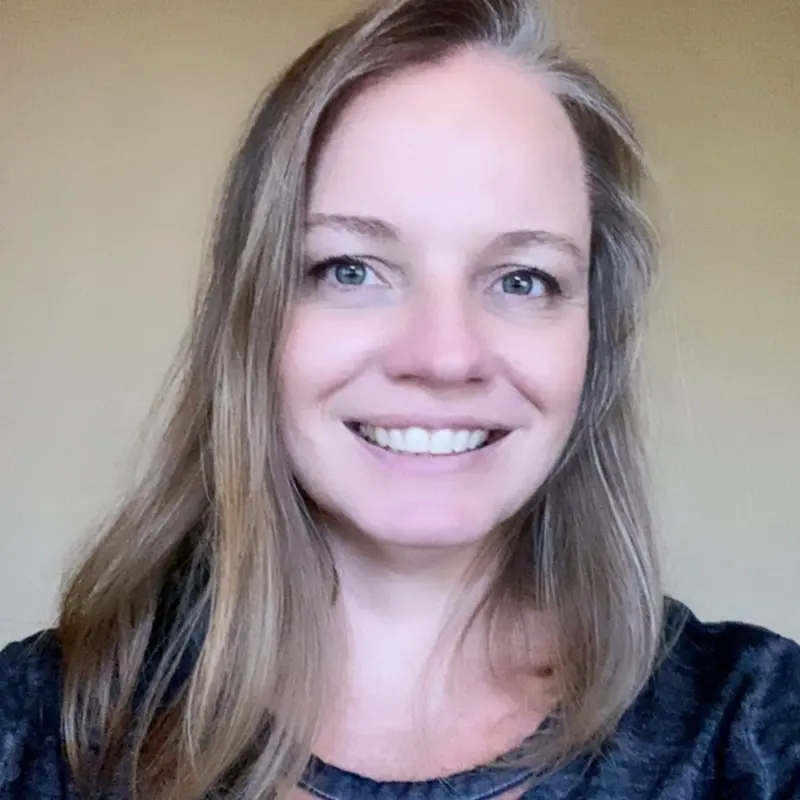
Jennifer Hays
SVP Fidelity Wealth - Head of Engineering Excellence & Technology Strategy ExecutionFidelity Investments
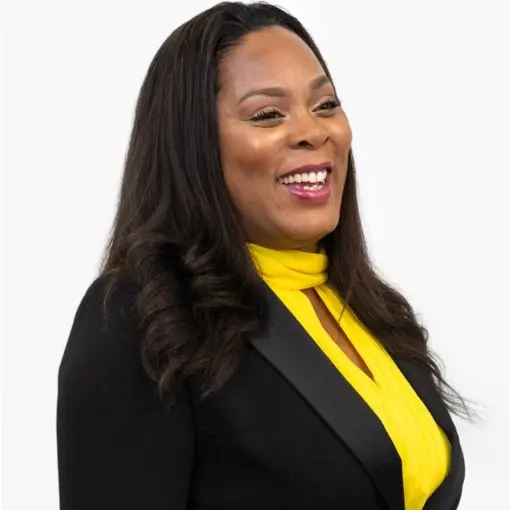
Natalie Daley
Director - Global Head of Cloud Economics & FinOpsHSBC
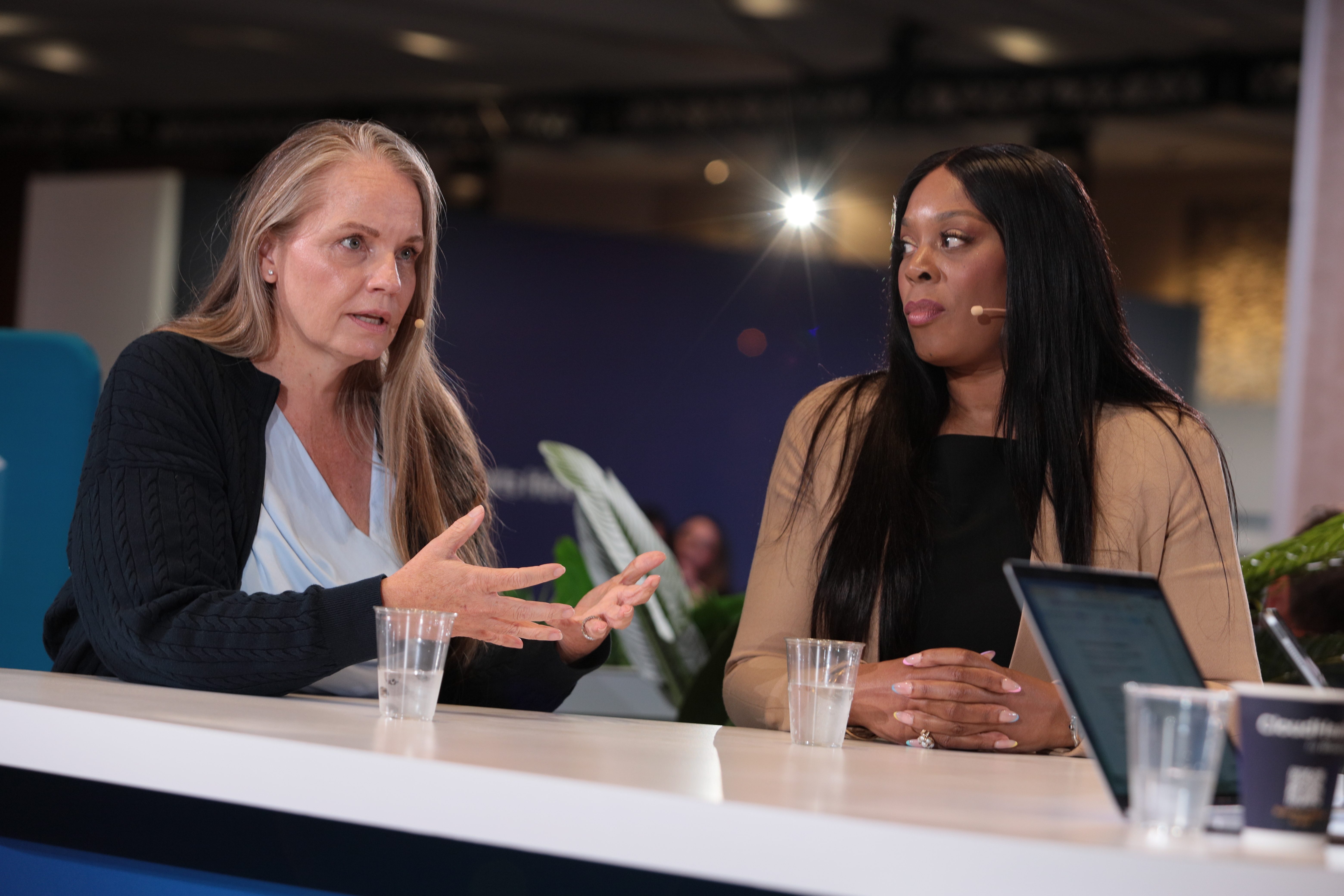
In this interview from FinOps X 2026, Jennifer Hays, head of engineering excellence and technology strategy execution at Fidelity Investments, joins Natalie Daley, director and global head of cloud economics and FinOps at HSBC, to talk with theCUBE's John Furrier and theCUBE Research's Paul Nashawaty about how FinOps is evolving from cloud cost control into an enterprise-wide discipline for governing AI investment and token economics. Daley traces FinOps's journey from cloud spend to Kubernetes to broader infrastructure and now to AI — underscoring the dual m...Read more
exploreKeep Exploring
What has been the biggest change observed as the FinOps community has grown?add
What broader costs should organizations consider when adopting token-based models/large language models beyond the token provider fees?add
How are the rapidly changing lifecycles of cloud-based software and AI models creating challenges for enterprises (especially in regulated industries), and how can FinOps teams help organizations select, integrate, protect, and manage the costs and trade-offs of those models?add
How are organizations approaching FinOps and token management, and how do SaaS providers differ from non‑SaaS enterprises in terms of maturity, transparency, budgeting, and capping?add
News Break with Jennifer Hays, Fidelity Investments & Natalie Daley, HSBC
search
John Furrier
>> Welcome back to theCUBE's live stream day two of FinOps X2026. I'm John Furrier, host of theCUBE with Paul Nashawaty, research analyst with theCUBE Research. My co-host, day two kicks off as we continue the theme of FinOps evolution, and the journey continues. Obviously costs, value creations, part of the themes here. We got two great end user practitioner companies here, leaders, Jennifer Hayes, Senior Vice President of Fidelity Wealth, head of engineering excellence, and technology strategy execution with Fidelity Investments. Thanks for coming on. Appreciate it. Natalie Daley, director, global head of cloud economics, and FinOps, HSBC. Thank you for coming on.
Natalie Daley
>> Thank you.
John Furrier
>> Big names here at FinOps. Congratulate, and originals here all six years. Great to see you. Let's review the keynote because again, day two goes a little bit deeper on the same themes. Looking at the FinOps evolution, the journey's evolving. Obviously generative AI, token economics are involved. You started to see the bigger picture. What was your reaction to the keynote? Natalie, we'll start with you.
Natalie Daley
>> Very exciting. Really looking forward to where we are now in our evolution. So, what's really clear is how FinOps has evolved over the past five, six years, right? Started in cloud. We saw the first leveling up around Kubernetes, and containerized spend, and then the expansion of FinOps across other infrastructures broadening beyond public cloud SaaS data centers, and various other infrastructure spends, and now with AI. So, very exciting. And that's FinOps for AI, and AI for FinOps. So, how we can leverage AI in our FinOps practices, but also the value that we can deliver to our businesses, and outcomes by providing that FinOps muscle memory in terms of managing AI spend, and return on investment.
John Furrier
>> Jennifer, you mentioned you were at Austin.
Jennifer Hays
>> Yes.
John Furrier
>> Original show moved to here. What's been the biggest change in your mind as the community starts to grow? A lot more people involved, a lot of adjacencies all coming together.
Jennifer Hays
>> Yeah, it's a great question. I think one of the biggest things that I really noticed this year about it was how fast the foundation is able to pivot to changes in the environment, and really support the community. A few months ago when we talked about AI, it was AI for FinOps, and FinOps for AI, but we were really talking about the product piece of AI, and how businesses were integrating it into their products, and what were the costs, and the spends from a cloud perspective in that. And within two months, this organization pivoted to really address the needs of generative AI itself, and how that is impacting our enterprises, our corporations. And it is a really complex. And so it has taken something that has become very business as usual from a cloud spend perspective, and really provided this community a chance to think about it from a career perspective, but how do they immediately start to organize within their enterprises to be able to address these needs?
Paul Nashawaty
>> Yeah, Jennifer, that's a really good point. Before we kind of got going here, we were talking about some of the keynote announcements. We were talking about tokenomics, what's happening here. And I think that there's impacts that happen around AI, but also we talked about the adjacent impacts as well. Can you touch a little bit about those adjacent impacts?
Jennifer Hays
>> Well, we saw this with cloud also, but I think you're going to see it much broader with tokens itself. So, when you think about it, a lot of people will want to talk about, well, the budgets to the providers of tokens, but there is a lot more cost. I mean, you think about most of this has to hit some sort of data source, and bring in data sources. So, what is going to happen with your input, your output into your large databases, Snowflakes, and those type of things that are going to happen. You also have things like laptops even for your developers. Are you going to think about running models locally, and what are you going to be your cost for that? So, there's this whole segment of costs that come with it that as you think about it, you have to get transparency in your token costs, but you have to understand actually how it impacts probably a dozen, or more costs around you.
Paul Nashawaty
>> Right. And Natalie, go ahead you were say-
Natalie Daley
>> Yeah, just to build on that a little bit as well. So, there's the infrastructure adjacent cost, but also the people, adjacent costs, and your processes that are there to support the built for environments that were essentially led by people. We're going to have processes now that are led by AI, and how do we work with our workforce as well as our processes to ensure that we are scaling up at the speed that AI is as well today?
Paul Nashawaty
>> Almost like you knew what I was going to ask. I was going to ask we were talking about the evolution, and changes of the program, the FinOps program, and FinOps X, but I think that that makes a lot of sense. Skill gap, and changes, and execution also as applies. Is that where you were going with that?
Natalie Daley
>> Absolutely. 100%. 100%.
Paul Nashawaty
>> Yeah.
John Furrier
>> How about the journey? Now we're at the point with AIs for FinOps, FinOps for AI. What's been the journey like at your companies as you look at the big picture? Because a lot of change is happening super fast. You mentioned the pivot time, the augmentation of now AI, again, across that holistic view, has it changed the journey, or has it accelerated it? What's it like?
Jennifer Hays
>> The lifecycle is completely different. With my experience in technology, which has been over 30 years, you went from lifecycles of three to four years within a software, and a technology, and that was still difficult for enterprises to move. And as you move to cloud, your life cycles became six months to 12 months where we would see changes in services, and engines, and things like that. We're seeing models release 20 new models within a quarter, or versions of models, and each one of those has incredible new capabilities itself. And so the idea of how does an organization actually understand how to create this agnostic framework that as these models are changing, you can use them, leverage them, integrate them into workflows, but also protect your enterprise, protect your company, protect your customers, protect your data. So, it is a huge challenge that I think is really on the minds of every CEOs, every CISO within the environments, especially in industries like us that are highly regulated. We always have to put that risk factor first.
Natalie Daley
>> And I think where FinOps can really help, or FinOps teams, especially teams that have mature practices, and have established credibility within their organizations is help with that decisioning, not just the initial stages of the transparency of the costs, but what do the costs tell you? How can you make decisions? How do you support the engineers, the developers, the HR teams to actually choose the right models? What are the right models for the right jobs? What are the trade-offs for costs, and speed, and execution? So, all of that I think is an area that the FinOps capability can really, really help harness, and help the business add value.
Paul Nashawaty
>> I think you're right. I mean, there's definitely... I used to enjoy, I came from the vendor side of the world. I used to enjoy those long life cycles of 12 to 18 months. And now what we're seeing in my own research, we see in our 2025 research that 24% of organizations that responded want to release code on an hourly basis. That is incredibly fast, right? And that's because of all these changes that you were talking about with regards to new models going into effect, changes, and regulations, and governance, and controls all have to go into effect. How is that impacting this whole evolution? Because it is very vast at this point.
Natalie Daley
>> Very fast. I think scale we've often talked about this. Scale, and speed is what we're really grappling with, what we're really challenged as leaders, and as a FinOps capabilities to try, and harness, and to try, and keep up with in terms of what we're offering from our practices, and how we're also supporting our teams to then move with this decisioning that's happening within the organization. And I think what I've seen in this conference is really practical tools. I'm a very practical person, so I love takeaways, and things that I can implement back with my teams. And what these talks have been amazing at doing is not only signposting the direction, but also providing tools, metrics that work, how to implement that into your existing practices, and how to essentially pivot quickly to support these decisioning.
John Furrier
>> And JR is very humble on stage yesterday. He's really transparent. We don't not yet know. So, very directional signposts are there. We saw the public keynote yesterday, and today, the whole world saw on the stream. You guys also participated in the executive tracks.
Natalie Daley
>> We did, yes.
John Furrier
>> Share your thoughts. What were some of the highlights, the keynote that stood out to you, and what were some of the themes in the executive forum?
Jennifer Hays
>> Yeah. I got the opportunity to actually host a panel at the executive committee yesterday. So, first of all, the executive committee is made up just of enterprises who use the tools, right? It's not a vendor piece of it. And so this is talking about the real problems that we exist. A couple of things kind of stood out to me. One is that of course the DevAssist piece, not only the DevAssist, but the generative AI for the entire corporations are really impacting. It is what is foremost on it. The other piece though is that areas that were actually responsible for FinOps seem to also be responsible for the implementation, and management of this. So, it's not just came in from FinOps, and you actually see that within my organization. I had FinOps, but I was given DevAssist generative AI implementation, and the change management around that. And so it was an interesting thing that we saw that consistently around a lot of the organizations, which I actually think underpins the importance that FinOps has actually played with really all of the companies on when they think about how do we create efficiencies, how do we create transparency? They went to the same group of people, not necessarily the practice. I thought that was really interesting, and important, but we definitely saw that there was common things about... I would group it into a couple of different types of organizations. You had the SaaS providers, which were actually much more mature on their ability to manage tokens because they've integrated it, and they've had to figure out how their customers... And it's a positive thing for them, right?
Paul Nashawaty
>> Sure.
Jennifer Hays
>> Because consumption means that people are consuming their products, and services. And then you have the enterprises who aren't SaaS providers, and they, I think, are a little bit behind the SaaS providers. And so it was really good for us to hear how some of these enterprises have dealt with how do you do things like budgeting? How do you get transparency? How do you cap, and budget these things, and then how do you declare the value?
John Furrier
>> Natalie, what's your take? Because the keynote, what jumped out at me was the theme we heard yesterday was time savings.
Natalie Daley
>> Yes.
John Furrier
>> I mean, just the time savings is a relief, but also it allows for more time to build out, do things. What stood out for you in the keynotes, and the sessions?
Natalie Daley
>> So, time, productivity, acceleration is a word that resonates with me when it comes to the keynote as well. So, the time saved, being able to do more, things that used to take... We deal with a lot of data in the FinOps capabilities, and things that data joining, and then the insights that the data provides you, we can do that much faster now leveraging AI, and accelerating the practitioner, and accelerating the views that you underpin, and support leadership decisioning. I think also when it comes to time, it's return on investment. So, another theme that came out quite strongly in the exec day, and then also over the past couple of days is how do we measure return on investment? How do we know the real value of the token spend? How do we measure that? But how do we also translate that to help drive the right decisioning about model choice.
Jennifer Hays
>> I'd love to add to that because there was a comment today in the keynotes, which was how people went to cloud was really important, and the value that they received off of it. And there were a lot of enterprises, and companies that just did a lift, and shift, right? And so they get the benefits of the cloud, but they do not necessarily take the full advantage, or the full value out of it. And I think we're going to see the same thing with AI. It's how we go across it. So, if you're using it as augmentation, your value statements are going to be much smaller. But if you're thinking of how do you reinvent our workflows, our processes, the SDLC, the different ways that legal, or HR use these things, can't just lift, and shift the current processes, and use AI, or we'll not get the scale that we need, and the real benefit. It is about re-imagining those workflows. And that I think is part of the FinOps responsibility to spark that thought process in the business itself.
Paul Nashawaty
>> Yeah. I thought that it was interesting. I mean, you're both hitting on a point that resonates very, very much with what I'm looking at from my research perspective. The evolution of skill is changing. We know that. People are going to be changing. The delivery is going to be changing. The workflow is changing. It could be accelerated on one hand but also slowed down on the other. But when we're looking at it, even from a research perspective, I'm seeing that 67% of organizations are hiring generalists over specialists, which means that they're leveraging, and utilizing AI in order to do what historically a specialist was doing. I think that's an interesting perspective, right? Because now we're seeing that change is an impact from a financial perspective as well as a productivity perspective. Would you agree with that?
Jennifer Hays
>> Yeah. Time to effectiveness is what we call it in there, which is the ability to move work, or to move people into things that they are not familiar with, and how long does it take for them to become effective in that. So, before you had specialists because they needed to have that information to be very effective, and then it was hard to pivot them, and the idea of a full stack engineer really never hit its promise. But what I think we're going to really see here is that the ability for these tools to read code, to read documentation, to summarize information really brings that ability to move people to work, to move work to different people. I think it is one of the pieces that is talked about, but probably not really understood about the positive impact that it has on it. I do believe though you're still going to need people in the domains of the business that have really in depth knowledge.
Natalie Daley
>> Yeah. And that touches on the human side of all of these discussions, right? And I think what was really interesting today is Mike's keynote talked about the elephant in the room. Are we worried that AI is coming for our jobs? Are we worried that AI is going to take over significant parts of what we do? And absolutely in the sense that an AI enabled FinOps practitioner, and an AI-enabled workforce of organization is definitely where we're going, and it's important to continue to be curious. It's important to continue to experiment. It's important to leverage that, but think about, and as you've said, you're still going to need the human in the loop. You're still going to need the domain knowledge. You're still going to need the gut instinct that tells you how to pivot, and direct, but using AI, it's the scaling, and the acceleration.
John Furrier
>> Jennifer, Natalie, thank you for coming on theCUBE. It's always great to have practitioners, and end users. In fact, what I love about the Linux Foundation is that it is vendors, and it is end users. We saw that in the cloud wave with CNCF. We're seeing it here. It's super important, but also you guys are leaders. You're like an analyst on theCUBE here. So, I have to ask you, how would you summarize the keynote, and the role that the FinOps community is playing, and how it's evolving because we think it's going to be a lot of migration into this community because of the nature of what it's doing. I mean, it's developing the skills, and the tools, and the platforms to bring up real time another theme. What's your thoughts? How would you summarize theCUBE if you were an analyst on our team? We won't quote you.
Jennifer Hays
>> You're not going to quote me. It's okay. I am really interested to see what this conference looks like next year, right? So, they announced that the conference will be changing the integration of the Finotch, and tokenomics. Tokenomics will definitely change us. And I agree, there's an intentionality about the size of this conference, and that it is very community focused, but that community is going to change, right? There will be a lot more people. The people I work with when it comes to GenAI, and understanding it, that scope has actually increased, that sphere has increased. And one of the keynote speakers talked about the different levels that you actually have to go up. And so we are going to see this really broaden. It is the topic of conversation with every CEO, every CIO, every CISO right now. And so I'm just really encouraged that we have quickly, so quickly reacted to the needs of the community.
Natalie Daley
>> I echo everything that Jen said. It's real evident of how adaptable this community is, and how adaptable the practitioners are, and how quickly we've been able to embrace the change, and work out where we sit, and how we add value. And I think there's so much more to come for this community. So, I think it's a very exciting time. I think we should remain curious, build on what we have built, and supported our organizations to do in the past five, six, seven years, engage with those broader teams. And yeah, I'm really looking forward to where we are at this time next year.
John Furrier
>> Thank you so much. I love the comments like cloud, how you come in, how you get that value, and can collaborate in an open way is awesome. Thank you so much for sharing on theCUBE. Thank you for coming on.
Natalie Daley
>> Thank you for having us. Thank you.
John Furrier
>> I'm John Furrier. Paul Nashawaty with theCUBE, and theCUBE Research, bringing you all the action, analyzing, really reviewing the keynote, and the direction. The sign posts are out there. This is a growing community. It's changing, but it's very relevant, and it'll be more relevant as more, and more tech keeps building, more, and more projects come online. Thanks for watching.