We just sent you a verification email. Please verify your account to gain access to
FinOps X 2026. If you don’t think you received an email check your
spam folder.
In order to sign in, enter the email address you used to registered for the event. Once completed, you will receive an email with a verification link. Open the link to automatically sign into the site.
Register for FinOps X 2026
Please fill out the information below. You will receive an email with a verification link confirming your registration. Click the link to automatically sign into the site.
You’re almost there!
We just sent you a verification email. Please click the verification button in the email. Once your email address is verified, you will have full access to all event content for FinOps X 2026.
I want my badge and interests to be visible to all attendees.
Checking this box will display your presense on the attendees list, view your profile and allow other attendees to contact you via 1-1 chat. Read the Privacy Policy. At any time, you can choose to disable this preference.
Select your Interests!
add
Upload your photo
Uploading..
OR
Connect via Twitter
Connect via Linkedin
EDIT PASSWORD
Share
Forgot Password
Almost there!
We just sent you a verification email. Please verify your account to gain access to
FinOps X 2026. If you don’t think you received an email check your
spam folder.
In order to sign in, enter the email address you used to registered for the event. Once completed, you will receive an email with a verification link. Open the link to automatically sign into the site.
Sign in to gain access to FinOps X 2026
Please sign in with LinkedIn to continue to FinOps X 2026. Signing in with LinkedIn ensures a professional environment.
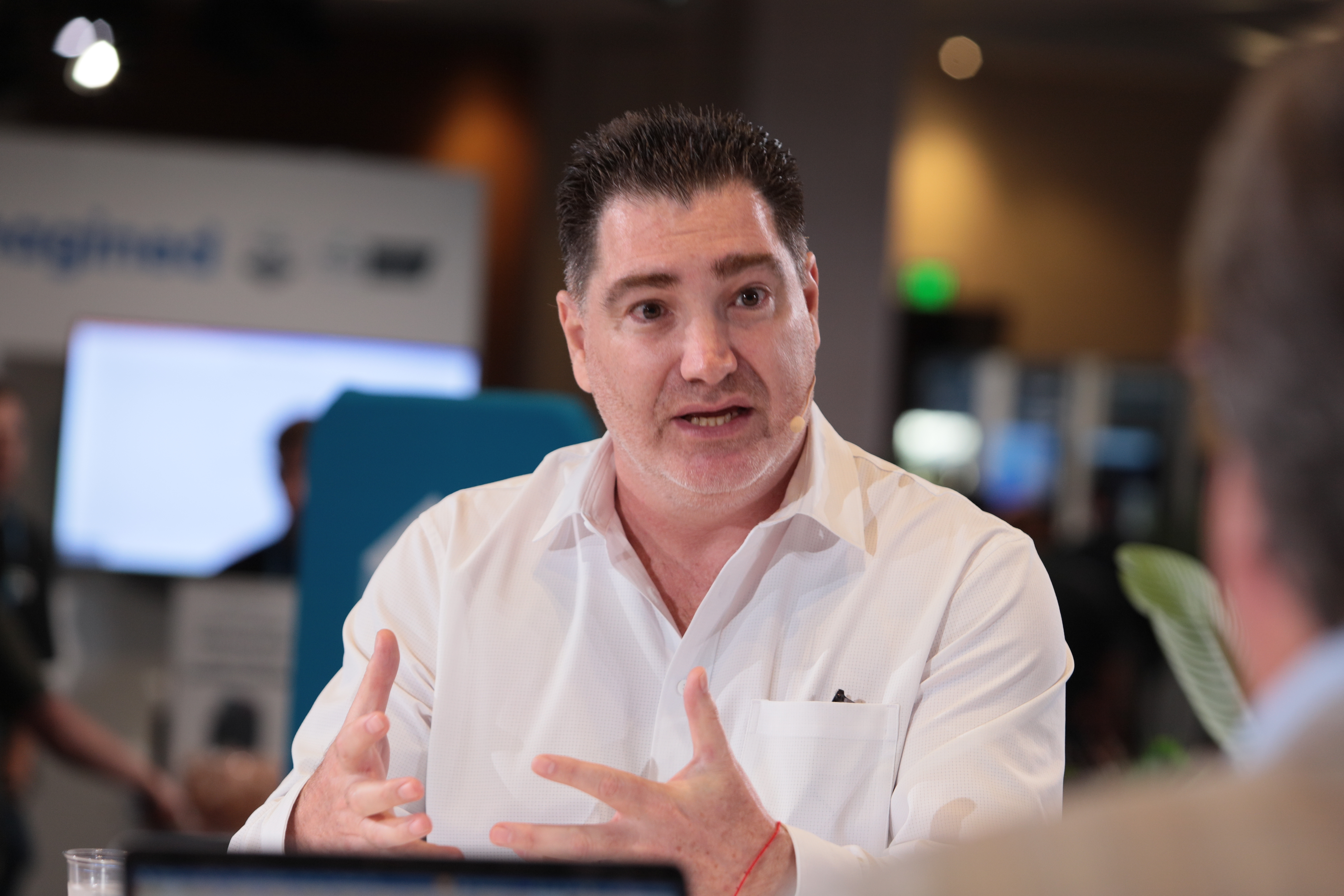
In this interview from FinOps X 2026 in San Diego, Cyril Belikoff, vice president of commercial cloud and AI at Microsoft Corp., joins theCUBE's John Furrier and theCUBE Research's Paul Nashawaty to discuss the evolution of FinOps from cloud cost management into an enterprise-wide discipline for governing AI value and token economics. Belikoff explains how enterprises moving from AI experimentation into production are turning token consumption into the central unit of measurement for technology investment. He details Microsoft's layered platform strategy — an...Read more
exploreKeep Exploring
What is your view on the recent surge in AI adoption and the resulting increase in token usage, and how is that affecting data centers and the emergence of distributed/edge nodes?add
What does it mean to "inject intelligence" into an organization across cloud, on‑prem, and edge environments, and how should the infrastructure and application layers be configured to enable that?add
What components of the AI stack and platform do organizations need to consolidate their data and manage AI agents securely so they can deploy intelligent (agentic) applications effectively?add
What does a "frontier" FinOps team look like in practice — what should its composition (engineers, data scientists, virtual agents, etc.) and responsibilities be?add
>> Welcome back to theCUBE's live coverage here in San Diego, FinOps X 2026. I'm John Furrier, host of theCUBE. My cohost, Paul Nashawaty with theCUBE Research. We're covering all the AI adoption, the impact to value creation, value extraction and the cost to provide that value. All the practitioners are here, it's open source. It's all about getting the data to understand where to meter that, how to understand it, and a lot more analysis coming all day for two days. Cyril Belikoff's here, VP of Commercial Cloud and AI at Microsoft. Cyril, great to have you on theCUBE. Appreciate it.
Cyril Belikoff
>> Yeah, thanks. Great to be here. You got some great stools here, getting my core. This tool's keeping my core busy.
John Furrier
>> Looking good. Nice shoulders, back.
Cyril Belikoff
>> Yeah.
John Furrier
>> Okay, AI adoption is on fire, because you're starting to see a lot more of the usage, not just using cloud applications or on-prem, old school SaaS applications. Old school, it sounds like it's like yesterday, but now everyone's using AI and that's showing results, highly accelerated results. The data center explosion where the tokens are being generated and used for the data on-premise is fueling another edge of the network as a distributed node. You start to see all that adoption. What's your view on this? Because as people say, "I love this, I don't want to go back to what I was doing before. I want more tokens, I want more value, I want better product that I'm building."
Cyril Belikoff
>> Yep.
John Furrier
>> This is what's happening.
Cyril Belikoff
>> Yep, you're totally right. We speak to customers every day, all day for five years already, and we started this AI journey maybe 15 years ago with machine learning and all those, but obviously in the last five years it's accelerated, and more importantly, in the last six months to your point. And so there's this intersection of technology, but also businesses understanding which use cases and which value that they want to prioritize against this AI platform and everything they're investing in. So, more recently we've seen great new models coming out both across the spectrum, not just one or two models. The models have got much more efficient, but then customers are now ready moving out of experimentation to production, and that leads to usage. And so when usage happens, then consumption happens and then we land up in a discussion about tokens.
John Furrier
>> And the growth of the tokens is also ratifying the distributed computing paradigm. You got cloud, you got on-prem, edge is there, and you said in the keynote about intelligence and AI. So define what that means, because I've heard that term before many times. We're injecting intelligence into the business, we're injecting intelligence at the edge, we're injecting intelligence in the data center. What does that mean? And how is the infrastructure and the app layers setting this up? Because it's same game, but different environment.
Cyril Belikoff
>> Yeah, great, great question. And it's really important to get our head around it, because intelligence or the context that we provide to intelligence or agents is really important, because it's one thing to ask a particular experience about a topic that doesn't have context on who you are in the organization or what your business is or what industry you're in. So you really want an intelligence layer, a layer that has context within your organization that you can train once on who you are, how you work, your organizational structure, your documents, your meetings, but also your structured data and your business process. And that can be created once so that your agents and your models don't have to be trained a million times, 'cause you want to change out models, you want to change and retire agents and increase new agents, but you want a single layer that you can have in your organization that is consistent for many, many years.
Paul Nashawaty
>> Yeah, so there's a lot there to unpack though, and we looked at the keynote, we looked at the information that was coming out of it. Microsoft IQ really is the driver here that we're talking about, the convergence between AI and data. You can have applications, you can have data. What I'm seeing from our own research here, we're seeing that organizations are encapsulating heritage systems, right? They're treating them as systems of record, building new systems of engagement to access those systems of record, right? But those systems of engagement that are accessing that information, they're not built the same way that those heritage systems of record are built, so there's governance compliance regulations and controls are in place, right?
Paul Nashawaty
>> Right, right.
Paul Nashawaty
>> So when we think about it, I'd love to get your perspective of the relationship between the two of AI and data and why it matters. And then obviously before you start your learning models and such, you have to scrub the data a certain way to make it work, right? Let's talk about that.
Cyril Belikoff
>> Yeah, so we're basically unpacking the AI stack. So like I mentioned intelligence layer, our platform there is Microsoft IQ. We help customers to turn it into their IQ or company IQ, and then of course, like you just mentioned, the data and AI platform. So, what platform do they need in place to consolidate their data across their organization so that it's joined clean and ready for AI to use? 'Cause it's great to have an agentic applications, but if your data's not clean, you're going to get garbage in and out, right?
John Furrier
>> Right, right.
Cyril Belikoff
>> And then secondly, have an AI platform that can manage these agents and manage these AI experiences from governance to security, to safety controls, so that you can implement together your data and AI strategy on a platform.
Paul Nashawaty
>> Yeah, and when you actually start having your lines of business builders building applications, they're not so much in control or they don't really know about governance compliance and control, they're just trying to get to their information. So there's a high risk of that information, sensitive information getting out to the wrong hands, not anything malicious potentially, but maybe it's just they didn't know what they were doing. So these guardrails that have to be in place, can you talk about that from the Microsoft IQ perspective?
Cyril Belikoff
>> Yeah, you're absolutely right. I take that back to maybe the old SharePoint days.
John Furrier
>> Yeah.
Cyril Belikoff
>> We launched SharePoint and then suddenly there were hundreds of thousands of SharePoint sites, and IT was like, "Whoa, okay, we need to like reign that in, put some governance around it. Leave people to innovate, but put some governance about it." And it's the same thing. We want to give the developers the ability to innovate in things like Visual Studio, GitHub and GitHub Copilot or any other IDE that they love, but then have this data and AI platform that provides the guardrails that protect them from themselves, so that they can pick the right model, have content safety so that hallucination doesn't happen, have security. And so we actually expose all of those controls directly inside GitHub and GitHub Copilot, so in the flow of their work they can get what architectural decisions can they make, what cost decisions can they make, what security decisions, which models should they pick right in the flow of their work. And so you need to provide the guardrails, but then democratize it in their tools.
Paul Nashawaty
>> Yeah.
John Furrier
>> Yeah, the conversation here so far has been who's spending what? What is that token being used for? So, getting clarity around usage has been big. But you mentioned governance. This is our 17th year doing theCUBE since I founded the company, and I think in the past eight months the word governance has been said more here in the past eight months than all the years. I mean, governance was like, "Okay, I'm doing some data management, get some governance." The role of governance, identity, accountability, you're hearing terms like systems of agency, who's accountable. So when you start looking at cost, the FinOps cost side with the value creation, the extraction is going to come out of that, but there's an interplay between cost and value creation.
Cyril Belikoff
>> Of course.
John Furrier
>> Which then defines what the extraction value is and was it worth it?
Cyril Belikoff
>> Yep, you're totally right. And we saw this very early on and we started building a system of record for agents we now call Agent 365 that essentially provides organizations the ability to treat an agent like they've been treating other humans. So they need an identity, they need controls. What do they have access to, what don't they have access to? So that the agent itself is managed by IT in the same way that they might manage you or I and secure you or I, and just like we might do things that we don't intend, the agent might go do things that they don't intend.
John Furrier
>> What's your thoughts on AI native? Because we're seeing some synergy between the cloud native movement with Kubernetes and containers, with the AI native developers using the models. It's almost not exactly the same, but the FinOps to me is an intersection point between, okay, how do I scale up the AI native infrastructure, the software that's going to run it? This is the agentic layer. I mean, what's your vision on that? How do you see that? Because AI native and cloud native, they come together.
Cyril Belikoff
>> Yeah, I think historically cloud or FinOps has been focused on, hey, I have on-premises infrastructure and how do I get it to the cloud? And how do I make that more efficient? And then how do I optimize it as I go to the cloud and on an ongoing basis? AI native is targeting, how do I create new value for my organization with brand new infrastructure, brand new applications, brand new application and data layers? And that's sort of where OpenAI and ChatGPT came on, and so those are different types of ... and of course they run on Azure and they work on Azure. That's different from us working with the largest, biggest banks to migrate from the cloud. Those are literally different infrastructures, those are different trade-offs. The token economics discussion that happens which you're alluding to happens to both of them, and so there is a convergence of how do you think about the AI infrastructure and how do you manage it? And that's why I spoke earlier about an IQ layer and a data and AI layer, that if an organization can get that right, they can save themselves a lot of headaches and a lot of lessons moving forward.
John Furrier
>> Well, you talked about the frontier FinOps teams. I love that term frontier, 'cause it's frontier models. So we're in the frontier, they're seeing things for the first time. Cloud native, we invented DevSecOps.
Cyril Belikoff
>> Right.
John Furrier
>> So is this frontier team formation, what does that look like in your mind? Because that's a new team that's going to have to get in and get the data, connect it, enable agents at scale, instrumentation, telemetry.
Cyril Belikoff
>> I shared it in the keynote, it's really for FinOps practitioners to democratize the information that they have. So just like we are providing information about Azure infrastructure in the flow of a developer, there should be an agent that understands the FinOps business of their organization. And that fits inside of their IQ side by side with all the other business data and is provided to whether it's the developer or someone using Copilot and asking questions of Copilot Cowork or a CEO that's interacting with AI, so that they can see the value upside of a decision, but then the cost implications and optimization that they have to go through. 'Cause really, we're speaking about FinOps democratization, this is like the frontier version FinOps where you enable the agent and then the agent can go answer the questions that you've been asked, and then you can invest your time in elevating the business towards what the CEO and the CFO are asking, which is the value and the cost together in a business outcome.
John Furrier
>> What does a frontier team look like? What's the makeup? Is it your classic engineer? Is it a data scientist?
Paul Nashawaty
>> Or is it a virtual agent?
John Furrier
>> Is it a virtual agent? I mean, what does that look like in practice?
Cyril Belikoff
>> It's all of the above. I think three years ago we came up with this concept of an AI center of excellence, which I don't think it's that much different today except that center of excellence need to be agentified, absolutely to your point.
Paul Nashawaty
>> Yeah.
Cyril Belikoff
>> You have to be able to democratize the decisions that be made, the policies, the governance so that people can continue to innovate and move quickly while you have that control.
Paul Nashawaty
>> So let's talk about that, innovation and moving quickly. Microsoft has an extensive partner ecosystem, right? Obviously you have a pretty good fit in the market, you have a lot of people who'll work with you. That has really an empowerment to make AI really more successful. How is Microsoft using that ecosystem to really drive that AI empowerment or the adoption?
Cyril Belikoff
>> It's a great question. I would be remiss to not call out our Microsoft AI cloud partner program, which is for our partners. And we spend multiple tens of millions of dollars, hundreds of millions of dollars on giving them what they need to operate across the Microsoft portfolio, not just on the Azure side, but Copilot, Teams, our Dynamics portfolio, our development portfolio, so they know what we're doing, they understand our strategy, they're technically-enabled and they're building practices to help our customers achieve what they need to do in this AI world.
Paul Nashawaty
>> So, but friction comes up quite a bit in this conversation and the marketplace allows for that friction to be removed. How do you use the marketplace to help with that enablement? Especially when you start talking about things like the citizen developer or the line of business, a user developing their own applications, they're building their own code. How does that kind of play into the whole mix?
Cyril Belikoff
>> Yeah, it's a great question. So, I'll pause for a little bit on the Microsoft Marketplace. So we brought together all our marketplaces back in September and launched that, and so it is now the single place for customers to discover, try and buy cloud solutions, AI apps and agents all in one place. So a customer can go and find a traditional SaaS solution, a modern AI application, or an agent that runs on Azure or snaps into Microsoft 365 Copilot and then implement that inside the infrastructure. And so we are now providing a digital platform to connect those partners that you mentioned that are building software agents and tools to our customers, so in scenarios where they don't want to build from scratch they can either find those components that are free, 'cause we have plenty ad-ins to Teams and agents that snap into Copilot that don't cost anything, but then of course SaaS applications that do and able to stitch that infrastructure together in a trusted source, 'cause we've vetted these applications to work on the Microsoft platform. Then to your point, just at Microsoft Build last week we spoke to developers about how they can use the marketplace to themselves acquire tools to develop and get going quickly, and then in turn, once they've built their own applications, get them onto the marketplace and connect to customers at scale.
John Furrier
>> You guys are no stranger to the enterprise, on-premise software, Microsoft's legacy, obviously the cloud dominance, the edge is coming. What's your vision and Microsoft's point of view on common language, like focus has been a big topic here and just FinOps in general? And with the token economics foundation decoupled, but highly connected and cohesive, what's your vision? Because the enterprise is under siege right now of massive adoption, cost, unbudgeted costs and everyone's not freaking out, but the alarm's being pulled is almost a red alert moment, code red of, okay, you guys are used to dealing with enterprise, you've mentioned SharePoint before. What's your point of view on how this rolls forward?
Cyril Belikoff
>> Yeah, I mean, I think the components that I mentioned in my keynote and we've touched on here are getting the right platforms in place. An intelligence platform with Microsoft IQ, a data and AI platform, a development platform. Having the right endpoints in place, whether it's a developer endpoint or a knowledge worker endpoint like Copilot and really making sure that they're clean in that strategy, 'cause if you have endless endpoints, endless platforms, endless coding, then you're going to run amuck. And that's not just a cost statement. You run security risk, you run compliance risks, your governance, which we discussed earlier. So that's where we spend our time with our customers, understanding what industry use cases they want to tackle, and then helping them go after those first industry use cases while putting down this layered platform so they have a sound future for themselves.
John Furrier
>> Going forward, last question, two years, three years from now, what do you hope to see as a steady state or maybe somewhat steady, managed steady state, managed chaos? Because it's highly accelerated. The AI infrastructure's booming, more and more speed, scale's coming, security's a concern, governance is now front and center. A lot of these systems concepts are coming to the table. How do you see this community and this piece unfolding?
Cyril Belikoff
>> Yeah, it's a great question. I'm a little worried about three years from now, 'cause I think if we could just get to one year, that would be awesome.
John Furrier
>> Fair.
Cyril Belikoff
>> But like I said, we want to connect the customer's intent with the technology capability and then obviously everything that fits in the middle. And so if we do that, I think we will achieve what we need to do, but to your point, there are lots of new concepts that are coming out and our customers are asking us these questions every day from the CFO around the cost to the CEO pushing all day, every day to embrace and move past the costs and look for innovation. So, it's that balance that I hope we can achieve success on.
John Furrier
>> Yeah. Well, we appreciate you coming on and sharing your point of view and your observations on theCUBE here. Thanks so much.
Cyril Belikoff
>> Yeah, thanks so much. Thanks for having me.
John Furrier
>> All right, I'm John Furrier, Paul Nashawaty. We'll be back with more coverage here in San Diego for FinOps X 2026 after this short break.