We just sent you a verification email. Please verify your account to gain access to
FinOps X 2026. If you don’t think you received an email check your
spam folder.
In order to sign in, enter the email address you used to registered for the event. Once completed, you will receive an email with a verification link. Open the link to automatically sign into the site.
Register for FinOps X 2026
Please fill out the information below. You will receive an email with a verification link confirming your registration. Click the link to automatically sign into the site.
You’re almost there!
We just sent you a verification email. Please click the verification button in the email. Once your email address is verified, you will have full access to all event content for FinOps X 2026.
I want my badge and interests to be visible to all attendees.
Checking this box will display your presense on the attendees list, view your profile and allow other attendees to contact you via 1-1 chat. Read the Privacy Policy. At any time, you can choose to disable this preference.
Select your Interests!
add
Upload your photo
Uploading..
OR
Connect via Twitter
Connect via Linkedin
EDIT PASSWORD
Share
Forgot Password
Almost there!
We just sent you a verification email. Please verify your account to gain access to
FinOps X 2026. If you don’t think you received an email check your
spam folder.
In order to sign in, enter the email address you used to registered for the event. Once completed, you will receive an email with a verification link. Open the link to automatically sign into the site.
Sign in to gain access to FinOps X 2026
Please sign in with LinkedIn to continue to FinOps X 2026. Signing in with LinkedIn ensures a professional environment.
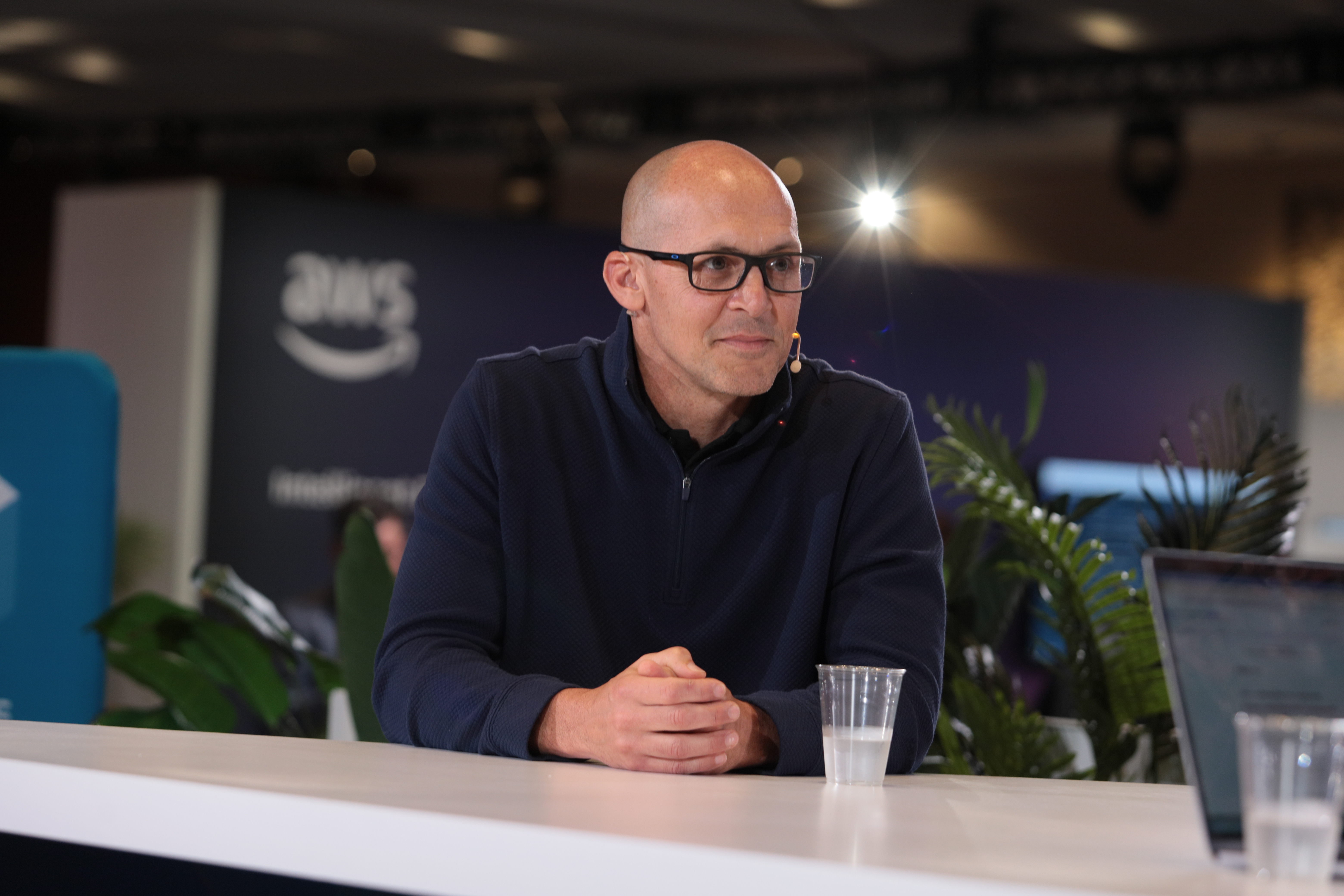
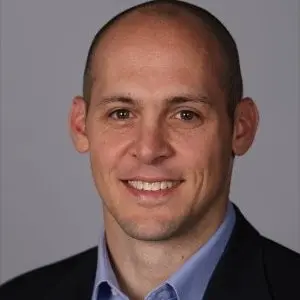
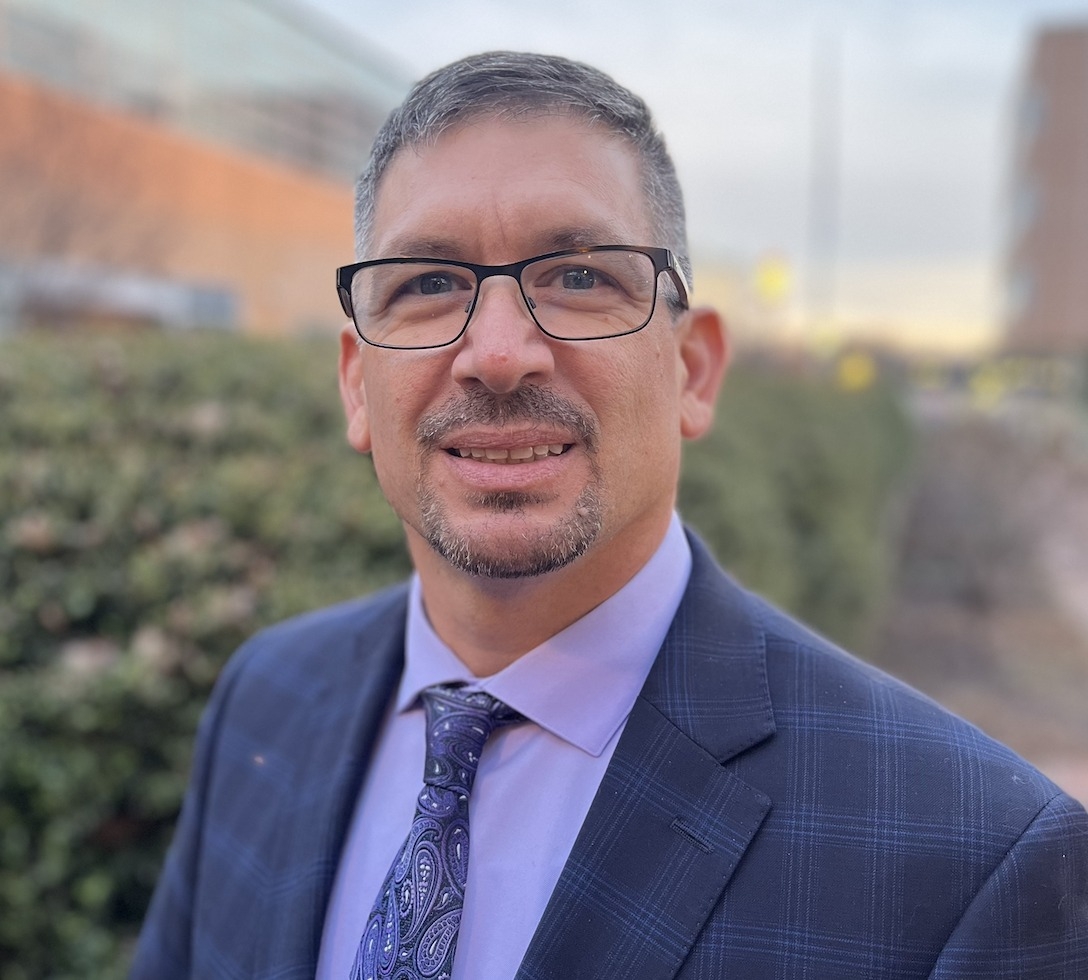
In this interview from FinOps X 2026, Jerry Rapisarda, director of cost management and optimization at Amazon Web Services, joins theCUBE's John Furrier and theCUBE Research's Paul Nashawaty to discuss the launch of the FinOps agent and how AWS is reframing cost governance for the age of agentic AI. Rapisarda unveils the FinOps agent �� now available in feature preview — an autonomous partner that monitors costs, detects anomalies, performs root cause analysis and integrates with Slack and Jira to alert responsible teams in real time rather than at month's end...Read more
exploreKeep Exploring
Is the FinOps agent a feature preview or generally available?add
What does "working backwards from the customer" look like when customers assess their AI/cloud spending, and what key measures are you implementing to shift cloud spend toward generative and agentic (non-deterministic) AI?add
Who is the FinOps agent intended to help, what benefits does it provide (e.g., time and cost savings), and how should people think about AI-related cloud spending versus traditional cloud spending — including AWS’s messaging for practitioner vs. executive (boardroom) audiences?add
How does the FinOps agent work and integrate with customers' existing workflows, tools, and teams — what integrations or roadmap (e.g., agent-to-agent communication, APIs) are planned, and how should customers think about ROI and cost optimization?add
>> Welcome back to theCUBE's livestream here in San Diego, FinOps X 2026. I'm John Furrier, host of theCUBE, with my co-host, Paul Nashawaty with theCUBE Research. We're breaking down all the action on AWS, gen AI, Linux Foundation, and all the costs that are going into all the value creation with AI. Certainly agents are putting a lot of pressure. Jerry Rapisarda Is here, director of AWS Cost Management and Optimization at Amazon Web Services. Jerry, thanks for coming in.
Jerry Rapisarda
>> Thanks for having me. Great to be here, guys.
John Furrier
>> I got a great view of the booth over there.
Jerry Rapisarda
>> Yep, there it is.
John Furrier
>> You got the product launches. Intelligent FinOps starts there. I want to get into some of the product side, but I've been staring at the sign, intelligence FinOps. What does that mean? Yeah. What is Intelligent Finish? Because AI is injecting intelligence into software, business, the edge is out. I mean, everything's about injecting intelligence.
Jerry Rapisarda
>> Yeah. Really that's really about how AI can understand the context of your business and how it helps you manage and optimize costs. And so we're at an inflection point from a technology standpoint where AI can allow you to evolve and evaluate your costs better than we ever have been before. And that's where we're focused. Today, we announced the launch of the FinOps agent. So this is a autonomous agent that monitors and manages your costs on your behalf, partners with you. You could think of this as like a virtual FinOps partner that can monitor and manage your costs, can alert you to cost anomalies, do the root cause analysis for you. Even integrate with Jira or Slack to message teams that are responsible for those costs so that you can take action immediately instead of finding out about a cost anomaly at the end of the month. So that's really what the intelligence is about is understanding the context of your business and helping you to manage costs in the cloud.
John Furrier
>> Is that preview or general availability?
Jerry Rapisarda
>> It's a feature preview. We launched it in feature preview. We've had it in beta with some customers. So this is really where any AWS customer can now sign up and set up and configure the FinOps agent and use it to manage their costs.
John Furrier
>> One of the things I love about covering any Amazon Web Services guests on theCUBE is that we've been covering re:Invent since 2013.
Jerry Rapisarda
>> Right.
John Furrier
>> So we speak Amazonian.
Jerry Rapisarda
>> Okay.
John Furrier
>> So let's work backwards from the customer. Okay, so you guys been doing cloud spend, obviously leader in cloud from day one, obviously legendary. Don't need to rehash that story. But now the agent era is there. Matt Garman and the team, Swami, everyone's got ... The whole things is pumping really well right now. What's the working backwards look like from the customer as they look at the AI spend? It's got cloud. Now you've got the on premise activity, the shifting workloads to the cloud. What are those things, what are the key things you're working on to get that cloud spending moving over to more of the non-deterministic or generative AI and agentic?
Jerry Rapisarda
>> Yeah. The key thing that we're hearing from customers is governance in a word. That was something, if you did the word cloud on the keynote speech today, probably at the top would be tokenomics and second would be governance. And governance in the terms of not bureaucracy slowing me down, but give me the levers and controls that I need so that I could manage AI spend and make sure that it is achieving the business outcomes that we need it to. And so that's the signal that we're getting from customers. That's really where we're focused. Governance starts with allocation and attribution, knowing who is spending what. And so that's an area where we've been focused. So in Bedrock, which is our fully managed service for developers to access all of the popular frontier models, we've given our customers the ability to allocate costs by the identity and access management role or user so they know where that spend is coming from and then they could use that to determine, am I getting the right business outcome from this investment in AI?
Paul Nashawaty
>> So this is interesting. It's really interesting times, Jerry, that we're in, because unlike cloud, I mean, there's a lot of similarities between what's going on with AI and spending and cloud. But unlike cloud, there's a lot more users touching with AI than we've ever had before.
Jerry Rapisarda
>> Totally.
Paul Nashawaty
>> So organizations have to have ... The reason why governance was so prominent at the keynote was because we need it.
Jerry Rapisarda
>> Right, exactly.
Paul Nashawaty
>> You can have citizen developers, you'll have lines of business developers, you'll have sales, marketing, finance, all creating their own applications. And next thing you know, you have this token cost that's just out of control. So what are your thoughts around that just for businesses best practices to manage that?
Jerry Rapisarda
>> Yeah. It's definitely brought cost management into sharper focus because of the explosive investment that we're seeing in AI. It really is the fundamentals around cost allocation and then understanding the return on investment, having clarity on what the business outcome is that you're after. That is paramount with gen AI investments. And so what we encourage our customers to do is to think through unit economics, what is the cost per acquisition or the cost per conversion. From an AI perspective, what is the cost per invocation and being able to tie that to a business outcome? So if you have a chatbot and you're spending three cents per invocation and that's getting a 4% conversion rate, you really have to know what is that conversion rate driving in terms of a revenue outcome or a business outcome.
Paul Nashawaty
>> I love that. I love where you're going with that. That makes complete sense in the traditional business model. Okay, but let's talk about it in the context of innovation and sandboxing. Last year, 2025, everyone was trying to use AI, they're innovating, they're trying different things. Lots of stuff happening, a lot of money being spent. Not really sure where that money was going, but it was being spent. Now, people are like, okay, ROI. We want to know where this money's being sent.
Jerry Rapisarda
>> Totally.
Paul Nashawaty
>> But the problem is you can't innovate and have direct ties to business outcomes without trying to innovate first.
Jerry Rapisarda
>> Right.
Paul Nashawaty
>> So you got to have that sandbox. What's AWS doing to allow for that innovation to kind of grow in a ? And one other piece to that is also I want to add in, since we're at an open source community event, I'd love to know what your take is from giving back to the open source as well with that.
Jerry Rapisarda
>> Yeah. Yeah. So great question. And again, this is, I think, where understanding an attribution comes into play to understand where the spend is coming from so that you could start to apply optimization techniques. You could start to look at, is this the appropriate model for this workload? And so we've focused on that cost allocation piece also in some of our tools outside of the console, like our cost intelligence dashboards and our CUDOS dashboards give customers the ability to look at cost per token across different models so that they could see is this the appropriate model for this use case. And it gives customers more levers to say like, "Hey, in this sandbox environment, maybe we don't need the latest and greatest model. There's a more efficient and cost effective model that we could use. So maybe we want to put some controls or constraints there. And maybe in this production environment, no, that's where we want to really make an investment and we don't want to risk performance of the applications that we're building."
So giving customers that visibility and that transparency is what they're asking for and it's what we're really trying to give them.
John Furrier
>> You know what I love about Amazon is you guys have a lot of data, a lot of data. I mean, I talked to Colleen Aubrey at the call center, she's looking at all the collective data, building apps. When you look at what's been going on with Swami, you guys rolled out the security agent, the DevOps agent, okay, all domain specific. So on the FinOps agent, what specifically did you hone in on? What was some of those domain specific levers that you guys were seeing and learning more broadly in the AWS infrastructure that was common amongst the customers?
Jerry Rapisarda
>> Yeah. So the FinOps agent is applicable certainly to the domain of everybody who's here at this conference. This is your virtual partner as a FinOps practitioner. And for most of the people at this conference, it's about time savings. This is something that could really help to shortcut building that report, researching that cost anomaly, understanding the trajectory of your costs. The other audience for the FinOps agent is the smaller business, maybe who doesn't have a fully developed FinOps practice or doesn't have a FinOps specialist that's working on cloud cost management as their primary job. This is where we think the FinOps agent is going to be a big difference maker in helping those smaller customers achieve that cloud financial management maturity much faster.
John Furrier
>> You think time savings is the needle mover? Time savings?
Jerry Rapisarda
>> I think it's time savings and it's cost savings as well. So the FinOps agent can also put your costs into perspective and help you understand which optimization lever to pull. So I think it's both of them.
John Furrier
>> So now let's get into semantics for a second. So cloud spending was traditionally FinOps. We've been to this 5th year in a row, that's class of cloud spend, the mechanisms of Amazon, EC2 and all these different services, AI is different. So now cloud spending includes now the AI piece.
Jerry Rapisarda
>> Right.
John Furrier
>> How do you separate those? How should people think about those? Because they're kind of two different things. One's outcome based, maybe use case based. One might be, okay, I'm levering the service and high level service at Amazon.
Jerry Rapisarda
>> Yeah.
John Furrier
>> Take us through the difference, how that ...
Jerry Rapisarda
>> Yeah, I think the difference that I see with AI is that they're both still tied to underlying resources. The wrinkle with AI is that unlike traditional software, it's not like a deterministic path to cost. When you have an AI agent that's at the core of your application, it's autonomous in terms of how it wants to solve problems.
John Furrier
>> And use a lot of resources. Yeah.
Jerry Rapisarda
>> Yeah, it could use a lot of resources. And fix this code prompt could cost you 20,000 tokens, it could cost you two million. So it puts a much bigger emphasis on understanding what is that agent doing, what are the levers in the software that are controlling it so that you can keep that token consumption in check.
Paul Nashawaty
>> So this is coming, going back to the keynote, that's why there's this bifurcated kind of messaging going on right now. FinOps is in the boardroom, right?
Jerry Rapisarda
>> Yeah.
Paul Nashawaty
>> It's a boardroom level of conversation because of the spend. So that's an executive level spend. But then there's FinOps as a practitioner and understanding what is it for you to roll it up your sleeves and getting things done. What's AWS's kind of messaging around those two different personas?
Jerry Rapisarda
>> FinOps in the boardroom versus?
Paul Nashawaty
>> The practitioner, like just the user that's like, "Hey, I want to understand what's going on because maybe my business line has this ..."
Jerry Rapisarda
>> Yeah. I mean, for one, I think some of those roles are starting to merge.
Paul Nashawaty
>> Yeah, they are, for sure.
Jerry Rapisarda
>> We're definitely seeing that. And the other end of that is that's where we think that tools like the FinOps agent and also Amazon Q, which we've put a lot of investment in Amazon Q to understand FinOps best practices, we've taken collectively decades of knowledge and expertise within our team and we've encoded it into these services so that they can help anyone, whether it's the FinOps practitioner or the CFO, understand cloud costs. We were very intentional with the FinOps agent of building this in a web interface with the primary interaction through Slack so that customers can, any customer can interact, from a builder or developer all the way to the CFO, can interact with this agent and it meets them at their level of expertise.
John Furrier
>> Explain this because I think this is why I brought up the security agent and the DevOps is because what was the revelation is that everyone on the DevOps, "Oh, this is so great. I got an AWS engineer at my disposal."
Jerry Rapisarda
>> Right.
John Furrier
>> But then they wanted to integrate their workflows. Take us through the FinOps agent, how that integrates in with, say my workflows, if I'm got a lot of workloads going on.
Jerry Rapisarda
>> Yeah. We don't have agent to agent communication with the FinOps agent yet. That's a signal that we'll listen to our customers and see what they want and what they would like to understand. So that's an area I think that's evolving to see how customers are going to use this agent and how do they want to integrate it maybe with agents that they've built or their own tooling. So those are areas that we're looking at. We do give customers, in our AWS Labs, you can access our billing cost management MCP server. For customers who are building their own tooling, that option is there, but we'll see .
John Furrier
>> So it's on the roadmap. So you're going to get requirements.
Jerry Rapisarda
>> Yes. Yes.
John Furrier
>> Well, we're seeing a lot of work on MCP obviously and A2A, but MCP mainly. And then API gateways are hot and the new foundation. What areas are you looking at to evaluate as linkages for feedback? If anyone's watching, they might want to give feedback. What are some of the areas you're looking at for the FinOps agent?
Jerry Rapisarda
>> Yeah, it's really just what are the patterns and how customers are using it and where are they deploying it and what personas are using it is really important to us to understand.
Paul Nashawaty
>> That's why I asked the question.
Jerry Rapisarda
>> Branching out beyond just the FinOps community and what other types of personas within the customer's organization are using it. That's going to be a very telling signal to us on how we need to evolve the agent.
Paul Nashawaty
>> I think your agent, your FinOps agent, from what I hear you ... That's why I was asking about the personas and the split. I think that actionable insights on whatever bespoke solution you're using. So if you're a developer, and you have an IDE and you have a connection to your MCP server, and you have this FinOps agent that's feeding out insights and it's feeding into an IDE, fantastic. That's great. Or if you're wanted to have something serving up to ServiceNow or something like that so you have some different ways of looking at data, great, you can do that too. So that's what I was trying to get out of that whole conversation I think.
John Furrier
>> That makes sense.
Jerry Rapisarda
>> Yeah. I mean, the surface area of engagement with AI is expanding rapidly. We recognize it's beyond the console, and so we're really looking to our customers to tell us where does that engagement need to occur? Where is it most valuable to them? And that's how we'll kind of steer the roadmap.
John Furrier
>> How are you thinking about the ROI equation? Because we're seeing this year, it's not a strategy risk with AI. Everyone's like, from the C-suite to deep tech to the developers, they're all jumping in. Infuse AI in your business, no debate. Execution risk is coming out. Starting to see costs pop up. How are you framing this piece of it? Because the CFOs are moving from guardians of the books to leaning into operational because we're hearing real time. What are some of the things, how should people be thinking about that frame specifically around ROI, like payback, total cost of ownership? Whole different set of equations.
Jerry Rapisarda
>> Yeah. I think it's still fundamentally like based on what the business outcome is, like we heard it throughout the keynote and like I've mentioned earlier in this discussion is really getting clear on what is the outcome that you're looking for for this investment and how do you measure that in terms of unit economics, and being able to tie that investment back to that. And then in addition to that is looking at your infrastructure through an optimization lens. There is still a lot of money on the table with idle resource recommendations and right sizing recommendations and commitment, savings plan commitments that customers are not taking advantage of. We see this in Compute Optimizer and Cost Optimization Hub. And this is where the FinOps agent can help you to understand what those opportunities are.
John Furrier
>> So we were joking earlier, "Can we get reserve tokens? We got to reserve instances." Okay, we got a lot going on this year. You got a New York event next week, DC's public sector kind of commercial hybrid, and then you got re:Invent at the end of the year. So you got now the second half coming. What are your priorities? What are you optimizing for right now?
Jerry Rapisarda
>> Yeah, we're really listening to what customers have to say and seeing what the usage of the FinOps agent looks like, as well as a lot of the other features that we launched today at FinOps X. Six new idle resource recommendations, savings plan purchase analyzer allows you to plan your savings plans based on your coverage percentage. We've radically improved how customers can look at and attribute credits. So there's a lot that we released today and there's a lot of feedback that we're going to need to get from that to determine how do we continue to shape and evolve these capabilities for FinOps practitioners and for small businesses that are just getting into cloud computing and understanding FinOps for the first time.
John Furrier
>> My final question is more of a philosophical one if you don't mind.
Jerry Rapisarda
>> Sure.
John Furrier
>> The cloud was great. You had builders and operators, DevOps, DevSecOps, all good. Now we have seen builders, operators. And investors and not like investors writing checks or private equity. The entrepreneurial nature of a lot of these teams, they have to get the money out. So they have to think like an investor. It's almost a new dynamic. We've seen that before in DevOps with preserve instances and other optimization, but this one speaks to revenue. So the CFO's attention is uninvolved because budget, but also use what you got. What's your reaction to that and how is that investment mindset translating into some of the execution?
Jerry Rapisarda
>> Yeah. I mean, I think use what's already there for one. So like I mentioned, if you go into Compute Optimizer, Cost Optimization Hub, there is savings there. There are savings that you can bank and take advantage of now that may have nothing to do with AI workloads, but take advantage of what's already there and then start to layer in the AI investments and leverage the tools that we're building, like the Q integration with Cost Explorer and the FinOps agent to help you more sharply identify where those opportunities are. And then the last thing I would say, which I'll kind of harp on again is understand the outcome. Understand what it is that you're after, what is the business outcome that you're shooting for, be able to measure that and tie that back to cost in a unit economics ratio. The customers that are struggling with ROI, it's not because the attribution data is there, it's usually because they haven't defined the output metric.
John Furrier
>> Yeah. We were saying earlier in theCUBE, the gas is the tokens and the car is the company workload. So you need the gas for the car. There's a whole industry about gas, that's Tokenomics Foundation. FinOps is taking care of the use cases where the agents need to be systematically designed-
Jerry Rapisarda
>> Definitely....
John Furrier
>> to drive the value. If that goes wrong, there's consequences there too, both sides.
Jerry Rapisarda
>> Yeah, totally. That's why we made the FinOps agent with a person in the loop and making sure that it is taking instruction from the practitioners. That's an important point. There's a trust arc that needs to be earned around full autonomous actions for agents that it's a journey that we're all on.
John Furrier
>> The users are driving the car. We had a chat on Twitter today with some folks about premium tokens. Okay, so now you're starting to get into these premiums. Jerry, thanks for coming on theCUBE.
Jerry Rapisarda
>> Yeah. Thanks, guys. It was a pleasure. This was fun.
John Furrier
>> As always, great to see the innovation at AWS. Thanks for coming on.
Jerry Rapisarda
>> All right, thank you.
John Furrier
>> I'm John Furrier, host of theCUBE, with Paul Nashawaty here from theCUBE Research, breaking it down, analyzing all the data here out in the open in San Diego. Thanks for watching.