We just sent you a verification email. Please verify your account to gain access to
FinOps X 2026. If you don’t think you received an email check your
spam folder.
In order to sign in, enter the email address you used to registered for the event. Once completed, you will receive an email with a verification link. Open the link to automatically sign into the site.
Register for FinOps X 2026
Please fill out the information below. You will receive an email with a verification link confirming your registration. Click the link to automatically sign into the site.
You’re almost there!
We just sent you a verification email. Please click the verification button in the email. Once your email address is verified, you will have full access to all event content for FinOps X 2026.
I want my badge and interests to be visible to all attendees.
Checking this box will display your presense on the attendees list, view your profile and allow other attendees to contact you via 1-1 chat. Read the Privacy Policy. At any time, you can choose to disable this preference.
Select your Interests!
add
Upload your photo
Uploading..
OR
Connect via Twitter
Connect via Linkedin
EDIT PASSWORD
Share
Forgot Password
Almost there!
We just sent you a verification email. Please verify your account to gain access to
FinOps X 2026. If you don’t think you received an email check your
spam folder.
In order to sign in, enter the email address you used to registered for the event. Once completed, you will receive an email with a verification link. Open the link to automatically sign into the site.
Sign in to gain access to FinOps X 2026
Please sign in with LinkedIn to continue to FinOps X 2026. Signing in with LinkedIn ensures a professional environment.
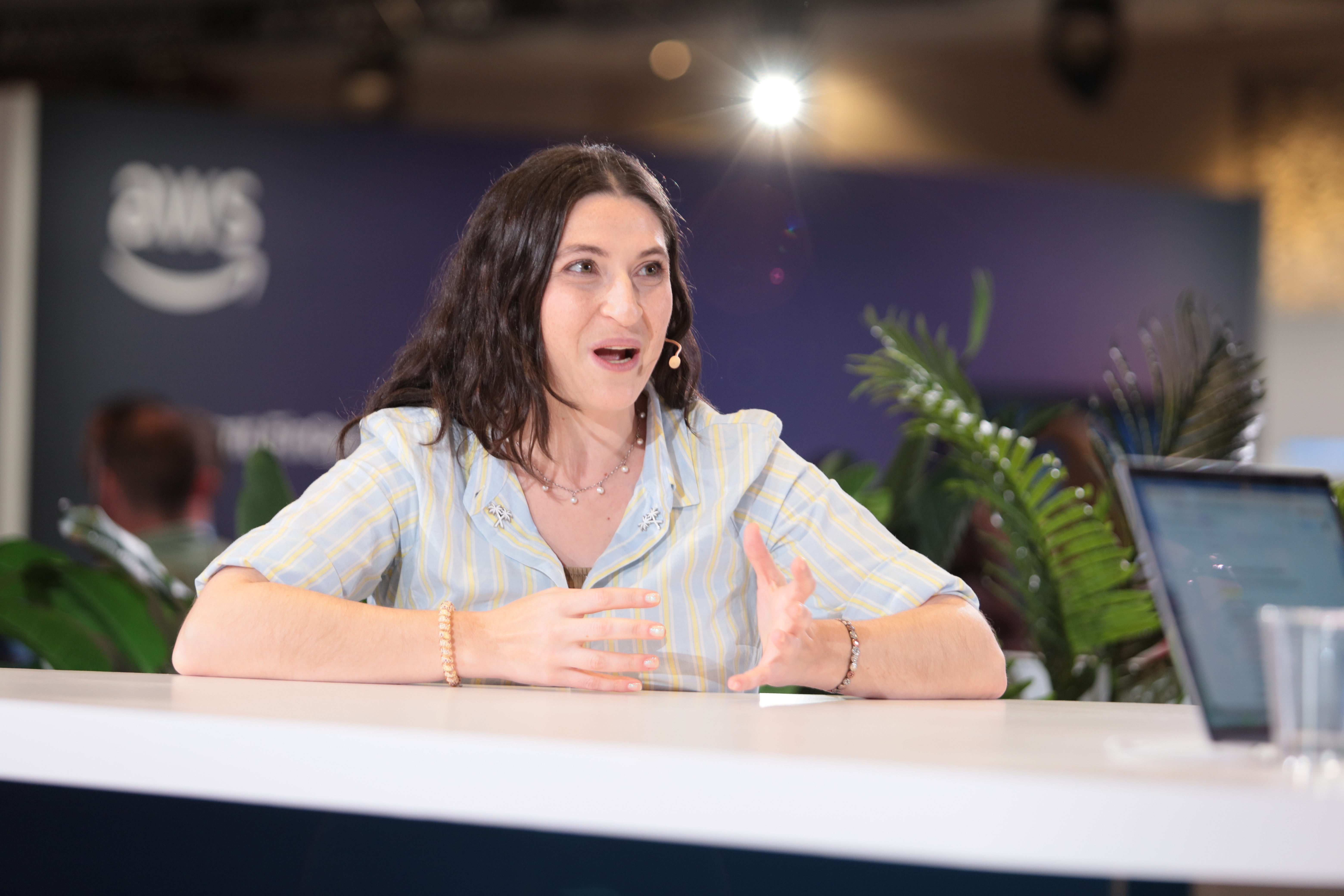
In this interview from FinOps X 2026, Victoria Levy, senior staff FinOps analyst at SailPoint Technologies, joins theCUBE's John Furrier and theCUBE Research's Paul Nashawaty to discuss how FinOps is evolving from cloud cost control into a discipline for governing AI value and business outcomes. Levy notes that while AI is moving faster than governance frameworks can keep pace with, the foundational principles of FinOps remain intact — it's the KPIs that need to change. She explains how token-based metrics, such as cost per token tied to specific business dri...Read more
exploreKeep Exploring
What is your reaction to the rapid growth of AI and the overall vibe and hallway conversations at FinOps X as the show wraps up?add
What are the key KPIs that should be tracked, and what infrastructure/architecture changes need to be put in place, as AI architectures shift to distributed, hybrid, Kubernetes-based “AI factories” and new data environments?add
How should organizations measure the value or ROI of AI—will valuation metrics be outcome-based and specific to use cases rather than focused on cost savings?add
>> Welcome back to theCUBE live stream here in San Diego for FinOps X 2026. I'm John Furrier, your host of theCUBE with my co-host, Paul Nashawaty. We're breaking it down, wrapping up day two and a half of all the wall to wall action. And really the story here has been the growth of AI, building on cloud, getting the data, understanding the cost, mapping it to the value as the revenue and the value creation of generative AI is key and doing it all in a highly governed secure environment is a story. Our next guest is going to unpack that with us. Victoria Levy's here, Senior Staff, FinOps and Analysts at SailPoint. Company we've covered on theCUBE many times. Great to see you. Thanks for coming on.
Victoria Levy
>> Yeah, thank you so much for having me.
John Furrier
>> Okay. So I have to ask you, there's a very big engineering culture here and this community is growing super fast.
Victoria Levy
>> Yes.
John Furrier
>> It went from get hold of the cloud, understand cloud, little bit slower game compared to AI and that was fast in the cloud.
Victoria Levy
>> Oh, yeah.
John Furrier
>> Now AI's here, they got a new foundation. Tokenomics is here upon us. So you have this growth.
Victoria Levy
>> Yeah.
John Furrier
>> What's your reaction to all this here as we wrap up the show? The vibe, the hallway conversations, what's your take?
Victoria Levy
>> I think it's a huge change. And so some people are a little shocked still. We haven't accepted it yet, right? But I think everyone is still really excited because it is something that we're going to need because AI is moving so fast. We don't have as much time to build all of that governance and KPIs and stuff. So we really need to get going on it so we can come back and do some better governance, so.
John Furrier
>> Yeah. JR, I loved his keynote yesterday and today, but yesterday, one of the things that jumped out at me was, and it's very nuanced, but I'll just say it, he was very transparent about what he did and didn't know.
Victoria Levy
>> Yeah.
John Furrier
>> And that's a signal that there's a lot more work to do. And at the same time, we just had ScaleUps on and other folks. The AI architecture's changing on the infrastructure side. So it's not your yesterday's cloud architecture. You got AI factories, you got distributed computing. So you have now environmental places. Now it's distributed, hybrid, building on like Kubernetes. Now you have a whole nother set of data. What's your take on, one, those KPIs, what needs to get done, and then the architecture behind what needs to be put in place?
Victoria Levy
>> I think the fundamentals are still going to be the same from what FinOps does. So yeah, you're going to need your governance, but yeah, the KPIs are going to be way different. And so we have tokens, so people are going to come up with your cost per token, maybe tokens per, I don't know, whatever other business driver there is out there, right? And so it eventually will converge on things that are useful and I think those will be part of the new foundation and then we'll be able to build off of that and start building our practices internally, so.
Paul Nashawaty
>> So yeah, this is interesting because I like where you were going with that. There's a conversation that's about the evolution of the team, the team.
Victoria Levy
>> Yes.
Paul Nashawaty
>> It's changing, right? You mentioned it, you talked about how this is working. Engineering is part of the FinOps teams now and I would argue that it's always really been part of the FinOps team because execution of cost optimization comes with the shift left of having it done on the engineering side. But the building automation for FinOps really does come with a maturity of an organization.
Victoria Levy
>> Yeah.
Paul Nashawaty
>> What does that mean to SailPoint? What does that mean to you?
Victoria Levy
>> So I think it's important for maintaining the work that you've already done because if you don't have automation and you tell people to do some of the best practices and right size, that's only a one-time thing.
Paul Nashawaty
>> Yeah.
Victoria Levy
>> And so you need to implement that enforcement to make sure that the work you've already done stays there and then you can build on it and go do different things. And so yeah, like with AI, we don't know what it's going to be yet, but we're going to have to do something there.
Paul Nashawaty
>> Well, but looking at that, what are the metrics that are used to say, how do you measure success? So like if we don't know what it's going to be and we don't know what those metrics are, how do we even know what we're doing?
Victoria Levy
>> I think some of those best practices you can turn into metrics.
Paul Nashawaty
>> Okay.
Victoria Levy
>> So you can detect compliance with a policy. So if you know that this is waste in your environment, you detect that waste and then you can say it's only in this percent of our teams or something like that. And so if we come up with those metrics for AI, which we can, you can classify queries in terms of like useful ones or less useful ones depending on the output. And so that could be a new way of detecting that. And you can turn that into a KPI that, hey, there is some waste here that we can go and address, so.
John Furrier
>> Yeah. How has some of the financial side of it, even though it's engineering, because there is a financial component, seeing more DevOps DNA, if you will, in the community, but still you're measuring money, cost. Risk is a big deal. When I think governance, I think risk management and exposure, certainly with OpEx and black box, kind of . Right now it feels like, what's the bill? What's the check?
Victoria Levy
>> Yeah.
John Furrier
>> So talk about that impact and how people are thinking about that.
Victoria Levy
>> Yeah. So I think for FinOps, the name itself comes from DevOps so it's not financial operations and so it's about integrating that from the start. So yeah, we can kind of do that. When we move towards AI as well, we want to make sure that teams are thinking about it when they build their architecture so we don't have to go back and do the rework there. And so yeah, when it comes to AI and other things, sometimes it doesn't have all that transparency in it so you don't know if they've built it in there from the start. And so it involves working with the engineers and yeah, getting closer to them, so.
John Furrier
>> The thing I love about, is that the value is there, but when you get into these disciplines, we've heard on theCUBE here that, okay, this department, not my department or stay in your lane.
Victoria Levy
>> Yeah.
John Furrier
>> That's not the kind of mindset that we're seeing be successful. What's your thoughts on this kind of collaborative piece?
Victoria Levy
>> Definitely. I think everybody should be talking to everybody else because there's so much context about why your costs might be the way they are or why a team even built something. You might think that it's not efficient, but they might have another reason, like a security requirement and that's why they made it that way so that it's not waste. Maybe it's actually valuable. And so talking to them, yeah, you get that context to make better decisions.
John Furrier
>> And we're hearing tools are out there, but one guest said, "There's no one product yet." What does that look like here? If you can imagine going forward, there's got to be work because the demand's high, there's money on the table. What's your thoughts on platform versus tools?
Victoria Levy
>> Ooh, let's see. I mean, yeah, there's a ton of tools out there already, right? So if there's something that you need to get done, and you can't do it in-house, for sure you could get a tool. But I think going back to the collaboration stuff, a lot of it is built from the team internally. So if you don't build a good structure internally, a tool is not going to do anything for you. You need to take those insights and be able to implement them.
Paul Nashawaty
>> Yeah.
Victoria Levy
>> So.
Paul Nashawaty
>> We're finding in our research that many organizations are using, actually 75% of respondents in our recent research, 2025 research indicate that they're using six to 15 different tools to do management.
Victoria Levy
>> Yeah.
Paul Nashawaty
>> That's a lot of sprawl. And 54% of those respondents are indicating that they want to move towards in favor of a unified approach, right, to reduce the complexity, reduce all this. But it's very siloed right now and then... But like, when we look at this, jumping into SaaS versus jumping into AI, it's very different. Jumping into SaaS is much easier, right?
Victoria Levy
>> Yeah. Yes.
Paul Nashawaty
>> Jumping into AI, you have to kind of know what to do and the data has to be scrubbed and then there's pieces that go along with it. So optimization is kind of used here as a way to kind of understand the environment. What does this mean to you?
Victoria Levy
>> So yeah, I will say from an AI perspective, we don't get the same level of detail in the bill that we do get with cloud or even SaaS because they have all their skews.
Paul Nashawaty
>> Intentionally though?
Victoria Levy
>> Potentially, yeah. Like with tokens, they are kind of whatever-
Paul Nashawaty
>> .
Victoria Levy
>> Yeah, whatever it needs to be and the price can change and all of that. So yeah, I think there's a lot that could be discovered from the bill to be able to get to some of those insights-
Paul Nashawaty
>> Yeah.
Victoria Levy
>> But you might even be able to abstract it. It's like you know the cost of it, what's your output and make a metric from that as well, so.
Paul Nashawaty
>> Yeah.
John Furrier
>> Where are the gaps? Because the data center doesn't have the kind of tooling that say SaaS, you mentioned SaaS. Certainly cloud has had years to prepare to send telemetry and data and the kind of reporting needed, but it's almost like a Wild West one in AI generally, but on the data center specifically-
Victoria Levy
>> Yeah.
John Furrier
>> What tooling today is mostly, it's internal.
Victoria Levy
>> Yes, I would say so. There are some tools out there that can help, but yeah, it really is like an internal process to be able to do allocation and chargeback because you've already gotten the bill, finance has already done something with it, right? Accounting's amortized it. And so that's kind of almost not relevant. You can use it, but you have to build your own way of actually determining the true cost and what is waste in the environment, so.
John Furrier
>> And this conversation we've been having here is buy from a vendor or build your own. How do you think about that and how are people talking about it? Because it's hard. We saw with the cloud and people tried to build their own clouds.
Victoria Levy
>> Yeah.
John Furrier
>> Other big companies, they failed and the big hyperscalers won. Is that playing out here?
Victoria Levy
>> Yeah, I think in multiple ways. So for AI as well, people try to build their own models too, but that's a lot of work. So that's why we have the ones we have now. And then, when it comes to yeah, just tooling for FinOps, I was previously a build it yourself because of the ability to customize it to what you need to do and so that's always really useful. But I think tooling gives you somewhat of insurance, in a way, because they are responsible for maintaining it and double-checking the data flows and things like that. That takes a lot of work to get accurate information. And so your one person FinOps team isn't going to be able to do that versus a whole company maintaining that.
Paul Nashawaty
>> Yeah. I mean, and you're not in the business of building tools, you're in the business-
Victoria Levy
>> Exactly.
Paul Nashawaty
>> Of running your business.
Victoria Levy
>> Yeah.
Paul Nashawaty
>> Right. So let's talk about governance because AI now touches on so many different things, so many different areas. Governance can be supported through general organizational policies, but that's not good enough in most examples. So what does governance mean to you?
Victoria Levy
>> So governance is one of my favorite things.
Paul Nashawaty
>> Okay.
Victoria Levy
>> And so I think we can use kind of the same model that we have been using for FinOps and apply it to AI, and SaaS, and data center, and all of that too. I have an example. So you can kind of set a policy that's more general and then you can get specific in the process of how you meet that policy for all of those different scopes. So, for, let's say, the cloud: if you want to modernize your instances, oftentimes the vendors give you a discount for being on the newest thing, right? So your policy could be that you're on the most modern infrastructure as long as it gives you a benefit for cost, right? And so if there's no benefit, don't do it. And so you could do that with AI too. Is it worth it to go to the new model or not? If you're getting a benefit, then yes, you can do that and that complies with your policy.
Paul Nashawaty
>> Yeah.
John Furrier
>> I love policy based off, I was using an example earlier, not to date myself, but back in the early internet days when Cisco started and routing was here, you had shortest path, least cost. You're seeing similar things now here with model routing, also quality of service, differentiated services, all kind of rhymes. And so you can actually almost do that here by saying, okay, I want this workload because I know it's going to have a great payoff. This is actually policy.
Victoria Levy
>> Yes, for sure.
John Furrier
>> What's your thoughts on that?
Victoria Levy
>> So I think a lot of what we're doing, there's already stuff built there that we could just take and use. It's just the specifics that are different, but we don't have to reinvent governance and policy. Again, we can use what we already have and just see how it applies to this new technology.
John Furrier
>> What's your thoughts on like... Good to have experts here like you, get all my questions answered, like great, while we're streaming. The data management discipline's been around for a while. We've seen that in a category, I won't say niche, but it's a category, but that's gone mainstream. Governance has gone mainstream.
Victoria Levy
>> Yeah.
John Furrier
>> There's no doubt about it. We've been talking about it for eight months straight. I've said it more on theCUBE in the past eight months than 15 years, but governance is a key ingredient, security, agentic, all this stuff here. How has data management changed and who can cross that chasm-
Victoria Levy
>> Oh.
John Furrier
>> Either from the modern legacy players to AI because you're seeing a lot of people kind of moving over, landing, some not, and new entrants coming in natively. Break that out for us, in your opinion.
Victoria Levy
>> So I guess from my perspective, I think if we're talking about data, in order to have that context in your agents and models, you kind of have to have the right data from the start. So yeah, even if you're using a tool to manage all of that data, a lot of the information you would want might still be in the engineer's head. And so how can we get them to document what they have? I know this is going backwards, right?
John Furrier
>> Yeah. Yeah.
Victoria Levy
>> They might be able to use AI to help them document it, but we need to get that information in order to be able to use it in our tooling, so. Yeah.
John Furrier
>> So get the data right?
Victoria Levy
>> Yes, definitely.
John Furrier
>> All right. So final question. Next year, what do you see the progression, seeing the signals, the naming, the foundations, which I think is a great call. You decouple them, different groups, different domains, different working groups but cohesive, but connected.
Victoria Levy
>> Yes.
John Furrier
>> What's your prediction? What's your thoughts for what we might see evolve between now and next year?
Victoria Levy
>> I think better concentration on what value actually means, because especially in the AI world, we're not talking necessarily about just costs anymore. So we've done that on the FinOps side. FinOps is more about not just saving money, but about making better business decisions and adding to that business value. And so with AI, if you don't always have that cost lever to pull, it really is about the outcomes that you're getting from it. So I think we're going to see more about how people are able to get that ROI on AI and probably more specifics on tasks that we can replicate at different companies to be able to govern it better and optimize.
John Furrier
>> So the valuation metric will be outcome, use case specifically?
Victoria Levy
>> I think so. I hope so, but yeah.
John Furrier
>> Yeah. That's the end. That would be the perfect scenario versus bunch of data reporting.
Victoria Levy
>> Right.
John Furrier
>> Victoria, thank you for coming on-
Paul Nashawaty
>> Thank you, Victoria.
John Furrier
>> And closing out our show here.
Victoria Levy
>> Yeah.
John Furrier
>> You're our 27th interview. This has been a great show, content-wise. It's been phenomenal.
Victoria Levy
>> Amazing.
John Furrier
>> We learned a lot. We shared a lot and we've got a big corpus for theCUBE AI. So thank you for coming on.
Victoria Levy
>> Awesome. Thank you so much.
Paul Nashawaty
>> Thank you.
John Furrier
>> All right. That's a wrap here for theCUBE. I'm John Furrier with Paul Nashawaty doing our part. A lot of content, a lot of expert commentary, insights, analysis, of course, a lot of opinion and we're happy to share that with you. Thanks for watching theCUBE.