We just sent you a verification email. Please verify your account to gain access to
FinOps X 2026. If you don’t think you received an email check your
spam folder.
In order to sign in, enter the email address you used to registered for the event. Once completed, you will receive an email with a verification link. Open the link to automatically sign into the site.
Register for FinOps X 2026
Please fill out the information below. You will receive an email with a verification link confirming your registration. Click the link to automatically sign into the site.
You’re almost there!
We just sent you a verification email. Please click the verification button in the email. Once your email address is verified, you will have full access to all event content for FinOps X 2026.
I want my badge and interests to be visible to all attendees.
Checking this box will display your presense on the attendees list, view your profile and allow other attendees to contact you via 1-1 chat. Read the Privacy Policy. At any time, you can choose to disable this preference.
Select your Interests!
add
Upload your photo
Uploading..
OR
Connect via Twitter
Connect via Linkedin
EDIT PASSWORD
Share
Forgot Password
Almost there!
We just sent you a verification email. Please verify your account to gain access to
FinOps X 2026. If you don’t think you received an email check your
spam folder.
In order to sign in, enter the email address you used to registered for the event. Once completed, you will receive an email with a verification link. Open the link to automatically sign into the site.
Sign in to gain access to FinOps X 2026
Please sign in with LinkedIn to continue to FinOps X 2026. Signing in with LinkedIn ensures a professional environment.
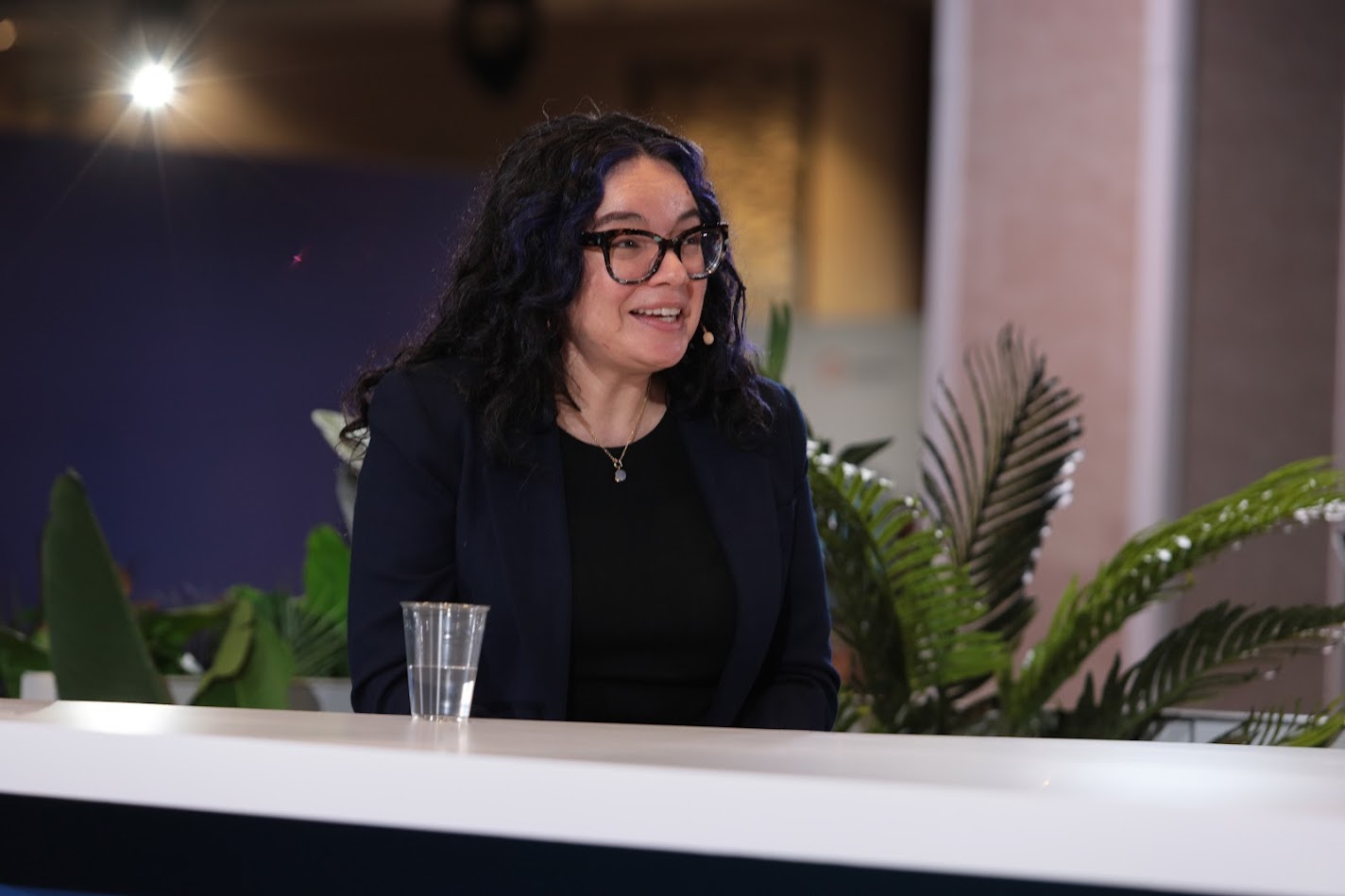
In this interview from FinOps X 2026, Deeja Cruz, senior FinOps analyst at Datadog, joins theCUBE's John Furrier and theCUBE Research's Paul Nashawaty to discuss how FinOps is evolving from cloud cost control into a broader discipline for managing AI value. Cruz frames the shift as a natural evolution — new AI service providers bring fresh pricing schemas, usage types and taxonomies, but the core questions remain: what is being used, for what purpose, how much does it cost and how can it be optimized. She makes the case that strong attribution tagging is the ...Read more
exploreKeep Exploring
How are adjacent functions like FinOps, ITAM, and SAM interacting and collaborating—who owns which responsibilities—and how is this playing out in your company and the broader community?add
How does your organization determine who "owns" new AI models and the associated cloud spend — was that assigned top-down by executives or did ownership evolve organically (for example via FinOps practices or an AI developer experience team)?add
How are FinOps, security, and compliance coordinated when deploying AI agents that access heritage/legacy data sets—balancing cost, security, governance/compliance—and how do you rein in the resulting operational chaos?add
>> Welcome back to theCUBE's live stream here in San Diego for FinOps X 2026. I'm John Furrier, host of theCUBE, with my co-host, Paul Nashawaty with theCUBE Research. Deeja Cruz is here, senior FinOps analyst at Datadog. Datadog knows a lot about SaaS, and now AI's here. Deeja, thank you for coming on theCUBE here at FinOps X.
Deeja Cruz
>> Thank you so much for having me.
John Furrier
>> So the world's talking about token costs, you hear a lot about telemetry, new signals are coming in from non-deterministic workflows. FinOps has evolved. SaaS has been mature from a cloud standpoint, still a lot of work to do there, but now AI's come in. First question is, how do you view that world now? What's changed the most?
Deeja Cruz
>> I think what's changed the most is that we have a new set of vendors that we are working with or data sets. So we've got new usage types, new pricing schemas, and just a new taxonomy to learn as FinOps practitioners. And so the nice thing though, at least in my opinion, is that a lot of the skillset is still the same. We're still looking at what are we using, what are we using it for, how much does it cost, and what's the best way to optimize it. So it's new and exciting, but it feels like a natural evolution in the space.
John Furrier
>> The theme we're hearing yesterday, we just heard from Fidelity HSBC, is that the comment was how you come into the cloud mattered during the cloud era. You guys did that flawlessly, in my opinion. Congratulations. But as people come into the AI world, how you land, and there's a lot of learnings from cloud, what's different between cloud, SaaS, and now AI world? Because how you get in there, and what can people learn from cloud?
Deeja Cruz
>> I think one of the biggest takeaways is make sure that your tagging is good. And what I mean by good is make sure you have a high coverage in terms of your attribution tags. It's often overlooked. We want to jump right to the more exciting things in FinOps, but having good tagging on your data will unlock your ability to allocate it and be able to answer questions that executives are asking, be able to optimize it, be able to know who is using what. So I would say the biggest takeaway that I can give is don't neglect your tags.
Paul Nashawaty
>> That makes a lot of sense. I think that you touched on something that is interesting to me. Datadog has an incredible ecosystem, a lot of ecosystem partners, a lot of relationships. You mentioned a lot of the skills stay the same, which is interesting to me because when I think about AI and I think about AI automation versus human interaction, there's a human judgment piece that goes into the equation. There's also different ways of doing things. So the kind of change in behaviors in your role, are you seeing this in some of your deployments or some of your experiences?
Deeja Cruz
>> Absolutely. So I'd like to share a great example from our team. So a colleague of mine identified this significant cost savings opportunity that required a configuration change for a storage bucket. And he was like, "Well, I'm not a developer, I don't know how to write code, but I know conceptually what needs to happen." And so he went and used an LLM to write a PR with the necessary changes in the code base, and then he contacted the bucket owner, and he sent that PR over, got approved, merged. And then when the cost data came in a few days later, we saw material savings from that change. And that was so cool. And I think that's a perfect example of how practitioners can use these AI tools to enhance theirselves.
Paul Nashawaty
>> What a great example. That's a great example. I think it's really powerful. And that means that the FinOps roles and skills are also pivoting, right?
Deeja Cruz
>> Yes.
Paul Nashawaty
>> So if you're a practitioner or even if you're at the buying level, there's a different look and feel on what you should be looking at when it comes to AI and FinOps. Is that accurate?
Deeja Cruz
>> Absolutely. I mean, I would encourage all FinOps practitioners to get really comfortable with these tools and just experiment, figure out a way that you can use these tools to take your domain expertise, because we're the practitioners, we're the subject matter experts, we have all this incredible knowledge, and these tools can really help us deliver value for the organization faster.
John Furrier
>> How do you build governance across and coherence around the cloud across all the licensing options that are out there? Governance has come up a lot. What's your thoughts on that? You mentioned tag, which is great, but now the governance on the same vein fits in there.
Deeja Cruz
>> So we definitely let our developers experiment and play and figure out what tools do they like and what tools are the best tools for the job. One example that I actually just saw earlier this week while I was here at the conference is that one of our large platform teams did this really cool optimization where now they're selecting the optimal model for the use case. So they're looking at what is this workload, or what is this task, what is this thing that I'm trying to do, and how can I pick the best model? I don't always need to pick the most expensive or the fastest model. And I think they hand rolled that, but now we're looking at like, oh, wow, how can we actually put that in place to have a multi-model governance strategy?
John Furrier
>> Yeah, a lot of people talking about the adjacencies, FinOps, the classic role, and you got ITAM, and you got SAM. They're all kind of related now, they're all coming together, and there's an intersection point, but you still have the roles. How is that playing out in the community and within your company? Because there's teamwork involved, there's a lot of collaboration required.
Deeja Cruz
>> Absolutely.
John Furrier
>> And silos need to be broken down in some companies, some are more advanced than others. We're hearing cloud players are more advanced than some other enterprises that aren't SaaS-based. So how is those other adjacencies? Now there's a little collaboration theme going on. What's your take on that?
Deeja Cruz
>> I think fortunately for us collaboration is really high at Datadog, so we don't suffer from the silo issue as much, but I would say it's figuring out who owns what, and then who's the lead on a particular effort, and then whose support. So I really like when our team, our FinOps team gets to be a strong supporting role. We can bring the data, we can bring the experience, the know-how. And if it's something that IT owns or procurement owns, we can just be a strong partner there, and I would encourage other companies to do the same. This is a team sport.
John Furrier
>> We've heard from other companies here that have customers say, when Claude came in, "Who owns Claude?" Everyone's like, "Me." So you have a lot of new things coming in where we heard a lot of models get updated quickly. So there's a lot of new inbound opportunities to figure out who owns it. How do you guys resolve that? Is it like you're on the room and say, "Who wants it?"
Deeja Cruz
>> We did have that as well. We have an AI developer experience team in house. And at first, they owned it, which made sense, and then they said, "Hey, we're really concerned about the spend." And that was right around the same time that finance came to us and said, "Well, you guys own cloud spend, so do you own this too?" And we said, "We could, sure." So then we reached out to the AI developer experience team, and we started chatting, and it turns out we wanted the same thing. And so we have this partnership going on with them where they're helping to implement some of those governance tools on their end, and they're working with the devs, and they're hearing what's important to them. And then we're owning more of the forecasting side and understanding that piece.
Paul Nashawaty
>> Is this an exec-down approach, or is this more of like, did it organically change with modeling towards FinOps approaches? How did it change in your organization?
Deeja Cruz
>> Honestly, I would say similar to the cloud, it's if the spend increases rapidly enough, if the spend is significant enough ...
Paul Nashawaty
>> It gets eyes on it.
Deeja Cruz
>> It does, it does, and that's just the truth. So I would say there was a lot of excitement around all of these AI tools anyway. We're a very engineering-first type of organization, and then so they were already playing around with all of these different tools, and then finance came to us, and they said, "Hey, we'd like to get on top of this before it's a problem." And thankfully, we did start getting some things in place. Everyone saw the graph at the keynote, we're just .
John Furrier
>> Yeah, we're on that curve.
Deeja Cruz
>> Everyone is.
John Furrier
>> I mean, it's exciting because there's values being created, cost takeout, revenue opportunities, because cost savings here shifts dollars around, but you got to rein in the chaos. So we're in the managed chaos phase. How do you guys think about this? What's some of the conversations you have as a team? We all look at each other saying, "Hey, we're arm in arm." How do you guys look at this? Because it's kind of managed chaos, but it's a good thing.
Deeja Cruz
>> Right. It's definitely an exciting time. I think right now we're trying to explore the data. What kind of usage data can we get? What's the metadata in that? Because these companies are so new, their cost and usage data sets aren't necessarily as robust as the hyperscalers, although I'm sure they will be in no time. And so we're looking at what are these user profiles, how are people using it, what's the average cost per user, what's the average daily number of users, and how are those trends changing over time?
Paul Nashawaty
>> So that's interesting. To piggyback off this question, the partnership between FinOps security and compliance comes together here, especially when you started forming these AI agents and you're starting to attach to data sets that maybe are heritage data sets, they have different rules and regulations and governance and compliance around them. Then there's a cost factor, there's a security factor. How is this all happening dynamically? And to John's point, how do you rein in the chaos?
Deeja Cruz
>> Yeah, I would say our security team does a fantastic job. We definitely are cautious when we roll out access, access to your various systems that, to your point, may have sensitive information. So our security teams, we let them take the lead there. And then that's, I think, going back to that example that I shared earlier where FinOps is happy to play a strong supporting, even when we're not the lead, we're just happy to be part of the team.
John Furrier
>> Deeja, great to have you on theCUBE. Thanks for sharing how you guys are approaching it. Obviously engineering first, that's refreshing because this is a great time to be in engineering these days with all the AI work. Final question, what's your reaction to the keynotes, the vibe here at the show? What's the big story coming out of this event, either highlights of the products, changing community, what's your observations of this show this year?
Deeja Cruz
>> Yeah, I mean, I love this event. I've been to every single FinOps X event.
Paul Nashawaty
>> Me too, me too.
Deeja Cruz
>> So right on. I would say, I mean, obviously AI is the biggest topic here. I think everyone's really excited about the Tokenomics Foundation that was recently announced, and I also would like to plug the FOCUS spec. I'm a contributing member to FOCUS.
Paul Nashawaty
>> Very cool.
Deeja Cruz
>> I'm on the steering committee, so I encourage everyone to take a look at that. I think we've seen a lot more adoption and excitement around that as well. So I think everyone's just excited for the future and to see where this all goes.
Paul Nashawaty
>> Common language.
John Furrier
>> The evolution of the model companies too are going to get better.
Deeja Cruz
>> Absolutely.
John Furrier
>> They have to speak the common language. Thanks for coming on theCUBE. Really appreciate it.
Paul Nashawaty
>> Thank you .
Deeja Cruz
>> Thanks so much for having me.
John Furrier
>> I'm John Furrier with Paul Nashawaty here day two of theCUBE's coverage of FinOps X. We'll be right back.