We just sent you a verification email. Please verify your account to gain access to
FinOps X 2026. If you don’t think you received an email check your
spam folder.
In order to sign in, enter the email address you used to registered for the event. Once completed, you will receive an email with a verification link. Open the link to automatically sign into the site.
Register for FinOps X 2026
Please fill out the information below. You will receive an email with a verification link confirming your registration. Click the link to automatically sign into the site.
You’re almost there!
We just sent you a verification email. Please click the verification button in the email. Once your email address is verified, you will have full access to all event content for FinOps X 2026.
I want my badge and interests to be visible to all attendees.
Checking this box will display your presense on the attendees list, view your profile and allow other attendees to contact you via 1-1 chat. Read the Privacy Policy. At any time, you can choose to disable this preference.
Select your Interests!
add
Upload your photo
Uploading..
OR
Connect via Twitter
Connect via Linkedin
EDIT PASSWORD
Share
Forgot Password
Almost there!
We just sent you a verification email. Please verify your account to gain access to
FinOps X 2026. If you don’t think you received an email check your
spam folder.
In order to sign in, enter the email address you used to registered for the event. Once completed, you will receive an email with a verification link. Open the link to automatically sign into the site.
Sign in to gain access to FinOps X 2026
Please sign in with LinkedIn to continue to FinOps X 2026. Signing in with LinkedIn ensures a professional environment.
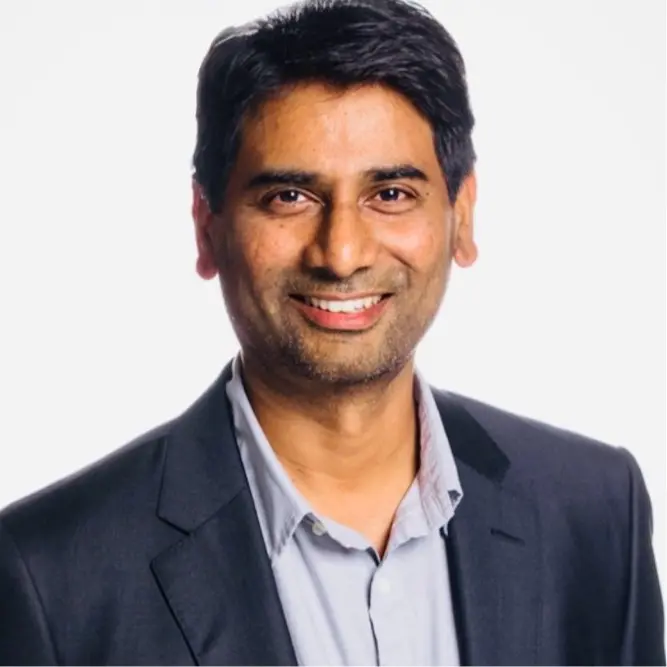
In this interview from FinOps X 2026, Harish Doddala, senior vice president and general manager at Harness, joins theCUBE's John Furrier and theCUBE Research's Paul Nashawaty to discuss how AI is compressing a decade of cloud FinOps evolution into months. Doddala explains that what took 15 years to establish in cloud cost discipline is now unfolding in the span of months, leaving enterprises scrambling to attribute token spend, identify who consumed what and govern AI usage before costs spiral out of control. He argues that effective AI cost management requir...Read more
exploreKeep Exploring
How did theCUBE open their live stream at FinOps X in San Diego 2026, including the introduction of Harish Doddala?add
How are organizations handling the rapid rise of AI-related costs—particularly cost attribution, optimization, and governance—and do you view your platform as the "harness" for agents?add
How complex is it to trace and optimize token consumption, session costs, and model invocation in AI systems—can you scope that complexity and describe what is being done to address it?add
>> Welcome back to theCUBEs live stream here at the FinOps X in San Diego 2026. I'm John Furrier with my co-host, Paul Nashawaty, with theCUBE Research, breaking down all the action and the analysis around the FinOps and the Tokenomics new foundation that was launched here today. As the world thrives forward with AI, from AI infrastructure to AI applications, the costs are front and center because the value is being realized. Now they're trying to put the cost, figure out the total cost of ownership. All this still, while the developer market explodes and expands to any AI builder. Harish Doddala's here, general manager and SVP at Harness, a company we've covered many times on theCUBE. Great to see you. Thanks for coming on theCUBE here at FinOps X.
Harish Doddala
>> Great to be here.
John Furrier
>> So cost is at the center of the proposition. We've seen this movie before in the cloud. Paul's documented it. He's got stats, he's got surveys. But it was a slower roll up as Kubernetes and containers, and all those cloud native architectures evolve. That's now the foundation. AI is coming in super fast. So what's going on? People want to know who spent that money? What is that for? Was that from engineers? Was that from users? This is the C-suite view. Meanwhile, the tech scene is exploding because there's so much innovation. How are you guys handling this? And by the way, everyone uses the word Harness all the time in every agent conversation. Are you guys the harness of agents? Only kidding, but what's your take on this world right now?
Harish Doddala
>> Yeah, so we do consider ourselves to be the harness of agents. Essentially, if you think about what an agent is, right. Agent is... does reasoning tasks, and sometimes we want to make sure that it's doing the right thing. It's secure, it's cost-efficient, and it has the right agent harness, if you will, to get the tasks done. So that's kind of how we look at it. Now, in terms of the arc, cloud basically went through this arc for the last 15 years.
John Furrier
>> Sure.
Harish Doddala
>> Right. Now, FinOps, the whole discipline got created in this time period in the last 10 or 15 years. AI, it's basically all of this is happening in months. You don't have the same luxury of time. The costs are already started to explore. So companies are sort of looking at it in terms of where are the costs going? How do I... What do I attribute that cost towards? How do I optimize those costs and ultimately govern those costs, right? So the whole arc is shrinking in months, essentially, when you compare that to what cloud went through.
John Furrier
>> I remember the AppDynamic days, not to throw that into the mix, but there was some heritage with the founder who I've interviewed. That was a really application performance management phase was an early software concept. In a way, we are living that right now. What's the telemetry? Not a lot of people are sharing their telemetry data. Common language with focus.
Harish Doddala
>> Yeah.
John Furrier
>> These are really big ideas happening right now. What's this look like? How do people measure? What is your view on this? Because you got to measure. You can't put a value on something you don't measure.
Harish Doddala
>> Absolutely. Absolutely. I think ultimately it comes down to tying the cost economics to usage.
John Furrier
>> Yeah.
Harish Doddala
>> Right. And as you rightly pointed out, AppDynamics, the... A lot of us come from the DNA. A lot of us came from AppDynamics. So we have that telemetry, the absorbability background. So with... Ultimately, when you want to get down to outcomes, you want to be able to understand what the utilization and the usage is. And then take all of that data and tie it to costs. Only then we do go beyond what you're getting from APIs, what you're at from... what are you getting from broad connectors, because you want to know exactly how much did that session cost you, how much did... how many tokens were consumed in that session, who was... what model was invoked. So you can go back and look at it holistically and optimize those sessions.
John Furrier
>> How complex is it? Scope the complexity because in all these ways, there's always complexity, but also abstraction with software. I mean, it makes the old software telemetry look really trivial, at least my opinion. What is your opinion on this? What's the complexity? Can you just share the scope of the complexity and what you guys are doing?
Harish Doddala
>> Yeah, absolutely. I think when you think about traces, I mean, there is... token consumption at the end of the day is something which happens at a much smaller scale as compared to the cloud, but it happens at massive volumes. Cloud was about optimizing an instance about trying to figure out what... unattached volumes and all those things. But in this case, the token unit itself might be small, but it's being consumed at massive scale. So when that is not... when that needs to be mapped to sessions, it needs to be mapped to spans. You need to be able to get that millisecond and second granularity for you to understand exactly what is really going on, like which model is being invoked.
Paul Nashawaty
>> So models are changing and rapidly kind of moving away from what traditional infrastructures look like before, right. And this is like a different approach when you're trying to understand the cost, you're trying to understand... because you had a longer runway, so to speak, historically. Now it's much shorter. And also we're seeing organizations are measuring production or productivity based on usage of tokens, right. That's not a good measurement either because it's like it's just burning tokens for no reason. What are your thoughts around these changes, and how does automation play into this as well?
Harish Doddala
>> Yeah. So the first step is to start gaining adoption across all the users. It's important to gain adoption, but then token... token maxing almost is becoming a negative term.
Paul Nashawaty
>> Yeah, yeah.
John Furrier
>> It is.
Harish Doddala
>> Yeah.
John Furrier
>> It has been.
Harish Doddala
>> Yeah. And people are starting to gravitate towards like, what does... how do you map token maxing to outcome maxing? So it doesn't matter if the users sort of get access to all the tools. What are they doing out of it? What are the high-value use cases that they're working on? How is it meaningfully moving the needle for the business? I think that's what is important. And when you look at it from a unit economic standpoint, like what are the use cases it's driving, whether it's support use cases, whether it's like making workflows more efficient, that's where companies want to get to.
Paul Nashawaty
>> So a lot of practitioners are saying, like the big items, the big achievements are kind of gone, right. And they want to understand what optimization really wants... what it looks like. So what's left that's granular code level that requires automation? What's needed at that level at this point?
Harish Doddala
>> Yeah. So when we think about optimization, the top three things that we are seeing across our customers is basically the following. We're looking at... When you think about like which model is the agent invoking? Is it like going through these retry loops several times to like come up with the same answer, and is it like... do we have the right kind of caching, the right kind of token compression, and so on in place? So basically model selection, retry loops, and token compression. Those are the three aspects that we see to a large extent that customers are experiencing pain in. So the optimization essentially has to map to that. How do you figure out like what model could be applicable for that use case? In some use cases, like for example, we had a customer who was talking about like fraud detection. Now fraud detection, you need to get like millisecond-level granularity to be able to figure out if this is fraudulent or not.
Paul Nashawaty
>> Right.
Harish Doddala
>> So you can't have an analytical model that's pinning in the background to be able to answer this use case. At the same time, if you're investigating an incident, the incident can basically have like more of an analytical model. So it's really trying to figure out what bag of use cases maps to what models.
Paul Nashawaty
>> Yeah.
John Furrier
>> On the blockers in this market, because FinOps is exploding, got Tokenonomics Foundation, what are some of the blockers or to-dos that need to be worked through? How would you stack rank that? Because it seems to be really kind of stage zero. What's going on is in the tokens and the infrastructures today? What are the other blockers that you guys are seeing with your customers?
Harish Doddala
>> I think one of the blockers that we see is really, and I was just talking to a customer this morning who was mentioning, "I just want to know, like there's a sprawl of usage across the company today. I don't have it all in one place. I want to start by centralizing all of that information. I want to understand exactly who's using what. What AI providers are they using? Are they using it from different applications, different SaaS tools? What are they doing with it?" I think that's one of the main starting points to understand what is all of that. And the second thing is for them to be able to like attribute those costs, because for them to be able to optimize to your earlier point, they need to know who's spending what, like which team, which developer, and then what use cases they are. So right now, I think the problem is a little bit of like blind spots in some of these things, where trying to understand, like where is all the spend, like where is the sprawl, and where is the sprawl across all the use cases and the applications. So that's where most companies are starting with.
Paul Nashawaty
>> That makes sense. I understand that. But then, when you apply AI use cases on top of it's almost like there's an initiative to push AI into everything. Where does AI not make sense for FinOps?
Harish Doddala
>> That's a good question. So let me put it this way. I think at the end of the day, there's a lot of use cases which is... where AI might be very useful for, which is top of mind. For example, reporting, access to data-
John Furrier
>> Sure....
Harish Doddala
>> explaining what you're looking at on the screen, for example, maybe trying to get to that first level of understanding what the anomalies are. Those are all like low-hanging fruit kind of use cases, right. But when you get to the next level of use cases, where you want to actually suggest what model is or for what workload, you want to figure out exactly how much to commit to. How do you like predict what your usage might be? You can't leave that completely to an agent.
Paul Nashawaty
>> Right.
Harish Doddala
>> Those are sometimes irreversible decisions as well because it has an impact on the performance and it has an impact on the quality. So those are some use cases which I wouldn't say it doesn't qualify to be AI, but needs to have human-in-the-loop.
Paul Nashawaty
>> Human-in-the-loop is still evolving.
Harish Doddala
>> Yeah.
Paul Nashawaty
>> Yeah.
John Furrier
>> So I got to ask you, just to wrap up, is on your vision with Harness, you guys are in the arena, you're seeing all the action with customers. Where do you see the puck going, and what are you doing for customers specifically to help them? Because everyone that's winning is leaning in, and it's a frontier position because it's pain and suffering, but the fruits of the labor, like cloud native-
Harish Doddala
>> Absolutely....
John Furrier
>> is huge. What's your vision on this?
Harish Doddala
>> So I'll mention two things. At Harness, our mission has always been putting developers front and center. We are a software at every lifecycle company, and we are the AI for everything after code. So we believe that developers are really integral to be able to make those changes and be effective in terms of reducing and optimizing those costs. The second thing I'll mention is that reporting and being able to slice and dice the costs is becoming almost commoditized. The next frontier is to be able to optimize those costs, but it's also to be able to like outcome max versus token max. So it's sort of trying to understand what the use cases are, how do you drive unit economics, and then how do you drive optimization and automation? So those are, I would say, like developers being front and center and empowering them to be able to take those actions, and two is for them to be able to optimize and gain efficiencies.
John Furrier
>> It's interesting. Paul and I were talking here at the show, as well as on the research side is that you're starting to see the multidisciplinary blending. You got to be a builder, operator, and an investor. And an investor mindset is not like writing checks. You got to think like, "Okay, I need to use that cash." Optimization is clear ROI on that sign of... on that flywheel. You kind of saw it at DevOps, but from an IT perspective, just your reaction to that, it's very entrepreneurial thinking, but it's also empowering.
Harish Doddala
>> Absolutely.
John Furrier
>> What is your opinion on this?
Harish Doddala
>> Yeah. So when we ask these questions internally, like for example, we're talking about adoption across our engineering organization, the question on our CTO's mind is not only about adoption, but it's about efficient adoption, right.
John Furrier
>> Yeah.
Harish Doddala
>> And from a financial standpoint, it's about predictability and driving unit economics and the right kind of capital allocation. And from a business and a product standpoint, it's to your point, like how do you drive the right outcomes and the right financial outcomes and make sure that you're getting more dollars for the dollars that you invest in that. So I think those are sort of the three buckets in which how we think about it.
John Furrier
>> Well, Harish, thanks for coming on. And of course, the word Harness is becoming a verb. You got to have that harness moving the workloads.
Harish Doddala
>> Absolutely. -
John Furrier
>> Congratulations. Thanks for coming on theCUBE.
Harish Doddala
>> Thank you.
John Furrier
>> Appreciate it.
Harish Doddala
>> Appreciate it.
John Furrier
>> I'm John Furrier with Paul Nashawaty here. We're day one. We had day zero yesterday, breaking it down before the keynote, kind of pregaming on theCUBE here. The data's coming out. You're seeing Agentic and Gen AI driving the FinOps category while Tokenomics Foundation is being established. The gas to the car, as we've been saying here in theCUBE. More coverage after this break.