We just sent you a verification email. Please verify your account to gain access to
FinOps X 2026. If you don’t think you received an email check your
spam folder.
In order to sign in, enter the email address you used to registered for the event. Once completed, you will receive an email with a verification link. Open the link to automatically sign into the site.
Register for FinOps X 2026
Please fill out the information below. You will receive an email with a verification link confirming your registration. Click the link to automatically sign into the site.
You’re almost there!
We just sent you a verification email. Please click the verification button in the email. Once your email address is verified, you will have full access to all event content for FinOps X 2026.
I want my badge and interests to be visible to all attendees.
Checking this box will display your presense on the attendees list, view your profile and allow other attendees to contact you via 1-1 chat. Read the Privacy Policy. At any time, you can choose to disable this preference.
Select your Interests!
add
Upload your photo
Uploading..
OR
Connect via Twitter
Connect via Linkedin
EDIT PASSWORD
Share
Forgot Password
Almost there!
We just sent you a verification email. Please verify your account to gain access to
FinOps X 2026. If you don’t think you received an email check your
spam folder.
In order to sign in, enter the email address you used to registered for the event. Once completed, you will receive an email with a verification link. Open the link to automatically sign into the site.
Sign in to gain access to FinOps X 2026
Please sign in with LinkedIn to continue to FinOps X 2026. Signing in with LinkedIn ensures a professional environment.
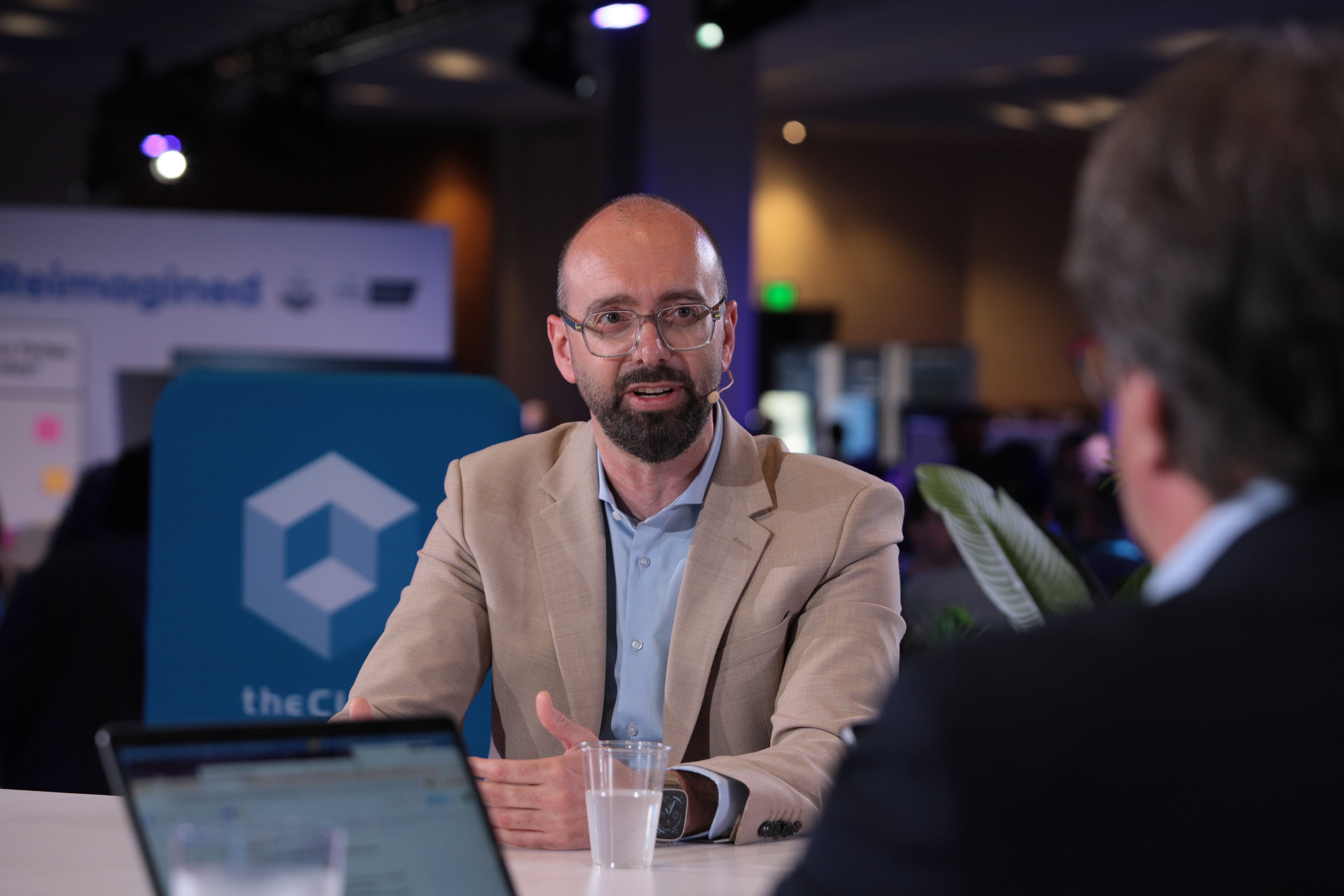
In this interview from FinOps X 2026 in San Diego, Marco Meinardi, vice president analyst at Gartner, joins theCUBE's John Furrier and theCUBE Research's Paul Nashawaty to discuss how FinOps is evolving from cloud cost control into a broader discipline for managing AI value across the enterprise. Meinardi explains that AI fundamentally complicates cost attribution — not only because agentic workloads can generate runaway token costs, but because end-user interactions with AI applications now directly influence spend outside the organization's control. He high...Read more
exploreKeep Exploring
What new challenges does AI introduce for FinOps, cost attribution, and cost control compared with previous cloud and SaaS spending?add
What do executives need to put in place to credibly use FinOps to manage AI investments and connect those investments to measurable business outcomes and ROI?add
How are disciplines like FinOps, ITFM, and ITEM coordinating roles and responsibilities to handle metered SaaS usage, AI-driven labor costs, and executive profitability reporting?add
How will AI influence consolidation in the FinOps vendor landscape, and what effects will that have on the integration of cost tools with observability and LM (large-model) observability?add
>> Hello, I'm John Furrier with theCUBE. We are here live in San Diego for FinOps X 2026. I'm joined with Paul Nashawaty with theCUBE Research. As visibility at the cost for cloud have been going on, now the AI train is here. Cost visibility, how to get operations lined up to bring in the innovation is the number one topic. People will be talking about the vendors are here, the customers are here. They're trying to figure out how to be a leader. Our first guest to kick off our two days of coverage on opening night here is Marco Meinardi, VP analyst at Gartner. Marco, thank you for coming on theCUBE. Thanks for coming on. You're leading the Magic Quadrant, you got one coming up. Thanks for coming on.
Marco Meinardi
>> Yeah. Thanks for having me. Yeah.
John Furrier
>> All the suspects are here for the ranking. It is a hot market and cloud has kind of been the slow. Okay, we're going to get to ops, AWS cloud players, hyperscalers coming in, but the AI tokens kind of changes the conversation. Kind of the same game, but different acceleration. Adoption's different. It's faster. What are you seeing? What's different in getting a handle on costs?
Marco Meinardi
>> Absolutely. Well, beside all the things you said, I mean, I think we're dealing with a more complex problem than we had before. I mean, if you think about cloud spend and SaaS spend, we were dealing with spending sources where people in our organization, like people that we control, that we could influence. And that's honestly the reason why we were launching FinOps practices. But with AI, now we're dealing with spending sources that are even outside of our organization. And I'm not just talking about agents that have potentially endless loops of reasoning, right? We're also dealing with end users, our customers. And customers and how they use our AI application, how they prompt them is going to influence our costs. So we're dealing with the different problems that will require different solutions, first and foremost. And then of course technically we'll have differences in cost attribution. With cloud, we were kind of done with tags and a few other strategies that we had to use for shared resources, for example. And now with AI, we're kind of losing all of that. The metadata is not there. We have to build it into the application. We have to use instrumentation and telemetry to really manage that metadata and then use it to connect cost with business outcomes, right?
John Furrier
>> You've been doing cloud. Obviously cloud's been hot, but that's the cloud. AI's got a lot of on premises. The data centers are back. You're starting to see AI factories. The adoption in the enterprise by the users is clear. The ability to manage tokens inside the company is clear cost wise. Buy a server, a rack or super scale, super computer. And then finally, the third is that the crown jewels are in the enterprise, the data. So now you're seeing cloud and hybrid.
Marco Meinardi
>> Absolutely.
John Furrier
>> How has that changed your view on this?
Marco Meinardi
>> Well, for sure. I mean, there were years in which cloud was going to be the destination, the ultimate destination. And honestly, AI changed that. You're right. The crown jewels, regulation. I actually do not trust certain AI providers, right? Sure, they're going to make me sign a contract, but especially if I'm a foreign entity, my crown jewel is going to stay in my data center. So regulation and not cost is what's causing a lot of AI to remain on prem.
Paul Nashawaty
>> Yeah. Yeah. Marco, thanks for being here. This is great. It's a great show. It's super busy. This is, what, the fifth year FinOps X has been going on. This is probably the most exciting FinOps X I've seen so far and it's just opening night, so it's really exciting to be here. As John was saying, all the vendors are here. There's a lot of opportunity. Let's talk about the evolution because I think that's a big factor here. When you look at how FinOps has kind of evolved, it was all about sustainability. It was all about governance, compliance control, which still applies, but differently. Now with this little thing called AI popping into the picture, sustainability seemed to have kind of moved out the window. What are your thoughts around that? Because you look at the AI tools that are in place, that's all converging into different ways of doing business. What are your thoughts?
Marco Meinardi
>> Well, I mean, the evolution of FinOps was very much at the beginning was the practice that we're going to fix the problems. We had cloud chaos. We had ungoverned migrations. Lots of things were landing in the cloud, it shouldn't be there. And so the FinOps force was coming in to fix the problems, like firefighting approach. That was the initial one. That was good at that time, but then organizations started to wonder, why should I pay all this money to fix all these problems? Why don't I just prevent them? So one big change is the shift left approach. A lot of the vendors and a lot of the organization are demanding that, say why do I need to pay money to fix them? Can I just invest in prevention? And so that's why we're getting FinOps into the software development life cycle a lot earlier.
Paul Nashawaty
>> Absolutely, but you also touched on something earlier about, I want to call it, data sovereignty, right? That's a big factor here, too, because now there's this kind of divergence between using the hyperscalers for cost optimization for cloud, but now that the governance compliance regulations for data sovereignty, especially in Europe and Asia, you're seeing that's a big push. What do you think?
Marco Meinardi
>> Yeah. Well, sovereignty for sure is a concern, especially in that area of the world. Just mentioned, which is where I live, right? So absolutely, so that's a concern. Unfortunately, the technology divide is large and the US provider are so far ahead than any other company, at least in Europe, as you mentioned, that the choice is done. There's a lot of going on with sovereign clouds and all this initiative with partnership, which honestly are helping to protect certain aspects, but they're not going to solve the sovereignty problem end to end.
John Furrier
>> Executives, they're investing in AI. Clearly people are doing it. FinOps with cloud, just when sovereignty was getting solved, now you have AI sovereignty. So when an executive's asked you, "Hey, how do I put FinOps in place to manage credibly my execution?" Because you have cloud execution sovereignty, you see that now, but now AI is also an economy issue. I can actually make money with AI. So how do you view that executive question of what do I need to have in place for credibly managing it?
Marco Meinardi
>> Well, to have FinOps in place to manage AI, I mean, you absolutely need to have that capability of connecting AI investment to business outcomes, right? Which is a hard problem to solve. It's not a problem we're going to solve this year. We're going to take years to get there due to the increasing complexity we were just talking about because that is really what executives need to know to invest further in AI. If they are asked to do so, if they're willing to do so, they really need to know where are the results so that we can make hypothesis about future results and ROIs. That is really the credibility that FinOps can bring to executive conversations and strategic decisions.
John Furrier
>> So when you see conversations like, "Oh, my God, my token budget is out of control," and people are feeling that today. I met an executive, he said, "I hate the word tokenomics." I go, "Why?" He goes, "It doesn't measure the true cost because you got security and governance." So if something goes bad, there's kind of a cost of ownership, a hidden cost. What does your research show you around thinking around not just the cost of tokens? Short term problem, yes, but if an outcome is bad, a hack or say doesn't hit the value proposition cost over human labor, what's your thoughts?
Marco Meinardi
>> I mean, you still have tokens to pay in those bad outcomes scenarios you just described, right? You have a hack, you have a denial of service, all of a sudden the tokens are going up. Attribution. That's the key word because with attribution, you're going to be able to tie sources of spend spikes to initiatives and you're going to use AI also to work on augmenting the context. The context is going to tell you. By sourcing it from multiple systems, what was the source of that spike, right? So eventually you're going to be able to tell a lot more if you solve the attribution problem.
Paul Nashawaty
>> So what's interesting, though, is to build on that, what's really interesting is I was talking to one organization recently and they were talking about gauging their employees by the number of tokens that they were using. I'm thinking you're burning money just to see what your employers are doing. It seems like counterproductive to me. I didn't think that was the right approach, but let's talk about, Marco, I know you have the research focuses on the maturity model of FinOps and the impact of the SDLC and the software development life cycle. There's rules and guardrails and stuff that kind of come into play, right? When you look at the SDLC, you look at infrastructure as code for automation and AI, that kind of plays into it. And then there's also AI coding tools, right? So now we have professional developers and we have citizen developers and they're building code, but governance, compliance and regulations have to be taken into consideration. We talked about the token costs. Now what does that mean from an execution from a productivity perspective?
Marco Meinardi
>> I mean, that really changes the game. I mean, as we were saying before, I mean, shifting left is going to reduce the amount of work that will have to go into optimization, right? We don't have to fix bad decisions anymore if we're able to hijack those decisions in the very first place, right? That doesn't mean that we will not optimize anymore. Business demand will keep changing, right? Business requirements change, so we will still optimize, but for the right reasons and not simply to fix bad decisions that some developers made because they were just not aware of the financial implication of those.
Paul Nashawaty
>> Yeah. But I mean, you actually mentioned it on the maturity model. You were talking about the impact of the data that's behind it. You start using these applications to accessing heritage systems of record with new systems of engagement, right? These heritage systems of record, they're not built the way that the applications and these new systems of engagement are using that data. Is that a concern that organizations should have?
Marco Meinardi
>> Well, sure. That is something that, again, there's a lot of experimentation going on with AI and MCP to make the data available to the right system at the right time. It's always about augmenting context and making that context useful to support decision making and at some point automation. Because if we talk about agentic automation and AI remediation, that's something that still requires trust to be built.
John Furrier
>> Yeah, you guys do a lot of great work on the technology landscape. I want to talk about the landscape. We've seen managing hybrid workloads, software true ups, SaaS and AI workload, cost management, basically software estates. You get the full technology estate now at play because it's a systems, architecture. Are there adjacencies coming together? What's forming in the market? What's happening from a trend standpoint that you're seeing?
Marco Meinardi
>> Yeah. So I mean, it's mostly the several disciplines that have been historically looking at assets and finance. They're really coming together. And in the past we've seen a little bit of a friction and disciplines getting a bit defensive of their domain and rightly so. I mean, they absolutely have some specific knowledge and uniqueness about each domain, but more recently, especially with AI, we've seen really a lot of more collaboration forming and ITFM, ITEM really trying to define the roles and responsibilities, right?
John Furrier
>> Yeah. And SaaS got subscription, that's kind of going to metered.
Marco Meinardi
>> So yeah, ITEM doesn't know how to deal with meter usage, so that's why they call FinOps for help and vice versa, right? And ITFM is the same. ITFM wants to do executive reporting for profitability analysis, right? It's a different use case from FinOps, but it needs FinOps data in order to enable their use case and serve their audience. Similarly, FinOps needs to understand more about labor costs, especially now that there are AI agents that do some sort of act as digital workers. They need ITFM's help in order to understand the full picture.
John Furrier
>> Okay. Talk about your research. What are you working on now as the landscape's evolving and adjacencies are coming together. Where's that convergence? Where's the intersection? How are you looking at this show like FinOps X? How are you measuring the horses on the track? What's the criteria?
Marco Meinardi
>> Well, I'm currently working on ... We're about to kick off the work for the Magic Quadrant for, we call them, cloud financial management tools, but certainly they're evolving into larger strategic platforms that are going to allow these convergence to actually be implemented through tooling and not just through processes as we were talking so far.
John Furrier
>> And for companies trying to get your attention, because you're at the Magic Quadrant, what's your message to people watching who are saying, "Hey, how do I do my best to share the data with you? What are you looking for? What jumps off the page?"
Paul Nashawaty
>> Yeah, what are the differences between this year's and last year's Magic Quadrant?
Marco Meinardi
>> Last year was all about cloud. This year we really, as we've seen here, and this is backed by our inquiry trends as well, we're getting a lot more questions in the last three, four months about managing AI costs. And so the space is definitely transforming. AI cost management is part of what used to be cloud financial management. Now it's all together. It's some acceleration that we haven't seen before and that's certainly how it's going to get transformed going forward.
Paul Nashawaty
>> All right, so let's talk about a little couple of predictions. When we look at what we're seeing in the market, the landscape, we're seeing some consolidation. We're seeing some vendors kind of working together, partnering up, consolidating, even getting bought by one another. What are your thoughts on the consolidation of the vendor landscape in FinOps?
Marco Meinardi
>> Well, I believe AI will drive more consolidation than ever because it's now cost is certainly no longer just going to be a separate thing anymore. We can see that with like LLM response quality, right? As being a domain is certainly not part of FinOps in the past, right? But now we need to look at quality because quality determines cost. I bet quality response will determine retries, retries more cost. This means that that cost tool will have to partner with observability, get also insights on prompts, caching, semantics tuning. All of that has an impact on cost, but that's as we get traditionally a domain of LM observability. So this vendor will have to collaborate or consolidate.
John Furrier
>> On your research, cloud native, AI native, where's the synergies? Where's the similarities and what's different? Because remember, love containers, love Kubernetes. All that work's been done. Where does it get leveraged and where is it different?
Marco Meinardi
>> Well, a lot of inference is happening on cloud native infrastructure today. It's kind of the default infrastructure type for inference. So for sure that's going to enable that hybrid inference infrastructure we're talking about. Which currently still has economic challenges, but a lot of plus in terms of sovereignty, as we were saying before. So I think that's where the convergence is going to happen.
John Furrier
>> Marco, thank you for coming on theCUBE. We'll let you get back and get your work done.
Marco Meinardi
>> Thank you. Thank you for having me.
John Furrier
>> A lot of briefings, again, queries. Thanks for coming onto theCUBE and sharing your perspective.
Marco Meinardi
>> Thank you. Have a great conference. Bye.
John Furrier
>> I'm John Furrier and Paul Nashawaty getting all the data here obviously from Gartner, tracking a lot of inquiries on AI costs. It's merging together, adjacencies. The industry's forming and reforming, building on top of the cloud work, but it's happening super fast. We're doing our job to bring that data to you. Thanks for watching.