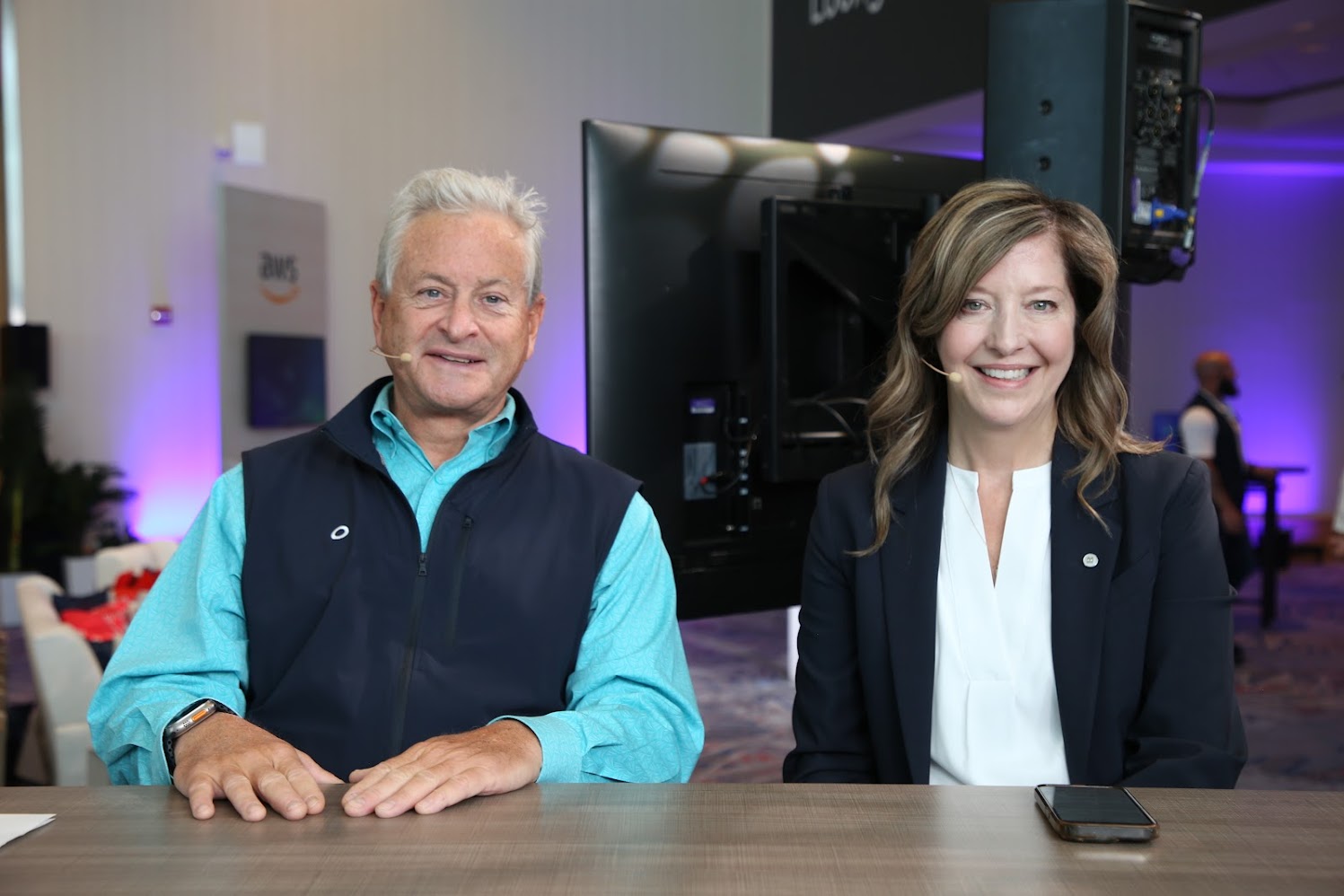
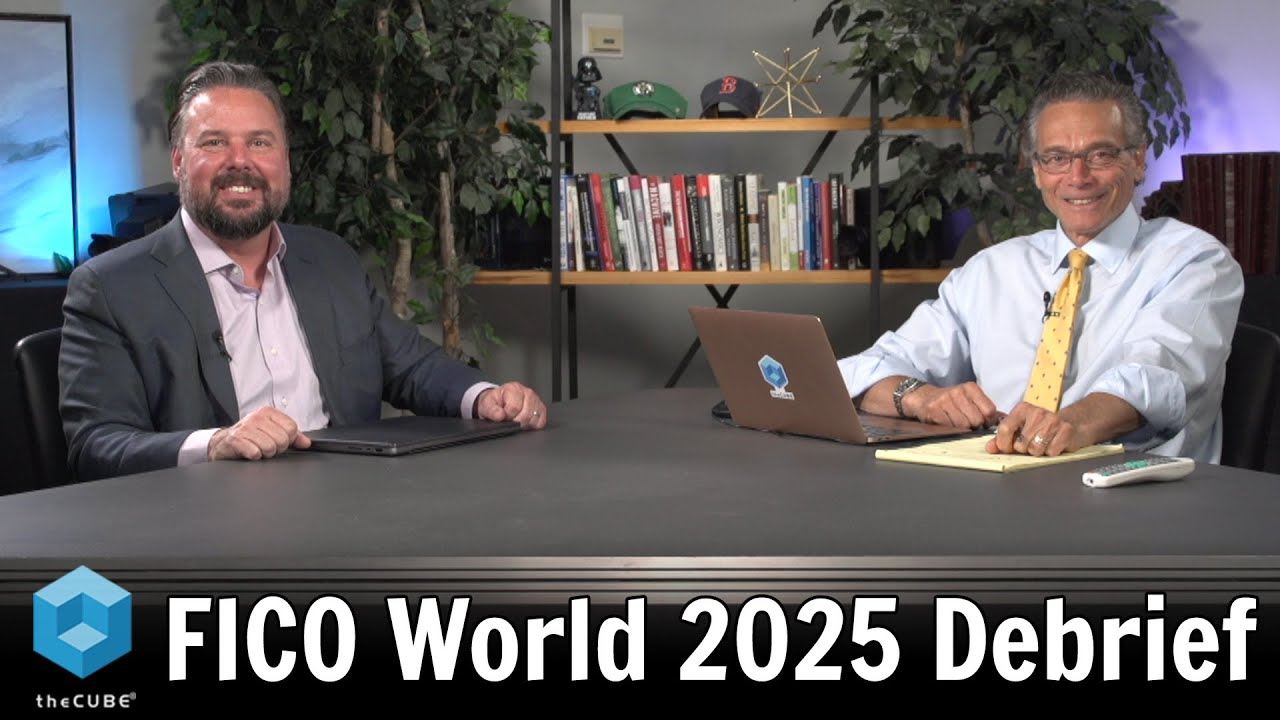
Will Lansing, chief executive officer at FICO, and Liz Billyard, head of North America retail credit and chief risk officer for Canadian P&C banking at BMO, join theCUBE’s Rob Strechay at FICO World to discuss the evolving role of data and AI in financial services. The conversation traces FICO’s journey from analytics consultancy to software platform provider with global impact.
Lansing shares insights into how the FICO Score and platform have evolved to deliver greater precision, scale and consumer insight. Billyard explains how BMO leverages FICO’s tools to personalize customer experiences and accelerate decision-making.
The discussion also highlights the future of risk, trust and innovation in an AI-driven financial landscape. Lansing and Billyard share strategies for navigating complex regulatory environments while staying agile.
Forgot Password
Almost there!
We just sent you a verification email. Please verify your account to gain access to
FICO World 2025. If you don’t think you received an email check your
spam folder.
In order to sign in, enter the email address you used to registered for the event. Once completed, you will receive an email with a verification link. Open this link to automatically sign into the site.
Register For FICO World 2025
Please fill out the information below. You will recieve an email with a verification link confirming your registration. Click the link to automatically sign into the site.
You’re almost there!
We just sent you a verification email. Please click the verification button in the email. Once your email address is verified, you will have full access to all event content for FICO World 2025.
I want my badge and interests to be visible to all attendees.
Checking this box will display your presense on the attendees list, view your profile and allow other attendees to contact you via 1-1 chat. Read the Privacy Policy. At any time, you can choose to disable this preference.
Select your Interests!
add
Upload your photo
Uploading..
OR
Connect via Twitter
Connect via Linkedin
EDIT PASSWORD
Share
Forgot Password
Almost there!
We just sent you a verification email. Please verify your account to gain access to
FICO World 2025. If you don’t think you received an email check your
spam folder.
In order to sign in, enter the email address you used to registered for the event. Once completed, you will receive an email with a verification link. Open this link to automatically sign into the site.
Sign in to gain access to FICO World 2025
Please sign in with LinkedIn to continue to FICO World 2025. Signing in with LinkedIn ensures a professional environment.
Are you sure you want to remove access rights for this user?
Details
Manage Access
email address
Community Invitation
Will Lansing, FICO & Elizabeth Billyard, BMO
Will Lansing, chief executive officer at FICO, and Liz Billyard, head of North America retail credit and chief risk officer for Canadian P&C banking at BMO, join theCUBE’s Rob Strechay at FICO World to discuss the evolving role of data and AI in financial services. The conversation traces FICO’s journey from analytics consultancy to software platform provider with global impact.
Lansing shares insights into how the FICO Score and platform have evolved to deliver greater precision, scale and consumer insight. Billyard explains how BMO leverages FICO’s tools to personalize customer experiences and accelerate decision-making.
The discussion also highlights the future of risk, trust and innovation in an AI-driven financial landscape. Lansing and Billyard share strategies for navigating complex regulatory environments while staying agile.
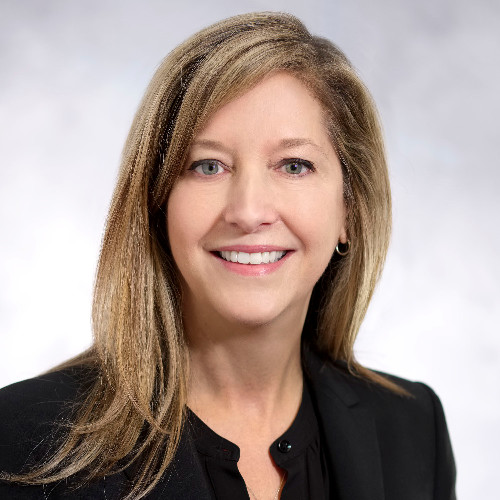
Head, NA Retail Credit & Chief Risk Officer, Canadian P&C BankingBMO
Will Lansing, chief executive officer at FICO, and Liz Billyard, head of North America retail credit and chief risk officer for Canadian P&C banking at BMO, join theCUBE’s Rob Strechay at FICO World to discuss the evolving role of data and AI in financial services. The conversation traces FICO’s journey from analytics consultancy to software platform provider with global impact.
Lansing shares insights into how the FICO Score and platform have evolved to deliver greater precision, scale and consumer insight. Billyard explains how BMO leverages FICO’s t...Read more
exploreKeep Exploring
What industry did FICO initially focus on when they were founded in Silicon Valley nearly 70 years ago?add
What was the original purpose of coming up with the FICO score in the '80s?add
What is FICO's approach to hyper-personalized interactions and how is it different from traditional CRM methods?add
>> Hello, and welcome to FICO World 25. We're here from Sunny Hollywood, Florida. We're really focusing on how customers are capitalizing on this intelligence revolution and really focusing on how you can get better use out of the data and what's going on to service those customers. I'm Rob Strechay, Managing Director with theCUBE Research, and who better to really help us kick this off than Will Lansing, who's the CEO of FICO and Liz Billyard, who's the Head of North America Retail Credit and Chief Risk Officer at BMO. Did I say that right?
Elizabeth Billyard
>> The Bank of Montreal, BMO. Thank you.
Rob Strechay
>> Yeah.
Elizabeth Billyard
>> It's good.
Rob Strechay
>> Thank you. Well, I think, again, welcome to the show. I'm excited about this whole topic. I think, again, this has been just a really interesting year to put it mildly. Will, you just wrapped up the first half of your fiscal year. You have thousands of customers here, about a thousand customers if not more, here in Sunny Florida. Maybe you can start off with kind of the state of your software business and where things are at.
Will Lansing
>> It couldn't be better. I mean, our software business is absolutely rocking right now, but maybe it's worth just going back in time a little bit to tell you how we got to where we are and then we'll talk a little bit more about where we are. Just a bit of background on our company, FICO, we were founded nearly 70 years ago in Silicon Valley. And at the time, it was a mathematician and an engineer who got together and thought, "Let's do an analytics consulting firm." And so they did. And for money, they would go out and try to make data-driven decisions. What rapidly happened was we gravitated to financial services because that's where the money is, those are the high-stakes decisions, and those were the clients of the firm that were prepared to pay for a better answer, a more precise answer. And so we wound up really focusing on financial services through the '50s, '60s, '70s. And then in the '80s, we came up with the score, with the FICO score. And the idea there was, let's have some very low-cost way to score a large population to understand propensity to repay debt. And we did that and then we moved from that to providing scores across different credit bureaus. And over the course of 30 or 40 years, the FICO score became deeply embedded in the financial system, and it was the low-cost, most effective way to evaluate credit. Well, along the way, we had this idea that instead of just being an analytics consulting firm, which is really kind of a professional services business where you don't really get returns to scale. You get paid for your work, but you don't get returns to scale. And so my predecessors thought, "Hey, we should be in the software business. If we could just take analytics and get them embodied in software, we would get returns to scale, and we'd get reuse and our R&D would go further." And so through the '80s and '90s and until today, really, we have focused very much on how do we get analytics IP into software. Now you know that's not an easy thing to do. It's very hard to do.
Rob Strechay
>> Very hard. I think, again, that's a big thing. So how does that lead to today?
Will Lansing
>> Well, so when you're trying to do this, analytics is kind of a bespoke, customized kind of an inquiry. You have a question you want answered. The original question is, "If I give you money, will you pay me back?" That's what we got started with. But you have a question you're trying to answer and you figure out what data do you want to bring to the party, what analytics do you want to bring to the party? How do you bring those together to make a decision? And because every question's different, it is just hard to build analytics software that's general, broad and multipurpose. And so in the early days, FICO really focused on very specific questions that banks had, originations. Should we or should we not give a loan to this individual? Credit line management, fraud, collections and recovery. And so we did those things and very successfully and became deeply embedded in the banks because we were doing a good job of answering those questions. But in kind of the last 10 years, what we figured out is it would be nice if it were much more flexible. If we had a platform where we could bring any and all data from any and all sources, bring it to the party, apply analytics, make a decision in real time, feed it into a workflow so that when the bank talks to a consumer customer, that interaction is optimized. We get exactly what we're trying to achieve, and it's based on everything we know about the consumer. And that's kind of where we are today is we have this platform and Liz and Bank of Montreal are our clients and have our platform installed and very powerful tool for making sure that the consumer gets what he or she wants. It's all about making them happy.
Rob Strechay
>> Yeah, I was going to say, diving into that, because I see a lot about Customer 360 as I tour the halls here and listen to some of the talks that are going on, how does the platform really help enterprises leverage that data?
Will Lansing
>> Well, so as I said earlier, we used to just focus on these very specific questions, originations, fraud. With the platform, we can use and reuse that data for a lot of different questions, for a lot of different use cases. And so, one of the things that happened in the banking world kind of during COVID was consumers stopped coming into bank branches. Not completely, but they reduced their usage, I would say. And so the digital relationship with the consumer became much, much more important. And a 360 degree view of the customer became more important. And our platform was all tuned for that, is tuned for this relationship, digital relationship with the consumer. And that's what we've got to offer and that's what banks leverage.
Rob Strechay
>> Right. And I mean, Liz, I think that the Bank of Montreal, big bank, I've known it well, my Canadian roots and where I used to work up in Waterloo there.
Elizabeth Billyard
>> Thank you.
Rob Strechay
>> So how does leveraging the FICO platform really help you make more precise business decisions? And are there some examples of where you had latent or underutilized data that you were able to get at that really helped you help the customer?
Elizabeth Billyard
>> Yeah, thank you for that question. For BMO, the customer is at the center of everything that we do and helping customers make real financial progress and that experience that they have with us is absolutely critical to what we execute on. The platform has provided an opportunity for us to take data across many different segments internally, external data so that we can show customers that we really know them. When we're making credit decisions, we have information to help them make real financial progress faster because we can likely say faster to a loan because we have that information on them. We also use this for advice to the customer as well. Good financial advice, particularly even when they're pre-delinquent or in delinquency, helping customers through changing economic environments. We found that's also critical in our path forward.
Rob Strechay
>> Yeah, because nobody wants to see the customer fail. I mean, I think at the end of the day, it's about customer service and helping them move forward. I think, Will, a lot of the keynotes were really talking about the customer experience. And there was a lot around hyper-personalized interactions. How is that really different from traditional CRM? I think people are probably trying to wrap their heads around that.
Will Lansing
>> So that's a great question. Everybody wants to treat the customer better and have a little more personalization, a little more customization. But what is really the state-of-the-art? The state-of-the-art, today, we are the state-of-the-art. The state-of-the-art as it was before we came along, was really segmentation. We would say, "Okay, you're a soccer mom and we're going to treat you like we treat soccer moms and we have a deep understanding of your need for a minivan. And you have children and these are the kinds of things you're interested in." But you're a member of the segment. FICO's approach is completely different. Our approach is this is an individual, and we know a lot about this individual. We've had 25 transactions with this individual over the last two years. We understand their brand proclivities, we understand their price elasticity. We understand what they care about and what they don't care about. And all of that should be brought to bear at this moment of truth when you're interacting with a consumer. You've got to bring it together at that moment. And so ours is truly a one-to-one marketing, one-to-one understanding of the consumer where we're optimizing for whatever it is we're trying to achieve, maybe more sales, maybe more profit, maybe greater lifetime value, different kinds of things. But whatever it is that we're trying to optimize for is based on all this data that we have about the consumer. So it becomes a very tight, customized kind of thing.
Elizabeth Billyard
>> And I really want to add to that because it is the power of the one, and being able to ensure that the experience of that one individual is personalized and customized to their needs.
Rob Strechay
>> Yeah. And I think that's the important part. I think that was the thing. I think it was a segment of one was the comment during the keynote, which I loved.
Elizabeth Billyard
>> Yes, exactly.
Rob Strechay
>> And that must help the bank also, because you're able to get a... Even though you have this segment of one, you're able to understand the likelihood amongst those different people who kind of fit and were lookalike. There's so much happening with AI and things like that. Is this helping you be more efficient in the way that you operate and help with different customers?
Elizabeth Billyard
>> Yeah, absolutely. So the decision management platform for us has been transformational. I had a quote earlier around flaying complexity and unleashing innovation within our team. And the way we're able to do that is that we are two times more efficient today on executing on our strategies that we were in the past. Double. And that gives folks in our teams the opportunity to really unleash that flywheel of innovation. So where in the past, maybe we were having to take more time on coding, we now are spending more time on innovating. So it's exciting for everyone.
Rob Strechay
>> Yeah. I think, again, what I liked during the keynotes, there was a lot of talk about making it simpler, taking away the complexity, not making it so code-forward, and things like that.
Elizabeth Billyard
>> Yes. That's right.
Rob Strechay
>> Will, I think everybody talks about AI. You guys have had ML, advanced analytics and AI under the hood for quite some time now. This is, I think, again, certain industries don't get enough credit for that. And I think you guys should. How is FICO investing in AI and advanced analytics and doing it at scale going forward? Kind of last question, bring us home here on where you're going.
Will Lansing
>> We've been involved in AI for a very long time. I mean, we started with neural nets 30 years ago, and so not new for us. We have a lot of patents in the area. We try to solve the big problems. In credit underwriting, there's some challenges with AI because we don't really understand how the AI got to the decision that it got to. And so there's regulatory challenges with that. We have solutions to that. We have patents in applying blockchain to the way AI makes a decision. So we have an audit trail, so we understand how the decision was made. There's other big problems that AI faces today. Large language models are incredibly costly. We have patents on functional models that are narrower and actually have higher predictive power than large language models, but also much, much lower cost. So we have that. We have a problem, we... The industry has a problem with hallucinations. I mean, what is the truth? How much do we trust this? And so we have patents around how to improve the accuracy of the decisions you get back. Knowledge anchors. And again, I encourage everyone to check out our patent portfolio, but we're on it. We're on it.
Rob Strechay
>> This has been great. I think, again, this has been just a fantastic show. I think, I was here yesterday checking out the preview and got to sit with some other customers. Everybody's so excited. And I think one of the words that comes up from customers a lot is partnership with you and with FICO, and I think, that's been great. So thanks Will and Liz for coming on board.
Will Lansing
>> Thank you.
Elizabeth Billyard
>> Got your thanks.
Rob Strechay
>> And thank you for watching this first episode, but not the last. We've got a lot more coming this afternoon from FICO World 25. Stay tuned. We'll be back in a few.








 Rob Strechay