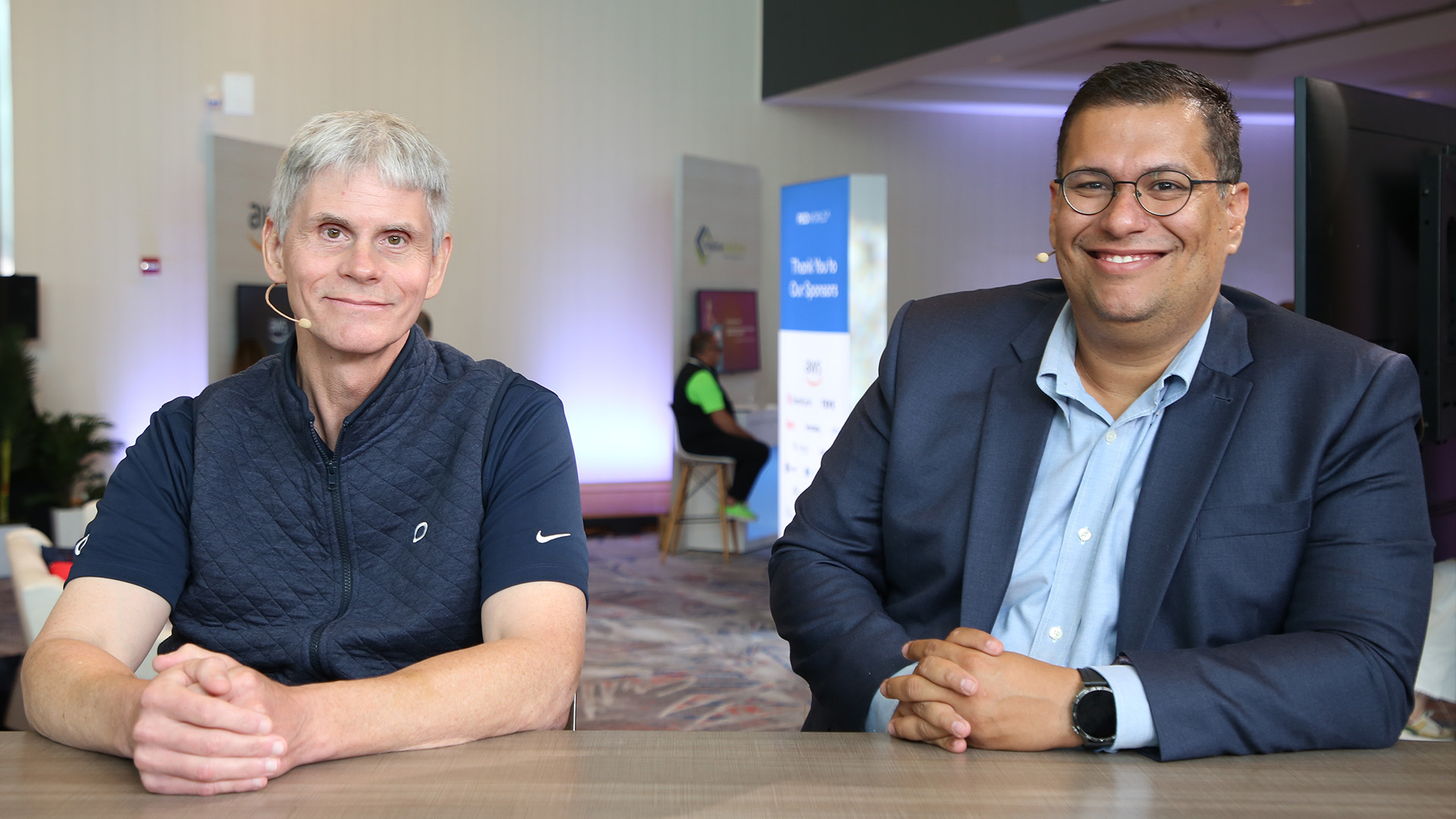
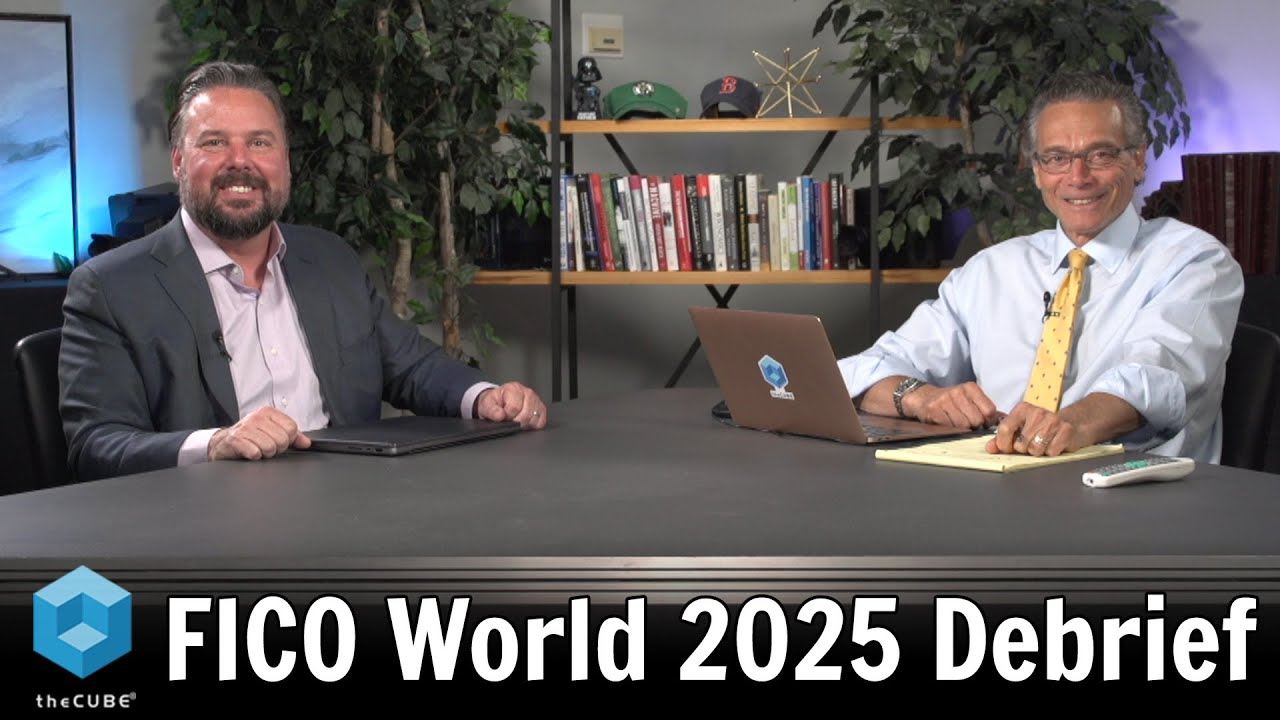
Scott Zoldi, chief analytics officer at FICO, and Rafael Cavalcanti, chief data analytics officer and CRM director at Bradesco Bank, join theCUBE’s Rob Strechay at FICO World to discuss the real-world impact of AI in financial services. The conversation centers on operationalizing responsible AI to improve customer experience and reduce risk.
Zoldi outlines FICO’s commitment to ethical, accountable and transparent AI, calling this moment a pivotal one for data-driven decision-making. Cavalcanti shares how Bradesco uses AI to enhance customer interactions and minimize false positives in banking operations.
Zoldi and Cavalcanti also examine the balance between innovation and trust in an increasingly automated industry. The discussion also provides a clear-eyed look at what it takes to deliver AI that serves both business goals and societal expectations.
Forgot Password
Almost there!
We just sent you a verification email. Please verify your account to gain access to
FICO World 2025. If you don’t think you received an email check your
spam folder.
In order to sign in, enter the email address you used to registered for the event. Once completed, you will receive an email with a verification link. Open this link to automatically sign into the site.
Register For FICO World 2025
Please fill out the information below. You will recieve an email with a verification link confirming your registration. Click the link to automatically sign into the site.
You’re almost there!
We just sent you a verification email. Please click the verification button in the email. Once your email address is verified, you will have full access to all event content for FICO World 2025.
I want my badge and interests to be visible to all attendees.
Checking this box will display your presense on the attendees list, view your profile and allow other attendees to contact you via 1-1 chat. Read the Privacy Policy. At any time, you can choose to disable this preference.
Select your Interests!
add
Upload your photo
Uploading..
OR
Connect via Twitter
Connect via Linkedin
EDIT PASSWORD
Share
Forgot Password
Almost there!
We just sent you a verification email. Please verify your account to gain access to
FICO World 2025. If you don’t think you received an email check your
spam folder.
In order to sign in, enter the email address you used to registered for the event. Once completed, you will receive an email with a verification link. Open this link to automatically sign into the site.
Sign in to gain access to FICO World 2025
Please sign in with LinkedIn to continue to FICO World 2025. Signing in with LinkedIn ensures a professional environment.
Are you sure you want to remove access rights for this user?
Details
Manage Access
email address
Community Invitation
Scott Zoldi, FICO & Rafael Cavalcanti, Bradesco
Scott Zoldi, chief analytics officer at FICO, and Rafael Cavalcanti, chief data analytics officer and CRM director at Bradesco Bank, join theCUBE’s Rob Strechay at FICO World to discuss the real-world impact of AI in financial services. The conversation centers on operationalizing responsible AI to improve customer experience and reduce risk.
Zoldi outlines FICO’s commitment to ethical, accountable and transparent AI, calling this moment a pivotal one for data-driven decision-making. Cavalcanti shares how Bradesco uses AI to enhance customer interactions and minimize false positives in banking operations.
Zoldi and Cavalcanti also examine the balance between innovation and trust in an increasingly automated industry. The discussion also provides a clear-eyed look at what it takes to deliver AI that serves both business goals and societal expectations.
Scott Zoldi, chief analytics officer at FICO, and Rafael Cavalcanti, chief data analytics officer and CRM director at Bradesco Bank, join theCUBE’s Rob Strechay at FICO World to discuss the real-world impact of AI in financial services. The conversation centers on operationalizing responsible AI to improve customer experience and reduce risk.
Zoldi outlines FICO’s commitment to ethical, accountable and transparent AI, calling this moment a pivotal one for data-driven decision-making. Cavalcanti shares how Bradesco uses AI to enhance customer interactio...Read more
exploreKeep Exploring
What are some reasons why the current era is considered as the golden age of AI?add
What is the importance of real-time decision making in customer interactions and why is FICO's history of operationalizing AI for real-time decision making valued by customers?add
What is critical in meeting customer expectations from a FICO perspective when it comes to the operationalization of AI?add
>> Hello and welcome back to FICO World 2025, live from Hollywood, Florida. It's beautiful out, but not as beautiful as talking about the intelligence revolution and how organizations are really applying that in action. I think one of the things that I've loved this week about being here at FICO World is how the customers are really partnered with FICO and they're being heard by FICO, and that's coming out in the products. I think one of the things that we're going to drill into. And I can't be more excited about the two people that I have with me now. I have Scott Zoldi, who's the CAO, which is chief analytics officer for FICO, and Rafael Cavalcanti who's the CDAO, lot of acronyms, CDAO and CRM director at Bradesco out of Brazil. So welcome to the show, guys. I think what's been fun this week has been a lot of AI in action. I think one of the things that was thrown at me was somebody goes to me and goes, "Hey, this is the golden age of AI." So Scott, what's your view? I mean, as the CAO of FICO, why do you think this is the golden age of AI?
Scott Zoldi
>> So we're in the golden age of AI primarily because we've never had so much access to compute, data, and AI algorithms. And so people are starting to understand there's tremendous amount of opportunity to apply AI. At the same time, with all that value, they're also saying, let's get practical about it. So they're understanding that not all AI is generative AI. They're asking questions about how to operationalize and what are the right ways to get that onto something like a platform so they can go and make those decisions. And moreover, when they're looking at generative AI, they're starting to ask very practical questions. How do I focus it down on a specific domain and a specific task? So it's about getting real and recognizing that value and making good business decisions and driving the value from AI.
Rob Strechay
>> So let's go a little bit deeper in that because I think one of the things that's really been fascinating about this and what I love is, not only is Rafael from Brazil, but there's people from all over the world. I was with some folks from Germany and some folks from Asia earlier today having lunch. I think again, it's been fantastic to see this is just such a global affair at FICO World this week. Globally speaking, what and where are some of the best practices for responsible AI coming from, or how are they being applied? What do you see for responsible AI?
Scott Zoldi
>> So for FICO, responsible AI consists of four major pillars. It's around building the AI responsibly, which means building it correctly. It's around explainability and interpretability. It's around ethics, ethical AI, and then accountability and auditability of that AI. And so best practices tend to be in those parts of the world where we have more regulation that says, listen, we need to make sure that we can explain an outcome. And to explain an outcome, we have to be very prescriptive in how we develop that AI. And so best practices is around having a model development standard for that AI and then codifying it and putting it on things like an AI blockchain so that it is immutable and how it was built. And so that all gives you a roadmap to go through all the complexity that's associated with developing an AI solution where there's a lot of ways it can go wrong and then step through that process and have a proof of work how you got there. And I think those are the best practices is navigating it and staying true to those tenets of responsible AI.
Rob Strechay
>> So I kind of mentioned it that you work with your customers, but Rafael, you're working with FICO and you're looking at Bradesco and how you guys work together really around AI, responsibility, especially in fraud and credit solutions because I think people want to understand... I mean, we've all seen hallucinations. You can't have that with credit and risk for that.
Rafael Cavalcanti
>> I think this great power of this golden age of AI comes with great responsibility. And it is not optional to have a responsible AI framework. It's just part of being able to deliver proper solutions to customers. AI can bring value in several aspects of the financial industry. We can become more efficiently. So understanding and mapping processes and optimizing the way that we deliver money across branches and ATMs is one. Enhancing controls. I think a lot of things related to AML fraud rely on our capability of understanding unstructured data and identifying patterns, et cetera. As Scott said, this gen AI hype is combining every type and capability of AI to come up with proper well-designed solution. The third one is enhancing customer experience. And I do think that this golden age brings high expectations of customers as well. So they want to have that same experience that they have when using streaming solutions or while doing online shopping. They want banks to do that. And we need to combine these techniques, and at the same time, understand that what we do has a core value that is privacy and responsibility, and that's what we do in Bradesco.
Rob Strechay
>> Yeah. Again, and love to get both of your guys' view on this, that it's about customer engagement. How has customer engagement really increased since Bradesco has really continued to implement AI? And really what are some of the things that have helped as AI has gone into credit decision models? And really where is FICO enabling Bradesco to really leverage AI into the future?
Rafael Cavalcanti
>> So I normally share something very, very relevant. If we were making decisions in credit the way that we used to do 30 years ago, we would have something as big as this building of underwritings deciding things. And it is not feasible economically, but it doesn't meet customer expectations. We need to decide at the right time, many times online, and the only way we can do that is combining data with very good models. And we've been doing that since always. FICO score exists for a long time I assume Scott.
Scott Zoldi
>> Indeed.
Rafael Cavalcanti
>> And that's the way to go. And as techniques become more powerful, as techniques become more complex, the need to understand them become also very critical. We cannot say we declined something and we cannot explain why. We cannot say that I think it's a fraud without having the proper components that actually made us make that call. It's not acceptable for the customer perspective. And actually, from the business perspective, it seems a very bad idea to do that.
Scott Zoldi
>> Yeah. And I would just add onto it. I mean, you said it right Rafael. It's around customer expectations and customers are more aware that their data is out there and that that data can be leveraged to make better decisions. So for FICO, that's what we really focus on is bringing that data into one place, breaking down silos so that data is available to make the very best decision. And I think customers have that expectation now, and we need to make sure that we can facilitate bringing that data into a common place for those AI models to make those decisions.
Rob Strechay
>> Yeah. I mean, I think that's a common theme that I've been hearing throughout this morning and this afternoon is the fact that really it is about real-time. And that has to be play a part where FICO has really been about real-time and the models and AI for quite some time. It's like you said, the... I call it traditional AI and ML. Is that really what you see is why customers also lean in is that you've got this history of bringing it at real-time at scale?
Scott Zoldi
>> It's one of the things that differentiates FICO is this constant focus on operationalizing AI for that real-time decision. Why that's important is that you need to make the right decision at the right time when the customer needs that decision to be made. It doesn't do you any good to make it a day later. Maybe even five minutes later it's too late. And so ensuring you understand where you need to bring that data into one place, how you operationalize and run that model so you can make a decision in 30 milliseconds and you can give them the right decision or the right offer, that's what they're expecting. And if you miss that short window, you miss an opportunity.
Rob Strechay
>> Yeah. I mean that gets at the whole idea of hyper-personalization and really the value of AI. What does that really mean to Bradesco?
Rafael Cavalcanti
>> I think we have a very clear view that when it comes to hyper-personalization, when we get it right, it takes us years to actually make the customer realize of that core value. However, if you get it wrong once, it destroys everything. So that's something that it really plays a relevant part of what we do. It's that, when, for example, deciding fraud, at the same time that the customer becomes quite happy when you ask him, "Hey, was it really your transaction?" And at the same time when he confirms and says yes, that's great. However, if it's really him and you're declining the transaction, that's terrible customer expectations and it really breaks the trust between a bank and the customer.
Rob Strechay
>> Yeah. I mean that whole trust thing. We actually have an AI agent trust index that we've come up with, and that's for another day. But really I think one of the things that I'm interested in as well is that how has AI really accelerated your digital transformation and how you're really leveraging that data in AI to give just a better customer experience.
Rafael Cavalcanti
>> So yeah, I do think that's something that we've been talking a lot recently is the notion of AI agents, how we can embed the AI capabilities and multidisciplinary squads to actually enhance our capability of doing things. So when we have to deliver something in the bank, we have different people from different backgrounds doing things. When we decide to develop a model, we have somebody that actually works prepping the data during feature engineering. We have somebody else who actually runs the model, validation, explainability, et cetera. We can imagine that squad working with humans and AI agents that are super specialized in very specific tasks. And that's something that we've been exploring with very positive results, and we have a double effect there. AI allows us to deliver very unique experiences to customers. And at the same time, if we do it responsibly, we actually deliver them faster. So that's a little bit of what we see in that spectrum.
Rob Strechay
>> Yeah. I mean you have over 70 million customers, over 40 billion in credit limited every day, and things of that nature. To your point about the people aspect of this, this must be such an operational game for Bradesco, and how you're working with FICO also gives you that trust in the models because there is such history with it as well.
Rafael Cavalcanti
>> Yeah, I think we have dramatically enhanced our time to market, our capability of delivering decisions better and faster. We have increased customer satisfaction, because at the end of the day, the amount of false positives we have reduced it dramatically. The amount of times that we have to call the customers to confirm about a transaction has reduced. And the reason we do that, it's because we're combining three very important things. Data at the right time, decisioning with taking into consideration large amount of data and very sophisticated techniques, and AI to develop the process itself but also to enhance the solutions that we have.
Rob Strechay
>> Yeah. I think to me, this has been just one of those things that all of this coming together it seems. I don't know if it's the golden age exactly, but it definitely seems like it's the right time for all of this to come together in that. Last question, Scott. I think that we're here today, how do you see this positioning FICO into the future?
Scott Zoldi
>> Yeah. So from a FICO perspective, operationalization of AI, bringing all the data together at the right time and at the right place is critical to meeting that customer expectation. And as Rafael mentioned, when you do that well, you get phenomenal results. But on top of that, what people may not appreciate is, once all that data is in that central location, and you operationalized it, you can start asking other questions. So you can imagine, actually, no, it's not one model, it might be 10, 15, 20 different decisions that get made. And so we start to get this hyper... We talk about hyper-personalization, think about hyper-intelligence. We can ask a bunch of questions about that consumer at that time of that transaction. And that's really where we're headed. And being able to operationalize and bring all that data in at the right time allows us to make many, many different decisions about that customer, which means we're going to be even more responsive to what they need.
Rob Strechay
>> So I said last question, but I lied. So last question to you. So Rafael, what do you hope to say next year that you can't say yet today here about how you're leveraging this?
Rafael Cavalcanti
>> I would say that our ambition is to make this multi-agent AI thing work embedded in different functions. I think it's fairly easy for us to invite a group of data scientists to do that. Because it makes sense, it's very convergent to what we do. However, we have lots of opportunities in back office, in operations. And to have that kind of dynamic in organizations, I think it'll be incredibly transformational for us.
Rob Strechay
>> Yeah. I mean, I just love this. I learn something new every time I get to talk to the FICO customers. So thank you for coming on board. And Scott, thank you as well for coming on board and helping go down this golden age of AI discussion today.
Scott Zoldi
>> Thank you so much.
Rafael Cavalcanti
>> Thank you.
Scott Zoldi
>> Appreciate it, Rob.
Rob Strechay
>> And thank you for watching this episode. We're keeping on going. We're going to take a short break and then we'll be back with more from FICO World 25, live from Hollywood, Florida. See you in a few.








 Rob Strechay