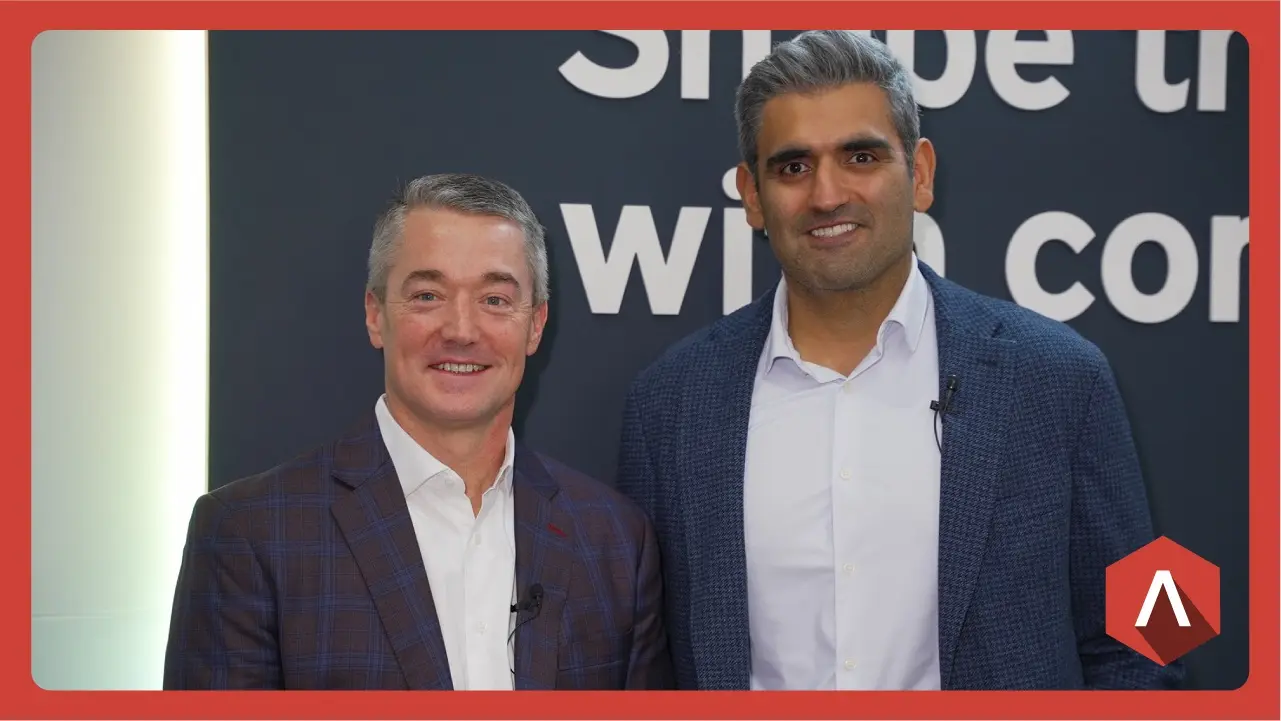
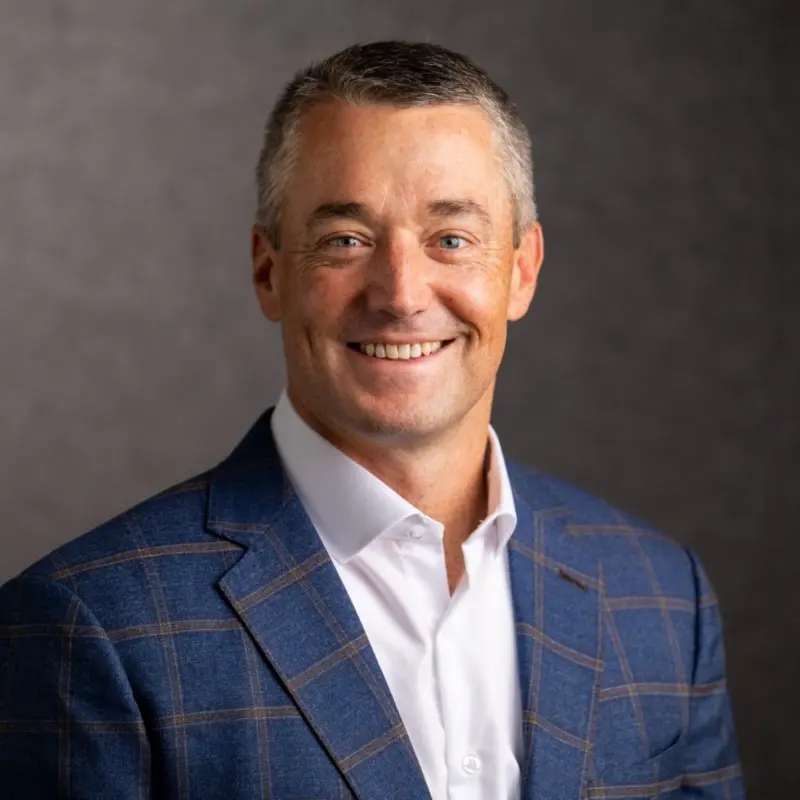
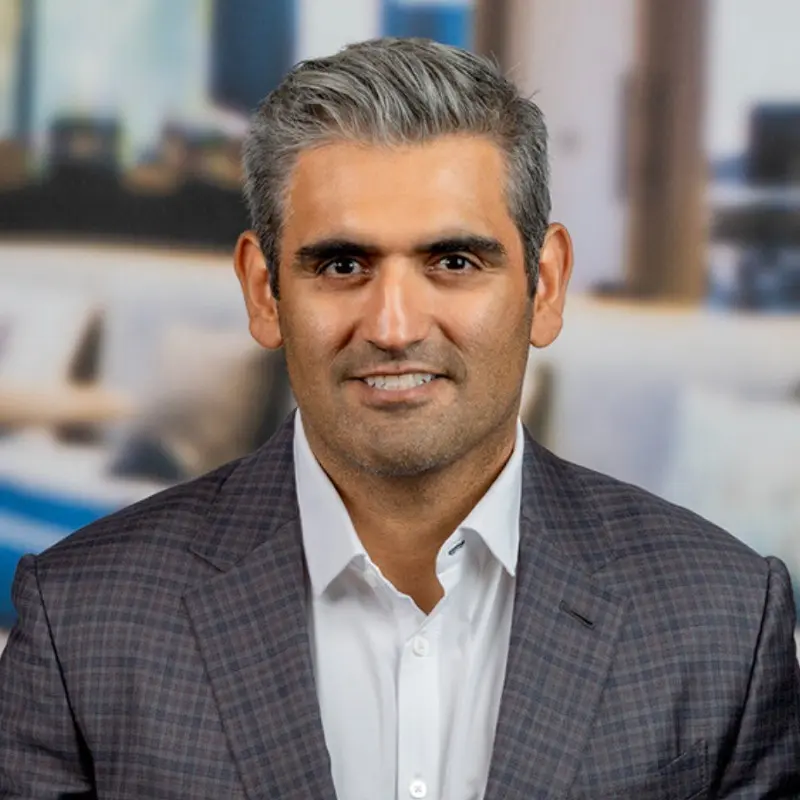
In this segment from CES 2026, EY’s Whitt Butler and Kapish Vanvaria join theCUBE’s Savannah Peterson and Rob Strechay to discuss the critical transition from AI hype to enterprise-grade scale. The conversation centers on the distinction between "responsible AI" – often viewed as a compliance checklist – and "trusted AI," which Butler defines as the essential framework required to unlock true automation and business value. The group explores why organizations must shift from bolting on safety measures at the end of development to embedding trust into the initial design blueprint. Vanvaria highlights how this "built-in" approach brings cross-functional stakeholders together early, ensuring that innovations in areas like procurement and operations breed confidence rather than skepticism.
The discussion also tackles the cultural challenges of AI adoption, emphasizing that technology should augment rather than displace human judgment and creativity. Vanvaria shares candid insights on implementation strategies, noting that top-down mandates often fail while empowering employees to use AI as a personal productivity tool drives genuine adoption. Butler and the hosts examine the long-term implications, predicting that companies successfully fostering deep trust will separate themselves from the pack through superior shareholder returns and brand loyalty. From achieving "quiet success" in the workplace to the broader impact on the future workforce, the interview provides a pragmatic roadmap for leaders looking to turn "AI Everywhere" into a trusted reality.
Forgot Password
Almost there!
We just sent you a verification email. Please verify your account to gain access to
Proof, Not Promises: Driving Enterprise Performance at Scale With EY Consulting. If you don’t think you received an email check your
spam folder.
Sign in to Proof, not promises: driving enterprise performance at scale with EY Consulting.
In order to sign in, enter the email address you used to registered for the event. Once completed, you will receive an email with a verification link. Open the link to automatically sign into the site.
Register for Proof, not promises: driving enterprise performance at scale with EY Consulting
Please fill out the information below. You will receive an email with a verification link confirming your registration. Click the link to automatically sign into the site.
You’re almost there!
We just sent you a verification email. Please click the verification button in the email. Once your email address is verified, you will have full access to all event content for Proof, not promises: driving enterprise performance at scale with EY Consulting.
Thanks for confirming your account. Now you can access Proof, not promises: driving enterprise performance at scale with EY Consulting with this email address.
I want my badge and interests to be visible to all attendees.
Checking this box will display your presense on the attendees list, view your profile and allow other attendees to contact you via 1-1 chat. Read the Privacy Policy. At any time, you can choose to disable this preference.
Select your Interests!
add
Upload your photo
Uploading..
OR
Connect via Twitter
Connect via Linkedin
EDIT PASSWORD
Share
Forgot Password
Almost there!
We just sent you a verification email. Please verify your account to gain access to
Proof, Not Promises: Driving Enterprise Performance at Scale With EY Consulting. If you don’t think you received an email check your
spam folder.
Sign in to Proof, not promises: driving enterprise performance at scale with EY Consulting.
In order to sign in, enter the email address you used to registered for the event. Once completed, you will receive an email with a verification link. Open the link to automatically sign into the site.
Sign in to gain access to Proof, Not Promises: Driving Enterprise Performance at Scale With EY Consulting
Please sign in with LinkedIn to continue to Proof, Not Promises: Driving Enterprise Performance at Scale With EY Consulting. Signing in with LinkedIn ensures a professional environment.
Are you sure you want to remove access rights for this user?
Details
Manage Access
email address
Community Invitation
Whitt Butler & Kapish Vanvaria, EY
In this segment from CES 2026, EY’s Whitt Butler and Kapish Vanvaria join theCUBE’s Savannah Peterson and Rob Strechay to discuss the critical transition from AI hype to enterprise-grade scale. The conversation centers on the distinction between "responsible AI" – often viewed as a compliance checklist – and "trusted AI," which Butler defines as the essential framework required to unlock true automation and business value. The group explores why organizations must shift from bolting on safety measures at the end of development to embedding trust into the initial design blueprint. Vanvaria highlights how this "built-in" approach brings cross-functional stakeholders together early, ensuring that innovations in areas like procurement and operations breed confidence rather than skepticism.
The discussion also tackles the cultural challenges of AI adoption, emphasizing that technology should augment rather than displace human judgment and creativity. Vanvaria shares candid insights on implementation strategies, noting that top-down mandates often fail while empowering employees to use AI as a personal productivity tool drives genuine adoption. Butler and the hosts examine the long-term implications, predicting that companies successfully fostering deep trust will separate themselves from the pack through superior shareholder returns and brand loyalty. From achieving "quiet success" in the workplace to the broader impact on the future workforce, the interview provides a pragmatic roadmap for leaders looking to turn "AI Everywhere" into a trusted reality.
EY Global and Americas Risk Consulting LeaderEY Consulting
In this segment from CES 2026, EY’s Whitt Butler and Kapish Vanvaria join theCUBE’s Savannah Peterson and Rob Strechay to discuss the critical transition from AI hype to enterprise-grade scale. The conversation centers on the distinction between "responsible AI" – often viewed as a compliance checklist – and "trusted AI," which Butler defines as the essential framework required to unlock true automation and business value. The group explores why organizations must shift from bolting on safety measures at the end of development to embedding trust into the init...Read more
exploreKeep Exploring
What are the key components necessary for companies to scale their use of AI effectively?add
What is the relationship between responsible AI and trusted AI?add
What is the significance of responsible AI and trust frameworks in scaling AI applications and their impact on companies?add
What are the essential steps needed to create customer confidence in new products and services?add
What impact does providing employees with access to technology and fostering a culture of trust have on innovation and emotional dynamics within an organization?add
What are the key factors to consider for successful adoption and implementation of AI in an organization, particularly in relation to employee and customer experience?add
>> Hey, nerd fam, and welcome back to fabulous Las Vegas, Nevada. We're here at CES 2026, kicking off the new year right. My name's Savannah Peterson, here bringing you all the exclusive stories with Rob Strechay. Rob, I love doing CES with you. This is our third.
Rob Strechay
>> Yeah, our third.
Savannah Peterson
>> Yeah.
Rob Strechay
>> And this has been fantastic. And I think the energy around this and how AI is really reshaping the experiences for organizations that they provide to their consumers has been really a lot of fun to go and dig into.
Savannah Peterson
>> Yeah, it absolutely has. And I feel like we're at a real critical moment, a great opportunity to have this conversation with our guests, where we're going from hype to actually putting the rubber to the road and saying what AI is going to do, not just what we hypothetically think it's going to do. Kapish and Whitt, thank you so much for taking the time today. Busy week for you guys, I'm sure.
Kapish Vanvaria
>> Of course. Thanks for having us.
Whitt Butler
>> Yeah. Thanks for having us.
Savannah Peterson
>> Okay. So I got really excited when I looked at our show notes for today because we are going to be talking about what I think is one of the most important things in the industry right now, and that is trust. Talk to me about what it means to have trust in AI or trusted AI.
Whitt Butler
>> Thank you for that question, and I love that you're excited about trust.
Savannah Peterson
>> I'm very excited.
Whitt Butler
>> We're not talking about it enough.
Savannah Peterson
>> No.
Whitt Butler
>> I truly believe the way we're going to get to scale in AI... Because you said it, Rob. We're walking around. We're seeing the coolest things. We're seeing the technology. The only way we're going to get to scale is through trust. And I think we started very early on talking about responsible AI. That was all the buzz. We need responsible AI. It became very compliance oriented, became a little political. Trust is about, we need a whole ecosystem around AI to scale this. So that's why I think it's so exciting, is if we talk about trust and all the components of trust, companies can truly embrace and unleash the capability of AI. Without it, we're going to be caught in use cases and cool stuff, but not scale. So that's why I love having this conversation, and it's critical.
Rob Strechay
>> So taking that a little bit deeper, because I think there's the idea, and there's been a lot of hype around responsible AI as well. How do you see the difference between trust and responsible AI? Because they're not necessarily exactly the same thing.
Whitt Butler
>> Correct. I see responsible AI being a component of trusted AI. I'll use an analogy with my children. I'll tell them to be responsible. Lock the doors. Be responsible. If I have trust in them, I know the doors are locked. I know the lights are turned off. I know things are taken care of. So responsible AI is important. 100%, you need to have it, but you need a broader trust framework to get to scale. Again, we're not going to scale AI, we're not going to scale the applications, the cool opportunities we have, if we don't have trust. And we've talked about trust in so many different applications for years and years. We would talk about it. We need controls. We need this, we need that. And then we'd say, well, it's part of a broader trust framework. We're at a point now with this technology, if you don't have it, it's going to impact how you interact with your customers. It's going to impact your employee experience. It's going to impact how effective you are as a company. I truly believe as critical a juncture we're at for companies to get to the next level through AI, if they don't build trust in as opposed to trying to bolt it on or checklist it, it will impede their ability to go get those benefits that we all know are out there.
Savannah Peterson
>> Yeah.
Kapish Vanvaria
>> That's right.
Rob Strechay
>> Kapish, bringing you in on this, you just mentioned the bolt-on aspect. And to me, that makes a lot of sense. You can't just bolt it on. Take that the next level down and help us understand what that means.
Kapish Vanvaria
>> To me, we can make it simple, because to drive this forward, all the cool things we saw this week, you've got to create customer confidence. They got to believe that this is in their best interest, regardless of what it is. And so to me, there's this concept of what you must do, the mandatory things to really give people comfort in all the new products, services that you're offering. What you should do, which is an expectation of consumers going one step beyond what you must do. And then what you could do, which is really going above and beyond. And so to me, this concept of bolt-on versus embedded, thinking about a new product, today, responsible AI comes at the very end and says, do you have transparency? Do you have explainability? Do you have this? And it's really a compliance exercise in the last mile before something's released to production. When you think of embedding this within the blueprint, it's bringing the product owner, the cybersecurity team, the head of compliance, legal, customer experience, supply chain in the room together to say, how will we ensure that when we roll this out, the adoption will be high because we're truly giving people the confidence that they can trust it?
Savannah Peterson
>> And with that confidence and building it in rather than bolting it on, you can unlock new value, correct? It's not just about scaling things or automating them. What are some of the business opportunities you see, Kapish, I'll start with you, that get unlocked when you do this right?
Kapish Vanvaria
>> Yeah. So we're here talking about trust, so I'll give you an example from a service that I work in almost daily, and it's working with procurement officers and vendors. And in third-party risk management, traditionally in the bolt-on model, you would do 1,000 assessments a year, 2,000 if you're a large company, 5,000 if you're multinational global. And it'd be a very manual effort to look through your vendor master, look through your payments and understand-
Savannah Peterson
>> And a super exciting one too.
Kapish Vanvaria
>> Right. Who are you doing business with? And what do they do? And it's honestly a very complicated matter because humans have limitations of how much they can perform and adapt and organize. Today, with technology, the first 40 steps of that is complete and the human starts at an area of adding value to their client, because all that ruckus of day-to-day delivery and data processing is done for them. They're now starting in a place where they can truly talk to the client about next best action, what's best for their organization, having a robust conversation with their business partners about new business opportunities, rather than the muck of the 40, 50, 80 hours they spent just evaluating that vendor relationship, looking at data.
Savannah Peterson
>> Yeah. They get to have more human interactions from what I'm hearing.
Kapish Vanvaria
>> That's right.
Savannah Peterson
>> Sticking with humans, let's talk about trust in humans and agentic. How do we breed trust or foster trust when there isn't a human in the loop? Whitt, I'll start with you on this one.
Whitt Butler
>> I think there's always going to be a human in the loop. I don't think we're at a point where it's turnkey, let's turn it over.
Savannah Peterson
>> Right.
Whitt Butler
>> Now, again, we're here talking about trust. And the more trust you have, to Kapish's point, the more confidence you have, the more you're going to lean on the automation. But I think as we look at real operating model changes, as we use this technology, whether it's within a function, within a process of an enterprise, when we really look at it, there's always humans in the loop. I actually think the human is still the secret sauce. You're going to really use AI and you're going to automate what can be automated, what should be automated. But when it comes to the human creativity, when it comes to the human judgment, we're not displacing that. You can't displace that. That is the secret sauce. So I think there's always humans in the loop. But I do think we're at a point now, you create the right trust around AI, you can get to a level of automation we've never seen. I like to go back to the RPA days. And we're still using RPA, by the way. And the way we applied RPA, we looked at a process. You were talking about you did some process work in the oil and gas sector, and we would look at incremental steps within the process and how can we automate that step? How can we automate this step? Now we're at a point where we reimagine a process. What is the process meant to deliver? What's the output? How do we get there? What can we automate? We need trust to have the confidence we can rely on things, but you're always going to have those humans in the loop. I just don't see that changing. But what's really exciting, and I don't think anyone has this answer, because no one's done this at scale across the entire enterprise. What does that operating model look like? We know it involves agents, to your point. We know it involves humans. So how is that interaction? I think that's the cool frontier that's in front of us to define that. It's exciting we get to work with so many great companies on that problem. We're at early stages of really making this come to you.
Kapish Vanvaria
>> Yeah.
Savannah Peterson
>> Oh, yeah. That's still very-
Kapish Vanvaria
>> I'll add to that.
Savannah Peterson
>> Yeah, please.
Kapish Vanvaria
>> The improvements to the employee experience. Arming your employees with access to technology like this that allows them to truly turn on their creative side, it's a game-changer. And so to me, to all the executives listening out there as they want to do this, the faster you put that trust not only to your consumers, but your employees, it'll drive that progress forward.
Savannah Peterson
>> You just brought up a really good point, and I'm so glad you said that, because AI is an emotional thing, whether that's within your organization... It's funny, right? We're talking about automation, but there are so many feelings about this, but they're all very valid. This isn't just an incremental change or iteration. We're talking about an entire innovation cycle around processes, around the way that we interact with both the physical and digital world. I would love to get your answer on this, Kapish. How do you advise your customers and your community when they're debating internally whom to give the AI controls to within their organization? Because I think it really has to transcend top-to-bottom or else you don't get that trust in the organization, but you guys see even more than we do. So how do you do that? Or how would you say that?
Kapish Vanvaria
>> Top-down leadership support will always be the fastest driver of change, because it will send the message that this is important to all of us. But there's also the humility and reverse mentoring. And as executives in organizations, asking your employees for what they want and living a day in their shoes to understand how technology can improve or harm their day to day, and having the humility to say which side is actually occurring. And then using that to drive your decision-making, to me, it's really important in the workforce of the future that we bring them into the conversation so that the messaging top-down is resonating. And when it meets in the middle, it's not a point of friction. I think in the areas where I've seen friends, clients, others have those points of friction, it's been really too quick of mandates without doing the work to get the people to share their opinions and their voices of what they want.
Savannah Peterson
>> And hearing that.
Kapish Vanvaria
>> That's right.
Savannah Peterson
>> Not just virtue signaling.
Kapish Vanvaria
>> That's right.
Rob Strechay
>> One of the things, and playing off of that a little bit, you mentioned earlier is getting there faster. And you have the EY.ai value blueprint as well. Is that how you help people go through this and understand where this trust comes in and how to address risk and things of that nature? Is that a big piece of this?
Kapish Vanvaria
>> Yeah. Yeah. So specifically, from a trust perspective, the traditional model was really risk avoidance. So manage the risk, avoid it, and go around. Now it's about capturing confidence. And so when you think of the value blueprint, to some of our earlier points on bringing in stakeholders from different parts of the organization, it's a mindset shift, which is trust is baked in to design upfront on day one rather than day 30. When you get to day 30, you start thinking about trust, you've created process debt, you've created technical debt, you've created experienced debt. It's just things that are very difficult to unwind. So when I look at our AI value blueprints specifically for trust, it forces the design thinking to start with trust in build, in customer experience, in supply chain, in operations, in legal, in compliance, in cyber and so forth.
Savannah Peterson
>> You mentioned design thinking. Trust is essentially the core of user-centered design.
Kapish Vanvaria
>> It has to be.
Savannah Peterson
>> It absolutely has to be, or else you risk leaving people behind. This whole conversation is stoking something for me. It's actually, at my first CES 14 years ago, we had a team brainstorm at the design firm that I was working at because we were going to show a prototype here. There's a ton of MVPs that'll never be anything out there. No offense to all those creators, but we wanted to just do proof of concept. And the person who ended up having the best idea in our organization was the front desk admin. And we ended up making their product. And I remember looking in that room, I was a pretty young woman at that time, and I remember looking around the room and thinking it was so cool that all of these older, more experienced, venerable engineers and designers and everyone, none of that mattered in that room. We were able to develop the product, had a really fun little show car. And I always think about that with these conversations around AI, and I love that we're talking about this, is if you're not bringing everybody in the room, they're not included, we're not democratizing anything if you're not included. So I'm curious. Trust is something that can be very nuanced across verticals and geographies and around the world. EY, obviously, incredibly global company. Does trust mean the same thing around the world or is it different elsewhere? Whitt, I'll start with you on this one.
Whitt Butler
>> Yeah. That's a great question. I think there are nuances. There's absolutely cultural nuances. But what's at the heart of it, and I think what's at the heart of your question, and frankly, what I think we collectively have been missing, is that journey with the... Let me just use an employee. The journey with the employee. To Kapish's point earlier, we can push AI agendas top down and you need top-down support full stop, but we see where that's gotten us. I said earlier, there hasn't been very broad enterprise-wide adoption and scale across the board. It's because I think we ran so quick to the tech and the cool things we could do.
Savannah Peterson
>> We tend to do that as an industry.
Whitt Butler
>> 100%, right? Instead of, what is the journey? How do we improve the employee, the customer experience? How do we build trust in so they know that these are tools and technologies and insights that can be relied upon, that are secure, that are governed? These are such important things. And we just didn't do that at first. We ran to use cases. We ran to doing cool things. Now, again, and I know I'm a broken record, but to get to scale, it has to be trust at its core, built in, not bolted on, enterprise-wide, and we need to start thinking about the journey for the employee. Not, this is going to replace you. No, this is going to empower you. And I think collectively, that narrative was missed and that's what's impacted the effect that AI has had to date. Let me just say, 2025 was about a lot of experimentation. Some scaling. I also think some disappointment. I think 2026, as we focus on trust, we focus on the human experience, that's how we're really going to get to scale.
Rob Strechay
>> Yeah. What we've been looking at is that it has to be, because there needs to be success. But you guys see a lot of different things. What are some of the biggest mistakes that you see companies making?
Kapish Vanvaria
>> Yeah. So I'll give you an example, and I'll talk about a mistake that I made as something-
Rob Strechay
>> I want to hear this one.
Kapish Vanvaria
>> I'll tell you.
Savannah Peterson
>> You mean you're not flawless?
Whitt Butler
>> Yeah. Can we get notes on this?
Kapish Vanvaria
>> We fail every day and we learn from loss. But I'll tell you the success side of it, which is when we first started rolling out our own AI product suite, it was everybody's got to use it because there were strong efficiency gains. The product did a much better quality of work because of human fatigue was not a limiter. And a lot of our internal push from me was around that, was, like, hey, this helps us from a quality perspective. It helps us from an efficiency perspective. And I sat with our younger professionals. I spent a lot of time with them. I understood what that actually meant to them, and that didn't mean anything to them. When I started talking to them like, use our AI product suite as your next Excel or your next PowerPoint where it's transforming the delivery of your day-to-day and not just this tool on the shelf that you must use, it changed the dynamic. Because now, when they have to come up with a really nice presentation that summarizes all their hard work, instead of opening a blank PowerPoint or Excel to start that documentation, they'll use AI to help augment their thoughts and help summarize all the good work they did do. And to me, when I started to see that movement, I was like, we're going in the right direction, because we're changing behavior, because we're answering them where they want to be met in the field day to day that transforms their work.
Savannah Peterson
>> Well, and to your point earlier, Whitt, you're cognizant of the fact that the tech doesn't matter. It really doesn't. The solution matters. The outcome matters.
Whitt Butler
>> The outcome matters.
Savannah Peterson
>> And this happens a lot when we look at, and I'm sure you see this too, broad organizational transformation. If you walk in and tell someone to start using a new tool, it's not going to go well. Nobody wants to retool and learn a new skillset. Whereas if you illustrate what's possible and time saved or creativity unlocked and say, hey, it's actually really easy. You have access to this. Totally different mindset.
Whitt Butler
>> And Savannah, I see, to that point, where AI initiatives and those AI outcomes that companies are seeking, when it's driven, frankly, by the CEO or business unit president, it's not just a tech project or tech initiative, it's a strategic initiative, it's a business initiative, there's a lot more traction. And I know that's very intuitive, right? Top-down, or CEO-sponsored, but it's absolutely critical. Also, from a trust perspective, they need to be talking about, this is AI, this is going to take our business to the next level, our customer intimacy is going to be improved, our product capability is going to be improved and we can trust the outcomes. It's massive. That's how you start to move from use cases to enterprise scale and impact.
Savannah Peterson
>> Yeah. And empower people to do stuff with their tools. I was in Hawaii a few months ago and I was talking to the front desk manager, and he had created a custom GPT for his front desk so that they could communicate as colloquially with people of every different language versus their native language, which I thought was so brilliant, because obviously he had super global guests, and he had just made it himself. And naturally, I'm on vacation talking about tech and AI, but he brings me around the desk and shows me how it all works. And I'm sitting there thinking, this is so cool. If you put that frontline worker empowered with a tool, now their customer satisfaction goes up and the employees feel awesome because they can still crack a joke in a different language or whatever that might be and be just as thoughtful. And it was one of those use cases where I just looked at it and I was like, that's empowering your employees. That's what it looks like.
Whitt Butler
>> I'll tell you something super cool I saw at one of my clients. They do safety moments before meetings. So they'll talk about, hey, here are the exits. If the alarm goes off, we're going to move out in an orderly fashion.
Rob Strechay
>> Been there, done that a lot.
Whitt Butler
>> And that was a way to really improve a culture of safety. You're like, okay, we'll take a couple of minutes. We'll have this conversation. Fine. I see one of my clients, they have AI moments now, and it's not the most senior person-
Savannah Peterson
>> Oh, interesting....
Whitt Butler
>> in the room that has to lead it. They rotate who leads it. So to your point, Savannah, it can be the first or second-year analyst providing a little, hey, here's how I'm using it. Here's how it's making my day-
Savannah Peterson
>> And it will be...
Whitt Butler
>> better or more efficient. It's super cool. It gets it into the culture a little bit to say, this isn't this thing that's going to take all of our jobs, this big scary thing I'm worried about. Let's share how it's making us all better. It's a cool little thing to do.
Savannah Peterson
>> And better is the right word, because one of the conversations that frustrates me a little bit in our industry right now is everyone's always talking about productivity. I'm 11% more productive. There is not a human on this planet that talks about their day like that in a normal context. You would never come home to your kids and say-
Whitt Butler
>> I hit 12% today....
Savannah Peterson
>> Dad was 6% more effective today, guys. We're going out for milkshakes.
Whitt Butler
>> That's right.
Savannah Peterson
>> That's not it. It's not it. It's, look at this cool thing I made today because I had time to do it or I had more focus where I was able to research things quicker and come to this deliverable. And it's a different mindset. So people are like, hey, implement this and you'll do that. I mean, people understand money. But the productivity side of it, I'm just like, Good Lord.
Kapish Vanvaria
>> Our success in all of this will be quiet success. When you don't have to talk about it because you gained that extra hour to go to your kid's event or do that one hobby you wanted or read that book that you wanted because technology augmented your day in a way that gave you that creative freedom to go do what you wanted to. Those quiet successes, that's when we know we'll all have really won.
Savannah Peterson
>> When we're not using the acronym anymore.
Kapish Vanvaria
>> That's right.
Rob Strechay
>> Yeah. Nice buzzword. But what I love about the stories you were just telling is the fact that it's transparency, and it's that transparency that then helps to breed trust within these organizations. As you look out over the next three years, what do you think is going to separate trusted AI companies from non-deep-in trusted companies?
Whitt Butler
>> I think the trusted AI companies will separate, meaning they will be in a class of their own. And you'll see it manifest itself in a whole bunch of different metrics from total shareholder return, revenue growth, margin growth. The companies that really get this right are going to have a value unleash very different than the ones that don't. Yesterday, we were walking around the CES floor, and I hope this is a good analogy. Maybe it's not.
Savannah Peterson
>> We'll be the judge.
Whitt Butler
>> Good. Tell me. Tell me. They had one of the robot dogs walking around. One of our colleagues, she was terrified of the robot dog, so then the robot dog started walking towards her and she took off running. She was terrified. And for me, knowing we're going to have this conversation today, I'm like, this is a good physical manifestation of what we're saying. She was afraid of that robot dog. She did not trust the robot dog.
Savannah Peterson
>> No.
Whitt Butler
>> She has dogs of her own that she trusts. If that company can get the trust of their customers and someone's not afraid of the robot dog, they want the robot dog, they're going to separate. They're going to win.
Savannah Peterson
>> No.
Whitt Butler
>> If they can't get the trust, they're going to be people that are terrified of the robot dogs. That's going to impact the-
Savannah Peterson
>> It's a great analogy, because I actually have data that supports that. So I interviewed the CEO of Serve Robotics, the food delivery robots, the little buggies. And Ali's a brilliant genius, my God. So if you've seen them, they have really big eyes. It looks cute. The little bin looks cute. And there is so much research behind that design so that people will not vandalize the robots, not mess with them in the streets, and not be afraid of them. And what's really interesting, by anthropomorphizing them, how did I get that word out, they've actually created this culture of trust and obsession to the point where now people want swag that has the robots on them. They want little Lego sets that are the Serve robots. And it's very neat because when you talk to him, so much a part of that design process was making them not afraid of the robot dog. Because if the perception's bad, this doesn't scale.
Whitt Butler
>> That's right.
Savannah Peterson
>> But as soon as people saw that they were friendly and fun and did this little thing and people take selfies with them and stuff, total flip-around.
Whitt Butler
>> Because they've built it in.
Savannah Peterson
>> People aren't looking at that thinking, oh wow, that's an artificially intelligent robot. They're looking at it thinking, what a cute little thing that just brought my burrito.
Whitt Butler
>> Yeah.
Kapish Vanvaria
>> That's right.
Savannah Peterson
>> Totally different mindset. And you're absolutely spot on in terms of that will be the separation.
Whitt Butler
>> Correct.
Savannah Peterson
>> Because then nobody's going to want to order from the not-as-cute robot-
Whitt Butler
>> That's right....
Savannah Peterson
>> or the not-safe dog, whatever that might be. So yeah, I think you're absolutely spot on.
Whitt Butler
>> And Savannah, if you pull that thread, you start to think about the talent. Talent, great people, are going to want to go work for those companies that also have it built in, that have that brand.
Kapish Vanvaria
>> That's right.
Whitt Butler
>> Again, trust can sometimes feel like we're having a risk discussion. We have a department, we have a function in our company, that handles this for us. We have to break that barrier down. We have to fundamentally say, this is built in, this is core, this is how we're going to get the best people. This is how we're going to give our customers the best experience. This is how we're going to unleash value for our shareholders. And if you don't have that trust, again, you won't scale.
Kapish Vanvaria
>> It's trust in every aspect of the value chain, from customer experience to your employee experience and everything in between.
Whitt Butler
>> Absolutely.
Savannah Peterson
>> Oh, absolutely. All right. Last question for you gentlemen, because this has been awesome. Whitt, you mentioned you have kiddos.
Whitt Butler
>> Yes.
Savannah Peterson
>> What do you hope that this technological revolution does for your kids?
Whitt Butler
>> I hope that it inspires them to do more than they're able to do today. So I'll use my daughter as an example. She's a graphic designer. I'm very, very biased. She's incredibly talented. What she can do with this technology, it's not going to replace or displace her creativity, but I think it'll allow her to do a lot more. She works for a great organization. They allow her to freelance on the side. She'll be able to do more of that. So I think what it can do for her and her family, I'm super excited about, but it's really going to empower her. And I have two sons as well. I think the same for them. But I love when I talked about earlier, that AI moment and the company, the client that has it before a meeting. I think we need to talk about it more. I talk to my children a lot about, this isn't something you should be ashamed of using. In a work context, it can be like, are you using it or are you not using it? Use it. Be very transparent. Make sure you're using it the right way, the proper way. But I think it's going to be a great enabler and something that's going to empower them to do more than they can do today. We joked a little bit earlier. We all grew up in the business world. PowerPoint and Excel. We can go beyond that. We're still using PowerPoint and Excel, but we can go beyond that. I think that's really, really exciting. And young people, day one, what they can contribute to an organization... I used to joke, but it's kind of not a joke. When I first started in the professional world, my value was, how good was I at taking the order for dinner if we were working late? How good was I getting the coffee order right in the morning? And how many pages could I get through the fax machine? That was what I was contributing. Today, you look at what young people with the technology and the fact that they are AI-native and they're digital natives, what they can bring day one is super, super cool. So I'm happy for my kids that they're going to have that opportunity to contribute in their professional lives so much more than I could day one.
Savannah Peterson
>> Yeah. And their framework and their thinking isn't limited by what was done before like ours is.
Whitt Butler
>> Correct.
Savannah Peterson
>> It's harder to unlock and re-break down those walls to just start and be like, there was a wall here before? Who knew? Kapish, what about you? What do you hope AI does for your family?
Kapish Vanvaria
>> I think there's an implicit expectation in everyone in the future, especially our younger people, that you start your thoughts, your thinking, augmented, better. And it gives you that freedom, those quiet moments, to do more. And so to me, my hope is for my children that this allows them to unlock a creative side in a different way than we had a chance to, and that it just does something slightly different for them than it did for us.
And I think they'll all take that in their own way and make it their own thing. But then when I bring that back to the business world and you actually correlate it to day-to-day, I think it's an implicit expectation, and it's up to us to put that out there for them.
Savannah Peterson
>> Yeah. I love it. Gentlemen, this has been a fantastic way to start the day.
Whitt Butler
>> Thank you.
Kapish Vanvaria
>> Nice to meet you. Thank you.
Savannah Peterson
>> Absolutely awesome. And thank all of you for tuning in to our exclusive coverage here at CES 2026 in Las Vegas, Nevada. My name's Savannah Peterson. You're watching theCUBE, the leading source for enterprise tech news.