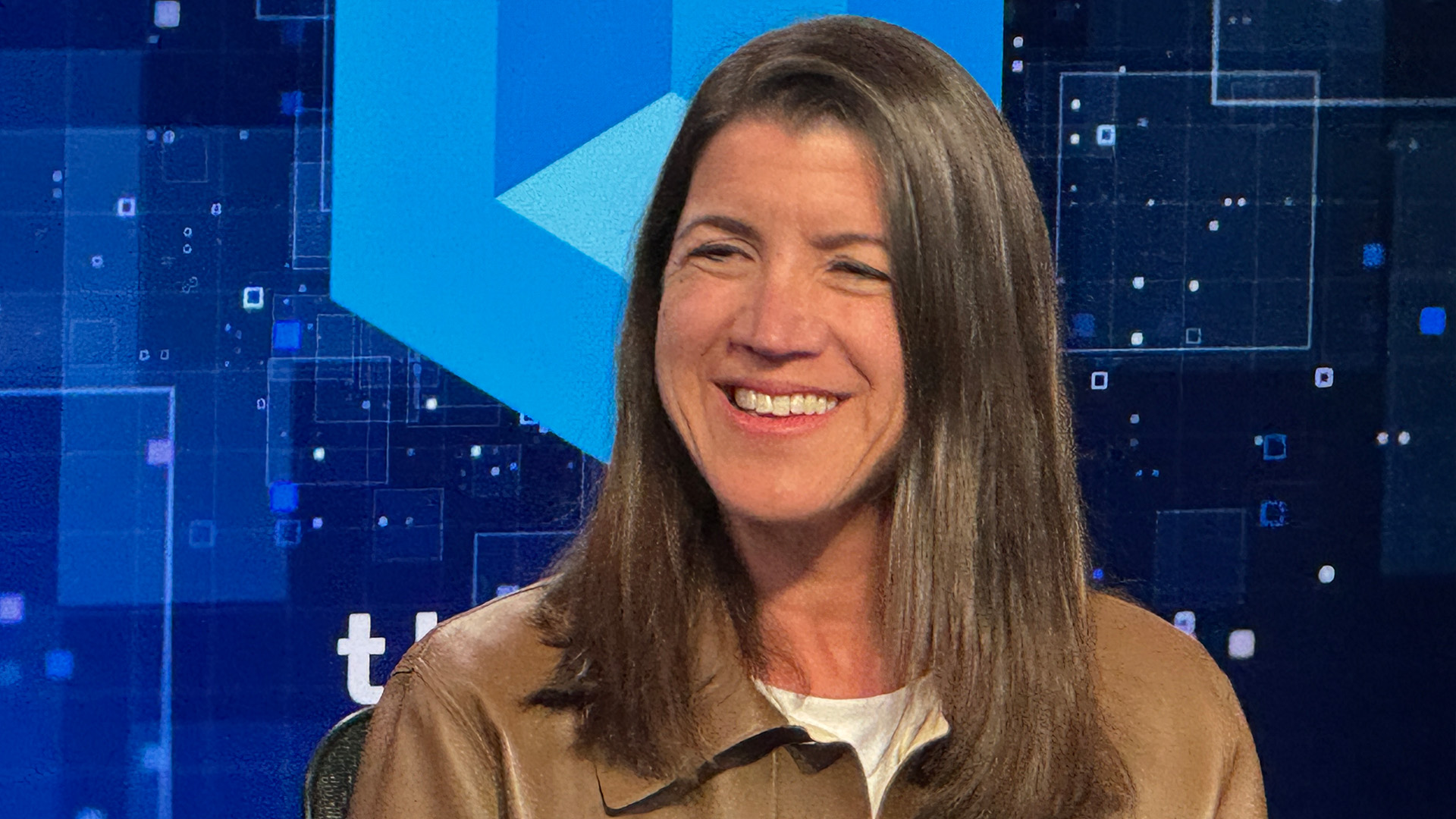
Laura Heisman, CMO of Dynatrace, joins theCUBE Research’s Rob Strechay to explore the complexities of digital transformation in today's rapidly evolving business landscape. They examine the persistent challenges companies encounter as they navigate their digital transformation journeys. The discussion sheds light on how organizations can harness digital solutions such as AI to optimize operations and meet customer expectations efficiently.
Heisman, an expert in digital business strategies, shares her insights on the necessity of leveraging cutting-edge technologies to streamline complex digital processes. Heisman discusses how Dynatrace supports businesses by offering comprehensive visibility into digital operations. The discussion highlights key areas such as AI integration, security challenges and the need for strong digital infrastructure to enhance customer experiences and ensure operational efficiency.
Businesses must prioritize resilience and reliability in digital transformation to remain competitive, according to Heisman. Furthermore, their discussion reveals how BMO Bank leveraged Dynatrace's solutions to reduce analysis time, thereby enhancing operational agility. Predictive operations and data-driven decision-making are important step allowing companies to thrive in today's complex digital environments, according to Heisman.
Forgot Password
Almost there!
We just sent you a verification email. Please verify your account to gain access to
Understanding Today's Digital Business With Dynatrace. If you don’t think you received an email check your
spam folder.
Sign in to Understanding Today's Digital Business With Dynatrace.
In order to sign in, enter the email address you used to registered for the event. Once completed, you will receive an email with a verification link. Open this link to automatically sign into the site.
Register For Understanding Today's Digital Business With Dynatrace
Please fill out the information below. You will recieve an email with a verification link confirming your registration. Click the link to automatically sign into the site.
You’re almost there!
We just sent you a verification email. Please click the verification button in the email. Once your email address is verified, you will have full access to all event content for Understanding Today's Digital Business With Dynatrace.
I want my badge and interests to be visible to all attendees.
Checking this box will display your presense on the attendees list, view your profile and allow other attendees to contact you via 1-1 chat. Read the Privacy Policy. At any time, you can choose to disable this preference.
Select your Interests!
add
Upload your photo
Uploading..
OR
Connect via Twitter
Connect via Linkedin
EDIT PASSWORD
Share
Forgot Password
Almost there!
We just sent you a verification email. Please verify your account to gain access to
Understanding Today's Digital Business With Dynatrace. If you don’t think you received an email check your
spam folder.
Sign in to Understanding Today's Digital Business With Dynatrace.
In order to sign in, enter the email address you used to registered for the event. Once completed, you will receive an email with a verification link. Open this link to automatically sign into the site.
Sign in to gain access to Understanding Today's Digital Business With Dynatrace
Please sign in with LinkedIn to continue to Understanding Today's Digital Business With Dynatrace. Signing in with LinkedIn ensures a professional environment.
Are you sure you want to remove access rights for this user?
Details
Manage Access
email address
Community Invitation
Laura Heisman, Dynatrace
Alois Reitbauer of Dynatrace joins the discussion at KubeCon + CloudNativeCon EU 2025 to explore the transformative role of digital observability in the era of artificial intelligence and cloud-native systems. This insightful session is part of theCUBE Research series, hosted by industry analysts, where expert insights are shared with a live audience.
In this video, Reitbauer shares their expertise on the evolving landscape of developer observability and the reshaping of platform engineering by AI. They elaborate on the convergence of AI and observability and its impact on digital transformation, highlighting the importance of providing developers with the right tools to enhance application performance and resilience. theCUBE Research analysts engage with Reitbauer to facilitate detailed discussions on these critical topics.
Key takeaways from the session include Reitbauer’s insights on the necessity of real-time observability to scale AI initiatives successfully and how businesses can benefit from embracing agentic AI systems. Reitbauer notes that shifts towards dynamic and unpredictable systems call for enhanced monitoring and compliance strategies to maintain system integrity and user satisfaction. These insights offer actionable strategies for business leaders and developers as they navigate the complexities of digital transformation.
Find more SiliconANGLE news and analysis https://siliconangle.com/ Follow theCUBE's wall-to-wall event coverage https://siliconangle.com/events/ Learn about the latest theCUBE events https://www.thecube.net/
00:00 - Intro 00:11 - Empowering Developers: The Role of AI and Real-Time Solutions in Digital Transformation 03:27 - From Microservices to Agentic Systems: The AI-Driven Business Evolution 06:48 - AI Observability and Developer Challenges 09:37 - Ensuring Compliance and Mitigating Risks through Real-Time Observability in AI 13:07 - Navigating Compliance: Future Directions and Final Reflections
Laura Heisman, CMO of Dynatrace, joins theCUBE Research’s Rob Strechay to explore the complexities of digital transformation in today's rapidly evolving business landscape. They examine the persistent challenges companies encounter as they navigate their digital transformation journeys. The discussion sheds light on how organizations can harness digital solutions such as AI to optimize operations and meet customer expectations efficiently.
Heisman, an expert in digital business strategies, shares her insights on the necessity of leveraging cutting-edge...Read more
>> Hello and welcome to this episode of Inside the Digital Business with Dynatrace. We will examine the current challenges and opportunities organizations are facing as they optimize themselves as digital businesses. Today, I'm joined by Laura Heisman, who's the CMO of Dynatrace. Welcome, Laura.
Laura Heisman
>> Thank you, Rob.
Rob Strechay
>> I'm so excited about this because I think that when you start to look at all organizations' journey towards being digital businesses, we talked about digital transformation for so long, and I think everything has just gone way, way faster as they have really started to embrace things like AI and other types of digital operations and things like that. I don't think anybody would say that the journey has become any easier for any of these organizations, but we know that there are steps that they can take to move faster. In fact, one of the things, I was just looking at some of our ETR data from our partner, and they said that 52% of organizations are going to actually leverage AI and cloud to help them in some way, shape or form to really get to that ROI. So, what do you think some of the challenges organizations, and some of the opportunities, that they're facing as they aim to meet their customers' digital experience requirements?
Laura Heisman
>> We're in a world of digital complexity. Everyone's going through business transformation, like you said, they have been for years. And now, it's looking at how do you actually optimize for that digital transformation? And it is that journey and there's so much complexity out there. And it's needing to think about that complexity. How do you manage that complexity? How do you use that complexity to your business advantage?
Rob Strechay
>> Yeah, I think, again, that's part of it. I think when you start to look at that complexity, I think there's some things that really add to it, like the security and the amount of siloed teams and the response times that they need to be responsive to the applications because you're always on. How do you see that? Is that really one of the things that you're seeing? Is Dynatrace kind of... You see the applications from end-to-end and really have a view into that.
Laura Heisman
>> It is. Our customers are looking at everything from their applications to AI, to their infrastructure, to compliance, security regulations, everything that they're dealing with, with just the business operations of their business. And so, that's it. We're helping them be able to look at everything that's growing at this unprecedented rate. It is more complex than ever. And so, how do you really understand what is underneath all of that, so that you can figure out your business and where to prioritize your business?
Rob Strechay
>> What are the real-world impacts of poor digital experiences and down time that organizations may experience?
Laura Heisman
>> It is everything from a board-level conversation to core IT operations type of conversation, to developer conversations. And the real-world impact is everything really around resilience, reliability, and being a business that is innovating. So, if you think about it from a board-level discussion, and we hear this from our customers, they are thinking about what is it that is keeping their board up at night or that they're thinking about? It is resilience and reliability, and that actually got a spotlight on it last year. If we look back at what happened in 2024. And then, if you think about core IT teams and operations, they need and want to be predictive. They do not want to have to be reacting. And so, it is how do you think about getting to this point of predictivity that they have not had before. And then, you keep going and you think about developers. Developers need to be able to understand what's happening with everything that they're building and innovating. And so, even from their level, they need to think about it. So, these are the types of things that everyone's got a view on. And it all comes back to how we put it as being able to observe and really understand what it is that their business is doing from whatever role that they play within the business.
Rob Strechay
>> Yeah, I think that to me is so key. And I think, again, when we were talking with your team and Dynatrace and stuff, you had some really interesting customer examples as well. I think you were talking about BMO Bank were able to reduce their analysis time by 80% and being able to find root cause. What other types of customer feedback have you seen about how when they lean into the right tool and platform for being able to observe across there that they're able to see and experience that?
Laura Heisman
>> It is wide-ranging. So, we have a customer that one of our executives was just meeting with a few weeks ago. And during that one-hour meeting, they said, "Had we been down..." they weren't, but had they been down during this one hour, they would've lost tens of millions of dollars of bookings because their system would've been down and no one would've waited. They would've gone to a different platform, because there's a competitor right out there that wants that business, and they would've lost all of that business at least for that hour, potentially long-term. So, that's the type of example of the business impact for our customers. And then, again, we have outages. And if customers can't figure out where those outages are, where that needle in the haystack is, which is really a benefit and a unique factor of Dynatrace, then they can't fix it fast enough. And so, you hear about some customers of ours that can be up right away. You hear about their competitors, it can take days for them to be able to get back up, and it's those kinds of different... And you talked about even just what that root cause is. That, of course, is something that we've been solving forever, it feels. But it is one of those special things that people need to be able to understand right away to keep their business up. And again, it's so that they cannot have to be reactive, but that they can be proactive and predicting and moving forward with their business.
Rob Strechay
>> Yeah, I think that, to me, was one of the keys, is that the real-time AI-driven insights, because you guys have... I've been around the block in observability and the platforms and security for quite some time and one of the neat things is you've always had AI in there, it's always been in there. Now, gen AI gets all of it, but really, I guess you could say the traditional AI has been there to really help people along, which again, then you're joining it with some gen AI that you're now doing as well. That must really be exciting for the customers to say, "Hey, I can talk to my data and understand the SLAs and understand where my applications are and what experience my customers are having."
Laura Heisman
>> It's been a journey. AI is in the DNA of Dynatrace. And so, when customers say, "Oh, what is it you're doing about AI," or wherever flavor they're talking about it, it is built into our business, it is core, it's a differentiator for Dynatrace, and it really helps to be able to figure out what is that cause? How are we going to predict it? How are we going to resolve something? And now, with everything that is around the chat and the chatbots and the LLM type of AI, it is also just the growth of what it is that our customers can do with us. But your gen AI side of things is only as good as the information that you put into it, and that's what you get out of it. So, it benefits our customers that we also look at the cause, we look at what does that cause mean and how do we analyze it, so we can predict what can be fixed. So, then when they get to the gen AI side of things, they can ask things and it has been input in a smart way, I guess is the most basic way to put it. And then, they can be the most productive, that they can innovate because they can have credible and really know that that is information that is grounded in how their business works.
Rob Strechay
>> Yeah, I think that's completely key, because again, being proactive, predictive and understanding really leads me into my next question, which is how do you protect and be prepared for the future? When you look at organizations trying to future-proof their strategies, while they're trying to focus on these digital strategies, where should they focus on to future-proof them?
Laura Heisman
>> So, we talked about it, the world is becoming more complex. I did some research and in 2010, there was two zettabytes of data. In 2024, they estimate that there was about 194 zettabytes of data and information. And then by 2028, we're going to more than double that and be almost at 500. And then I'm going to put this in a picture. So, picture one gigabyte is your cup of coffee, one zettabyte is the Pacific ocean, so imagine 500 zettabyte of information being 500 Pacific Oceans. We're getting more complex. There's so much information out there and you need to understand your business. So, to future-proof, there is no golden answer, but you need to understand your business and you need to have an elevated understanding of your business, so that you can see where's the value? What do I need to understand to be able to... Whatever it might be. If it's innovate, if it's solve a problem, if it's accelerate growth, if it's all of the above, that's the type of analysis that you need to be able to do to be able to future-prepare your business.
Rob Strechay
>> Yeah, I think that's key. And I love how you framed the data. Funny enough, I remember when we were using floppies and then USB drives, and now thinking about 500 oceans' worth of data is just insane. That it would also be a very long flight, to put it lightly. But if there's one takeaway business leaders should take from this, what should that be? What should they really be focusing on as they work with their organizations?
Laura Heisman
>> It is that resilience, reliability, it's key, it's foundational to your business. Observing what's going on with your business, it's no longer optional, it really is mandatory in today's world of all of these complexities. And if you don't understand your complexities, you are at a disadvantage because your competitor or a future competitor is. And so, you need to understand what is happening with your business to be able to move your business forward.
Rob Strechay
>> Yeah, I mean, as you talk to those business leaders, they have to be coming to you and going, "Hey, we're being told that we have to do AI, we have to do these new projects." Funny enough, even though over the last few years their budgets haven't been going up in double digits and kind of mid-single digits, they still have to get the same work if not more done, including this thing called AI. How have you seen them really focus on that? Is that leveraging it or how do you see that?
Laura Heisman
>> AI is something that all of us should be leveraging. In fact, your stat of 52% I was pretty surprised about because you would think it'd be much higher than that. And I also saw a stat recently about 97% or 98% of developers are using AI, and it makes me think, "What are those other developers doing?" Because it's just part of who we are now. We use it every single day. And if not, you become legacy. Instead of thinking about how you're going to move forward to be that modern business, to be that modern customer, to be able to do what your customers maybe aren't even thinking about today. We have to do that as part of our business. Not only is it built into our technology, but we're helping our customers be able to observe their LLMs and everything that they're building around all of their AI infrastructure. And if they're not doing the same thing, then they will find someone else that likely is because moving at the speed of AI.
Rob Strechay
>> How are you helping organizations really address that and really transform their digital businesses?
Laura Heisman
>> So, we think about it in the way that we're helping our customers analyze, automate, and innovate. So, we're helping them analyze and automate their digital ecosystem. And then, with that, it enables them to take the complexity and turn that into one of their greatest assets. And that, in itself, lets them innovate and it lets them move their business forward. And then, the way that we put it is Dynatrace is helping our customers understand their business better than ever before.
Rob Strechay
>> Yeah, I think that means so much to so many different organizations. But you also, upfront there, mentioned a little bit about board-level issues. What are some of those issues that Dynatrace is really helping organizations avoid?
Laura Heisman
>> So, what we think about from a board level all the way through the organization is really thinking through the complexities, so that our customers can then be able to solve for their brand, can think about their churn rates, and how do they ensure that they don't have churn rates and keep their customers? How do they think about operational efficiencies and ensure that they are running the most efficient business, while, as we talked about, also being resilient and reliable? It's all of these things. It takes everything to be able to be a successful business in this quickly-moving world that we live in.
Rob Strechay
>> Thank you for that, Laura. I think it's really been insightful and enlightening, and I think organizations can take a lot away from this. Thanks for coming onboard today.
Laura Heisman
>> Thank you so much, Rob.
Rob Strechay
>> And thank you for watching this episode of Inside the Digital Business with Dynatrace. Stay tuned for more to come as we peel back the covers on this here on theCUBE, the leader in technology and analysis news. Thank you and stay tuned.







 Rob Strechay