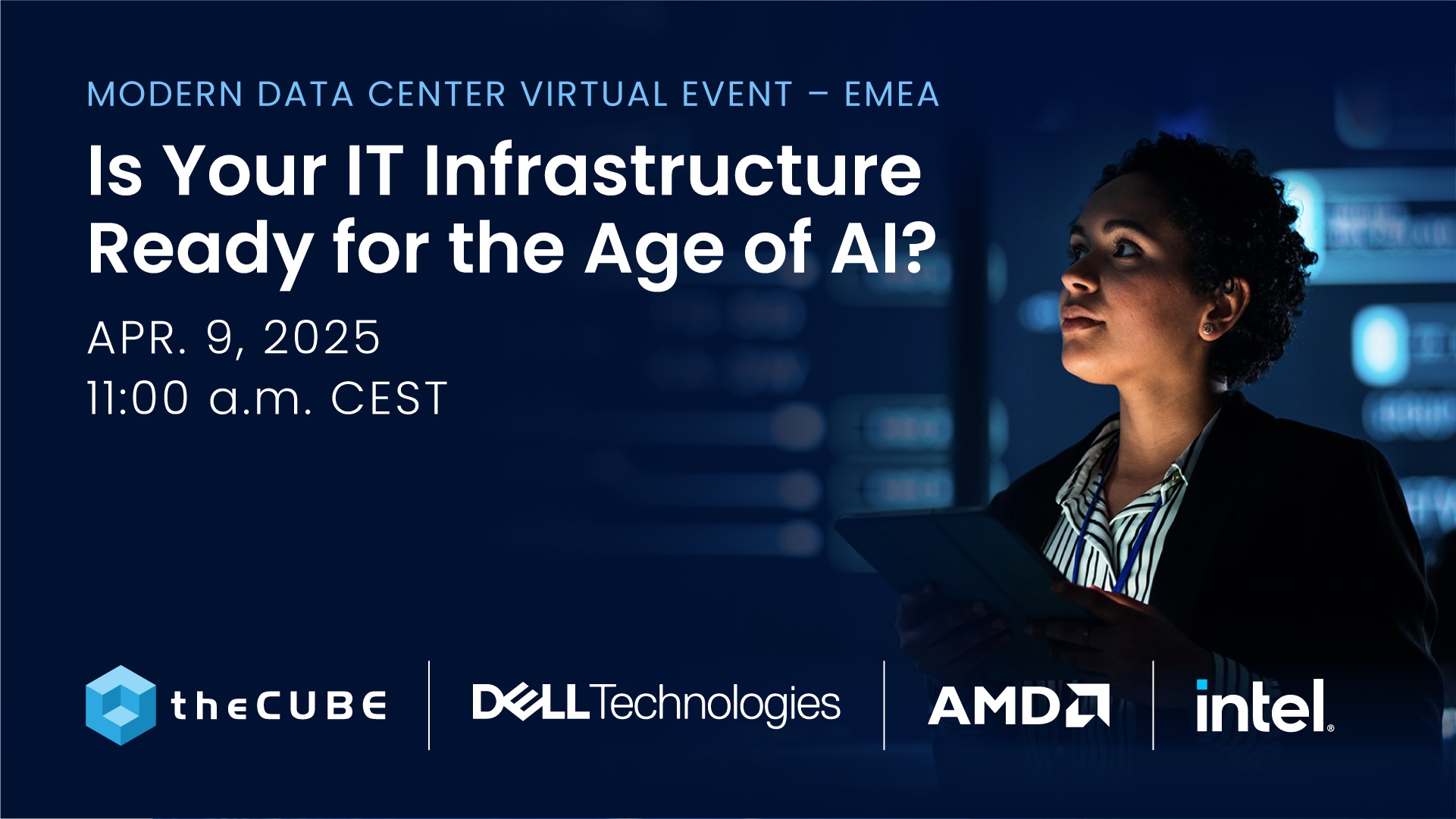
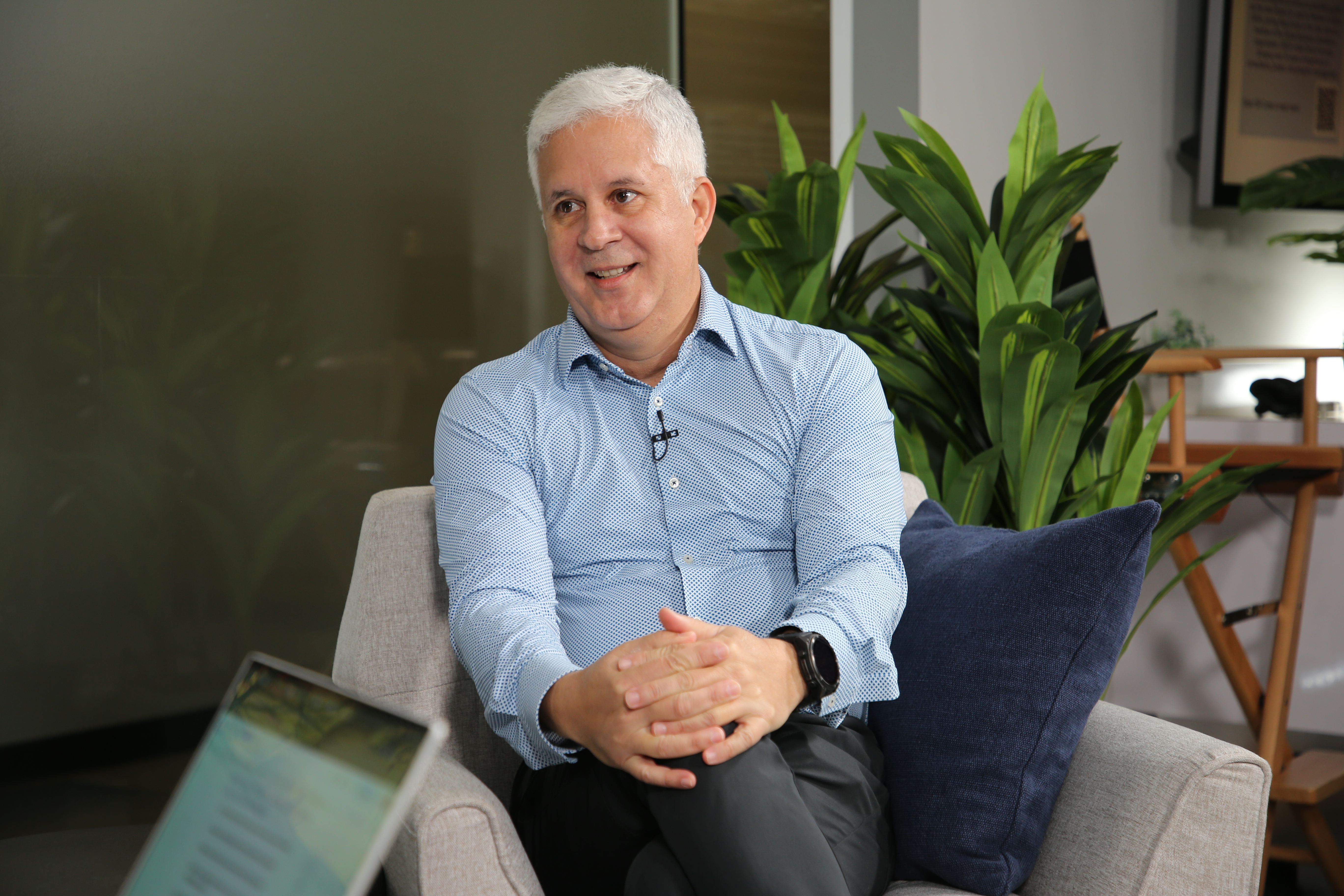
TheCUBE's Dave Vellante talks to Arthur Lewis, president of Dell's ISG Group, as he shares insights on how IT infrastructure evolves to meet the demands of AI during Dell's "Is Your IT Infrastructure Ready for the Age of AI?" event. Lewis draws from his experiences with customers navigating the intricacies of modernizing data centers to support AI and digital transformation.
As a part of the discussion, Lewis provides expert insights into data center evolution, focusing on the integration of AI in business operations. As data becomes an increasingly vital asset, Lewis discusses the transition from traditional data silos to connected infrastructures, enabling real-time digital representations.
Key takeaways from the video include the importance of data accessibility and clean data in AI operations, as highlighted by Lewis. Additionally, Dell’s strategic focus on a select set of use cases underscores the necessity of modernizing processes to extract business value. The return on investment for enterprises embracing AI infrastructure can be significant, underlining the value of integrating compute, network and storage systems, according to Lewis.
Forgot Password
Almost there!
We just sent you a verification email. Please verify your account to gain access to
Is Your IT Infrastructure Ready for the Age of AI? – EMEA. If you don’t think you received an email check your
spam folder.
Sign in to Is Your IT Infrastructure Ready for the Age of AI? – EMEA.
In order to sign in, enter the email address you used to registered for the event. Once completed, you will receive an email with a verification link. Open this link to automatically sign into the site.
Register For Is Your IT Infrastructure Ready for the Age of AI? – EMEA
Please fill out the information below. You will recieve an email with a verification link confirming your registration. Click the link to automatically sign into the site.
You’re almost there!
We just sent you a verification email. Please click the verification button in the email. Once your email address is verified, you will have full access to all event content for Is Your IT Infrastructure Ready for the Age of AI? – EMEA.
I want my badge and interests to be visible to all attendees.
Checking this box will display your presense on the attendees list, view your profile and allow other attendees to contact you via 1-1 chat. Read the Privacy Policy. At any time, you can choose to disable this preference.
Select your Interests!
add
Upload your photo
Uploading..
OR
Connect via Twitter
Connect via Linkedin
EDIT PASSWORD
Share
Forgot Password
Almost there!
We just sent you a verification email. Please verify your account to gain access to
Is Your IT Infrastructure Ready for the Age of AI? – EMEA. If you don’t think you received an email check your
spam folder.
Sign in to Is Your IT Infrastructure Ready for the Age of AI? – EMEA.
In order to sign in, enter the email address you used to registered for the event. Once completed, you will receive an email with a verification link. Open this link to automatically sign into the site.
Sign in to gain access to Is Your IT Infrastructure Ready for the Age of AI? – EMEA
Please sign in with LinkedIn to continue to Is Your IT Infrastructure Ready for the Age of AI? – EMEA. Signing in with LinkedIn ensures a professional environment.
Are you sure you want to remove access rights for this user?
Details
Manage Access
email address
Community Invitation
Arthur Lewis, Dell Technologies
TheCUBE's Dave Vellante talks to Arthur Lewis, president of Dell's ISG Group, as he shares insights on how IT infrastructure evolves to meet the demands of AI during Dell's "Is Your IT Infrastructure Ready for the Age of AI?" event. Lewis draws from his experiences with customers navigating the intricacies of modernizing data centers to support AI and digital transformation.
As a part of the discussion, Lewis provides expert insights into data center evolution, focusing on the integration of AI in business operations. As data becomes an increasingly vital asset, Lewis discusses the transition from traditional data silos to connected infrastructures, enabling real-time digital representations.
Key takeaways from the video include the importance of data accessibility and clean data in AI operations, as highlighted by Lewis. Additionally, Dell’s strategic focus on a select set of use cases underscores the necessity of modernizing processes to extract business value. The return on investment for enterprises embracing AI infrastructure can be significant, underlining the value of integrating compute, network and storage systems, according to Lewis.
President of Infrastructure Solution GroupDell Technologies
TheCUBE's Dave Vellante talks to Arthur Lewis, president of Dell's ISG Group, as he shares insights on how IT infrastructure evolves to meet the demands of AI during Dell's "Is Your IT Infrastructure Ready for the Age of AI?" event. Lewis draws from his experiences with customers navigating the intricacies of modernizing data centers to support AI and digital transformation.
As a part of the discussion, Lewis provides expert insights into data center evolution, focusing on the integration of AI in business operations. As data becomes an increasingly vi...Read more
>> Hi everybody. We're here at the Experience Center at Dell - Round Rock 2. I'm Dave Vellante. We're here with Arthur Lewis, who's the president of Dell's ISG Group. Arthur, good to see you again.
Arthur Lewis
>> Good to see you. How are you?
Dave Vellante
>> Thanks. I'm well, thanks. Not much going on out there. Is there?
Arthur Lewis
>> Yeah. It's a little busy.
Dave Vellante
>> So we've been spending a lot of time with customers trying to help them through their strategies and thinking about their infrastructure. I mean, the data center for a while was a boring place. It's not boring anymore, is it? I mean, they're trying to modernize. There's a lot of action going on. What do you see from your perspective?
Arthur Lewis
>> A couple of things, Dave. Number one, there's no question that data center capacity is growing. You just have to follow the investor dollars to see that. There's no question that customers are very focused on power and cooling as part of modernizing their data center. But to me, what's really interesting is why are we seeing this in the marketplace? And it's largely driven by AI and for years, customers have been on a digital transformation journey, and the underpinning of that has been the data. It's always about the data. So as we move into the world of AI, access and visibility to data becomes incredibly important. Silo's of the past will be dismantled, infrastructure will be connected. Algorithmic innovation is going to drive smaller domain specific models. So you can envision modern data centers with a multitude of models, and data is going to be the fuel that drives those models. So in a world today where you have many silos and the majority of the data sitting in cold archive or backup, you can envision a world where the majority of that data moves into hot and warm tiers, constantly in circulation, feeding these AI engines that not only sit in the data center but span to the edge onto the PC. It's an incredibly exciting time.
Dave Vellante
>> And the data evolution has really been quite remarkable to see. I mean, you had the data center and then you had the cloud, a bunch of stuff went into the cloud, and now you've got multi clouds. All these things are connected. You've got the edge and you've got data everywhere. And yeah, we brought together data to do some analytics, but now people are trying to build essentially digital representations of their business in real time, and they're rethinking their processes. So in order to achieve that, they've got to have a modern infrastructure. Like you said, they need the power and the cooling, and that seems to be a big constraint here. But can you explain how your customers are thinking about modernizing infrastructure and how that supports their AI initiatives?
Arthur Lewis
>> Well, when you think about the value that artificial intelligence brings, and again, it's all about taking that value and taking that data and driving business value out of it. All comes down to do I have access, visibility, clean that can run the AI? And part of that is modernizing the operations. So when we chat with customers, and this is a very new thing to them, they always have five questions that are top of mind. The biggest questions that customers struggle with today is ROI and use case. Hey, what's the best use case to go after? How do I think about ROI? Then we get into a conversation around model selection and hey, which are the best models to run all of the different use cases? Then we get into a data prep conversation, and only after those three questions are answered, do we get into an architecture infrastructure conversation. And again, what's really interesting is even though those are just three questions, they typically yield many, many more questions around, "Hey, I really have to think about modernizing my processes because all of this is about data and I need really clean good data in order to drive optimal AI." So this is not an infrastructure conversation, this is a how do I change the strategy of my company and modernize to take full value of what is becoming the world's most valuable asset, which is data. It's truly remarkable.
Dave Vellante
>> I like how you keep coming back to the data and the thing that customers are telling us is they're doing a lot of experimentation in the cloud, but their data lives on-prem, especially their high value data. And it's been there and they've put a brick wall around it and protected it, and it's secured it. But now they want to bring intelligence to that data, whether it's AI and agents, and they're not going to move that data into the cloud. It's too expensive and it's too risky from their standpoint, it's working, but they want to enhance it. So they've got to rethink how they approach that. Part of it is certainly infrastructure, but it's also, as you say, they have to rethink their processes because that's what's really going to drive business value. I'm interested, you've mentioned use cases. I mean, certainly code assist is a big one, but there are others. What are you seeing in terms of the use cases that customers have experimented with and now they want to scale on-prem?
Arthur Lewis
>> Yeah. I'm going to answer the question, but let me start with something that's very fundamental and important for customers to understand and something that Jeff Clark did in the early days of AI at Dell, which is to organize the company and strategy to be very focused on a select set of use cases to really understand how to get to optimal value of AI. Because what we see with a lot of customers is everybody wants to roll their own in a company, and that's extremely suboptimal. When we started, Jeff took a role of how many AI projects we had in the company. We had over 900 projects running in the company. Quickly got that organized and we broke it down into we were going to focus on what we thought for Dell were the more valuable use cases. Number one, content creation. We have thousands of people that are working on content for customers, for internal presentations, incredibly streamlined the ability to generate content. Number two, sales chat. We have hundreds of thousands if not millions of conversations with customers on a weekly basis. So sales chat, services and service chat, we talked about next best action. We've seen a significant reduction in how long it takes the time to close a case with a customer because we're able to pull from a variety of data sources, understand what the problem is, and quickly get to the rep, what's the next best action that they should take with the customer. And we've seen anywhere from a 15 to 20% reduction just at the start. And then code assist. Code assist are obviously very relevant in my world, even in the early days, we see close to 40 to 50% of the code generated being generated by AI. Now, you have to get into how much of that it's adopted and actually getting into the source tree and into the code base. And it's about half of that, but a lot of really green shoots. So sales chat, customer chat, code assist, content creation, top four use cases, and we just added a fifth, which is in our supply chain. But taking advantage of this really required the company to modernize itself around this initiative because the worst thing that could happen here, you've heard of shadow IT, shadow AI is exponentially worse. And CIOs and CEOs have to rein this in, modernize their operations, get it under control, and they will see the value in it.
Dave Vellante
>> And it all started with getting your data house in order. I have no doubt about that. We talked earlier about some of the power constraints that customers face. Obviously technology, we talked about inflation. The beautiful thing about technology, it's deflationary. We just keep driving efficiency. So what are the things that you guys are doing to drive efficiency for customers?
Arthur Lewis
>> Well, I mean obviously density is incredibly important. So we can go round-robin across the portfolio. So on the server side, we started with the 9680, which was the leading AI server for Dell fastest product to a billion dollars. But we had a couple of design points on the 9680, silicon diversity, network diversity, density and power efficiency. And we led the industry in all of those, which is why we were so successful, the 9680. The follow-on product, still with the same silicon diversity, network diversity, 33% more dense in a 4U Chassis, 2 1/2 times more energy efficient. And then we take those servers and we build super efficient rack scales with 64, 72, 96 growing to 144 GPUs driving a ton of density. We take that same mindset into the storage portfolio where we launched PowerStore Prime with industry leading five to one guarantee. And we talked about data and the importance of protecting it. And we have the world's leading target appliance with data domain that drives a 55 to 1 data reduction guarantee. And then we have PowerScale, which we believe is the most performant, dense file system in the industry. So you take all of those components together and we're able to provide a lot of density for customers that are limited by space. And then we also introduce liquid cooling into the servers to provide for even more performance. So now we have a individual server that's liquid cooled. We have the rack of GPUs that's liquid cooled and very impressively, we launched the M7725, which is our modular multi-node CPU rack, which is based on AMD's Turin platform, 27,000 cores in a single rack. Wrap your head around that.
Dave Vellante
>> Okay. So this is critical because as we've talked about many times, data center consumption of electricity is probably about, I don't know, two to 3% for years and forecast, it's going to go into the double digits here, certainly by the end of the decade, and so that's got a lot of people concerned, but let's talk beyond the technology. We were talking a little bit before about processes. What have you guys learned from some of your internal work beyond the tech that is necessary to modernize your infrastructure and prepare for this new wave that we're on?
Arthur Lewis
>> Yeah. It's a pretty significant effort, and we have this mantra, streamlined, standardized, automate AI. Those are the three steps to get to AI. And what that means is Dell's a 40 year enterprise. So we have a lot of processes in the company. We ship a lot of different things to a lot of different customers. So we had to take a step back and take a look at every single process to ensure that all of our processes were streamlined, that they were standardized across the company, they were automated, were applicable. And only then if we could get to those three steps, would we say it's "AI-able" because obviously it's all about the data. And if you have data everywhere and different components, not clean, not visible, great. It's a suboptimal AI experience. AI is really about modernizing operations, modernizing the data center. It's a completely different way of thinking about how you run the business. Data centers used to be cost centers, now they're value centers.
Dave Vellante
>> Yeah. We wrote a piece, I'd love to get your thoughts on this. My final question area. We wrote a piece about a couple of months ago that Jamie Dimon is Sam Altman's biggest competitor, and the point was that you're Jamie Dimon is not going to take his data and put it out in the internet so that LLMs can train on it> rather, they're going to bring that AI into the data center. I'm sure you guys are seeing this as well at Dell, you've got a lot of your own proprietary data. So that seems to be the big opportunity. That is a huge tailwind for... It's not repatriation, it's just investment in on-prem.
Arthur Lewis
>> Here's a misconception. Well, first of all, I'll say when we started down this path four years ago, we wrote down several hypotheses that we had about the industry and the market. And one of them, the leading hypothesis was AI is going to follow the data. Everything that we've seen in every customer conversation we have is that is absolutely true. And in fact, we see and hear more about customers needing to repatriate workloads for AI business that they want to run on-prem. But the misconception is we have this binary dichotomy of training and inferencing and implicit in that is training is a point in time. Training never stops. Fine-tuning is training. Training is just getting the model ready to go into production. But the reality is, the majority, 90% of the world's data sits on-prem, and the majority of the data hasn't even been created. The evolution of fine-tuning is the continued training that allows inferencing to be optimal. We're moving into reasoning and thinking models now. The fine-tuning that you're doing, is going to be way more important than the initial training of the model, which is why it's so important for the data to be on-prem, it's more performant, it's cost effective, and also it's more secure.
Dave Vellante
>> So it's not either or, but I'm inferring from your comments that inferencing is like a spring coil ready to take off, and that's what we're seeing in the marketplace. Would you agree?
Arthur Lewis
>> 100% agree. It's always interesting because it's eye-opening for customers when they think about, hey, what training is one thing and inferencing is another, and it's like that's really not a binary thing. Its training is forever. The way I think about it is as humans, we go to school, we go to college, some of us, and then we live our life. Training is like through that college experience, but the real experience comes after college. When you get into the world and you get a job and you start to learn, "This is what they meant in school." It's the fine-tuning because a trained model by itself without data, without fine-tuning is suboptimal. You need the data in your business to fine-tune that model to get it to derive the type of value that you would expect.
Dave Vellante
>> I think the other misconception too, Arthur, is that people you hear in the news about these 100,000 GPU clusters, you don't necessarily need that. For a lot of these on-prem data centers, these mid-size and even large companies, they can do a lot with a really efficient targeted infrastructure. What are you seeing in that regard?
Arthur Lewis
>> Yeah. There's no question. Look, folks that are deploying hundreds of thousands of GPUs are in pursuit of know AGI and ASI and know those kinds of things. And hey, it's great. I love it. And we are a huge part of every single one of those endeavors, and we learn something every day when we meet with those customers. But for a typical enterprise customer, even a large enterprise customer, the ROI that we're seeing is on the order of 25, 30 to 1, it's incredible what you can do with a couple of racks of infrastructure. But again, it really comes down to where's my data? Is it visible? Do I have access to it? Is it cleaned? Is it AI-able? And our very strong value proposition is that we architect the compute, the network, and the storage all for AI under one roof. So we are the integrator of the system for the customer. The customer is not their own integrator.
Dave Vellante
>> I feel like we've been preparing for this moment for 40 plus years in technology. It's really an exciting time. Arthur, thanks so much for spending some time with us. Really appreciate it.
Arthur Lewis
>> Thank you for having me.
Dave Vellante
>> You bet. Okay. Keep it right there. We'll be back. We're going to dig deeper into some of the product areas and the new innovations that Dell is announcing. Be right back, right after the short break.







 Dave Vellante