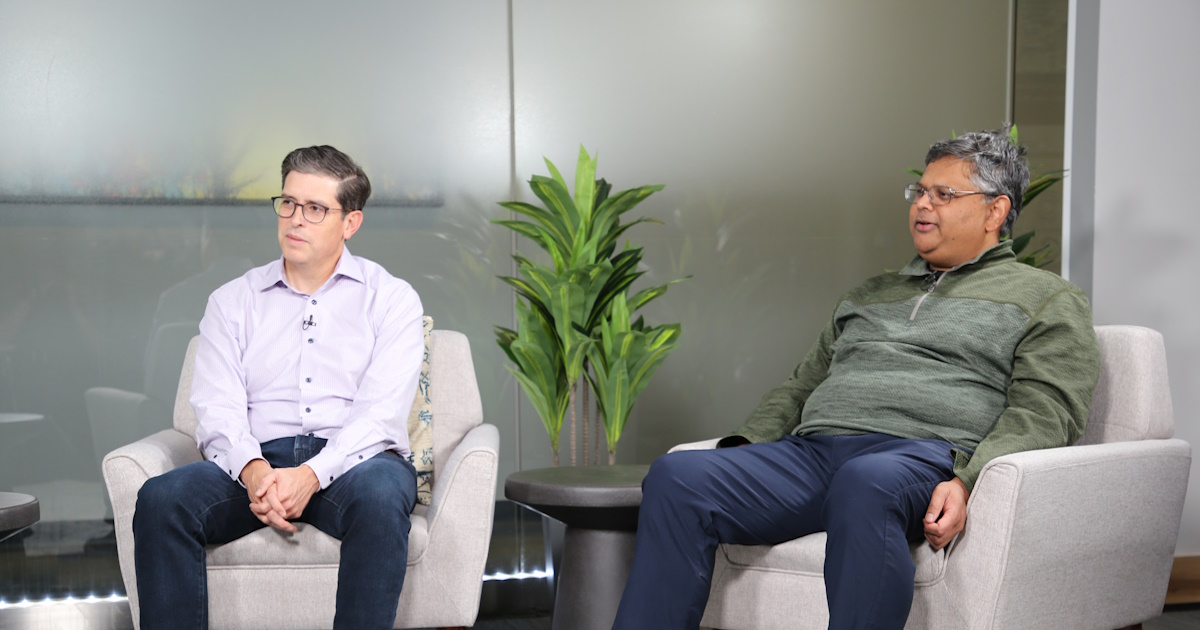
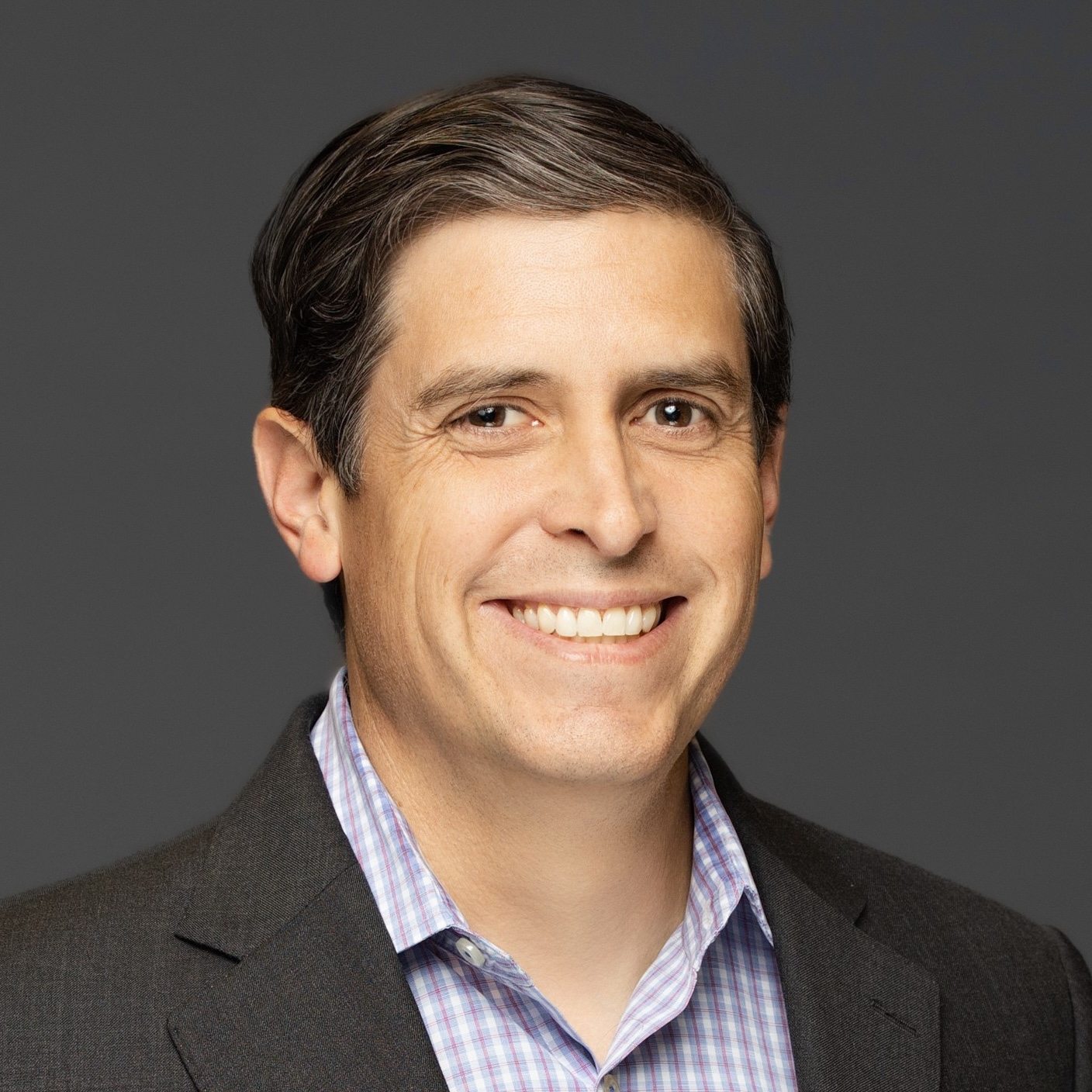
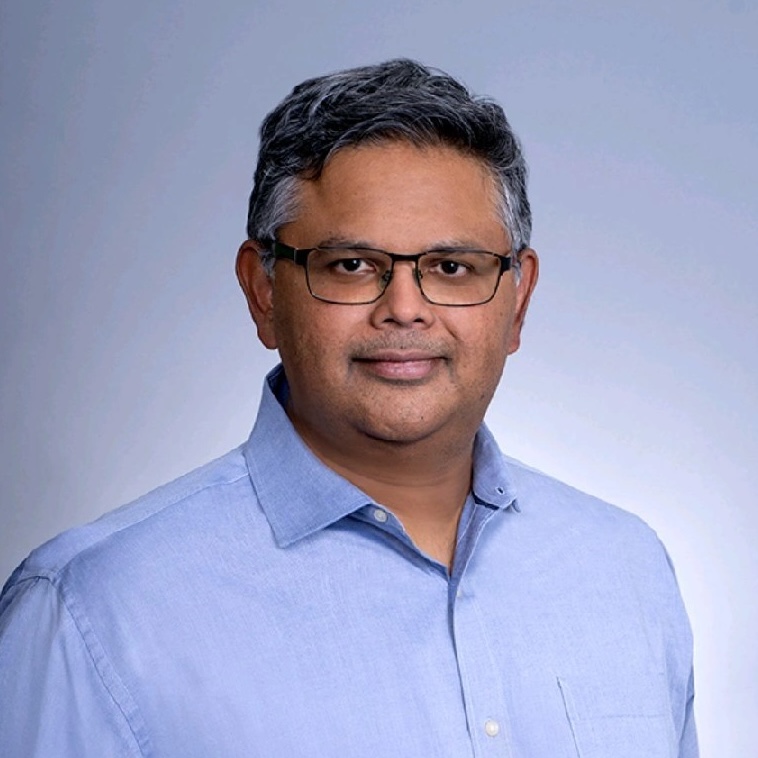
Arunkumar Narayanan, SVP, server and networking products, at Dell Technologies, and Travis Vigil, SVP, product management, at Dell Technologies, discuss transformative changes in IT infrastructure amid the rise of AI with theCUBE's Dave Vellante during Dell's "Is Your IT Infrastructure Ready for the Age of AI?" event.
Narayanan and Vigil relate their extensive knowledge of advancements in AI-ready IT infrastructure. The video explores the key challenges businesses face as they implement AI within their data centers. Narayanan shares his experience in managing the relentless momentum of AI and the necessity for data center modernization to support AI workloads.
Key insights from the video include Vigil's analysis of transitioning toward disaggregated architecture for optimal performance in data centers. Vigil notes that automation and single-provider solutions such as Dell facilitate better service and support, thereby improving overall IT performance. Narayanan stresses the importance of power management in both traditional and liquid-cooled servers to effectively meet modern AI demands.
Forgot Password
Almost there!
We just sent you a verification email. Please verify your account to gain access to
Is Your IT Infrastructure Ready for the Age of AI? – APJ. If you don’t think you received an email check your
spam folder.
Sign in to Is Your IT Infrastructure Ready for the Age of AI? – APJ.
In order to sign in, enter the email address you used to registered for the event. Once completed, you will receive an email with a verification link. Open this link to automatically sign into the site.
Register For Is Your IT Infrastructure Ready for the Age of AI? – APJ
Please fill out the information below. You will recieve an email with a verification link confirming your registration. Click the link to automatically sign into the site.
You’re almost there!
We just sent you a verification email. Please click the verification button in the email. Once your email address is verified, you will have full access to all event content for Is Your IT Infrastructure Ready for the Age of AI? – APJ.
I want my badge and interests to be visible to all attendees.
Checking this box will display your presense on the attendees list, view your profile and allow other attendees to contact you via 1-1 chat. Read the Privacy Policy. At any time, you can choose to disable this preference.
Select your Interests!
add
Upload your photo
Uploading..
OR
Connect via Twitter
Connect via Linkedin
EDIT PASSWORD
Share
Forgot Password
Almost there!
We just sent you a verification email. Please verify your account to gain access to
Is Your IT Infrastructure Ready for the Age of AI? – APJ. If you don’t think you received an email check your
spam folder.
Sign in to Is Your IT Infrastructure Ready for the Age of AI? – APJ.
In order to sign in, enter the email address you used to registered for the event. Once completed, you will receive an email with a verification link. Open this link to automatically sign into the site.
Sign in to gain access to Is Your IT Infrastructure Ready for the Age of AI? – APJ
Please sign in with LinkedIn to continue to Is Your IT Infrastructure Ready for the Age of AI? – APJ. Signing in with LinkedIn ensures a professional environment.
Are you sure you want to remove access rights for this user?
Details
Manage Access
email address
Community Invitation
Travis Vigil & Arun Narayanan, Dell Technologies
Arunkumar Narayanan, SVP, server and networking products, at Dell Technologies, and Travis Vigil, SVP, product management, at Dell Technologies, discuss transformative changes in IT infrastructure amid the rise of AI with theCUBE's Dave Vellante during Dell's "Is Your IT Infrastructure Ready for the Age of AI?" event.
Narayanan and Vigil relate their extensive knowledge of advancements in AI-ready IT infrastructure. The video explores the key challenges businesses face as they implement AI within their data centers. Narayanan shares his experience in managing the relentless momentum of AI and the necessity for data center modernization to support AI workloads.
Key insights from the video include Vigil's analysis of transitioning toward disaggregated architecture for optimal performance in data centers. Vigil notes that automation and single-provider solutions such as Dell facilitate better service and support, thereby improving overall IT performance. Narayanan stresses the importance of power management in both traditional and liquid-cooled servers to effectively meet modern AI demands.
SVP, Server and Networking ProductsDell Technologies
Arunkumar Narayanan, SVP, server and networking products, at Dell Technologies, and Travis Vigil, SVP, product management, at Dell Technologies, discuss transformative changes in IT infrastructure amid the rise of AI with theCUBE's Dave Vellante during Dell's "Is Your IT Infrastructure Ready for the Age of AI?" event.
Narayanan and Vigil relate their extensive knowledge of advancements in AI-ready IT infrastructure. The video explores the key challenges businesses face as they implement AI within their data centers. Narayanan shares his experience in ...Read more
>> Welcome back to the Experience Lounge here in Round Rock, Texas. My name is Dave Vellante. And we're talking about the trends and changes in data centers, data center modernization. And I'm very excited to have the key components of infrastructure. We've got the servers, the storage, and the networking pieces all together. The brass is here, Arun Narayanan, who's the senior vice president for server and networking products, and Travis Vigil, who's senior VP of product management at Dell Technologies. Gents, good to see you again.
Arun Narayanan
>> Great to be here.
Travis Vigil
>> Great to see you.
Dave Vellante
>> We saw each other last year at the Supercomputing Show. That was super exciting. And wow, the momentum has just continued, Arun, so it's good to have you -
Arun Narayanan
>> Yeah, it's relentless. Relentless. The AI momentum is relentless.
Dave Vellante
>> It is relentless. And Travis, you were talking to Arthur earlier today about some of the trends that are going on in data center, and you and I have talked about when we go back to the converged infrastructure days, it was like you had servers and storage and networking and we kind of bolted them together. And then hyperconverged came along and simplified that. But now we're entering a new era. Why don't you give us your perspective on the three-tier architecture and where we're headed?
Travis Vigil
>> Yeah, Dave, it's a super exciting time. I mean, I've never been involved with so much change at once. And if you look at what our customers are having to deal with, it's a combination of, "What am I going to do about generative AI? What am I going to do about private cloud? And what am I going to do about cybersecurity? And how am I going to get an optimal configuration in my data center?"
And what we've learned over the course of the last 10 years is that while hyperconverged was really great if people were focused on a singular ecosystem, with the need to optimize the performance going to your storage, separate from the capacity to your storage, you need to move to a disaggregated architecture. Which means that if you want to be ready for generative AI, if you want to set yourself up to have multiple hypervisors in your environment, and frankly, if you just want to get better TCO in your data center, moving to an architecture that looks a lot like what three-tier was, but is different in a couple key ways, is the right investment to make. And those key ways are, it needs to be automated. Getting all of the components from a single provider like Dell helps with service and support. And it's a trend that we see almost every customer we're talking to, whether they're looking at what do I do about generative AI or what do I do about private cloud or what do I do about cybersecurity look at going forward.
Dave Vellante
>> When you talk about a single ecosystem, you're talking about you're either a VMware shop or you're a Hyper-V shop, or you rolled your own with OpenStack or KVM and you're there-
Travis Vigil
>> A hundred percent.
Dave Vellante
>> ... you're sort of locked in there for good.
Travis Vigil
>> Yeah.
Dave Vellante
>> Okay, got it. And Arun, I wonder if we could talk about data center monetization. The thing that we're seeing is, like you said, AI momentum is relentless.
Arun Narayanan
>> Yep.
Dave Vellante
>> We're seeing a lot of experimentation going on in the cloud, but every enterprise that we talk to is saying, "I have data on-prem. That data has gravity. I don't want to do this in the cloud because I don't want to move the data and it's too expensive, so I'm going to build my own capabilities on-prem. Meaning I have to modernize my on-prem infrastructure, which I haven't really been focused on doing for the last several years, other than basic refresh cycles." So what are you seeing in terms of that?
Arun Narayanan
>> Yeah, this is a great point, right? So as you said, every enterprise, if they need to start doing AI, they need to create space for AI. They need to create power for AI, right? I mean, data centers are like 10 years old, 15 years old, nobody has modernized that. And now the average power per kilowatt in the average data centers is less than 15 kilowatts. And now an average rack for an AI rack is 60 kilowatts. How are you going to create the power envelope to do that? Now, the biggest advantage we have is most of these data centers have assets that are aging five, six, seven years. Now, you go back to a server you bought five or six years ago and you buy a new server today, you can do a seven to one consolidation ratio, right? So think of if you have a hundred servers, you can take out a hundred of those servers, replace it with 14 servers or 15 servers. That is what new data center modernization is all about. Reduce the footprint, reduce your blast radius, and then create both power budgets and space budget to introduce AI into the data center so that you can use the same existing data center to do AI workloads. And then you can use the existing data that is in the same data center for training those AI models or inferencing from those AI models. That is what I see as the biggest trend happening in enterprises right now.
Dave Vellante
>> And Travis, I don't know if you remember, I think it was at Dell Tech World last year, we had riffed a little bit around life cycles, and I had put forth the premise that because of AI and because of the demands for power that life cycles were going to shorten, and it wasn't certainly not definitive, but you noticed some of the cloud vendors in the income statement who had been elongating their depreciation schedules are now squeezing them down and specifically citing AI. And so that's just an example of some of the changes that we're seeing, and I think there's more to come. I want to ask you about this notion of disaggregated infrastructure. And so let's think beyond HCI. So HCI was great, it simplified things-
Travis Vigil
>> Yep.
Dave Vellante
>> ... but like you said, you were within a stack, you were stuck in that stack. And you didn't really have the ability to scale.
Travis Vigil
>> Yeah.
Dave Vellante
>> So why does disaggregated infrastructure solve that problem? How does it address that problem?
Travis Vigil
>> HCI provided a lot of operational simplicity for folks, and it was the right solution at the right time. What we're seeing with the need to have choice and flexibility around which hypervisor you choose, VMware environment, a Nutanix environment, an OpenShift environment, and what we've seen customers do with HCI environments over the years has led us to a new conclusion, which is in order to get the most out of your infrastructure, in order to make sure that you're deploying something that makes space for generative AI, like Arun was talking about, you can't have a solution where your cores on your HCI are 20, 30% utilized. And that's what we've seen in practice. And so by moving to a disaggregated architecture, you can get higher utilization of your servers, meaning you need less servers. And then you can also take advantage of key functionality and ease of use and cost efficiencies that we've built into the storage arrays, things like five-to-one deduplication rates. So you can get an environment that utilizes less servers, utilizes less storage, is easier to run and saves you money.
Dave Vellante
>> I want to come back to the sort of energy footprint that you were talking about before. I had the pleasure of touring some of your advanced labs back during the Analyst Summit in November and saw some really cool stuff, much of which I can't talk about yet, but I'm excited about it. A real main focus was on reducing that energy footprint. So what can you tell us about how Dell, specifically Dell servers have advanced energy efficiency and are supporting this whole AI adoption wave?
Arun Narayanan
>> Yeah, I'll put it into two parts. I mean, there's the traditional air-cooled servers, which we've known for a long time. What we've seen is across the last eight years, we've improved every piece of the technology, right, be it the airflow in the servers, what is the inlet temperature that goes in, all the materials that are being used on it, the design of the themselves, right? So we've done a lot of these changes that has allowed us to take down energy efficiency, increase it by 83% over the last eight years. So significant design changes in airflow, materials being used, fan speeds to increase that, right? So on the air-cooled servers. The second, I think the biggest trend we are seeing right now is liquid-cooled, right? I mean, I know you saw some of it in the lab there. But direct-to-chip liquid cooling is going to be a pretty key capability that we are doing, especially in AI servers. When you have to cool a 200 kilowatt rack, there's no amount of air cooling can do that. You have to pull that temperature, keep it room neutral. So we are innovating on cold plate technology, what material sciences we are going use there. We are innovating on CDU technology, on what flow rate, how do you do that? So we are working through the entire cold plate ecosystem, the entire CDU ecosystem to make sure that we have latest technologies to be very, very energy efficient, right? So that's part of what we will innovate over the next few years. But that's going to be pretty critical capabilities that I think are differentiated in the market space.
Dave Vellante
>> We talked a lot about servers. They're the big power consumer.
Arun Narayanan
>> Yeah.
Dave Vellante
>> And of course when we reduced the amount of spinning disk, that helped of course. But you guys are making a bunch of announcements, PowerStore PowerProtect, all your whole power line. What's exciting you in the storage space?
Travis Vigil
>> Well, I'll tell you one of the most exciting things in the storage space actually has to do with generative AI. We're having conversations constantly with customers about, "How do I get started with generative AI?" And outside of having the conversation about compute and power and all of that, the number one conversation we're having is about data. And what we've seen, especially for enterprises, is that in order to make a RAG deployment or an inferencing deployment work for an enterprise, it's got to utilize what I call the intelligence of the enterprise. And that intelligence resides in PDFs and it resides in support repositories, it resolves in email. And being able to curate the right data for your generative AI deployment is probably the number one conversation we have with customers. The great news about working with Dell is we're on the cutting edge of that. We can talk about speeds and fees. I know you had folks talking earlier about, "We're coming out with the latest and greatest 122 terabyte drive, and we have object scale with all flash and we have high performance with power scale." And that's all necessary. But we also have things like the Dell Data Lakehouse, which helps customers curate and find the right data and metadata so that their generative AI RAG deployments or their generative AI inferencing deployments is actually utilizing the right data.
Dave Vellante
>> How about the data protection piece? Where does that fit?
Travis Vigil
>> Data protection is critical for customers. I like to say the three big things that I talk with customers about is, "What do I do about private cloud?" And that ends up coming to a disaggregated story. "What do I do about generative AI?" And that ends up coming to a PowerScale or an ObjectScale or a Dell Data Lakehouse discussion. We just talked about that. And then the third thing is, "What do I do about cyber security?" And the one thing that customers are always asking us for is obviously you need to have great TCO. And with our PowerProtect data domain we get dedupe rates of 55-to-one, that's great. But we're building intelligence into the systems. We're building integration into the systems that really make it differentiated. For example, we've built in an integration between our PowerStore product and our PowerProtect data domain products such that you can do backups at four X the rate versus alternative methods. Number one. Where we're adding all-flash capabilities to PowerProtect data domain so that if you need to do fast restores, you can do it from flash versus spinning media. And something I'm really, really excited about is that we've built anomaly detection into PowerProtect data manager. And so anomaly detection gives our customers an early warning if something's going awry so that if a cyber event is happening, we can sense it and the customer can take action to mitigate it or to restore from it.
Dave Vellante
>> And that becomes increasingly important because AI is just going to create more seams, more ways for the bad guys to get in. So as they advance, you have to advance as well. Arun, I want to come back to you. And we've talked about the efficiency piece. Workloads are also changing. I mean, the entire stack from silicon all the way up to applications is changing. So what are the things that you pay attention to from the compute and networking standpoint that are changing, as you said, to prepare for the next five years?
Arun Narayanan
>> Yeah, I mean, I'll go to the networking piece now, right? I mean, I think this AI is building an entire new fabric. I mean, there's a whole new fabric that's getting built out. These GPU clusters don't work with other network, right? They have to have the most modern networks, the fastest networks. So what we are seeing is a massive new opportunity of an entire network build out in networking.
Travis Vigil
>> Well, and that's a network for GPU-to-GPU-
Arun Narayanan
>> For GPU-to-GPU connectivity.
Dave Vellante
>> And GPU-to-storage.
Arun Narayanan
>> And GPU-to-storage. So we have both.
Dave Vellante
>> Yeah, I know.
Arun Narayanan
>> I mean, if you think of any big GPU deployment, for every dollar you spend on a server, you're spending 20 to 25 cents on networking. And in that 20 to 25 cents, 80% of that 20 to 25 cents is this GPU-to-GPU connectivity. But the remaining 20% is storage connectivity. You need both. You need high-speed storage connectivity, and you need high-speed GPU-to-GPU connectivity. So we are seeing massive new technologies being built out, the 400 gig networks, 800 gig networks. Now all of this has to be managed. And so smart fabric management to make sure that the NIC on the server, the switch is all working together in effective way is also new emerging technologies. I think that that is just scratching today, is thinking of the NIC and the switch as of one ecosystem. Historically, there've been two separate ecosystems. Of course, NVIDIA has done some innovations in Spectrum and InfiniBand to do that, but I think that's just beginning, right? Now everybody's going to do that. Fabric management and fabric management at scale is going to be a lot of innovation in the next three to five years from a software technology standpoint.
Dave Vellante
>> The entire balance of the system has changed, hasn't it? I mean, when we go from spinning disk to flash, that was obviously a sea change, but then you open up the floodgates with much greater bandwidth. How have you been able to maintain that balance? And how do you see it shifting in the future?
Arun Narayanan
>> I mean, what we've tried to do is as we see the market shaping forward, our goal is to be the best compute provider out there because we are a compute-led technology. And of course storage is the number one marketplace, get the best storage technologies. Networking so far, we've not focused so much on enterprise networking, right? That has been like a Cisco Arista shop. But with AI networking, which is a compute-led sale, we want to build out the entire AI network fabric. So that's what we are trying to do, is build the capabilities for this AI ecosystem, be the best compute layer, be the best storage layer, and be the best network layer. That's how we're trying to strike the balance, a focus on the AI workload, which is the workload of the future.
Dave Vellante
>> Good. We'll come back to data. Unstructured data is, ever since I've been in this business, the amount of unstructured data has been greater than 90%, right? I mean, it's just-
Travis Vigil
>> It's the avalanche that never stops.
Dave Vellante
>> ... unbelievable, right? And then of course, forget about video. I mean that just makes it 99.99%. But how are you handling unstructured data? What's your story there? Give us a little color.
Travis Vigil
>> If you look at our unstructured story, it's really scale out file with PowerScale, scale out object with ObjectScale. We've released some really interesting enhancements there in terms of all-flash support for that product line. And then it goes back to the data, right? How do you make sense of all the data? How do you curate the data, especially for generative AI? And that's where the Dell Data Lakehouse comes in.
Dave Vellante
>> Let's wrap with some advice for customers. So as we said earlier, a lot of experimentation going on in the cloud. Every enterprise knows it needs to build some kind of on-prem AI capability. But they're still nervous, right? They're not really sure, the applications are kind of chatty, ChatGPT-like. They're stealing from other budgets to fund it. It's not like the CFOs are opening their checkbooks. They're a little bit nervous about, "Well, it's water-cooled stuff. I got to move to that direction." Help me Dell, give me confidence that I can invest in the future, you're going to be there as a partner. What's your advice to these customers?
Arun Narayanan
>> Yeah. So I think about it like this, right? I mean, we've moved from, for enterprises, Dell has to play a role in ensuring them the proof of value. I mean, it's gone from these are the use cases. Use cases are important, but you have to go to the CFO or the CEO and tell him that this is the value from generative AI, right? I mean, what are we seeing? What is the productivity savings or what is the revenue capabilities you can generate? Depending on your business. And I think Dell can play a role, right? Because we've worked across multiple customers. Now we've seen what best looks like, right? We've learned from that. We are trying to build use cases and proof of value to these customers and showing them. Then once you land that story, then it becomes, "Okay, what is the infrastructure conversation you want to have? How can Dell provide you the best infrastructure? What is the best storage conversation you want to have? What is the best network conversation you have?" And the most important thing to me is these are not simple deployments. Even in the smallest of cases, this is a pretty complex and sophisticated deployment. So building that and making sure the customer feels confident that they have something that's deployed well and gets the best performance out of it is a pretty important thing that Dell can help. So start with a proof of value, because we can show that to those customers, and then talk about the infrastructure. I don't think it's a infrastructure-first conversation, it's a proof of value-first conversation.
Dave Vellante
>> That's great. Value back, work backwards from value. All right, Travis, to you. Your advice, I'm guessing it's going to relate to data, but over to you.
Travis Vigil
>> Well, actually I think I'm going to go in a little bit different direction.
Dave Vellante
>> Oh, please. Yeah.
Travis Vigil
>> I'm going to build off of what Arun said. I mean, if you look at Dell, we do have that broad experience with interacting with so many different customers. And I think we've also been out in front in adopting generative AI within Dell. We've identified the use cases. We're well into deployment for things like code generation, services assistance, sales assistance, marketing content generation, and we're up and running. And the great thing about having all of that experience is that we're able to package it up in services that we can then help our customers. Because to Arun's point, it's not a simple conversation. And so we can do things like assessments, we can do things like deployments, we can do things like manage services to help our customers move into this new world that is a combination of modern infrastructure, modern private cloud, and generative AI.
Dave Vellante
>> Yeah, and that value that you talked about, I think it does start with understanding your data and then understanding how you're going to leverage that data for competitive advantage. Jeff Clarke at the Analyst Summit very eloquently talked about all the data that lives on-prem that's never going to get onto the internet, is never going to go get trained on these LLMs.
Travis Vigil
>> 84% of customer-critical data resides on-premises. And as we've talked many times, Dave, data has gravity. And so I really think that the AI has to follow the data.
Dave Vellante
>> Well guys, thanks so much for sharing your perspectives on what you're doing to help customers modernize. And we'll be watching, we'll see you at Dell Tech World. Super excited for that.
Arun Narayanan
>> We'll be there. And you'll be there.
Dave Vellante
>> Okay. And thank you for watching. This is Dave Vellante, and we'll see you next time.







 Dave Vellante