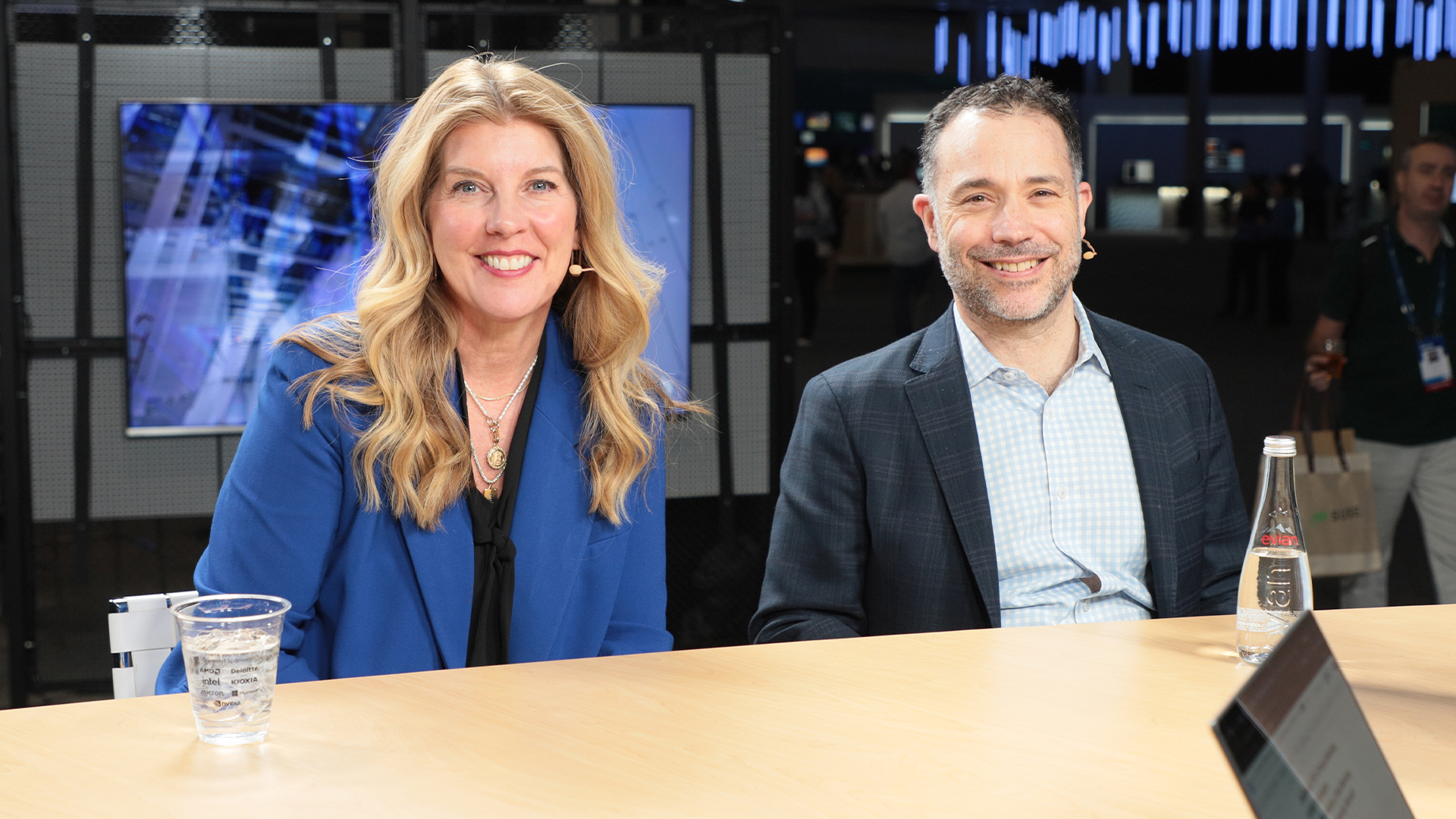
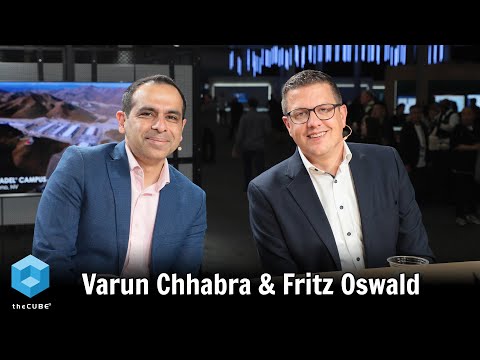
In this interview from Dell Technologies World, Jon Siegal, senior vice president of product marketing at Dell Technologies, joins Mary Ann Anderson, global marketing leader for the Dell partnership at Microsoft, to talk with theCUBE's Dave Vellante and theCUBE + NYSE Wired's Gemma Allen about how the AI PC is emerging as the central hub for agentic AI experimentation in the enterprise. Siegal unveils Dell's new deskside agentic AI offering — enabling enterprise workstations to run large open-weight models with payback versus cloud in as few as three months. He frames the modern AI PC as a "free token generator," a compelling proposition as token consumption costs remain high across enterprise deployments. Anderson builds on that, describing Microsoft's vision of Windows as a "canvas for AI," anchored by the Windows AI Foundry and a governance control plane to help organizations securely deploy and manage their own agents.
The conversation also explores the urgency behind enterprise PC refresh cycles, with Siegal arguing that hardware adequate a year ago can no longer support the agentic workflows arriving at pace. Smaller, high-performance models — in the 13-billion-parameter range — are approaching fast, requiring devices with MPUs capable of handling inference without sacrificing battery life. Anderson underscores the governance imperative: employees are already finding ways to use AI regardless of corporate policy, and tools like Microsoft Intune and Entra are becoming essential for assigning agent identities and securing data access. For CIOs navigating the complexity, both guests offer a practical framework — identify use cases, map workloads to the right environment and start experimenting without delay. From a productivity revolution Siegal predicts will far exceed the gains of the original PC era to the deepening Dell-Microsoft partnership ahead of Microsoft Build, the conversation delivers a clear message: the AI PC has moved from the edge of enterprise strategy to its center.
Forgot Password
Almost there!
We just sent you a verification email. Please verify your account to gain access to
Dell Technologies World 2026. If you don’t think you received an email check your
spam folder.
In order to sign in, enter the email address you used to registered for the event. Once completed, you will receive an email with a verification link. Open the link to automatically sign into the site.
Register for Dell Technologies World 2026
Please fill out the information below. You will receive an email with a verification link confirming your registration. Click the link to automatically sign into the site.
You’re almost there!
We just sent you a verification email. Please click the verification button in the email. Once your email address is verified, you will have full access to all event content for Dell Technologies World 2026.
I want my badge and interests to be visible to all attendees.
Checking this box will display your presense on the attendees list, view your profile and allow other attendees to contact you via 1-1 chat. Read the Privacy Policy. At any time, you can choose to disable this preference.
Select your Interests!
add
Upload your photo
Uploading..
OR
Connect via Twitter
Connect via Linkedin
EDIT PASSWORD
Share
Forgot Password
Almost there!
We just sent you a verification email. Please verify your account to gain access to
Dell Technologies World 2026. If you don’t think you received an email check your
spam folder.
In order to sign in, enter the email address you used to registered for the event. Once completed, you will receive an email with a verification link. Open the link to automatically sign into the site.
Sign in to gain access to Dell Technologies World 2026
Please sign in with LinkedIn to continue to Dell Technologies World 2026. Signing in with LinkedIn ensures a professional environment.
Are you sure you want to remove access rights for this user?
Details
Manage Access
email address
Community Invitation
Jon Siegal, Dell Technologies & Mary Ann Anderson, Microsoft
In this interview from Dell Technologies World, Jon Siegal, senior vice president of product marketing at Dell Technologies, joins Mary Ann Anderson, global marketing leader for the Dell partnership at Microsoft, to talk with theCUBE's Dave Vellante and theCUBE + NYSE Wired's Gemma Allen about how the AI PC is emerging as the central hub for agentic AI experimentation in the enterprise. Siegal unveils Dell's new deskside agentic AI offering — enabling enterprise workstations to run large open-weight models with payback versus cloud in as few as three months. He frames the modern AI PC as a "free token generator," a compelling proposition as token consumption costs remain high across enterprise deployments. Anderson builds on that, describing Microsoft's vision of Windows as a "canvas for AI," anchored by the Windows AI Foundry and a governance control plane to help organizations securely deploy and manage their own agents.
The conversation also explores the urgency behind enterprise PC refresh cycles, with Siegal arguing that hardware adequate a year ago can no longer support the agentic workflows arriving at pace. Smaller, high-performance models — in the 13-billion-parameter range — are approaching fast, requiring devices with MPUs capable of handling inference without sacrificing battery life. Anderson underscores the governance imperative: employees are already finding ways to use AI regardless of corporate policy, and tools like Microsoft Intune and Entra are becoming essential for assigning agent identities and securing data access. For CIOs navigating the complexity, both guests offer a practical framework — identify use cases, map workloads to the right environment and start experimenting without delay. From a productivity revolution Siegal predicts will far exceed the gains of the original PC era to the deepening Dell-Microsoft partnership ahead of Microsoft Build, the conversation delivers a clear message: the AI PC has moved from the edge of enterprise strategy to its center.
Jon Siegal, Dell Technologies & Mary Ann Anderson, Microsoft
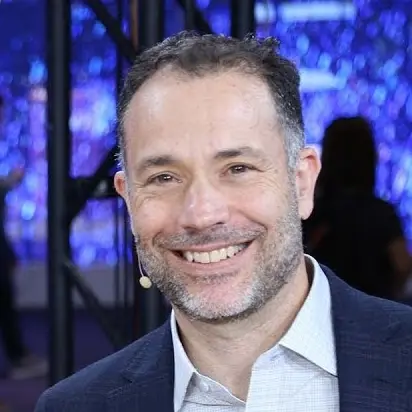
Jon Siegal
SVP, Product MarketingDell Technologies
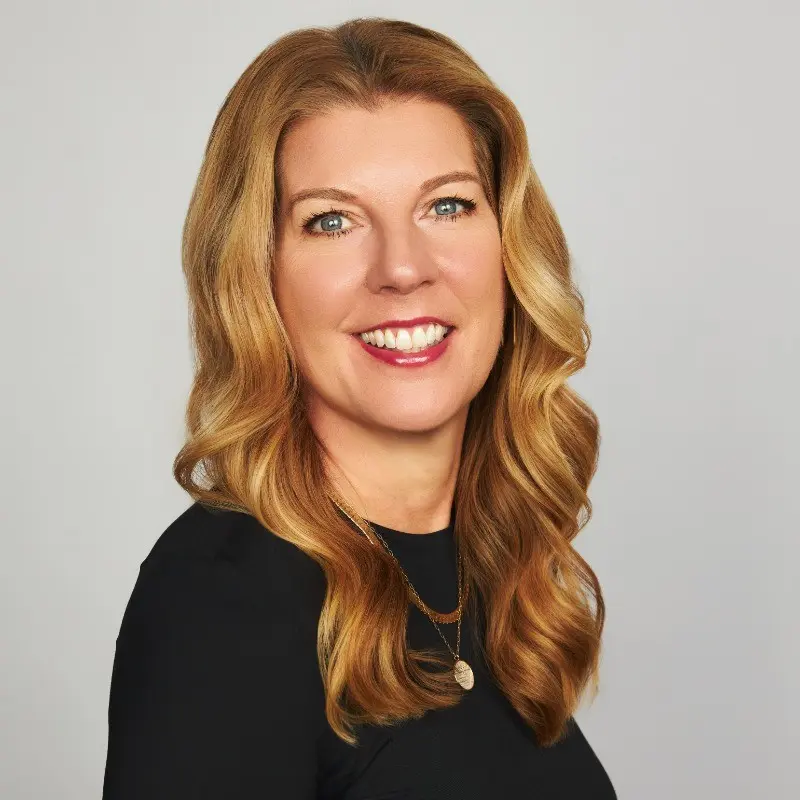
Mary Ann Anderson
WW Marketing Director, Dell Partnership at MicrosoftMicrosoft
In this interview from Dell Technologies World, Jon Siegal, senior vice president of product marketing at Dell Technologies, joins Mary Ann Anderson, global marketing leader for the Dell partnership at Microsoft, to talk with theCUBE's Dave Vellante and theCUBE + NYSE Wired's Gemma Allen about how the AI PC is emerging as the central hub for agentic AI experimentation in the enterprise. Siegal unveils Dell's new deskside agentic AI offering — enabling enterprise workstations to run large open-weight models with payback versus cloud in as few as three months. ...Read more
exploreKeep Exploring
What role do PCs/workstations play in the enterprise AI continuum, and why might organizations choose to run AI workloads on the desktop rather than in the cloud?add
How is Windows (and its partners) approaching AI—particularly agent-based workflows—and how are they enabling developers and enterprises to build, deploy, and govern those agents securely?add
Do customers need to upgrade to the latest Copilot+ PCs to run upcoming agentic AI workflows and newer, more performant models (e.g., ~13-billion-parameter models)?add
How aware are customers of the potential productivity gains from these PCs and their AI capabilities (e.g., Copilot+, agentic AI workflows running on-device)?add
Jon Siegal, Dell Technologies & Mary Ann Anderson, Microsoft
search
Dave Vellante
>> Okay, we're back at the Venetian in Las Vegas. Dell Tech World 2026, and you're watching theCUBE's live coverage. I'm Dave Vellante with my co-host for this segment, Gemma Allen. John Furrier is also in the house taking a little break, walking around the show floor. There's a lot to see here. Jon Siegel is back. He's the Senior Vice President of Product Marketing at Dell Technologies. He's joined by Mary Ann Anderson, who's the global marketing leader with the Dell partnership from Microsoft. Thanks folks for coming on. It's great to see you.
Jon Siegal
>> Yeah. Great to see you again, Dave.
Mary Ann Anderson
>> Great to see you. Thank you.
Jon Siegal
>> And Gemma, nice to meet you.
Gemma Allen
>> Great to have you guys on.
Dave Vellante
>> Yeah. Exciting things going on. Agentic AI, the whole new workplace. Everybody's kind of crazy on agents, OpenClaw's taking the world by storm. So Jon, I wanted to start things off here. So you've got AI, it's getting more embedded and agent driven. How are you thinking about the client maybe as part of a broader platform as opposed to sort of this separate device?
Jon Siegal
>> Yeah, that's a great question. I think, well, first of all, I will say it is becoming increasingly important to PC when it comes to the continuum of AI, enterprise AI specifically. And as I think it's really about at the end of the day, making sure you run the right AI workload with the right model in the right place. And that place can vary. That place could be the edge, it could be the data center, it could be the device on the PC itself, or it could be the cloud. And a lot of that varies now based on whether it's performance, data sovereignty, and cost. Cost is a big one right now. Cost and security in particular are really big. And as I think Michael said today, the most efficient AI is run when it's closest to the data. And that's where really the desk side has come in. And so today we announced desk side agentic AI, which is really all about helping our customers, our enterprise customers start to experiment with agentic AI in a secure space and making sure they can do that on the workstation and they can do it cost effectively. In fact, there's as few as three months to get the payback versus the cloud when it comes to using our workstations in especially developing agents.
Dave Vellante
>> I thought that was one of the most exciting parts of the keynote, frankly, because I can run a trillion parameter model on my desktop or smaller models on my smaller version. But Mary Ann, this fits well with Microsoft's posture at strategy. You've always been a company in hybrid, you've got amazing cloud business with Azure. So how does that sort of line up with your strategy as organizations, as you help them scale?
Mary Ann Anderson
>> Yeah. I mean, I think it's really important to think about what customers are facing today. There is a lot of ambition around AI and really thinking about how customers do that in a really smart way. And Windows devices, partnering with Dell is a really powerful solution when you think about distributing AI processing power. And so a lot of what we're thinking about is how do we take the different ways that you can think about agents and think about how you're building agents to experiment and then build into workflows. And with Windows, we're going beyond just it being an operating system. We're thinking about it as really a canvas for AI. And so we're empowering through things like a control plane. So how do you make sure that you're governing these agents in a really secure way? And then how do you think about empowering your developers? So there are things like Windows AI Foundry. So a lot of what was talked about this morning was agents that are packaged up already that corporations can adopt, but then also how do you empower their developers to build agents that really systematize those workflows that they already have and that their employees can then use. And then I think they were talking about it, like pretty soon there's going to be a point where individual employees are managing their own agents, maybe a small army of agents. And so you have to do that in a way that is governed and is very secure. And so with Windows and then with Dell Copilot+ PCs on the edge, you can think about is the processing power in the CPU, the GPU, or on the MPU, or is it in the cloud, and really have it at that right level.
Gemma Allen
>> Jon, you make a good point in terms of some of the decision making process around, especially when we think about a very large installed PC base, right? You say it's expensive, cost is an element, but we know that like there is pressure right now for speed. When we think about these devices and Dell's broad ecosystem with Microsoft, what are your thoughts on sweating assets versus technology that is good enough for the agentic Era versus the risks of potentially not swapping out assets in a timely manner?
Jon Siegal
>> That's a great question. Look, I would say this, what was good enough a year ago is no longer good enough in the AI era. It might have seemed like a safe choice, it might have seemed like a cost effective choice at the time, but our customers need to get to the latest Copilot+ PCs so they can actually run agentic AI workflows because they are coming fast. And they're coming in and not just as I mentioned earlier, the workstations today, you're running the larger open weight models, but the smaller, more performant models are coming really soon, like 13 billion parameter type models, and those are going to be really powerful assistants for the average user and it's critical that they have PCs that can support that. That means having an MPU that can actually run some of these tasks and ensure that you still have really strong battery life and good performance for the rest of your applications.
Gemma Allen
>> And Mary Ann, what do you see from the perspective of how customers use aging hardware around Windows, Windows 365, like Microsoft stack generally? What are your thoughts on the risks versus the opportunity of, again, constantly thinking about swapping out these assets?
Mary Ann Anderson
>> Well, I think a lot of customers, and then the customer's employees, are really experimenting with AI. And whether a corporation wants to have AI or not, employees are finding a way and it's really important to make sure that they're doing that in a way that's secure and that the corporation has that control. And so with things like Microsoft 365, that is something where that data is governed and is staying within the organization, which is super important. And it's given us at Microsoft a lot of learnings like how to do that and how to help other organizations do that in a way where they can build other agents either with Microsoft 365 and Copilot Studio, or through other means, and then use tools like Intune and Entra to give those agents identities so that they can see what kind of data they have access to and make sure that it's secured in a way that they feel really good about. And then going from that kind of experimentation mode to then really thinking about like, how does this transform our business and make it into a much more forward thinking organization?
Jon Siegal
>> Yeah. And just to add to that, I feel like we asked earlier about the role of the PC and AI and it's a free token generator more than anything else right now. I mean, that's what's resonating with customers right now is that the cost of tokens right now is through the roof, right? We know even though the cost of a token has come down pretty dramatically, the amount of tokens that are being consumed right now is just astronomical. And so the cloud costs are just pretty high right now. So how do customers balance that out and run the right workload in the right place? Well, we're trying to give customers a place to start. The PC is a great place to start. And when you have a free token generator, you give your employees a free place to experiment, to innovate, and then when they want to run into production, they could then run it in another spot like in the data center or in the cloud. But we want to make sure I think the PC is going to be really central to innovation now in enterprises as our enterprise customers want to give their employees essentially the freedom to experiment.
Dave Vellante
>> Well, I think a couple things. Free token generator, that's I think powerful. Mary Ann, you said employees will find a way. It reminds me of sort of the first wave of PC productivity. We as employees found a way, but to your other point, Mary Ann, we didn't have to worry about security. We were running Excel, PowerPoint, Word, writing documents, we were air-gapped. It was early days, there was no internet. Today it's totally different, but the productivity impacts can be absolutely enormous. And I think that there's clearly a refresh cycle and a modernization cycle that's happening. There's also just this new productivity boom that's on the cusp, maybe rethinking how we work, finding new processes. Not just necessarily automating existing processes, but finding new ways to do things. How tuned in, Jon, do you think customers are to this?
Jon Siegal
>> I think right now, I don't think it's fully appreciated how much productivity is going to come from these PCs over time. 20, 30% is just the start and so we're seeing some of that with some of the Copilot+ capabilities that we've had, but we expect it to be a lot more than that. As you start to run agentic AI workflows and you're running agents directly on the PC using your own data where you're able to keep it secure, proprietary, protected with the right safeguards, the sky's the limit here. I think we've just scratched the service on the productivity benefits that customers can see with the PC. I don't know what you think.
Mary Ann Anderson
>> Yeah, I would agree. And I think what a lot of customers are embarking on is a true culture change, and embracing AI and really embracing it in a way that it's core to their business, and the ones that are doing that faster are going to succeed faster and the ones that are doing it with their employees and really empowering them. Because employees know the workflows and they can see what are those ones that are repetitive that we can assign agents to and what are things that need to be managed by people and then really have that balance. And so I think it's really a big culture shift. And the faster that leaders in IT and leaders at companies can get there and really see the distributed power, not just in the cloud, but actually on the devices, and the token piece is huge to see through and see that dream, I think the better off they're going to be.
Dave Vellante
>> You must be seeing this inside your own organizations. I mean, Satya is a visionary, obviously encouraging people to lean in, not only externally, but internally. Michael has basically said, I think two and a half, three years ago, "If we don't do this, we're going to be out of business." It sounds extreme, "Ah, how can Dell go out of business," but we've seen it before. Many, many companies don't respond to the trends. So you're seeing that internally? Are you seeing the results in your organizations?
Jon Siegal
>> I mean, we are AI first in everything we do, and that means we need to arm our employees with the best devices possible. So we're all Copilot+ PCs all in. And yeah, I mean, it plays a key role. I mean, the workflows right now, a lot of it comes back to the data. So a lot of what we're doing right now is making sure we have clean data and then that we have the right processes set up so that we can take full advantage of AI and then use the agents, ultimately autonomous agents to help do the work and make our employees even more productive. So ...
Gemma Allen
>> So if we just talk practically for a second, we know that there's a race here, there's a lot happening in the market at a very complex time. If you are a CIO or an IT decision maker watching this show right now and it can seem overwhelming, even people who've been in tech for a long time, okay, there's a lot to take in here, what do you both think are some kind of immediate steps every CIO and every IT decision maker should take to really begin to think about an agentic wave? How do you really truly get there?
Jon Siegal
>> Yeah. I mean, I'm glad to start and then I think it starts with mapping out your workloads. Well, first of all, identifying your use cases and prioritizing them, and start right away to start mapping your workloads on where they would run most effectively and most efficiently, whether that's again, on prem, in the data center, at the edge, on the device, or in the cloud, I think that's really key. And I think then start experimenting. Start experimenting, don't wait. And that means trying it out, for example, running agents on device and evaluating how is that working? How's the MPU reacting? Is it doing what it's supposed to do. Keeping all the data on prem, is that helping? Are your use cases where you don't have internet connectivity and benefit from an on prem experience, is that working out? So I think those are a couple steps right off the bat.
Mary Ann Anderson
>> Yeah. And I think probably if you're watching this, you have some level of partnership with Dell and Microsoft, and I think pulling Dell in particular to look at those use cases, partner, take best practices that they've seen and get the help and make sure, as a trusted advisor, that you're learning from everything Dell's learned from, Microsoft's learned from, and just starting. And the faster you start, the faster you'll accelerate and then get to identified workflows that will help your business.
Dave Vellante
>> Yeah. When is Microsoft Build? I think it's early June, right, this year?
Mary Ann Anderson
>> It's June 2nd and it's coming up and we're really excited for some of the announcements. I think I mentioned Windows is the canvas for AI. We started talking about that this past year. We announced a lot of developer tools for Windows last year at Build, and there's even more coming.
Jon Siegal
>> Yeah. It's a hybrid AI world, I mean, ultimately, and I think we're looking forward to working closely with Microsoft to make that a reality.
Dave Vellante
>> Yeah. I mean, I think you put these tools in the hands of users. It's like it's going to dwarf the original PC productivity boom. We haven't had high sustained productivity really since the '90s when the PC productivity really hit. It's been kind of a dearth to productivity. And this is the promise of AI, isn't it?
Jon Siegal
>> That's right. That's right. So we're helping making it happen and it's really, really exciting right now. We're seeing in the market, and this partnership has been working out great. And so we're looking forward to say even more. I think we talk about, we're still in the early innings in terms of agentic AI in particular. I think once we get moving here and you want to start to do more and more inferencing, that's going to happen more and more in the device. And again, these smaller models that become more performing. I mean, again, the PC is going to be even more important a year from now when I'm sitting across from you than it is today, and then two years from now, even more so. I mean, it's moving in that direction and it's exciting.
Gemma Allen
>> Well, folks, it's definitely an exciting time and an exciting event here. Talk to us a little bit about what's ahead for you both. I mean, over the next couple of days, I'm sure you'll both be busy here on site. And then the next, I guess six months, right? Because six months suddenly feels like five years in the world of tech. So fill us in.
Mary Ann Anderson
>> Yeah, it's going fast. We're already at the end of day one of Dell Tech World and next couple of days are going to be really exciting. There's a lot of different breakouts we have at Microsoft here. We are in the different hubs. And then as we head into Build, some announcements, and I think there's a lot of partnership that will, especially after Build, that you'll hear more about between Microsoft and Dell.
Jon Siegal
>> Yeah. It's been a busy couple months already and this week obviously is kind of our Super Bowl here at Dell when it comes to our announcements. But we're looking forward to bringing a lot of customer stories forward now. I think a lot of my focus is going to be the next couple of months, making it real, taking some of the show on the road. We have the Dell Forums that start ... This basically starts our march for the rest of the year and we'll be doing symposiums and forums and cities and countries around the world and having some fun. And we do a lot of joint workshops as well with Microsoft, PC Days is what it's called, with customers around the world as well and looking forward to taking it on the road.
Dave Vellante
>> Well, when the mobile era hit, obviously people spent a lot of time on their mobile and people just kind of forgot about the PC, but it's back. There's a renaissance happening. The intelligence inside the PC at people's fingertips or at their human mouth is-
Jon Siegal
>> That's right. That's right....
Dave Vellante
>> how we're going to be interacting.
Jon Siegal
>> Yeah. Who knows if there'll be a keyboard there next year.
Dave Vellante
>> That's right. That's right. Well, Jon and Mary Ann, thanks so much for coming on theCUBE. Appreciate it.
Mary Ann Anderson
>> Thank you so much.
Jon Siegal
>> Yeah, thanks for having us.
Dave Vellante
>> All right, this is Dave Vellante, for Gemma Allen, John Furrier. You're watching theCUBE After Dark Day one in the evening, Dell Tech World, 2026 from Las Vegas. We'll be right back, right after the short break.