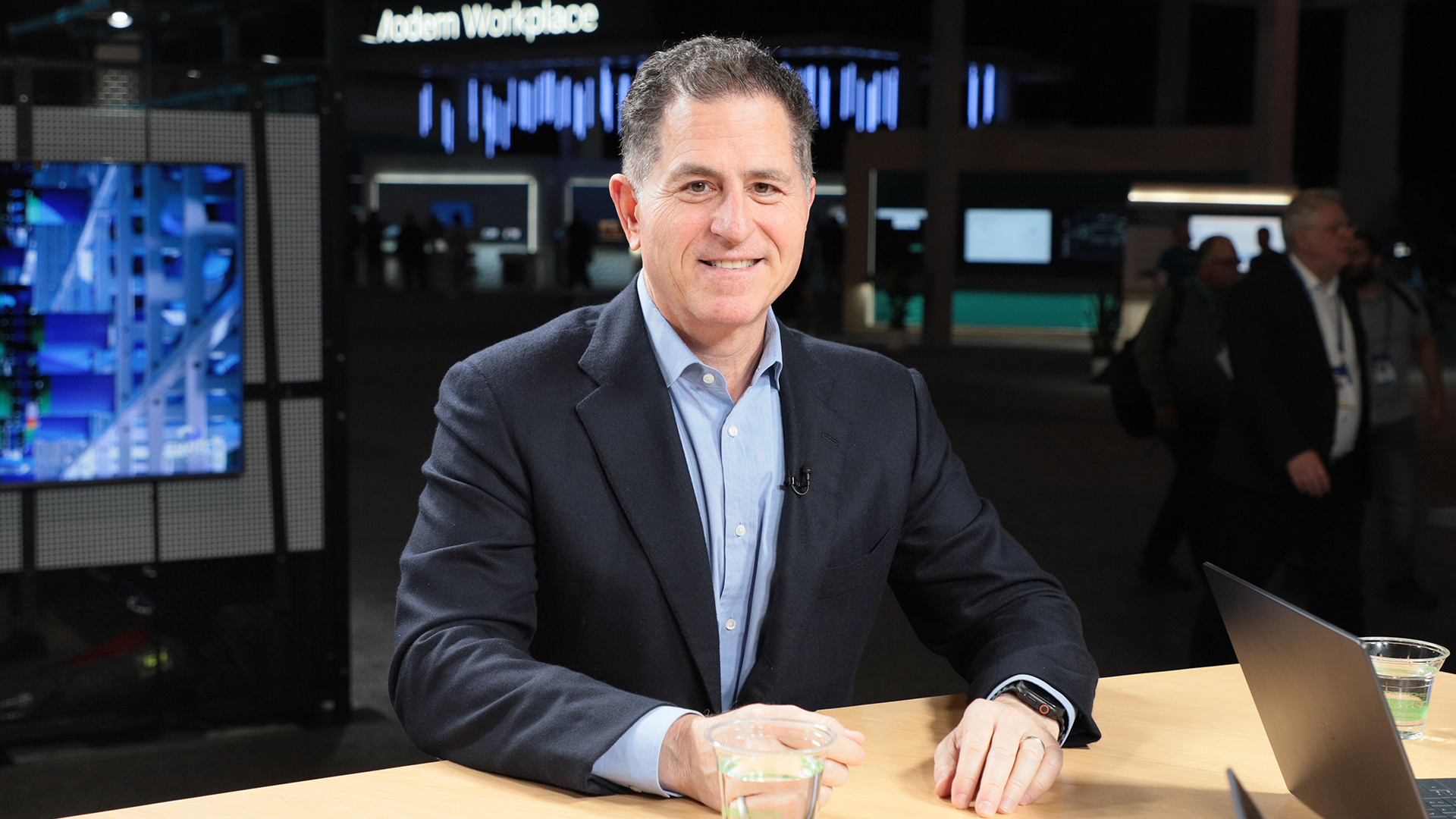
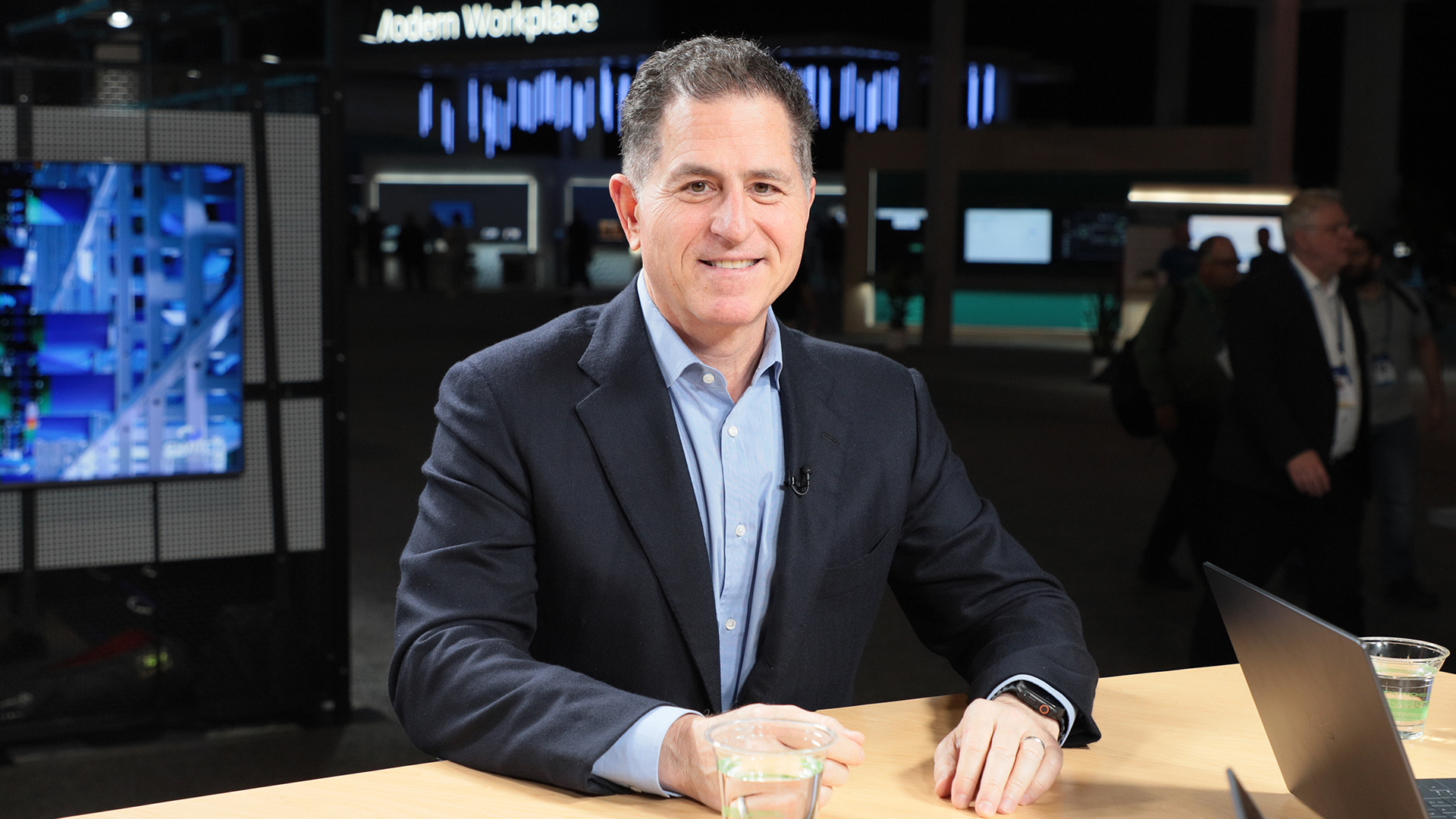
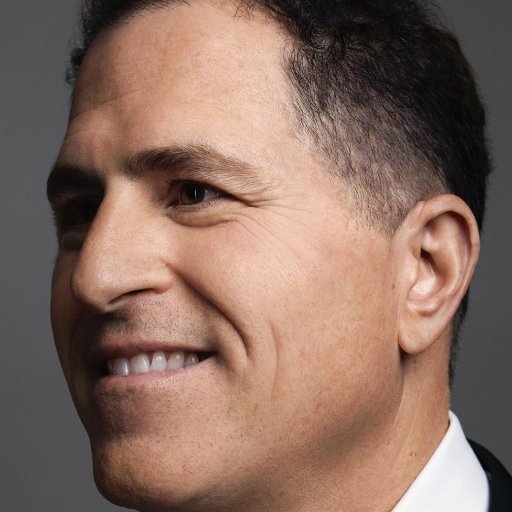
In this interview from Dell Technologies World 2026, Michael Dell, founder, chairman and chief executive officer of Dell Technologies, joins theCUBE's John Furrier and Dave Vellante to discuss how the AI factory revolution is moving enterprises from experimentation into full-scale production. Dell reflects on the scope of the current AI era, arguing it rivals electricity and the worldwide web in its transformative significance. With more than 5,000 enterprise customers now running the Dell AI Factory, he underscores that AI is no longer a proof of concept — it is inflecting at scale. Dell also details the deep, round-the-clock collaboration with NVIDIA across supply chain, sovereign AI and enterprise deployments, describing the partnership as central to delivering rack-scale AI infrastructure to customers worldwide.
The conversation also explores what separates leaders who talk about AI transformation from those who execute it. Dell draws on Stripe's data showing companies born in 2025 grew four times faster than those founded in 2018 — a stark reminder of the cost of inaction. He urges executives to pursue the largest, most data-intensive workflows rather than incremental pilots and to surface internal champions already immersed in the technology. The discussion covers OpenClaw, Dell's AI PC platform, which he connects to the broader tradition of individual empowerment that defined the original PC era. Dell and his wife Susan have also committed to seeding investment accounts for 25 million American children, a long-term bet on human capital as foundational infrastructure. From reimagining enterprise workflows with agentic AI to unlocking economic opportunity for the next generation, Dell makes the case that the boldest investments in people and infrastructure are inseparable from leading the AI era.
Forgot Password
Almost there!
We just sent you a verification email. Please verify your account to gain access to
Dell Technologies World 2026. If you don’t think you received an email check your
spam folder.
In order to sign in, enter the email address you used to registered for the event. Once completed, you will receive an email with a verification link. Open the link to automatically sign into the site.
Register for Dell Technologies World 2026
Please fill out the information below. You will receive an email with a verification link confirming your registration. Click the link to automatically sign into the site.
You’re almost there!
We just sent you a verification email. Please click the verification button in the email. Once your email address is verified, you will have full access to all event content for Dell Technologies World 2026.
I want my badge and interests to be visible to all attendees.
Checking this box will display your presense on the attendees list, view your profile and allow other attendees to contact you via 1-1 chat. Read the Privacy Policy. At any time, you can choose to disable this preference.
Select your Interests!
add
Upload your photo
Uploading..
OR
Connect via Twitter
Connect via Linkedin
EDIT PASSWORD
Share
Forgot Password
Almost there!
We just sent you a verification email. Please verify your account to gain access to
Dell Technologies World 2026. If you don’t think you received an email check your
spam folder.
In order to sign in, enter the email address you used to registered for the event. Once completed, you will receive an email with a verification link. Open the link to automatically sign into the site.
Sign in to gain access to Dell Technologies World 2026
Please sign in with LinkedIn to continue to Dell Technologies World 2026. Signing in with LinkedIn ensures a professional environment.
Are you sure you want to remove access rights for this user?
Details
Manage Access
email address
Community Invitation
Michael Dell, Dell Technologies
In this interview from Dell Technologies World 2026, Michael Dell, founder, chairman and chief executive officer of Dell Technologies, joins theCUBE's John Furrier and Dave Vellante to discuss how the AI factory revolution is moving enterprises from experimentation into full-scale production. Dell reflects on the scope of the current AI era, arguing it rivals electricity and the worldwide web in its transformative significance. With more than 5,000 enterprise customers now running the Dell AI Factory, he underscores that AI is no longer a proof of concept — it is inflecting at scale. Dell also details the deep, round-the-clock collaboration with NVIDIA across supply chain, sovereign AI and enterprise deployments, describing the partnership as central to delivering rack-scale AI infrastructure to customers worldwide.
The conversation also explores what separates leaders who talk about AI transformation from those who execute it. Dell draws on Stripe's data showing companies born in 2025 grew four times faster than those founded in 2018 — a stark reminder of the cost of inaction. He urges executives to pursue the largest, most data-intensive workflows rather than incremental pilots and to surface internal champions already immersed in the technology. The discussion covers OpenClaw, Dell's AI PC platform, which he connects to the broader tradition of individual empowerment that defined the original PC era. Dell and his wife Susan have also committed to seeding investment accounts for 25 million American children, a long-term bet on human capital as foundational infrastructure. From reimagining enterprise workflows with agentic AI to unlocking economic opportunity for the next generation, Dell makes the case that the boldest investments in people and infrastructure are inseparable from leading the AI era.
In this interview from Dell Technologies World 2026, Michael Dell, founder, chairman and chief executive officer of Dell Technologies, joins theCUBE's John Furrier and Dave Vellante to discuss how the AI factory revolution is moving enterprises from experimentation into full-scale production. Dell reflects on the scope of the current AI era, arguing it rivals electricity and the worldwide web in its transformative significance. With more than 5,000 enterprise customers now running the Dell AI Factory, he underscores that AI is no longer a proof of concept — i...Read more
exploreKeep Exploring
How is Dell Technologies positioned to support AI — specifically the activation of data and the infrastructure (servers, racks, solutions) needed across industries and devices?add
How do you view the current era of computing (especially the AI-driven changes) and how does it compare to previous eras like the PC, internet, and mobile eras—particularly in terms of how work gets done and operational models?add
Is this collaboration and AI capability deployment just happening behind the scenes or as demos, or is it being rolled out at scale across real customers and producing tangible breakthroughs?add
What has changed the most over the past year for you personally and for Dell Technologies, aside from the AI factory sales numbers?add
>> Welcome back everyone to The Cube's live coverage here at Dell Technologies World 2026. Our 17th year covering The Cube. I'm with Dave Vellante, my co-founder and co-host of The Cube. Cube alumni, Michael Dell, chairman and CEO of Dell Technologies. His name is on the box. Doesn't he have to sign the machines? But Jensen Huang signed the server on stage. Michael, welcome back. Great keynote, phenomenal content. Everything was popping. The product's popping, the market's popping, AI's infrastructure. AI infrastructure, center stage, the servers up there, the rack, the whole time. So this is like a dream scenario if you're in the infrastructure business.
Michael Dell
>> Great to be with you guys. Yeah, absolutely. I mean, I think we've been seeing, over the last few years, tremendous evolution of the capability of the models. And at the core of this is really activating all this data. And we've been talking about data at Dell, at EMC, at Dell EMC, at Dell Technologies for decades, and now all the data's coming to life. And we've got the infrastructure solutions as the leading company in the space, to make it all happen. You see the incredible breadth of solutions bringing it all together at the rack level, all the models, the frontier models, the open models, the specialized models. And it's happening in the client device. It's happening in factories, in retail stores, in logistics centers, in hospitals, in laboratories. And of course, big buildouts all over the world and we're making it happen.
John Furrier
>> Your business is really, really flying high right now. And again, I love OpenClaw on stage as an example because every aspect of your business, even the client PCs are now the OpenClaw machines for anyone playing with AI.
Michael Dell
>> I loved Dave Morin and it's really an empowering story. And you think about a lot of the origins of what happens in our industry. A lot of it starts with an individual user. It comes up with an idea and then it migrates into the enterprise with Nemoclaw and it's secure.
Dave Vellante
>> The three of us have seen every era in computing and you and Larry are really the icons of every era. The only two. You could put Jensen in there, I guess, but frankly, nobody was paying attention to Jensen back in the PC era. And so in that era, as you well know, everything changed. Competition got very decentralized. Of course, we saw the internet and mobile change things, but now we're seeing a change in the way work gets done. Jeff talked about the operational model. Not a lot of people talking about that, by the way. That was profound, I think. How do you think about this era? People love to compare it to other eras. This is clearly different, but love your thoughts on that.
Michael Dell
>> I think it is every bit as significant as the internet worldwide web. I wasn't around for electricity, but that feels like-
Dave Vellante
>> It was pretty big.
Michael Dell
>> ... It feels like that was a pretty big deal. It feels like it could be on that order of magnitude. And the important thing is really how you reimagine the workflows? I mean, here's a way to think about this. If you had an organization in 2015, you used management practices and tools and structures and techniques that were contemporary at the time. And now in 2026, we have something completely different. And if you're stuck in the ways of doing things from five or 10 years ago, that's just not going to work very well. And it's when you reimagine the workflows to get to the same outcomes that you want to achieve and you can actually do quite a bit more now with this technology, organizing all the data, applying the models. And again, it's humans plus the digital workers. And the digital workers, of course, can work thousands of times faster. We can have millions of those and it just enables all of us to do a whole lot more.
John Furrier
>> We've known each other for a while, as Dave mentioned. One of the things I point out, you're very hands-on CEO, the entrepreneur, founded it in the dorm room. I love some of the memorabilia you put on the web, original term sheet and all the early Dell stuff. But two things I want to ask you. One-
Michael Dell
>> I got drawers and drawers full of memorabilia.
John Furrier
>> The Dell Factory coming , the memorability factory. David really hit helm with me because he made a point about the personal side of the impact of OpenClaw. He made a reference to the Dell PC that enabled him to start his business in his dorm room. So that's happening in organizations. The C-suites right now are dealing with... transformation may be a overused word, but true business change. You just mentioned it. As a hands-on executive, I know from talking to your staff and your employees, you're very hands-on. How should leaders think about this new cultural business management or organization because you're going to have digital workers. What's your view on this? You're hands on, you're doing it. Obviously it's working. How should people think the role of the CFO, the role of the chief human resource officer, CIO, super CIO. So how do you look at that and what's your experience and what prescription would you give?
Michael Dell
>> What I tell a number of them when they ask me a question like this is that this is a moment of courage and leadership. And I think that is a big differentiator in the sense that we all have the same tools and technology available to us, but you have to be willing to really change things in a dramatic way. And not everybody wants to do it. I get it. It's hard. It's difficult. It's uncomfortable. Maybe it's awkward, but I kind of believe deep in my bones that if you don't do it, you might not be a business in a few years. And that's the approach we've taken inside our company and it is working. We're seeing more and more companies certainly at the leadership level figure out that, wow, this is something very, very different. If we don't do this, if we don't adopt this, we're going to have a big problem because of either our competitors or new entrants. And I think we're at that moment.
John Furrier
>> What's the difference between saying it and doing it, in your opinion?
Michael Dell
>> I think it is really doing the hard work to understand what the process could look like to reimagine it, to be willing to break stuff and delete stuff that you built from the past and reassemble your capability around this new technology. I mean, just one simple data point. So Stripe, the payments company, Payments platform company, they would tell you that the companies born in 2025 grew four times faster than the ones in 2018. Why is that? They had 2025 technology. That's an extraordinary change four times in not too many years. So if you're stuck in 2018 mindset and technology, you've got yourself a big problem.
Dave Vellante
>> So I could see some leaders listening to that advice, Michael, because you actually apply the technology yourself. We were talking off camera. I could see some leaders saying, "Yeah, but this guy built PCs in his dorm room. I mean, he's a techie. He knows this stuff." So what would you say to the leaders that aren't necessarily as comfortable with technology? They certainly invest in technology, but what should they do? Should they get a smart guy or a gal that's a sidecar and help them get up to speed? What would you advise them to really get hands on?
Michael Dell
>> I think you just have to throw yourself into it and surround yourself with people that are immersed in this. I'm going to go back a little bit to the worldwide web and at that time there were a lot of folks, let's say in senior management that didn't really quite get the whole thing. And so what did we have to do? We had to go and create it off to the side, then integrate it back in. I don't actually think we have time to do that. So I think leaders have to go find people in their organizations. There are people, if you've got a company of any size, I guarantee you there are people that understand this and want to go do it. You've got to go find them. Jeff was talking about the super users and ask them to help you reimagine how the most important processes in your company could work in the future. Don't just pick some small thing that is interesting. Go for the big ones.
John Furrier
>> The pilot strategy changes. The POCs change.
Michael Dell
>> I think there's an instinct sometimes to like, let's just go do AI very quickly. To really have the impact, you got to go after the giant processes that affect the most number of people, the most amount of data, and can really drive competitive advantage and speed for a company.
John Furrier
>> That's great advice. I want to ask about Jensen and your moment on stage. Obviously you guys are both operating massive scalable companies that are operating at scale. Different swim lanes obviously, he's got the GPUs and the end-systems, but you've got the product market fit. Both have good products. What's it like operating at scale? And what are some of the conversations you have with Jensen , "Hey, how's it going? What is going on?" What do you talk about backstage with Jensen? Because you're both operating at scale and driving this AI factory revolution that's just getting started. The edge is going to come soon. Jensen hinted that last time I talked to him. What's it like? What kind of conversations do you have?
Michael Dell
>> Well, it's not just backstage. I mean, we're doing it twenty-four seven constantly at certainly myself and Jensen, but at all levels of both companies we're tightly bound together here in rolling out this capability at scale across all sorts of different customers, whether it's the , the sovereign AI, the enterprise AI, we're working with supply chain, working all the sort of details to make this happen. And the opportunities are extraordinary and I think it goes back to this shift to intelligence and helping people think and machines that think it's just a paradigm shift in computing and it's leading to exponential and parabolic improvements in what companies can do and can become.
John Furrier
>> And the change you guys are affecting and it's almost like it's almost a moment of, "Hey, can you believe this is actually happening? Look at the bio success on biology, some of the breakthroughs that are going on." And these are like life extending breakthroughs, like serious big scale things.
Michael Dell
>> Absolutely. And now with the 5,000 enterprise customers with the Dell AI factory, it's happening at scale. It's not a demo or a proof of concept anymore. It's really inflecting.
Dave Vellante
>> Michael, with your resources, you could do a lot of things. You made what could arguably be the greatest acquisition in the history of enterprise tech. I really can't think of a more impactful one. Maybe Mellinox someday will prove to be up there. Obviously VMware originally, you could do it again. You could go big or go home, buy more companies, but you and your wife, Susan, have decided that philanthropy is at this stage of your career exceedingly important. What you've done with the Trump accounts, congratulations on that. Quite amazing. I wonder if you could talk about that and share with the audience your mindset as to how you decide to where you want to put your resources and your time.
Michael Dell
>> We do believe that the most important investment that any country can make is in its people, particularly its children. And so we made this decision to give a kind of starter investment account to 25 million American children ages two to 10 who live in zip codes where the median income is $150,000 or less. And the reason we did that is we know that when a child has an account like that, even a relatively small account, but it'll compound over time, become something a lot bigger, they're way more likely to graduate from high school and go on to higher studies, become a productive member of their community, start a family, buy a home, start a business, not be incarcerated, at least the better mental health for the child and the parent. And look, I mean, there are maybe 40% of American families that don't have any assets invested in the stock market. So they're not benefiting from all the incredible innovations that are occurring and they have no reason to learn about capital or capitalism. Well, now they do. And in not that much time, we're going to have 70 million children with the government contributing to these accounts, companies adding to the accounts, even states adding to the accounts, cities, philanthropists. And I think that will be something that will be incredibly important, certainly over the next 10, 20, 30 years.
John Furrier
>> Congratulations as well. Pivoting off that, you always talked in the past on The Cube about the trillion dollar productivities. You had a number quote, I don't remember the exact number, but if you look at AI and the productivity that's going to bring. So you got the accounts going, that's a nice seed, the future leaders. But now short term, you look at the productivity gains. Any re-thoughts on the scope of how much productivity's going to impact? Is it the size of the GDP? Do you ever think about that from that perspective? It's to see the productivity gains. I mean, people are doing more with less than ever before.
Dave Vellante
>> Yeah, it's good top down math, 115 trillion dollar economy, take 10% of that. Maybe we're not spending enough on AI.
John Furrier
>> Is that coming up a lot? Are you thinking about this?
Michael Dell
>> I think you can still make that argument that while there's a lot being invested, given the size of the economy and the productivity gains that we know are possible, maybe there's not enough investment. And again, we know a lot more now than we did two or three years ago and what we know is that people can become way more productive. I mean, there's definitely a productivity boom that's going on in certain companies. It's happening in our company. We know other companies where it's happening and everybody is going to want that and that should lead to an economic boom across the country and across the world.
John Furrier
>> Final question for you is what's changed the most this past year for you besides the AI factory sales numbers, which are phenomenal? What's the biggest change for you personally and Dell Technologies, if you had to answer that?
Michael Dell
>> It's this shift towards agents and workflows and sort of the exponential and parabolic improvement in software development and so many other areas and it's been a lot of fun. We're having a great time re-imagining everything we do and we can do so many more things so much more quickly and have a greater impact and what's more exciting than that.
John Furrier
>> I know you're taking me to OpenClaw, so I'll ask one more question. What's the coolest thing that's happened or weirdest thing that's happened with your experimentation with OpenClaw? Did it discover anything? Did it go wild? When you first used OpenClaw, did you have a moment? What was your experience? Share a moment where it's like, wow, that's real.
Michael Dell
>> I'm probably a little more security conscious than the average bear out there when it comes to using these tools. But look, I mean every time... I think you also have to be struck by, it seems like every week or two there's like an advancement in the models and this one's ahead, now this one's ahead, now this one's ahead, and it keeps progressing. And so I continue to be blown away at just the insights you're able to get and how easy it is to be curious and to learn and to explore. And when you think about that applied to over eight billion people, their creative ideas, their imagination translated into results and execution faster than ever, what an incredible time to be alive, whether it's in drug discovery or starting a business in your dorm room. I mean, we've got just incredible tools and capabilities now.
John Furrier
>> Michael Dell, thanks for coming on The Cube. Really appreciate it. Great to see you again and congratulations on the great show and continued success. Thanks for coming on. Appreciate it.
Michael Dell
>> Thanks for your time.
John Furrier
>> Michael Dell here I'm John Furrier with Dave Vellante. day two coverage, going on straight without a break for 10 interviews, more coming. So much action happening here at Dell Technology Worlds. Thanks for watching.










 John Furrier
 Dave Vellante