We just sent you a verification email. Please verify your account to gain access to
Dell Technologies World 2025. If you don’t think you received an email check your
spam folder.
In order to sign in, enter the email address you used to registered for the event. Once completed, you will receive an email with a verification link. Open this link to automatically sign into the site.
Register For Dell Technologies World 2025
Please fill out the information below. You will recieve an email with a verification link confirming your registration. Click the link to automatically sign into the site.
You’re almost there!
We just sent you a verification email. Please click the verification button in the email. Once your email address is verified, you will have full access to all event content for Dell Technologies World 2025.
I want my badge and interests to be visible to all attendees.
Checking this box will display your presense on the attendees list, view your profile and allow other attendees to contact you via 1-1 chat. Read the Privacy Policy. At any time, you can choose to disable this preference.
Select your Interests!
add
Upload your photo
Uploading..
OR
Connect via Twitter
Connect via Linkedin
EDIT PASSWORD
Share
Forgot Password
Almost there!
We just sent you a verification email. Please verify your account to gain access to
Dell Technologies World 2025. If you don’t think you received an email check your
spam folder.
In order to sign in, enter the email address you used to registered for the event. Once completed, you will receive an email with a verification link. Open this link to automatically sign into the site.
Sign in to gain access to Dell Technologies World 2025
Please sign in with LinkedIn to continue to Dell Technologies World 2025. Signing in with LinkedIn ensures a professional environment.
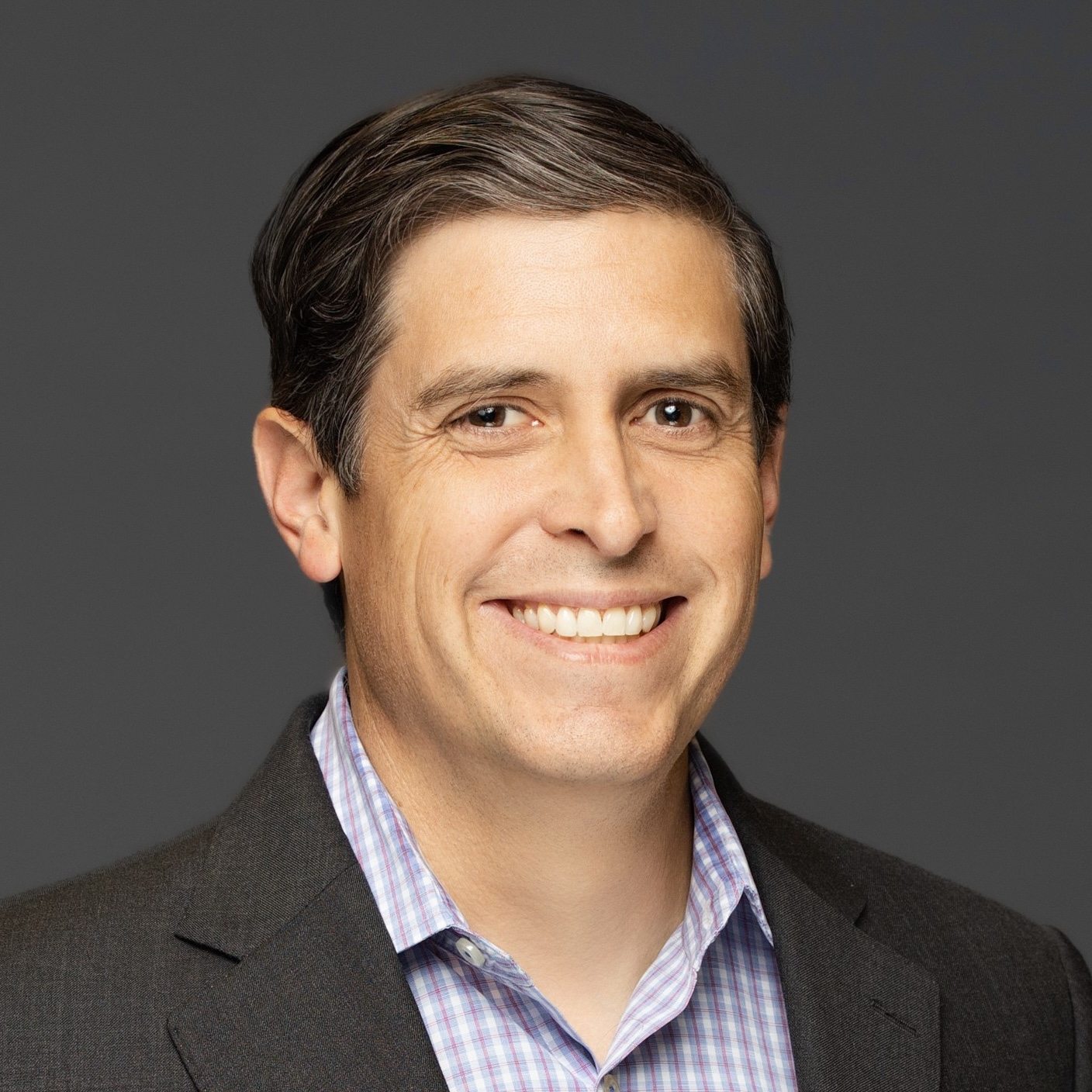
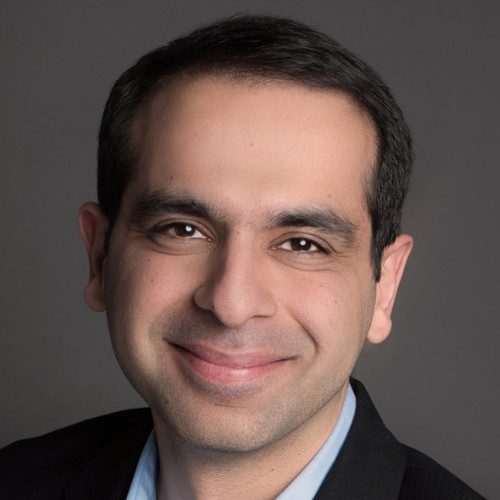
Varun Chhabra, senior vice president of product marketing, Infrastructure Solutions Group and Telecom, at Dell Technologies Inc., and Travis Vigil, chief product officer of IT infrastructure at Dell Technologies Inc., join theCUBE’s Savannah Peterson and Dave Vellante at Dell Technologies World 2025 to discuss the future of enterprise storage. Their conversation explores how Dell’s new architecture is optimizing performance and resilience in an AI-first world.
Vigil highlights Dell’s two-tier storage model, which features innovations such as KV Cache...Read more
exploreKeep Exploring
What are the storage needs for training models and inferencing at scale, especially in relation to tier two CSPs like Michael and Jeff mentioned on stage?add
What are customers wanting to talk about when discussing private cloud, generative AI, and cyber resiliency?add
What are some benefits of being able to separate compute and storage for customers?add
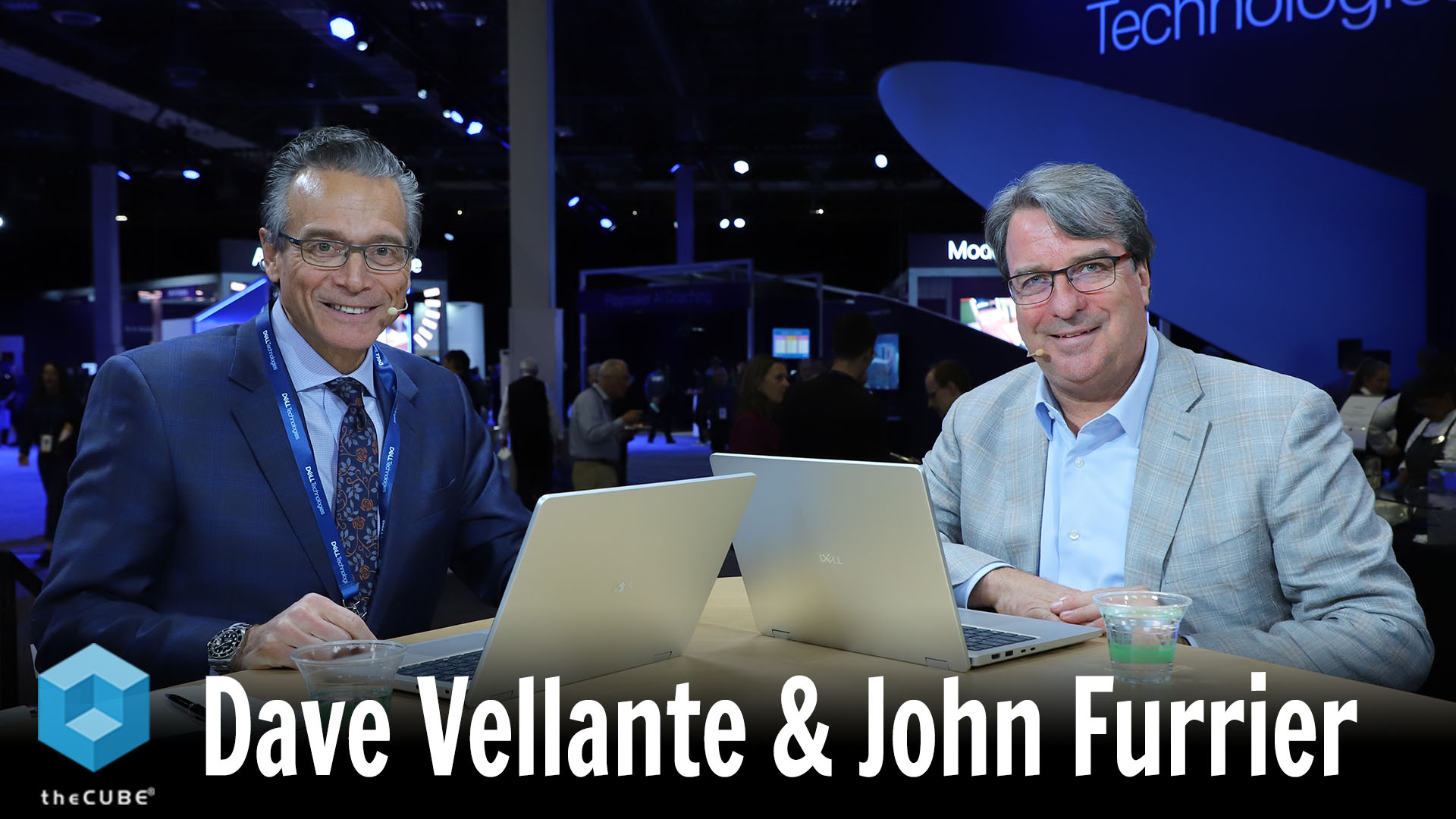
>> Hi everybody. Welcome back to Las Vegas. This is theCUBE's Day three coverage of Dell Tech World 2025. I'm Dave Vellante with John Furrier, Savannah Peterson is also in the house, Jackie McGuire, Kristen Martin, the whole Cube team is here. Varun Chabar's back along with Travis Vigil, and we're going to talk about storage. Gentlemen, it's good to see you. What a week.>> Thanks for having us.
Travis Vigil
>> Good to see you.
Dave Vellante
>> It's exciting. Okay, so we heard Arthur yesterday in the keynote talking about the data center of the future. In a private meeting with Jeff Clark, an analyst, he was saying this is an entirely new architecture.>> Yeah.
Dave Vellante
>> And a lot of people maybe don't understand that, but everything has to change including storage.
Travis Vigil
>> Yeah.
Dave Vellante
>> So what is it about storage that's changing?
Travis Vigil
>> If you look at the most ... The largest needs that we have for both training models and doing inferencing at scale, the storage needs to be fast, it needs to be scalable, and it needs to be in the right place. And especially if you're talking about some of these tier two CSPs, like Michael and Jeff talked about on stage, you look at their storage architecture, while kind of the terms you use we've used in the enterprise for many years. They take on a completely different meaning when you're talking about some of these large deployments. First and foremost, especially as you move forward to inferencing or reasoning, you need to make sure that you have enough storage within the cluster itself so that the latency of the responses is low. And so there's this concept called KV Cache from Nvidia, and the announcement that we made up on stage about lightning, lightning is an accelerator for KV Cache, allows you to store more storage within the cluster itself and increase the overall efficiency, speed, and reduce the latency of reasoning and inferencing models. So I think of that as tier zero. Then outside of tier zero you need a fast and scalable, but also cost-effective tier one or data lake. And what we're seeing in the big customers is they'd like to standardize on object for that use case. And so you saw a lot of announcements for object scale being on the latest and greatest hardware, having 800 gigabits per second connectivity, 122 terabyte drives. Object is not a tier two archive protocol anymore. It is a high performance data lake that backs that KV Cache that I talked about in tier zero. And so kind of this two tier approach is what we're seeing customers standardize on, and from a Dell portfolio perspective, what we're doing with Lightning and what we're doing with object scale is 100% aligned to where that architecture is going.>> And I think the other variable here that's driving this change is just the, I believe it's a technical term, gob smacking amount of tokens. Which is what's happening with reasoning models, just as Jeff was saying yesterday, just one year ago, what we were thinking we require from an infrastructure perspective to what now it's looking like 100 times more number of tokens, more data. It is a fundamentally different storage architecture that's going to drive these new workloads.
Dave Vellante
>> And I think it was like 38 quadrillion or something in mind-boggling. But I think the other thing that it's important for people to understand is we tend to think of compute, storage, and networking in isolation.>> Yes.
Dave Vellante
>> You guys are a systems company. The balance is critical because otherwise you're just pushing data around and you're creating bottlenecks. So I wonder if you could address that balance and how you guys are achieving that.
Travis Vigil
>> So you're absolutely right. Some of the things that we've announcing with Nvidia this time around is the AI data platform. They've made a lot of announcements around that. Think of an appliance form factor that combines compute, storage, networking that you can start small with and then scale, whether it's training models like Travis was talking about with CSPs, or with high-scale inferencing. The balance across the three, and thinking about it as a system design disaggregated, yes, but still has to work together as one unit. We're talking about computer networking as part of a data platform. I think that tells you how we're thinking about this differently along with Nvidia.
Dave Vellante
>> Travis, you mentioned KV Cache. At GTC, all the announcements, I'm like, "Oh my God," I just zoned in right on that. And Jensen said it's the operating system for the clusters. It's the networking. It's networking, right? So networking, compute, storage, I always used to call it the Holy Trinity of all the action. The roles have changed. So networking is essentially creating the cache layer so that things can be low latency, got that. But the storage is getting closer to the action too in terms of being close to where it's processed and where the networking's happening. And then Michael Dell said on stage on day one, cold storage to warm storage and all the enterprise data's sitting there. So essentially, that's a kind of disaggregated model. KV Cache points to that. What is the change? What's happening in the system when, "Okay, I'm going to take stuff out of cold and put it to warm." Is that where you guys are seeing this architecture work, or is it just in general that's where it needs to be closer to the caches, closer to the HBM? Take us through why that's important. Is that where cold storage will go, and what's the relationship to KV Cache?
Travis Vigil
>> Yeah, I think what we're seeing is the new architecture that we're talking about with KV Cache, lightning, high performance object scale really being optimized for people that are doing training or inferencing at scale. And the need to feed the massive amount of GPU power that is being delivered in Dell servers priority number one. But I want to talk ... You about the Holy Trinity. Networking, storage, and compute. We do that too. Compute networking and storage. But let me add one more to the list, and it's a doozy, which is data.And especially if you get out of the tier two CSPs and you bring it into the enterprises, what we're seeing is, yes, you still need have the need for a tier zero high performance storage. Yes, you still have the need for a data lake, but the fact of the matter is that the data that you need to make your generative AI deployment work for you is the company specific and proprietary data that already exists on premises. And so where we're seeing a huge opportunity is how do you transform that data? How do you ingest that data? How do you query that data? How do you make it simple so that if you're doing a sales assistant, or a services assistant, or a code generation assistant, you get the right data into the models or the right data into the agent or the right data into the inferencing? And that's why if you look at the AI data platform, it has lightning, it has object scale, it has power scale, but it also has the Dell data lakehouse.
Dave Vellante
>> I want to ask you, when I think about the evolution of storage services, I think about things like data reduction tools and copy services and space reclamation. They used to be outside of the storage system, and then they became embedded, whether it was compression or deduplication, things of that nature, space efficient snapshots all became part of that. I think of things like search, analytics, security capabilities that used to be bolted on top. Are those migrating into the storage system? I wonder if you can talk about that.
Dave Vellante
>> Absolutely. That's a huge part of the announcements we made this week, Dave. So if you think about, let's talk about storage first. So in the AI data platform, as Travis was talking about, whether it's on the storage level or in the Lakehouse area, we're basically embedding more and more support for semantic search, support for natural language queries, the latest and greatest querying capabilities, even things like iceberg maintenance, building that into automated iceberg maintenance, building that into the platform so that you don't have to basically think of them as separate systems. You're bringing that closer to where the data is. And then the other thing that is ... The other theme that consistently still is number one, despite all the understandable hoopla around AI, cyber resilience, cybersecurity. So what you saw yesterday when we announced both for Powerscale and for PowerStore, bringing automated ransomware detection to the array, having the data right on there versus that being a separate standalone solution that people have to configure is a big part of what we're doing. So in PowerStore and Powerscale, AI driven ransomware detection, helping really look at how the data's doing, automated threat detection, even in the case of Powerscale, even air gap, cyber vault capabilities that are built into what we're delivering with these, and then of course maybe Travis can talk a little bit about what we're doing with Powerprotect data domain.
Travis Vigil
>> Yeah, I think it's so important. When we talk to customers they want to talk to us about three things. They want to talk to us about private cloud, which we'll probably talk about a little bit. They want to talk about generative AI, which we've been talking about, and they want to talk to us about cyber resiliency. And the cool thing about cyber resiliency and being a portfolio storage provider is that you can bring to market a solution that addresses cyber resiliency in a holistic way. And so it's not a question of just data protection anymore. It's not a question of backup anymore. It's a question of building cyber resilience into your data ecosystem at every layer. So whether that's in the primary storage array, whether that's in the unstructured storage array, or in the storage of last resort, your backup, super important. But just as important is the ability to recover quickly. And so we announced the Powerprotect data domain, all flash array, and this thing is just awesome. So it gives you the ability to recover significantly faster than recovering with systems with hard drives in them, but just as interestingly and just as importantly, it's all flash. And so with it comes the fact that you can, in a 6U form factor, get 544 terabytes of usable data. And given the data reduction benefits and the efficiencies that we get from data domain, 35.4 petabytes, 35.4 petabytes in 6U, it's the densest offering on the market, and you get that fast recovery.
Dave Vellante
>> Yes. 4x faster backup, 2x faster restores.
Travis Vigil
>> That's right.>> All the amazing capabilities of data domain now within all flash performance, 80% lower energy, 40% less rack space.
Travis Vigil
>> That's right.>> What's that like?
Dave Vellante
>> The economics of Flash have ... Finally at that point where it makes sense for all Flash for that type of use case.>> Yeah.
Dave Vellante
>> So I feel like this is really the gen AI, the agentic moment for the storage portfolio. Dell Tech World 2025. It really is sort of a new awakening. I wonder if you could talk about how you think about the portfolio, and specifically how you see that transition from servicing your install base to this new era.
Travis Vigil
>> Yeah, I think if I look at the portfolio, we've talked quite a bit about generative AI. We've talked about cyber resiliency. We have to talk about private cloud. In every single conversation that I have, I know that you have with customers, Varun, the question is what do I do about a multi-hypervisor world? What do I do about designing an architecture that gets me ready for where the world is going to with generative AI? And just as importantly, how do I make sure that it's optimized so that I can be cost-efficient and have a low TCO on my private cloud so I can free up investment to go and do those generative AI things? And that's why we've been talking so much about this disaggregated architecture. Look back, historically, HCI was great in terms of simplicity. What it wasn't great at was providing the right utilization of the compute cores and the right utilization of the storage infrastructure. And so if you can offload the storage workload to something like a power store where you get the industry best five to one D-duplication ratio, you actually pull that workload off the cores->> Compute nodes, yeah.
Travis Vigil
>> The compute nodes, and that means you have to pay lower licensing fees then. And so you can really get a much more cost-efficient solution with disaggregated, then you layer on something on top like the Dell automation platform that gives the ease of use that customers have come to know and love.
Dave Vellante
>> It's the flexibility.
Travis Vigil
>> And the flexibility, yeah.
Dave Vellante
>> You mentioned private cloud. One area we're watching very closely is sneaking up from a growth lever is sovereign cloud. That's basically on country. We were talking about that last night. Is that a new word, Dave? On-premises and on-country. Here's an on-country strategy. What do countries want to do? That's a multi-vendor thing too. That's like a big data center. Basically what you just said, moving things around, that's where that comes in. Am I getting that right?
Travis Vigil
>> Yeah, it's the flexibility that you get by being able to separate compute and storage that gives customers the freedom to go wherever they go next.>> Really the promise of disaggregated ... The reason why we're so excited and getting behind it is the flexibility of three tier, with the simplicity of things like HCI, right? So it's a software-driven automation, easy operations, et cetera, et cetera. It's bringing that real ... And then the great thing about it is it's perfect for private cloud. It's also the defacto model for AI deployments. \.
Dave Vellante
>> That's right, that's right.>> And then increasingly we think it out of the edge as well.
Dave Vellante
>> It's interesting, because the HCI was essentially the answer to the cloud because it was taking the labor out of the TCO, and then now it's like, okay, what's next? Well, it's inefficient. So we have to drive efficiency.
Travis Vigil
>> That's right.
Dave Vellante
>> Because it's a bigger and bigger component of the TCO, including as you said, software licenses. Every Oracle customer knows this. The fewer cores, the more money you're going to save.
Travis Vigil
>> That's right. So it's the ease of use and the operational simplicity that you love with HCI, the high utilization of server and storage, reduce the cores that you need to run your private cloud environment, pay less in licensing, and set yourself up for where the future is going in terms of needing to separate them for generative AI.
Dave Vellante
>> Jeff Clark said, speed's critical, moving very fast is key. What you guys are showing is that you can move fast with the new game, the new architecture, data, data security, but the game is still the same. You got to protect it. So you guys successfully made the transition to the new market architecture while managing the protection piece. That seems to be a big deal. What are customers looking at when they see that? Is it they get that same benefit? Is that the customer?>> I think so.
Dave Vellante
>> They're not moving as fast. Some of them are, but->> That's the nice thing about our portfolio. Really, we're able to meet customers wherever they are. And if you think about the ... Travis talked about the three things that customers want to hear about is what are we doing to make their private cloud experience better, how do we help them protect their data, and of course, AI. Across all the announcements, whether customers want it as an integrated solution or if they want to focus more on private cloud, versus AI, versus et cetera, we're there to help them with all of that.
Dave Vellante
>> So you guys are the storage king. We know the competitive landscape. Now we have AI. It changes everything. You have the HBC guys now coming into the mainstream, you're responding with things like Project Lightning. So how should we think about Dell and its differentiation? Why Dell?
Travis Vigil
>> Yeah, look. I think if you look at something like the Dell AI data platform, it really highlights the fact that we are a portfolio company and we are able to meet customers where they're at. And so just the conversation we had earlier about how the larger customers are probably a lightning plus object scale configuration, and as you go into the enterprise, it's probably more of a power scale plus Dell data Lakehouse approach, our ability to meet customers where they are and bring all of the pieces from an infrastructure perspective, automate the deployment, make it easy for customers to get up and running, make it so that customers can focus on the things that matter, which is their data and the outcomes is what differentiates us from any pure player.
Dave Vellante
>> And I'll add one more thing on it. Best of breed. It's that integrated experience on best of breed, whether you're doing storage, cyber resilience, private cloud, et cetera, et cetera.
Dave Vellante
>> It's hard to be best of breed and have a wide portfolio, but it takes investment and focus, guys.
Travis Vigil
>> But David, I think that the important thing sitting here talking with you all today, hopefully you're seeing this. The focus on the storage portfolio is really on three things. It's private cloud with PowerStore, it's generative AI with the Dell AI data platform, and it's cyber resilience across the board but with Powerprotect. And the conversations we're having with customers, the conversations we're having with partners, hopefully the conversations we're having with you, that focus drives a lot of clarity and a lot of benefits.
Dave Vellante
>> Guys, congratulations. It was great to have you on theCUBE.>> Thanks for having us.
Dave Vellante
>> Really appreciate your support, and look forward to working with you for the rest of the year.>> Thanks for having us.
Travis Vigil
>> You too.
Dave Vellante
>> You're very welcome. All right, keep it right there. Dave Vellante with John Furrier and Savannah Peterson right back from Dell Tech World 2025 from Las Vegas. You're watching theCUBE.