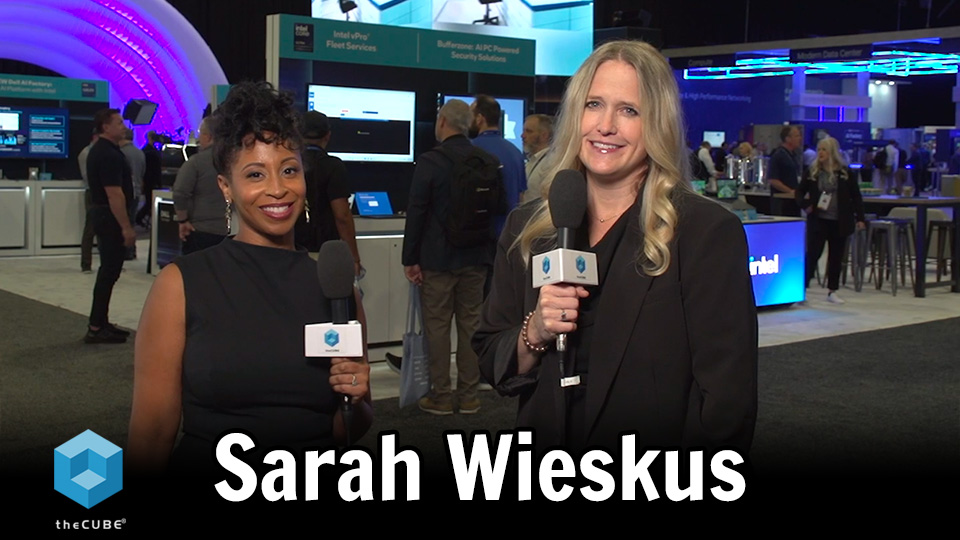
Sarah Wieskus of Intel participates in theCUBE at Dell Technologies World 2025 in Las Vegas to discuss the intricacies of Intel's vPro platform. This segment is hosted by Savannah Peterson of SiliconANGLE Media and Dave Vellante of SiliconANGLE Media as they explore Intel's innovations and their real-world applications.
Wieskus shares extensive knowledge about Intel's vPro, a commercial-grade platform designed for the business sector. The conversation, guided by Peterson and Vellante from theCUBE Research, covers a range of topics including the performance benefits of vPro, its security features, and collaboration with Dell in crafting tailored solutions for commercial use.
Wieskus elaborates on the advantages of integrating CPU, GPU, and NPU within vPro systems to enhance efficiency and productivity. The conversation also addresses AI's role in revolutionizing PC use, offering significant offloading benefits and energy savings, according to Wieskus. They discuss the transformative impact of AI across industries such as education and agriculture, demonstrating its potential to drive innovation.
Forgot Password
Almost there!
We just sent you a verification email. Please verify your account to gain access to
Dell Technologies World 2025. If you don’t think you received an email check your
spam folder.
In order to sign in, enter the email address you used to registered for the event. Once completed, you will receive an email with a verification link. Open this link to automatically sign into the site.
Register For Dell Technologies World 2025
Please fill out the information below. You will recieve an email with a verification link confirming your registration. Click the link to automatically sign into the site.
You’re almost there!
We just sent you a verification email. Please click the verification button in the email. Once your email address is verified, you will have full access to all event content for Dell Technologies World 2025.
I want my badge and interests to be visible to all attendees.
Checking this box will display your presense on the attendees list, view your profile and allow other attendees to contact you via 1-1 chat. Read the Privacy Policy. At any time, you can choose to disable this preference.
Select your Interests!
add
Upload your photo
Uploading..
OR
Connect via Twitter
Connect via Linkedin
EDIT PASSWORD
Share
Forgot Password
Almost there!
We just sent you a verification email. Please verify your account to gain access to
Dell Technologies World 2025. If you don’t think you received an email check your
spam folder.
In order to sign in, enter the email address you used to registered for the event. Once completed, you will receive an email with a verification link. Open this link to automatically sign into the site.
Sign in to gain access to Dell Technologies World 2025
Please sign in with LinkedIn to continue to Dell Technologies World 2025. Signing in with LinkedIn ensures a professional environment.
Are you sure you want to remove access rights for this user?
Details
Manage Access
email address
Community Invitation
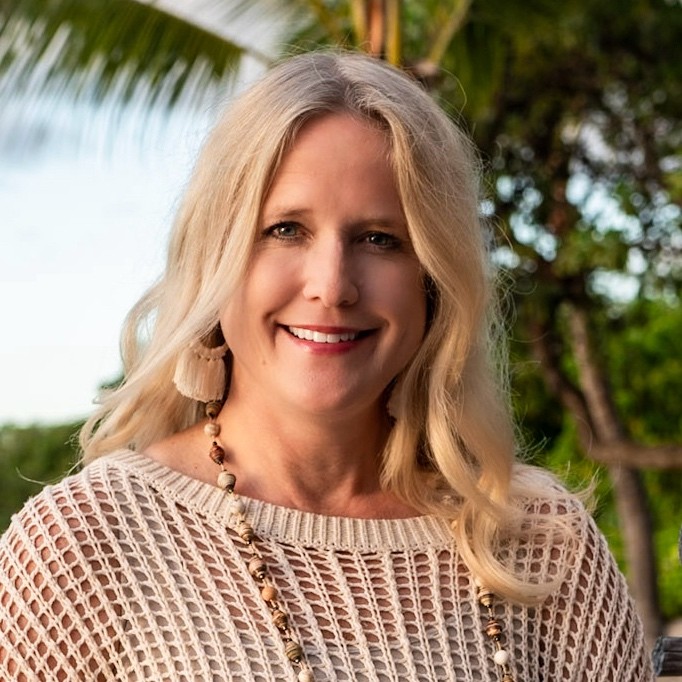
Sarah Wieskus, Intel
Sarah Wieskus of Intel participates in theCUBE at Dell Technologies World 2025 in Las Vegas to discuss the intricacies of Intel's vPro platform. This segment is hosted by Savannah Peterson of SiliconANGLE Media and Dave Vellante of SiliconANGLE Media as they explore Intel's innovations and their real-world applications.
Wieskus shares extensive knowledge about Intel's vPro, a commercial-grade platform designed for the business sector. The conversation, guided by Peterson and Vellante from theCUBE Research, covers a range of topics including the performance benefits of vPro, its security features, and collaboration with Dell in crafting tailored solutions for commercial use.
Wieskus elaborates on the advantages of integrating CPU, GPU, and NPU within vPro systems to enhance efficiency and productivity. The conversation also addresses AI's role in revolutionizing PC use, offering significant offloading benefits and energy savings, according to Wieskus. They discuss the transformative impact of AI across industries such as education and agriculture, demonstrating its potential to drive innovation.
Sarah Wieskus, general manager of commercial client sales at Intel Corp., joins theCUBE’s Savannah Peterson and Dave Vellante at Dell Technologies World 2025 for a deep dive into the vPro platform. Their discussion explores how Intel’s hardware innovations are elevating commercial computing through security, performance and manageability.
Wieskus explains how the vPro platform leverages a trio of processing units—CPU, GPU and NPU—to drive efficient AI workloads. She also details how integrated neural processing boosts battery life and responsiveness in...Read more
exploreKeep Exploring
What are the quality and performance benefits of using vPro commercial grade platform?add
What are the advantages of using three processing units (CPU, GPU, NPU) instead of just one?add
What does Intel provide in terms of software exploitation for offloading tasks to NPUs and GPUs?add
>> Good afternoon, Dell Community, and welcome back to fabulous Las Vegas, Nevada. We're here midway through day two of our three days of live coverage on theCUBE. My name is Savannah Peterson here for all the fun with Dave Vellante. We were talking about farms just a second ago. Yeehaw, baby. I was just in Dallas last week, but I love this one thing. We always learn so much from our guests, but we also learn something about each other, every show, which is very fun. Without further ado, a fellow farm lover. Sarah, welcome to this show. How you doing?
Sarah Wieskus
>> Thank you, Savannah. Thank you for having me. It's been great.
Savannah Peterson
>> It is such a pleasure to have you on the show. Right away, I could tell your energy was good. And when you said you were from Minnesota, I thought, "Oh, well this now makes perfect sense. This is actually, this all lines up." We're talking to Intel today. Very excited, have done a lot of interviews and shows with you all, but we're going vPro today. Talk to us a little bit about that line and the quality of it, and what customers can expect.
Sarah Wieskus
>> Yeah, so vPro is basically our commercial grade platform, and it's been around for almost 20 years, and it was really built so that customers in the commercial sector knew that that product was for them. It starts with a specification that says you have to have a commercial grade processor, chipset, WiFi, Thunderbolt connectivity. The whole thing has to be on a secure firmware. And if you follow this specification, you can call it vPro, our professional grade platform.
Savannah Peterson
>> Or very pro moving forward.
Sarah Wieskus
>> Yes, exactly. And now a Dell Pro. So it all works together.
Savannah Peterson
>> We've got a couple machines here, both with Intel inside. Talk to me a little bit more about the specific differences. You talked about some of those specs, but what are the quality and performance benefits of going with a commercial grade machine?
Sarah Wieskus
>> Yeah, so Savannah, you're using what I'd call a consumer grade machine. Dave is using a commercial grade vPro machine.
Dave Vellante
>> Okay, here we go.
Sarah Wieskus
>> And so, you can see the differences, well, besides the color-
Dave Vellante
>> Well, but the keyboard is different.
Sarah Wieskus
>> Yes.
Savannah Peterson
>> This is a little thinner.
Sarah Wieskus
>> Yes.
Dave Vellante
>> The connectivity is different.
Sarah Wieskus
>> Yeah. So we work closely with Dell on that design of the commercial grade platform. And some of the specifics that are different is, first of all, again, you have to have a minimum bar when it comes to the commercial grade CPU. So you don't see anything less than a 5 Series in a commercial grade. It has to be five, seven-
Dave Vellante
>> Ultra 7, right?
Sarah Wieskus
>> Yeah, Ultra 7, yes. So you don't get anything below an Ultra 5 or a 5 Series in a commercial grade system. Period, full stop. Then you have to have the Q series chipset, you have to have WiFi seven. It's a total package and it's the best of the best. And then there's more security technologuy in vPro than there is consumer.
Savannah Peterson
>> Which makes a lot of sense.
Sarah Wieskus
>> Which makes a lot of sense when you're protecting a business's assets. And then, the last thing is specifically around remote management. So we just saw the biggest blue screen outage that ever happened to PCs in July. And customers that were using vPro were able to remotely access those systems and repair them, where others had to physically touch the system.
Savannah Peterson
>> That's a big difference.
Sarah Wieskus
>> Yes. And it's very much like server technology you see from Dell. Dell has DRAC, which is lights out management, because they can't go into data centers to fix them. They need to remotely access them. So we took that concept and said, "Hey, but in PCs, we have so many more of them all over the world, we need to be able remotely manage them, whether they're blue screened, off, et cetera."
For disaster recovery, because the world realized how important specific PCs were in the environment. Think about airport PCs, manufacturing PCs, hospital PCs, it's crazy. And then, customers see a benefit from a break fix perspective, so they're able to reduce their help desk costs and help desk calls, because they can remotely access systems to fix them and get people more productive. So those are the big things. You get really that best experience, you get the most security, and it's the easiest to manage solution, which are the big requirements for commercial.
Dave Vellante
>> And what's inside? Both of these have CPUs, GPUs, and NPUs. Is that correct?
Sarah Wieskus
>> Yes, correct. Correct.
Dave Vellante
>> Okay. And NPUs are relatively new innovation. I mean, they've been around, but they're increasingly going into AI PCs. How are they being used? I mean, I don't know as a user, I just use my PC. When is it invoking the NPU? What's the benefit to the customer?
Sarah Wieskus
>> Yeah. So first of all, three processing units is better than one. So having a CPU and a GPU, and an NPU, you get that flexibility to use all three engines instead of one at the highest level. And it's really important then that we have software that takes advantage of all three of those engines. It's not automatic. You have to do the software work. So at Intel, we have 20,000 software developers working with the software ecosystem to make sure they can see all three of these engines and they're using them. And the way we describe it is you need the CPU for Burst AI. We've had AI in the CPU since 2011. A lot of people don't know that, with machine learning and those kinds of things. GPU is really for heavy AI. And then, NPU is for battery efficient, always on AI. And if you look at the software, we've enabled over 200 software vendors to use all three of these engines. They're using it about 30% CPU, 30% NPU, 40% GPU. So depending on how the software is written, they're using these three engines. And one of the biggest, easiest ROI for a customer to have all three of these engines is for something we call offload. Because there's specific use cases that the CPU is basically getting hammered, aggressive security scanning happening all day, every day, especially in commercial, your collaboration software. I mean, your video's on, Teams is running and that can consume a lot of CPU and a lot of battery. So offloading things like your security scanning to the NPU or GPU, and/or collaboration software, which is another one to these engines for video and things, you get 20% more of your CPU back, you get 20% more of your battery back.
Savannah Peterson
>> Which is very significant.
Sarah Wieskus
>> Which is very significant. So even if people aren't at the point where they're ready to use all things AI, the easiest starting point is offload.
Dave Vellante
>> And the software exploitation that you described, what does Intel provide? Just basically the development platform to do that, and then it's the developer's choice to leverage that capability?
Sarah Wieskus
>> Yeah. Correct. So we provide tools, we provide the libraries, we provide the training to the developer community. We have over 15,000 developers we've enabled for the AIPC. Those are commercial-
Savannah Peterson
>> Already?
Sarah Wieskus
>> Yes. And those are commercial grade-
Savannah Peterson
>> That's impressive....
Sarah Wieskus
>> and they're off the shelf. So it's important that you are providing those tools, those libraries, that training to take advantage of it. Hardware is always ahead of software, and so you need to work with that software community to take advantage of the three engines.
Dave Vellante
>> And what's the rough cost delta? What percent more? Is it 5%, 10%, 50%? Roughly.
Sarah Wieskus
>> It varies depending on-
Dave Vellante
>> Depending on how much storage and......
Sarah Wieskus
>> your specification and those types of things. But I would say generally people understand commercial is better and they're willing to pay more for that, right? There is no one size fits all. It really depends, because what we see in commercial is that our commercial customers are very specific on custom configuration sometimes. And so, it can really vary, but at the highest level, customers value commercial grade over consumer grade and they know that it'll last them longer, it is higher quality, and they just feel benefit there and they're willing to pay for that.
Savannah Peterson
>> I could definitely see that. What are some of the AIPC use cases that get you most excited?
Sarah Wieskus
>> Oh yeah. So for sure getting more out of the device and making people more productive. I love where things are going with agentic AI and generative AI, and just making life easier for everyone, whether you're a commercial or you're a consumer. And it's just so exciting to see. I think it's going to change learning so much. So education is part of my team, and I think AI in the classroom is so exciting. I mean, talk about that-
Savannah Peterson
>> Customized learning, the ability to, every mind, no matter their neurodiversity or where they're off at, that is one of the use cases that just touches my heart quite honestly. I think it's going to make such a difference in people's lives.
Sarah Wieskus
>> Yes. And I love the accessibility of AI. So we've worked with some specific software companies like Omnibridge that do sign language to text using AI, and the capability and the camera of the PC. So that opens up the world to diverse workers.
Savannah Peterson
>> That's amazing.
Sarah Wieskus
>> And they can be so productive in the enterprise. But also even working with restaurants on being able to take orders with sign language, the language translation, whether it's sign language or regular language, is really impressive.
Savannah Peterson
>> We're going to have to talk about that after this wraps, because that's one of the beats that I cover is accessibility and inclusion for us with tech tools. And we do multiple segments with deaf folks every year. And that is such a wonderful addition. I'm really excited about that. Okay. Two final questions for you. What do you think the AIPC or even the AI revolution might do for something that's close and near and dear to both of our hearts, for the farming community?
Sarah Wieskus
>> So first of all, I'm blown away with how much technology is used in farming. It's so scientific. There's been GPS on tractors way before we had GPS on what we use in the consumer world, way before. And so, I think the farming community is already benefiting from AI. They're so far ahead. I work closely with John Deere in Illinois and companies like that, and it just blows my mind how much more efficient they can be. Because growing up on a farm, we saw how hard our parents had to work and they had to, even how many rows they could harvest is so much smaller than what they can do today. So you're just so much more efficient, which brings food to people's table in much a more efficient and fast way, which we all need. And you go healthier options too, with the chemistry involved with AI. So it's very exciting.
Savannah Peterson
>> It's really exciting. And I'm actually really glad that we had chatted about that before we went live, because it's perfect and it's an industry I think that gets overlooked by technologists a little bit sometimes. Agriculture and farming in general, because we're nerds with our devices in our offices, but it's such a powerful driver of innovation. And talk about something that affects all of us. We all eat food. I mean, there's no way it doesn't touch us. All right, final question for you.
Dave Vellante
>> Wait, wait. Before you ask that question.
Savannah Peterson
>> Yeah.
Dave Vellante
>> How did you do your nails with the AIPC? What did you do?
Savannah Peterson
>> So my nails are designed by this AIPC and what I did was I took the palette, the color pantones for the shows that we had these two weeks. I put them in the Copilot and I also shared my style, some pictures of my clothing. And then I had it generate different patterns for me. And the first few were kind of boring. And then it got to a point where I thought it was cool enough and brought it to my human in the loop, in this case, my nail tech. And she did my nails.
Dave Vellante
>> So you just launched Copilot, you fed it the images and you just told them what you wanted-
Savannah Peterson
>> Yeah, yeah. I said, "Just design me some interesting nails."...
Dave Vellante
>> and you kept iterating and you said, "Boom, that's it."
Savannah Peterson
>> Yep. And printed it out. I mean, it's quite literally the first thing. I didn't even... Well, I guess I would've had to have logged in on the internet, because I was using Copilot, but it was literally the first thing I did when I got my Dell PC.
Sarah Wieskus
>> But then you get something so unique.
Savannah Peterson
>> Exactly.
Sarah Wieskus
>> And you're ready for the 4th of July.
Savannah Peterson
>> Exactly. Conversation starter, ready to rock, on brand.
Dave Vellante
>> Oh, those will change many times before the 4th of July, trust me.
Savannah Peterson
>> You know me too well, David. But no, it is really fun. And I think these little gateway instances are what really get people noodling and thinking about things. All right. This has been awesome, Sarah. I'm really excited to continue the conversation with you in the future. So what do you hope to be able to say at Dell Tech World 2026 that you can't yet say today?
Sarah Wieskus
>> Oh, that is a really good question. I really hope we can say specifically in commercial that people are using AI and really loving it, and leveraging it. We have a lot of customers purchasing the AIPC in commercial to future-proof, right? Because they know we have this Windows 10 end of service happening in October-
Savannah Peterson
>> 25 billion laptops due for refresh.
Sarah Wieskus
>> Exactly. And they know this refresh is happening. They know they keep these devices three, four, five years and they know it's coming. And so, a lot of our customers are hedging their bets and they're future-proofing. What I'm excited to come back in 2026 with all the enablement work we're doing with Dell and Intel, that we have example after example of after commercial customers. Not just future-proofing for it, but using it, loving it, and wanting more.
Savannah Peterson
>> Yes. Well, we look forward to having that. We'll have a customer right next to you telling us some really cool stuff this time next year. Sarah, thank you so much. This has been wonderfully inspiring.
Dave Vellante
>> Great to have you.
Sarah Wieskus
>> Yeah. Thank you.
Savannah Peterson
>> Thank you, Dave. And thank all of you for tuning into our three days of live coverage here at Dell Tech World in fabulous Las Vegas, Nevada. My name's Savannah Peterson. You're watching theCUBE, the leading source for enterprise tech news.












 Savannah Peterson
 Dave Vellante