We just sent you a verification email. Please verify your account to gain access to
Dell Technologies World 2025. If you don’t think you received an email check your
spam folder.
In order to sign in, enter the email address you used to registered for the event. Once completed, you will receive an email with a verification link. Open this link to automatically sign into the site.
Register For Dell Technologies World 2025
Please fill out the information below. You will recieve an email with a verification link confirming your registration. Click the link to automatically sign into the site.
You’re almost there!
We just sent you a verification email. Please click the verification button in the email. Once your email address is verified, you will have full access to all event content for Dell Technologies World 2025.
I want my badge and interests to be visible to all attendees.
Checking this box will display your presense on the attendees list, view your profile and allow other attendees to contact you via 1-1 chat. Read the Privacy Policy. At any time, you can choose to disable this preference.
Select your Interests!
add
Upload your photo
Uploading..
OR
Connect via Twitter
Connect via Linkedin
EDIT PASSWORD
Share
Forgot Password
Almost there!
We just sent you a verification email. Please verify your account to gain access to
Dell Technologies World 2025. If you don’t think you received an email check your
spam folder.
In order to sign in, enter the email address you used to registered for the event. Once completed, you will receive an email with a verification link. Open this link to automatically sign into the site.
Sign in to gain access to Dell Technologies World 2025
Please sign in with LinkedIn to continue to Dell Technologies World 2025. Signing in with LinkedIn ensures a professional environment.
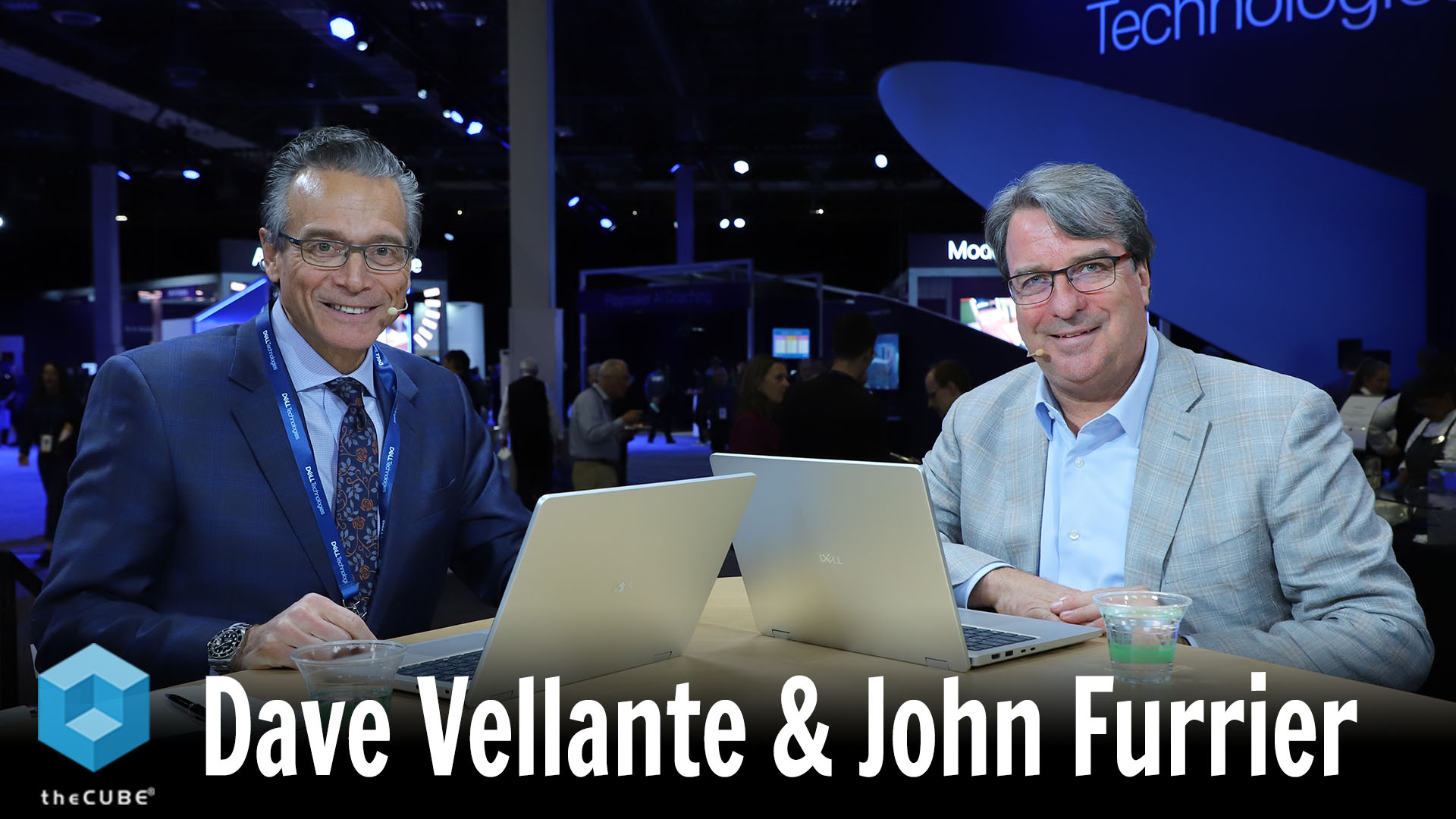
Greg Matson, senior vice president of products and marketing at Solidigm, joins theCUBE’s John Furrier and Dave Vellante at #DellTechnologiesWorld to explore a step forward in storage innovation. The conversation highlights Solidigm’s new 122-terabyte QLC drive and its implications for AI, data centers and power-conscious infrastructure design.
The discussion traces Solidigm’s evolution from its Intel roots to its leadership in high-capacity, cost-effective SSDs. Matson details how Solidigm’s longstanding partnership with Dell has helped drive effici...Read more
>> Welcome back, everyone. Live coverage here at Dell Technologies World 2025. I'm John Furrier, host of theCUBE, with Dave Vellante, co-founder, my co-host at theCUBE, 15 years covering Dell. We've got Craig Madsen, Senior Vice President at Solidigm, one of the hottest companies out there. Innovative product solution, growing like a weed, CUBE alumni in the NYSE Wired community. Craig, thanks for coming on theCUBE. Appreciate it.>> Thanks for having us. It's exciting.>> All right, first of all, people may or may not have heard of Solidigm, certainly in the tech industry, whereas as infrastructure, you're well known. Set the table. What's the most innovative thing you're doing? Why are you guys successful right now? What's the main product?>> So know, firstly, Solidigm was really born out of the memory and storage business at Intel. So we're a startup company, if you'd say, but really a well-running startup hit the ground running. And so we specialize in memory and storage products and specifically have really brought the modern SSD to market for both PC and server usages. And now we're really driving and leading the high capacity storage for AI revolution that's happening right now.>> We've been covering clustered systems now, AI factories. There's demand for tokens, putting huge pressure on these clusters or AI factories. So enterprise, hyperscalers, neoclouds, whatever you want to call it. They need more systems, bigger systems. Memory's a huge problem in this. And you guys partnered with Dell. We're here at Dell Tech World, see a power scale. What's the relationship with Dell? Talk about that first, and I want to get into some of the memory, why memory is more important now than ever before. But let's start with Dell.>> Yeah. Great. We've been a good strong partner and close partner with Dell for way more than a decade in terms of storage and memory. And we've together as companies driven new storage innovations, whether it was the driving the PCI interface for solid state storage versus SATA and SAS. We did that together maybe 10 years ago. It started to drive high capacity storage, 30 terabytes, 60 terabytes, 120 terabytes to market. So we've been partnering with Dell across the board in storage for years.
Dave Vellante
>> How are you interpreting the demand signals in the marketplace for AI training? You've got inference. You have cloud-scale workloads. How are you squinting through that and how does that affect your NAND and SSD roadmap when you look out?>> Well, firstly, we started with our core technology, which was really ideally suited to be the best and highest capacity storage product in the market. And so we were doing that before this big training wave. It was a portion of our business, but our technology that we had been driving was really, I would say, optimized for that use case
Dave Vellante
>> And really good cost per bit.>> Very good cost per bit. Very good performance.
Dave Vellante
>> Right.>> Reliability, power at the very highest capacities. And now when training came along and people are starting to design new greenfield data centers, they don't want anything to do with legacy hard drives. They're way too slow, take way too much power, and take up a lot of space so that there's a magic spot for us with our very highest capacity solid state drives.
Dave Vellante
>> So given the focus on cost per bit, what's your secret sauce to balance the need for high performance and endurance? Historically, you got to trade one for the other, but it seems like Solidigm has figured out a way to have its cake, eat it too, and not gain weight. How do you do that?>> I wish the weight gain was true. First, it comes down to our core memory silicon. Our NAND flash memory is placed on what's called floating gate technology, and we were the first company to bring in mass quad level cell or four bits per cell flash memory to the enterprise SSD market. So at the core, a drive, a cost of a drive is more than 80% of the actual flash silicon itself, and we make the best quad level cell silicon on the map. And then we wrapped it around with a very cost and power efficient system and integrated those two together. And so we really pride ourselves on our media integration expertise and the ability to really extract the most out of what some people would call quad level cell might have lower endurance than other memory technologies, but we're able to actually increase the level of endurance at a system level and deliver almost a no compromised product.
Dave Vellante
>> You're like QLC magicians to close.>> I just ask them to be magicians and people do it. But, yes, I think you're right.>> We all love the SSD market. It been changing the storage game for years. Just give us an order of magnitude of the scope of the impact. First, what's the product being featured here at Dell Tech World? What's the capacity? You said it was 122 terabytes?>> Yes.>> Okay, that's huge. And then scope the impact and what that means in these systems. Because it makes sense to be a storage tier. Why have HBM, all this other most expensive stuff? Memory's critical and all this. Where does it fit in? So give us the numbers. What's being featured here at the show and what's the impact in the infrastructure?>> Okay. Yeah, no problem. So we actually have a sample of our drive today. It's our 122 terabyte QLC drive. And you can see that the frame right here, we actually pulled this right out, straight out of a PowerScale system. So PowerScale is the first major storage system to go to market with 122 terabytes. It allows them to scale up to six petabytes per node, so massive capacity. And Dell's going to be rolling these things out in volume here pretty quick. And they launched them publicly maybe about a month ago.>> Got it.>> So our focus today is 122 terabyte. And look at that.>> It's beautiful.>> It's 122 terabytes the size of a pack of cards.>> That is beautiful.
Dave Vellante
>> That is really 122 terabytes. Wow.>> All right. Obviously, we see where Dell wins. So Dell got some good packaging, density's great. Okay, energy, all these core issues. And the architecture, the trend and the conversation is, it's not about the chips around it. I hear storage fabric, network fabric, interconnects. What does this do for that equation if someone's thinking about their data center as a computer?>> So really where the high capacity drives fit in is in the network attached storage. So there are drives, very fast Gen-5 SSDs in the GPU servers, but really those servers need massive amounts of data, I mean, petabytes and petabytes of data. In fact, some of the big greenfield data centers, you read about it every day in the press, they're buying exabytes of these drives. Because we really need to have a massive amount of data really adjacent to those GPU servers. And so by moving to high capacity flash storage instead of hard drives, you can save 80% of the storage related power, which companies like Meta, Microsoft have said is up to 30% of the total system power, so 80% of that power. You can also consolidate racks, about 4X rack consolidation. And when you're building a data center authorized around GPUs, you want to save all the power, give all the power to the GPUs, want to give all the space to the GPUs, all the real estate on your floor. And so this really allows companies to build optimized systems with very high performance, low power space efficiency.>> What are some of the performance numbers? Do you have those stats handy? Because Michael Dell said at his keynote, "Cold storage has got to come and get warm and hot because the AI wants to the data.
Dave Vellante
>> The economics make it so attractive.>> Absolutely.>> So what are some of the numbers? Because hat's going to create a huge lift for you guys. That means SSDs are perfect for warm and hot transition.>> They're perfect for it. They bring data to life. If it's not on an SSD, it's essentially dead.>> Give us an order of magnitude scope of, I got cold storage, old way. Now I got these SSDs in there tied right next to this high bandwidth system. The throughput's got to be there.>> You can imagine that this drive right here, just one drive has a million ions. And so you think about a hard drive with maybe 200. And then there's six petabytes of these drives in the highest capacity Dell PowerScale system.>> That's almost as big as my phone.>> Yeah, exactly. Exactly. It's very, very similar. And so the scale of IOPS, the of bandwidth is just massive.>> Space, power, energy, performance, and design for the systems.>> Exactly.>> That's where the action is.>> Yeah.>> So is that the reason why you're successful? Would you peg it that's the reason why you guys are winning right now and your growth is phenomenal? Obviously, you came out of the big company as a separate company and you guys are like a startup within a startup. What's the reason why you're winning?
Dave Vellante
>> I think there's a couple of areas. First is, like I talked about, the media integration and knowing how to extract every last bit of performance and capacity and endurance out of the flash memory. But also we spend an inordinate amount of time with our customers, and it's customers across the globe. So I've spent personally years working with everyone I can find at Dell to understand their use cases and their customers use cases. And it's not just Dell. It's customers around the world, cloud customers, big customers, small customers. And we try to understand fundamentally, what are their pain points in storage and then how can our technology help marry that and help fix those problems.>> I saw at GTC a demo with a cooling on top. That's a very cool product. Give a plug for that thing. That's real.>> Oh. So yes, in March, we announced the world's first liquid-cooled SSD.>> Nice.>> Again, talking with our customers and our partners, in this case NVIDIA, and they had a problem know. At PCIe Gen 6, they needed to have basically a liquid-cooled system. Not just on the GPUs, but the whole system they needed to be fan-less. And so we partnered with them. We actually had been doing a lot of pathfinding in both immersion cooling and cold plate cooling. We designed the drive as well as the cold plate kit that the drives plug into to bring this to market.>> Very innovative.>> And now it's going to be part of their main line reference design.>> Is that shipping now?
Dave Vellante
>> It'll be shipping later this year with their next generation servers.
Dave Vellante
>> And what does that do from an innovation standpoint? Because I mean, the historical Moore's Law would be, I don't know, call it doubling every 18 months, maybe roughly 40% a year. What kind of curve are you on? How does that direct liquid cooling affect that? Is it more for performance, for capacity, a combination?>> It's for performance and thermal and power. And mostly not on the network attached storage, it's mostly on the GPU attached storage.
Dave Vellante
>> Yeah.>> And so those drives are a very hot environment. The GPUs are just begging for data. And so it's like every bit of performance that they can extract out of the drive, they need, and by running those drives at higher than typical spec. So I can run that Gen 5 drive at 30 watts, but because of the cold plate, the thermal dissipation is running it at 15 watts. I get hundreds of thousands of more IOPS out of the drive and way more bandwidth out of the drive to feed the GPUs.>> So Greg, I got to ask your a personal question. As SVP, Senior Vice President of Products and Marketing, you don't really need to do a lot of marketing. More product than marketing.>> I do spend my time, an inordinate amount of my time, in product. Because we got to get the product right.>> Pretty damn good product.>> Right.>> It sells itself. I mean, there's a lot of demand.>> Yeah.>> Am I getting that right? There's a lot of demand?>> There's a lot of demand, but there's still a lot of education to do, and that's why we're here talking about this stuff. Because IT decision makers can't get to the data that they need. They don't buy directly from us for the most cases. They buy through solutions providers. And so how do we get the word out that, hey, if you're building, whether it's an edge data center, you have a small amount of space, a small amount of power, you need .>> I would just hold the drive up and say, "This is my iPhone Max and that's a drive. It's 122 terabytes. If it works, you're going to buy it, right?" I mean, that doesn't do it. All right, so I got to ask the verticals and the industries you're targeting. Obviously, you're seeing Dell Street, it's like that's our theme, Main Street. All use cases, every vertical's got AI. Are there certain industries right now that are more active than others? And can you give some examples of where you guys are moving the needle on these large factory configurations and just some data around how it's working?>> Yeah, I mean, first and foremost, these big drives are being used in the greenfield AI data centers. Even the hyperscalers have to make a transition off their existing infrastructure to something new. But when you're starting from scratch, you know what the best technology is. And that's where we're gaining a lot of traction. But some of the cool end user stories are, we worked with Dell and one of our storage partners called Peak AIO in the U.K. with a company called Mon.io. It's actually an open source consortium that works with King's College. And they optimize algorithms and models for medical imaging. And so we work with them to reduce the medical imaging time for MRIs and getting the data back from your MRI from days to minutes. So it's a real world application that really benefits people. It benefits you and I, if we were able to do.
Dave Vellante
>> That's a stress reducer right there.>> Yeah.
Dave Vellante
>> It could be sometimes weeks.>> Yeah.>> Well, let's definitely get a drill-down on that. We'll follow up certainly in the Palo Alto Studios, NYSC Wired Studios in New York. You guys are a great company we've been seeing on the radar. Obviously, know the history. Congratulations on the success. And a great deal with Dell. The products look good.>> Yeah, we have a great partnership with Dell. We're really thankful for it and thank you for the congratulations.>> All right. Craig, good to see you.
Dave Vellante
>> Thanks for coming to theCUBE.>> All right.>> I'm John Furrier with Dave Vellante here live in Las Vegas with Dell Tech World 2025. It's our 12th year covering Dell Tech World. Michael Dell was on earlier. More coverage after this short break.