We just sent you a verification email. Please verify your account to gain access to
Dell Technologies World 2024. If you don’t think you received an email check your
spam folder.
In order to sign in, enter the email address you used to registered for the event. Once completed, you will receive an email with a verification link. Open this link to automatically sign into the site.
Register For Dell Technologies World 2024
Please fill out the information below. You will recieve an email with a verification link confirming your registration. Click the link to automatically sign into the site.
You’re almost there!
We just sent you a verification email. Please click the verification button in the email. Once your email address is verified, you will have full access to all event content for Dell Technologies World 2024.
I want my badge and interests to be visible to all attendees.
Checking this box will display your presense on the attendees list, view your profile and allow other attendees to contact you via 1-1 chat. Read the Privacy Policy. At any time, you can choose to disable this preference.
Select your Interests!
add
Upload your photo
Uploading..
OR
Connect via Twitter
Connect via Linkedin
EDIT PASSWORD
Share
Forgot Password
Almost there!
We just sent you a verification email. Please verify your account to gain access to
Dell Technologies World 2024. If you don’t think you received an email check your
spam folder.
In order to sign in, enter the email address you used to registered for the event. Once completed, you will receive an email with a verification link. Open this link to automatically sign into the site.
Sign in to gain access to Dell Technologies World 2024
Please sign in with LinkedIn to continue to Dell Technologies World 2024. Signing in with LinkedIn ensures a professional environment.
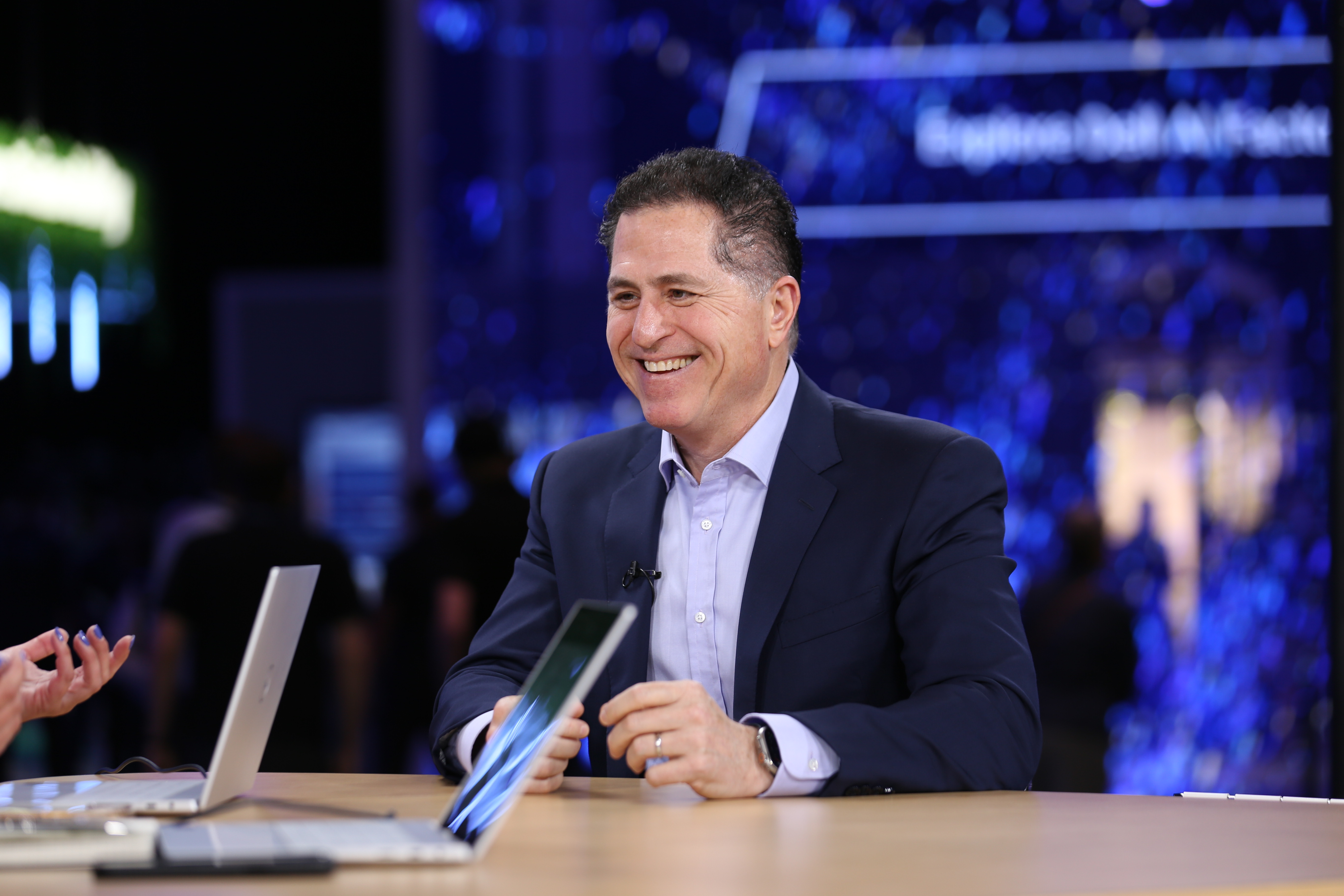
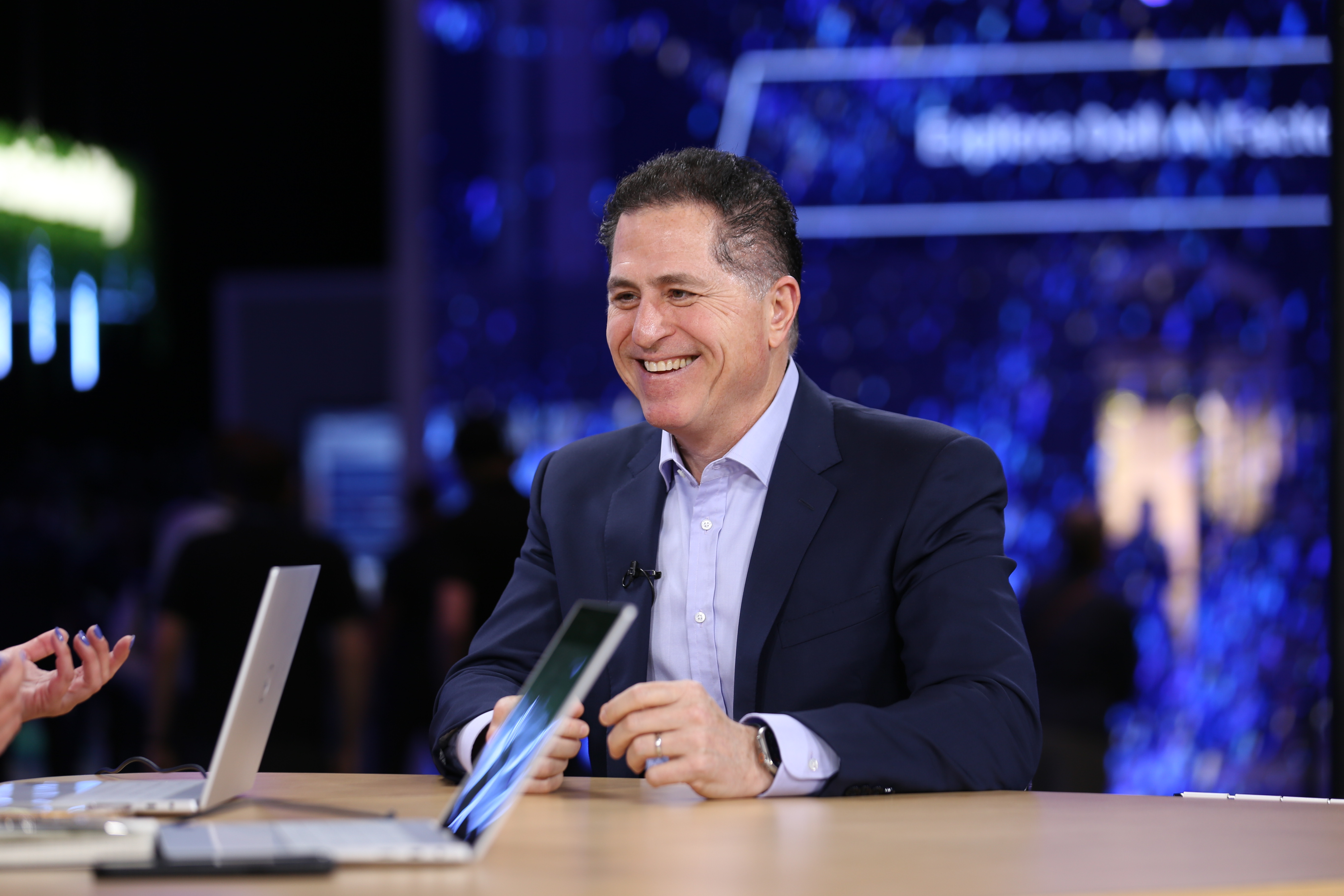
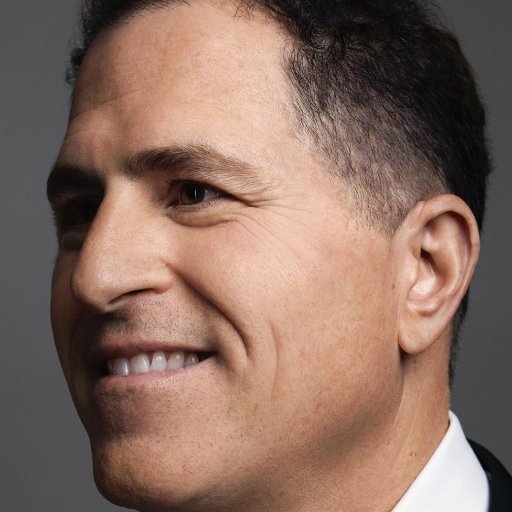
>> Good morning nerd fan, and welcome back to fabulous Las Vegas, Nevada. We're here in the middle of day two of three days of power-packed coverage at Dell Tech World. My name's Savannah Peterson, joined by my co-host and CUBE co-founder, Dave Vellante, for perhaps the most exciting segment of the->> Always a highlight.>> One of the biggest highlights. Without further ado, I got to welcome to the stage, Michael Dell. Thank you so much for being here. This is your show. We appreciate you having us.
Michael Dell
>> Well, thank you and really appreciate the incredible coverage that CUBE provides, not just for this show, but for decades. You guys have been with us and helping to educate and inform our customers and the community and really bringing out the great stories.>> Oh, we appreciate you saying that. We didn't pay him to say that, folks, just to be very clear. Speaking of decades 40th anniversary of Dell earlier this month, congratulations. Quite a celebration.
Michael Dell
>> We're still here.>> 40 years ago, I know you couldn't have predicted necessarily being on this stage, but what does this week mean? You've had some huge announcements. You had all of your AI celebrity friends on stage yesterday. Give us a high-level overview of where you're at right now.
Michael Dell
>> I think what's exciting about our industry is about every 10 years, something comes along and it kind of redefines the opportunity for technology to have a impact in the world. And we've seen that with the internet and microprocessors and the PC and clouds and mobile, and now obviously AI. I think the key difference here is it's happening maybe 10 times faster than those other waves. And it's right at the intersection of a lot of the things that we do. And of course, at the beginning of all the AI is data. And we've been talking about data at the center of everything for a long time. And so it feels like Dell Technologies was made for this moment. You see how our teams are energized. We're building the solutions, the AI factory, the compute, the storage, the networking, the memory, the services, the broad ecosystem from open and closed and the professional services to make it all happen. And it's all happening right here at Dell Technologies World.>> So it's quite remarkable. I mean, Dell sometimes in the past has been criticized for not innovating, but I'm seeing innovation everywhere, not just in products from laptops all the way out to the largest servers, but business model innovation as well. Can you tell us how you sort of came to this point of, I need to point the company at AI. How did that all come about? And it seems like you were amazingly ahead of everybody on that, which in this fast-paced world, it's hard to do so.
Michael Dell
>> When you see these powerful forces, and the only one that I can really equate that had a big impact on us was the internet, when we went to the World Wide Web and people could order things online, that was amazing. But AI has been around for a while. We had machine learning and the ideas have been around for decades, but when we saw these generative AI models and we imagined what could that mean for how we operate as a company, it really kicked us into a totally different gear. And we said, "This is the moment to reimagine, not just we want to make everything more productive and efficient. Yeah, we should do that, but what could it be given the trajectory of how these tools are improving?"
And we kind of said, "Well, if we don't do this, somebody else is going to do it and they could put us out of business, so let's go do it and let's go all in," and every part of the company, obviously how we serve our customers, but as you said, we're reinventing Dell and future-proofing Dell so we can be better, faster, stronger, and continue to serve our customers.>> How long ago was that moment that you just mentioned?
Michael Dell
>> Yeah, I would say it started around the second half of 2022, and it kind of built from there. And we started seeing a lot of new demand from customers as they were deploying these models, needing trading systems. And they were saying, "Okay, this is great, but I need way faster networking and way faster storage, and I want to connect thousands and tens of thousands and hundreds of thousands of these together, and can you help us?" And we said, "Yes," and we put our engineers to work, and they were energized by the challenge to build these systems that would provide these incredible capabilities.>> You said consumer's not a huge part of your business, but you said this morning, it's a very important part of your business because all business people are consumers. So you have visibility on that. Maybe it's an early warning signal. I don't know, because I wonder if you can think about this. Innovation tends to happen in the consumer space. I mean->> No, I love it.>> AI ROI is pretty clear with these big internet giants, bigger GPU clusters, better advertising, more money. Not as clear in the enterprise. People are hitting singles, but you know it's coming. How do you think about that and the consumer as a canary in the coal mine, if you will?
Michael Dell
>> Well, I think consumers, particularly techies and the gamers, you've got the Alienware team around here.>> Speaking of that.
Michael Dell
>> I'm speaking your language here. So they have been embracing these capabilities aggressively, and we already saw a lot of these small models and machine learning happening with GPUs on PCs. And the reason the consumer's important, as we were talking about earlier, everybody inside a company is a consumer. And so having the best devices, the best experiences is super important. And we're kind of at an interesting moment, right? Because it was about four years ago there was this huge wave of new machines that were installed. Now they're getting pretty old. And guess what? Now we have the AI PC here with new capabilities and the ability to drive productivity, haven't found anybody that doesn't want those capabilities in their next generation of PCs. So we're ready for that as well. And we also show up in all the edge devices in manufacturing and retail and Telco, and anywhere where there's data, there's going to be intelligence and connectivity, and there's going to be AI.>> Do you think that edge... how do you think about the edge opportunity from an economic standpoint? It's famous, the story Intel passed on the iPhone because they didn't think that the margins were going to be there. People think maybe the edge is not going to be as lucrative. I've never heard that from you. So how do you think about the edge as a long-term economic opportunity for Dell?
Michael Dell
>> Well, of course, the most prominent device for the edge is the one that's right in front of you. It's the PC. But in the future, most of the edge devices will be machines talking to machines, and we're actually already seeing it. It's not really the future right now. If you look at advanced manufacturing, edge infrastructure is happening there for sure. It's also happening in retail. Those are the front-running industry sectors. And you want to make your machines intelligent. You want to make them connected. You want to use that data to ultimately improve the experience. We created this native edge platform to bring the OT and the IT worlds together. And if you're a manufacturer, you've got 200 locations, you don't want to have a IT team in every single location. You want to be able to manage and deploy these consistently. If you're a retailer with 10,000 stores, you can't have people going out to every store to install these. You'll want a simple way to do that. So our NativeEdge platform, the edge computing infrastructure that we've built to do that increasingly with AI built in, not the super big NVIDIA GPUs, but smaller versions of that to be able to process data and intelligence in the real physical world right close to the action where it's happening.>> So 2024-
Michael Dell
>> And we think that's only going to grow.>> 2024 has been an insane year for Dell. GTC, Jensen anointed Dell as the company with the best end-to-end infrastructure on the planet. You've then transferred that into the best AI end-to-end infrastructure. Jensen basically who coined the term AI factory, you have taken that to new levels. Bill McDermott yesterday said, you are the most trusted person he knows in business. Incredible compliment.
Michael Dell
>> Right.>> I mean, amazing.
Michael Dell
>> It struck us both. Yep.>> And you have known both of these individuals for many, many years. As the founder of the company with your name on the logo, how important are those relationships and how do they come back to create this kind of innovation over time? I wonder if you could speak to that.
Michael Dell
>> Well, I wrote a book called Play Nice But Win and relationships are really an important part of how you succeed in life, and life is a long journey. I've met Jensen a long, long time ago when he was moving triangles around. That's how graphics processing started in gaming. I met Bill McDermott a long, long time ago, back in the nineties. And we built friendships and relationships and trust, did a lot of work together, and also became friends along the way with a shared view of the opportunities and the things we can do together. And when you're doing this stuff, there aren't a lot of people you can talk to, but other people running companies, you can compare notes and those friendships are super valuable. And now, of course, when we're moving quickly, we need trusted partnerships to be able to get things done.>> Compress the deal cycle.>> It's great to have besties running some of the most impressive companies on the planet alongside you, so it's a nice thing. I was watching the keynote you gave at Dell Medical School this year, and you were talking about how having... well, you were giving them the advice to have fun and talking about how being-
Michael Dell
>> I think they call it a commencement. They don't call it a keynote.>> They actually did. It's actually on the website as keynote.
Michael Dell
>> It says keynote?>> Yeah, it literally says keynote. I mean, I thought maybe we're modernizing that. All right. Whatever. Anyway, you were delivering some lovely words to the class.
Michael Dell
>> You're correct.>> Yeah. Of 2024. And I thought you were talking about being surrounded by your grandkids and how lovely that is. And as someone who is truly leading our AI future, what do you hope AI creates or provides for your family, for your grandkids as we look far into the future?
Michael Dell
>> Well, to be clear, I only have one grandchild so far. So I'm looking forward to being surrounded by grandchildren.>> .
Michael Dell
>> Yeah, this is what happens when you get a little older. . But look, I think technology has always been about making us healthier, safer, and more productive in all human endeavors. And I think what we're unleashing with this AI superpower, advancing scientific discovery, that was one of the things I was talking about at the Dell Medical School with the 50 amazing physicians that graduated.>> Yeah, that's so cool.
Michael Dell
>> And it's inspiring to spend time with them and hear their stories and hear their passion for patient care. And we created a new kind of medical school that's blended with a world-class engineering research school. So they're thinking about data and technology just as they're thinking about biology and healing and understanding their patients. And my hope is that all this technology will do exactly what I said, make us healthier, safer, more successful at everything we as humans want to accomplish.>> I love that. What a beautiful note. I have one last favor to ask you because I know it's a busy week for you. It's a very special person watching today. It's my mom. Would you mind saying, "Hi, Robin"?
Michael Dell
>> Hi, Robin. Hi, mom.>> That's great.>> I love it. Thank you so much, Michael. We really appreciate you taking the time. Dave, always a pleasure to have these great conversations and thank all of you for tuning in live wherever you might be on this beautiful rock. We're here in fabulous Las Vegas, Nevada. My name's Savannah Peterson. You're watching theCUBE, the leading source for enterprise tech news.
>> Good morning nerd fan, and welcome back to fabulous Las Vegas, Nevada. We're here in the middle of day two of three days of power-packed coverage at Dell Tech World. My name's Savannah Peterson, joined by my co-host and CUBE co-founder, Dave Vellante, for perhaps the most exciting segment of the->> Always a highlight.>> One of the biggest highlights. Without further ado, I got to welcome to the stage, Michael Dell. Thank you so much for being here. This is your show. We appreciate you having us.
Michael Dell
>> Well, thank you and really appreciate the incredible coverage that CUBE provides, not just for this show, but for decades. You guys have been with us and helping to educate and inform our customers and the community and really bringing out the great stories.>> Oh, we appreciate you saying that. We didn't pay him to say that, folks, just to be very clear. Speaking of decades 40th anniversary of Dell earlier this month, congratulations. Quite a celebration.
Michael Dell
>> We're still here.>> 40 years ago, I know you couldn't have predicted necessarily being on this stage, but what does this week mean? You've had some huge announcements. You had all of your AI celebrity friends on stage yesterday. Give us a high-level overview of where you're at right now.
Michael Dell
>> I think what's exciting about our industry is about every 10 years, something comes along and it kind of redefines the opportunity for technology to have a impact in the world. And we've seen that with the internet and microprocessors and the PC and clouds and mobile, and now obviously AI. I think the key difference here is it's happening maybe 10 times faster than those other waves. And it's right at the intersection of a lot of the things that we do. And of course, at the beginning of all the AI is data. And we've been talking about data at the center of everything for a long time. And so it feels like Dell Technologies was made for this moment. You see how our teams are energized. We're building the solutions, the AI factory, the compute, the storage, the networking, the memory, the services, the broad ecosystem from open and closed and the professional services to make it all happen. And it's all happening right here at Dell Technologies World.>> So it's quite remarkable. I mean, Dell sometimes in the past has been criticized for not innovating, but I'm seeing innovation everywhere, not just in products from laptops all the way out to the largest servers, but business model innovation as well. Can you tell us how you sort of came to this point of, I need to point the company at AI. How did that all come about? And it seems like you were amazingly ahead of everybody on that, which in this fast-paced world, it's hard to do so.
Michael Dell
>> When you see these powerful forces, and the only one that I can really equate that had a big impact on us was the internet, when we went to the World Wide Web and people could order things online, that was amazing. But AI has been around for a while. We had machine learning and the ideas have been around for decades, but when we saw these generative AI models and we imagined what could that mean for how we operate as a company, it really kicked us into a totally different gear. And we said, "This is the moment to reimagine, not just we want to make everything more productive and efficient. Yeah, we should do that, but what could it be given the trajectory of how these tools are improving?"
And we kind of said, "Well, if we don't do this, somebody else is going to do it and they could put us out of business, so let's go do it and let's go all in," and every part of the company, obviously how we serve our customers, but as you said, we're reinventing Dell and future-proofing Dell so we can be better, faster, stronger, and continue to serve our customers.>> How long ago was that moment that you just mentioned?
Michael Dell
>> Yeah, I would say it started around the second half of 2022, and it kind of built from there. And we started seeing a lot of new demand from customers as they were deploying these models, needing trading systems. And they were saying, "Okay, this is great, but I need way faster networking and way faster storage, and I want to connect thousands and tens of thousands and hundreds of thousands of these together, and can you help us?" And we said, "Yes," and we put our engineers to work, and they were energized by the challenge to build these systems that would provide these incredible capabilities.>> You said consumer's not a huge part of your business, but you said this morning, it's a very important part of your business because all business people are consumers. So you have visibility on that. Maybe it's an early warning signal. I don't know, because I wonder if you can think about this. Innovation tends to happen in the consumer space. I mean->> No, I love it.>> AI ROI is pretty clear with these big internet giants, bigger GPU clusters, better advertising, more money. Not as clear in the enterprise. People are hitting singles, but you know it's coming. How do you think about that and the consumer as a canary in the coal mine, if you will?
Michael Dell
>> Well, I think consumers, particularly techies and the gamers, you've got the Alienware team around here.>> Speaking of that.
Michael Dell
>> I'm speaking your language here. So they have been embracing these capabilities aggressively, and we already saw a lot of these small models and machine learning happening with GPUs on PCs. And the reason the consumer's important, as we were talking about earlier, everybody inside a company is a consumer. And so having the best devices, the best experiences is super important. And we're kind of at an interesting moment, right? Because it was about four years ago there was this huge wave of new machines that were installed. Now they're getting pretty old. And guess what? Now we have the AI PC here with new capabilities and the ability to drive productivity, haven't found anybody that doesn't want those capabilities in their next generation of PCs. So we're ready for that as well. And we also show up in all the edge devices in manufacturing and retail and Telco, and anywhere where there's data, there's going to be intelligence and connectivity, and there's going to be AI.>> Do you think that edge... how do you think about the edge opportunity from an economic standpoint? It's famous, the story Intel passed on the iPhone because they didn't think that the margins were going to be there. People think maybe the edge is not going to be as lucrative. I've never heard that from you. So how do you think about the edge as a long-term economic opportunity for Dell?
Michael Dell
>> Well, of course, the most prominent device for the edge is the one that's right in front of you. It's the PC. But in the future, most of the edge devices will be machines talking to machines, and we're actually already seeing it. It's not really the future right now. If you look at advanced manufacturing, edge infrastructure is happening there for sure. It's also happening in retail. Those are the front-running industry sectors. And you want to make your machines intelligent. You want to make them connected. You want to use that data to ultimately improve the experience. We created this native edge platform to bring the OT and the IT worlds together. And if you're a manufacturer, you've got 200 locations, you don't want to have a IT team in every single location. You want to be able to manage and deploy these consistently. If you're a retailer with 10,000 stores, you can't have people going out to every store to install these. You'll want a simple way to do that. So our NativeEdge platform, the edge computing infrastructure that we've built to do that increasingly with AI built in, not the super big NVIDIA GPUs, but smaller versions of that to be able to process data and intelligence in the real physical world right close to the action where it's happening.>> So 2024-
Michael Dell
>> And we think that's only going to grow.>> 2024 has been an insane year for Dell. GTC, Jensen anointed Dell as the company with the best end-to-end infrastructure on the planet. You've then transferred that into the best AI end-to-end infrastructure. Jensen basically who coined the term AI factory, you have taken that to new levels. Bill McDermott yesterday said, you are the most trusted person he knows in business. Incredible compliment.
Michael Dell
>> Right.>> I mean, amazing.
Michael Dell
>> It struck us both. Yep.>> And you have known both of these individuals for many, many years. As the founder of the company with your name on the logo, how important are those relationships and how do they come back to create this kind of innovation over time? I wonder if you could speak to that.
Michael Dell
>> Well, I wrote a book called Play Nice But Win and relationships are really an important part of how you succeed in life, and life is a long journey. I've met Jensen a long, long time ago when he was moving triangles around. That's how graphics processing started in gaming. I met Bill McDermott a long, long time ago, back in the nineties. And we built friendships and relationships and trust, did a lot of work together, and also became friends along the way with a shared view of the opportunities and the things we can do together. And when you're doing this stuff, there aren't a lot of people you can talk to, but other people running companies, you can compare notes and those friendships are super valuable. And now, of course, when we're moving quickly, we need trusted partnerships to be able to get things done.>> Compress the deal cycle.>> It's great to have besties running some of the most impressive companies on the planet alongside you, so it's a nice thing. I was watching the keynote you gave at Dell Medical School this year, and you were talking about how having... well, you were giving them the advice to have fun and talking about how being-
Michael Dell
>> I think they call it a commencement. They don't call it a keynote.>> They actually did. It's actually on the website as keynote.
Michael Dell
>> It says keynote?>> Yeah, it literally says keynote. I mean, I thought maybe we're modernizing that. All right. Whatever. Anyway, you were delivering some lovely words to the class.
Michael Dell
>> You're correct.>> Yeah. Of 2024. And I thought you were talking about being surrounded by your grandkids and how lovely that is. And as someone who is truly leading our AI future, what do you hope AI creates or provides for your family, for your grandkids as we look far into the future?
Michael Dell
>> Well, to be clear, I only have one grandchild so far. So I'm looking forward to being surrounded by grandchildren.>> .
Michael Dell
>> Yeah, this is what happens when you get a little older. . But look, I think technology has always been about making us healthier, safer, and more productive in all human endeavors. And I think what we're unleashing with this AI superpower, advancing scientific discovery, that was one of the things I was talking about at the Dell Medical School with the 50 amazing physicians that graduated.>> Yeah, that's so cool.
Michael Dell
>> And it's inspiring to spend time with them and hear their stories and hear their passion for patient care. And we created a new kind of medical school that's blended with a world-class engineering research school. So they're thinking about data and technology just as they're thinking about biology and healing and understanding their patients. And my hope is that all this technology will do exactly what I said, make us healthier, safer, more successful at everything we as humans want to accomplish.>> I love that. What a beautiful note. I have one last favor to ask you because I know it's a busy week for you. It's a very special person watching today. It's my mom. Would you mind saying, "Hi, Robin"?
Michael Dell
>> Hi, Robin. Hi, mom.>> That's great.>> I love it. Thank you so much, Michael. We really appreciate you taking the time. Dave, always a pleasure to have these great conversations and thank all of you for tuning in live wherever you might be on this beautiful rock. We're here in fabulous Las Vegas, Nevada. My name's Savannah Peterson. You're watching theCUBE, the leading source for enterprise tech news.