In this review of Dell Technologies Inc.'s AI Data Platform announcement, theCUBE Research’s chief analyst Dave Vellante and principal analyst Rob Strechay unpack how Dell is unifying the artificial intelligence data pipeline from storage to inference. They describe a platform built on four tightly integrated pillars – from PowerScale and ObjectScale forming the storage engine to a data engine that brings together Starburst, Elastic and open-source Spark – all aimed at supporting agentic workloads. Rather than ticking boxes, the conversation zeroes in on why a durable data foundation is the only way to move beyond proofs of concept. Vellante and Strechay reference the oft-cited finding that 95% of projects fail six months into production, then explain how Dell’s composable, partner-forward approach curbs lock-in while embracing open formats like Apache Iceberg and OpenAPIs.
The discussion surfaces real-world proof points from implementer Maya HTT, including PowerScale paired with Nvidia graphics processing units and the MBOT solution to speed engineering work in environments with lots of unstructured design files, plus a CSL shipping project that delivered about a 3% boost in fuel efficiency. Strechay and Vellante also walk through what’s new: Elastic N.V. now powers fast, real-time search over unstructured data to improve retrieval-augmented generation and semantic enrichment while Starburst Data Inc. lets teams query across many data sources and use open table formats without moving everything first. MetadataIQ makes it easier to index very large file sets and a PowerScale connector streamlines the retrieval step so data pipelines run more smoothly. The takeaway: Dell’s flexible control plane lets customers plug in the tools they need to safely serve data to AI agents – paving the way for hybrid, edge-aware platforms that turn raw data into business results.
Forgot Password
Almost there!
We just sent you a verification email. Please verify your account to gain access to
Dell AI Data Platform Event. If you don’t think you received an email check your
spam folder.
In order to sign in, enter the email address you used to registered for the event. Once completed, you will receive an email with a verification link. Open this link to automatically sign into the site.
Register for Dell AI Data Platform Event
Please fill out the information below. You will receive an email with a verification link confirming your registration. Click the link to automatically sign into the site.
You’re almost there!
You are now verified for the Dell AI Data Platform event! You now have access to our resources and can save the date of the broadcast using the "Add to Calendar" button.
I want my badge and interests to be visible to all attendees.
Checking this box will display your presense on the attendees list, view your profile and allow other attendees to contact you via 1-1 chat. Read the Privacy Policy. At any time, you can choose to disable this preference.
Select your Interests!
add
Upload your photo
Uploading..
OR
Connect via Twitter
Connect via Linkedin
EDIT PASSWORD
Share
Forgot Password
Almost there!
We just sent you a verification email. Please verify your account to gain access to
Dell AI Data Platform Event. If you don’t think you received an email check your
spam folder.
In order to sign in, enter the email address you used to registered for the event. Once completed, you will receive an email with a verification link. Open this link to automatically sign into the site.
Sign in to gain access to Dell AI Data Platform Event
Please sign in with LinkedIn to continue to Dell AI Data Platform Event. Signing in with LinkedIn ensures a professional environment.
Are you sure you want to remove access rights for this user?
Details
Manage Access
email address
Community Invitation
Dell AI Data Platform Event - AnalystANGLE
At the NYSE, theCUBE Research’s Dave Vellante sits down with Darren Miller, technical staff member for unstructured data storage at Dell Technologies, and Matheen Raza, principal product marketing manager at Nvidia, for a conversation about how these two tech giants are reshaping enterprise AI. They explore how storage and accelerated computing are converging to make large-scale AI more efficient and accessible.
Dell’s unstructured data solutions are helping organizations manage the explosion of AI-generated data, Miller explains. Nvidia’s AI platform certifications bring confidence and performance optimization to enterprise deployments, Raza expands. Together, they unpack how integrating smart storage with accelerated computing is redefining data center design and AI readiness.
The discussion highlights Dell and Nvidia’s co-engineered reference designs — including the Nvidia AI Data Platform and Dell’s PowerScale RAG connector — built to streamline AI workloads. These technologies transform data centers from cost centers to value generators, accelerating innovation, strengthening data governance and unlocking intelligent, scalable AI operations across industries, they both emphasize.
In this review of Dell Technologies Inc.'s AI Data Platform announcement, theCUBE Research’s chief analyst Dave Vellante and principal analyst Rob Strechay unpack how Dell is unifying the artificial intelligence data pipeline from storage to inference. They describe a platform built on four tightly integrated pillars – from PowerScale and ObjectScale forming the storage engine to a data engine that brings together Starburst, Elastic and open-source Spark – all aimed at supporting agentic workloads. Rather than ticking boxes, the conversation zeroes in on why ...Read more
exploreKeep Exploring
What are the key components of the Dell AI Data Platform and how does it contribute to Dell's overall and AI-specific strategies?add
What is Dell's approach to AI data solutions, and how does it differ from other solutions in the market?add
What unique features contribute to the success of the Dell AI Data Platform and VxRail in the hyper-converged space?add
What approaches is Dell using to enhance data accessibility and interoperability in its platforms?add
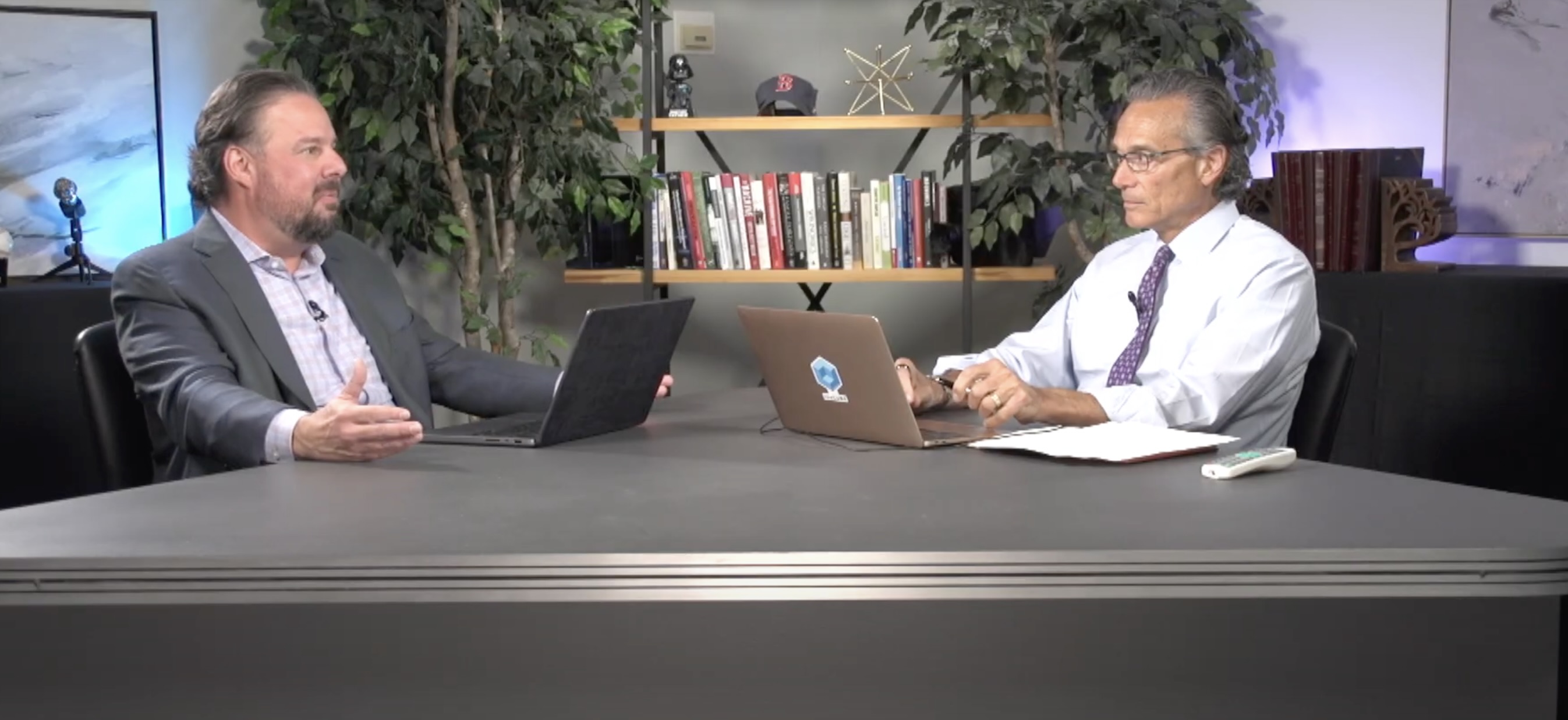
>> Hello everyone. Welcome to our analyst review of Dell's AI Data Platform announcement. I'm here with Rob Strechay. Rob, good to see you.
Rob Strechay
>> Glad to be here.
Dave Vellante
>> Let's get into it. So what is the Dell AI Data Platform? How does it fit into Dell's strategy generally, but their AI strategy specifically?
Rob Strechay
>> Yeah, I think they look at it, and you and I talk about this a lot where the Dell AI Data Platform is really the foundation for a lot of the things that they're building up on top of that. It really comes on four core pillars. One of them being PowerScale, one of them being ObjectScale. That's really the storage engine aspect of it. Then they have the other, which is the data engine. They really look at it from Elastic and a Starburst perspective as contributing to that data engine as well as they're adding open source with Spark. Then they really look at another leg of that stool is cyber resiliency, which they've built in with their native tools and then they look at bringing data management services on top of that, bringing that all together to have a ready platform for deploying agentic workloads.
Dave Vellante
>> Yeah, so Dell's known for having purpose-built storage, right? They're not trying to do the all-in-one Swiss Army knife. So you mentioned PowerScale and Object as well. Elastic is the vector search.
Rob Strechay
>> It's the vector aspect of it, and we'll kind of get into that a little bit. But when you start to look at it, they're using Starburst as their federated query engine and then Elastic as diving into the vectors, and then they have a number of other partnerships that they're working on as well with that. But also, hey, I need another engine on top of it. I want to use Python. So they have the ability of deploying Spark into that environment as well.
Dave Vellante
>> So essentially to me, it's like Dell's saying, "Hey, we're an infrastructure player. We can't do all of this stuff ourselves. We've got to partner for it." So you're familiar of course with the famous MIT study, which is 95% of these POCs fail six months after going into production. Part of that reason is data. So why is now the right time for organizations to invest in AI data platforms?
Rob Strechay
>> Yeah, I think again, when you start to look at it, if you don't have the right foundation to a house, the house is going to fall over. I think we all look at that, and again, I don't want to say that too much, but I'm a data guy and I look at the data infrastructure. In fact, when you look at adoption and Varun and some others have talked about, this is really how do you get from POC to production? If you don't have quality data that is accessible, you're in a tough spot. And with this, a lot of people have struggled with fragmented silo data across multiple different systems. And AI really requires and operates across cloud core and edge. And I think what people are trying to do is how do we bring this together and bring the right tooling together. And this is where the AI Data Platform with people like Starburst and Elastic and Spark, they're trying to not only bring together what's in their kit, but across kit as well. And I think they had on their segment, Maya HTT, who's an implementer. And what they were using on top of the Dell AI Data Platform was really PowerScale with NVIDIA GPUs and what they call their MBOT solution to kind of help people understand. And in particular, they talked about two different customers, MDM space, which has a ton of, or I would say a vast amount of unstructured data that they're really bringing together and trying to put into so that their engineers can go faster and that they can review different designs and accelerate output for satellites that they build. They also talked about CSL, who's a shipping operator, and they were looking really specifically to reduce and improve their fuel efficiency. So how do you understand routes? How do you understand different telemetry and data from these big ships? Well, they were able to get a 3% lift in efficiencies and cost savings on those ships and the shipping operations by putting in this thing. I think that goes to that MIT study of, "Hey, how do you get from POC to production?" It's really being very selective on the use case. It's engaging, and sometimes you look at it, partners who've seen this for different industries with Mata in particular, they looked at it from an engineering and a manufacturing perspective.
Dave Vellante
>> And obviously getting your data act together is a big part of that.
Rob Strechay
>> Yes.
Dave Vellante
>> Let's line it up with some other platforms. The modern data stack was almost exclusively in the cloud. You mentioned cloud core to edge, so that's obviously one of the differences. But how, in your view, is Dell's approach different from other AI data solutions?
Rob Strechay
>> Yeah, I mean, I look at it and go they've taken a composable approach to their AI data stack and they're looking at it by saying, "Hey, this architecture lets us bring in plug in." They're not saying you have to use Elastic, you're not having to use Starburst. But they recommend those as part of it, but they say, Hey, use PowerScale and ObjectScale. And then on top of them, there's a common control plane that Dell has deployed that allows you to plug in these other pieces with Elastic, with Starburst that gives you a better efficiency from that. And I think that's why not every customer is the same. Some aren't going to want to go to Spark because they don't know Python or something like that. But then you have people who are in the data science realm really want to go deep into that and build models beyond just agentic models or maybe using agentic to call traditional AI as well. So I think their approach is different in the fact that they're not trying to silo you all into one box. They'll let you plug in different pieces in there based on best of breed.
Dave Vellante
>> So help me understand that, because some of that is do-it-yourself. But at the same time, I'm inferring that one of the value props of this is that they've got an opinionated stack and it's a solution. So what are the problems that they're really solving for from a customer standpoint?
Rob Strechay
>> I think that's where their special sauce comes in, which is that aggregation or composability layer that they've built. If you think about it, I mean, we know that when they went into the hyper-converged space, one of the things and reasons why VxRail took off was the fact that their special sauce got you up and running incredibly fast. And what they've done within this ecosystem, within the Dell AI Data Platform is they brought that knowledge of how to make a composable system really tightly integrated between these pieces, but having optionality. So they're really, to your point, letting the optionality be easy where you can plug in different pieces or unplug different pieces based on your needs so that it can evolve over time.
Dave Vellante
>> So what are those specific pieces? This has been around for some time now. What's new in this platform?
Rob Strechay
>> Yeah, I think some of the major innovations was really when they brought in elastic to power the unstructured data engine and really helping with the real-time RAG, enabling faster search, semantic enrichment, and really accelerating that vector for the GPU acceleration for RAG and AI chatbots. Starburst was the first partner that they launched with really built on Trino as we all know, open source, but really that helped them tie even tighter into the federated analytics and AI queries that live across many different data silos. So this gives them, "Hey, maybe not everything's going to be on PowerScale and ObjectScale." I'm sure they would love that. But hey, I have to bring queries together across different data sets. And now with Iceberg and open table formats, which they can leverage using Starburst, that helps them with that. And I think when they look at it, they also brought in MetadataIQ, which is really intelligent indexing of billions of files for AI pipelines, and then really PowerScale RAG Connector, which was a streamlining the retrieval augmented generation portion within PowerScale. Because I think if you look at that unstructured data and how you have to go and do this, they're bringing that pipeline. Because a lot of people fall down on how do you build your data pipelines, how do you make them and maintain them. In fact, we'll have some new research coming out pretty soon from the Data Platform Summit that even just tangentially, if I can say that properly, looks like it's really building these pipelines yourself, to your point. Hey, there's some DIY, but really, it's more you choose point-and-click DIY versus I actually have to knit this stuff together. So it's not quite in the weeds of DIY.
Dave Vellante
>> A couple, let's see, to a 2024 GTC, we saw Jensen point to Michael Dell and basically talk about how Dell is number one at end to end. Dell picked up on the AI factories name, so it's now the Dell AI factories with NVIDIA is their branding. We've been covering that quite extensively, but initially it was just kind of a bunch of hardware and then NVIDIA's stack. It seems like the stack is evolving, this is part of it. How does this fit into the AI factories narrative?
Rob Strechay
>> Yeah, I mean, I think again, like you've talked about a lot, you have not only their own stack of stuff that they're bringing together, but Dell is really good at integrating in these different types. In fact, they've gone out and become storage certified with a number of the different NVIDIA deployment models for the AI factories, and they bring together stuff like the retrievers, the NeMo and NIMs Retrievers, and a number of things that can be deployed as part of this package. So I think where the AI Data Platform is really the foundation, then they're bringing together that stack up on top of it as well with the NVIDIA stack. And they're connecting the dots between, say, the RAG Connector and PowerScale with some of the retriever stuff that's in NeMo, stuff that's in the NVIDIA stack as well.
Dave Vellante
>> Rob, as you know, AI is largely about unstructured data. That's the real challenge. What is Dell doing there? Have they changed their sort of strategy around unstructured data? Are they just kind of bringing legacy platforms and pointing them at AI? What are they doing there that's specifically making AI ready, if you will, for parallel processing?
Rob Strechay
>> Yeah, I think when they look at it, they're doing a number of things to help them from a PowerScale and ObjectScale, really looking at different types of products for the right workloads, like again, PowerScale handling a high performance file-based workloads, which really supports training inference and RAG. ObjectScale, providing the scalable cloud native or S3 compliant object storage for massive data sets. And they're really looking at this as providing unified visibility and flexible data movement without re-architecture. Because if you go and look at how these multimodal, generative and RAG AI implementations are going, they're using different types of data. You actually may have an object, but that object actually may be a file. And so when they look at it, what is the right storage for the right type of workload? And they have it all, so that really helps them from that perspective.
Dave Vellante
>> I've never seen so much focus as I have these days on lock-in. People, generally speaking, about 15% of the customers that I talk to say, "Yeah, we're concerned about lock-in." But really, they're concerned about business value. And I think by the way, that's largely going to be the case, but it's almost become compulsory that you have a "open system." And you and I know open systems used to mean Unix, so take that for what you will. But my point is the definition of open evolves. So what is Dell doing to ensure that their systems are open and then they can minimize lock-in?
Rob Strechay
>> Yeah, I think Dell has really taken a great approach in this. I mean, they do this through their partnerships. They do this through the choice, but they're also doing and embracing it like Apache Iceberg and OpenAPIs and supporting interoperability across different analytics platforms, AI platforms and science tools, scientific tools. They're not dictating what formats or they're looking at supporting all of the open standards. So again, they look at it as if the market has chosen to go down the iceberg route, they're absolutely all in on that. And I think that way, if you look at it, really makes the data accessible not only within that stack that you've deployed there, but cross-stacks, so that they can, actually, their data platform can actually be part of other data systems and AI systems as you go along. It gives just freedom of choice. It really reduces lock-in, and it really is actually a requirement for long-term success.
Dave Vellante
>> Excellent. I'd like to give you a couple of my thoughts on this whole-
Rob Strechay
>> Well, I would love to get, because especially diving into the AI factory aspect of it as well.
Dave Vellante
>> I think that the trend that I've noticed, and I think part of the reason why this whole ROI discussion gets brought forth is because organizations have put so much emphasis on the cloud and they've kind of de-emphasized to a large extent they're on-prem. And now, they're saying, "Well, I'm not going to put some of my core systems into the cloud. I want to bring that intelligence to the data that lives on-prem."
And in doing so, I think they're realizing that their data stack maybe needs to catch up to the modern data stacks that have been in the cloud, and that data is siloed, it's not harmonized, and they have all this really great excitement around agentic. But in order to achieve that vision, they have to get their data to a place where they can serve it up in a governed manner to agents. And they're trying to figure out, "Okay, who around here can do that? Who's got the skillsets to do that?"
AI factories, as I say, can't just be hardware. You've got to have the surrounding stack, not just the data stack, but you have to have governance. If you're going to do open table formats, you've got to be able to talk to other governance catalogs. And then I would need to develop applications. If I'm going to have all this vibe coding and everybody's going to be coding, well, then I have to support that. And again, it's got to be compliant. So all of that is going to take some time to build out. But I do think, Rob, that we're going to see, I don't know if it's a 10x or 10%, 20%, 30%, 40%, like Michael Dell says, improvement in productivity, but you can already see it. You certainly see it in coding. You certainly see it in our daily lives and how AI is impacting our productivity and allowing us to do more things. And so I think it's going to take a couple of years to play out, but I'm envisioning that you're going to have an on-prem stack that is hybrid. It talks to the cloud. I think the edge is going to be really interesting. You saw some of the announcements that NVIDIA made this week in telco, and so that whole thing with 5G and 6 G is starting to emerge. And so I'm envisioning the cloud is this expanding universe and AI overlaid around, we used to call it super cloud, but then agents being able to serve up those governed, to take advantage of that governed data and actually take actions with humans in the loop. I think that's going to be the case for quite some time. I think AI factories are essentially the data center of the future. Your thoughts.
Rob Strechay
>> I agree, and I think, again, the foundation of them comes back to the data. I mean, data center. I mean, again, it's the center of data. And I look at it and go I'm a big fan of hybrid, and I think that hybrid and multi-cloud is going to win out. And multi-cloud, meaning it's not just a hyperscaler, multi-cloud means an operating system. And I think that's really what I love about Dell's approach to this. Again, they didn't say, "Hey, we're solely this stack. Every piece of software is from us. You come in and you're stuck in here." That choice and the ability to be able to go cross-silo with their stack and integrate their stack into other stacks is what I think AI, to your point, the AI factories of the future are going to be really heterogeneous in that way, but they have to have the right solution underneath it because people are looking at, to your point about data, data is stranded in other silos. And if you can go and make that actionable, which Dell can with their Dell AI Data Platform, they can go and make that actionable. That helps return a little positive ROI more than you would normally get if you had to say, "I'm going to go move everything to the cloud and push all my data up there." Which to your point, nobody's going to do that. There's something like 80% of the data is still stuck on-prem, and that data is going to be used for certain use cases. And probably, or funnily enough, it's going to probably be a higher ROI use case because that data is something that they've kept very close. It may be tied to certain processes that really there's people with certain knowledge that they have to get out and build into these agentic lines. And I think that's why, again, building these on-premise data platforms to bring things together and be able to be the source of truth for these AI systems is going to be key going forward.
Dave Vellante
>> So it's not just about the LLMs. It's not just about the models and the algorithms. It's going to be about what you can do with them, and I think this is going to be a real B2B boom. I think that's what's going to drive this. Right now, it's all about the CapEx, but I think the revenue generation and the productivity from enterprises is going to catch up to that. It might take a few years, but our expectation is it's not going to be a straight line, and sometimes it gets a little bumpy, but overall we think that the hype is going to manifest itself into reality. So thanks, Rob. Appreciate it.
Rob Strechay
>> Well, thank you.
Dave Vellante
>> Okay. And thank you everyone for watching our analyst review of Dell's AI Data Platform announcement. Until next time, this is Dave Vellante for Rob Strechay.