This special announcement segment from Dell Technologies Inc. tracks one through-line: turning scattered enterprise data into production AI. Various leaders in this space come together to discuss the biggest developments around Dell’s AI Data Platform, including: Varun Chhabra, senior vice president of ISG product marketing at Dell Technologies Inc.; Travis Vigil, senior vice president of ISC product management at Dell Technologies; Remi Duquette, vice president of industrial AI at Maya HTT; Anahad Dhillon, director of product management at Dell Technologies; Kevin Deierling, senior vice president of networking at Nvidia Corp.; Vrashank Jain, director of product management, AI Data Platform, at Dell Technologies; Ajay Nair, general manager of platform engineering at Elastic N.V.; and Jitender Aswani, senior vice president of engineering at Starburst Data Inc.
Introduced at Dell Technologies World earlier this year, the Dell AI Data Platform is gaining traction. Customer examples include how MDA Space boosts satellite output with Dell PowerScale and Nvidia, and CSL using real-time telemetry to drive about 3% energy savings and safer operations. Anahad Dhillon maps workloads to storage: PowerScale for parallel file access and ObjectScale for hyperscale S3, with All-Flash gains and smooth adoption of new GPUs and CPUs. Kevin Deierling ties in Nvidia’s stack – NeMo for model building, Triton for inference, RAPIDS for analytics – and NeMo Retriever for secure, real-time retrieval-augmented generation, or RAG. Vrashank Jain previews new data engines, including an Elasticsearch-based unstructured engine and MetadataIQ for change-aware ingestion with LangChain. Ajay Nair explains hybrid lexical and vector search with GPU acceleration. Jitender Aswani closes with Trino-powered federated SQL across lakes and warehouses without ETL and an agentic layer that brings vector and large language model functions into SQL. Above all else, it’s clear the platform is in place; now it’s about putting it to work at scale.
Forgot Password
Almost there!
We just sent you a verification email. Please verify your account to gain access to
Dell AI Data Platform Event. If you don’t think you received an email check your
spam folder.
In order to sign in, enter the email address you used to registered for the event. Once completed, you will receive an email with a verification link. Open this link to automatically sign into the site.
Register for Dell AI Data Platform Event
Please fill out the information below. You will receive an email with a verification link confirming your registration. Click the link to automatically sign into the site.
You’re almost there!
You are now verified for the Dell AI Data Platform event! You now have access to our resources and can save the date of the broadcast using the "Add to Calendar" button.
I want my badge and interests to be visible to all attendees.
Checking this box will display your presense on the attendees list, view your profile and allow other attendees to contact you via 1-1 chat. Read the Privacy Policy. At any time, you can choose to disable this preference.
Select your Interests!
add
Upload your photo
Uploading..
OR
Connect via Twitter
Connect via Linkedin
EDIT PASSWORD
Share
Forgot Password
Almost there!
We just sent you a verification email. Please verify your account to gain access to
Dell AI Data Platform Event. If you don’t think you received an email check your
spam folder.
In order to sign in, enter the email address you used to registered for the event. Once completed, you will receive an email with a verification link. Open this link to automatically sign into the site.
Sign in to gain access to Dell AI Data Platform Event
Please sign in with LinkedIn to continue to Dell AI Data Platform Event. Signing in with LinkedIn ensures a professional environment.
Are you sure you want to remove access rights for this user?
Details
Manage Access
email address
Community Invitation
Dell AI Data Platform Event: Break Through AI With Data
In this review of Dell Technologies Inc.'s AI Data Platform announcement, theCUBE Research’s chief analyst Dave Vellante and principal analyst Rob Strechay unpack how Dell is unifying the artificial intelligence data pipeline from storage to inference. They describe a platform built on four tightly integrated pillars – from PowerScale and ObjectScale forming the storage engine to a data engine that brings together Starburst, Elastic and open-source Spark – all aimed at supporting agentic workloads. Rather than ticking boxes, the conversation zeroes in on why a durable data foundation is the only way to move beyond proofs of concept. Vellante and Strechay reference the oft-cited finding that 95% of projects fail six months into production, then explain how Dell’s composable, partner-forward approach curbs lock-in while embracing open formats like Apache Iceberg and OpenAPIs.
The discussion surfaces real-world proof points from implementer Maya HTT, including PowerScale paired with Nvidia graphics processing units and the MBOT solution to speed engineering work in environments with lots of unstructured design files, plus a CSL shipping project that delivered about a 3% boost in fuel efficiency. Strechay and Vellante also walk through what’s new: Elastic N.V. now powers fast, real-time search over unstructured data to improve retrieval-augmented generation and semantic enrichment while Starburst Data Inc. lets teams query across many data sources and use open table formats without moving everything first. MetadataIQ makes it easier to index very large file sets and a PowerScale connector streamlines the retrieval step so data pipelines run more smoothly. The takeaway: Dell’s flexible control plane lets customers plug in the tools they need to safely serve data to AI agents – paving the way for hybrid, edge-aware platforms that turn raw data into business results.
Dell AI Data Platform Event: Break Through AI With Data
Varun Chhabra
SVP, Product MarketingDell Technologies
Travis Vigil
SVP, ISG Product ManagementDell Technologies
Ajay Nair
GM, Platform EngineeringElastic
Vrashank Jain
Director Product Management for AI Data PlatformDell Technologies
Jitender Aswani
SVP, EngineeringStarburst
Kevin Deierling
SVP of NetworkingNVIDIA
Remi Duquette
Vice President – Innovation & Industrial AIMaya HTT
Anahad Dhillon
Director, Product ManagementDell Technologies
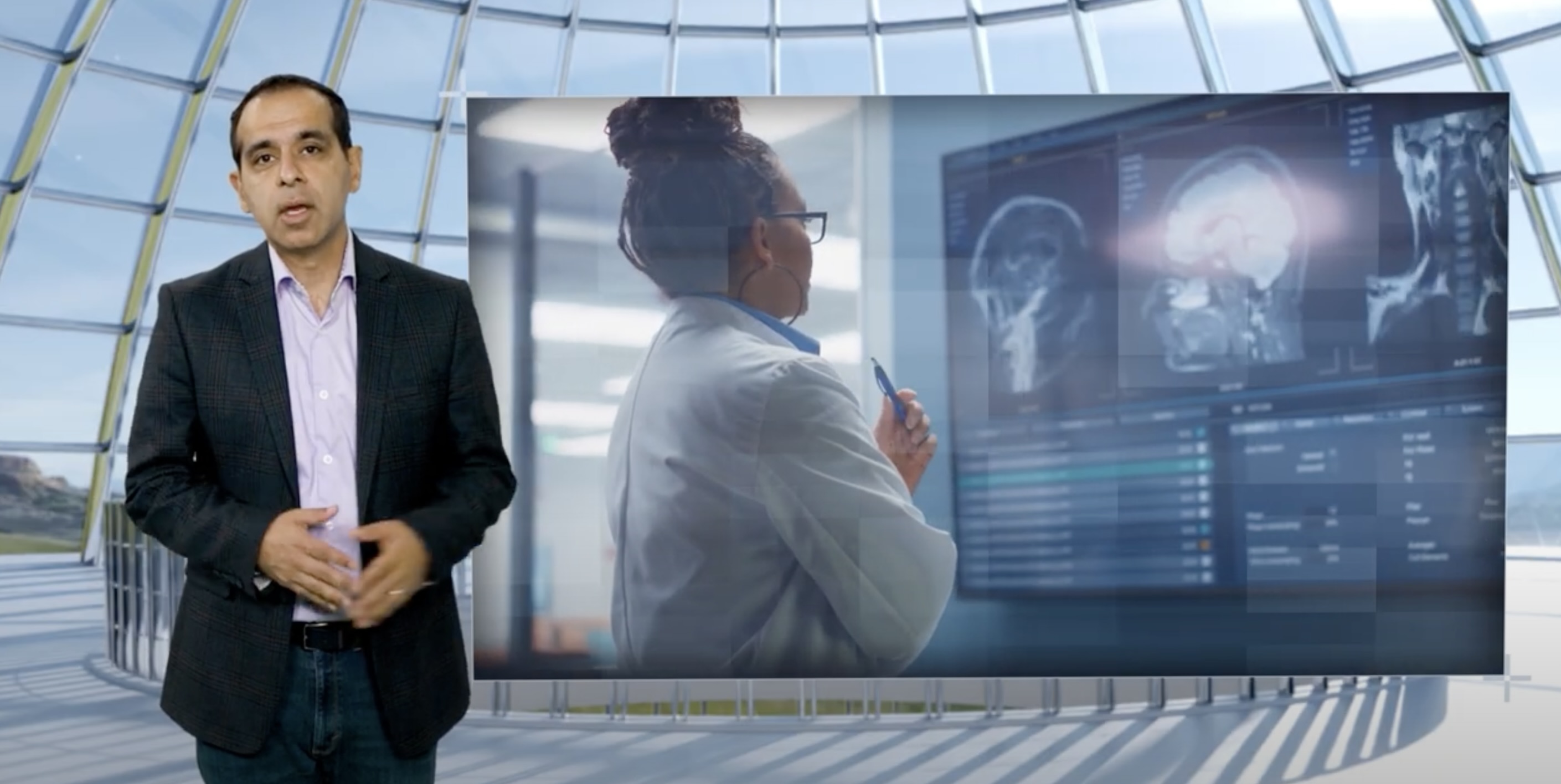
Travis Vigil, Senior Vice President of ISG Product Management at Dell Technologies, presents insights from the Dell AI Data Platform Event. The discussion includes contributions from experts such as Ajay Nair of Elastic, Vrashank Jain of Dell Technologies, Jitender Aswani of Starburst, Kevin Deierling of NVIDIA, Remi Duquette of Maya HTT, and Varun Chhabra and Anahad Dhillon of Dell Technologies. They highlight the importance of leveraging data for advancements in artificial intelligence across various industries.
This video provides an in-depth explor...Read more
Dell AI Data Platform Event: Break Through AI With Data
search
>> 10, 9, 8, 7, 6, 5, 4, 3, 2, 1. Let's begin.
Varun Chhabra
>> Welcome everyone. At Dell Tech World, earlier this year, we introduced a foundational element of the Dell AI factory, which is the Dell AI data platform, a purpose-built foundation to help enterprises turn data into AI outcomes. Over the last year, AI adoption has accelerated quickly in the enterprise. Organizations are no longer just experimenting with AI. They're increasingly deploying it to drive real business impact. And as they do that, we hear the same challenge again and again. The success of AI projects is often limited by the ability to unlock the value of enterprise data. And this isn't surprising. Enterprise data has grown to a massive size. It's increasingly fragmented and distributed and often locked in silos across workloads and locations. It's in files, in databases, in cloud environments, and in edge locations, and often sits on infrastructure that just wasn't designed for AI. All of this limits your ability to unlock the value of this data, which in turn limits the effectiveness of your AI initiatives. The Dell AI data platform is designed specifically to help you with this challenge. It's built to reduce this data complexity, unify your data pipelines, and make AI-ready data available everywhere your business needs it. And we're seeing this come to life across industries from healthcare teams using real-time analysis to speed up diagnosis, to manufacturers that are preventing downtime by predicting failures before they happen. This momentum validates Dell's vision that unlocking the value of data is critical to the success of AI efforts today. You'll hear from our product leaders, our partners, and our customers as they uncover how Dell is enabling organizations to do just that. To move from AI pilots to production faster and with less risk. To get us started, it is my pleasure to invite Travis Vigil, the senior Vice President of ISG product management at Dell. To give you a closer look at the Dell AI data platform and highlight why it's resonating so strongly with enterprises.
Travis Vigil
>> Thanks, Varun. It's great to be here to talk about how Dell is helping customers bring AI to life with a smarter data strategy. The last 12 months have been transformational. We've seen AI go from proof of concept to production across nearly every industry. But one thing has become very clear. AI isn't just about compute. It's about the data that feeds it. Data today is everywhere. It's structured, unstructured, semi-structured, spread across silos, apps and clouds, and pulling it together is complex. Most vendors would say push everything into a single storage layer. But this creates bottlenecks, slows things down, and locks you in. So the real challenge isn't just storing the data, it's activating it, turning raw information into something that's usable, trustworthy, and scalable for AI. Organizations need a smarter data strategy, one that makes data ready for AI without compromise. That's why we built the Dell AI data platform. It's an open modular foundation built on four core building blocks. First, our storage engines. Power scale and object scale. They move and scale data without compromise, ensuring it's always available when AI needs it. Next are our data engines. Specialized tools that organize, query and activate your data, turning raw information into insight. Third, we built in cyber resiliency with real-time threat detection, governance, and intrinsic security because AI is only as good as the trust you have in its results. And finally, our data management services. They provide a strong foundation for AI making data AI ready to scale outcomes with confidence. Together these four building blocks provide a foundation that grows and adapts as your AI ambitions evolve. With our Dell AI data platform, storage engines and data engines are each optimized for what they do best, working together, but independently. That means no bottlenecks, no lock-in, just the freedom to innovate on your terms. By separating data processing from storage, we eliminate friction and reduce solution costs. Whether you're training a foundation model, building a rag pipeline, or automating customer service, the Dell AI data platform delivers the speed, scale and flexibility your AI workloads require with an open framework, validated designs, and real-world performance. From AI-first performance storage and cutting-edge innovations with power scale and object scale to end-to-end data management powered by our data engines. We're proud of the technology, but we're even more proud of what our customers and partners are achieving with it. I would like to introduce Maya HTT to tell you more, but first, thank you for having me. Now over to you, Remi.
Travis Vigil
>> When we look at AI, AI is the tip of the iceberg, but you need a whole foundation underneath it to support it and make it sing, and make it do what you want. At Maya HTT, we deliver engineering, manufacturing, and industrial operation solutions for our end clients. CSL is a large operator of marine vessels around the planet. One of the biggest challenge that we were trying to address with CSL was to harness the terabytes of telemetry data that they are generating every year. Dell PowerScale really enabled that our AI models run real fast despite the immensity in the terabytes of data that are feeding the models. AI power predictive maintenance help maintain peak efficiency. We're talking about 3% energy savings over long periods of time. When we look at CSL in the real-time telemetry, a big element is situational awareness key to the safety and security of the crew first, the secondary benefit was reduced risk of whales being hit or being injured by very large vessels. As we look to the future with Dell Technologies and NVIDIA, they will continue to enable us to drive a real-time feedback and insight to our client and AI ecosystem, which is really exciting on all levels.
Anahad Dhillon
>> Thank you. Let's talk about the foundation of the Dell AI data platform. Our storage engines, when it comes to AI success starts with data and the ability to feed your GPUs pipelines and inferencing workloads efficiently. At Dell, we optimize every layer of our architecture to do what it does best, and that includes storage. That's why we built a modular approach with two high-performance scale-out storage engines. First, there's PowerScale, designed for demanding file-based workloads. Then there's ObjectScale, our cloud-native software-defined object storage engine. Together they give you the flexibility to scale, adapt, stay ahead of what's next. Powerscale delivers NAS simplicity with parallel performance, optimized for training, fine-tuning, inferencing and RAG pipelines. With the latest NVIDIA GB two-hundred and GB-three-hundred GPUs integration and our continuous software enhancements, organizations can unlock new levels of AI in production, with sustainable performance, easy management of massive scale leading resiliency and seamless integration with applications and the solution stack. What makes this even more powerful is the way Dell integrates next-generation hardware seamlessly, without disruption. That means you don't need a forklift upgrade every time a new CPU, or media technology comes along. It enhances your existing infrastructure and scales it to AI production. And with that, let me welcome Kevin from NVIDIA to share how this collaboration accelerates AI at scale in the enterprise. Kevin, over to you.
Kevin Deierling
>> Thank you. Hello everyone. It's great to be here with our friends at Dell Technologies. At NVIDIA, we believe AI is the defining technology of our time and will transform every industry. And unlocking its full potential requires the right combination of compute, networking, software and storage. That's why our partnership with Dell is so important. Together we've delivered a unified Dell AI data platform with NVIDIA, bringing NVIDIA's accelerated compute together with Dell's composable storage and data engines. This makes AI faster to deploy, easier to scale, and more cost-efficient. On the software side, the Dell AI data platform with NVIDIA integrates seamlessly with NVIDIA's full stack. That means you can use Nemo to build and customize large language models, leverage Triton to maximize inference performance and tap into Rapids for GPU-accelerated analytics and data science. And because the platform integrates our software end to end, customers can run these tools efficiently at scale, and we're not stopping there. Together with Dell, we've integrated NVIDIA Nemo Retriever directly with Dell's unstructured data engines. This enables RAG or Retrieval-Augmented Generation to securely search and deliver data to AI models in real time. And customers can trust this isn't just vision. So what does it mean to be an NVIDIA cloud partner, Superpod certified? And NVIDIA certified enterprise storage partner with Dell? It means customers get peace of mind that our joint solutions have been rigorously tested, validated, and performance optimized by both companies. Dell is proud to be a leader in NVIDIA cloud partner certifications. And with Superpod certification, we've proven our ability to deliver NVIDIA's highest level of reference architectures for enterprise AI, including complex multi-node, multi-GPU deployments. Together, we're accelerating AI storage across block file and object platforms, helping customers scale smarter and innovate faster. That means less risk, more confidence, and a proven foundation that's fast, flexible, and ready to scale from pilot projects to global rollouts. We're excited about where this partnership is headed. And we look forward to continuing to deliver AI breakthroughs together so you can unlock the full power of AI with data. And now back to Anahad.
Anahad Dhillon
>> Thank you for that great overview, Kevin. As you just heard, Dell and NVIDIA together give enterprises a foundation that's fast, flexible and proven. But delivering AI at scale also demands the right approach to unstructured data. And that's exactly where ObjectScale comes in. ObjectScale is our cloud-native high-performance software-defined object storage engine, which is built for unstructured data at Hyperscale, it's fully S3 compatible and supports multi-site and multi-tenant deployments. With our latest object scale all-flash platform, we've taken performance even further. We're delivering up to twice the performance of competing object stores and enhanced compression algorithms for massive efficiency gains. So how do you choose between the two storage engines? Think of powerscale as your high-performance file platform for workloads that need fast parallel access to large files. Object scale on the other hand, is ideal when you need scalable S3 native object storage for truly massive data sets, especially in gen AI analytics or multi-cloud environments. And of course you can use them together. Many customers pair PowerScale and ObjectScale to optimize both file and object pipelines, enabling a deeper unified visibility and a seamless experience across both. And together they form the industry's most open, complete, and performance-optimized AI data platform, keeping your AI infrastructure flexible, fast, and future-ready. With that, let's explore how we extract intelligence from this data using the next layer of the platform, the data engines. Vrashank.
Vrashank Jain
>> Thanks, Anahat. Now that we've covered how we move and store data with Powerscale and Object Scale, let's talk about unlocking its intelligence. As AI adoption grows, organizations are looking beyond the infrastructure. They want to know how to search, organize, and activate data for real outcomes. That's where Dell's data engines come in. These are specialized engines designed to work across structured and unstructured data sets, making it easier to discover insights, automate workflows, and power real-time AI. Today we're introducing the latest addition to the Dell AI data platform, our new unstructured data engine built with ElasticSearch at its core. This engine delivers real-time secure access to massive volumes of unstructured data. It's optimized for use cases like RAG, semantic search and generative AI pipelines. It lets you interact with your data as naturally as asking a question, enabling faster decisions, automatic knowledge, surfacing, and new levels of responsiveness. It is also integrated with Metadata IQ, a Dell service that enables data discovery of billions of files stored on PowerScale and ObjectScale using granular metadata. It allows developers to build smarter RAG applications in their favorite tools like LangChain, by sensing metadata changes and adjusting only those files that have changed. This saves hours of costly compute time and keeps vector databases up to date. To explain how this came together, and what it means for developers, I'd like to welcome Ajay Nair.
Ajay Nair
>> Thanks Vrashank. Elastic has always been synonymous with search. Search and relevance play a critical part in our lives from finding your favorite shoes to the nearest Uber. In the age of AI, the precision of search to find exactly what you need powers more than just a box on your screen. It has become the foundation of intelligent data access. Teams need instant access to petabytes of unstructured data and accurate, efficient, and scalable ways to put the data to work, be it for actions, insights, or decisions. That's why we are excited to partner with Dell and bring the power of ElasticSearch directly into the Dell AI data platform. This integration means Dell customers can now harness ElasticSearch, not just as a Vector database in the AI data platform, but for its full search capabilities optimized for speed, scale, and relevance within a single turnkey engine. Whether you're building RAG, real-time inferencing, or hybrid search, the data engine powered by ElasticSearch delivers the speed, accuracy and context awareness. Modern AI requires this partnership is a natural fit. As a Vector database, Elastic is the most widely downloaded vector database today. This is not by accident. Elastic has been on a multi-year journey to be the best vector database starting in 2017. We have delivered multiple innovations focused on delivering the speed, scale and relevance that our customers expect from the best. With innovations like better binary quantization for faster, 95% more memory-efficient vector search, 2X performance gains from changes in Lucene and ACON for high-speed filter retrieval, we have been continuously focused on pushing the boundaries of what's possible. We're also collaborating with NVIDIA on an ElasticSearch plugin, bringing GPU acceleration using NVIDIA QVS to vector search and the Dell AI data platform. But for the enterprise AI needs, vector search is just one capability for engineering the context needed for empowered AI. Enterprise AI needs to not just retrieve the relevant results, but the ability to weave in lexical search, combining static knowledge like documents with dynamic signals like logs. Elastic has been constantly innovating in this space. And at this point, we are the platform that delivers everything you need to bring your data to AI. This includes sparse and dense vector support, filtering, semantic re-ranking, aggregations, role-based securities and ingest pipelines. We also support built-in connectors and workflows that make development fast and repeatable. It's everything developers and enterprises need to create domain specific search agents securely and at scale. Joining forces with Dell's presence in enterprise data environments, and their modular AI optimized platform, gives Elastic the foundation to reach even more customers right where their data lives, where they're searching across files, documents, logs or transcripts. We help you uncover the signal in the noise and turn it into insight. Let's take the example of a large pharmacy chain handling millions of prescriptions, patient records and inventory updates every day. All that unstructured data, PDFs, logs, prescriptions, even scanned images, sits on Dell PowerScale. With Dell's data engines, that information is ingested, enriched and made available for advanced indexing. Elastic then takes over to search across this massive data set in real time. A pharmacist can instantly and precisely pull up a patient's history, check for drug interactions or confirm stock availability, even if that data is spread across multiple sites. And because Elastic runs directly on top of Dell's, high performance storage, queries are lightning fast and scale with demand. Dell ensures the data is stored securely, while Elastic ensures it's discoverable and actionable. That's the power of Dell and Elastic, turning unstructured data into actionable decisions. Together we're helping organizations transform unstructured data into an AI advantage. Thanks again to Dell for the partnership.
Vrashank Jain
>> Thanks, Ajay. That's a powerful example of what's possible when you unlock unstructured data at scale. Now, let's talk about structured data because that's just as critical for AI pipelines, analytics and operational decision making. Many enterprises still struggle with data silos and AI needs to connect those dots across sources, formats, and locations. That's why we partnered with Starburst, a leader in federated query and distributed analytics. With Starburst embedded in the Dell AI data platform, customers can now query structured and semi-structured data across any source, without having to move or duplicate it. This allows teams to run lightning fast SQL queries across data lakes, standardized on Iceberg, Delta Lake, and other open formats, distributed databases, data warehouses, and cloud storage. It powers real-time dashboards and analytics, and lets you curate data sets for model training and fine-tuning without ETL bottlenecks. And because the platform is built on open, consistent formats, every single engine, SQL, analytics or AI pipelines can work from one version of the truth. No extra copies, no mismatched results. Just query-ready data everywhere. You get the flexibility to query what you need when you need it, using the tools your analysts and data scientists already know. Now, you might be asking, what if I need to bring in data from streaming feeds or batch pipelines, and what if I want to train machine learning models on top of that data? Well, that's exactly where the Dell data processing engine comes in, built on Apache Spark and accelerated by NVIDIA GPUs, it delivers the familiar industry-standard distributed compute experience. But with enterprise-grade security and simple, reliable deployment. And because our engines are composable, you can start with the one that solves your biggest need today and add others as your use cases expand. Best of all, they arrive as a turnkey solution complete with hardware and a purpose-built Kubernetes-based admin control plane that's common across all engines. That means IT administrators can finally meet uptime SLAs, stay current on software versions, meet DR and compliance requirements, and avoid burning cycles managing a messy hardware and software stack. To tell us more about the innovation in the query engine, I'd like to welcome Jitender to share how Starburst is transforming data access and analytics with Dell.
Jitender Aswani
>> Thank you, Vrishank. At Starburst, we believe analytics and AI start with one thing, fast, reliable, and secure access to all your data wherever it lives. Not just in the cloud, not just on-prem, but across every system that matters to your business. And that is why we built an AI-native data platform powered by Trino, the world's fastest distributed query engine. Our data platform connects to virtually any source, and we do it at a massive scale. With Starburst, our customers query large data sets across many silos to feed AI models and run analytics without moving their data. And now we have brought that same power to the Dell AI data platform. By combining Starburst AI-native data platform with Dell's high-performance storage and orchestration, our customers can now query across PowerScale, ObjectScale, cloud, data lakes, and data warehouse. This partnership is a game-changer, especially for regulated industries like finance, healthcare, and the public sector, where data residency truly matters. For our customers, data sits what it does for a reason. Compliance, sovereignty, and governance. Our platform gives customer the freedom to choose the right architecture without any compromise. Let me bring this to life with an example from a pharmaceutical customer. In this scenario, the customer has prescription inventory and supplier data all stored in various file formats, table formats, and most importantly, in different locations. With Dell and Starburst, customer queries directly on top of power scale and object scale. No ETL, no movement, just one consistent view of the data. Dell's data engines unify structured and unstructured data. Starburst makes it query ready. And because we use open table formats such as Iceberg, that data can power AI workflows, SQL queries, and dashboards all from the same source. No duplication, no delay. Now imagine being able to answer where are we seeing drug shortages? Which medication are trending in demand? How is patient experience changing over time? All without copying a single byte of data. And that is the strongest value we are delivering to our customers. There is one more thing. We're also excited to bring the Starburst agentic layer to the Dell AI data platform. With the Starburst AI agent, we're taking a big leap. From raw data sets and manual prep work to governed, documented, business-ready data products in seconds. This agentic layer bridges the gap between people and data, and removes costly delays. It automates documentation, surfaces insights using conversational interface and gives every user from executive to analyst, a fast, intuitive way to work with data. And we're not stopping there. We're bringing vector search and LLM powered functions right inside SQL. So data engineers can harness the power of AI directly in their workflows. No extra tools, no contact switching, just SQL supercharged With AI, Dell brings the muscle, performance, scale, security. Starburst brings agility and governance. Together we are powering analytics without barriers. Dell and Starburst are helping customers simplify their data stack, reduce time to insight and make smarter decisions faster. We are proud to partner with Dell to give organizations the power to act on all their data, no matter where it lives. Thank you.
Varun Chhabra
>> Welcome back. Today, you've seen how Dell's approach to powering AI with data is uniquely suited to help you accelerate AI in your organization. Rather than collapsing everything into a single inflexible stack, we've built a modular AI data platform that meets your needs now and scales with you as you grow. We believe AI success starts with getting your data right, not just storing it, but making it usable, trusted, and ready for production scale workloads. The Dell AI data platform gives you an open modular foundation that grows with you, keeps complexity in check, and accelerates real business outcomes. With the Dell AI data platform, you can take AI beyond pilots, beyond proof of concepts, and put it to work for your business no matter which industry you operate in. And our professional services team can help you align your AI data strategy across people, processes, and infrastructure. On behalf of all of us at Dell Technologies, thank you for your trust and partnership. We can't wait to see what you build next, and we are here to help you get there faster.
Jitender Aswani
>> The most important result of innovation is that it allows us to make people happy. At Subaru, innovation encourages EyeSight, our advanced driver assist system that uses stereo cameras to help drivers react to situations as fast as they happen. We are partnering with Dell Technologies to enable AI for the next generation of EyeSight by combining AI inference with traditional image recognition logic. We are using Dell PowerScale storage for sensor data and images captured to improve EyeSight. PowerScale can ingest and process massive amounts of files efficiently, so that we can store and manage 1000 times more files than before. Dell PowerScale enables us to unlock the full potential of AI by providing the scalability, performance and reliability needed to innovate. At Subaru, we are committed to providing enjoyment and peace of mind to our customers. Dell is helping us harness the power of AI to improve the automotive experience of the future.