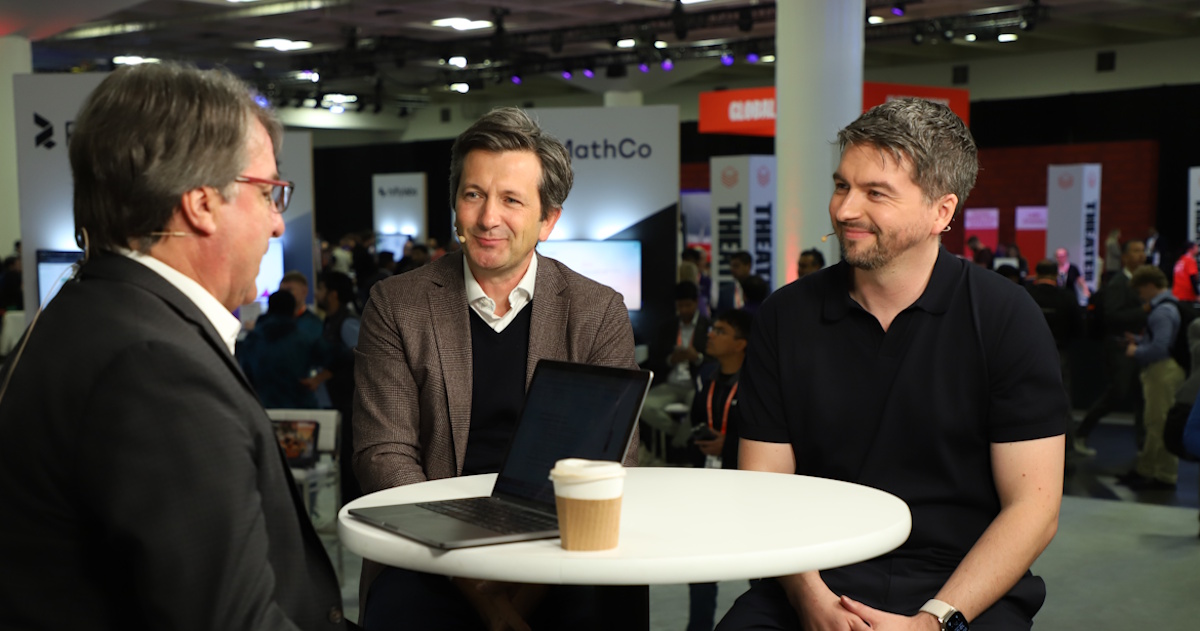
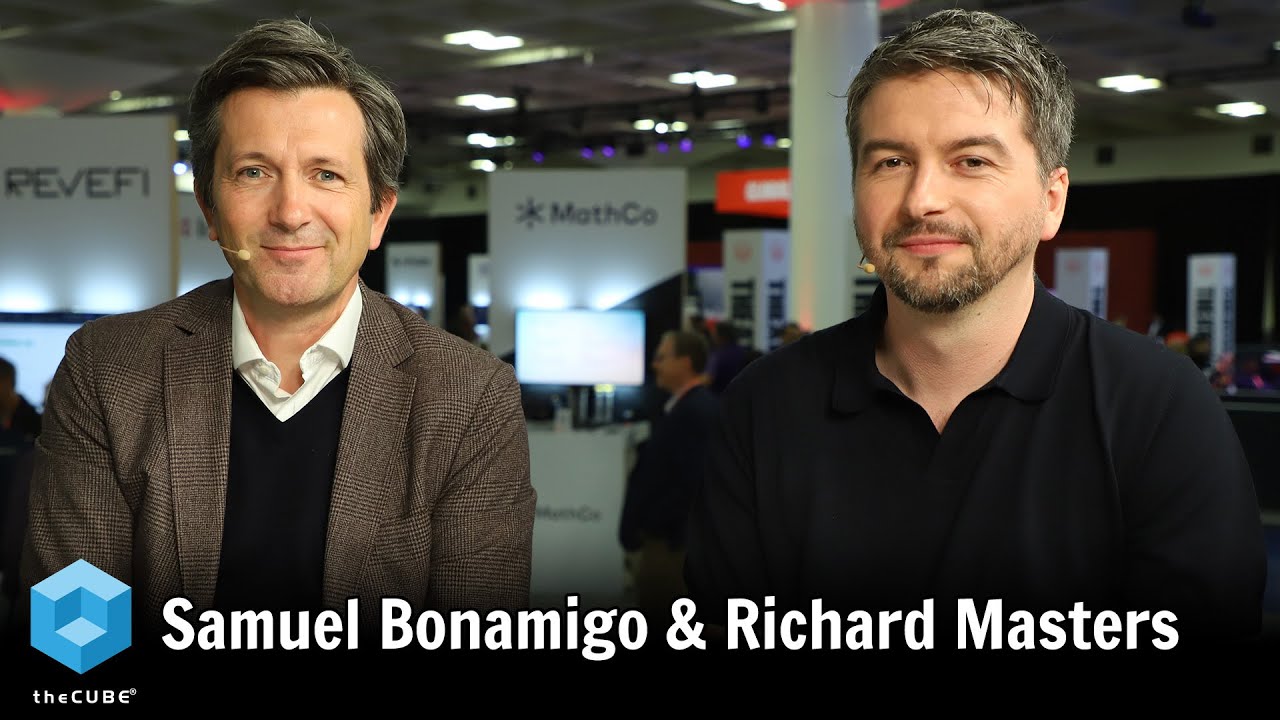
Richard Masters of Virgin Atlantic and Samuel Bonamigo of Databricks join John Furrier at the Databricks Data+AI Summit 2025 on theCUBE. They discuss advancements in data intelligence and artificial intelligence, emphasizing the role of Databricks platforms in transforming business operations.
Masters shares insights into Virgin Atlantic's data strategy, including how they utilize Databricks for a comprehensive view of their operations. They highlight the application of VibeCoding for prototyping within their development process. Bonamigo provides context on the growing impact of Databricks across the EMEA region, noting the success of the summit with over 20,000 attendees and significant customer testimonials.
Key takeaways from the conversation include the importance of democratizing data intelligence tools, as underscored by Bonamigo's enthusiasm for the Databricks free edition. Masters emphasizes the operational efficiencies gained from using serverless computing and Unity, allowing for precise return on investment calculations, and the benefits of Databricks' data engineering that enhance productivity and creativity.
Forgot Password
Almost there!
We just sent you a verification email. Please verify your account to gain access to
Data + AI Summit 2025. If you don’t think you received an email check your
spam folder.
In order to sign in, enter the email address you used to registered for the event. Once completed, you will receive an email with a verification link. Open this link to automatically sign into the site.
Register For Data + AI Summit 2025
Please fill out the information below. You will recieve an email with a verification link confirming your registration. Click the link to automatically sign into the site.
You’re almost there!
We just sent you a verification email. Please click the verification button in the email. Once your email address is verified, you will have full access to all event content for Data + AI Summit 2025.
I want my badge and interests to be visible to all attendees.
Checking this box will display your presense on the attendees list, view your profile and allow other attendees to contact you via 1-1 chat. Read the Privacy Policy. At any time, you can choose to disable this preference.
Select your Interests!
add
Upload your photo
Uploading..
OR
Connect via Twitter
Connect via Linkedin
EDIT PASSWORD
Share
Forgot Password
Almost there!
We just sent you a verification email. Please verify your account to gain access to
Data + AI Summit 2025. If you don’t think you received an email check your
spam folder.
In order to sign in, enter the email address you used to registered for the event. Once completed, you will receive an email with a verification link. Open this link to automatically sign into the site.
Sign in to gain access to Data + AI Summit 2025
Please sign in with LinkedIn to continue to Data + AI Summit 2025. Signing in with LinkedIn ensures a professional environment.
Pete Sonsini, Laude Ventures | Databricks Data+AI Summit 2025
Pete Sonsini
Co-founder and General PartnerLaude Ventures
Pete Sonsini, co-founder and general partner at Laude Ventures, joins theCUBE’s John Furrier at the Databricks Data + AI Summit 2025. A longtime investor in enterprise software, Sonsini shares insights from his transition from NEA to launching Laude Ventures with Andy Konwinski.
The conversation explores how Laude Ventures backs deeply technical, research-driven founders shaping the next wave of innovation. Sonsini reflects on investment experiences with Databricks, VMware and Perplexity, and the power of academic depth in enterprise software success.<...Read more
exploreKeep Exploring
What is Laude Ventures and what approach does it take in its investment strategy?add
What recent deals have been completed and what companies are involved?add
Pete Sonsini, Laude Ventures | Databricks Data+AI Summit 2025
search
>> Welcome back, everyone, to the live coverage here with theCUBE here in San Francisco for Databricks' Data Plus AI Summit. I'm John Furrier, host of theCUBE, wall-to-wall coverage all day. All the top Databricks executives and technical talent coming through as well as some of the featured customers. And I'm psyched to have Pete Sonsini with Laude Ventures, who was the first institutional funding in Databricks before it had any revenue. Great to see you, Pete, friend of theCUBE. Thanks for coming in and taking time out of the day.
Pete Sonsini
>> So good to see you. Thanks for having me.>> So NEA, for how many years were you a partner at NEA? You were there for how long?
Pete Sonsini
>> 20 years.>> 20 years.
Pete Sonsini
>> Yeah, 18 years.>> And now you've got your own firm. Explain the new firm Laude Ventures. We'll get into some of the things about Databricks, but you got a new venture fund. You got a great partner who is the co-founder of Databricks and Perplexity.
Pete Sonsini
>> That's right. Andy Konwinski is his name, right.>> Explain the new firm, who your partner is, what you guys are doing.
Pete Sonsini
>> It's Laude Ventures. Laude means high praise in English, of course. And we spell with an E, laude, with distinction in academic terminology. We invest in deeply technical founders, tend to be those that have PhD research-driven stuff. It doesn't have to be research-driven necessarily or spun out of research, but we tend to focus on the PhD-driven, technology-type entrepreneurs. And that is an area that has some of the biggest outcomes that you'll see in software, companies like Databricks.>> And Perplexity.
Pete Sonsini
>> VMware, Perplexity. Of course, Arvin was a PhD from Berkeley. So it's a good area to be focused on. And it's like I say, some of the biggest outcomes, some of the greatest entrepreneurs, Ali on the stage today, who is probably the greatest entrepreneur out of academic research. And so we focus on those kinds of deals, and it's a small-focus fund, and I've really built my career on that kind of investing. I was an early employed VMware. VMware, of course, spun out of Stanford research. And so I saw the massive impact that people like Mendel Rosenblum, Diane Greene can have in enterprise software. And so when I got in the venture business, I started focusing on those kinds of deals, and that led me first to Conviva, Ion Stoica's first company, and then eventually Databricks and Anyscale and Perplexity and many others. And so I really built my career on that, and that's what we're doing in this fund, very focused on those kinds of deals.>> It's interesting. in all these waves, it's always a Cal, Stanford. It's with a research, academic drive, a lot of academics and/or either some other investment with a lot of R&D or action happening. What is the opportunity? When you guys did the thesis, obviously it makes essentially the history of Silicon Valley, a lot of the big stars all came from those kinds of programs. They weren't in it to be a, "I want to be an entrepreneur." They were actually doing real work.
Pete Sonsini
>> Yeah, exactly. The researchers, they have the disciplines around trying to look ahead and anticipate where the world's going to go. They obviously seek big difficult problems, and so you apply some of those skills to innovating technology. And then not all of them are entrepreneurs. Not all of them have the skills who can be well-rounded, who can be self-aware and really be coachable and know what they don't know, but many do. And those that focus on that, we believe, have the biggest outcomes, have the greatest increase in shareholder value, make the biggest impact in the world, and that's what we focus on.
And my partner Andy, he's a PhD from Berkeley. He's one of the co-founders of Databricks. He started doing a little investing. He found Arvin. He became a co-founder of Perplexity when he invested in that. And so he's got a great skill as an operator in building companies out of research open source. And so Laude combines my investment experience, which has deployed a lot of money, I've invested in over 60 deals in my career, I've learned a lot from that, with his operating experience as an entrepreneur. And we feel like we can help. We feel like we can help our LPs make money, and we feel like we can help the entrepreneurs.>> You guys are a great team, I got to say. That's a good call-out. He's got the experience too on both sides of the R&D PhD table. He's been an operator. He's seen success. You know what success looks like. So I have to ask you, what are some of the signals you see now? Are there some signs that you're looking at? Obviously, Databricks was the obvious one, you saw that one because you've got the Cal connection there. But what are some of the areas you guys see, you and Andy are riffing on? Or is it a trade secret? Can you share any thoughts on that? Because I think most people don't know what to focus on.
Pete Sonsini
>> Well, the one thing that everybody knows is it's very dynamic. It's changing. And you just need to continually scan and evaluate and learn from ... We heard Jamie Dimon talk about it today. You need to learn and evaluate and assess and make adjustments as the market evolves, which is 100%. If there's anything that defines this era of AI, it's that it's highly dynamic, highly changing, and so you need to learn. So I mean there's things that we're focused on around obviously reasoning's the next big thing, multimodal a lot of focus on that, agents everywhere and how you make these agents more productive. How do they take action? Ali spoke about that today. But we're also spending a lot of time with the researchers. We're spending a lot of time in the labs. I was at UW a couple of weeks ago and talking to the PhD students there about what they're actually spending time on in their research. And a lot of it is around using data more effectively to train, ed reasoning time, and a lot of stuff around that sort of thing. Obviously, multimodal's a big part of it. Self-learning and LLMs that can actually self-prompt is another new thing. And so we're digging into all of it.>> The next Nvidia's out there somewhere. Jensen Huang's all over AI factories and physical AI. The digital physical world coming together with data must be a huge focus. And then what powers it, and what kind of processors? Are you guys open to any kind of deal, hardware, software, you're neutral, or there's no real disciplines, more research-focused?
Pete Sonsini
>> We tend to be computer science driven, however, that software's driving further and further lower and lower into the stack. Our roots at HP, John, is what, 35 years ago?>> Yeah.
Pete Sonsini
>> There's innovation going on, obviously as you see within Nvidia, lower levels in the stack. My son's studying computer engineering right now, and he's diving into the software and how it meets the hardware. So we're going up and down the stack. In fact, one of our companies, LLM Cache is very, very low level. So we tend to be focused on computer science driven stuff. But you see companies like Nvidia getting into with Dynamo and the things that they're doing, obviously moving up stack. So it's a good time to have that hardware background, and we're about it. And maybe, maybe.>> You talk about going back to the old HP days in the '90s. KV cache reminds me of the old memory management days back and the old servers back when you had to manipulate to run the operating systems.
Pete Sonsini
>> Yeah, totally.>> It's like, here we go again.
Pete Sonsini
>> It's similar concepts.>> Back to the '90s.
Pete Sonsini
>> Caching's still relevant, and caching companies can be big. And so that's why we made an investment in one.>> So go through the deals. You mentioned the caching deal you had there. So networking's hot in the chip layer. So just what deals you got right now and done?
Pete Sonsini
>> We've done a company called arcade.dev, Arcade AI, which is allowing agents to securely make connections to data and applications agents. They want to take action, but the right authorization, the secure access to data and applications is something that Arcade does, and there's a great need for it. We led a seed deal. That's what we do. We focus on seed, pre-seed deals. And great entrepreneur, Alex Salazar, I worked with before. So they're hitting the ground running. It's really around the tooling for agents, which obviously everybody's very focused on for good reason because we heard about it today with Databricks. So that's a good one. I mentioned LLM Cache, check that out. That's very exciting around faster inference time, running AI models. I'm very excited about that. LMArena is another deal we did around evaluating LLMs, obviously a very well-known project for evaluating LLMs, and that was a little later stage project for us, but we knew the team out of Berkeley, so we leaned way into that, and I'm very glad to be involved. So there's three of the deals right there.>> A lot of Berkeley connections, a lot of Stanford, the valley formula. So great focus. I have to ask you about your history with Databricks since you're on the board and we're here. Talk about your history with Databricks. We've been covering Databricks from the early days when Hadoop was dying, and Spark came on the scene, and you jumped in. It was just early on.
Pete Sonsini
>> Well, so first of all, so I met Ion through my first investment in my career with Conviva. Ion Stoica, who's the founder of Databricks, with Matei and Ali and Renal and Arcelon and Patrick and everybody, and Andy. So I invested in Ion's first company, and then he went back to Berkeley and started focusing on the next big thing with Matei and started working on Spark. And I talked to him about, "Hey, when you're ready to form a company, I'd love to do it." And one thing led to another, and my friend Ben Horowitz beat me to it and took the deal under my nose, and he made him a deal they couldn't refuse, which I fully respect. But Ion and the rest of the team said, "Well, Pete, with the next round, we make sure you are in a position to lead it."
And I went ahead and did that. I went and led the Series B's before they had any revenue, any software revenue, that is. A long time ago, 11 years now, and I joined the board, and we were doing okay, I think. The company Spark was growing, but they didn't really figure out their revenue model. And they went out to raise money, and it was actually probably the only challenging fundraise that Databrick's ever had in its entire existence. And they couldn't really get a lead at the terms that they wanted. And I had a lot of belief in the team still. And I learned a lot from my experience in MIG data with my Hadoop earlier investments. And I knew that Ali coming in as likely to be the next leader of the company and what he was capable of, I actually raised my hand and said, "I'll do it." I said, "I'll lead the financing. I'll pay the price that you want to pay." And so I doubled down. And so I led the next round after the Series B, and we increased our position, and it was better lucky than good. It was definitely probably one of the better things I did in my career, leaning in at that time. And it's been off to the races since then.>> What year was that?
Pete Sonsini
>> 2014 when I initially invested, and then I led that inside round about a year later.>> And so at that time, the jury wasn't out on the lake-house. Ali was coming in as CEO, right, at that time?
Pete Sonsini
>> Yep.>> And then again, it all clicked in and then hello, cloud growth.
Pete Sonsini
>> Yes, yes.>> And the rest is history.
Pete Sonsini
>> And you got to remember these guys, they wrote that paper at Berkeley, the above the clouds paper. You may remember that.>> Of course.
Pete Sonsini
>> That was->> The super cloud paper, I call it.
Pete Sonsini
>> Well, it was basically a bunch of researchers saying, "We're going to form a lab." It came out of the AMPLab and a thesis about where the world was going, writing a paper in a very collaborative way. And it was that the world was going to cloud, and that was eventually where data processing was going to go. And they crushed it. And so they were always cloud first. They were always cloud first.>> Always cloud first.
Pete Sonsini
>> And I lost plenty of money not going cloud first. And so when I knew when I was involved with them and they were going cloud first with a big data processing platform, I had learned from some investments that didn't work out that that was absolutely the right way to go. Obviously I had a lot of trust and confidence in the team, and that's where obviously it happened for them in a big way.>> Well, Peter, great investor. And again, some great hot hands right now and great team over there at the new firm, Laude Ventures.
Pete Sonsini
>> Laude.>> Laud.e It's the Jersey in me. Laude Ventures. Congratulations.
Pete Sonsini
>> Thank you.>> Hey, good team, good market.
Pete Sonsini
>> Yeah, no, we're having fun. I'm super excited. I'm having a blast, and we're going to do some good stuff.>> Thanks for coming on theCUBE, really appreciate it.
Pete Sonsini
>> Thank you so much.>> For the Databricks Summit, we are here. I'm John Furrier, your host. Thanks for watching.