We just sent you a verification email. Please verify your account to gain access to
MWC25. If you don’t think you received an email check your
spam folder.
In order to sign in, enter the email address you used to registered for the event. Once completed, you will receive an email with a verification link. Open this link to automatically sign into the site.
Register For MWC25
Please fill out the information below. You will recieve an email with a verification link confirming your registration. Click the link to automatically sign into the site.
You’re almost there!
We just sent you a verification email. Please click the verification button in the email. Once your email address is verified, you will have full access to all event content for MWC25.
I want my badge and interests to be visible to all attendees.
Checking this box will display your presense on the attendees list, view your profile and allow other attendees to contact you via 1-1 chat. Read the Privacy Policy. At any time, you can choose to disable this preference.
Select your Interests!
add
Upload your photo
Uploading..
OR
Connect via Twitter
Connect via Linkedin
EDIT PASSWORD
Share
Forgot Password
Almost there!
We just sent you a verification email. Please verify your account to gain access to
MWC25. If you don’t think you received an email check your
spam folder.
In order to sign in, enter the email address you used to registered for the event. Once completed, you will receive an email with a verification link. Open this link to automatically sign into the site.
Sign in to gain access to MWC25
Please sign in with LinkedIn to continue to MWC25. Signing in with LinkedIn ensures a professional environment.
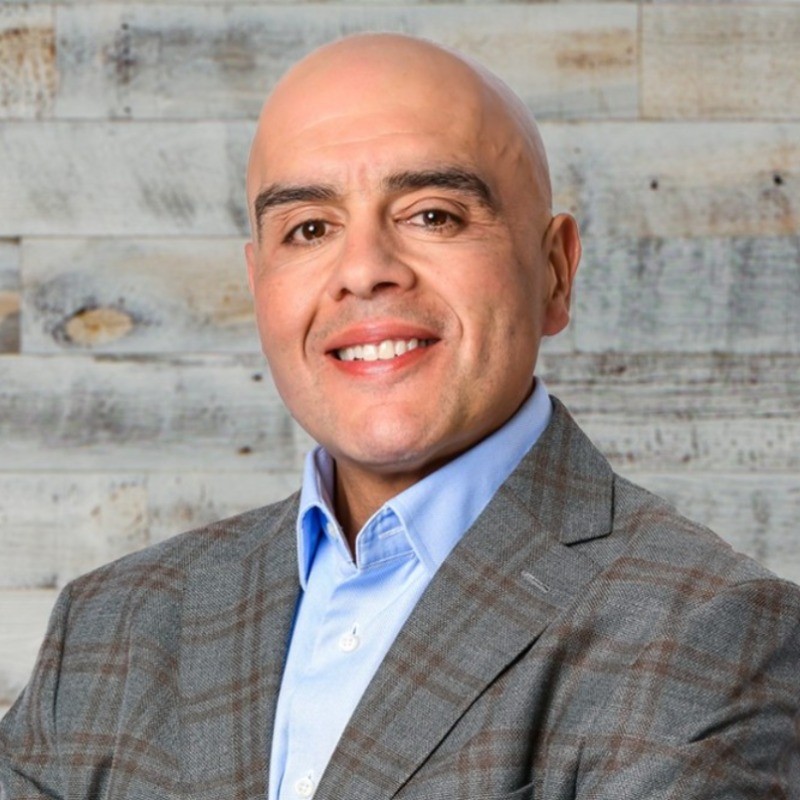
Join us as Mohamed Awad, Arm's influential leader, sheds light on the vibrant shifts within the infrastructure business at MWC25 in Barcelona. Awad, a seasoned expert, delves into the significant contributions of Arm to the field of AI, highlighting collaborations with industry giants like AWS, Microsoft, and Google. Savannah Peterson and David Vellante from theCUBE host the engaging discussion, ensuring a comprehensive insight into the latest technological advancements.
Throughout the conversation, Awad emphasizes Arm's pivotal role in the rapid expan...Read more
exploreKeep Exploring
What investments have been made in transitioning customers to ARM-based infrastructure and how has collaboration with big players in the industry influenced this transition?add
What is your favorite application or instance that you are inside or a part of that you get to see in the world?add
What are some of the exciting developments happening in AI technology across various sectors?add
>> Good afternoon CUBE community and a welcome back to beautiful Barcelona, Spain. We're here on day one of our four days of coverage of Mobile World Congress. My name's Savannah Peterson, joined with David Vellante.
Dave Vellante
>> Hi Buddy.
Savannah Peterson
>> This is the coolest MWC I think we've been at.
Dave Vellante
>> It just keeps getting better.
Savannah Peterson
>> Yeah.
Dave Vellante
>> All the AI buzz, it works.
Savannah Peterson
>> It really does. And it lets us have so many conversations about AI at the edge, which we're not having at a lot of the other events.
Dave Vellante
>> That's the thing, I mean, it's so much diversity here and AI is getting injected into everything, it's not just one sort of amorphous topic-
Savannah Peterson
>> That's a good point....
Dave Vellante
>> it just diffuses it to all the different areas.
Savannah Peterson
>> Yeah, I know. And we got someone who can definitely speak to that in a lot of different areas. Mohamed, thank you so much for coming to hang out with us today.
Mohamed Awad
>> Thank you guys. Thank you so much.
Dave Vellante
>> .
Savannah Peterson
>> TheCUBE alum, total VIP. Before we dig into it, I saw you almost a year ago. What's happened? What's going on? Give us the latest set arm in that time period.
Mohamed Awad
>> Yeah, I mean, so infrastructure business, obviously a lot happened in an arm within the infrastructure business.
Savannah Peterson
>> I know was actually, as I asked that, I was like, "Do we have enough time for you to tell us how much you've done?"
Mohamed Awad
>> Yeah, where to start? I mean obviously all this stuff happening with AI, we're a big part of what's happening with things like Grace Blackwell. But then beyond that, when you look at all the hyperscalers, they've all done some amazing things over the last year. We've gone GA with Axion and Google. We've gone GA with Microsoft and Cobalt. You look at AWS and they talk about how 50% of the compute that they've deployed in the last two years has been ARM-based.
Savannah Peterson
>> Wow. That's awesome.
Mohamed Awad
>> It's been a wild sort of ride. We're just seeing these kind of massive adoption across the board.
Dave Vellante
>> I mean, years ago, David Floyer predicted ARM's ascendancy into the enterprise. It seemed blatantly obvious at the time to us because it started with consumer, which it always does.
Savannah Peterson
>> I know, I was going to say for me, this has always been....
Dave Vellante
>> it started with iPhone, and Apple with the M series and then with Annapurna, and we were like, "Wow, this is really going to happen, look at the economics."
Savannah Peterson
>> The tablet market too was huge for that.
Dave Vellante
>> And a lot of people said, "You got to rewrite the software." And it's like, "Okay, we'll see." And now it's just, ARM has just created an entirely new business model and has taken the world by storm and AI has taken over the data center. The data center's exploding, and you're just loving it. It's amazing.
Mohamed Awad
>> It is wild. I mean, it's a culmination of 15 years worth of effort, a perfect storm.
Savannah Peterson
>> I was going to say, I feel like you're having a bit of a moment though. I mean to be in your shoes. Actually, on that note, just for fun, is the energy in the company up right now because it's such an exciting time.
Mohamed Awad
>> Oh yeah, of course it is. Yeah. I mean, just in ARM in general. Rene Haas, our CEOA, a couple of years ago, he took over and they sort of energy that he's injected just really allowing us to really just drive new trajectories has just been amazing. It's been great.
Dave Vellante
>> How is it being public?
Mohamed Awad
>> I mean, day to day it's the same-
Dave Vellante
>> The same.
Mohamed Awad
>> I mean, there's the end of quarter reporting and the rest of it that comes along with it, but we got our noses to the grindstone. There's so much to do to the core business and get the products out that that's really our focus.
Dave Vellante
>> But it's still a unifying factor for everybody, it's kind of cool to see that-
Mohamed Awad
>> It is....
Dave Vellante
>> that the people who are... The ecosystem can see quarterly, okay, what's happening? What's the progress like? Michael Dell would say, "Sometimes being on the 90-day shot clock is not the greatest thing in the world." But I love the transparency as analysts and reporters, we love it and the employees get to participate. So it's...
Savannah Peterson
>> It kind of lets you see what's hype and what's not hype to a degree.
Dave Vellante
>> Plus you can see the trends and you can actually track it and it's... I love it because ARM is such a main spring of innovation and Silicon and AI now and the edge. So what's on your roadmap? What are the priorities these days for ARM and for infrastructure?
Mohamed Awad
>> Yeah, I mean, so for ARM more broadly, I mean obviously AI is a big topic, and so we're seeing compute accelerate across the entire compute spectrum, that tiniest endpoint all the way up to the data center. AI being infused across the board, whether that's inference on CPU, whether it's an accelerator sitting right next to it, whether it's exporting it to a Grace Blackwell system in the cloud that's running ARM. We're participating in all that. So that's one big thing. And then on a infrastructure specific note, a lot of it from a general purpose compute is about transitioning more and more of those customers over to ARM. You talked earlier about the software lift and everything associated with that, so that's been a long-term investment that we put in place. And what's amazing now is we're not doing it alone anymore. Now you've got all of the big hyperscalers, all of those big players, whether it's NVIDIA or Amazon or Google or Microsoft who are now investing alongside us, and really that flywheel is really kicking right now, so it's really about driving that.
Dave Vellante
>> Can you explain to the audience the role that Neoverse plays in enabling that scale?
Mohamed Awad
>> Yeah, so arm, we've long since, we come from a long heritage of building CPUs and building compute for, as you said originally, consumer markets, mobile phone is what we're most well known for. Back in 2019, we launched our first Neoverse CPUs and that was our first foray into creating custom CPUs which are specifically targeting infrastructure. That means supporting things like virtualization, they're a little bit more performant, they've got different security profiles, that sort of thing. That was really when things really started to take off for us. AWS Graviton launched shortly thereafter, we had Cobalt, we had Axion, and obviously Grace all based on Neoverse. So at the end of the day, that CPU platform is the CPU platform that all of these SOCs are built on, which means that the software is easily compatible between them all, they get a level of consistency. It's really about accelerating how quickly and easily people can get to market.
Savannah Peterson
>> Every plays nice.
Mohamed Awad
>> Exactly.
Savannah Peterson
>> And then we can all build cheaper, faster.
Dave Vellante
>> And the security angle as well, right?
Savannah Peterson
>> That's a great point.
Mohamed Awad
>> Well, yeah, it's about all of the leverage benefits, security being an incredibly important one, but it's about all of the leverage benefits of having a level of consistency across all these different SOCs. It's about enabling these hyperscalers and these people that are building silicon, kind of simplifying and lowering the cost of adoption for them by allowing them to go amortize... Effectively, we amortize the cost across lots of different players and allow them to get to market more easily.
Dave Vellante
>> Right, the manufacturability-
Mohamed Awad
>> That's right....
Dave Vellante
>> because you design it, you give it to TSM or whatever Foundry, they know that they can get the tape out with great confidence. And the other thing is, at least my understanding is, and I love what, for instance, Tesla has done with ARM, we want to customize the NPU. The other pieces we'll take maybe off the shelf because we're not going to differentiate there, but we are going to differentiate with the NPU, eliminate LIDAR and save $2000, whether or not that's the right call-
Savannah Peterson
>> We see that in a lot of devices.
Dave Vellante
>> It's the ARM enabled that and the programmability enabled that.
Mohamed Awad
>> Yeah, and what's interesting about that is what we're seeing more and more, and this is a lot of the reason why we came up with compute subsystems. I mean, one of the things that our partners have said to us time and time again is like, "Hey, we want to get to market faster. We want it to be easier to get to market." And so we went from just delivering a specification to delivering the actual discrete IP. Now we integrate it all, we verify it all, we hand it to them, they can make some modifications, add on a custom NPU for example, or add on the bits and pieces they want and then tape it out. So it's an accelerated path for them to get to market even faster.
Dave Vellante
>> When I started in the industry, IBM, HP, Digital, Sun, Data General, probably Prime, Wang, they all made their own... They designed their own silicon. Many of them manufactured it. In fact, most of them did. Obviously that changed with X86. Everybody said, "We'll just let Intel have all the margin." But clearly we're seeing a resurgence of companies that want to design their own silicon, because Hyperscalers have the resources and many others. I mentioned Apple, Tesla, et cetera. Are you seeing subsequent to the AI heard around the world, even more companies indicating that they want to design their own silicon and coming to you?
Mohamed Awad
>> I think there's this general trend in the industry, which is more and more compute, more and more efficiency, better integrated systems. And that's a huge tailwind for ARM for a couple of reasons. One is just our heritage of enabling that low-power compute. But then beyond that, there's this idea that if you build an entire system from top to bottom, that full stack solution, you can create a much more tightly integrated solution, which allows you to achieve better performance, better efficiency, et cetera. So said differently, within the data center, no longer do you have to take a general purpose thing off of the shelf and try to build your entire data center around that. You can actually build a silicon around what you want your data center to be. And I think that's the distinction that's really driving this, not only in data centers, but in automotive, but in IOT, industrial and lots of different sectors.
Savannah Peterson
>> That purpose-driven Silicon is very unique, to your point, it's kind of, getting to go... We were talking about this in an accessibility standpoint earlier today, but when you can customize for edge cases, everything's usually taken care of in the middle as well, so you have all the tools in your kit. Given the number of... I mean, ARM's in so many different things, so I feel like this is going to be a fun and challenging question for you. What's your favorite application or instance that you're inside or a part of that you get to see in the world?
Mohamed Awad
>> Oh, jeez.
Dave Vellante
>> Your favorite child?
Mohamed Awad
>> Geez, what's my favorite child?
Savannah Peterson
>> I know, I know that's what I'm asking, but you're such a diversity of things that ARM's a part of or built into. I can't help it.
Mohamed Awad
>> What's my favorite child? I don't even know where to start with that. I would say... So I like to barbecue, so I'm like a-
Savannah Peterson
>> Let's go here.
Mohamed Awad
>> Right?
Savannah Peterson
>> Yep, let's do it.
Mohamed Awad
>> So I like to barbecue. So I have a wireless thermometer which uses ARM and it collects data on my cook and sends it up to the cloud where it creates all these statistics and graphs that I can then go watch and control from my phone anywhere. So in that particular case, it's actually my phone working with the cloud, working with the thermometer, all working together. And I think that's where the beauty of ARM is, it's that sort of end-to-end story where it's part of all that.
Savannah Peterson
>> And-
Dave Vellante
>> I'll give you my favorites, nitro-
Savannah Peterson
>> Great.
Dave Vellante
>> I love my Tesla NPU example, the Apple M series, amazing. And you're in TPUs, the Google TPUs, is that ?
Mohamed Awad
>> We're in lots of different... I mean, there's-
Dave Vellante
>> Oh, you can't comment?
Mohamed Awad
>> There's very few things-
Dave Vellante
>> You can't comment?
Mohamed Awad
>> I mean, looking around, I think a lot of the things that-
Savannah Peterson
>> Well, that's sort of what I was thinking, it's everything from our handheld devices-
Dave Vellante
>> Well, those are my four favorites. I could probably think of a couple others.
Savannah Peterson
>> So okay, we got to go back to the barbecue for a second because that's a great... That's a really good example. And to your point, it's leveraging so much technology, but it's also giving you such a delightful experience.
Mohamed Awad
>> It is.
Savannah Peterson
>> What's your favorite thing to put on the barbecue?
Mohamed Awad
>> I like to cook actually ribs, like beef ribs. Beef ribs are-
Savannah Peterson
>> Oh yeah, yum.
Mohamed Awad
>> So sometimes I go brisket, sometimes I go beef ribs.
Dave Vellante
>> Beef ribs? Beef ribs, not pork ribs?
Mohamed Awad
>> Yeah, beef ribs.
Savannah Peterson
>> So I'm curious, when you're hanging out at home enjoying perfectly cooked beef ribs because of your sweet ARM-powered wireless thermometer, and you're hanging out with your three boys,-
Mohamed Awad
>> Yeah, who would usually eat it before I get to it.
Savannah Peterson
>> Yeah, maybe not hanging out. At that point, everyone's stuffing their face. Okay, so let's say we're satiated. What is the conversation like over those ribs with your three sons?
Mohamed Awad
>> I mean, it's about all sorts of things. I will tell you a story though because it actually reminds me of a particular instance, the point at which semiconductors became cool. My oldest son, I think he was 14 at the time, he's 18 now, it was about four years ago. It was right in the middle of the pandemic. He wanted to build his own PC. And I was like, "Okay, well, I'll help you build it, but we got to get the parts." And he looks at me and he's like, "Well, we're not going to be able to get a GPU." And I'm like, "Well, why not?" And he explains to me the entire TSMC supply chain and why it was backed up. This was a 14-year-old, and I was like, "Semiconductors are back."
Savannah Peterson
>> Oh my God. Did you have a really proud dad moment?
Mohamed Awad
>> It was moment. It was a moment. It was a proud-
Savannah Peterson
>> I bet that was a total-
Mohamed Awad
>> It was a proud, proud dad moment.
Savannah Peterson
>> And that would've made sense because that would've been right during the pandemic.
Mohamed Awad
>> Right in the middle of the pandemic, right in the middle of the pandemic.
Savannah Peterson
>> Oh my God, that's great. Do you want to-
Dave Vellante
>> Okay, so I got to ask you, since you brought up TSMC, easy question, and then they get harder, progressively. So how important is it that we have a US-based foundry that can manufacture advanced chips?
Mohamed Awad
>> Yeah, I mean, I think it's important that we have a diverse supply chain, in all manners. And that's true about any industry. I mean, I think it's important that we don't limit ourselves to one particular place, to one particular company in any vector. And obviously semiconductors are an important part of that story and so, yeah.
Dave Vellante
>> They're failing at that. I mean, no offense to the semiconductor industry, but you've got ASML, you've got EDA, you've got the Foundry, TSM. These are all choke points. Even thin film, even rare earth components. So you have... Chris Miller laid it out better than I can, but all the choke points, but one of the big ones is the foundry. So that's something that we're talking about a lot. So I presume, to your answer, you agree that there's got to be some diversity in the foundry, which right now is centrally located in Taiwan, whether it's Europe or US, I guess you're saying it doesn't matter so much.
Mohamed Awad
>> I'm saying diversity of supply just in general, and that's true about anything. And certainly the foundry is part of that. I mean, having a diverse supply chain is a good thing for the industry, and it's a good thing for ARM, it's a good thing for consumers.
Dave Vellante
>> Do you not feel it needs to be US-based?
Mohamed Awad
>> Geopolitics are geopolitics, so-
Dave Vellante
>> Okay, so you're passing that question.
Mohamed Awad
>> Yeah.
Dave Vellante
>> You'll pass on my next question too.
Savannah Peterson
>> How diplomatic?
Dave Vellante
>> Does it need to be a US-based company, I guess you'd say the same. It really doesn't... That's not what's important to you. Just if there's free flow of supply, that's what matters.
Mohamed Awad
>> Again, I think what's important is that there's a level of diversity in supply chain so that everyone can feel assured and that the economy can continue to drive forward.
Dave Vellante
>> Well then how does that happen in foundry in particular?
Mohamed Awad
>> Well, I mean, foundry's an especially difficult one because of the level of investment required. And I think the government's looking at some options, and I think we are certainly supportive of having an environment where lots of different partners can potentially thrive. And so I'm hopeful that we get to that point.
Dave Vellante
>> I have a plan. I've written about it.
Mohamed Awad
>> A plan or a plan for a plan?
Dave Vellante
>> No, I have a plan.
Mohamed Awad
>> All right.
Dave Vellante
>> I don't know if it's a plan for a plan. No, I have a plan.
Mohamed Awad
>> All right.
Dave Vellante
>> I've laid it out, a new cap table for Intel foundry-
Savannah Peterson
>> No, I know you actually did a really great piece .
Mohamed Awad
>> Hey, listen-
Savannah Peterson
>> You did some great stuff on this.
Mohamed Awad
>> A strong Intel is good for the entire industry, on all vectors, so I'm super supportive of that.
Dave Vellante
>> And I think for Intel to be strong, it's got to spin out its Foundry and I think the US CHIPS Act money should be directed to support that. I think TSM is a viable partner if they bring over IP and skills. And I think private equity should provide some debt. And I think the big hyperscalers plus NVIDIA need to guarantee volume. I think that's... And I've laid out that plan, at least it's the potential for that diversity to occur.
Savannah Peterson
>> Did you send it over to Elon yet?
Dave Vellante
>> I have actually. I know somebody who's on the DOGE team. I'm like, "Get this to Elon." I don't know if you've seen it-
Savannah Peterson
>> Amazing.
Dave Vellante
>> But it's definitely gone to the Intel board.
Savannah Peterson
>> I'm so glad I asked.
Dave Vellante
>> And has gone to parts of the administration. Something's happening, something's bubbling up. And as a US taxpayer, I'd like to see my tax dollars be directed towards something that has a high probability of success, which I don't think an integrated Intel Foundry has. I know you can't or shouldn't comment on that, so you don't have to.
Mohamed Awad
>> Yeah, I mean, like I said, I certainly believe that a strong Intel, certainly a strong Intel Foundry was a good thing for the company, the country, the industry, the world. So I absolutely, absolutely believe that that is the case. And I also agree that it's going to take a village. They've got tough problems to solve and we're all rooting for them.
Dave Vellante
>> And I also think it's important because a lot of rumors about Intel getting acquired by, whether it's Qualcomm or somebody else, I think you guys are in the mix too. I would like to see Intel remain an independent design company. I would like to see them both compete and cooperate with ARM, which they're already doing. So, that to me, provides that greater diversity. Competition is a good thing.
Mohamed Awad
>> We're already partners with Intel in many different vectors-
Dave Vellante
>> I know you are....
Mohamed Awad
>> both on the Foundry side and on the product side.
Dave Vellante
>> Absolutely, yep.
Mohamed Awad
>> We work with them quite closely.
Dave Vellante
>> They partner with TSM, which again is to me an indicator that it's the right direction.
Savannah Peterson
>> Well, one of the things that you're both kind of hitting on though, is truly how collaborative this era is in technology.
Mohamed Awad
>> It is, yeah.
Savannah Peterson
>> A lot of companies that have been really competitive historically are finding ways to work together in unique ways to offer full solutions and build out the ecosystem, all of the partnerships you just mentioned being one of those. Mohamed, you're such a good guest. We could have you on forever and I just looked at the time. I have one final question for you, since we have you on pretty much once a year, hopefully more now in the future-
Mohamed Awad
>> Okay, all right.
Savannah Peterson
>> What do you hope to be... So much has happened too since the last time we spoke, what do you hope to be able to say the next time you get to sit on this stage with us that you can't yet say today?
Mohamed Awad
>> I mean, there's so many things that are just so exciting about what's going on in the world today. I'd love to see AI take root from across the entire infrastructure, from endpoint all the way into the data center. We're very much in a training era right now. Some interesting use cases around inference. I'd like to see those kind of built out. I'd like to see AI kind of play in all that entire continuum of compute from endpoint all the way into the cloud. So much attention is going to it. So many people are working on it. So much interesting stuff is happening. So I'm looking forward to talking to you guys about that next time.
Savannah Peterson
>> Great. Well we look forward to it as well. Thank you so much for coming to hang.
Mohamed Awad
>> Thank you.
Dave Vellante
>> I think they started doing shots over there already.
Savannah Peterson
>> I know.
Dave Vellante
>> Here we go, MWC.
Savannah Peterson
>> All right, well that's time to wrap it up then. Thank you, Dave, great questions as always. And thank all of you for tuning in to our four days of live coverage here in Barcelona. We're at Mobile World Congress. My name's Savannah Peterson. You're watching theCUBE, the leading source for enterprise tech news.