We just sent you a verification email. Please verify your account to gain access to
MWC25. If you don’t think you received an email check your
spam folder.
In order to sign in, enter the email address you used to registered for the event. Once completed, you will receive an email with a verification link. Open this link to automatically sign into the site.
Register For MWC25
Please fill out the information below. You will recieve an email with a verification link confirming your registration. Click the link to automatically sign into the site.
You’re almost there!
We just sent you a verification email. Please click the verification button in the email. Once your email address is verified, you will have full access to all event content for MWC25.
I want my badge and interests to be visible to all attendees.
Checking this box will display your presense on the attendees list, view your profile and allow other attendees to contact you via 1-1 chat. Read the Privacy Policy. At any time, you can choose to disable this preference.
Select your Interests!
add
Upload your photo
Uploading..
OR
Connect via Twitter
Connect via Linkedin
EDIT PASSWORD
Share
Forgot Password
Almost there!
We just sent you a verification email. Please verify your account to gain access to
MWC25. If you don’t think you received an email check your
spam folder.
In order to sign in, enter the email address you used to registered for the event. Once completed, you will receive an email with a verification link. Open this link to automatically sign into the site.
Sign in to gain access to MWC25
Please sign in with LinkedIn to continue to MWC25. Signing in with LinkedIn ensures a professional environment.
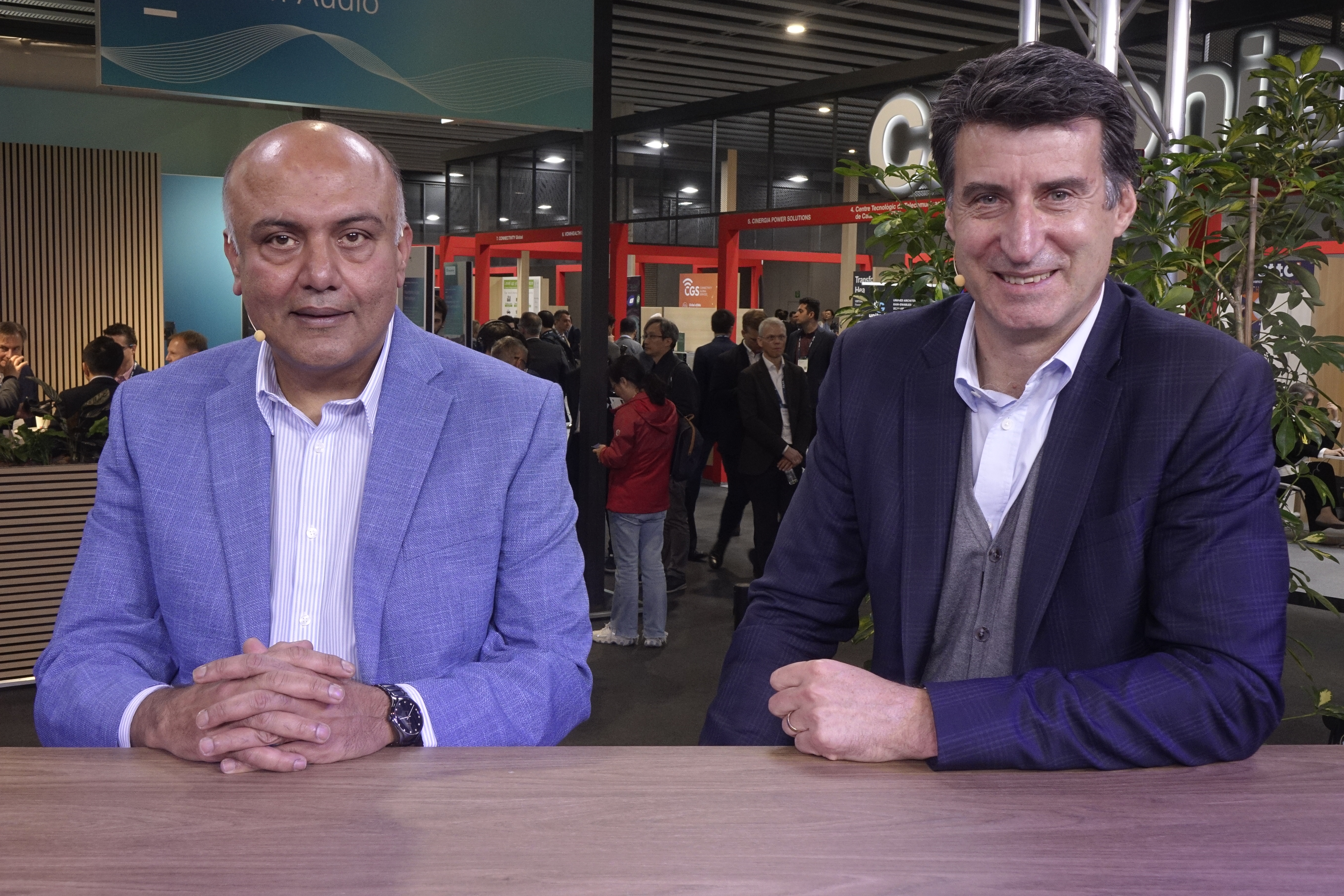
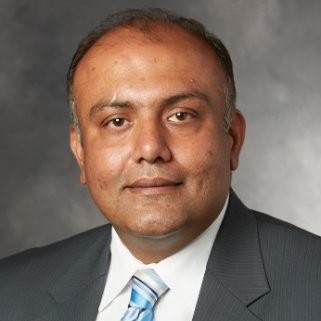
In this insightful discussion, Amir Rao, General Manager at AWS, and Jan Hofmeyr, Vice President at AWS, delve into the latest innovations showcased at MWC25 in Barcelona. Interviewed by theCUBE's Savannah Peterson and Dave Vellante, they explore the evolving landscape of telecommunications and the role of cloud technologies, emphasizing AWS's efforts to drive transformation in network operations. Key topics include the integration of AWS services in 5G networks and the advancement of telcos through cloud innovations.
Hofmeyr and Rao offer valuable ins...Read more
exploreKeep Exploring
What is the importance of a consistent cloud for customers in AWS and how does AWS provide a seamless experience for developers across different regions and network environments?add
What impact is the new technology era having on telco in terms of agility and innovation?add
What is the unique feature of AWS and EC2 that allows for separation of infrastructure management and customer operations, and how does it contribute to the concept of sovereignty by design, especially in Europe and in the telco industry?add
What are the benefits of turning software into infrastructure that is fully managed for operators?add
What potential benefits do telcos stand to gain from leveraging their strengths and data to drive monetization, with the goal of creating a customer experience similar to that of Amazon?add
>> Good morning telco fam and welcome back to day two of Mobile World Congress, here in fantastic Barcelona, Spain. My name is Savannah Peterson, taking you through this journey all week with Dave Vellante. Dave, this is, I think, the coolest MWC.
Dave Vellante
>> Yeah. I think last year it was a lot of... Two years ago it was just ChatGPT came out and it was confusing.
Savannah Peterson
>> That's a good point actually, because this is earlier in the year.
Dave Vellante
>> Last year, there was a lot of chatter. There was a lot of experimentation going on, but now really it feels much more real.
Savannah Peterson
>> It feels much more real and it feels like value and ROI is becoming real from these interesting-
Dave Vellante
>> It's interesting. In 2021, during COVID, MWC was near death.
Savannah Peterson
>> I think every conference was near death.
Dave Vellante
>> One of our clients, Danielle Royston, came in and invested in Cloud City, and she had theCUBE right in the middle of Cloud City. There was nobody here except us in Cloud City and about 10,000 people. And her whole rap, which was very controversial, was, "Listen guys, the telcos have to move to the cloud. You got to break the decades-long stasis of your vertical stack. It's not flexible. We've done it in IT. You can do it here." That was her rap in 2021. It's happening.
Savannah Peterson
>> Well, she was spot on too. Speaking of clouds and cool things going on in telco, very excited to welcome, Jan and Amir, to the set today from AWS. Thank you both for taking the time.
Jan Hofmeyr
>> No, thank you for having us.
Amir Rao
>> Hey guys, thank you so much.
Savannah Peterson
>> You're full of smiles, so I'm going to go out on a limb here and say that you're probably having a great show so far. Jan, I'm going to start with you. What's it like being in this environment and getting to see so many different customers and partners of yours in the wild?
Jan Hofmeyr
>> Yeah. You know what? First of all, I would agree with the earlier statement. There's something different here this year.
Savannah Peterson
>> Yeah.
Jan Hofmeyr
>> I feel like in the previous year there was always this one topic that it's everywhere, and this year it's balanced. I see a lot of innovation where we can use new technology. I see new innovation around the board. I walk around these hallways and you see all these devices in the mobile space, and it's just unbelievable. So, there's an excitement for me here this year that I-
Savannah Peterson
>> There's so many cool devices. And I think when people think of Mobile World Congress, I feel like when I tell friends and family, they think it's just cell phones. It's so much more than that. It's really everywhere. We're going to interact with AI and a lot of things at the edge in our factories, whatever we're doing. Amir, what about you? What's it like being here?
Amir Rao
>> It's fantastic. You get a lot of opportunity to meet the customers, partners, understand what's driving their business, what's driving their technology needs, how can we help them, how do we partner? It's coopetition these days, so you work with the industry players, you work with the customers.
Savannah Peterson
>> Love that word. Coopetition, I'm stealing that. We've been talking about that, well, this is a unique era in technology where companies who have consistently been in conflict for the same customers or share a brand voice. Everyone is working together in a lot of different ways that are really unique and across different verticals on solutions that are going to make our worlds better. It's a really uplifting thing. Y'all had a big announcement about Outpost recently. Can you tell us about that?
Jan Hofmeyr
>> Absolutely. I'll start and then, Amir, you jump in. So, just to take a step back, we talk about the whole cloud, what cloud did for IT and the whole cloud transformation we saw in the IT world. And we've been very much focused on how can we bring that same transformation to the network, and that's been a key focus of ours.
And in AWS, one of the things we learned about the cloud transformation in the IT is the importance of a consistent cloud for customers. And that you do not build bespoke solutions, but you build a cloud environment where a customer can run their application wherever they need to run it.
So, at AWS, we started off with our regions across the world and then we said, "How can we bring that same AWS experience with the same APIs closer to our customers? Running it in local zones, bringing it all the way on-premise with Outpost, and then all the way to the edge with a server."
And throughout each one of those steps, it's the same AWS experience. A developer go to the console, I want to deploy my application. I can deploy it anywhere in that chain. And so when you look at that, that is perfect for the network, because if you think about the network, 5G was designed for the cloud. And what does it mean is you can take the 5G network stack and you can say this component I want to run in the region, because it's just a control plane, and this is really data-centric or data-heavy. I would like to run that closer to the edge. So, we announced our Outposts for 5G networks here at the show, a pre-announcement, and it's designed for running networks. Every one of these servers is a 400 gig capable server that gives you that same AWS experience, but for networks. So, that's super exciting.
Savannah Peterson
>> And that developer experience that you're talking about is so critical. When we're looking at so many different tools and things happening right now, being able to have that ubiquitous ability to create has got to be really completely-
Amir Rao
>> I love the word ubiquitous.
Savannah Peterson
>> Great. Me too.
Amir Rao
>> As Jan was mentioning, it's a ubiquitous cloud programming model. So, that's what when Jan says, it's the same service, the same APIs, it's the same Amazon EC2, same Amazon Elastic Kubernetes Service, same Amazon CloudFormation, CloudWatch templates. So, basically all the test and dev could actually be done in the region and get with a click of the mouse actually be deployed on premises, and that's the agility that 5G promises. That it's going to introduce a faster time-to-market agility to develop faster features and deliver the promise of 5G.
Dave Vellante
>> So, during the last decade, there's been a lot of, I'll call it vendor marketing, some FUD, I'll call it, around repatriation. Now we always have said we look for the data. We're analysts. We could never see the data. This is a very small amount. We call them cloud repatriates. Now the conversation is shifting to sovereign AI, on-prem AI, data has gravity. All true by the way, but still most of the work in AI is being done in the cloud. Certainly a lot of the experimentation, a lot of the deployments. But again, data has gravity, data is on-prem. Are you seeing that? And it sounds like you have a strategy, whether it's on-prem or at the edge, to approach that.
Jan Hofmeyr
>> No, absolutely. So, first of all, I think GenAI is already here and it's impacting our businesses today, and it has been for a long time. And if I look at where it has a very big impact today, if you think about the AWS Connect, our call center solution, how AI is really transforming that customer experience and engagement with the customer. So, we see it in those places. I think we have so much opportunity to use it in the network, whether it's from running the rig, which is the optimization of the network, to getting more data and understanding how to optimize and operate your network. And one thing I don't think we all understand yet is where should those AI systems run? One thing I do know is our customers need the flexibility to run where it makes sense to run the applications. In some cases for sovereignty, they might have to run the data on-premise. In some cases, they have to anonymize the data before sending it to a bigger bedrock model to run a report on that. So, I think the flexibility for our customers to be able to run AI where they need to run it, that for me, is the most important.
Savannah Peterson
>> You got to run AI wherever the data is too.
Jan Hofmeyr
>> Exactly, exactly.
Savannah Peterson
>> You mentioned something, Amir, a second ago that, and I say this with a lot of love, is not always associated with the telco industry, you mentioned agility. Do you think that this new technology era where, well, it's not new anymore, we're in this heat of adoption I should say. Do you think that that is changing that for telco? Do you think that the agility and ability to innovate is becoming much faster?
Amir Rao
>> I think it's clearly being recognized as a big need and I think we've seen a lot of forward-leaning customers, operators, Telefonica being one of them, they've been at the forefront with us. Nokia, from a partner ecosystem perspective, also been at the forefront with them. We've actually, these two announcements that Jan just talked about, the Outpost rack, it actually can be used to host the 5G core or the UPF. You can do all of the testing in the region. You don't necessarily need to have a physical device on premises. But as soon as you've tested and you've got the device landed on the edge, you can seamlessly, you'll be actually surprised. It's minutes the amount of time you need to deploy on actually in on-premises.
Savannah Peterson
>> That's a big deal.
Amir Rao
>> Compare that to days and months, that's the kind of agility that we're talking about.
Dave Vellante
>> Okay. So, you're saying I could do all my experimentation-
Savannah Peterson
>> So, the answer is yes....
Dave Vellante
>> Get everything ready in the cloud and then when I'm ready, wherever I want to bring that, I bring it up.
Jan Hofmeyr
>> But there's another exciting product we actually announced here.
Savannah Peterson
>> Tell us.
Jan Hofmeyr
>> One we mentioned on is, so we talk about the 5G core, which ones the data. We also announced a cloud RAN, an Outpost RAN server, which really now takes the AWS EC2 Nitro cloud experience all the way to the radio site. Where we can now run-
Savannah Peterson
>> That's a game changer....
Jan Hofmeyr
>> The RAN site at the radio site, we can run the RAN. What we've done with that server is it's a Graviton server, and we made sure there is enough cores left on that server that you can now start thinking about running applications all the way into the RAN where your towers are, so extending their ability. So, now imagine a developer-
Savannah Peterson
>> That's awesome....
Jan Hofmeyr
>> Thinking about where is the best place to run this one function or this application? They can go from the region to the RAN.
Savannah Peterson
>> That's got a nice ring to it too.
Jan Hofmeyr
>> From the region to the RAN. We should boost on theCUBE.
Dave Vellante
>> Love it. And now you heard me at the top talking about Cloud City, are you seeing telcos respond and bring, for instance, some of their BSS and OS systems into the cloud? It seems like a logical starting point, although when you talk to some of the telcos, they're a little bit afraid of the cloud. Have they warmed up to it? What are you seeing?
Amir Rao
>> Yeah. I think as far as OSS/BSS customers, we've got tens of customers already in production running in their OSS and BSS platforms. One of the largest OSS/BSS partners, Amdocs, they've got their products read available. Native Automatics, Ericsson similarly. So, all of these products and solutions are available on AWS, they're running in production, and they're actually in production all over the world. You talk about Latin America, Asia-Pac, Europe, even North America. So, we've got a lot of adoption as far as region-based services. I think this last mile at the edge, the network was, call it final frontier, where customers were asking, "Can we bring the same experience down to the edge?" So that whatever they've been used to for OSS/BSS applications, which is once again the same AWS services and same APIs, "Can we bring the same services down to the edge?" Which is what we've been able to do both for the core, the CU as well as, as Jan mentioned, at the cell tower. So, you basically have a complete continuum of deployment spectrum.
Savannah Peterson
>> It's so important what you're just talking about there. As we know, 50% of data is at the edge. When you think about that, we've only been optimizing 50% of our data period, as a planet and as human beings. Which ever since I've learned this little nugget, I can't stop obsessing over it. You mentioned the cell towers. I'm curious, do you have any other really unique or exciting edge cases that you're pumped about?
Dave Vellante
>> Kuiper, that's pretty unique.
Jan Hofmeyr
>> No, Kuiper is very much very exciting.
Dave Vellante
>> Final frontier.
Jan Hofmeyr
>> Space use case.
Savannah Peterson
>> Yeah, love that.
Jan Hofmeyr
>> Edge use case. No, but to your point on the edge use case. For me, and we talk about it the whole time here, is this industry needs agility. Customers don't have patience. I think we are going to get to a world where I think technology and with AI is going to require things to change much faster than in the past.
Savannah Peterson
>> 100%. And our tolerance for sluggishness is going to be this.
Jan Hofmeyr
>> Yes. So, this where you ask a feature from a backend system or from a network component, and the answer is, I'll do it in my next release 12 months from now. The world has changed, and we need to help the industry and that's why we bring the cloud. We are also working with the ISVs to help them then transform their applications to become cloud-native, their software to become, so they can become much more cloud-like.
Dave Vellante
>> It reminds me of Bezos. Bezos has this thing where he says, "People always ask me what's going to change in the future?" He goes, "I like to think of what's not going to change." And he says, "I know that people are going to always want lower costs," and it just reminds me, Jan, when you said, "Nobody is going to say I want to go slower in the future."
Jan Hofmeyr
>> Exactly.
Dave Vellante
>> They want to be more agile. Nobody is going to say, "I want less choice. I want to be locked into a single choice." So, your scope is EC2. I want to ask you some EC2 questions. Go back to 2006, Amazon had one service, S3. And then EC2 came along and became the dominant service. You guys can't comment, but we've forecast on theCUBE. We were the first one, theCUBE Research, saying that EC2 is actually less than half of Amazon's business. We said this during, I think right after COVID. Again, you guys can't comment, but point being, it's still a substantial portion of the business. Now, you know Dylan Patel. Don't hate me, hate him. He called Trainium2, the Amazon basics of silicon.
Savannah Peterson
>> The shade of that.
Dave Vellante
>> But he was maybe faint praise, but actually real praise because his point was actually, it's really cost-effective. It's got higher bandwidth memory.
Savannah Peterson
>> Great value products.
Dave Vellante
>> It's perfect for lower cost training. So, what we've seen is, what you guys have done is remarkable with Annapurna, and then Nitro, and then Graviton, and then Trainium, and then Inferentia. You've now got a quantum chip. ARM-based systems manufactured at the Foundry, the Fabless model. Brilliant. So, my question is, what's new in EC2 land? There's a lot. And how does it apply here? What's the fit in this world?
Jan Hofmeyr
>> All right. I'm going to try to answer that question. It's a really-
Dave Vellante
>> I know a lot I threw a lot at you there, Jan.
Savannah Peterson
>> Got a few different dimensions to that complexity. That was great though.
Jan Hofmeyr
>> I'm going to give a name, and Amir, jump in.
Savannah Peterson
>> You got this, Jan, we believe in you.
Jan Hofmeyr
>> The first thing, there's something very, very unique about AWS and EC2, and that's Nitro. And Nitro is the security that we've put into every single one of our servers that allows us to separate where we have to run as AWS, managing the infrastructure and where our customers run. So, we completely have separation. That's why we are able to make a statement like we are sovereign by design, and Nitro allows us to make that statement. That's a really important topic here in Europe and with the telco industry is around sovereignty. And how we can bring AWS as a solution and showcase how it is sovereign by design. We've done the attestations, third party attestation, that have proven and have shown that the claims we've made in terms of the security of our systems, that backs that up. So, I think that's the first one that's really important
Savannah Peterson
>> And that's critical.
Jan Hofmeyr
>> It is so important.
Savannah Peterson
>> Absolutely table stakes.
Jan Hofmeyr
>> No, it starts there.
Savannah Peterson
>> Yeah, 100%.
Jan Hofmeyr
>> It starts there. And it's also the Nitro that allowed us to take what run in my regions and put it into a customer data center, which is a hostile environment, and still make those same claims. The security of those workloads, regardless where these systems run, we can ensure that because of Nitro. So, Nitro is the first key thing for us. The second one is the EC2 instances that I'm bringing into the core, into the RAN, is the same EC2 instances I'm running in the region. I didn't build a bespoke solution for the edge. I really extended what I have. So, I can bring my EC2 instances as I see use cases, to the edge, whether it's Trainium, whether it's the next generation GPU, all of those can come to the edge. I think that for me is the power here.
Savannah Peterson
>> Well, and you just brought up a good point that we talked about in the very beginning, that developer experience, that user experience for everybody-
Jan Hofmeyr
>> It's the same....
Savannah Peterson
>> Is synonymous across the system. I feel soothed by that as someone who has seen the different types of processes. Yeah, go ahead.
Amir Rao
>> Actually, Nitro does another very important thing, something that Dave touched upon. It provides you the service link, the access to the region. So, all of the AI/ML services; the SageMaker, the Prometheus, the Amazon Grafana. So, all of these services that customers can use for tasks such as observability, how to drive packet rate purely from a radio network optimization, the core optimization, the fact that they can have this additional core. So, for example, the cloud RAN server that we've come up is based on Graviton3. This is using exactly the same instance, the same motherboard that we use in our region. So, we bring that economy of scale to the edge rather than actually bringing or building something which is bespoke, which could run into the cost economic challenges. So, bring the price performance of Graviton to the edge and actually provide silicon diversity for the radio access networks.
Dave Vellante
>> Oh, I want to ask you about just telcos broadly. You're an infrastructure company, you guys are good at infrastructure. Telco infrastructure is fossilized, it's a has been, and it has to become more flexible and you guys are working on that. The other thing you're really good at is monetization. You have an ecosystem that is second to none. Telcos, you hear it all the time in these keynotes, we can't let it happen again. We're putting all these CapEx in. We can't let the over-the-top vendors get all the monetization. But telcos frankly, aren't that good at monetizing other than connectivity. So, on those two fronts, breaking the fossilized telco stack and helping with monetization, what's your story there to telcos?
Jan Hofmeyr
>> Absolutely. So, you are so right. If you look at the telco industry, 2G, 3G, 4G, 5G, every time was a new stack, a new solution that in many cases, had to replace what was there before and put something new in. What we are bringing in is we're saying we're bringing in the cloud that gives you all of those primitives, and whether you implement a 5G core, a 6G core, it really doesn't matter. You are not tied to the physical hardware. So, how do you turn it into software that runs on managed infrastructure? And I think that's the big shift here that you will see. As the market evolve and the standards evolve, they will not have to replace the hardware. Another important thing is with our solution is it is fully managed infrastructure. When I put AWS in that cell tower with a cloud RAN server, or I put it in the data center of my customer, AWS monitors it, we manage it. If we see anything going wrong, we replace it, so it is a fully managed service. So, we say to our operators, "You can really focus on operating and running your systems and we take care of the infrastructure, the compute, the cloud infrastructure."
Dave Vellante
>> Okay. So, those are two good examples. The first one, they get a much better return on invested capital. The second one, managed services is less expensive, so that helps with the bottom line. What about monetization? Do you think that the telcos should just... Chris Lewis was here, he is a telco analyst. He said, "They should just stick to their knitting of connectivity." But then we had-
Savannah Peterson
>> Harrison....
Dave Vellante
>> Eand.
Savannah Peterson
>> Yeah, Harrison from Eand.
Dave Vellante
>> Harrison from Eand, they have a Netflix competitor, they have a financial services arm, they have a grocer.
Savannah Peterson
>> The groceries. I'm still not over it. I'm still not over it.
Dave Vellante
>> This has got to be a telco, and I'm like, "Wow, more telcos maybe should do this." Thoughts on whether or not the telcos should stick to their knitting and just do because-
Savannah Peterson
>> A great question, Dave....
Dave Vellante
>> They're great at connectivity. They're great at infrastructure.
Amir Rao
>> At the end of the day, this is their business choice. We've got different telcos. Some really want to focus on connectivity services. Some have looked for adjacent areas to expand and diversify their revenue streams going into enterprises. Some really want to shift the focus becoming, we've heard terms like techcos. I think the value that we bring as a cloud provider is, as Jan mentioned, we bring our cloud continuum to the edge, and by helping them build their cloud at the edge, whether these traffic aggregation sites, which are their MSOs which is something that they want to monetize. And it's the same cloud that they can actually run their network functions and it offers the same APIs that a lot of our developers use. So, that we could work out go-to-market models, and we are actually in discussion with some of those operators, to figure out how can they maximize the return on their invested capital? And that's the monetization story. You build an infrastructure which is ubiquitous not only for your network, also for your IT, for your SS/BSS and any B2B application, which is the monetization angle.
Dave Vellante
>> So, I would say start there because that's a no-brainer.
Jan Hofmeyr
>> No, start there, but sorry, I want to jump in here.
Dave Vellante
>> Yeah, please.
Jan Hofmeyr
>> If you look at where they're coming from, their areas of strength, they own the last mile network, they have the customer relationship, they have the billing relationship, they have the data. If you give me those things, imagine what you can do with that.
Savannah Peterson
>> That's what I brought up in the interview. The power of that data is wild.
Jan Hofmeyr
>> Yeah. So, what we want to do is we want to enable, we want to bring cloud to their infrastructure, so they can start leveraging the strengths they have and start driving monetization.
Dave Vellante
>> I think Amazon, not even AWS, but amazon.com can be an inspiration for these telcos from a customer experience standpoint. Because you take those ingredients, Jan, if you create a customer experience out of those, you win.
Savannah Peterson
>> About the recommendation engine. My phone knows more about me than I care to admit. And I think that when you think about that, what better source of information about you? I think it's such an interesting business opportunity.
Dave Vellante
>> Well, so, you guys are going to, I think, can attack both of those. I think you're right, Amir. It's their choice, right?
Savannah Peterson
>> That's not cheap to enter those markets.
Dave Vellante
>> But I'd like to see them not just talk about it and not just go forward and fail, to actually leverage the way that you guys are helping them. And it's true, we are all in the cloud, and I get the cloud bill and I'm like, "Mm." But I don't want to run my own data centers. I understand the return on capital and I understand the managed services, and so those free me up to do things that I'm good at. That I'm better than you at the stuff that I do well. And so I'll give that to you, and I think that's the model that works in this business.
Savannah Peterson
>> Yeah. I think it's really interesting. All right, gentlemen, this has been super awesome.
Jan Hofmeyr
>> Thank you.
Savannah Peterson
>> I have one final, but very important question for you. When we are hanging out at Mobile World Congress next year in 2026, what do you hope to be able to say then that you can't say today? Oh, I love that you're looking at Jan, so we're going to Jan first.
Jan Hofmeyr
>> We're going to go to Jan first.
Savannah Peterson
>> Yeah, yeah, yeah. It's happening.
Jan Hofmeyr
>> We are-
Savannah Peterson
>> That was cute, Amir.
Jan Hofmeyr
>> Everything we just spoke about, we are in deployment with customers. I would love next year to stand on stage with a customer and show how they started to transform their business. Not their network, that's table stakes. How they started transforming their business.
Savannah Peterson
>> I love that.
Jan Hofmeyr
>> That would be for me, fantastic.
Savannah Peterson
>> Well, you can stand on stage and we'll have you back on the show to do that.
Jan Hofmeyr
>> Fantastic. Thank you.
Savannah Peterson
>> You go ahead and do that, Jan. All right, Amir, you've had enough time now.
Amir Rao
>> Yeah. I think just piggybacking on Jan's answer, we would want to see a network being rolled out using AWS cloud continuum across the topology of the network. I'd like to come back here, sit on your show and say, "Okay. This is a Cloud RAN server, runs an AWS Outpost, and it offers X number of possibilities of monetization."
Savannah Peterson
>> I love it. All right. Well, we look forward to telling those stories in 2026. But thank you both so much for joining us here in 2025.
Amir Rao
>> Thank you so much.
Dave Vellante
>> Thanks guys.
Jan Hofmeyr
>> Thank you.
Savannah Peterson
>> Thank you, Dave, as always.
Dave Vellante
>> You bet.
Savannah Peterson
>> And thank all of you for tuning in to our wonderful power-packed four days of live coverage at Mobile World Congress. We're on day two. My name is Savannah Peterson. You're watching theCUBE, the leading source for enterprise tech news.