We just sent you a verification email. Please verify your account to gain access to
MWC25. If you don’t think you received an email check your
spam folder.
In order to sign in, enter the email address you used to registered for the event. Once completed, you will receive an email with a verification link. Open this link to automatically sign into the site.
Register For MWC25
Please fill out the information below. You will recieve an email with a verification link confirming your registration. Click the link to automatically sign into the site.
You’re almost there!
We just sent you a verification email. Please click the verification button in the email. Once your email address is verified, you will have full access to all event content for MWC25.
I want my badge and interests to be visible to all attendees.
Checking this box will display your presense on the attendees list, view your profile and allow other attendees to contact you via 1-1 chat. Read the Privacy Policy. At any time, you can choose to disable this preference.
Select your Interests!
add
Upload your photo
Uploading..
OR
Connect via Twitter
Connect via Linkedin
EDIT PASSWORD
Share
Forgot Password
Almost there!
We just sent you a verification email. Please verify your account to gain access to
MWC25. If you don’t think you received an email check your
spam folder.
In order to sign in, enter the email address you used to registered for the event. Once completed, you will receive an email with a verification link. Open this link to automatically sign into the site.
Sign in to gain access to MWC25
Please sign in with LinkedIn to continue to MWC25. Signing in with LinkedIn ensures a professional environment.
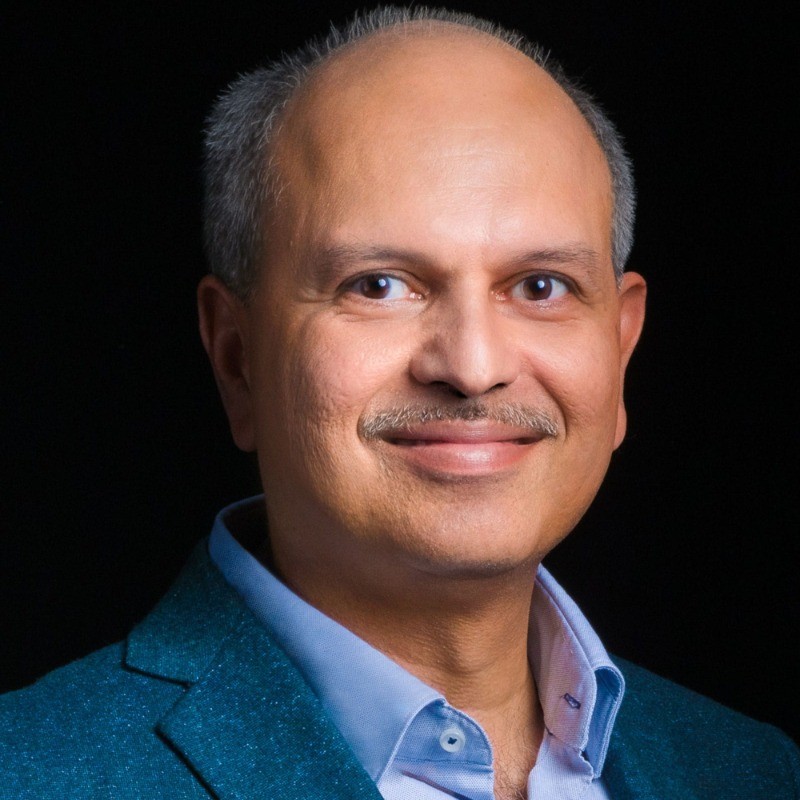
Join Sumit Sadana, Executive Vice President and Chief Business Officer at Micron, as he sits down with theCUBE analysts Dave Vellante and Savannah Peterson at MWC25 Barcelona to discuss Micron's pioneering advancements in semiconductor technology. Sadana provides insights into the company's latest 1-Gamma DRAM technology, the introduction of Extreme Ultraviolet (EUV) lithography, and how these innovations are set to drive the future of Artificial Intelligence (AI) applications across various platforms.
According to Sadana, the importance of collabora...Read more
exploreKeep Exploring
What are the key accomplishments and advancements that the company has made in terms of DRAM technology and how will this benefit future CPU platforms and AI capabilities?add
What is the significance of the EUV technology and how does it impact the manufacturing process in the memory industry?add
What is the nature of the partnership between Samsung and the speaker/company?add
What are some important considerations regarding high bandwidth memory (HBM) in relation to AI machines in data centers and the power efficiency of these systems?add
>> Good afternoon Telco fans and welcome back to Mobile World Congress here in Barcelona, Spain. My name's Savannah Peterson. Delighted to be joined by Dave Vellante for some of the most stimulating conversations we've had this year.
Dave Vellante
>> Telco fans. That's a first.
Savannah Peterson
>> I know. You know I'm always trying to think of a new intro. I ruminate about that probably more than I should admit.
Dave Vellante
>> I'm not the biggest fan of my Telco, but that's okay.
Savannah Peterson
>> Well, in theory, if our Telcos adopt a lot of the technology that we're seeing here at this show, we might become fans.
Dave Vellante
>> Well, and Telcos get a bad rap. Let's face it. The stuff works pretty well.
Savannah Peterson
>> Yes.
Dave Vellante
>> And it got us through COVID.
Savannah Peterson
>> Yeah. Well, geez, let's not even go down that rabbit hole. Very excited for our next guest, Sumit from Micron. Thank you so much for being here, Sumit.
Sumit Sadana
>> Thank you for having me.
Savannah Peterson
>> Y'all have had some really exciting announcements recently. We're going to dive into all of them. Let's start with the 1-Gamma.
Sumit Sadana
>> Sure.
Savannah Peterson
>> Tell us about it.
Sumit Sadana
>> So we are very excited. We are the first company in the world to get to this latest DRAM technology and sample it to customers, and this is for next generation CPU platforms. So it'll get us to higher speeds, more power efficiency, and really enable a lot of what we are trying to do with AI in a very meaningful step forward. It's also the first node where Micron has introduced EUV technology. So this is a really big deal and we have gone through a lot of experience with EUV in prep for launch of 1-Gamma, and so now we are at the cusp of that and it's very exciting for us.
Savannah Peterson
>> That is very exciting. You mentioned that you already have this deployed in use cases out there in the wild. Can you share any of those with us?
Sumit Sadana
>> So we are, in terms of EUV technology, this is going to be our first node and we are going to start ramping this as soon as we have finished qualification of these products. But we have been working with our customers in the compute arena and we have so much more innovation coming in the pipeline in support of this boom in AI. So it's going to happen in the data center, but here in MWC we see all of the devices, the edge-
Savannah Peterson
>> The edge is here.
Sumit Sadana
>> Compute part of it and all of the prospects for growth on the edge with AI PCs, AI smartphones, at some point humanoid robots. So a lot of fascinating things ahead.
Dave Vellante
>> Big TAM.
Savannah Peterson
>> Yeah, big TAM is a great way to put it.
Dave Vellante
>> In the keyword stack bar chart. Obviously AI, NVIDIA, GPUs, HBM is up there right now. So a lot of people may not realize you guys not only design silicon, you manufacture it and do a lot of manufacturing in good old Boise, Idaho by Bogus Basin, and we love Boise. When you talk about, so maybe you could explain that, because you're not the classic. Today, fabless is the mainstream model.
Sumit Sadana
>> That's right.
Dave Vellante
>> You guys choose to have an integrated model and it is very successful. Maybe you could explain that.
Sumit Sadana
>> Sure. So Micron is one of the largest integrated manufacturers in the semiconductor industry. The memory business is an integrated manufacturing model business. There isn't a fabless model for memory like it is for logic. For example, Qualcomm, NVIDIA, Broadcom, these are fabless companies. Memory companies, all of the large memory players, Micron, Hynix, Samsung, they're all integrated. We do our own manufacturing and there isn't a fabless model for that because the integration between the technology, the product, and the manufacturing of the product is so tight that it makes sense to have it all as one company. Like you said, HBM of course is the most complex piece of memory ever designed and so we are super excited about what's happening in that space.
Dave Vellante
>> For a long time it made sense in the logic business, you got economies of scale, it just became too difficult as we've seen, and Intel obviously proving that out in its own way. We saw what happened with AMD when they were able to get rid of the fab. But back to sort of Micron, when you talk about EUV, I think of EUV, I think of ASML. So you guys are bringing in ASML machines. They're the most amazing-looking machines in the world. They cost hundreds of millions of dollars.
Savannah Peterson
>> I geek out on those. It's a thing.
Dave Vellante
>> EUV, maybe you could explain that technology because it sounds like magic, but it enables magical things to happen.
Sumit Sadana
>> It is like magic, and once you understand all the details of how the machine actually works, it is a miracle that it actually does what it's supposed to do. So being able to print circuits that have line widths that are smaller than the wavelength of light with which it is being used to print those circuits is just the magic that these machines create. And there is a tremendous amount of decades of innovation that went into creating EUV machines and then a long time for these EUV machines to get integrated into large-scale manufacturing. On the memory side, Micron took a very conscious approach to introduce EUV into large-scale manufacturing at a point in time when we could optimize for its needs in manufacturing for performance reasons and to get to those line widths, but also for cost reasons, because these are very expensive machines. And so we have felt that we did a really good job of identifying the node of technology. That's the 1-Gamma node that we just announced when EUV would first be utilized. But that of course is in support of our large portfolio of products, including the next generation of HBM and other DRAM technologies that will be manufactured in our EUV node.
Dave Vellante
>> A couple months ago, the Wall Street Journal ran an article on the, I don't know if you saw it, the day in the life of an ASML operator, and I think she spent time in-
Sumit Sadana
>> She was in Boise.
Dave Vellante
>> In Boise.
Sumit Sadana
>> That's right. That's right. It was in our fab and we had provided access to the reporters for that.
Dave Vellante
>> That was an amazing-
Savannah Peterson
>> Oh, cool.
Dave Vellante
>> Amazing article. And I mean, she's like an artist, knowing which knobs to turn because those things, you don't want them to go down.
Savannah Peterson
>> I actually got to interview two women at Women in Data Science last year from ASML that talked about it as well. And just fascinating. I mean, my background way back when I was in 3D printing and we talk about the Micron layer obviously sitting next to you. In my mind, I'm like the Micron puns that I'm coming up with are insane, but the amount of detail and the ability to be able to do this is extremely complex. And like you said, kind of magic. We don't use that word a lot in tech, because we're literal people, but I mean, it really is magic. Let's talk a little bit more about collaborations. You mentioned earlier you mentioned Samsung. I know you have an exciting collaboration going on with them right now as well. Can you dive into that?
Sumit Sadana
>> Yes. So Samsung has obviously been a competitor of ours on the memory side, but on the mobile phone side, they're a very big customer of ours and a very important partner. So when Samsung launched the Galaxy S25, we have been privileged to be their launch partner for that phone. And it's really our LP5X DRAM that's in that phone as well as our UFS products on the NAND side. So both for DRAM as well as for NAND storage, we have a great partnership with Samsung and really proud to be part of their latest flagship phone platform.
Savannah Peterson
>> You just mentioned a healthy tension that we've been talking about a lot on the show. Historically, actually a lot of the companies in this building have been competitive in a lot of aspects, but now it feels like there's a lot more collaboration. And so to your point, do you guys ever joke with each other about the healthy tension there or are you all just great team players when it comes to this collab?
Sumit Sadana
>> I think it helps that our customers are a completely different division of Samsung than the company that we compete with on the memory side, but definitely the ecosystem has become more complex. We have partnerships and then we have healthy competition, and we obviously have to keep those two separate.
Dave Vellante
>> I'm looking at our data. We did an assessment of the chip business and we had logic and also memory, but I'm just looking at our numbers. This is 2010. And for SK Hynix, Micron, and Samsung, SK was 10 billion. Micron at the time was roughly 6 billion. Samsung, 28 billion. And then we did a five year CAGR, no, sorry, a 12 year CAGR. So we had SK is 7%, Samsung at 3%, and we had Micron growing at, sorry, take that back. Micron growing at 14%, Samsung flat down a little bit, and SK at 10%. So we had a huge market, 40 billion plus another close to 40 billion, it's 80 billion plus we had another 30 plus billion from Micron, over 100 billion dollars memory market. You guys growing and again, this is our forecast, not yours and not Wall Street's from 6 billion in 2010 to 30 plus billion, and this is projected 2028. So massive, massive markets driven by AI and high bandwidth memory was a fundamental assumption in our model. It's constrained today. So can you talk about the supply, the availability of supply, how you see that sort of S-curve evolving?
Sumit Sadana
>> So you're very right. I mean, we have had a really good trajectory of growth over the last many years. And high bandwidth memory, which is the most sophisticated kind of DRAM memory that the industry produces is focused on these AI machines in the data center, these AI servers. And important fact is that a lot of these processors, CPUs and GPUs that go into these servers are actually getting memory bandwidth constrained. So even when the GPUs and CPUs have adequate compute cycles available, the compute cycles are waiting for data to be served up so that they can efficiently process those data. So getting more data faster into the compute engine is the critical bottleneck in a lot of these systems. And HBM enables a lot of data to be moved into the compute engine very, very rapidly. And Micron has had a really exciting HBM product which has 30% lower power consumption than the next best competitor. And this is-
Savannah Peterson
>> That's really significant.
Sumit Sadana
>> This is very significant because in our industry getting three, 4% better power efficiency is a big deal. This product is 30% better. So this has been a really good thing for our customers because as you know, power the data centers has been also an important bottleneck. And so our supply of HBM has been sold out for all of calendar '25. We are working with customers for 2026 and 2027 arrangements for HBM supply. And one important fact that has been happening in our industry is to produce the same number of bits in HBM, it takes three times as many wafers as it does for DDR5, for example. So anytime we want to produce one extra bit of HBM, three bits of DDR5 get displaced from the supply. So the non-HBM portion of the supply gets constrained as we ramp up HBM.
Dave Vellante
>> Oh, I see.
Sumit Sadana
>> So that has been a very, I would say, important thing that has made the supply side tight while the demand has been growing on the AI front.
Savannah Peterson
>> Okay. First of all, I just want to say you sold out and it's only March 4th, which is just remarkable. I'm curious, this is a big leap in innovation. 30% is no joke, especially an industry like this. How long have you been working on this and did you happen to time it perfectly with everything that's happening right now across the industry in general?
Sumit Sadana
>> Well, we have been working on HBM for several years. We started in late 2017, but before that, Micron had leadership in a product called Hybrid Memory Cube, which was a predecessor to HBM. So we did that kind of product. It had number one share in the industry. From there, we went to HBM. And HBM is expected to be over 30 billion market this year alone and growing from here. And we expect that in 2030, HBM market size will exceed the size of the entire DRAM industry today. So it's a very fast-growing market. It's driven by AI and then it's not just about HBM of course, because as we speak about these edge devices, smartphones and laptops, as they get AI into these products and there are compelling new applications for these platforms, a lot of that growth will broaden to the edge and that's what will drive growth for years to come.
Dave Vellante
>> I mean, that 30% is huge. We had your friends on on Broadcom earlier and last year we had Charlie Kawwas on, and I picture, we were at the Broadcom financial analyst meeting and they use the term XPUs, GPUs, CPUs, NPUs, all the XPUs. And they show a picture. Of course, they all have to be connected, and they show the picture of two HBM modules right there, and that's your business. So every piece of AI in the future is going to require that HBM. And to your point, that's going to exceed the entire DRAM size of the market by, you're saying, the end of the decade.
Sumit Sadana
>> By 2030, that's right. And what is happening now is a GPU that ships out there has eight instances of HBM around it, and each of these instances of HBM has 12 high stack of DRAM in it, each of these eight instances. So there is a lot of DRAM. In fact, if you measure the surface area of all the DRAM silicon that's around this GPU, it's typically many times the silicon area of the GPU itself. So it's a very memory-bound compute problem.
Savannah Peterson
>> That's fascinating. Yeah, yeah, yeah.
Sumit Sadana
>> There's a lot more memory silicon being shipped inside every GPU complex than there is GPU itself.
Savannah Peterson
>> So you're saying it's a good time to be in the memory business.
Sumit Sadana
>> It is a good time to be in the memory business.
Dave Vellante
>> It's a hard business though.
Sumit Sadana
>> It's a-
Savannah Peterson
>> It is a hard business.
Dave Vellante
>> And whenever I get to the pleasure of interviewing Sanjay, I always ask him, I'm like, "It is a cyclical business." But Al Shugart, many, many years ago, Al Shugart was a disk drive industry veteran, and he used to say, and they were vertically integrated as well, Seagate was-
Savannah Peterson
>> Oh, yeah.
Dave Vellante
>> I was called Seagate. And he used, there's no more business that was more cyclical than hard disk drives, it was feast or famine. But he used to say, "If you are not there with supply when the market demand is there, you miss a whole cycle." And so it's actually worse to not have supply when the demand is there to have oversupply. There's probably similar dynamics in your business. Now, Sanjay has said that you guys are able to smooth out those peaks and valleys, but it's still a cyclical business. So I wonder if you could talk about how you've sort of used your knowledge of the business, your forecasting capabilities and your discipline to sort of smooth those peaks and valleys out. We still see them, but you're doing a much, much better job of managing it in the 2020s than say, 10 or 15 years ago. How is that?
Sumit Sadana
>> That's a great point. It is a cyclical business, like you said, and a few things that we try to do is we try to do a really good job of trying to triangulate from customers around the world as to where the demand is going. And we often see some of these turning points ahead of others, and we are very open in articulating those turning points. For example, when there was the downturn in 2023, we were the first company to actually talk about an impending slowdown, and our focus is to manage our own capital spending so that we can make the changes to our own spending plans when we see some of those changes occur in the industry. And of course, a downturn is typically followed by a really strong upturn, and we are in the midst of that right now. But the other aspect that we try to do is have a very strong diversified business, because not all segments go up and down at the same time. So right now, for example, the data center segment is extremely strong because of AI, but if you look at the edge segments, PCs, smartphones, even automotive, it's not like they're growing like gangbusters because that whole replacement cycle hasn't kicked in. We don't yet have those compelling must-have type of applications on these consumer devices that would make everyone go out and upgrade their phones and PCs. So at some point in the future, that will happen, and that's why having a diversified portfolio really helps. So we have been focused on getting to leadership products in every one of these segments. For example, in automotive, we have almost half of the market from a DRAM perspective in automotive worldwide, almost half the market is Micron. So it is a huge position to be in, and that's just one example of how we try to keep a very diversified portfolio.
Dave Vellante
>> And that's one of NVIDIA, Jensen talks about it on his earnings calls, I think if not the largest, one of the largest verticals for those guys in it. To your point about PCs, we see this in Dell's earnings.
Savannah Peterson
>> Yes we do.
Dave Vellante
>> We saw it in HP's earnings. Of course, Dell is more diversified than HP Inc. and you'd love to see both of those markets hit at the same time. It never seems to work out that way, maybe sometimes for a little period of time. But I feel like with this data center super cycle that we're on, we have a chance of the AI PCs kicking in while the data center cycle is in full steam. And we could see a renaissance here of tech generally, memory specifically.
Savannah Peterson
>> Yeah, no, I think you're actually really spot on with that, Dave. Sumit, I've got one last question for you, because this has been super fun and I'm appreciative of your insights as well as the breadth of the market that you have such a depth of knowledge on. What do you hope to be able to say when we're chatting at Mobile World Congress in 2026 that you can't say today?
Sumit Sadana
>> Well, I'm hopeful that we can start celebrating the start of the renaissance of AI PCs and AI smartphones in a meaningful way.
Dave Vellante
>> Yeah, let's do it.
Sumit Sadana
>> And talk about some compelling consumer apps that get everyone all excited to get their next smartphone and their next PC.
Savannah Peterson
>> I am here for it.
Dave Vellante
>> This is your wheelhouse, girl.
Savannah Peterson
>> Everyone getting excited. We're celebrating. It's going to be awesome. It's a renaissance. We're here for it. Sumit, thank you so much for being here today.
Sumit Sadana
>> Thank you so much, Savannah.
Dave Vellante
>> Thank you.
Savannah Peterson
>> And thank you, Dave, and thank all of you for tuning in to our four days of live coverage here at Mobile World Congress in Barcelona. My name's Savannah Peterson. You're watching theCUBE, the leading source for enterprise tech news.