We just sent you a verification email. Please verify your account to gain access to
MWC25. If you don’t think you received an email check your
spam folder.
In order to sign in, enter the email address you used to registered for the event. Once completed, you will receive an email with a verification link. Open this link to automatically sign into the site.
Register For MWC25
Please fill out the information below. You will recieve an email with a verification link confirming your registration. Click the link to automatically sign into the site.
You’re almost there!
We just sent you a verification email. Please click the verification button in the email. Once your email address is verified, you will have full access to all event content for MWC25.
I want my badge and interests to be visible to all attendees.
Checking this box will display your presense on the attendees list, view your profile and allow other attendees to contact you via 1-1 chat. Read the Privacy Policy. At any time, you can choose to disable this preference.
Select your Interests!
add
Upload your photo
Uploading..
OR
Connect via Twitter
Connect via Linkedin
EDIT PASSWORD
Share
Forgot Password
Almost there!
We just sent you a verification email. Please verify your account to gain access to
MWC25. If you don’t think you received an email check your
spam folder.
In order to sign in, enter the email address you used to registered for the event. Once completed, you will receive an email with a verification link. Open this link to automatically sign into the site.
Sign in to gain access to MWC25
Please sign in with LinkedIn to continue to MWC25. Signing in with LinkedIn ensures a professional environment.
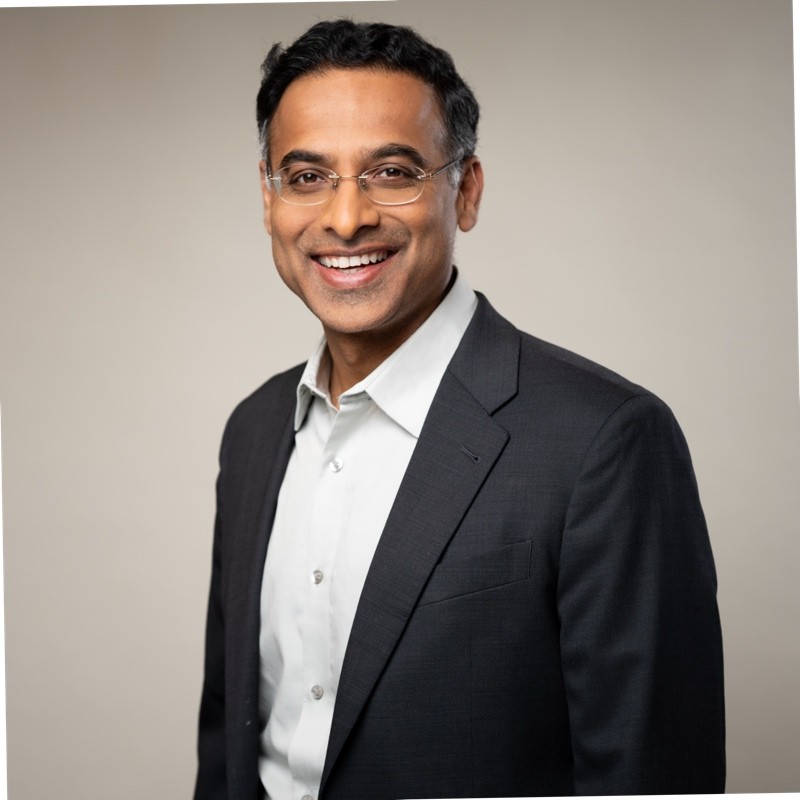
EVP and GM, AI and Network SecurityPalo Alto Networks
Anand Oswal, the Senior Vice President of Palo Alto Networks, joins theCUBE at MWC25 Barcelona to discuss his extensive expertise in cybersecurity and network innovation. Interviewed by theCUBE analysts Savannah Peterson and Dave Vellante, Oswal dives into hot-button topics such as the company's latest SASE 5G announcement and strategies for monetizing 5G infrastructure. His insights illuminate the evolving landscape of secure access service edge technology and offer valuable perspectives on how service providers can leverage 5G networks effectively.
T...Read more
exploreKeep Exploring
What is SASE (Secure Access Service Edge) and how can enterprises utilize it to secure 5G-enabled devices without changing the ecosystem of service providers?add
What are the three broad solutions for 5G security that this company offers to help service providers secure their infrastructure and monetize their services?add
What are some ways in which telcos are deploying AI to enhance security in their operations and protect sensitive data from new types of cyber attacks?add
What factors are driving the excitement and traction around secure browsers and Prisma SASE 5G for enterprise customers and telcos?add
>> And good afternoon, super smarties and welcome back to Barcelona, Spain. We're here coming to the end of day two of our four days of live coverage on theCUBE. My name's Savannah Peterson, joined here with Dave Vellante for really what has been super intellectually stimulating dialogues from all of our guests.
Dave Vellante
>> Yeah, all the super smarties and the telco lovers.
Savannah Peterson
>> Yes, exactly. Our little community over here and all the Europeans. I mean, we really do get to reach a unique audience with this particular show, and so many big players in the game here.
Dave Vellante
>> Everybody's here, yep.
Savannah Peterson
>> Everybody's here. And speaking of big players, we've got Palo Alto Networks in the hot seat next. Thank you so much for being here and coming to hang out.
Anand Oswal
>> Thank you for having me again.
Dave Vellante
>> Yeah, good to see you again.
Savannah Peterson
>> I know you're CUBE alum, total VIP. There's a lot we're going to cover in this interview. Let's get started on your SASE 5G announcement and then we'll work through some of the rest of that information. So tell us about that.
Anand Oswal
>> Good. If you see this mobile conference right now you're seeing SASE 5G really come to life. Look at service providers, they spend a lot of money on buying spectrum, building this broad 5G infrastructure. They're looking now ways to monetize that investment. And what is the best way? Enterprises. Now, if you think about SASE, SASE is all about secure access service edge, and we said it's built on the principle of zero trust, which means any user, any device. We solved the problem of a managed device. We solved the problem of connecting to any application, any data. Now enterprise is seeing many 5G-enabled devices that have SIM cards. How do you secure those devices without changing the ecosystem of the service provider? So using the same SIM-based authentication mechanisms the service provider has, don't change the packet core, but still have that consistent security. So when I'm on my 5G device and I go back home on WiFi or in the office and wired, I have that same consistent security, the consistent policy and consistent manageability for my employees. That's what we announced yesterday with Prisma SASE 5G.
Savannah Peterson
>> Well, that's very exciting. Congratulations.
Anand Oswal
>> Thank you.
Dave Vellante
>> So if we go back mid last year, you recall there was this discussion about consolidation and spending fatigue and things happen, right? I mean the industry still is, the spending climate now is more uncertain than ever, but-
Savannah Peterson
>> That's for sure.
Dave Vellante
>> And then leading up to RSA, we did a survey with our partners, ETR, asking customers, are they able to consolidate the number of vendors in their stack? And most of them said, "No, we're having a hard time doing it." Now, when I listened to your earnings calls, very clearly you're winning in the platformization game. So what are you seeing... And by the way, we predicted in our breaking analysis predictions this year, we said platformization is not going to stop. It's the right path for security. So explain for the audience why is platformization a more secure approach?
Anand Oswal
>> Okay. So if you talk to any customer and very simply say, what do they want? They want to make more money, they want to save money and to be out of trouble. Think of platformization. Platformization is about today customers have 10, 20, 30, 40, 100 different security tools. They have to have different consoles to manage them. That to build expertise. It is not possible. You can't have a different point solution for every new threat you have. You have AI access, you have AI runtime, you can't have point products and solutions. Platformization, primary goal is not consolidation. It's you have operational complexity, you want to reduce it, you want to give ROI to our customers. But the most important part of platformization, how do I get you a better security outcome? If I can't make you more secure, nothing else matters. And that's the journey that we've been on. Now, of course, customers, when they do it, they'll consolidate tools. Of course they'll save money. But the primary objective is how do I get a better security outcome? You look at different point products and tools, Dave, they don't talk to each other, they don't share that intelligence. So actually they give you a poor security outcome. With platformization, you have the combination of best in class products tightly integrated, a common view for manageability, from what I say, day minus one to day N, across operations, configurations, security policies, AI ops, incidents, alerts, bringing it all together. Because you want to stop the kill chain, the attack anywhere. You can have it stopped with data security, with threat prevention, with malware. These need to coordinate, these need to work together seamlessly, only then do you get a better security outcome.
Dave Vellante
>> Let me play devil's advocate and have you respond as to why your approach accelerates that outcome. Because some people would say, "Well, I have a new threat and there's this new tool, it's best of breed, I'm going to deploy it and I'm going to API all this data maybe into a lake and I'm going to analyze it and I can achieve a similar," you used the word, you said consolidation is not the goal, but I'm going to say consolidated outcome.
Anand Oswal
>> Sure.
Dave Vellante
>> But that you hear that a lot from customers. Why is your approach better? Can it be best of breed and platformized and why does it accelerate that outcome?
Anand Oswal
>> Yes. First it can be best of breed and platformize. Let's take an example. We all heard about the AI boom last two years. Okay? We have two big problems in AI, for securing AI. Employees are accessing AI applications whether you like it or not, whether IT knows it about it or not.
Dave Vellante
>> They have smartphones.
Anand Oswal
>> Right. So even from the office.
Dave Vellante
>> Yeah, absolutely.
Anand Oswal
>> 60% of employees are accessing AI, general AI bot applications.
Dave Vellante
>> Yeah, sure.
Anand Oswal
>> You want visibility into what employees are accessing, you want control or you want to allow, deny what you want to sanction or tolerate. You want to protect them from sending your most sensitive data, which can happen not intentionally-
Savannah Peterson
>> Exactly. I was thinking that. Yeah, it's so easy for an accident to happen in one of these moments and having that observability over that is imperative.
Anand Oswal
>> Yes. And then all of these applications, they give you responses. The responses can have phishing links, the responses can have malware. How do you protect that? Now if you take this as a problem, you have two options. You can say, I'm going to have a point product to deploy to solve my AI access solution, or I'm going to integrate on a platform. If you want to point product, you deploy an agent on your endpoint, you deploy proxy solution, get the traffic in line. It's cumbersome. If you have platform, you just enable the feature on. The same will apply for runtime security for applications I'm building in this AI applications. They're talking to the infrastructure, models, tools, plugins, they talk to each other. They have access to sensitive data. They talk to the outside world. I have software firewalls in every cloud provider natively integrated. I just upgrade it to support model, app and data protection. And that's the power platformization. You get to a better, faster outcome with lower operational complexity.
Dave Vellante
>> So this is a promise that you guys-
Savannah Peterson
>> Which everyone wants.
Dave Vellante
>> Yeah. Which everyone wants. But this is a promise you guys, it's not like you just made this up yesterday, you've been at this for a while now.
Anand Oswal
>> Absolutely.
Dave Vellante
>> So you have data.
Anand Oswal
>> Yes.
Dave Vellante
>> What does the data tell you about the outcomes? What are the results? What's the business value that your customers are seeing? Can you quantify that in any way?
Anand Oswal
>> So the most important outcome that we get from customers are the number of threats that they're not able to stop or they're getting breached, right? If you think of the platform-centric approach, let me give you some data. We are stopping, and this may blow your mind away, 30.8 billion, with a B, attacks every single day.
Savannah Peterson
>> 30 billion?
Anand Oswal
>> 30.8 billion every single day. You go back a year-
Savannah Peterson
>> And I can imagine that's only going up. Holy moly.
Anand Oswal
>> Up if you go back a year ago, that was maybe 12 or 13 billion. A small number of those, 9 million, a very small number but still a big number-
Savannah Peterson
>> Yeah. Yeah....
Anand Oswal
>> 9 million are net new attacks. Attacks that nobody has ever seen before. And we are able to stop it because we have what we call Precision AI. It's a combination of machine learning, deep learning, infused with gen AI to give us a very holistic solution. And that's the scale of platform. Every time we enable new services, the platform gets better. Why? Because I have the network effect of data. I'm sharing that intelligence. You can have good AI when you have good data.
Savannah Peterson
>> It all gets smarter together.
Anand Oswal
>> Exactly.
Dave Vellante
>> And how about the false positives on those, whatever it was, couple million?
Anand Oswal
>> A small number. But we always are learning. It's a feedback loop and we get better every time.
Dave Vellante
>> So what happens in that false positive? It's just, it's an exception?
Anand Oswal
>> It's an exception. You understand it, you research it, you update the models, you fine-tune the models and you keep processing-
Dave Vellante
>> And the AI learns from that exception.
Anand Oswal
>> Yes, absolutely. Today we have 4,400 deep learning custom models on the Network City Platform, and with that we're able to stop 30.8 billion attacks daily.
Savannah Peterson
>> You were not kidding when you said that was probably going to blow our minds.
Anand Oswal
>> Yes.
Savannah Peterson
>> Now that I'm just wrapping my head around this, how long has it taken you to develop this and how are you... And I'm sure you're thinking about this a lot. I mean the attacks are only going to get greater and greater and greater with the toolkits that are out there. So how have you designed to adapt as this continues to grow and scale?
Anand Oswal
>> It's a wonderful question. If you see the threat landscape today, I call it the three S's. It's increasing in scale, it's increasing in sophistication and speed. If you rewind the clock, 10, 12 years ago, we were the first companies to introduce machine learning for sandboxing or WildFire, what we call a product. And people said, "You can't send this data to cloud. It's not going to work." It worked. Over five, six years ago we saw that the traditional way of security of a signature or a database is not sufficient. What I mean by that is take an example of, simple example URL filtering. The way everybody does URL filtering in the world, and some even today is you crawl the internet, you build a database of every URL in the world. You give every URL a risk score. You group them into categories. These are news websites, adult content, websites of country X, and you set a policy. That is not working anymore. Attackers are too sophisticated. Websites come up and down in seconds Before I can build a database, it's gone. Attackers will register domains five years ago, they use it today. It appears benign. And I can give many such techniques they use. So what we realized five or six years ago is that signature and databases are good hygiene. They're sufficient, but not enough. You've got to look at things in line, real time, metadata content to stop these attacks before you ever seen them. Because the days of you getting infected or you getting infected by an attack, me learning it, building a signature, pushing it, no longer works. We want to stop the patient zero attack, the first person. And that's the number I said, roughly 9 million on net new attacks that we are stopping every day. Attacks that nobody has ever seen before, and that's the power of Precision AI.
Savannah Peterson
>> That is incredibly powerful. I mean, we cover most of the big security conferences. And just over the last year I really feel like I've had my mind blown because as we get to use these tools and do great things, everybody on the nefarious side also gets to use these tools and do strange things. And then it ends up impacting the consumer side of things as well. You mentioned that you had some interesting and fun, exciting announcements about consumer.
Anand Oswal
>> Yes. So look, I think if you look at 5G security broadly following the network, we have three broad solutions. First, we are building products to help secure service providers' 5G infrastructure across all layers, signaling management plane and data plane. Across all facets so your RAN interface, roaming interface, your GI interface which is internet bound, in the cloud, on-prem, no matter where it's, that's one. And that's doing really well. And then we have that for a couple of years now. The second big category is how do you help service providers monetize their 5G infrastructure? In that there are three real solutions we have. First for consumers so we have partnered with Singtel and they've launched a new service to help provide a secure connectivity for their consumers. And they charge X dollars a month more, a percentage of what they charge for regular connectivity, and it is one of their fast-growing services where they're now able to prevent phishing attacks, malware attacks for the consumers. The second and third are both for enterprises where you can give a slice, a 5G slice as a service to enterprise customers so they can get the guaranteed slice, quality of service and it's secure. And third is what we talked about, the SASE 5G. So all these three are part of how enterprises can benefit from 5G. The third broad category is private 5G is also taking off, especially in utilities, manufacturing, oil and gas.
Savannah Peterson
>> You see it all over the show floor here too.
Anand Oswal
>> Exactly. So how do you have OT security, OT multi-visibility, segmentation, compliance, limit the vulnerabilities, and then full 5G security where you can have granular policies based on the 5G devices' IMZ or IMEI. That's the broad category of what we do in Palo Alto network of 5G.
Dave Vellante
>> So the business case-
Savannah Peterson
>> It's a lot...
Dave Vellante
>> high level two-fold reduced the expected loss, the risk, and then the monetization.
Anand Oswal
>> Yes.
Dave Vellante
>> Okay. And then you dig into that. Are telcos inherently easier to secure because they're so locked down?
Savannah Peterson
>> Good question.
Dave Vellante
>> Or is there a different dynamic?
Anand Oswal
>> No, so it is different for different telcos. If you think about how 5G is built, you have customers who are building their 5G packet code in a cloud-native architecture right from the get-go. And we have examples of that like DISH. You have customers who are still migrating to standalone architectures for 5G. So it's different. The most important thing is that 5G provides a lot of inherent security functions, over the air encryption, all those things. They're all good. But the issue is that you also need to secure a data plane. The real data that's flowing through it, it has malware or phishing and whatnot, management layer, signaling layer, roaming interface and data plane, all of that needs to be secured for the service provider.
Dave Vellante
>> But your data model is a centralized data model, correct? Is that fair to say? Or not necessarily?
Anand Oswal
>> It may not be centralized. It could be distributed also. It depends on where you want it to be.
Dave Vellante
>> That's my question, Anand, how do you deal with a logically centralized data model... I should restate it. It's a logically centralized data model. How do you deal with edge of data and edge use cases in that model?
Anand Oswal
>> So you can have enforcement points or form factors for enforcement at the edge as deep into the RAN architecture or in the packet code. All of them are doing different functions. At the end of the day, you are stopping different kinds of threats at different places, they're all coordinated. So they're kind of pseudo-centralized in that sense.
Dave Vellante
>> Okay, good. So what else is happening in a telco that is exciting you? How about AI? How are they deploying AI? And specifically, how are they deploying AI to become more secure?
Anand Oswal
>> So look, you're seeing 5G come to life. This is one of the first MWC that people are really is getting in what enterprise and consumers. At the same time, you are seeing really AI come together at the same time and this convergence is happening almost at the same time. And with AI, you are finding applications where you are using AI for better security, the examples I gave you. But also you are finding that AI is getting built into every single customer's outcome. What I mean by that is every single organization I speak to is building an AI pod application to transform their business model to give a better experience to their customer. And as they go on this journey, they're wanting to know how can they make sure RAM's secure? Because in the classical model of an application, you had a three-tier model, you had a front-end, a back-end and database layer. Then the cloud came along. People said, "Don't take your lift and shift your application. Built it on microservices." If you think of AI pod application, it's really the third wave of application development because it's no longer taking an application, a model and plugging it. You're bringing an entire AI infrastructure, tools, data sets, plugins, all of these talk to each other. They talk to the outside world. They do amazing things for you. You can have a translation, you can have some credit card transactions to their models, but they're having access to sensitive data, and how do you secure that? Your models, your data and your applications. And there are new types of attacks. The old attacks were people attacking application by trying to obfuscate your APIs and getting in there. Now people are doing prompt injection attacks, denial-of-service attacks, data leak attacks. So you have to protect all these new attacks in addition to the existing attacks. And that's what we call the AI Runtime Security solution.
Dave Vellante
>> Clever, aren't they? RSA next month.
Anand Oswal
>> Yes.
Dave Vellante
>> You want to tease us a little bit? Anything you can-
Anand Oswal
>> There's a lot going on in security and as we spoke about, there are things that we are doing for Precision AI and we'll continue to do that. Right? Good AI runs around good data. You're seeing a lot of discussion on agents, access to agents, securing agents, data from the agents. How do you bring all this thing together from a platform-centric approach? You're seeing a lot of excitement around secure browser, right? Because you're able to now have a new layer of protection of managed devices, but also get these unmanaged devices. We're seeing amazing traction on Prisma SASE 5G because it gives telcos a new avenue to monetize for enterprise customers without changing their co infrastructure, which they've invested billions on. That's very exciting.
Savannah Peterson
>> And that is imperative too. Nobody wants to rebuild that. Nobody wants to lose out on that investment, but there's ways to optimize that moving forward. All right, one final question for you. Going to take it a little farther than RSA out. When we're here next year at Mobile World Congress, what do you hope to be able to tell us then that you can't tell us now?
Anand Oswal
>> Look, I would love to see a wider deployment of people building secure private 5G networks. Today still many networks in private 5G are built with security as an afterthought. And so-
Savannah Peterson
>> That's a great point....
Anand Oswal
>> That's why we built this whole private 5G ecosystem partners. We have many partners, access vendors partnering with folks like Nokia, NTD Data, with NVIDIA, OneLayer because this is ecosystem approach. So I'm hoping at that one, because all of these private 5G networks are built in areas which are like manufacturing, utilities, oil and gas, these are highly regulated, but also very critical from an infrastructure perspective. And second, I'd love to see a lot more progress around service providers able to monetize their 5G investments through slicing, SASE, consumers and whatnot.
Savannah Peterson
>> I love it. Well, we look forward to helping you tell those stories. Anand, thank you so much for being here with us.
Anand Oswal
>> Thank you for having me. Thank you for having me.
Dave Vellante
>> And we'll see you in San Francisco. You're welcome.
Anand Oswal
>> Thank you.
Savannah Peterson
>> Yes.
Dave Vellante
>> All right.
Savannah Peterson
>> Yes we will. And hopefully we'll continue to see all of you tuning into our four days of live coverage here in Barcelona, Spain at Mobile World Congress. My name's Savannah Peterson. You're watching theCUBE, the leading source for enterprise tech news.