We just sent you a verification email. Please verify your account to gain access to
MWC25. If you don’t think you received an email check your
spam folder.
In order to sign in, enter the email address you used to registered for the event. Once completed, you will receive an email with a verification link. Open this link to automatically sign into the site.
Register For MWC25
Please fill out the information below. You will recieve an email with a verification link confirming your registration. Click the link to automatically sign into the site.
You’re almost there!
We just sent you a verification email. Please click the verification button in the email. Once your email address is verified, you will have full access to all event content for MWC25.
I want my badge and interests to be visible to all attendees.
Checking this box will display your presense on the attendees list, view your profile and allow other attendees to contact you via 1-1 chat. Read the Privacy Policy. At any time, you can choose to disable this preference.
Select your Interests!
add
Upload your photo
Uploading..
OR
Connect via Twitter
Connect via Linkedin
EDIT PASSWORD
Share
Forgot Password
Almost there!
We just sent you a verification email. Please verify your account to gain access to
MWC25. If you don’t think you received an email check your
spam folder.
In order to sign in, enter the email address you used to registered for the event. Once completed, you will receive an email with a verification link. Open this link to automatically sign into the site.
Sign in to gain access to MWC25
Please sign in with LinkedIn to continue to MWC25. Signing in with LinkedIn ensures a professional environment.
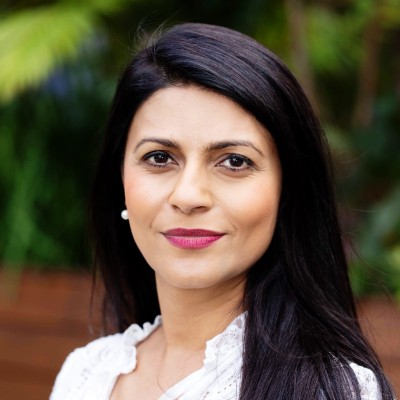
Nevash Pillay, Databricks leader, joins theCUBE's Savannah Peterson and Dave Vellante at Mobile World Congress 2025 in Barcelona to delve into transformative uses of agentic AI in the telecommunications sector. With over two decades of telecom experience, Pillay shares insights on how Databricks' data intelligence platform enhances proactive and predictive customer service. Key topics include handling telecom challenges, evolving customer interactions, and showcasing Databricks' role as a disruptor in the industry.
Pillay emphasizes the criticality of ...Read more
exploreKeep Exploring
What is the key starting point for successful proof of concepts in artificial intelligence?add
What are some common business units found in the telco industry and how do they need to integrate their data in order to improve customer experience and efficiency?add
What has AT&T accomplished by using machine learning, open source systems like Llama 3 and Claude, and analyzing real-time data?add
What innovation has Databricks been credited with in terms of revolutionizing the industry?add
What are telecoms seeing as key leverage points to meet their strategic goals?add
>> Good afternoon CUBE community, and welcome back to day two of our four days of coverage here at Mobile World Congress in Barcelona, Spain. My name's Savannah Peterson, soaking up all the knowledge here with Dave Vellante.
Dave Vellante
>> We're halfway.
Savannah Peterson
>> We're halfway, and I almost feel like you and I are ramping up. Sometimes it can be a little fatiguing, but even our next guest was talking about how great the energy is in here, and I think this show really is different this year. I'm super excited. Navash is a CUBE alumni and a radiant person I can already tell. Thank you so much for coming to hang out with us today.
Nevash Pillay
>> Thank you so much for having me. It's a pleasure to see you and meet you again.
Savannah Peterson
>> Yes, yes, we love having you on. And I'm sorry I missed you last time. Dave and I were both very intrigued when we were doing our homework before this interview and we saw your very catchy title for the talk that you're giving tomorrow. Tell us what you're going to be talking about. Give us a little preview if you can.
Nevash Pillay
>> Okay, so I actually am engaged in four panel discussions, so I think the one you're referring to is-
Savannah Peterson
>> The web is dead....
Nevash Pillay
>> agentic AI, the web is dead, and look, there has been some fundamental shifts, I worked in telecom myself for about 20 years, and there were instances where if you were a customer, you had to wait for a while to be served. When you were served, you had to wait to get your issue resolved. But I think now it's more about how do you shift to being proactive and predictive? Most customers want their telecoms to identify the issue in advance, fix it without them even knowing, and then perhaps inform them, "We were across the fact that you may have experienced this. This is how we rectified it, FYI." That way everything is seamless. And tomorrow is more about that. But how we bring that to life, because it's easy to say that people want it, but how do we actually make that happen with agentic AI?
Savannah Peterson
>> So how do you make it happen with agentic AI?
Nevash Pillay
>> Okay, so here's the thing. AI is top of mind for everyone right now. We can see traversing this entire exhibition space, you see AI in every form.
Savannah Peterson
>> It could be AI World Congress instead of Mobile World Congress this year, yeah.
Nevash Pillay
>> Totally, totally. But with us, and I have also tried different proof of concepts in my career, and sometimes they work, sometimes they don't work exactly to plan. Sometimes they're inconsistent. So for me, the difference about tomorrow and what I will share is it starts with the data. It's your foundation. If your data is clean, unified, organized in tables where you can apply your data science, you have a much better way to then apply your AI. Over and above that governance is a key issue for everybody. So at Databricks we have a data intelligence platform, which enables you to actually clean the data and we deliver it to you in the form of tables. We then have a governance layer over that. So every piece of your data can be observed, you can trace it, and you can have full lineage-
Savannah Peterson
>> So critical right now too. Yeah.
Nevash Pillay
>> And not just for your data, but for your AI agents. And what we see, like with agentic AI, it's about... If you look at telco to solve any problems, it's a little bit complex. So if you call and say, "I have a billing issue, why is my bill higher?" You would find that someone has to look at the last two bills, look at your contract, figure out what's different. With agentic AI, you could have one agent looking at the bill, one agent looking at your contract, one agent looking at your NPS, when you are due to have an expired contract. It picks up all the data in seconds and presents the answer to you or the contact center.
Savannah Peterson
>> You are really speaking my language right now because I have been avoiding what I know will probably be a three hour phone call with my cell phone provider because of a bill that was egregiously high for who knows what. This is going to impact both those human agents on that side as well as the wonderful customers of that. Getting to design this type of magic must feel pretty exciting right now.
Nevash Pillay
>> I am more inspired now than I have ever been because even the use cases that we have with our customers, it's not providing small changes and small impact. The impact is actually huge, and the benefit is for the individual, for people who can do other things that they enjoy, and also customers don't care about what technology you have, like you. You just want your problem solved fast. And I think this has the ability to transform all of that and deliver much better results.
Savannah Peterson
>> To say that you're more inspired than you've ever been with your impressive career I think is really saying something.
Dave Vellante
>> One of the things that you told me last time we talked was that the telco industry tends to automate back office first, like finance, maybe IT, but they have to learn to integrate multiple complex workflows. That's what agents are designed to do. So I wonder if you could share your vision for how the telco industry changes its workflows with agentic.
Nevash Pillay
>> Sure. I think typically if you look at the telco industry, you would find customer experience business units, you would find network business units, you would find service delivery business units. And the way I see the future is about not having those silo data sets, but integrating them. Because if you are a customer and you have an issue, it could relate to something that's happening back of house, front of house, or in the network. And to actually deliver the right answer you need to understand the data. Or if you look at it the other way around, if you have a network issue, first thing you need to do other than figuring out how to fix it, is which customers are impacted. And it's critical now that that data is arranged in a way where it's beneficial to all parts of the business. Because as a customer, as I said, you want the outcome rather than having to be moved from one part of the business to the other part of the business. And one of my favorite use cases that we have just on how you bring data together is actually with a customer who has an amazing booth here, AT&T. Now I can share the story now, but we can come back to it a little later also.
Savannah Peterson
>> No, no, let's talk about it. Why not?
Nevash Pillay
>> Because I think, again, it's about taking these complex problems, getting your data together, and getting your agents and your humans to deliver the best outcome to your customer. So AT&T, a large customer of ours, they have 182 million subscribers.
Savannah Peterson
>> Just a couple.
Nevash Pillay
>> They process 10 million sets of data every minute in their network, or transactions every minute on the network.
Savannah Peterson
>> Million sets. Okay, that's not a casual amount.
Nevash Pillay
>> No, like every industry telco is experiencing issues with fraud. So you're a customer today, imagine what it would feel like if I called and said you've lost your SIM card and as a result, you need the service terminated and I reconnect it. And I now have access to all your data. Or I call and pretend to be you and connect to new servers. Telecoms face a significant amount of fraud, and that's increasing. So AT&T are now using machine learning. They are also using open source systems like Llama 3 and Claude. They are now analyzing real-time structured and unstructured data, and they have reduced fraud by 80%. That's eight zero percent. Now it goes-
Savannah Peterson
>> Over what period of time?
Nevash Pillay
>> Over a year and a half.
Savannah Peterson
>> You've got to be kidding me. That is magnanimous.
Nevash Pillay
>> And the good thing about agentic AI is that it's not just about building the agents, it's about deploying them, evaluating them, and governing them. So the AI has built into it ways to get it better. So that should be closer to 90% soon. And to me, that's a great example of many data points, getting to the problem ahead of the customer experiencing it, and having these seamless experiences merging multiple points of data.
Dave Vellante
>> So the talk that Savannah mentions, 3:45 Central Europe time tomorrow the 5th of March, The Web is Dead: Agentic AI and the Rise of the Post Web Era, and you're going to talk about how agentic and generative AI systems are transforming human-machine collaborations and the creative process, so don't miss that. That sounds like... What a great hook.
Savannah Peterson
>> Can we break the broadcast so we can go over there and watch?
Dave Vellante
>> Great Hook. Databricks has been a perpetual disruptor. It came into the market with Spark right in the middle of the big data era, Hadoop, which was basically flailing because it was so complicated. Spark kind of semi-saved it, semi-killed it I'd say.
Savannah Peterson
>> Not wrong about that, yeah.
Dave Vellante
>> And then more recently blew up the industry again, where the model was to shove everything into a central data warehouse, cloud data warehouse, and then do everything in there. Well, Ali Ghodsi was really the poster child for open table formats. Last year Databricks acquired Tabular, Ryan Blue's company, which created Iceberg, which is the open table formats. Mateus on the stage clicked the button to open source Unity-
Savannah Peterson
>> Oh, I remember that. I was there....
Dave Vellante
>> which is the governance catalog.
Savannah Peterson
>> I was in the room when that happened.
Dave Vellante
>> There wasn't a lot of code in GitHub to be honest, but it got the industry going. So perpetual disruptor-
Savannah Peterson
>> It was symbolic if nothing else.
Dave Vellante
>> So Databricks, I would say, was one of the most influential companies in terms of starting the movement to open table formats, where any engine, doesn't matter if it's Amazon or Snowflake or Databricks or Starburst or Trino, whatever, can operate on any data. So the cloud data warehouse separated compute from storage. This separates compute from data. Any data can be operated on by any compute. Major change. Now you bring in-
Savannah Peterson
>> Opens up so many possibilities.
Dave Vellante
>> Now you bring in agentic and changing workflows, those complex workflows. My question is, long-winded intro here, my question is how did the telcos play in that? Because they've got these static, fossilized systems and there's pressure for them to open up. How do you see that playing out?
Nevash Pillay
>> Yeah, look, we are growing overall in Databricks, and in telco it's no different. I think when you look at the telecom landscape right now, revenue growth is not huge. In fact, most telecoms are flat or growing marginally. They are trying to be much more efficient. So irrespective of the legacy tools that they have, the transformation that they are continuing to go through, they see agentic AI as a way to monetize data, to deliver better customer experiences, to deliver more efficiency in the business. Because again, agentic AI can work 24 by 7. Now you can still bring in a human in the loop, but even when you look at your network, the analytics, the data points, what I shared with AT&T, reducing fraud. So what we are finding with our customers is that they are starting to see how data and AI are key leverage points to meet their strategic goals. And ultimately that's growth and being more efficient. And all of the conversations we've had, I think yesterday we had 30 meetings. Today I think... I mean over the three and a half day period, I think we're up to like 77 or something like that. But the interest is very similar. Where are you doing it? How are you doing it? How can you help us do it? Open source is a great positioning for our telecom customers because of course they want to own their data and they want to be able to use it to do multiple things in their business. But ultimately, it's the governance that the telecom loves most. To be able to trace and track the data is just so critical as well as your agents, so I think it's that combination that's key.
Savannah Peterson
>> Having that built in, like you were talking about 10 million, the volume of data that AT&T is doing, having that governance is so nuanced around the world, depending on what you're doing, it really is imperative. You just started your new and exciting job four months ago at Databricks. Congratulations again.
Nevash Pillay
>> Thank you.
Savannah Peterson
>> What's been the most... And obviously only things you can share, but what's been the most unexpected surprise or interesting thing that you've uncovered?
Nevash Pillay
>> Okay, so I think for me, the biggest surprise has been the interest of customers and how easy it is to get to the people that we need to talk to. You know sometimes when you are selling software, you can see the number of vendors over here. It's actually you're struggling for mind share and mind space. And when you look around, even when I walk around, and again, I've been in a telco for a long time and I'm now working on the opposite side, trying to get the attention of telecom leaders, and I think what I'm most humbled about is that leaders are willing to listen and learn. They've heard about Databricks. We've got an amazing set of leaders who started way before I arrived, and it's always been a humble company from what I've seen, it's a beautiful culture, and we say it as it is. It's about open source. It's about the better good of this community and the industry. And I genuinely feel that it's about making an impact to the world. And some of my most favorite things since I've started is how we are impacting children who have diabetes.
Savannah Peterson
>> Tell us how you're doing that.
Nevash Pillay
>> And we have an amazing customer and they sell the little pod that sits on your arm, and I have a family member who's diabetic. And when you are diabetic and your insulin is low and you don't have access to your insulin at that point to be injected into your body, you could actually feel very dizzy, disoriented, and in some cases you've got to rush home to get the insulin-
Savannah Peterson
>> I was going to say, you can also die. It's very dangerous.
Nevash Pillay
>> Exactly. And now we have created solutions where we can analyze the data in the pod that's on your hand or on your arm, and as you need the insulin, so this data is being analyzed and processed real-time by the second, and as you need it, it's injected. And what I loved was-
Savannah Peterson
>> It's built into the monitor?
Nevash Pillay
>> It's built into the monitor, exactly, exactly.
Savannah Peterson
>> Oh, that's a big game changer in this space.
Nevash Pillay
>> And being a mom myself, I heard a mom share a story of five of her children who are diabetic, and I know how hard it is if you have one child who has a special need or you've got your head on it, and just being able to know that your child is going to school without having to worry about how they're going to feel through the day, or even if they remember... I remember putting things in the lunchbox to remind them, and a note to please have-
Savannah Peterson
>> To eat your snack or to-
Nevash Pillay
>> Eat a sandwich, take this medication if you need it. But as a mom, knowing that my child's going, or my children are, and they are okay for the day and they can enjoy the playground and not have to worry about these things, that's what inspires me most and makes me most proud to work at Databricks.
Savannah Peterson
>> I just felt that in my heart. You highlighted all the good things about community, but really, and I say this to Dave all the time, none of this matters if we're not making the world a better, safer, healthier place for all of us and looking after the planet while we do it.
Nevash Pillay
>> I agree.
Savannah Peterson
>> It's just not worth it. How old is your child?
Nevash Pillay
>> Actually, I've got two daughters. They're a bit older now, 21 and 19. So yes, it's a very exciting time, but yeah.
Savannah Peterson
>> What are your conversations like about AI and what you're doing with your daughters?
Nevash Pillay
>> For the first time in my life, they actually think I'm cool.
Savannah Peterson
>> Love this.
Nevash Pillay
>> It's never happened before, actually.
Dave Vellante
>> We think you're cool.
Savannah Peterson
>> Yeah, we were sold. We were already sold.
Nevash Pillay
>> Thank you. I think you guys are so cool too. But it's tricky being a mom because they always think you're out of date. So here I am now-
Dave Vellante
>> Or being a dad.
Nevash Pillay
>> Girls are very transparent about those things, so all of a sudden I'm very interesting to them, and my daughter's actually started her first job, she's just finished university at a bank as a graduate. And each night she calls me and it's like, "Mom, could you tell me how AI might be able to impact this space? I'm putting a problem statement together." So for the first time, I actually feel more relevant, yes, as a mom.
Savannah Peterson
>> Okay, that's a silver lining that we maybe couldn't have expected. Would you like to say hi to them right now? We can give them a little wave.
Nevash Pillay
>> Oh, yes. Hi, Skye and Chloe, with all my love of course.
Dave Vellante
>> Great names, great names.
Savannah Peterson
>> Oh, that is awesome. I have two more questions for you. There are not a lot of people who look like you and I in these industries and positions of leadership, unfortunately. What would you say to a young woman or someone your daughter's age, for example, who's really intrigued by the career path that's possible here and maybe a little nervous to get into the industry because it can be a little gender imbalanced?
Nevash Pillay
>> I would say there are times when I'm still nervous, so I think it's normal to feel that. But seriously, follow your dream and do it. It is possible. It is very likely, and whatever you want, I'm confident you would get to, but I'd say find a few mentors. Mentors would really... And that's been a huge thing in my life. I've had a few mentors who have helped me along. We all need a little bit of support along the way. But you could have whatever you dream for, and I think this is the time where there are so many role models and don't be afraid to reach out. There are so many people that I admire and I would still reach out to them and ask, "Could you give me a little bit of guidance and advice on how I may do this?" And there is such a willingness now for us to help each other. And it's not just women helping women, it's men who have daughters also wanting the same for their daughters as the rest of the women in the industry. And I think my biggest supporters have actually been leaders that I've worked for, irrespective of whether they're male or female, who have been willing to hold my hand when I've fallen behind a little bit, but don't feel shy to ask for that help.
Savannah Peterson
>> No, I think you sum that up so well. I am such an advocate of mentorship. I would not be who I am today without the many people, many of them in the early days in particular were men being that advocate, being that ally and looking after us. But I do love that. We all get a little nervous sometimes. I think that's such a gentle reminder. Navash, this has been absolutely amazing. My final question to you, since you're now a CUBE regular, when we're chatting with you in, say, six months to a year from now, either... Well, could be at the New York Stock Exchange, could be at Mobile World Congress, could be at your summit, what do you hope to be able to say then that you can't quite yet say today?
Nevash Pillay
>> So at that point, I would love to come to you with more customer success stories, because at the end of the day it doesn't matter what I say, it's our customers actually achieving these outcomes. So my goal is to come back with maybe five amazing stories with one of our customers to share this jointly. .
Savannah Peterson
>> Well, we can't wait to tell all about those. Yes, I mean, your examples already today were so good. I can only imagine what it's going to be with a little more months of scale up and immersion in the company. Navash, thank you so much.
Nevash Pillay
>> Thank you for the opportunity. Absolutely.
Dave Vellante
>> See you in June at Data and AI Summit. We'll be there.
Savannah Peterson
>> Yeah, we'll be having some fun. Yeah, yeah, heck yeah.
Dave Vellante
>> Awesome show.
Savannah Peterson
>> Well, I hope all of you watching at home enjoyed this, as much fun as it has been for Dave and I. We are here midway through day two at Mobile World Congress in Barcelona, Spain. My name's Savannah Peterson. You're watching theCUBE, the leading source for enterprise tech news.