We just sent you a verification email. Please verify your account to gain access to
MWC25. If you don’t think you received an email check your
spam folder.
In order to sign in, enter the email address you used to registered for the event. Once completed, you will receive an email with a verification link. Open this link to automatically sign into the site.
Register For MWC25
Please fill out the information below. You will recieve an email with a verification link confirming your registration. Click the link to automatically sign into the site.
You’re almost there!
We just sent you a verification email. Please click the verification button in the email. Once your email address is verified, you will have full access to all event content for MWC25.
I want my badge and interests to be visible to all attendees.
Checking this box will display your presense on the attendees list, view your profile and allow other attendees to contact you via 1-1 chat. Read the Privacy Policy. At any time, you can choose to disable this preference.
Select your Interests!
add
Upload your photo
Uploading..
OR
Connect via Twitter
Connect via Linkedin
EDIT PASSWORD
Share
Forgot Password
Almost there!
We just sent you a verification email. Please verify your account to gain access to
MWC25. If you don’t think you received an email check your
spam folder.
In order to sign in, enter the email address you used to registered for the event. Once completed, you will receive an email with a verification link. Open this link to automatically sign into the site.
Sign in to gain access to MWC25
Please sign in with LinkedIn to continue to MWC25. Signing in with LinkedIn ensures a professional environment.
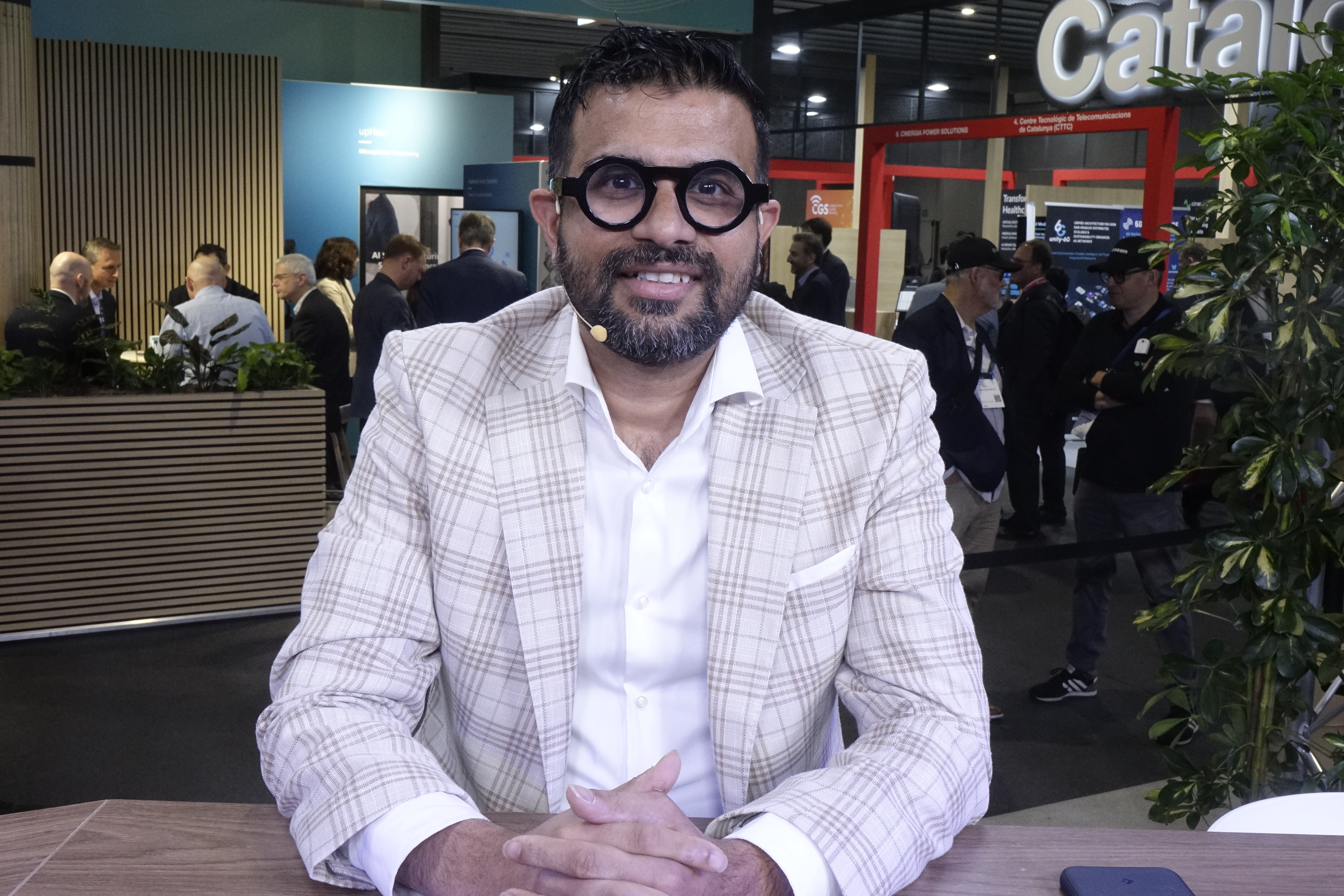
Vijay Nagarajan, esteemed executive from Broadcom, joins theCUBE's Dave Vellante and Savannah Peterson at the Mobile World Congress 2025 in Barcelona. Nagarajan shares insights into Broadcom's advancements in AI infrastructure and engineering feats like the introduction of their extreme dimension system and package in 3.5D packaging. This interview, guided by the insights of theCUBE research and analysts, explores the evolving landscape of AI, highlighting Broadcom's strategic application in both infrastructure and edge AI.
According to Nagarajan, Broa...Read more
exploreKeep Exploring
What specific product lines have been successfully delivered across the infrastructure products in the last 12 months?add
What is the significance of SerDes technology in maintaining high-speed data lanes and signal-to-noise ratio in AI infrastructure?add
What advanced packaging technology did we announce back in December for our XPUs?add
What are y'all doing in the edge space right now?add
What are the benefits of the development of artificial intelligence towards AGI in terms of efficiency and future investment?add
>> Good afternoon, CUBE community, and welcome back to Barcelona, Spain. My name's Savannah Peterson. You're watching our live four days of coverage here on theCUBE, joined by Dave Vellante. Dave, I have an interesting opening question for you. Have you noticed that everyone dresses so sharp here?
Dave Vellante
>> Oh, yeah. We're in Europe. You got to dress up. I feel like I'm dressing down.
Savannah Peterson
>> Well, you look great. And the reason I'm bringing it up is our next guest is dressed so impeccably well that I couldn't help but notice. Vijay, thank you so much for taking the time to hang out with us.
Vijay Nagarajan
>> Thank you, Savannah. Thank you Dave, and thanks for the compliment. I do appreciate you guys having me today and it's always a pleasure for us to talk to you all. I know we did this last MWC, when Charlie came here and I had a wonderful conversation with you all. And here we are, following up a year on.
Dave Vellante
>> It was a surprise of last year's show when we had Charlie on because he was a first-timer on theCUBE, and the interview was so good. It was epic. It's still up today. I go back and reference it quite frequently. So, go to MWC 2024 on thecube.net to see that interview. It's a great educational overview of Broadcom because people didn't really understand Broadcom. I think they're starting to realize... Wall Street clearly realizes that, "Oh, wow, Broadcom does a lot of really hard things with great IP that drives value for customers, invests in R&D." Well, I think we debunked a lot of myths on that interview, but give us the update. What's new in the last year? A lot has transpired.
Vijay Nagarajan
>> A lot has transpired, Dave. You're absolutely right. I think actually before I recap, I need to specifically talk about one thing, which is when Charlie met you all last year, he talked about a specific acronym, do you remember that? O-S-P?
Dave Vellante
>> Yeah. Open, -
Vijay Nagarajan
>> Scalable.
Dave Vellante
>> Wait, wait, wait.
Vijay Nagarajan
>> Scalable.
Dave Vellante
>> Open, scalable and performant? No.
Vijay Nagarajan
>> Power-efficient.
Dave Vellante
>> Power-Efficient, right? Open, scalable, power. Of course, yeah.

Vijay Nagarajan
>> Open, scalable, power efficient. This has been our mantra that sort of pervades all of our product decisions, especially with respect to AI infrastructure, we've been doing that. And I think in the last 12 months I would say we've delivered to this vision and we've also delivered to the product promises that we've made across all of our infrastructure products. We talked about five or six product lines. There's XPUS, there's ethernet, PCIe, optics, and foundational technologies, like SerDes and DSP. We've done quite well. We've successively prosecuted those roadmaps in last year, had tremendous success.
Dave Vellante
>> I never really understood the importance of SerDes until I started digging into it. Serialization/de-serialization. It's like a secret sauce that you guys have. The word is you have the best SerDes in the business. Why is that so important? Talk about the underlying technology there and why that's so critical
Vijay Nagarajan
>> And more than the underlying technology, I think fundamentally it's really the interconnects that keep the AI infrastructure going. And SerDes is very critical in terms of ensuring that you have these high-speed data lanes and these high-speed data lanes have to work at extremely, extremely good signal-to-noise ratio, right? So, it needs to make sure that your signal gets across from one end of the link to the other, despite all the noise that you would see in the electrical circuits. This is true of this fundamental SerDes technology. Now, these interconnect technology has to go into our XPUs, it has to go into our ethernet devices, into PCIe. So, every piece of connectivity silicon that we do requires the SerDes and the quality of the SerDes makes those products that much more impactful and valuable.
Dave Vellante
>> And the fundamental premise that we talked about last year, which Charlie explained so well, was you got GPU, CPU, I would call it the XPU, I think he called it and all those PUs have to talk to each other, all the XPUs and the networking in between is critical and that's hard and you guys do it really well and everybody needs that. With high-bandwidth memory, the importance of that just escalates. And so, we're just at the beginning of this new data center cycle. At Financial Analyst Day, you guys hinted that there are people working on million-GPU clusters. We've seen hundreds of thousands now with xAI. So, you guys made that call last, I think it was February or March.
Vijay Nagarajan
>> March.
Dave Vellante
>> And now, we're seeing that whole vision come to fruition, so we're just getting started though.
Vijay Nagarajan
>> We're getting started. And again, as I talked about, SerDes is important, but it's equally important that other pieces of our technology are actually prepared when that happens. And this includes what we would do on the ethernet front, what the XPUs need to be equipped with, for example.
Savannah Peterson
>> That's a great point. Yeah.
Vijay Nagarajan
>> For example, I mean you asked about what we did in the last 12 months. Back in December, we announced 3.5D advanced packaging for our XPUs. We call it extreme dimension system and package. Now, if you look at the XPUs today, they integrate multiple compute dies. They integrate substantially more HBMs, IO chiplets, and they all have to come together in a relatively small area, and that would require us to go focus on advanced packaging. That's something that we've done very, very well. We've tried to keep us ahead and that's become one of our differentiators. In December, we launched 3.5D, which we believe would be the advanced packaging of choice going forward for these XPUs to extremely, extremely large dies.
Savannah Peterson
>> I got a question for you. Speaking of that whole end-to-end product line, and because we are here at Mobile World Congress. Mobile phones being probably the most ubiquitous edge device that's out there and connected. What are y'all doing in the edge space right now?
Vijay Nagarajan
>> Well, it's a great question. Thank you Savannah for asking that. So, I mean so far we've always talked about the Broadcom infrastructure play in AI, but we do have an equally interesting play in the edge as well and it primarily comes from our broadband access offerings. So, we have in the last 12 months, again, we had a couple of very interesting announcements that we made in the edge AI space. One is we announced, together with Comcast and Charter, that we're developing the first unified DOCSIS 4.0 chipset with AI/ML capabilities in there. So, it has a neural engine that is capable of supporting a lot of the AI use cases in your home. Think of your broadband gateway as being your edge device in your home, which okay, you could think about doing video processing for a great video experience. You could think about presence detection or making sure that your WiFi and IoT connectivity is great. So, all of these in an edge AI platform in your home. We've not just done that. From an edge perspective, we've made sure that the edge access network actually has neural capabilities, whether it is our DOCSIS 4 offering. So, we've integrated these neural engines in not just the modems, but also in the smart apps and nodes. Or you take our PON devices, our 50-gig PON devices. Today, they have neural engines spec, so the two sides of the length, the OLTs and the ONUs, they have the neural engine as well. So, think about what it can actually offer to the service providers and the operators, the network management capabilities, the power-management capabilities, the possibilities are endless. And so, it sort of expands your view of what you would consider the edge. Edge is not just about the phone here and the use cases that you'd have, let's say manipulating your photos or coding on your computer without the cloud, but the way I look at it is maybe in the extreme edge is everything compute that happens outside of the data center and that's something that we would play in.
Savannah Peterson
>> I love that as a very simplified definition, and I think I'm probably going to steal that from you from time to time, I promise.
Vijay Nagarajan
>> That's okay.
Dave Vellante
>> So, when you see something like DeepSeek, our reaction was, "Great news for the edge." If this lowers the cost of doing AI, more people are going to do AI. And I wonder how you think about it and what the reaction was inside of the brain trust at Broadcom when you saw DeepSeek. What was the response and how do you think it will play out over time?
Vijay Nagarajan
>> Yeah. Overall, I think it's a positive development from the perspective that we see it rather as an acceleration of AI towards, call it AGI or ASI. I mean all of these efficiencies are required in order for the world to accelerate there. That means there's going to be consistently more investment in the AI. It has nothing to do with somehow reducing compute, for example. It has everything to do with accelerating towards that journey that we are all taking together and the journey that our kids will live in in another 20 years. That's the world they're going to be in.
Savannah Peterson
>> So, you're a parent?
Vijay Nagarajan
>> Yes.
Savannah Peterson
>> How old are your kids?
Vijay Nagarajan
>> 12 and eight.
Savannah Peterson
>> Oh, wow. What do they think about AI?
Vijay Nagarajan
>> Oh, they are absolutely flummoxed and I take my time to actually train them on AI. Schools have a very irrational way of dealing with AI today because they just don't know what it is, it's the fear of unknown. But I know that kids are going to live in an AI world where they absolutely need to know how to use the tools. So, I teach them today on what they can do with it at home for their homework. So, for their tests, for example, my daughter no longer touches her textbooks. So, I download each of her chapters as PDF, feed it into NotebookLM, and that's what she hears in her drives. So, it's an audiobook and that's how she learns and that's how it should be.
Savannah Peterson
>> Wow. Textbooks is such a rite of passage when you had that big backpack full of books when we were younger.
Vijay Nagarajan
>> That's right. That's how it should be.
Savannah Peterson
>> Staying there just for a second, what do you hope that AI does for your kids as their adults? When you mentioned 20 years as a demarcator, where do you hope we are then?
Vijay Nagarajan
>> It's going to change the way they do things at home and at work. My son always thinks of... He says, "Dad, when I grew up, they're going to be flying cars." That's how he sees, this is an eight-year-old. And I give this analogy to everybody. When I was in my high school, there were calculators, but we'd have to use those log books to do log calculations. I don't know if you've ever encountered those paper log books. There was a calculator right beside me, but no, I could not use it. I had to use this log book to compute the exponentials. I don't use that today.
Dave Vellante
>> I had to use slide rule that's-
Vijay Nagarajan
>> There you go....
Dave Vellante
>> what I had in my day. In my chemistry class, they made us use a slide rule. I'm like, "This is so stupid."
Savannah Peterson
>> Oh, God.
Vijay Nagarajan
>> So, we're using laptops, computers, phones, and that's what I want my kids to be geared towards. They need to be ready for the possibilities in the future, not so much get bogged down by the drudgery of today.
Dave Vellante
>> Well, like you said, there's sort of a lot of high schools and grade schools are misguided. I remember when my kids were younger, they wouldn't allow them to use Wikipedia. Are you kidding me? But you'll let them use an encyclopedia? Wikipedia's better. And now, you're seeing the same thing, but eventually it's inevitable. AI's going to be everywhere and like Ray Kurzweil says, you're not going to want to give up the tools and go backwards and be less smart. AI makes you smarter.
Savannah Peterson
>> Or less efficient.
Dave Vellante
>> Or less efficient, right?
Savannah Peterson
>> Yeah.
Dave Vellante
>> So, it's funny how the initial reaction sometimes is negative, but then the wave comes and it's-
Savannah Peterson
>> Well, I think we get scared of the unknown. I mean, I think that's kind of natural. And anytime you're retooling, whether that's as a human or a company or whatever, there's a bit of anxiety that goes into that. What are some of the trends you're seeing? I mean, being at Broadcom, you get to see the application of this across verticals, across everything. What are some of the trends you're noticing? And then, also, if you could wave a magic wand and all of a sudden the entire community knew something about AI or something about where we're off at, what do you wish you could teach them magically?
Vijay Nagarajan
>> Okay, so there's one thing that I want to teach them, and this is something that I learned actually as late as yesterday. So, I've been trying to, for the longest time, think about a great analogy for edge AI versus infrastructure. And I've been wracking my brain on how I could simply explain it. And yesterday I learned it, off all people, from a doctor that I talked to.
Savannah Peterson
>> Go figure.
Vijay Nagarajan
>> It was fascinating. This was Dr. Gao Yujiyo from NUSD in Singapore. He is using AI for his hospitals and whatnot. And he had this splendid, splendid explanation that compared edge and infrastructure to your brain and the spinal cord. And I never thought of it that way. Think of it, right? So, when you go touch-
Savannah Peterson
>> It's like my brain and analogy....
Vijay Nagarajan
>> a hot object, your neural sensors drive your information back to the spinal cord and to the brain. The spinal cord first does the processing and lets you know, "Hey, take your hand off." The information goes back to the brain nonetheless and the brain then triggers the pain sensation. So, you have reflex that's driven by the spinal cord, and then you have the brain that's doing the ultimate processing. In my mind, this is spectacular. I was bowled over because this is a very simple explanation of infrastructure and a edge AI.
Savannah Peterson
>> I think it's awesome. I love that you just brought this up and shout out to your doctor. I've been comparing the AIPC to the human brain a lot and the different parts of the brain and what that could be. And I love the spinal cord. I've been using hands as the edge devices in this body analogy that I've been toying with wanting to draw, but I love that you just said that because that's exactly what it is. And what's interesting about that too is the spinal cord is actually trying to optimize the system, right? Your nervous system is trying to balance you out, that's sort of what we're trying to do with data and all this other stuff. I'm with you. I'm now drinking the Kool-Aid on the whole thing.
Vijay Nagarajan
>> And by the way, this spinal cord analogy to it, again, this is not just your phone or your laptop, but in the enterprise case, it's an on-prem server cluster that is on the premise, which is doing instant processing. Same hospital analogy. I mean you're not going to wait for the patient's vital to... I mean, you need to respond to the patient's vital quickly and you do that with on-prem compute, not so much going back to the data center.
Dave Vellante
>> Did you see the movie The Substance yet?
Savannah Peterson
>> No, I have not watched it.
Dave Vellante
>> It was kind of freaky. Did you see it?
Vijay Nagarajan
>> No.
Savannah Peterson
>> It's the Demi Moore-
Dave Vellante
>> The spinal cord's a pretty key piece of infrastructure in that movie. Of course, we didn't see the Oscars last night because we were over here, but-
Savannah Peterson
>> Yeah. Yeah, I didn't even think about that.
Dave Vellante
>> Anora won at all. The soft porn flick won all the awards. I wasn't a fan. I don't know if you saw Anora. Did you see Anora?
Savannah Peterson
>> No, I didn't.
Dave Vellante
>> You didn't see Anora? My family watches this. My wife is a big film Oscars fan, so she makes sure that she sees all the movies beforehand. So, I'll watch many. But anyway, I digress. But the key was the spinal cord was the key piece of infrastructure in that movie that powered the-
Savannah Peterson
>> Way to bring us back there, Dave....
Dave Vellante
>> power of the brain, right?
Savannah Peterson
>> Well, it is. And when you think about it, I mean, there's so much data in all the different parts of our body, whether that be our fingertips or whatever, and it's all coming back through that central cord, that ethernet pipe of the spinal cord. Anyway, it's really awesome to think about. Okay, we love having you on the show. We had you on last time. What do you hope to be able to say when we have you on the show at MWC 2026 that you can't yet say today?
Vijay Nagarajan
>> That's an interesting question. What would I say? Probably that some of the efficiencies that are being investigated that are being brought to bearing in the AI world, were, "Hey, I told you so, that acceleration is happening. The AI acceleration is really happening in this year and you're seeing these million-unit clusters. But at the same time, they're also seeing that journey to AGI accelerate." That's something that I'd love to see. I mean, it's also a little bit of wishful thinking, but just to be able to see that acceleration to where we ultimately want to be, that would be fascinating.
Savannah Peterson
>> All right.
Dave Vellante
>> And you guys, AGI, lot of debate about what it is, what it isn't. I don't want to necessarily go there, but let's assume something that looks like AGI is coming, Broadcom's a critical part of that. And again, I think people misunderstand, probably still to this day, Broadcom, I think they think that, oh, it's like a zero-sum game between Nvidia, and whether it's Google, Microsoft, AWS doing their own, you guys obviously participate in a lot of custom silicon with some of those companies or whatever, AMD, Intel. But it's really, it's not a zero-sum game. It's like it truly is this tide that lifts all ships.
Savannah Peterson
>> Yes, it is.
Dave Vellante
>> So, I mean, Broadcom almost a trillion dollars. It hit a trillion dollar market cap. It was significantly lower last year at this time. And so, again, when we hit these cycles, you get a lot of volatility. But when we project out 10 years, these companies are adding so much value. We talked earlier today about agents and agentic and the impact that that's going to have. My point is oftentimes we get caught up in the tech industry because we have valuations, MAG7, Broadcom, et cetera, but there's also massive value being created by the end customers who are applying AI. And that's where the economy is really going to benefit, and you guys are a fundamental part of that value chain.
Vijay Nagarajan
>> And that economy, I mean, again, sky is the limit and I'm really curious to see what sort of applications will come to be. One of my favorite use cases that I'd love to see in the future is this device being replaced by something that is more task-based, right? Today, we are driven by an app-based device. I'd love to see something that's task-based. I guess agentic you can call it. So, an edge device that's agentic, that's task-based, that you get input and output not just with touch, but maybe you talk to it and say, "Hey, I just need to go from here to La Rambla now. How do I do it?" I don't have to go into Uber to go hail a cab. It should be able to do that by itself. Being able to get there with a very different user experience, your personal assistant, your true personal assistant that is with you, that's an extension of you. I think that would be a game-changer.
Dave Vellante
>> Replace our thumbs and fingers with our voices.
Savannah Peterson
>> And NLP, baby.
Dave Vellante
>> And to your point about your children earlier, learning through listening. I mean, I have great conversations with ChatGPT and other LLMs.
Savannah Peterson
>> Even Chris being blind.
Dave Vellante
>> Yeah, accessibility. I mean, the conversations are wonderful. It's like having David Floyer at my fingertips. Yeah, yeah.
Savannah Peterson
>> That's one way to put it. Wow. Vijay, this has been absolutely outstanding. I look forward to us seeing how that acceleration has manifested itself when we get to chat with you at MWC, hopefully even sooner than that. And congrats to the team. Y'all are doing a great job. We're big Broadcom fans over here.
Vijay Nagarajan
>> Thank You, Savannah.
Dave Vellante
>> Thanks for making some time, appreciate it.
Vijay Nagarajan
>> Yeah. Well, thank you both of you for having me. Always a pleasure talking to you all, and I look forward to coming back next year.
Savannah Peterson
>> Yeah, we look forward to having you. One last thing, do you want to say hi to your kids?
Vijay Nagarajan
>> Sure. , hi.
Dave Vellante
>> There we go.
Savannah Peterson
>> Perfect. All right. And thanks all of you for tuning in wherever you might be. We're here in Barcelona, Spain at MWC. My name's Savannah Peterson. You're watching theCUBE, the leading source for enterprise tech news.