We just sent you a verification email. Please verify your account to gain access to
MWC25. If you don’t think you received an email check your
spam folder.
In order to sign in, enter the email address you used to registered for the event. Once completed, you will receive an email with a verification link. Open this link to automatically sign into the site.
Register For MWC25
Please fill out the information below. You will recieve an email with a verification link confirming your registration. Click the link to automatically sign into the site.
You’re almost there!
We just sent you a verification email. Please click the verification button in the email. Once your email address is verified, you will have full access to all event content for MWC25.
I want my badge and interests to be visible to all attendees.
Checking this box will display your presense on the attendees list, view your profile and allow other attendees to contact you via 1-1 chat. Read the Privacy Policy. At any time, you can choose to disable this preference.
Select your Interests!
add
Upload your photo
Uploading..
OR
Connect via Twitter
Connect via Linkedin
EDIT PASSWORD
Share
Forgot Password
Almost there!
We just sent you a verification email. Please verify your account to gain access to
MWC25. If you don’t think you received an email check your
spam folder.
In order to sign in, enter the email address you used to registered for the event. Once completed, you will receive an email with a verification link. Open this link to automatically sign into the site.
Sign in to gain access to MWC25
Please sign in with LinkedIn to continue to MWC25. Signing in with LinkedIn ensures a professional environment.
Senior Vice President of Worldwide Alliances and ChannelsSnowflake
Pierce Hofman
Global Alliance Leader at Amazon Web Services (AWS)AWS
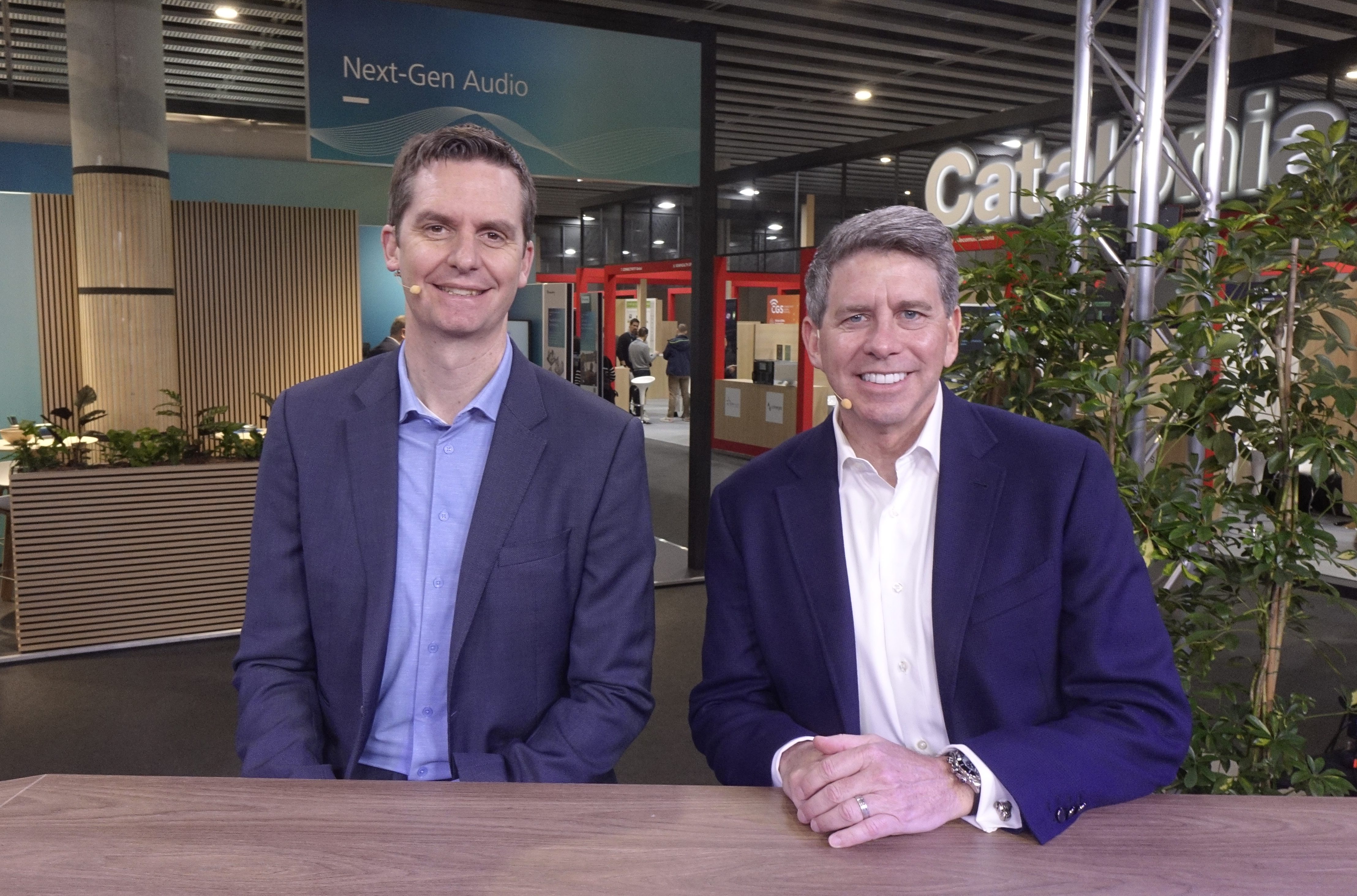
Chris Niederman, Managing Director of AWS Industries Partners Solutions, and Pierce Hofman, solutions expert at AWS, join theCUBE at MWC25 Barcelona. They delve into the extensive partnership landscape at AWS, addressing the evolution from telco to techco. Conducted by theCUBE's Dave Vellante and Bob Laliberte, this insightful conversation explores AWS’s emphasis on innovation, particularly in the arenas of 5G implementation and GenAI solutions across various industries.
Key takeaways from this engaging discussion include Niederman's insights on the tr...Read more
exploreKeep Exploring
What is being discussed at the FIDA in Barcelona during The Cube's day four coverage of MWC 2024?add
What prompted the shift in focus towards solving customer's business problems through value chains and partnerships with telco customers?add
What are customers today saying they want to do with AI in relation to their data centers and the cloud?add
What is the current breakdown of AWS's business in terms of compute compared to other services?add
What is the key for telcos to be more agile and flexible while still maintaining reliability in delivering services?add
What is the focus and goal of setting up a platform and services for partners and customers in regards to breakthroughs in the industry?add
>> Hi, everybody. Welcome back to the FIDA in Barcelona. This is The Cube, our day four coverage of MWC 2024. I'm Dave Vellante with Bob Laliberte. Savannah Peterson is on our way over as well. John Furrier is not here, he's got FOMO, he's in L.A., just talked to him, he went to bed. Chris Neederman is here, friend of The Cube, managing director of AWS Industries Partners Solutions. We're going to get into it. Chris is a long-time Cube alum, it's great to see you again. Cube newbie, Pierce-
Pierce Hofman
>> Absolutely. Excited to be here....
Dave Vellante
>> , you're doing solutions at AWS. I want to dig into that. It's something that people always ask about. From primitives to solutions, we're going to get into that as well. Gentlemen, welcome to The Cube. How's it going in Barcelona?
Chris Niederman
>> Outstanding. We miss Furrier. He's got FOMO?
Dave Vellante
>> Yeah, big time.
Chris Niederman
>> Wave to John. Love you, John. Miss you, but we've got Dave, so it's okay.
Dave Vellante
>> So your second year here-
Chris Niederman
>> My second year.
Bob Laliberte
>> Yeah.
Dave Vellante
>> My fourth. My first year here-
Chris Niederman
>> Wow....
Dave Vellante
>> was during COVID, there was nobody here, it was like a ghost town, I'm not kidding. Not a ghost town now though, is it?
Chris Niederman
>> Well, now you've brought 100,000 of your closest friends with you, so there's quite a few.
Dave Vellante
>> Your booth is packed. I mean, the hyperscalers are killing it, and AWS is the top hyperscaler.
Chris Niederman
>> We're going to quote you on that. Thank you for that.
Dave Vellante
>> Well, you are. It's documented.
Chris Niederman
>> You heard it here.
Dave Vellante
>> It's documented in my research, Chris, you know that, and I'm objective. So what's the show been like for you guys?
Chris Niederman
>> It's been pretty amazing. I was here last year. I want to hear from you about four years, but last year, I actually was like, "Okay, telco." I cover all industries, and I'm coming here and I'm thinking, "I don't know anything about telco." And what I found was fascinating, because it wasn't about telco, it was about every industry, and it was not just manufacturing, and automotive, there were booths for everything, media entertainment, and I had no clue, I learned so much. And then I heard this concept of techco, and the telco, and a lot of telco's like, "Yeah, we're not a telco, we're a techco." And I go, "What does that mean?" Like, "We're innovative. We think big. We think differently." And I go, "Okay, well, how does that play out?" They gave me a ton of examples in every single industry, and how they want to extend beyond just the pipes, provide the data to the edge, do analytics and compute at the edge. I'm like, "That's really, really cool." And so I continue to see that theme this year, it's evolved. How about you? What are you seeing?
Pierce Hofman
>> First time here. I wasn't prepared for just how big and impactful this conference was, and the number of people here. So 100,000 of your friends are all here, and doing amazing things. It's really interesting seeing how the push of 5G to the edge is really bringing a lot of new opportunities out, and I'm really looking forward to understanding what the use cases that we're going to find, and the customer problems we're going to be able to solve with that, especially as we start thinking about the extending of GenAI out to that edge as well.
Bob Laliberte
>> Yeah, absolutely. I think there's so much going on at the show, like you said, that transformation to techco, they really realized they've missed the transition to the cloud completely, they don't want to miss the transition to AI. So they're really focused on, "How do we build solutions that enable us to take advantage of the infrastructure we've built to help organizations." And like you said, across every industry to be able to enable that AI, especially at the edge, right?
Chris Niederman
>> Yeah, they shouldn't worry about missing out. Cloud's here, it's going to be here, it's going to keep evolving. We have partners and partnerships, our job is to help them catch up, innovate, continue, and learn. And I think that there's use cases we haven't even thought of yet that all these folks, all these booths around us... I've been having a ball running around going, "Wait, I didn't even think of that." And so whether they think they missed out or not, the opportunity is still there to accelerate, and our job is to help those partners differentiate and accelerate.
Dave Vellante
>> So it was interesting listening to you say you were new to telco. Four years ago, I was new to telco, and it was during COVID. It was July of 2021, and Ericsson had everybody tapped out of their space, but one company, a company called TelcoDr bought up 60,000 square feet in Hall 3. And this gal, Danielle, who runs TelcoDr, DR is her name, or her initials, she built Cloud City, 60,000 square feet. Her whole wrap was, "The telcos are slow, they're slow to move, they have fossilized infrastructure. They need to go to the cloud." So her company does BSS and OSS systems on AWS. And I remember, that year, they've had a big announcement, and I was talking to their CTO, "You use Graviton?" He goes, "Oh yeah, we're just starting to use Graviton." And blah, blah, blah, "We're going to lower cost."
Okay, that was four years ago. There was nobody here. It was 10,000 people the whole week, and they were all in Cloud City, and The Cube was in the middle of it all. And so that was the beginning of the telco transformation to the cloud. We were there. It was amazing. Now you fast-forward four years, and it's accelerated in telco terms, you've seen it. You guys, your competitors, hyperscalers, are exploding, people are definitely moving the BSS and the OSS systems to the cloud, and you're building solutions for telco. Now, I want to ask you, Pierce, because I remember talking to Jassy years ago about, "Why is it you give these primitives?" And he said, "We do it for a reason. It's deliberate. It gives us flexibility when the market changes." And I remember asking Matt, "Is it an either or?" He goes, "No, it's an and. So we're building on top of it." So explain that, because it's not really well-understood.
Pierce Hofman
>> Yeah, so historically, if you look at where AWS has really excelled is we've excelled with the builders, and because we have the best primitives that can help them go do what it is they want to do, whether it's build a custom solution for their business, or whether they want to go put together a very bespoke product that's unique to their customers. When we started the partner solution journey about 14 months ago, we'd focused on bringing all these partner solutions together, and really understanding them. But what we heard from our customers as we were doing that was that it's great we have all these individual partner solutions, and we have great primitives within AWS, but our customers really wanted to help them solve their business problems, as defined by their value chains. So we worked with them, and said, "Okay, what are your value chains? What are the strategic value chains that help us represent in an industry?" And we define those. And then we've been working with our partners and with AWS to then put together solutions that answer the need of these value chains, and oftentimes, span multiple AWS services and primitives, as well as many partner solutions, and bring these primitives together. And one of the things that we have found, and one of the reasons that I'm here this week is that we found that it's really important that most of these value chains have telco components in them, and have connectivity in them. And while we build solutions for our telco customers, we're also really partnering with our telco customers to take solutions to our joint customers to help solve their business problems.
Bob Laliberte
>> Yeah, I think that's so important, that transition from just being connectivity and pipes, to some type of a value-add, being able to help the telcos monetize that connectivity to deliver better outcomes to the business, and not just the pure connectivity is going to be so important for them. They've been trying to figure out how they're going to monetize 5G, whether it's going to be fixed wireless access. Obviously we're seeing that convergence really start to play out nicely for them with 5G and fixed... Things like that at the edge, and AI moving to the edge. So a lot of the big models locked up in the hyperscalers and things like that, but the inferencing, there'll be a lot of opportunities for telecommunication companies to be able to deliver solutions that, again, deliver those outcomes, which is so critical for the businesses.
Chris Niederman
>> Yeah. And the edge is super critical. I mean, you think about it, you can't do GenAI without data in the cloud.
Bob Laliberte
>> Correct.
Chris Niederman
>> So let's get data in the cloud, and now if you want to do... We have the workloads at the edge, and let's say they're network-intensive, high-throughput workloads, you need to have 5G everywhere. And so you take a look at our two announcements this week with outposts for racks and outposts for servers, that take those high-network throughput, network-intensive workloads, and take them out to the edge, and so you have 5G everywhere, or radio access networks out at the edge or anywhere. So we've taken 5G everywhere, and there's use cases for that, whether it's manufacturing, predictive maintenance and scheduling and calendaring, and doing the compute at the edge or others. But we've enabled this now that we know a few use cases, I think that we're going to see an explosion use cases, but we've created the technology leveraging 5G that whatever we need in the future, and we don't know, we don't, right?
Bob Laliberte
>> Right.
Chris Niederman
>> We're ready, and we've provided that technology. So we're building for breakthroughs. If you've come to our booth, you'll see the big theme, built for breakthroughs. And there's a number of areas, you mentioned BSS, OSS, so business optimization, we're building for business optimization. We're building for network modernization and migration. You need the pipes for that, you need to be able to compute at the edge, leveraging 5G. There's customer experience, we always start with the customer work backwards, and you'll always see that with us. And then new growth areas that we haven't even thought of yet, whether it's IoT devices and managing those at the edge, and figuring out how to better leverage those for compute of any task. There's so many examples we're thinking of, but come back here in a year, there's going to be a lot more, where you're like, "Wow, I didn't even think of that."
Dave Vellante
>> You mentioned working backwards, if I go back, Pierce, how long have you been with AWS?
Pierce Hofman
>> Just about six years now.
Dave Vellante
>> Okay. And Chris, of course, you were there really from the beginning of-
Chris Niederman
>> 11 years now. long time....
Dave Vellante
>> the transformation. So when you go back to the early cloud days, the business case was so compelling to move workloads into the cloud, people started to dial down their data center investments. And as you well know, working backwards from the customers, a lot of the workloads did stay on-prem, even Andy and your , you talk about this all the time, I think you use 90%, 80%, whatever the number is, there's a lot of stuff that's still on-prem, and didn't go into the cloud for variety of reasons. And so customers today are saying, "We want to bring the AI to the data."
The other interesting thing is, you've always said... Again, Andy, we pay attention to him, "In the fullness of time, everything's going to be in the cloud." And people misunderstand, they think, "Oh, that's going to go up in the sky somewhere." No, actually, you're bringing the cloud to the data, that's what the outposts announcement is. So, long-winded, but we're hearing from customers that they want to have an AI stack on-prem for a variety of reasons, latency, they don't want to move the data, they want to control things, whatever it is, and that's what's happening. The problem is, they don't really have an AI stack, that's all in the cloud. So you guys are bringing that AI stack on-prem, that's a huge opportunity. I wonder if you could comment on that, what you're seeing, again, working backwards from the customer, and what your partners are seeing?
Chris Niederman
>> Well, you think about why people come to AWS. First of all, it's because of our infrastructure, our services. They initially come to the cloud when I joined, 2014, it was all about, "How do I reduce costs and retire technical debt?" And that conversation within minutes usually went to, "Okay, I get that. How do I innovate, and what do I do? And how do I differentiate myself if I'm a partner?" But take the infrastructure, the services, all the benefits that our customers come to AWS for, and now you take that to wherever the workload resides. And so that's what we're saying, is do the work, be there, and run... Wherever the workload resides, you can have the standard AWS infrastructure and services that you've come to know and love.
Bob Laliberte
>> Yeah. And modern infrastructure that they know and love.
Chris Niederman
>> Modern infrastructure. .
Bob Laliberte
>> And that's an upgrade, because you were talking about how long you've been here, first time I came to Mobile World Congress was in 2014, and at that time, telcos were just trying to figure out how to go from dedicated appliances to software. So when you look at that time span, we've come a long way in the evolution of the environment, and now, like I said, starting to adopt the cloud to be able to accelerate the modernization of their services and expand that, not only from the OSS and BSS and the cloud, but also to the edge.
Chris Niederman
>> Absolutely.
Dave Vellante
>> So Pierce, bring that back to solutions, how do you... Again, let's work backwards, how do you think about solutions that fit the need of the customer, which... A lot of these customers want custom solutions, how do you do it so that not every solution is a snowflake so that you can actually scale at AWS scale?
Pierce Hofman
>> Yeah, I think the important part there is, you've got to start with that customer need, and really understand what they're trying to accomplish. And one of the great things that we're seeing with some of the GenAI developer tools for builders, is that some of the customization is getting easier, but also, even when people want to bring their particular primitives and components together, they still want guidance from us, and guidance from our partners on, "What are the best options? What are the best APIs for me to use? Who can help in my country, in my industry, do a specific area?" So a lot of times, we may not be delivering a solution that is a one-click deploy in the marketplace, we do do a lot of that, but that's not what all of our solutions are. A lot of them bring different components and primitives together, and give our customers choice to bring the right pieces that meet their business need, and let them achieve their unique outcomes.
Dave Vellante
>> I want to run something by you, kind of a little tangent here, but you saw the DeepSeek announcement, you saw the reaction from Wall Street. I was listening to one of the talking heads, it must've been CNBC, because we always have it on at the office, and this analyst was making the case that GenAI is... I'm laughing, is going to hurt the hyperscalers, because it's going to reduce the need for infrastructure, kind of like the DeepSeek thing. And I was like, "I don't really understand that." What are you seeing from customers?
Chris Niederman
>> I don't know about that. I'm seeing increased demand. But the difference from a year ago is, while everybody was playing with it and trying it, going... It was almost like, "I know there's a value there, but I've got to figure out where it is." And now customers are being very focused, very purposeful, going, "Okay, I'm going to do a project, but unless there's a clear ROI, or a benefit to my company, we're probably going to focus here, not there." And so we're seeing GenAI continues to add more and more use cases, but my mental model of how I think about the use cases has changed slightly. It used to be like, "All right, I have 61 use cases, prioritized use cases for auto and manufacturing. At any given time, depending on where customers evolution, they might say, 'Well, these are the two that I want to focus on.'" And we go onto these. And I used to think, "Okay, GenAI is going to add more use cases."
I've changed my thought on that, I'm thinking that GenAI should be leveraged in every use case. And so there might be new use cases that come about as a result, but I'm having a hard time thinking of any single use case where you can't apply AI, you can't apply GenAI to provide some kind of benefits. And I think that's the change of thought is, people are saying, "I'm not looking for an incremental new thing, I'm going to look at what I'm doing and see how I can leverage GenAI to make it better, faster, and benefit my company more."
Dave Vellante
>> Yeah. And we do a lot of work in this area, we do a lot of surveys, we talk to a lot of customers, and it's just the demand for compute obviously is through the roof, but we've... You guys can't comment, but we've published on the Cube research that compute is actually less than half of AWS's business now. Not a lot of people have talked about this, I think we're first. Which says things like storage is exploding, data is exploding, all the other solutions that you guys are developing, and you're just getting started, really, in the solutions business. And so I don't see how GenAI is a headwind for the... I mean, hyperscalers, we just published, over $200 billion for the top four hyperscalers last year when you include Alibaba, it's growing at least 20% a year, that's massive. There's action on-prem, it's like there's action everywhere, everywhere you look. So I want to come back to your organization, Chris. When we first met, you were doing GSIs, you've now extended that for the partners, for telcos. Can you explain a little bit about how you're organizing and going to market-
Chris Niederman
>> Sure. When I joined in 2014, it was more or less... We were really small at the time, and there were a number of us who said, "Okay, here's what you need focus on." I had the GSIs, Oracle, VMware, SAPs, it was kind of like, "Okay, let cover this for now." And then we grew those businesses separately, and I ended up focusing on the GSIs for about 10 years, and helping grow them. I think why I was asked to help build this particular team starting a year ago is, because the GSIs are focused heavily on industries. That's the way they go to market, that's the way they build solutions, that's the way they think. And that's not anything new, they've been doing it for decades, some for over 100 years. I mean, you worked at Deloitte, they were around for-
Pierce Hofman
>> 78 years....
Chris Niederman
>> 78 years. And we've been around, AWS, for 18, 19 years. And so we like the industry approach, we like that model, and so we've really dove deep into that. It's not just our team, it's every part of AWS, it's marketing, it's professional services, it's training and enablement, it's the sales teams. We've always had those global account industry-focused sales teams, now led by Kathrin Renz for AWS Industries, and we're propagating that, we're permeating that through all the GOs now. So Greg Pearson's teams that are in the GOs there, they're grouped by industry, with experts in industry. Our customers expect and demand industry expertise, and again, not new, but we're delivering that to him, because what they're asking for. And who knows industries better than a GSI who's been doing it for over 100 years. And that's why I think the GSI business, and consulting partners in general, I hate to just exclude others, but SIs in general who focused on industries, they are seeing an accelerated ramp in a non-linear fashion in business with us as they bring their industry unique, differentiated solutions to market.
Dave Vellante
>> And when I talk to the GSIs, what they're telling me is, "You remember the whole BPO thing? This is like BPO on steroids." Because they're completely rethinking everything, even enterprise software, which is... You don't think of enterprise software as static, but compared to what's coming, it is, these kind of hard-coded processes that are linear. I source something, I add value to it, and I sell it for a profit. That linear value chain is getting blown away with agentic. We talk about agentic, I know it's a big buzzword, but the potential is there. If I have a strong data estate, I can harmonize that data, I can now reform workloads, processes are malleable now, they're building blocks. You guys know a lot about builders. And now I'm rethinking my entire organization, I'm not just paving the cow path and getting 10% efficiency improvements, I'm getting 10X or 100X benefit from rethinking my entire organization, and that's what the GSIs are working on.
Chris Niederman
>> And being nimble, and quick to be able to respond to things that maybe we don't even know are coming. And take COVID hits, you had ConvergeHEALTH from Deloitte, and had a very specific purpose to enhance the patient experience. COVID hits, it was not a use case that anybody had thought of at the time, but then they used it, and very quickly, in a matter of months, not years, were able to work and deliver the vaccine, come up with a solution, deliver the vaccine to get in the hands of the consumer far faster than we ever could before.
Dave Vellante
>> This is a good point, because we've always been with analytics pretty good, at least always since the cloud data warehouse thing, pretty good at, "Well, what happened? And where did it happen?" And putting in okay at, "Why did it happen?" We've never been that good about, "What's going to happen next? And what should we do next?" And I think that is the future of, really, enterprise software, infrastructure, IaaS, PaaS, SaaS.
Chris Niederman
>> We're working with our partners to help them prepare today for whatever may come in the future, and so we're enhancing the 5G experience, do we know the use cases today? We've got a fair idea, but we're preparing for whatever may come. And you look at the platforms, and Pierce, talked a lot about the strategic value chains, and these platforms we're building, we're taking the primitives, putting together into packages that maybe provide 70, 80% of what customer needs, and giving the flexibility to, "Well, let's add our secret sauce and move it this direction." And much faster.
Bob Laliberte
>> Yeah, I mean the key, especially with telcos is, they obviously need to be a lot more agile and flexible, but they also need the reliability, when you think about what their purview is, what they're delivering, and that's what's always held them back, it's been that balance of, in enterprise, you might be security versus networking, we can have performance, or we can have it secure, we can't have both. In telco, it's all about that reliability, that customer experience-
Chris Niederman
>> The resiliency....
Bob Laliberte
>> versus their agility. And so moving to the cloud, moving to outpost, having that consistency across the cloud, and at the edge is what's going to allow them to start accelerating and delivering more innovative services faster.
Chris Niederman
>> We're setting everybody up to have breakthroughs.
Bob Laliberte
>> Yes.
Chris Niederman
>> That's our theme. Do we know what those breakthroughs are going to be? No, not necessarily. Some of them we do, but boy, we're creating a platform and services so that our partners and our customers can leverage what we're giving them to have breakthroughs that we haven't even thought of yet.
Bob Laliberte
>> Yeah.
Dave Vellante
>> When you think about the last 10 or 15 years, we've learned a lot, the industry's learned a lot from Amazon, emulated a lot of what you do, the customer obsession, the whole working backwards concept, two pizza teams. I mean, there's no compression algorithm for experience. I mean, a lot of these-
Chris Niederman
>> We got them down. .
Dave Vellante
>> A lot of these things that you guys have come up with have become... It's like the NFL, it's like, "Hey, that's a good idea, let's implement that, and let's keep pushing forward." And of course, Chris, you're Mr. Culture, Pierce, you're six years in, Amazon has these leadership principles, that's the other thing, these are serious leadership principles, they're not just kind of mission statements and fluffy . So when you started six years ago, I'm curious, the leadership principles, what they meant to you, which ones were most important early on? And how... You're laughing. It's the test you gave me-
Pierce Hofman
>> My favorite subject. You know I love this subject.
Dave Vellante
>> Yeah. Which ones were important early on? How did that evolve? Which ones are important to you today?
Pierce Hofman
>> So I'll first start out with the leadership principles. I was in consulting in my previous life, and I got to work with a lot of great companies around the world. And the thing that differentiates our leadership principles from mission statements and what I've seen a lot in places is, it's not something we just do in the interview process, it's not something we just put on the internet, it's something that we live every day. And meetings every single day, the leadership principles come up, and that's how we guide decisions, and that's how we can work across an organization that's the size of Amazon, and with all of our disparate businesses that work together, and have really productive, and do new and exciting things that change the world. For me, the most important one, to me, and it's the first one as well, it was when I came to AWS, it still is today, is customer obsession. Because if we always focus on what our customers are doing, and we understand their business, we can help them. And I'm in sales, but I don't particularly like selling to people, I like helping my customers. And if I'm making them successful, I don't have to sell them anything. They'll just want more of what we're bringing them. So I always focus on customer obsession, and everything else follows from that.
Chris Niederman
>> Yeah. It is fascinating. I mean, whether Pierce knows it or not, when I hired him, he's a fit for the culture, and we hire a lot of people, whether they know it or not. You can't come in and interview and go, "I've got to memorize the 16 leadership principles, and I'm going to memorize an example for every one of them." It doesn't work, but you can tell when somebody's a natural fit or they're not. And I think that our culture is part of our strategic value proposition to our customers, to our partners. In fact, looking externally, I've sat down with partners, and the best relationships we have are when we... The culture doesn't need to be exact, but it's kind of a match of some kind. I sat down with McKinsey years ago, we talked about customer obsession, they said, "Oh wait, we're client-focused." Or client-obsessed, or... So we may not use the same words, but then we write down the list, and our cultural values and principles align very well, and that set the stage for the partnership and how... The conversations we could have. And so I'll give you an example, we're in a discussion with McKinsey, or Accenture, or whomever, and we all of a sudden get off track, and generally, it's because you've lost sight of the customer. Somebody in the meeting stops us, and goes, "Hold it. We're talking about things that are not relevant to what we... Stop, reset, focus on the customers that we want to serve, and help..." And the conversation's back on track again. It keeps us grounded in everything we do. And the beautiful thing is, you can go anywhere in the world, centers, Amazon offices, any of us, and everybody speaks the same language. Not because they have to, but because it's just a natural for them.
Bob Laliberte
>> Right.
Dave Vellante
>> All right, guys. Hey, I'm sorry, we've got to go. We kept you way too long. It's great. I'm glad we got that in though.
Bob Laliberte
>> Yeah.
Chris Niederman
>> Thanks a lot.
Pierce Hofman
>> Thanks for you know I love that topic.
Dave Vellante
>> I know you do. .
Pierce Hofman
>> Enjoy the rest of the show. Thank you so much. Really appreciate it.
Chris Niederman
>> We'll see you here next year, I hope. All righty?
Dave Vellante
>> All right, keep it right there. Dave Vellante for Bob Laliberte. Savannah Petersen's also in the house. You're watching the Cube's continuous coverage, it's day four MWC 2025 from Barcelona. I'll be right back.