We just sent you a verification email. Please verify your account to gain access to
MWC25. If you don’t think you received an email check your
spam folder.
In order to sign in, enter the email address you used to registered for the event. Once completed, you will receive an email with a verification link. Open this link to automatically sign into the site.
Register For MWC25
Please fill out the information below. You will recieve an email with a verification link confirming your registration. Click the link to automatically sign into the site.
You’re almost there!
We just sent you a verification email. Please click the verification button in the email. Once your email address is verified, you will have full access to all event content for MWC25.
I want my badge and interests to be visible to all attendees.
Checking this box will display your presense on the attendees list, view your profile and allow other attendees to contact you via 1-1 chat. Read the Privacy Policy. At any time, you can choose to disable this preference.
Select your Interests!
add
Upload your photo
Uploading..
OR
Connect via Twitter
Connect via Linkedin
EDIT PASSWORD
Share
Forgot Password
Almost there!
We just sent you a verification email. Please verify your account to gain access to
MWC25. If you don’t think you received an email check your
spam folder.
In order to sign in, enter the email address you used to registered for the event. Once completed, you will receive an email with a verification link. Open this link to automatically sign into the site.
Sign in to gain access to MWC25
Please sign in with LinkedIn to continue to MWC25. Signing in with LinkedIn ensures a professional environment.
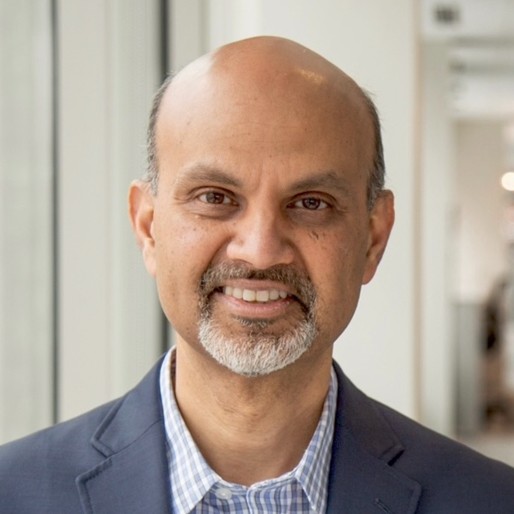
Join theCUBE's insightful discussion with Mohamad Ali, Senior Vice President at IBM, as he dives into the transformative initiatives of IBM at Mobile World Congress 2025 in Barcelona. In this engaging session, Ali, known for his expertise in leveraging technology to drive business value, shares how IBM is influencing sectors ranging from emergency services to sports. The interview, steered by theCUBE's analysts Savannah Peterson and Dave Vellante, unravels IBM's strategic collaborations and the impact of AI in reshaping enterprise processes.
Accordin...Read more
exploreKeep Exploring
What are some important factors to consider when investing in AI technology besides just spending on the technology itself?add
What role do organizations like IBM see themselves playing in the future as business operations change and evolve?add
What is the newest service offered by IBM Consulting called?add
What technology products does IBM have that they utilized to help integrate disparate systems for their clients?add
What are the potential implications and responsibilities associated with the advancement of artificial intelligence technology?add
What is the goal of the new type of consulting business being built with IBM Consulting Advantage?add
>> Good morning Cube community and welcome back to beautiful Barcelona, Spain. We're here kicking off day two of our four days of coverage at Mobile World Congress. My name's Savannah Peterson, joined by my favorite co-pilot, Dave Vellante. Dave.
Dave Vellante
>> Day two.
Savannah Peterson
>> I know.
Dave Vellante
>> I feel like day four.
Savannah Peterson
>> I know. Well, we've had so many interesting conversations. We've learned so much, and it's unfortunate our guests can't see or our audience can't see this. There's so many cool things going on on the show floor here. I know we were talking about the IBM booth last night. We were talking about their connected ping pong, the foosball. I mean, there's play here as much as there is very serious stuff going on.
Dave Vellante
>> Yeah, it is an amazing event. I took a picture from up on high of the venue and you can see all the halls.
Savannah Peterson
>> Oh, I need to do that.
Dave Vellante
>> It's huge. I say over a hundred thousand people are here.
Savannah Peterson
>> I mean, it feels like that. Certainly swimming upstream as a salmon, but we've got one of the cooler of those a hundred thousand people here with us right now. Mohamed, thank you so much for taking the time this morning.>> Thank you so much for having me here.
Savannah Peterson
>> I'm really excited about our chat. We've gotten to have two lovely folks that are partners of yours. We had IANS and->> Oh, fabulous client,
Savannah Peterson
>> Super cool. Harrison was absolutely fantastic. He closed us out last night, and then we also got to talk about football. We had the Sevilla Football Club. I'm super hyped on that AI and sports narrative. It really feels like there's IBM magic fairy dust all over this->> Sports in particular.
Savannah Peterson
>> Yeah. Yeah. Do you have a favorite application that's here showing off of IBM and your partnership?>> Well, I think you mentioned a couple. We also have a partnership with Samsung where we are deploying an entire new emergency services network for the government of the United Kingdom. So fire, police, ambulance, aircrafts, vehicles, personal devices, and it was announced publicly. It's a $1.7 billion deal.
Savannah Peterson
>> Amazing.>> And with our partner, we're rebuilding the entire infrastructure. And as part of this, like most of the things that you're seeing here is a ton of technology packed into this solution. And I think the Samsung team's demoing part of it.
Dave Vellante
>> We had Ruth on last year.>> Oh, Ruth's great.
Dave Vellante
>> And that's how we met Samsung. You remember, I think you and I did that together, and then we were hanging out with them in the evenings. You could see the partnership sort of developing and evolving. And so now you've really starting to hit that steep part of the S-curve. Congratulations, that's amazing.>> They're a great company.
Savannah Peterson
>> So just to dig in there for a second, because that sounds like an awesome project, and we were talking with Sri from HOAi yesterday about disaster prevention and fires in California. What's the overall end goal of that project? Is it to make the citizens of the UK safer?>> Faster response.
Savannah Peterson
>> Okay.>> So something happens, a lot of stuff has to happen behind the scenes, tomorrow the response will have all the data that they need to show up, to take the right actions, and they'll be on a dedicated network. So a disaster could be happening elsewhere. They'll be protected, they'll be able to communicate, they'll be able to get their jobs done.
Savannah Peterson
>> That's a really interesting advantage.
Dave Vellante
>> So let's talk a little bit about what you're seeing here. This is to go to the AI show, every show is an AI show.
Savannah Peterson
>> That's right. Join in the AI show.
Dave Vellante
>> And I was at One Madison, I saw you in the hallway a month ago, a couple of weeks ago actually. And I sat down with a number of your team members. And the big discussion that we were having is, "Okay, we've done a lot of experimentation in the cloud. We've thrown a bunch of use cases at the wall and now we're prioritizing those use cases and we really want to drive substantial business value for our organization." And so we talked a lot about what that takes. You can't just say, "Okay, throw GenAI at the product.">> That's right.
Dave Vellante
>> You've got a data asset, you have to govern it. You've got all this. People talk about agents, you got skill sets, and a lot of that data lives on prem, so they want to bring the AI to data. So what are you seeing there? What are some of the challenges that you're helping your customers attack?>> So it seems like everybody's investing in AI, right? And the data says that 89% of the people we surveyed are either maintaining or increasing their investment in AI, but just spending on the technology isn't sufficient. You also have to invest in people training. You have to invest in culture, and you have to invest in governance. And these are not something that you naturally think about at the beginning of the process. At IBM Consulting and IBM in general, we've been really thinking about the people aspect of this. And the term we've been using is how do you make this sticky in an organization? And we're not the only ones realizing this. 64% of CEOs now say that it's not the technology that's going to make this successful. It's the people that are going to make this successful. And so within IBM, we've built a variety of capabilities to get people involved in both creating the GenAI tools and using the GenAI tools. Dave, I think you know this in consulting, we have 160,000 consultants. And in order to bring them along, we built a platform called IBM Consulting Advantage because there's a lot of great technology. We're all over it. It's working actually quite well in many areas. But the next component of that, the most important component of that are the people and enabling the people to use this technology for their benefit.
Dave Vellante
>> I want to follow up on IBM Consulting Advantage. It was kind of a circuitous way to ask this question. So we just wrote a research note comparing, it was the war of words between Nadella and Benioff. Benioff calls Copilot Clippy.>> Yes, yes. We've heard. Yes.
Dave Vellante
>> Nadella says, "Oh, in the future it's just going to be agents talking to CRUD databases. We're not going to need SAS.">> Yes.
Dave Vellante
>> So we dug into it and what we found, and I'm going back to the talk that you gave last year at the Analyst summit when you talked about we're putting certain software assets into the consulting group and we're actually building assets that are fungible and scalable assets. So the big takeaway from that research that we just did is no longer is just data an asset, but processes are increasingly becoming an asset. And I wonder how you think about that in the context of IBM Consulting Advantage, not just data. Its processes are now building blocks that are fungible and malleable to actually create the new future of what enterprise software and enterprise systems look like, digital twins essentially of a business. What are your thoughts on that and how do you participate?>> Yeah, so great question because the process is very important, right? So you could take AI and you could lay it on top of the existing process that you have and you'll get certain benefits. We have done that actually at scale in one call center that was taking about 40 million calls. We've applied AI onto that process and now we're handling about four million automatically and the NPS has gone up. So that's wonderful. We are using technologies from IBM Consulting Advantage in order to do that. The next phase of this is redesigning the process. And if you can redesign the process, you can make it sort of AI native, kind of like cloud native, now it's AI native, right? And we're doing that at Riyadh Air where there's a set of airline processes that airlines have used for decades. Now we just announced at FII in Miami a couple of weeks ago, big ceremony there, a big event there, that we are going to be deploying AI natively within that whole airline process. And it's an opportunity to redefine the experience, build more compelling experiences for customers who are going to use their app, use their reservation, use their aircraft, right?
Savannah Peterson
>> I mean sitting here as frequent flyers, that sounds like quite the value add.>> It's a huge value add. I mean, think about how convoluted it is to buy an airline ticket today. So they're actually going from buying the airline ticket, sort of like the train ticket way to the Amazon basket sort of way, right? And so that gives you a lot of opportunity to embed AI into a new type of process. And at Riyadh Air, we are actually using IBM Consulting Advantage to both deploy that new type of process, but also enable our delivery team members to deliver with AI. It's actually an amazing use case at that client.
Dave Vellante
>> So the takeaway there is, and you and I have probably talked about this before, you're not paving the cow path, I like to call it. You're really re-imagining the processes. You mentioned AI native, an analogy analogous to cloud native, cloud native, to really take advantage of cloud, you had to change the operating model.>> That's right.
Dave Vellante
>> What you're talking about is really changing the business's operating model, and that's how you get 10x leverage. And there's a little bit of truth in what Nadella says. You're going to have agents talking, you're going to talk to agents in human language. And there's certainly a lot of truth in what Benioff is saying in that you got to have connections to back end systems, but you have to rethink the processes. You're not going to hard code these into microservices. That's a different way of thinking about enterprises, isn't it?>> Is a different way. And in some ways they're both right, actually.
Dave Vellante
>> Yeah, absolutely.>> Because in one way you have a CRM process and you're overlaying agent force on top of it, and it's actually working quite well. And what Satya Nadella is saying is, "Will, you can decompose all the software into these agents and it effectively just all become agents and assistants, right?. And by doing that, you can then take the agents and assistants and attach it to human beings. And you now have a whole new process that's defined by humans plus agents." And there'll be scenarios like that. We are encountering both scenarios and different clients that are at different stages in what they do, but it's kind of interesting to see Benioff and Nadella establish this spectrum of possibilities.
Dave Vellante
>> Well, and I think what it underscores is, I don't even know if we can call it enterprise software anymore, it's just that the way in which businesses operate is changing.
Savannah Peterson
>> Its business operations almost.
Dave Vellante
>> And of course, none of this just happens without skills and this is where you guys come in. So I want to come back to what you talked about at Summit and how your organization generally and IBM specifically is evolving to meet some of these future needs and what role you see your organization playing in the future.>> Yeah, I mean an organization like IBM and then IBM Consulting I think is actually pretty important, whether it's us or other companies that look like us to clients being able to adopt and get the most out of these technologies because it's just moving too fast for most clients to keep up. So as you know, Dave, IBM has been building a set of technologies under the Watsonx brand. Watsonx is a catalog that allows you to use a wide variety of IBM models and non-IBM models. IBM's also been creating agentic frameworks and so forth. So that's the technology stack. You get that from IBM, you get that from others. At IBM Consulting, we're now taking those technology stack and helping clients utilize that. But as I said in the beginning, the people part of this, the change management part of this, the process decomposition and the reintegrating in the process is absolutely essential, right? So as you go to agentic frameworks, you go to a CIO and the CIO says, "What am I going to do with this?" It requires an organization like IBM Consulting that can come and help decompose that process, determine how to integrate the GenAI. And you might've seen this a couple of weeks ago, we announced a new service that IBM Consultings offering. We offered 38 service, and this is our newest of those services. It's called IBM AI Integration Services. And it's not just technical integration, it's also people integration.
Savannah Peterson
>> So that's actually quite awesome because you're so community focused is what I'm hearing when you say that. It's not just about ticking these boxes or the, quote, unquote, "digital transformation" that's happening, it's truly about empowering people to do better work, more purposeful work. I'm not surprised. I'm just looking at the numbers here in our notes. You've had an incredible adoption curve on the IBM Consulting platform, 85,000 users already, 2000 assistant agents, 60 industry domain-specific applications, which I just want to call out specifically because that goes to say, as I was saying, your magic fairy dust is kind of all over here at MWC. It's because you've touched so many different things. How do you distill the curriculum, so to speak, or the toolkits you're rolling out across these different verticals mean? What is that process like for building out that material? You've obviously done this superfast in this AI revolution we're really only about two and a half years in.>> We've actually used sort of an inner source model. We've gotten our 160,000 consultants to be creators because they're actually the doers, right? They're the ones that are writing the code, designing the specs, et cetera. Well, if you are doing that, why are you not the ones that help create these assistants, these agents, et cetera, these assets, these pre-built applications? And we've said to them, "Here's a platform. Go build whatever you want." And they've built thousands of these things, and now we've curated them down to about 2000 assistants and agents that we consider production ready, right? But you talk about community, making this a community activity, whether it's at IBM Consulting or it's our client e& or L'Oreal or Riyadh Air, getting the employee base engaged and being creators of this new way of working is actually absolutely essential to getting the AI to work
Savannah Peterson
>> Well, and that's how we empower people to take advantage of these new tools. And the fact that you just said that, because I've been a consultant for many years, the notion of a team empowering consultants to be creators is novel. I would call that innovative, quite frankly. And I can imagine, does that stoke the enthusiasm internally? Do you feel like the team's really excited?>> Oh, yeah. I mean they love it. They build these things and then they want them to be successful, right? I mean imagine-
Savannah Peterson
>> Yeah. Yeah, yeah. It feels like more of an investment in... Wow.>> Imagine if you're a healthcare company and you say to your call center folks, "Here's some new tools." They might accept it, they might resist it. But if you say, "Hey, call center, why don't you help create these new tools?" They're going to love those new tools and they're going to embrace those new tools, and that's a part of the human side of making this work.
Savannah Peterson
>> Absolutely.
Dave Vellante
>> Am I correct that you guys are customer zero?>> We are. We love being customer zero.
Dave Vellante
>> So that sort of ties into what you guys were just talking about. Can you share with us some of the learnings, particularly around these agentic initiatives that you have, some of the learnings that you have internally and how you're bringing that to market? I mean, I'm thinking you got a data problem, everybody has it. You had to solve that. You've got to connect to backend systems, you've got to have a governance in place. This just doesn't happen. It takes hard work. What have you learned and how are you taking those learnings and pointing them at your customers?>> Yeah. Now we happen to be lucky in that we have a whole technology business, a whole product business within IBM, and we can use some of those things and get a fast start. So you mentioned governance. We have a product called watsonx.governance. So we utilize that. We have something called watsonx.data that allows us to put the data in the right form and vectorize it so that the AI can use it. And then there's watsonx.ai, which is a catalog of our models and other company's models that we can mix and match to get the most efficient thing. But there's a fourth product that I'm going to mention, which was very important to our client's, zero experience, and it was to integrate all these disparate systems that we have. And so just an example, it turned out we had 63 HR system, I don't think we even knew it. And we used a product called Orchestrate to plug them all into this one layer. And then on top of that, we were able to build the AI components that sat on top of Orchestrate that talk to the 63 systems. So there's some ways to layer AI on top of existing systems very quickly. And by doing that, now 95% of what we call transactional HR, this is like Dave transferring an employee can be done through this AI interface. And so we've seen massive efficiency in just that one area.
Dave Vellante
>> You didn't have to rip and replace the systems.>> We did not. Right.
Savannah Peterson
>> And you got it all out of silos. I mean, that's the whole point. You're getting this observability and visibility across the org and I mean, shoot, nothing more important than your people when we're talking about HR and making sure that that's a smooth process, whatever that might be. That's super cool. I can imagine, yeah.
Dave Vellante
>> You probably learned some things too. Maybe you couldn't rationalize those by actually doing that inventory, right?
Savannah Peterson
>> We learned a lot of what we had, right?
Dave Vellante
>> You get fast ROI and you can keep turning the crank.
Savannah Peterson
>> Yeah, absolutely. Well, and you discover what you don't know. I mean, I think one of the ROIs of AI that we don't talk about a lot is when we connect these systems in a uniform UI that makes sense and is intuitive, you actually learn what's going on in the business. People have been over in their little BU doing whatever it is they're doing, and it's really this unification. You get to see so much cool stuff. So I'm going to ask you take off your IBM Consulting hat for two seconds. What gets you most excited for our AI future?>> Well, you're right. I mean, I'm lucky I get to see a lot of-
Dave Vellante
>> No exactly.>> You get to see a lot of cool stuff too, right?
Dave Vellante
>> We do.>> So I would say that there are a lot of technologies that sort of come and go. Metaverse, is it going to happen? Remember Second Life, we all invested in that and we're still not there, but AI is here. I feel like AI is like cloud. It is here. It's like mobile, right? It's here. It's going to happen and it's really going to change society in some remarkable ways. And that's one of the reasons I came back to IBM about 18 months ago because IBM is the kind of responsible company that for a hundred years, it's taking technology and try to do the best we can with delivering value and betterment to society with that technology. Now, having said that, they are tremendous opportunity for misuse of this technology, and it's a big part of why I feel like we all need to be part of this. We need to drive strong governance, ethical standards on the use of this technology because it actually has tremendous ability to change how you and I live more than anything we've seen in our lifetime. And that excites me.
Savannah Peterson
>> I kind of got chills up the back of my arm as you were saying that. No, I totally agree.
Dave Vellante
>> It's probably a great topic to end on, but I don't want to end. Yeah, you don't want to end here. We got a little bit more time. I want to come back to a client. Zero question. You saw the DeepSeek noise, right?>> Yeah. Yeah. And it's great. We love it. And it actually validates IBM's approach of using a mixture of small and large models to get things done.
Dave Vellante
>> Totally. And that's what was our first reaction. So wow, IBM Granite the same messaging as >> Right. Granite free mind. Yep.
Dave Vellante
>> So I'm curious as to your thoughts. Virtually everybody that I talked to in the technology business says this is a good thing. Jevons Law.>> Oh, yeah.
Dave Vellante
>> Nadella was right about that. I think Wall Street got it wrong. At least their initial reaction.
Savannah Peterson
>> I agree with that.
Dave Vellante
>> And so as customer zero, how do you think about it? You mentioned Granite or I mentioned Granite, but you talk about validation, you must've been on that curve, applying those smaller language models internally. I wonder if you could talk about that and share with our audience again what you've learned there. I mean, I think if you were a Chinese company, you probably would've got a lot more press on what you guys did. But it really does validate what you guys are doing.>> Yeah, I mean, you've said it, Dave, right? So IBM's been building this series of small models. They're under the name Granite. There's a variety of them. The latest one is Granite 3.1, and it performs extraordinarily well at much lower costs. So we are also internal users of LLMs and at IBM Consulting, as we were building Consulting Advantage, we needed to consume a lot of LLMs. And so naturally we just started with the large LLMs, and one of the things that we saw was that it became much more expensive as the 85,000 people came on board and we're just pounding at this thing, right?
Dave Vellante
>> I can imagine. Yeah.>> And so we started adjusting for smaller models that had the same efficacy. So you ask it a hundred questions to the large models, the small model you ask a hundred questions, gets it all 100% right, is probably a good model. And so now 38% of all of our workload, we have a pie chart of all the models we use have moved to Granite 3.1. It still means that 62% of our models, our consumption is non-IBM models because I think we're going to be in a world where you're going to have to mix and match, and that's what we are seeing on a real-life basis. There are also some other models, especially for Mobile World Congress here, like the time series model. It's a six million parameter model. It's technically a small model, but it is the best time series model on the market, right? So for different problems, use different models, and I expect that most solutions are going to be a of multiplicity models.
Dave Vellante
>> I mean, that's an IoT. That's perfect for an IoT situation or an industry 4.0, manufacturing 4.0.
Savannah Peterson
>> Yeah. I think there's actually less scenarios than most people think at the beginning. Because of we ended up in this GPT moment that we had, everyone thinks, "Oh, it's got to be an LLM. That's the future." And we've heard a lot this week, it's going to be the small models that most people end up interacting with in their work environments, in their factory at the edge supply chain. There's so many different things here. I'm really glad we brought that up.
Dave Vellante
>> It's a power log. Yeah, it's a power log. Why is it important? Now look at the wrap. People will say, "Oh, people open source models because they're behind." Oh, okay, sometimes that's true and often that's true, but there's more to it than that. Why is it important as an executive that manages hundreds of thousands of practitioners, why is open source important to you and your organization and your customers?>> Well, open source has shown itself to be extraordinarily valuable to the business community and extremely enduring, right? Linux has been around for a long time and it continues to power many, many things out there. And it's very, very cost-efficient. Hybrid cloud, right? Red Hat and Red Hat virtualization, it's another enduring platform. While we're seeing other virtualization technologies change over time, I won't mention any specific, right? But I expect that Red Hat virtualization, open source virtualization will endure. And you see it, not just from IBM but from the hyperscalers. It's some version of open source virtualization. And similarly with AI and models, open source will evolve. There are thousands if not millions of contributor to open source technology.
Savannah Peterson
>> Well, it's all about the community like we were talking about.>> That's right. And it's about the community. And I think ultimately it's going to be more secure because more people can look and see where the potential problems are and fix them before it becomes a problem.
Savannah Peterson
>> I couldn't agree with you more, and I'm glad you brought that up. I think it's going to be more secure, and I think it's going to be safer to our earlier conversations about what AI's going do for the world. The more great minds we have looking at and working on and tooling things, the better off we'll be. The water level rises together in open source, and I think it's one of the instances in technology where it really is unique where more creative minds and diversity really shines too in.>> But I do want to underscore this with that. Our clients need a variety of technologies, right? They need open source technologies, they need closed source technologies. They need technologies from our partners like SAP, AWS, Microsoft, Salesforce, Palo Alto, and that has become our new strategy since Arvind's taken over, right? This ecosystem, this community, once again of products.
Savannah Peterson
>> Yeah, I love it.
Dave Vellante
>> But staying on open source for a minute, I mean props to IBM because you guys really have leaned into open source. I think a lot of people don't realize this. I mean, I remember-
Savannah Peterson
>> I thinks that's a great plan....
Dave Vellante
>> when Steve Mills said, "We're going to invest a billion dollars in Linux." Back when a billion dollars was a lot of money, and people don't realize->> Now you need a trillion.
Dave Vellante
>> That's right.
Savannah Peterson
>> I literally was just thinking that.>> But at the time, Microsoft was the dominant player. I mean, they were the monopoly of all monopolies and they had really the business. And Linux is what actually moderated that monopoly and it became the lamp stack and it powered the internet. So people don't really remember that. I give a lot of props to Granite because while DeepSeek gets a lot of high marks for being open, I would say Granite's even more open. It's Apache 2.0. I think they're even more open than DeepSeek, which again is top of the open charts.
Savannah Peterson
>> I like that hot take. I agree with that.
Dave Vellante
>> But the point is that if people don't realize this, IBM for decades now has embraced open and it's a compliment to all those other solutions, and that's where IBM Consulting comes in. I think you called it an enduring business. That's a phrase that Arvind used early on.>> And, Dave, if you think about it, that open source is actually power of the cloud. If you think of things like Kubernetes and so forth, it's in all of the clouds, right? Open source is actually an essential part of even the proprietary systems we use today.
Dave Vellante
>> Yeah, MySQL actually.>> You're right.
Dave Vellante
>> Has been leveraged extensively by some of the cloud players. So awesome conversation.
Savannah Peterson
>> Wow. This has been so cool. Okay, last question for you, because you're at the apex of all of this and it's fun to look back on a year from now. When we're hanging out at Mobile World Congress 2026, what do you hope to be able to say then that you can't yet say today?>> So I think Dave knows this, right? So we're building a new type of consulting business, one that has 160,000 consultants, plus 1.6 million digital workers. IBM Consulting Advantage is the path to enable us to do that. At that point, I'd like to be able to say we're at that point or we're close to that point, or we've delivered the key milestones. And that we are benefiting our clients with this powerful new type of consultant where it's Dave the consultant plus his 10 agents that are going into Riyadh Air or e& or L'Oreal and helping them do amazing things. That's what I'd like to be able to talk about.
Savannah Peterson
>> Well, we look forward to talking about it with you. Muhammad, this has been an absolutely fantastic 25 minutes. Thank you.
Dave Vellante
>> It's been so much fun.
Savannah Peterson
>> I know.
Dave Vellante
>> We'll see you I think in May in Boston. I presume you'll be there.>> I think May Boston it is.
Dave Vellante
>> We'll be there as well. So looking forward to it. If we don't see you before, maybe in New York.>> Great.
Savannah Peterson
>> Yeah, it'll be great.
Dave Vellante
>> Thank you, Muhammad. Thank you.
Savannah Peterson
>> Yeah, thank you both and thank all of you for tuning in. We're here in Barcelona, Spain at Mobile World Congress, day two of our live coverage here on theCUBE. My name is Savannah Peterson. You're watching theCUBE, the leading source for enterprise tech news.