We just sent you a verification email. Please verify your account to gain access to
MWC25. If you don’t think you received an email check your
spam folder.
In order to sign in, enter the email address you used to registered for the event. Once completed, you will receive an email with a verification link. Open this link to automatically sign into the site.
Register For MWC25
Please fill out the information below. You will recieve an email with a verification link confirming your registration. Click the link to automatically sign into the site.
You’re almost there!
We just sent you a verification email. Please click the verification button in the email. Once your email address is verified, you will have full access to all event content for MWC25.
I want my badge and interests to be visible to all attendees.
Checking this box will display your presense on the attendees list, view your profile and allow other attendees to contact you via 1-1 chat. Read the Privacy Policy. At any time, you can choose to disable this preference.
Select your Interests!
add
Upload your photo
Uploading..
OR
Connect via Twitter
Connect via Linkedin
EDIT PASSWORD
Share
Forgot Password
Almost there!
We just sent you a verification email. Please verify your account to gain access to
MWC25. If you don’t think you received an email check your
spam folder.
In order to sign in, enter the email address you used to registered for the event. Once completed, you will receive an email with a verification link. Open this link to automatically sign into the site.
Sign in to gain access to MWC25
Please sign in with LinkedIn to continue to MWC25. Signing in with LinkedIn ensures a professional environment.
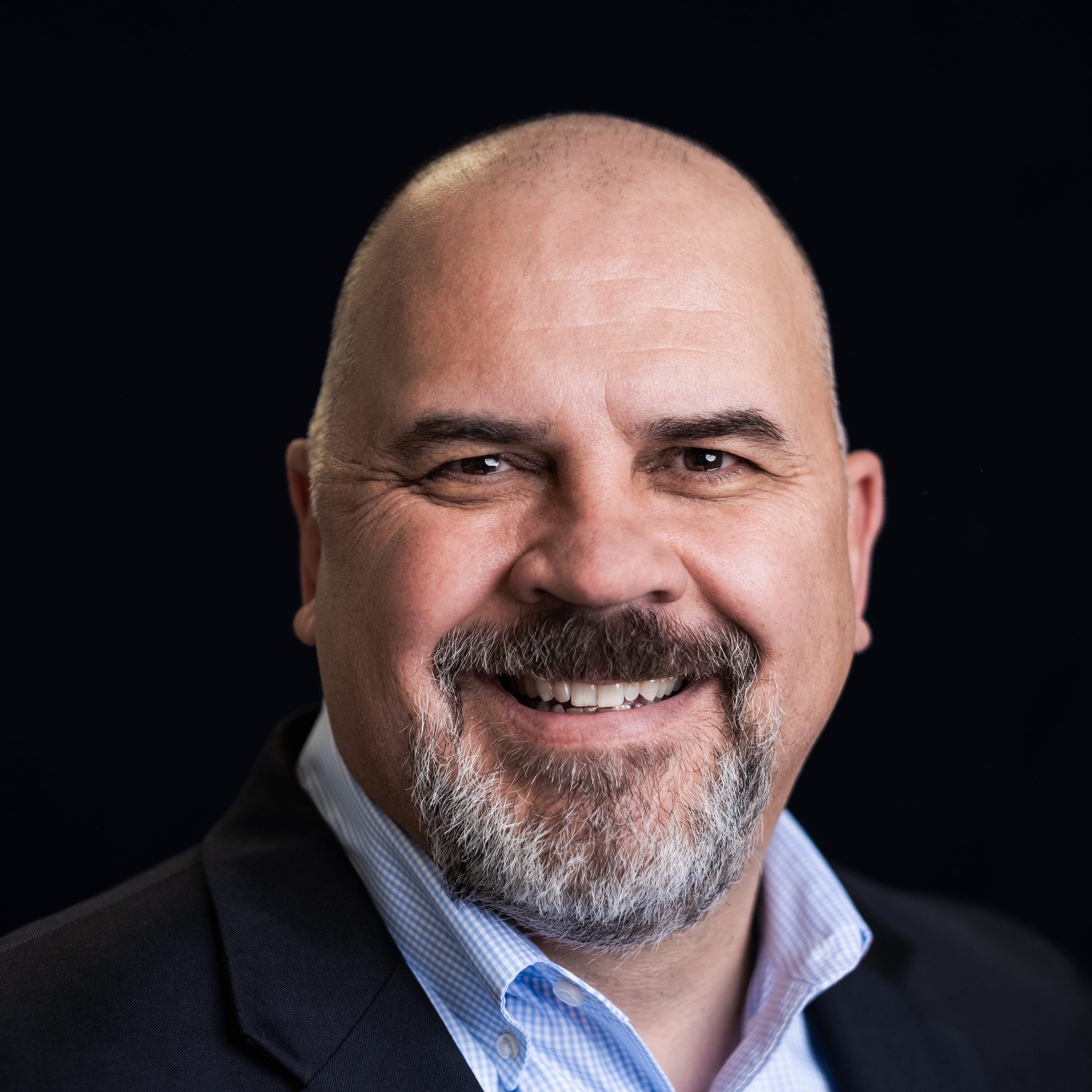
Jeetu Patel, executive vice president and chief product officer at Cisco, joins theCUBE at MWC25 Barcelona for an insightful discussion on platform thinking and technological synergy. The conversation, conducted by theCUBE analysts Dave Vellante and Bob Laliberte, delves into Patel's strategic objectives at Cisco, the transition to a single product organization, and the implications of integrating network and security systems. Patel emphasizes Cisco's dedication to enhancing customer value through tightly integrated yet loosely coupled systems, aiming to enab...Read more
>> Hi everybody. Welcome back to Fira Barcelona. My name is Dave Vellante. I'm here with first time co-host at MWC, Bob Laliberte, and we're super excited to have Jeetu Patel in the house, EVP and chief product officer at Cisco. My friend, good to see you again.>> It's great to see you.>> Always a pleasure when you make time for us, we want to catch up on Cisco. It's been two years since we've been on this set.>> I missed last year, so I'm glad that I'm back over here and...>> John Furrier has FOMO, no doubt, and a lot has changed in your personal role at Cisco, now a chief product officer, which is amazing, bringing platform thinking, something that we've talked about a long time, and we saw your blog when you came out at the sales kickoff meeting when you first said that you were taking over this role, these are my objectives, we're going to talk about that, but how's it going? How do you feel?>> We're having a lot of fun right now. And one of the reasons we made this change to a single product org is we wanted to make sure that this was... We could fully leverage the platform advantage, because if you think about Cisco right now, the breadth of capability we have is unparalleled. But it's very hard to realize that if you actually have multiple silos within the organization, so we wanted to make sure that we wove it all together. So how does security get woven into the fabric of the network? How does the network telemetry go into Splunk? How do all of these things work together? So the notion was if we can make sure that we reduce the marginal cost of ingestion of Cisco technology to a de minimis amount so that every single time a customer buys an additional technology from us, there's a very low effort and lift, but the compounding value, not just to the new technology they buy, but to the existing technologies they already have just continues to keep accreting, that becomes a huge benefit for the customer.>> You know why I love that? Because a lot of software companies, you're increasingly becoming a software company, a lot of the software companies, it's a one-way street on operating leverage. They get lower marginal costs, but the customer doesn't. What you're saying is a two-way benefit. We're going to lower our marginal cost, of course at volume, but you also get the benefit of lower cost.>> The way we think about this is in anything that we do, we always start from the customer and work backwards, and I think that's the only way to do it, because frankly, even if for example, we had to partner with someone who was a quasi-competitor for us, that's okay, because if the customer's invested in two of us, we owe it to the customer to make sure that we can work well together with them so that we can protect the customer's investment. And if we do that, then there's going to be the appropriate level of benefit that's going to flow our way. But if we don't, then it's just not going to be good for the customer, it's not going to be good for us.>> And it's always going to take an ecosystem, right? No one company's going to be able to do everything. So keeping that open mind, that open ecosystem is going to be so important for delivering solutions.>> Especially in these days. I think what happened in SaaS was there was this fundamental shift in the mindset of people, in the mindset of customers where you had this beautiful thing called RESTful services, which was the ability to call APIs through a URL, and before you knew it, customers are saying, "Hey, if I have vendor A and I have vendor B, I expect the two of you to work together." Now, in the age of the operator, you don't even need APIs for two machines to talk to each other, because the machine simulates a human being in the way that they interface with the product. So I think this notion of an ecosystem that's open is super important. And frankly it's beneficial for the customer to make sure that they don't just get locked into one provider and that you actually have an overall ecosystem working harmoniously well together. And in security the true enemy is not the competitor. It's the adversary. So we need to make sure that we're working together, exchanging data in real time. So even though I compete with a lot of my security counterparts, I consider Nikesh and Jay and all these others just part of the same fraternity, and we should just make sure that we're working together.>> And customers are plugging in different platforms. They have to. They're challenged to reduce their stack because something new comes along, it's all left of field, but security and networking, sort of peanut butter and jelly, they come together.>> And one of the things that I loved when you took over, you made the comment that we're going to have loosely coupled but tightly integrated. And it really speaks to the fact that when you look at Cisco's portfolio, you've got all the pieces.>> We do.>> It's just now about bringing them together so they're a more cohesive solution, whether it be security or observability. I wonder if you could touch upon that a little bit more. When you see... Kind of kid in the candy store, look at what I've got to bring together.>> But the loosely coupled, tightly integrated was very intentional because I think it shows humility on our side that the customer doesn't have to buy everything from us all at once or ever if they don't want to. But when they do buy two things together, boy, they work like magic. And the reality is most customers work in a heterogeneous environment, and we're never going to go into an environment which is going to be completely top-to-bottom Cisco for everything, so we have to make sure that we are tightly integrated among our components, but that we are loosely coupled, that customers aren't required to buy everything in order to have anything work. That was a core philosophy that we wanted to implement so that we showed humility and we showed openness for the customers.>> If I go back two years ago, Jeetu, I have to say I was a little bit confused about your AI strategy. When I went into the divisions, I got it, it made sense, but I felt like there was not a platform view. So I wonder if you could update us on your AI strategy, what you've brought to that thinking.>> So we've made a ton of progress in the past couple of years, and I think generative AI in general was a massive catalytic event for us. So let me just walk you through what we do on the AI side. So firstly, we power the infrastructure for AI. So if you think about the training infrastructure that you might have for training GPUs, the intra-GPU communication that needs to happen at low latency, high performance, very high power efficiency, we are actually one of the major providers on that front and we want to continue to keep doing that. I think there's only going to be two kinds of companies in the world as you move forward, there's going to be companies that are very dexterous with the use of AI, and then there are going to be companies who are going to struggle for relevance. And this notion of the companies that are the good ones, what do they get held back by? They get held back by three things. First one is they get held back because they don't have the right infrastructure and the simplicity of the infrastructure. Second is they're really worried about safety and security, so the adoption gets held back. And third is they don't have the right skills. And in each one of these three, we help customers massively. So when you start thinking about safety and security, we actually had a product that just came out recently on Jan 15th called AI Defense, and that actually provides a safety and security substrate across any model, across any agent, across any application in a seamless way. I think as you start to see the DeepSeek effect, what's going to happen, the cost of training is going to go down precipitously, and the consequence of that is there's going to be many, many models. I used to think there'd be tens of models. I think now there's going to be tens of thousands of models. And as you have many, many models, you're going to need to make sure that the safety and security can't be relied just solely on the model providers, but you need to have a common substrate of safety and security across every model, and that's what we provide. Infrastructure, like we talked about. And then on the skill side of the house, making sure that our infrastructure and security underlying substrate is as simple and turnkey as possible is so important. So that's the thing that we try really hard to make sure that we continue keep doing.>> DeepSeek is amazing to me, the reaction that Wall Street had. Either everybody I know who's smart in tech has got it wrong or Wall Street has it wrong. The reaction was so negative to DeepSeek. I mean I think it's just->> I'm not sure why, frankly, because I think Jevons Paradox is going to be profoundly present.>> Satya was right, you agree. I mean, I think Wall Street's reaction was amiss, frankly. And I think we've seen this before. Costs less, consume more.>> We consume more.>> And by the way, the inference volume is going to go up exponentially.Do you think that's this year or is it going to take a couple years?>> No, it's not happening this year because once you... And it'll be driven by these agentic workflows that are starting to happen because... What I call the operator effect. And most people, we are in Europe right now, most people in Europe haven't really experienced it yet, but when you start thinking about what happens with the operator. Right now they have it behind the paywall of $200, but the moment it gets a little bit more mass market, you can literally tell it to do things that you thought would've been complete magic just a year ago. It's my wedding anniversary. Make sure that you book me a movie and a restaurant, they have to be close to each other and go ahead and take care of it and it'll take care of it. That entire effect, what it does is you're going to have all of these agents talking to each other across data centers, data center interconnect will be really important. The network traffic that'll flow between data centers will be exponentially higher. Even campuses and branches that'll now have edge devices, robotics, humanoids agents, those will actually go up in volume. So the inherent effect to Cisco is going to be massively positive because there's going to be more traffic flowing through the network, there's going to be more need for security and safety, there's going to be more need for making sure that there's an ecosystem effect. Our partnership with Nvidia is going to be a huge area where customers are finding a level of excitement because they're like, "Well, we invest in Nvidia, we invest in you. I'm glad the two of you're working together.">> Excellent. No, that sounds great. One of the things I wanted to ask you about was the innovation cycle at Cisco. So I've been following you for a long time and it appears to me, and I think it's fact, that there's been a lot of new releases coming since this summer, coming in through the winter timeframe, sometimes tied to an event, sometimes not, just coming at a... Is that something that we should continue to expect to see out of Cisco, that this pace of innovation and releases is going to dramatically increase?>> You should continue to expect an acceleration of the innovation. And the way I think about it and the way we talk about it internally is at Cisco we want to be the world's largest startup, which means we have to operate at speed with scale. Now either one of them by itself is pretty easy to do, but what we are doing that's pretty unique we feel is we are doing it at speed with scale. And I would expect that this is only going to compound over time. So I would say that in networking in 2025 alone, we will have made more innovation than the past decade combined. In 2024 in security, we made more innovation than the past decade combined. And '25 was a multiple of '24. So you could start to see the compounding effect. It's actually exciting, the company itself has gotten it's... It's gotten really re-energized where it doesn't feel like, "Hey, this is..." There used to be, like few years ago, if people asked me, "Hey Jeetu, this is an important area, what are we going to buy?" Now they ask me, "This is an important area, what are we going to build?" Because we've become builders again, and we won't be shy to deploy our balance sheet if we find something that's at the right price point that furthers our strategy. But we want to make sure that we are known for building amazing products that people love that they talk to their friends and family about.>> One of the dimensions... I want to ask you about that world's largest startup, because obviously one of the dimensions is innovation and organic delivery of new product function. Frank Slootman, one of my business heroes, is I think very good at this. He's like, "We don't spend money unless it's absolutely necessary." He would always say that. And that stuck with me because that's what startups are like. And the DeepSeek, necessity is the mother of invention. Do you think of both dimensions there in your startup equation and how do you balance a company that's $50 billion where every dollar matters? How do you inject that into the culture?>> Generally, we've been pretty prudent with the way in which we deploy capital. So that's never been an area that we've actually had an issue with in the market. But one of the things that we have to be very... We have to keep getting better and better at is being very intentional on which areas are we going to participate in and what kind of capabilities are we going to build. So the first principle on that front... There's three core principles to keep in mind on this. The first principle is we have to build products that people love, that they talk to their friends and family about. Why is this so important? And I sound like a broken record internally, but the reason I say this over and over again is if you're building products for hundreds of millions of people, billions of people, there is zero chance that you have a better marketing engine than word of mouth. And word of mouth happens when people love your product, that they find it irresponsible not to talk about it to someone else. So the first thing we have to do is make sure that we get very product oriented, product centric, which we have now done, and that transition is well underway, and you could see this in spades across the board, Bob, to what you said about it's the compounding rate of innovation. The second area is we have to be obsessed with an ecosystem centric approach, which means even if there's a competitor, we will be open to going out and partnering with them. We've shown this with Microsoft Teams and WebEx. We've shown this with the telemetry we've taken from security vendors and put it into our XDR. We've shown this with what we just did with multiple partnerships we've announced. So that'll continue to keep happening. And then the third area, which is really important, is don't just try to be 10% better than the market because that doesn't make customers change their mind on the shift of the platform. But when you're 10X better, it's impossible to ignore. And I think that being 10X better is hard, it takes a while to be really intentional in saying, "What did we have to build that was at least an order of magnitude better than what anyone else had in the market?" And for us, it's three things that make it 10X better. Our platform advantage, the fact that we build our own silicon, and the fact that we're AI native. And the combination of those three things really start creating magic that just wasn't available before. And we're very lucky that we've got that scale, we've got the depth of investment, and we can build our own silicon, we can build our own systems, we can build our own software, and we build our applications on top of it, and I think it creates a very different level of value for customers that otherwise just would have not existed.>> You just described your flywheel. Product-led growth, you've got your ecosystem leverage, and no incrementalism, 10X is the mindset.>> You have to have something that creates a wow effect for the customer on an ongoing basis. Because here's the thing, our ability as humans now, to getting from something feeling like magic to something feeling completely ordinary, that time compresses very quickly. Think about Waymo. The first time you take a Waymo, you're like, "Oh my goodness, this is like, where am I?" the second time you start checking your email while you're... The third time, you're complaining about the seats not being comfortable. So that kind of... I think the world gets normalized to whatever you have out there very quickly, so your rate of innovation has to continue to keep exceeding that rate of normalization for the world.>> The post-COVID world is a new new normal, new abnormal we used to call it.>> So we're here at Mobile World Congress. So probably it would be good to talk a little bit about your support for the service providers, what you're bringing out. I think you announced some Agile Services Networking for... Maybe talk a little bit about that and what you're doing and your commitment to the service providers as well.>> So one of the things that... One of the most important customer constituencies we have is the service providers, and if you think about global connectivity, there's no one better than the service providers right now to be able to make sure that they can provide this for customers. And all the investment they made in 5G can now actually be leveraged over here. So I think there's three big opportunities service providers have that we'd like to help with. The first one is the ability to monetize net new revenue streams that weren't available in the past because of AI. So there's the AI effects on monetization that they have. The second big area is oftentimes service providers will still continue to have this property of ARPU might not increase, but their revenue increases, so they have to make sure that their profitability is continued to be something that they pay attention to. So we got to make sure that we reduce the cost of operations for them. And then the third area is customer experience, customer service. So in each one of these three areas, we want to make sure that we continue to provide more and more assistance. Agile Services Network is a blueprint that we provide service providers to really help them make sure that they can have an AI-ready infrastructure for data centers. If you think about data centers right now, we're going to be... Data centers are going to get distributed based on wherever the closest power availability is. And these data centers are going to have to act like they're virtually a single data center. So the data center interconnect is going to be really important and we can really help with that with our optics technology, we can help with that with our routing technology. So we will continue to make sure that we provide the blueprint and we provide both routing and optical... Coherent pluggable optics that could be meaningfully creative to service providers.>> So two and three, I think very high probability of success. You can consistently, relentlessly lower cost, drop profit to the bottom line, the customer experience definitely you can help improve. The telcos and the service providers haven't been great at new monetization. They're really great at connectivity and that infrastructure. They aspire to be these over-the-top vendors, like the grass is greener, but they haven't been successful there. So what monetization should we expect? What's gettable?>> I think firstly the amount of traffic flow is going to increase exponentially with AI.>> Well, the cost per bit keeps .>> But I do feel like there's an opportunity for service providers over there to make sure that they can service that traffic flow. The second thing that's happening is as you have more and more use cases happening on the edge, robotics, humanoids, agents that are going to be on the edge, you will see service providers play a very important role over there. And what we want to do is we want to make sure that we power the service providers with the technology, with our customer experience services, so that they can make sure that they can maximize this window of opportunity that they have. And frankly, I'd say that in the past, which was missing was this catalytic event which we now have, which is the global platform shift to AI. And that in my mind is going to be the thing that was missing for them to go out and come up with new monetization vectors. And they've got all the infrastructure, they've made the investment. This is a new way for them to go out and monetize the investment, and we're looking forward to partnering with them.>> Awesome. What do you want to be able to say 12 months from now that you can't say today?>> The way I tell people is in 12 months from now, Cisco will be a very different company. In two years, in 24 months, we'll be unrecognizable for the better only because the velocity which we are starting to see this change happen is phenomenal. And I'll give you an example. We had a product launch event recently on Jan 15th on AI Defense, which was one of the safety and security products that we launched. The level of interest that customers have on that has been phenomenal. And why is that so important? Because what you're starting to see is what we are doing now seems like is in the core focus area of every single thing that every enterprise is doing. If you're building an application with AI, you're going to need safety and security, you're going to need connectivity, you're going to need Cisco. If you're going to be an employee using an application with AI, there's going to be the same things that are going to be needed. So we are right in the midst of all of this, and we've got a very partner-friendly approach as we move forward. I think in 12 months I'm just hoping that there's much, much more technology and there's much more of a tempo buildup. Frankly, what we are today compared to what we looked like even six months ago on any dimension of the business is meaningfully different, and I think that rate will only accelerate over time. G->> Jeetu Patel, thank you so much for coming on, spending some time with us, bringing platform thinking when platforms beat products, and Jeetu Patel is a platform executive. Great to have you on. Thanks for watching everybody. Dave Vellante for Bob Laliberte and Savannah Peterson. We'll be right back right after this short break. You're watching theCUBE from MWC 2025 from the Fira in Barcelona. Right back.