We just sent you a verification email. Please verify your account to gain access to
MWC25. If you don’t think you received an email check your
spam folder.
In order to sign in, enter the email address you used to registered for the event. Once completed, you will receive an email with a verification link. Open this link to automatically sign into the site.
Register For MWC25
Please fill out the information below. You will recieve an email with a verification link confirming your registration. Click the link to automatically sign into the site.
You’re almost there!
We just sent you a verification email. Please click the verification button in the email. Once your email address is verified, you will have full access to all event content for MWC25.
I want my badge and interests to be visible to all attendees.
Checking this box will display your presense on the attendees list, view your profile and allow other attendees to contact you via 1-1 chat. Read the Privacy Policy. At any time, you can choose to disable this preference.
Select your Interests!
add
Upload your photo
Uploading..
OR
Connect via Twitter
Connect via Linkedin
EDIT PASSWORD
Share
Forgot Password
Almost there!
We just sent you a verification email. Please verify your account to gain access to
MWC25. If you don’t think you received an email check your
spam folder.
In order to sign in, enter the email address you used to registered for the event. Once completed, you will receive an email with a verification link. Open this link to automatically sign into the site.
Sign in to gain access to MWC25
Please sign in with LinkedIn to continue to MWC25. Signing in with LinkedIn ensures a professional environment.
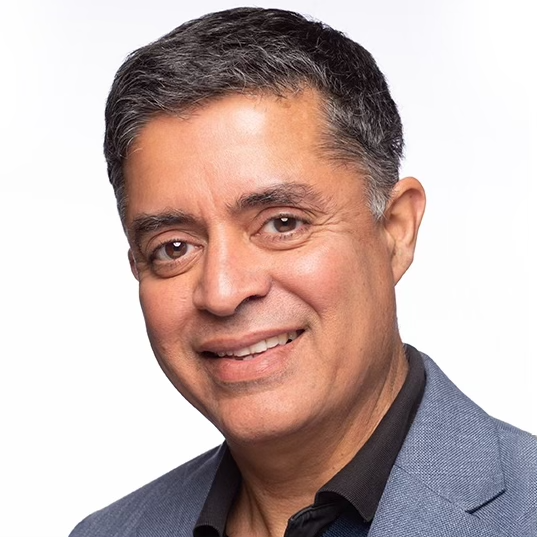
Join us for an insightful session with Sanjay Uppal, the Senior Vice President and GM of VeloCloud at Broadcom, during MWC25 Barcelona. Interviewed by theCUBE’s analysts Dave Vellante and Bob Laliberte, this discussion uncovers the innovations in network convergence spearheaded by Broadcom. Uppal explains the strategic news of VeloSky, a groundbreaking product focused on application-level technological convergence, offering telecom operators the ability to enhance critical applications efficiently.
During this session, Uppal highlights the shift toward...Read more
exploreKeep Exploring
What is the purpose of the VeloSky product announced by the speaker?add
What is the importance of integrated fiber, 5G, and satellite connectivity for businesses relying on AI-driven applications and distributed workloads, specifically in relation to VeloSky?add
What security features come with the VeloSky service and why are they important for connectivity?add
What role do telecom operators want to play in business relevant conversations, especially when it comes to the implementation of generative AI applications in enterprises by 2025?add
>> Hi everybody. Welcome back to FIATA Barcelona. My name is Dave Vellante. I'm here with Bob Laliberte. Savannah Peterson is also in the house. You're watching theCUBE's day two coverage of MWC 2025. Sanjay Uppal is here. He's the Senior Vice President and GM of VeloCloud at Broadcom. Good to see you again. It's been a while.
Sanjay Uppal
>> Nice to see you too.
Dave Vellante
>> Last summer, we sat down the end of the summer. Of course the tradition is we go to VMware Explore, formerly VMworld.
Sanjay Uppal
>> That's right.
Dave Vellante
>> We talked about all the action going on on the edge and of course big edge show here. But you guys got some news.
Sanjay Uppal
>> We do.
Dave Vellante
>> We announced the news today.
Sanjay Uppal
>> That's right. Right now.
Dave Vellante
>> Give us the hard news. Let's start there.
Sanjay Uppal
>> So we announced our VeloSky product, which is our new product for convergence. And essentially what it does is for telecom operators who are supplying technology and services to enterprises, it allows them to go on an application by application basis and combine or converge these networks together. So usually convergence is about business convergence. You get one bill and you're fixed and your mobile and your TV is on a single bill. But here, what we are doing is true technological convergence on the basis of applications. So for your most important applications, like if you're a healthcare provider, the application that drives the respirator is very important. So you can combine the networks together for that application, but may not be for the web browsing application. So it really gives an application level quality of service, which the telecom operator can charge more for. And we'll talk about application slicing in a minute, but that's the focus of VeloSky.

Dave Vellante
>> Okay. So is that the business case is monetization? Or is it also, is there a cost savings associated with that?
Sanjay Uppal
>> There is a cost savings, but I think the primary focus for this is monetization, because as we know, just walking around this show, the monetization of 5G has not really happened as the way that people thought it would. But this is one play for monetization because it talks directly to the applications that enterprises want to accelerate.
Dave Vellante
>> Telcos have consistently struggled with monetization.
Sanjay Uppal
>> Yep.
Dave Vellante
>> They're great at connectivity, they get out of their swim lane, but this seems like a natural progression for them.
Sanjay Uppal
>> Yeah. That's what we are expecting and hoping.
Dave Vellante
>> Yeah.
Bob Laliberte
>> Yeah. And when you're talking about convergence, just for everyone that's watching, we're talking about the ability to combine fixed lines, wireless, so 5G cellular, even satellite, to ensure that your applications are able to be maintained at an optimized state.
Sanjay Uppal
>> Correct. You can combine two 5Gs together, you can combine satellite with 5G or with fiber. In fact, any type of network. And what's also really cool about this is that even a single link, you can make it perform better. But of course the whole idea is about converging different links together on the basis of applications.
Bob Laliberte
>> So it's not only the traditional high availability play, it's also an optimized performance play that you get out of this as well.
Sanjay Uppal
>> Absolutely. So we say application level QOS, but the end user, whether it's a machine or an agent or a human being, will get better quality of experience or QOE.
Bob Laliberte
>> Yep, absolutely. Yeah, that's so important, especially for the telecom providers, right? That's something they're always striving for.
Sanjay Uppal
>> Yep.
Bob Laliberte
>> This is really well-timed because we're in an age of AI. And so one of the interesting things that some people forget about is this is really going to be instrumental in networking for AI and enabling the network to handle AI. But also, like you were saying, the key is that don't forget you've got these other business-critical applications that you need to accommodate and don't let the AI workloads dominate or negatively impact those. So with this situation, with this solution, you're freeing up additional bandwidth that will enable organizations to ensure that their existing business-critical apps can run harmoniously with the AI workloads as well.
Sanjay Uppal
>> Absolutely. And I think one of the things that's very interesting, and since we met last August, what we've been doing is measuring the GenAI applications on the network for some of our largest customers, those that have more than 1,000 endpoints. And what we are finding is that the traffic stream of these applications is very different from normal web applications. Number one, they're extremely bursty, but second, the amount of upstream traffic is sometimes more than what the downstream is. Now, in certain cases you find that the upstream is 100 times more. Now you think 100 times more, how can that be possible? But here I have my pair of Meta Ray-Ban glasses. Now these are meant for the consumer, but these glasses, they have video in the upstream direction and audio in the downstream. So I put them on and I can say, "What am I looking at?" Or I can say, "Take a video. Take a photo." And these can livestream in the upstream direction. They can do translation. And in the future you can ask, who's this person? And of course there's a privacy angle to it-
Bob Laliberte
>> Yeah. Yeah, sure.
Sanjay Uppal
>> But 100 times more upstream than downstream. Now they've sold about 2 million of these, they're going to make another 10 million this year. And if this becomes the type of endpoint, this is a GenAI endpoint. It talks to GenAI in the backend, whether it's a large language model or a small language model. Now you think there's so much more traffic going upstream than there is downstream. And the networks are not built for that. Networks are built for a lot more downstream than upstream.
Dave Vellante
>> And then I understand the privacy thing, but also, what's this building? What is this monument? You ask the local people, a lot of times, "I don't know, some monument." People ask me that in Boston. I'm like, "I don't know."
Sanjay Uppal
>> Yeah. You walk into a shop and say, "How much does that cost?" And by the way, how much does it cost on your favorite online shopping experience? And you can do a comparison match right there. It's just the amount of things that you can do with this, and this is only one example. It doesn't even have video in the downstream direction. But just saying that GenAI applications are much more upstream. And then when agents come in, these agents are going to be distributed across the network. They want to talk to one another. They need low latency, they need the quality of service. So we want to get VeloCloud to be the network for agentic AI. That's the direction that we're going towards. And VeloSky is just one step in that direction.
Bob Laliberte
>> Got it. Yeah, I think that makes a ton of sense. And it's funny when seeing that and thinking about it, so many times it was the 4G was all about augmented reality and things like that. But you can see not only the personal, but from a business perspective, someone out troubleshooting something, being able to show someone, here's what I'm looking at, what do I do? How do I do it? Being able to have those fine-tuned and RAG environments for customer-specific environments, this could be a game changer. But again, in order for this to work, you need to have the network connectivity.
Sanjay Uppal
>> You need to have the network. And you mentioned RAG. So we are finding out that the amount of data that is being sent up by RAG, it's enormous. This is another example of more upstream. Because enterprises, they just can't take the current LLMs and there's a privacy angle and there's all of the enterprise data that has not been used for the training or the fine-tuning. So they use RAG. Now with RAG, you've got to send all this data upstream so that it is properly put in the vector database. And the data that is coming from is not situated in the data center. It's situated at all the endpoints of the enterprise, which again is distributed, which again needs upstream. So all of this is tying together to tell us that you need this kind of network to be constructed for these new class of applications that we have not seen the likes of over the last two or three decades.
Dave Vellante
>> You have a testimonial on the VeloSky from a guy, Eddie Fox, who's the CTO of MetTel. He says his business is increasingly relying on AI-driven applications and distributed workloads the need for integrated fiber, 5G and satellite connectivity has never been more crucial. And he goes on to say why VeloSky is important. But so if I understand it, then the example you just gave, by integrating those networks, you are dramatically accelerating the outcomes, the results for customers. And that back to the monetization allows the telcos, the carriers to actually deliver greater service and new products, new services that they can monetize.
Sanjay Uppal
>> Yeah, absolutely. Ed Fox, MetTel is very focused on a few verticals. Government is one of them. And of course they have critical infrastructure, critical applications that they need to provide for. And previously the telecom operators also recognized this, but their responses were, "Well, let's set up the network slicing."
Now network slicing, we've been talking about it for a couple of decades. It's really very static. Even the slices that are being set up today. You do a slice for an event like a coronation, or you do a slice for first responders. What we are talking about is slicing that you can do at the application layer with or without the network slicing. If the network slicing is available, we make use of it. But if it's not, you can still set up a slice on an application basis dynamically. You don't have to say that this application forever needs this quality of service. You say, this is the application, recognize the application, and we already know how these applications behave. So we can say that for the Ray-Ban application, we need this kind of service and we can configure it in the network on the fly. It doesn't have to be pre-configured.
Bob Laliberte
>> Right.
Sanjay Uppal
>> The telcos responsibility is to set up the tariffing correctly. They have to be able to do dynamic tariffing, so that someone can say, "Okay, I'm going to put on my Meta Ray-Ban glasses. I'm willing to pay another $2 to get the best quality of service for the next 10 minutes or so."
Dave Vellante
>> So you can spin up that virtual resource very easily and then you can dynamically share that resource or?
Sanjay Uppal
>> Correct. What we do on top of the network itself is that firstly we do a channel estimation process and we use AI for that. So this is more AI for networking. Not the networking for AI. So AI for networking, we say, "Okay, how is this channel working? How's the 5G working? How is the satellite working? How's the fiber working along this bandwidth packet loss jitter and latency?"
Once we know this, we know the application, then we can perform all the heuristics. Should we queue it? Should we not? Should we jitter buffer it? Should we forward error correct it? Should we send it on all the links? Should we multiply it? We can do all of these things. But it really starts from understanding the channel, which is the network and the application, and then all of the magic follows once we get that done.
Bob Laliberte
>> And that makes so much sense, and the key to all this is that it's all done dynamically. In the old day, "Hey, give me a network link." Okay, that's going to take so long to get in. So you're giving service providers the ability to deploy once and then have it connect in many different ways.
Sanjay Uppal
>> Correct.
Bob Laliberte
>> So if it's needed urgently and there's no fiber going to the building, they can connect over 5G, multiple 5G connections, satellite, et cetera, mix and match, do all that. And of course this is some of what's always been the zero touch provisioning, that dynamic nature being able to automatically change the dynamic and the performance on the fly.
Sanjay Uppal
>> Exactly.
Dave Vellante
>> Take us through what a telco has to do to take advantage of this service.
Sanjay Uppal
>> Right. So the telecom operator, they sell access technologies today. They sell you a fixed wireless access, which shows up as a device and then you connect up to the service. It's as simple as that. You get an appliance and that appliance is capable of doing ethernet termination. It's also got wifi, it's also got 5G built in. So that's the box end of it. Of course, the software is all available, it's all API driven, so they have to connect it to their OSS BSS systems. But we've done that so many times now that it's pretty packaged that you can get that done. And then they go out and they ship these devices. As you were pointing out, zero-touch provisioning, so you really don't have to sticker the device saying, "Okay, this device got to go to that location." The devices can go anywhere. And through pull-based orchestration, the device comes up, gets its profile, it's up and running, and then it's configured based on what are the applications it finds, what's the business that it's going after. And then you set up a policy for it. You say, "Okay, this is the most important application, this is not." However, we have a set of smart defaults that you can use. So if you're happy with those, and usually customers are happy with the smart defaults, then they get up and running. Literally, you were talking about in situations where you need something immediately, like construction sites, hospitals, pop-up clinics, retail stores, these places you can get set up within a few days. You can just distribute these devices. In fact, one of our customers more on the SD-WAN side set up 9,000 devices in seven days.
Dave Vellante
>> And you don't care where the OSS and the BSS systems are? True or?
Sanjay Uppal
>> No, we don't care.
Dave Vellante
>> Are you seeing a migration to the cloud of those systems or no? Are they pretty much ...
Sanjay Uppal
>> No, we absolutely are. The other thing that's happening in telecom of course is what is telecom doing by virtualizing the software infrastructure and moving away from vertically-oriented stacks to horizontal ones. And of course VMware and Broadcom plays in that business as well. That's not the business that we are talking about today, but in that business it's really taking the likes of OSS systems, BSS systems, also what's running in the network itself, virtualizing it, making it horizontal so that they can increase the service velocity, reduce the costs.
Dave Vellante
>> And the more cloudified those systems are it's probably even simpler for you to set up?
Sanjay Uppal
>> Correct. That's right. The cloudification is one piece of the software definition that goes on inside the network.
Dave Vellante
>> Now how do you guys price VeloSky?
Sanjay Uppal
>> This is priced on a per-month basis, so that you have different class of service, meaning that if it goes up from 100 megabits to a gigabit and beyond, that's one tier and then all the features that you get. And it's priced very competitively compared to today's access points. And of course based on volume, if you buy 500 or 1,000 or 10,000, there'll be different pricing. But it's really on a per-month per-user basis.
Dave Vellante
>> And you've got stuff in the field? I mean it sounds like some reference accounts.
Sanjay Uppal
>> We do have Vodafone and MetTel that have been quoted in the release. So we are out there talking to a whole bunch of telcos. That's the reason I'm here as well.
Dave Vellante
>> What are they saying?
Sanjay Uppal
>> They're pretty excited about this. As you saw with both Vodafone and MetTel. I wanted to pick one in the United States and one here to just get us going, and I think it's looking very strong right now.
Bob Laliberte
>> Now, there's also an aspect of security to this, if I'm not mistaken as well. Right?
Sanjay Uppal
>> Yeah.
Bob Laliberte
>> So in addition to having the zero-touch provisioning for all the network and the application performance, et cetera, there's also a firewall that gets added to this as well. Correct?
Sanjay Uppal
>> Correct. There's an enhanced firewall that comes with the device itself. And this is security to prevent someone from breaking into wherever this access point is and the resources that are sitting behind. But the connection between the access device, the appliance itself, and the rest of the network that's also encrypted, it's secure. And then of course you can have enhanced value that you can bring in when you add things like CASB and DLP are also future options for the VeloSky service.
Bob Laliberte
>> Yeah, it's hard to mention connectivity without secure connectivity being part of that conversation.
Sanjay Uppal
>> Absolutely. Even with the GenAI applications, as we talked about, when you do RAG, the enterprise doesn't want certain types of data to be leaking. So data leak prevention becomes really important. Again, data leak prevention is not thought of when you get fixed wireless access today. It's not in the lexicon of people who provide you with that service, but it is critically important. If someone connects up to your fixed wireless access and is leaking away some document, you cannot let that happen. Now you have to get another system to be able to enforce it. You shouldn't have to. With this system, you can get application layer security as well as the application layer performance.
Dave Vellante
>> And as you go from RAG-based chatbots to agentic systems, that becomes even more important, right?
Sanjay Uppal
>> The agentic is going to be, I think, a tsunami of change that is coming across us. Because today's agents, like there's this small company in Silicon Valley called CrewAI.
Dave Vellante
>> Yeah, sure. We know them.
Sanjay Uppal
>> You know?
Dave Vellante
>> Yeah.
Sanjay Uppal
>> And then you can set up these agents. But those agents, you set it up and they're all located in the same place. They're located on your laptop or they're located in the data center in one rack. That's not the interesting part of agents. The interesting part is going to be when the agents are distributed across the network. This agent is talking to that one waiting for the response, and then behind the agent is sitting a small language model or a large language model. When you do that, then the interaction between these agents is dependent on the network. No network, no agentic AI. And that's really critical.
Dave Vellante
>> Right. You've got these agents with these incredible ... they're worker bees, but they're really good worker bees and they have access to small language models, large language models, and they want to go.
Sanjay Uppal
>> Yep.
Dave Vellante
>> Right? So if the network is the new bottleneck here. Right?
Bob Laliberte
>> Well, I think it's also, I wouldn't look at it as the bottleneck, I would look at it as the critical link.
Dave Vellante
>> My point is it used to be storage.
Bob Laliberte
>> Oh yeah.
Dave Vellante
>> Spinning disk was the bottleneck.
Sanjay Uppal
>> Correct.
Dave Vellante
>> When you eliminate that, now the network becomes so critical to that link.
Bob Laliberte
>> Yeah, the interesting part, we did some research last year in '24, 93% of the organizations came back and said, "Our network is critical to achieve our business goals."
Sanjay Uppal
>> Yep.
Bob Laliberte
>> So the good news is there's great recognition of the importance of the network, and it's not just plumbing. It's really something that's going to enable the business to be able to develop, to proceed, to accelerate its innovation, especially around all these agentic AI's like you were pointing out for all those reasons.
Sanjay Uppal
>> Exactly. And the telecom operators really have wanted to play and have a role that is business relevant. Not just to provide the bits and the plumbing. Because really the enterprises don't care about what's the bit error rate on my MPLS connection. They want to know that this application works, that the agents are going to talk to one another, that their ERP is going to function. And this gives telcos a calling card to be relevant in the CXO-level conversations that are happening. Because generative AI applications, 2025 is the year that so many enterprises are rolling them out. Now, not rolling them out in full production, but they're testing them. They're doing in pilots, they're trying to get the ROI. And if the network doesn't work, then the application is not going to work. So this is the time for telcos to engage in those conversations to say, "Hey, same thing happened with SAS when the network wasn't ready. Gave rise to SD-WAN. Same thing is going to happen now with GenAI applications, if the network is not ready, then those applications won't work. But if the network is ready with the likes of VeloSky and VeloRain, then you can get your GenAI apps to work. That can pave the way for your ROI and TCO and all of these calculations.
Bob Laliberte
>> Absolutely.
Dave Vellante
>> Broadcom have software now. We had a Vijay on earlier. Last year we had Charlie Kawwas on. Of course, semiconductor guys. 50% of the business roughly is now software.
Sanjay Uppal
>> That's right.
Dave Vellante
>> Remarkable transformation. And it seems to be going quite well.
Sanjay Uppal
>> Yes. This is all division of our CEO. And of course Broadcom, what did we say? Connecting everything. Right? And so there's the software part of it, there's the semiconductor part of it, bringing together for telcos, everything from the chips that Vijay and Rahm and people like that are making to the upper layer software that we are.
Dave Vellante
>> Amazing. Sanjay, thanks for coming by theCUBE. Great to see you again.
Sanjay Uppal
>> Yeah, it's great to see you guys. Thank you.
Dave Vellante
>> All right. Appreciate it. All right, keep it right there. We'll be back. Bob Laliberte, Dave Vellante and Savannah Peterson live from MWC 2025. You're watching theCUBE day two's coverage. Right back.