We just sent you a verification email. Please verify your account to gain access to
MWC25. If you don’t think you received an email check your
spam folder.
In order to sign in, enter the email address you used to registered for the event. Once completed, you will receive an email with a verification link. Open this link to automatically sign into the site.
Register For MWC25
Please fill out the information below. You will recieve an email with a verification link confirming your registration. Click the link to automatically sign into the site.
You’re almost there!
We just sent you a verification email. Please click the verification button in the email. Once your email address is verified, you will have full access to all event content for MWC25.
I want my badge and interests to be visible to all attendees.
Checking this box will display your presense on the attendees list, view your profile and allow other attendees to contact you via 1-1 chat. Read the Privacy Policy. At any time, you can choose to disable this preference.
Select your Interests!
add
Upload your photo
Uploading..
OR
Connect via Twitter
Connect via Linkedin
EDIT PASSWORD
Share
Forgot Password
Almost there!
We just sent you a verification email. Please verify your account to gain access to
MWC25. If you don’t think you received an email check your
spam folder.
In order to sign in, enter the email address you used to registered for the event. Once completed, you will receive an email with a verification link. Open this link to automatically sign into the site.
Sign in to gain access to MWC25
Please sign in with LinkedIn to continue to MWC25. Signing in with LinkedIn ensures a professional environment.
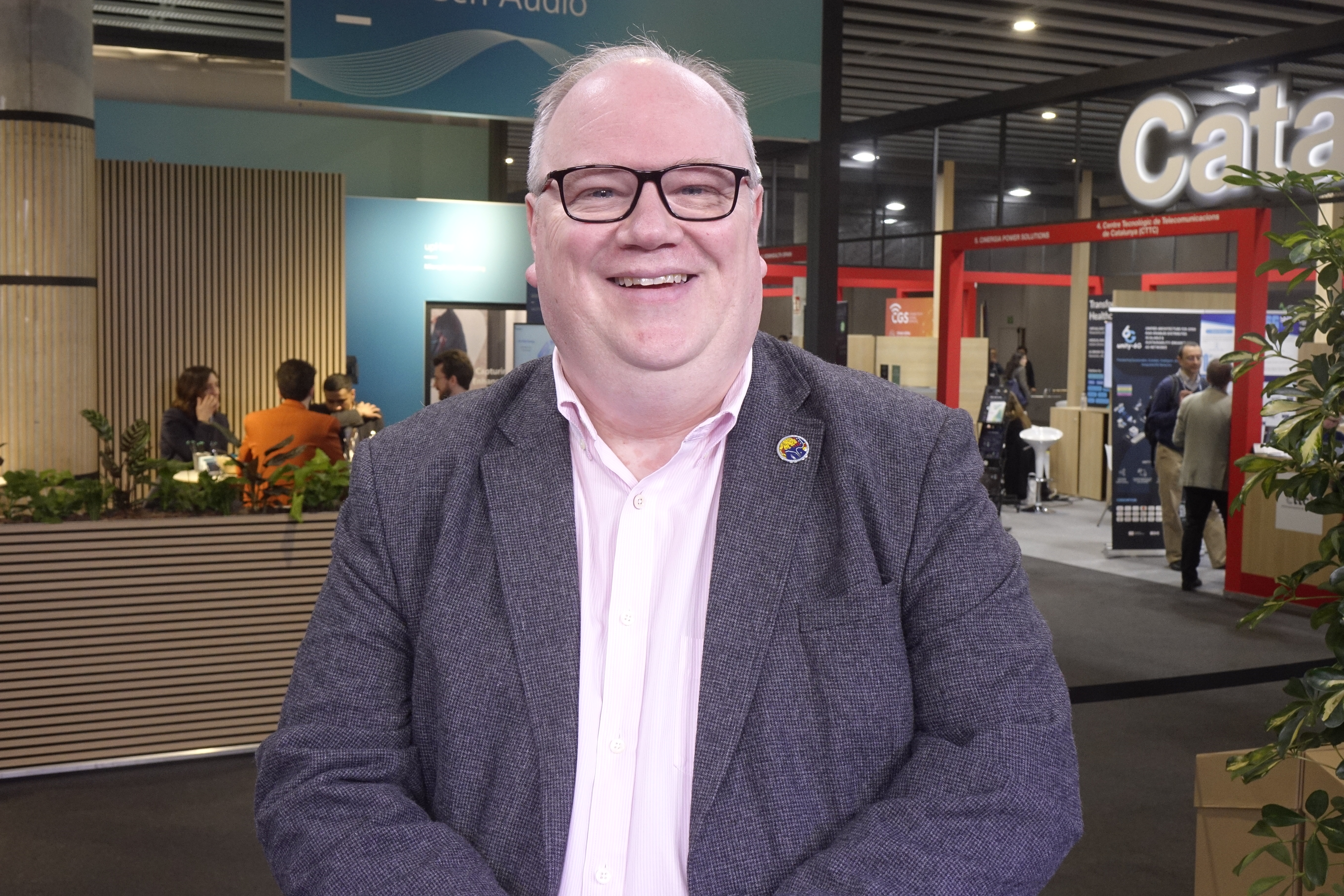
Join Neil McRae, the Chief Network Strategist at Juniper Networks, in an exciting session from MWC25 Barcelona. Neil shares his insights on the advancements in AI-native networking and Juniper's pioneering efforts in AI-native routing. Captured by theCUBE's analysts Savannah Peterson and Dave Vellante, this interview digs into how Juniper extends AI capabilities across enterprise and public clouds, simplifying network management and enhancing efficiency.
Discover actionable insights as McRae explains how AI-driven solutions reduce network trouble ticke...Read more
exploreKeep Exploring
What are the details of Juniper's recent announcement about AI-native routing?add
What are some recent developments in AI, specifically in terms of ChatGPT and generative AI?add
"What are your plans for implementing your tool Paragon in service provider networks in the future?"add
What are the main pillars that telcos need to focus on when modernizing their networks?add
What is Juniper's approach to making changes in networks and helping service providers become more sustainable?add
>> Good afternoon networking nerds and welcome back to Barcelona, Spain. We are here coming to the conclusion of day two of our four days of live broadcast on theCUBE. My name's Savannah Peterson here with my favorite co-astronaut on the rocket ship, Dave Vellante.
Dave Vellante
>> Oh, are we going to talk space here? Is that right?
Savannah Peterson
>> We're talking space on this segment. It's happening. Did you know our next guest is named after perhaps the most famous person in space ever?
Dave Vellante
>> Neil Armstrong.
Savannah Peterson
>> Yes. Quite literally.
Dave Vellante
>> I watched him land on the moon.
Savannah Peterson
>> You and a few other people.
Dave Vellante
>> I dye my hair gray.
Savannah Peterson
>> Were you there with him next to him? It was you and Buzz just hanging out having a margarita.
Dave Vellante
>> It was pretty remarkable. I know people who say that was fake.
Savannah Peterson
>> Yeah, let's not talk about those people today. We've got a very tangible thing and our next guest is very real. Neil, thank you so much for taking the time to join us today.
Neil McRae
>> Thanks for having us. Thanks for having us.
Savannah Peterson
>> This is going to be really exciting. Juniper, definitely a leader in AI-native networking, but you've just had an exciting announcement about AI-native routing. Can you explain that to us?
Neil McRae
>> Yeah, so look, we were in AI before it was trendy. We've been working on AI-enabled networks for over five years now, focused on the enterprise. Then we went into the clouds and now we're extending that into our wide area networks. And what that allows our customers to do is to focus on their business, not focus on running a network, not focus on dealing with network issues, because Marvis, our AI agent, takes care of all of the network for them. It allows them to do planning, it allows them to do fault-finding, it allows them to do installations and configurations. But literally, Marvis takes the challenges out of the network and allows our customers to focus on their customers and their business.
Savannah Peterson
>> Wow. And I can imagine there's a lot of complexity to being able to do this. How long have you been working on this? I mean, you talk about... I'm actually, no, I want to take this even deeper. You say you were in AI before AI was cool.

Neil McRae
>> Yeah.
Savannah Peterson
>> How long ago was that and do you think it's only been two years that AI has been cool? Or what's your-
Neil McRae
>> Well, yeah, I think we were looking at AI as a solution for enterprise networking. You know what it's like, you come into the office, you plug your laptop in, but you can't do any work. And we found that there was a definite segment for in the enterprise space, to enable enterprises to take the pain out of networking. As a network guy, I'd always get a phone call, "You guys in network, it's not working, it's your fault." And most of the time it wasn't actually. But what the AI allows us to do is to really get past those points and be able to pinpoint where issues are and move on with them. AI in terms of ChatGPT and generative AI, that's a more recent development. It's only been two years, but we were working on AI concepts, not gen AI, but more AI concepts in the network to enable our customers to have the network that they expect, which is one that they actually don't even realize is there because it's working so well. And in some customers we've seen trouble tickets reduced by almost 90%. So they really see the benefits of deploying our Mist AI.
Savannah Peterson
>> That is extraordinary. 90%-
Neil McRae
>> 90%, yeah.
Savannah Peterson
>> Reduction in complaints.
Neil McRae
>> 90%.
Savannah Peterson
>> I mean, I can say we probably want that ubiquitously across the planet.
Neil McRae
>> Absolutely. And look, and we're bringing it. As I said, we started an enterprise. We've been massively successful there. We're now taking that into, we took that into the cloud where we've got more and more investment in the cloud because of AI, because of public cloud, because of applications and digitalization. And again, people just want that to work. They need it to work, lives depend upon it working. So having something that looks after the network, pre-diagnoses faults, takes care of them before you need to take care of them, and then alerts the network operators to say, "Actually, you might want to look at this in the future." Is something that we just got massive, massive momentum on. And then our service provider customers in particular saying, "Hey, we'd like to see that in the service provider network." So we're starting that journey with our tool called Paragon, which takes a lot of our experience and most importantly, the data that we have. So we've been running enterprise networks for some time, and AI is all about teaching. It's about teaching the AI what to do, and we've got years of teaching experience and being able to teach that AI what is right in the network, what's wrong in the network, and what it needs to do to fix the network.
Dave Vellante
>> So you guys, rightly so, you talk about how you were doing AI before, it was cool. You have a lot of experience in this space and thinking about your service provider customers and how they're applying AI, if you had to break down the value pie, Neil, how would you say the value pie splits between the part that goes towards simplifying operations and lowering costs versus energy efficiency?
Neil McRae
>> Yeah, I mean, I think those two things are actually more intertwined than people realize. The network is so complex today. Back when I was building networks when I was younger, you could run the network in your head. Networks are so complex today that you just can't do that. So you need tooling to help you manage that. So as you're managing your network operations, as you're running an efficient network, that translates into power efficiency, that translates into experience efficiency, having the best experience, the network effectively drives itself. And you're using the tools to ensure that you're doing that in an energy efficient way and in a way that delights customers. Because at the end of the day, when we press that YouTube button, we want it to ping up and we want it to be punchy. All of this AI helps us get to that end goal. And our customers, they don't know about it, but they love it. And in terms of taking cost out, particularly on energy, we're here in Europe of course, but energy prices here have been quite challenging and it's been a big focus for our enterprise customers, but also we have a lot of regulation around CO2. That's also a big driver for customers ensuring that what they do is sustainable. And with our WAN enabled AI and Paragon and some of the other tools that we've got, not only can we reduce the energy, but we can actually display it. And a lot of service providers I talk to, they don't actually know how much energy they're using, so it's hard for them then to start to turn it off.
Savannah Peterson
>> You can't solve what you can't see.
Neil McRae
>> Exactly, 100%. 100%.
Savannah Peterson
>> Yeah.
Dave Vellante
>> So you guys talk about AI native routing.
Neil McRae
>> Yeah.
Dave Vellante
>> What exactly is that? How do analytics fit in there? What's the data model look like and how does that affect solving problems?
Neil McRae
>> Yeah, so I mean the data model is actually, we've had this for some time, but we've never really taken the best use of it. The data model is all the routing information. It's already in the network today, but typically it's been hidden away from service providers. What we are doing is we're exposing that data and allowing the routing protocols with AI to take either the best path on an experience point of view, or taking the best path that's actually the most energy efficient. And again, trying to do that manually when you have a network of thousands of devices in it, it's impossible. This is where the AI really brings in its capability and allows us to benefit the service providers. And again, also simple things like ensuring that you're doing what I call the network housekeeping, making sure everything, the watering of the plants, the feeding of thing is getting done often. Most network issues actually happen when operators forget to do something and we're human, we forget stuff. So the AI takes that away from you and it automates the initial configuration, the setup, the policies, everything that a service provider needs to run the network well and also do that on a continuous and sustainable basis.
Dave Vellante
>> Yeah. So what about beyond routing? Maybe you can talk about are there AI ops use cases that are getting traction and what are those?
Neil McRae
>> Yeah, so we see a number of use cases. Again, this is kind of linked to what we're doing in the enterprise, but where you're doing SD-WAN, where you've got a large network and you perhaps have a problem with your factory in some part of the world, what the AI allows us to do is actually say, "Actually this is having an impact on this process." So businesses have a real impact when there's a network challenge or when we have to do something, they know how it's affecting them and they can take action. And most importantly, they know how, one of the biggest benefits I hear from customers is, "We're able to pinpoint the issue within seconds." Historically, that could take hours. "There's a network problem, where is it?"
Savannah Peterson
>> Depending on the environment, it could take days.
Neil McRae
>> Yeah, absolutely. And you might have to coordinate with multiple providers or multiple service agents. You've got multiple stakeholders. They just want to know what is it and when's it going to be fixed. So around exposing that data, exposing that capability, and using Marvis and Paragon, our AI tools to zero in on that really takes so much pain out of service providers' day-to-day operations, but also allows them to reduce cost on things like service level payments where you've had an outage, you may have to pay the customer a service level payment because you haven't met the service level. And of course, that's something that service providers want to avoid, but every service provider wants to put on the best service that they can because they know how much the world is depending upon the network today.
Savannah Peterson
>> I can imagine that's been well received in your community. This announcement's been live for 10 days, I'm sure you've been engaging with folks. How has the feedback been so far?
Neil McRae
>> It's been very positive. And there's a number of use cases that we're focusing on. One of them is around what we call cell site gateway. So connecting all the cell towers back to the core network, you've got thousands of cell towers, millions of them. It's a high volume process. And when one cell tower goes down, you're affecting thousands of users. So you want to be able to address that quickly. You also want to make sure that you're able to plan the network for the future. You're adding the bandwidth from the capacity that you need. And again, with our ACX7020, that's kind of built into that platform from the ground up. And certainly the feedback from the service providers is hugely positive and they're excited about it.
Savannah Peterson
>> I love to hear it. Congrats.
Dave Vellante
>> So you have all these forces. You got telco transformation we've been talking about for a few years now. You got this AI awakening, not new to you, new to a lot of people. Even of course, the gen AI piece is new to everybody. You've got 5G monetization headwinds. We've certainly heard that at this show, but you've also got an imperative to modernize the network. So how's that working with telcos? Are they going through a network rationalization, their portfolio rationalization exercise? Is that a first step to modernization? What do they have to do to modernize their networks?
Neil McRae
>> Yeah, so look, we work with telcos in that space along four or five pillars. The first pillar is about the monetization. How can you deploy more services to sell to customers? Because ultimately that's the name of the game. That's pillar number one. Pillar number two is security. How do you ensure you're building a network that's secure for today, for tomorrow, for the future? And security is a challenge that just never goes away. Every day we learn something in security. Number three, sustainability. And when I say sustainability, of course, I mean energy and carbon, but I also mean a network that's got a sustainable platform that's going to take you for the next 10 years. Often we see organizations build a network and it's right for one year, but then they're having to re-engineer it. We want service providers to have certainty about the network future. And then finally, about automation and AI ops. And actually you can't do any of those pillars without that. So we've been working with service providers on what we call network as a service, the ability to use the network as a piece of code or through an API, and it allows service providers to build a network for their customers on demand when they need it. And one example of that is what we call a sovereign network. So building a network in a country where the data's never going to leave that country, historically, that's been really difficult to do, but with this new network modernization, we're able to do it very easy. And that's a capability that many customers will pay more money for.
Savannah Peterson
>> Especially in this industry.
Dave Vellante
>> Pillar one helps pay for all this.
Neil McRae
>> Absolutely. You've got to, look, the networking business is all about return. If you're not making a return, you're not in a network business for very long. And I've been in this industry 30 years and my starting point, and it's one of the reasons why I love working at Juniper, our starting point is actually our customer's customer, which is the end users of the network. And if we delight them, they delight the service provider and the service provider works with us. And that's how we think about it. And we think about it through the lens of experience. How is the experience for the end user? And if that's great, the monetization comes.
Dave Vellante
>> Well, we're demanding, no doubt.
Savannah Peterson
>> We-
Dave Vellante
>> Absolutely. And we're consumptive. And the price per bit has been dropping like a rock, and our consumption's been going through the roof and many service providers have had challenges sort of keeping up. Having said that, it's still a pretty stable business and they do great on their connectivity for their infrastructure. They have aspirations. We've seen some service providers, actually Eand is one good example, but they're few and far between. But at the end of the day, if you're providing better efficiency, that drops money to the bottom line. It allows you to have that, they say future-proof, but the sustainable network.
Neil McRae
>> Yeah, and absolutely. I'll just build on that. I said earlier how complex the network is, and we've been running that with a, the way we've managed that is by doing fewer changes. But actually we need to evolve the network. We need to take the network into places we've never taken it before. How frustrating is it when you're in a car park and you can't get service, you don't know where you're supposed to go.
Dave Vellante
>> Or a tunnel and it says take a left and there's no left.
Savannah Peterson
>> Oh yeah, even New York City .
Neil McRae
>> As our service provider, our customers deal with those issues that enables more and more use of the network, more dependence of the network. And we really believe that our goal-
Dave Vellante
>> And trust.
Neil McRae
>> And trust, absolutely. And our goal is to help our service providers deploy new networks quickly, efficiently, that has the lower cost bit. So we've got our new PTX core router, fastest router on the planet. It is from a cost per bit point of view, is one of the strongest platforms out there. And we are focused on delivering all of those innovations that drive more bandwidth at a lower cost, at a lower energy usage and at a lower COT usage. And our customers love it.
Dave Vellante
>> I love it. You're not selling ports, you're selling value.
Neil McRae
>> Absolutely. And experience. It's that experience that the customer's value, 100%.
Savannah Peterson
>> Yeah, and looking at the community holistically, the cell phone user to the service provider, to whatever might be going on there. I have to close this segment with one of our favorite topics. As someone named after Neil Armstrong, and I noticed your space pin, your Apollo 17 pin when you walked up here.
Neil McRae
>> Thank you.
Savannah Peterson
>> You mentioned that you do a lot of research around space. Can you tell us a little bit about that?
Neil McRae
>> Yeah. So I'm a space fan. I've met nine of the 12 people who walked on the moon. They're kind of my heroes.
Savannah Peterson
>> Wow.
Dave Vellante
>> That's so cool.
Savannah Peterson
>> I just got goosebumps.
Neil McRae
>> And actually as a kid we talk about, this is why what you guys do is so important because you put a face on what we do in telecommunications. We spoke about this earlier, but Neil Armstrong just stepping off the land on the moon. That's what got me into engineering, no question about it. And it was a wind in my sail of going into engineering and learning, how did they do that? So what I study is actually how did they do all the communications? And what you have to remember about those days is, today we take cell phones and microphones and all that stuff for granted. Then they have to imagine that. How does the astronaut talk back to the earth, but also talk to the guy in orbiter? And they started from a blank sheet of paper and they had to imagine all this equipment. They had to make it modular so it worked across different platforms. Actually, they had to build the first truly global network, because you're going around the earth constantly. So I take great inspiration and experience on how they solve some of those problems. And they were running on a computer that our iPhones today almost make, it's almost laughable, but they achieved some great stuff. And our industry is, a lot of it's based off that. So I tried to learn about how do things get built? How do they do it? And then I try and share that information to show that actually in telecommunications we make such a difference in the world. Everything is dependent upon us. It's a great place to have a career. It's a great place to learn. It's a great place to build new technology. And that's really important in this industry that we have the next generation of experts and engineers come into it
Savannah Peterson
>> And that they can get inspired by people like you and us having this conversation.
Neil McRae
>> Hopefully. That's the goal. That's the goal.
Dave Vellante
>> That's awesome.
Savannah Peterson
>> I mean, this genuinely-
Dave Vellante
>> Hey, just real quick, do you want to plug this sustainability report?
Neil McRae
>> Yeah, sure. Sorry. Yeah, absolutely. So on our website, juniper.net, we've been working with SDK on how we make changes in networks and what service providers need to do to be more sustainable. I mean, I think many of them are on this journey, but we've got some experience and we've kind of taken that in across all of our customer base. And this just helps our customers start thinking about a plan. And it's not just a plan for sustainability, that's absolutely important. It's a plan for the whole network modernization. And we at Juniper, we've done a number of these. We're working on many more with many customers. We're really keen to help. And by sharing this information with the community, we want to be a responsible network organization that's making the future sustainable for all of us.
Savannah Peterson
>> That's a beautiful thing. I can tell that you're a community-focused man just like I am. I got to bring it back to space for one more quick second because you were giving me goosebumps thinking about the astronauts, and I don't even think you know this about me. So when I was a young girl, my mother didn't want me to be a nerd because she was afraid that I was-
Neil McRae
>> Actually, me too.
Savannah Peterson
>> Really? Oh my gosh. Something we have in common. Yeah, so she was always a-
Dave Vellante
>> When you were a young girl.
Savannah Peterson
>> When I'm... Oh, thanks, Dave.
Dave Vellante
>> What are you talking about?
Savannah Peterson
>> Love you for that. Love you for that.
Dave Vellante
>> I'm like, "Wait, wait, where are you going this?"
Savannah Peterson
>> I'm like seven. I'm not seven anymore.
Dave Vellante
>> Okay.
Savannah Peterson
>> I mean, elementary school, middle school. And I always identified as a nerd, I've always been a nerd. I'm a deep nerd.
Neil McRae
>> And proud.
Savannah Peterson
>> And exactly, and proud. And my mom, I think she thought I would be uncool or maybe. I'm not throwing you under the bus, mom, I love you very much. And she knows this story, obviously that involves her. But I will never forget, I was at the GOES-S launch of our weather satellite. Well, she's no longer giving us weather data anymore, but back in the day. And so I'm there filming it, I was there for the NASA social program, and my mother is watching the launch. Oh gosh, it makes me emotional to say this. And I remember the phone call after she watched that launch and knew that I was there and all she said into the phone at the top of her lungs was, "Go nerds.""
Dave Vellante
>> That's great.
Savannah Peterson
>> And we were both just, I mean, I genuinely just feel it in my soul, and I felt so seen in that moment, and I really appreciate what you just said because there's some little space nerds out there right now who are wondering all the different ways that they can get involved in that industry or play a role.
Neil McRae
>> And look, we're talking about satellite to device here at MWC. The space has come into our industry again, which for me is super exciting. It's almost like doing my hobby for life. So it's very relevant in terms of space and what's happening in space in terms of the mobile and telecommunications industry. And again, it's interesting to watch you and your emotion because often when I'm talking about the space program, I want to cry because-
Savannah Peterson
>> I'm holding them back right now. Straight up holding them back right now. I think this is the closest I've gotten to crying on the show ever. I love you mom, by the way. And also I love all the nerds out there in this world. On that note, I'm going to wrap this, Neil, because that was just absolutely beautiful and spectacular.
Neil McRae
>> Well, thank you for having us.
Savannah Peterson
>> Thank you. Thank you so much for coming on.
Neil McRae
>> Anytime.
Savannah Peterson
>> I'm glad we got to talk about space, and I look forward to talking to you about some of these stories and customer examples as this rolls out and scales up.
Neil McRae
>> Absolutely. Our customers are loving it and we're excited about it. Thank you for having us.
Savannah Peterson
>> Awesome. Yes, absolutely. And thank you Dave for humoring me when I go down a personal rabbit hole and you never know where I'm going to go.
Dave Vellante
>> Oh, I loved it. It was great. Hey, very FOMO.
Savannah Peterson
>> Yeah. Hey, I mean, space is cool. We're going to have to start covering some launches. Would love to hear what you all think about space in the comments, wherever you might be tuning in from this rock or from outer orbit, or who knows where you might be watching this broadcast. My name's Savannah Peterson. We're here in Barcelona, Spain. You're watching theCUBE, the leading source for enterprise tech news.