We just sent you a verification email. Please verify your account to gain access to
MWC25. If you don’t think you received an email check your
spam folder.
In order to sign in, enter the email address you used to registered for the event. Once completed, you will receive an email with a verification link. Open this link to automatically sign into the site.
Register For MWC25
Please fill out the information below. You will recieve an email with a verification link confirming your registration. Click the link to automatically sign into the site.
You’re almost there!
We just sent you a verification email. Please click the verification button in the email. Once your email address is verified, you will have full access to all event content for MWC25.
I want my badge and interests to be visible to all attendees.
Checking this box will display your presense on the attendees list, view your profile and allow other attendees to contact you via 1-1 chat. Read the Privacy Policy. At any time, you can choose to disable this preference.
Select your Interests!
add
Upload your photo
Uploading..
OR
Connect via Twitter
Connect via Linkedin
EDIT PASSWORD
Share
Forgot Password
Almost there!
We just sent you a verification email. Please verify your account to gain access to
MWC25. If you don’t think you received an email check your
spam folder.
In order to sign in, enter the email address you used to registered for the event. Once completed, you will receive an email with a verification link. Open this link to automatically sign into the site.
Sign in to gain access to MWC25
Please sign in with LinkedIn to continue to MWC25. Signing in with LinkedIn ensures a professional environment.
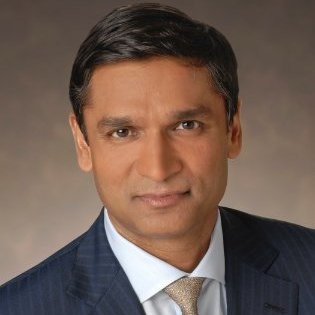
Join us for an insightful discussion with Shahid Ahmed, Executive Vice President of New Ventures and Innovation at NTT, as he delves into the dynamic landscape of small language models, Edge computing, and the ever-growing role of AI at MWC25 Barcelona. Hosted by theCUBE analysts Savannah Peterson and Dave Vellante, the conversation navigates the exciting intersections of technology and regulation, providing a fresh perspective on industry trends and innovations. Follow theCUBE's wall-to-wall event coverage https://siliconangle.com/events/.
>> Good afternoon, nerd fam, and welcome back to Barcelona, Spain. We're here coming to the
conclusion of day one of our four days of coverage on theCUBE. My name's Savannah Peterson,
joined with Dave Vellante. Dave, what is the coolest
thing you've learned? >> Day one. I feel like the
week is ending. Holy cow.
Dave Vellante
>> Well, we've had enough
great content today-
Savannah Peterson
>> Yes, definitely.
- ...
Savannah Peterson
>> that I feel like we could
have gotten a whole scope
Dave Vellante
>> of the show in just the
short time we've been here, although so many fun stories to unpack, including with our next guest. Shahid, thank you so much for taking the time to hang out with us.
Shahid Ahmed
>> Always a pleasure.
Thank you for having me. >> I mean, you were hosting
Dave last night at Happy Hour.
Savannah Peterson
>> Now you're here with us. We're going to be talking
small language models. We're going to be talking Edge. There's a whole lot going on. >> That's a good tradition
you guys do on the
Dave Vellante
>> Verbena rooftop.
Shahid Ahmed
>> Yeah, it's Sunday evening
right before the show begins.
Dave Vellante
>> It's become a sort of a
classic meeting spot now.
Shahid Ahmed
>> Thank you.
- It was a good crowd last night.
Shahid Ahmed
>> And it didn't rain, so we like that.
Dave Vellante
>> It didn't rain.
- I was thinking
Savannah Peterson
>> about that with your rooftop.
Dave Vellante
>> I appreciate, I respect the
courage that it took to do that. What's the most exciting thing
you've seen here on day one?
Shahid Ahmed
>> It does feel like day four, by the way, so I kind of agree with you. Well, first and foremost, it feels like we got more people than last year. >> It feels super buzzy.
Shahid Ahmed
>> I don't know if you
guys have noticed this,
Savannah Peterson
>> but hard to get through from
hall five to six to four. So I have a sense that
there's more people. We'll get the numbers later
from John Hoffman, CEO of GSMA, but it feels like the buzz
is here around AI, the buzz around Europe versus US, regulate versus innovate. That debate is boiling. I was in a panel where
they're talking about the role of regulations and how
to fair share for telcos. My message was, "Go innovate guys. No one's stopping you to
building those over-the- top applications. " So, look, I think there's
a lot to talk about. I'm very excited about the show.
Dave Vellante
>> So, by inference, where
are you on regulation, regulatory capture? You're like on the innovation
side of the equation, right? Is that right? Am I inferring correctly?
Shahid Ahmed
>> A hundred percent. I think ... look, as the adage goes,
Europe regulates, US innovates. I think that continues to happen. I think, US has taken
the lead on AI, clearly. Of course there's China there too. We've seen that story play
out the last six weeks, so we cannot ignore that. But in the end, I think the whole model around innovation and creating new opportunities, startups, Silicon Valley, you guys
are very familiar with it. >> Indeed.
- I think, that's definitely
Shahid Ahmed
>> helping these new waves of
technologies that we're beginning
Dave Vellante
>> to see and happen every other week.
Dave Vellante
>> So as we talked about
earlier, two years ago, theCUBE research put out the ... it's actually two and a half
years now, theCUBE, Gen. AI power law, and there we said, "Okay,
you're going to have a lot of big LLMs, big players, but there's going to be a huge opportunity for smaller language models
that are sovereign, more secure, bringing AI to the data
on prem, and at the edge. " You've been talking about this for about the same amount of time. We've seen it. We've predicted it. It's now happening, isn't it?
Shahid Ahmed
>> It's awesome that you
guys have been talking well before DeepSeek showed up to the scene. It became a family word. I think, look, for me, anybody can build a large language model. You got deep pockets, you can get the GPUs, you can build it. It's not a big deal. Big deal is to build a
small language model.
Savannah Peterson
>> Why?
- Because three big reasons.
Shahid Ahmed
>> One, you don't want to be
consumed with large resources or compute power, which means- >> Hundred percent.
- ...
Shahid Ahmed
>> not only it's not
sustainable, it's power-hungry
Savannah Peterson
>> and it's not economical. Almost 80% of the use cases, as an example in industrial
manufacturing plants, are based on edge use cases. >> 80%.
- 80% of AI use cases are on the edge.
Shahid Ahmed
>> And so, intuitively, think
about it. How many people in ...
Savannah Peterson
>> blue-collar workers are going
to actually use ChatGPT, Perplexity, Anthropic
on their laptop? Few.
Savannah Peterson
>> No, it's AI beyond the browser.
Shahid Ahmed
>> Right.
- Yeah.
Shahid Ahmed
>> Yeah. But if you want
Savannah Peterson
>> to automate all your conveyor
belts, your thermostats, your robotics, that requires
a very edge-type service. It requires smaller language models. I'm only talking about 20
tokens, 30, 40 tokens versus- >> A whole different experience.
Shahid Ahmed
>> Yeah.
- Yeah.
Shahid Ahmed
>> And, to me, that's
Savannah Peterson
>> where the breakthroughs
are going to happen.
Dave Vellante
>> And I'm so glad that DeepSeek, one of the side benefits of DeepSeek, besides bringing the whole
economics down, is to bring to this idea that you don't
need large language models.
Savannah Peterson
>> Correct.
- You can garner the benefits
Shahid Ahmed
>> of AI from small models that
can go on your cell phone- >> A hundred percent.
- ...
Shahid Ahmed
>> a little Raspberry Pi CPU.
Dave Vellante
>> And we've known this for
a while, you predicted it,
Savannah Peterson
>> we predicted it, and
yet the market responded by selling off Nvidia. So my question to you is, "Okay, you don't necessarily need
these large language firms, let the big guys spend all that money, but you still need GPUs."
Shahid Ahmed
>> Look, I think, if you look at the software cycle over the years, even pick Microsoft operating system, even personal experience,
you're like, "I want a bigger, better laptop with larger
CPUs so I can do more things. " And so hardware, you'll
always need a bigger CPU. There's no doubt about it. GPUs will play a part,
Nvidia will play a part. Yeah, their stock dipped, but, by the way, has regained a lot of it. So, I mean, look, and the
earnings was great as well. >> Awesome. Yeah.
- So hardware will always catch up
Shahid Ahmed
>> to software
Dave Vellante
>> and there's no doubt that you'll
need bigger compute power. But I think there is,
what was forgotten in all of this talk, is the idea of building smaller language models or just smaller AI models. Agentic AI, as an example,
doesn't require big, huge, monolithic models anymore. You could just do it with a small 20- token model and be done with it.
Dave Vellante
>> The other thing is, if
any market is not a zero- sum game, it's this one. So it's not as though
if ... pick your vendor. Whether it's you AMD or AWS or Google or Microsoft, just because those guys are selling chips doesn't mean
Nvidia's not going to sell. They're all going to sell chips, because there's different use cases. What are you seeing at the edge for that type of deployment,
and where do you guys fit?
Shahid Ahmed
>> So we launched Edge AI, as a product and service, back in August,
and we were telling the market- >> We chatted back then.
Shahid Ahmed
>> Right. Right. And we said,
"Look, we could do a lot
Dave Vellante
>> of things on the edge. You don't need a big,
massive GPU infrastructure or data center to power these AI models. You could do that in a
small little edge box that sits right next to an
x-ray machine or a conveyor belt or a airport locomotive, AGVs, warehouses. It needs to be there , because it needs to
take action right away. " So what Edge AI is basically
looking at time series data as data is coming in, it
does something with it, puts it in a nice model and takes action. That's the benefit of an Edge AI model. And I'm oversimplifying it, I know my engineers are going to kill me.
Savannah Peterson
>> You're not necessarily
oversimplifying it, though. Just because you're not using
a lot of acronyms and words and abandoning half of the audience who doesn't understand our lexicon, I think you're actually
hitting the nail on the head. And I think what I like about what you're saying is
you're essentially saying that this experience at the
edge is going to be the way that most people interact
with AI in a longer- term value creation way,
which I think is fascinating. You mentioned the supply chain example. I'm very curious what else
you're seeing in terms of edge, where the benefit is as
obvious as it is with the 80% of the use cases there.
Shahid Ahmed
>> I'll give you a use case. And I think, David, we talked
about this some time ago and, since then, we've
matured on this use case. Basically, take a big large warehouse and typically you'll find
hundreds, if not thousands, of thermostats regulating the temperature of this huge space. Sometimes these- >> I bet they're doing it in here.
>> And each section should
have their thermostats, so
Savannah Peterson
>> that you can be comfortable. But in typical, in these
large warehouses, factories, there's literally a person with a laptop, much like your mixer there
with, it looks like a DJ, he's calibrating all the
thermostats to get an ambient temperature of 70 degrees. Making that up. To do that, you have to regulate all these
thermostats across the board. And literally this person
is going from thermostat to thermostat, connecting to it, and being able to get a
ambient temperature of 70. >> Crazy.
- Now, if you put that in a AI model,
Shahid Ahmed
>> it takes all the data
from these thermostats,
Dave Vellante
>> understands it, and then regulates it. And you just say to your little UI model, just say, "Hey, put
the temperature to 70 degrees. " It does the magic.
Savannah Peterson
>> And it probably does
it more efficiently.
Shahid Ahmed
>> More efficiently. You don't
need a person to do this. But it does that effectively and immediately, which is
key, versus somebody going to hundreds of them and trying
to manage it individually.
Savannah Peterson
>> Well, and you could probably ... sorry, I know you got
something to say, but- >> That's good. Go .
Savannah Peterson
>> And you could probably ... I mean,
Dave Vellante
>> I'm just thinking about this from a sustainability perspective. If you sense, you could know that there aren't people in the room, for example, so it
doesn't need to be at 70. It can go a little bit up and down, depending on the
machines or whatever's in there.
Shahid Ahmed
>> Yeah. In this case, by the
way, one of the goals was for lower carbon footprint, energy
footprint, sustainable goals. That's why they wanted
to have a consistent standard temperature.
Savannah Peterson
>> Yeah.
- It's funny you was joking
Dave Vellante
>> before, your engineers wouldn't
like the way you described it, but you were actually
talking tech, time series. That's streaming, that's data. You talked about action
taking action. That's agentic. Everybody's talking about agentic. You're actually applying
it in the real world. So I'm interested, because there's a lot of agent washing going
on, a lot of AI washing. You're talking about real
use cases in the field. This is real revenue
that you're generating for you guys and your customers. So where are we? What's
the journey look like? How real is this today?
How meaningful is it?
Shahid Ahmed
>> So at Edge AI, in our
view, is blue-collar, meat and potatoes use case. Things that people want
and need in real time. I would love to have
Google search replaced by my Perplexity browser. Great. But you know what? I
don't even know if I need it. Maybe, I do. Who knows? I can build my itinerary when
I go back to Europe in summer. Great. But these are use cases that could be used
today, in today's world. We do believe, we call
them blue collar use cases, but they're basically industrial
manufacturing use cases that there are critical,
mission-critical, applications. So look, for me, it's important to solve today's problem
using today's tools, and that's what AI and Edge AI does.
Dave Vellante
>> We did a study, it was
over 10 years ago now ... actually, GE asked us
to take a look at it. Remember when they were trying to sort of become a software company? And I remember our analyst
who quantified this, he came to me, he was like, "This thing is so big. " He goes, "It starts
with a T, with a trillion. " I mean the market is massive, but, of course, it's very fragmented. So how do you deal with that sort of fragmentation from a
business model standpoint? >> It's an awesome question,
Shahid Ahmed
>> because there's so many
AI models out there today. It's kind of crazy. You
remember the old browser wars?
Dave Vellante
>> Yeah.
- Oh, yeah.
Shahid Ahmed
>> Well, it feels like we're seeing this,
Savannah Peterson
>> right now, play out. Look, for us, it was very important to pick the right AI framework, and the one we looked at
was mathematical based. Not to get too technical, but a mathematical based model is different than a
language based model in that it can pivot very
quickly to a variety of different use cases through
mathematical permutations, like linear programming
models, not to get too-
Dave Vellante
>> No, it's good. Linear programming, you use a matrix math. >> Exactly. Thank you.
Shahid Ahmed
>> You can get nerdy with us. Don't worry.
Shahid Ahmed
>> Absolutely. And using those
Savannah Peterson
>> constructs are easier to not only program, but also apply in these
industrial use cases that require time series data. So back in the linear program classes that you probably took,
it was all time series.
Dave Vellante
>> And they require very
high degrees of accuracy.
Shahid Ahmed
>> A hundred percent.
- They can't hallucinate, right?
Shahid Ahmed
>> And mathematical models
do not hallucinate.
Dave Vellante
>> Exactly. They're not-
- They're very discreet.
Shahid Ahmed
>> It's discreet mathematics there.
Savannah Peterson
>> Yeah, you're either correct
or you're not correct.
Dave Vellante
>> That's what we learned, back then. Right? Okay, so DeepSeek, good news, right?
Shahid Ahmed
>> I think so.
- Okay. How about China-US?
Dave Vellante
>> You hear a lot of talk. You
guys are a global company. I hear people say, "US
must win the race for AI. " Not even quite sure
what that means anymore. I mean, China clearly is a player here, but you know the US
innovation model, very well. How do you think it's going to play out?
Shahid Ahmed
>> It's a loaded question, Dave.
Always a good one from you. Look, I think the DeepSeek
model proved two things. One, the economies have scale. I think Satya said it very
eloquently, which is, look, it doesn't mean that you can ... just because you have
something, economics go down, doesn't mean the demand is not there.
Dave Vellante
>> Jevons paradox.
- Exactly.
Dave Vellante
>> And so, I think, that's one. Outcome.
Shahid Ahmed
>> The second one is that it's open source, which means you don't necessarily have to build a proprietary model,
you can open source it. And, by the way, yes,
DeepSeek has all the data. If you have that app on
your iPhone, which I do, all that data goes to China. We know the sensitivities there. But, look, it's open source too. You can bring that data
and make it your own, so it doesn't go to China. So there's a lot of nuances. People have to really
understand the differences. It's not just necessarily ... just because it's made in China
doesn't mean it has all the political attachments. So I think there is going to be a lot of China versus US. I think, to me, what is more important is to discuss open versus proprietary models. And I think that's where ... it's interesting that China would come up with an open source model. Isn't it? DeepSeek gets
very high marks for that. I mean, IBM Granite, very open, didn't have quite the
performance advantages. Although, very competitive
performance, it just didn't get as much noise, because it
wasn't a Chinese company.
Shahid Ahmed
>> Correct.
- I'll give you my take.
Dave Vellante
>> I wonder if you could comment on it. You're not going to stop
China from innovating. No way. Copying, innovating, whatever
you want to call it, both. But the AI diffusion regulations, I don't know if you saw them.
Shahid Ahmed
>> Yeah. - They basically put
countries into three buckets.
Dave Vellante
>> You're with us, you're against
us, or you're in the middle. And it's that in the middle,
it's like India, Israel, Switzerland, and it's so convoluted that those guys aren't going
to be able to get access. And, to me, that's a mistake. Speaking as an American,
the United States should be welcoming those countries in as opposed to pushing them away. They could push them to China. Because my premise is you need
an ecosystem to win in AI, and if you don't have
those countries as part of your ecosystem and China does, that's advantage for China. Your thoughts? >> I mean, yeah, no, absolutely.
Shahid Ahmed
>> I think the whole idea
of sovereign AI kind of sucks, to be honest with you. I'm like, "No, please don't
bring politics into tech. Let's leave that alone. " I mean, DeepSeek proved
it right on point, that just because you're Chinese, it proved the whole economic
transformation on AI. Reset our thinking. And so, hey, what's the next ... it's not to say maybe
somebody in France who are, by the way, the best physicists and mathematicians university-wise, they might come up with
something very different.
Dave Vellante
>> I saw some benchmarks.
DeepSeek, obviously, competitive. You had Llama in there,
you had Anthropic in there, you had Google in there, et cetera, but the one company that is consistently innovating is OpenAI. We're talking large language models, and I know you're a big fan
of small language models, because your space and your serve market, but I want to ask you something
that we often ask informed guests is do you think that
market gets commoditized, that LLM market? And some people would say it already is. But then there's OpenAI.
They keep pushing the envelope, which is kind of interesting. John Furrier, whom you
know, smart guy, says that the key's going to be innovation as to whether it gets commoditized. I know a lot of VCs say,
"We've seen this model before. It's a hundred percent going to get commoditized." What do you think?
Shahid Ahmed
>> I agree, I think, with Furrier. I think, look, it will have
to consolidate at some point. Masa Son from SoftBank, he is investing, I want to use the expletive
here, but a lot of money. And is there room for another model like that? I don't know, frankly speaking. I think what we have is pretty good. I think there is some consolidation that will have to happen. I like the way OpenAI is
also focusing on business-to- business use cases. That's a good advancement,
much like Microsoft is. That's going to drive a
lot of innovation, a lot of different types of use cases, and ultimately we'll figure
out whether there's a room for another model out there. >> And it's great for you
because it just trickles out.
Dave Vellante
>> What Grok is doing, what Elon's doing with XAI, yeah, bring it on. If you want to spend all
that money creating systems, open systems, that we can then learn from, that's what's going to happen. One of our earlier guests
today called it ... he called it Doge for AI,
which I thought was brilliant.
Savannah Peterson
>> No, yeah. That was great, in general. All right, Shahid, we
could talk to you all day, but I have one final question for you. Since you're a CUBE alum,
VIP here, what do you hope to be able to say when we're
hanging out at Mobile World Congress in 2026 that
you can't yet say today?
Shahid Ahmed
>> Awesome question. Well, to me, I think 2025 is going to be a pivotal year. Many of us know the political
landscape is changing almost daily, if not weekly. Look, I think the tech cycle is also in full correlation with the political cycle
that we're witnessing. The two things are almost
identically revolving, so I think it'd be interesting
to see the intersection of politics and tech that I
don't think we've seen before.
Savannah Peterson
>> Agree. Well, we've certainly
never seen an inauguration with the executives of the largest social
networks on the planet standing next to the President of the United
States. . >> Right. And the cabinet
members are way back.
Savannah Peterson
>> Yeah, exactly. In the nosebleeds.
Dave Vellante
>> And there's an asymmetry
now in the media.
Shahid Ahmed
>> Where it was, everything
was sustainability and DEI, that's been a big backlash, and so we hope to fill that void.
Savannah Peterson
>> Yeah, I was going to say
we're still going to be- >> We'll balance that assymetry.
- ...
Savannah Peterson
>> sustainable and care about DEI. Shahid,
Dave Vellante
>> thank you so much for this
segment. This has been awesome.
Shahid Ahmed
>> My pleasure. Thank you for having me.
Dave Vellante
>> Shahid, great to see
you, man. Thank you. >> It's great to see you too.
Shahid Ahmed
>> And thank you, Dave.
Great questions on that one.
Savannah Peterson
>> That was awesome. And thank all of you for tuning in wherever you might be. We're here in Barcelona,
Spain, at MWC, coming to the end of day one. My name's Savannah Peterson. You're watching theCUBE,
the leading source for enterprise tech news.