We just sent you a verification email. Please verify your account to gain access to
MWC25. If you don’t think you received an email check your
spam folder.
In order to sign in, enter the email address you used to registered for the event. Once completed, you will receive an email with a verification link. Open this link to automatically sign into the site.
Register For MWC25
Please fill out the information below. You will recieve an email with a verification link confirming your registration. Click the link to automatically sign into the site.
You’re almost there!
We just sent you a verification email. Please click the verification button in the email. Once your email address is verified, you will have full access to all event content for MWC25.
I want my badge and interests to be visible to all attendees.
Checking this box will display your presense on the attendees list, view your profile and allow other attendees to contact you via 1-1 chat. Read the Privacy Policy. At any time, you can choose to disable this preference.
Select your Interests!
add
Upload your photo
Uploading..
OR
Connect via Twitter
Connect via Linkedin
EDIT PASSWORD
Share
Forgot Password
Almost there!
We just sent you a verification email. Please verify your account to gain access to
MWC25. If you don’t think you received an email check your
spam folder.
In order to sign in, enter the email address you used to registered for the event. Once completed, you will receive an email with a verification link. Open this link to automatically sign into the site.
Sign in to gain access to MWC25
Please sign in with LinkedIn to continue to MWC25. Signing in with LinkedIn ensures a professional environment.
Sangmin Lee, SK Telecom & Mark Seamans, Penguin Solutions & Sunghyun Park, Rebellions.ai
Mark Seamans
VPPenguin Solutions
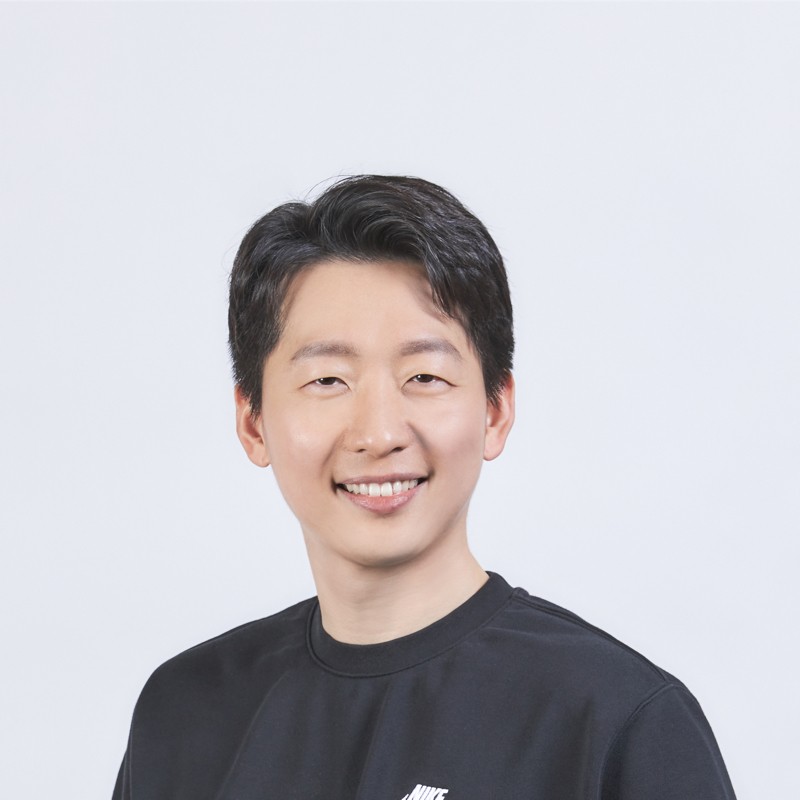
Sunghyun Park
Co-founder & CEORebellions.ai
Sangmin Lee
Head of Growth Business OfficeSK Telecom
In this episode from MWC 2025, Dave Vellante of theCUBE hosts an insightful discussion featuring Sangmin Lee from SK Telecom, Mark Seamans of Penguin Solutions, and Sunghyun Park of Rebellions AI. They explore the rapid evolution of the data center market, powered by advancements in accelerated computing and artificial intelligence (AI). The conversation delves into their recent collaboration, marked by a signed memorandum of understanding (MOU), aiming to advance AI data centers with a focus on high-performance computing and innovative accelerator technologi...Read more
exploreKeep Exploring
What is the projected growth rate and market size of the data center industry in the upcoming years?add
What is the collaboration agreement between Penguin, SK Telecom, and Rebellions focused on?add
What trends are being seen in the marketplace regarding data centers and AI infrastructure?add
What do you want to be able to say a year from now that you can't say today?add
Sangmin Lee, SK Telecom & Mark Seamans, Penguin Solutions & Sunghyun Park, Rebellions.ai
search
Dave Vellante
>> Hi, everybody, welcome back to Fira Barcelona. My name is Dave Vellante. And we're here at MWC 2025. You're watching theCUBE. My name is Dave Vellante, and we're excited to have the next session. We're in a data center super cycle. We've said that. Some people don't like that term, but, hey, deal with it. It's true, it's happening. The data center market is exploding. AI, accelerated computing, massively parallel computing is powering that. We're excited to have Mark Seamens here. He's the Vice President of Penguin Solutions. And he's joined by Sangmin Lee, who's the Growth Business Office Vice President at SK Telecom. And Sunghyun Park, who's the CEO of Rebellions AI. If you don't know them, stay tuned. You're going to learn a lot. Guys, welcome to theCUBE. Thanks so much. Appreciate you being here.
Mark Seamans
>> Thanks, Dave.
Dave Vellante
>> Yeah, so, Mark, you heard my setup. I really do believe that we are in a next era, a giant wave. Data center business was flat, really not that exciting for a number of years. Important, but not growing. All of a sudden, wow, GPUs have changed the world, AI. And the market is growing. We've forecasted at theCUBE Research a 10-year compound annual growth rate in data center, all in, power cooling, equipment, 15% CAGR over 10 years, massive. And the accelerated portion of that growing at mid-twenties. So it's just mind-blowing. And we're talking about a trillion-dollar business by early 2030s. So massive TAM, a lot of acceleration, and you guys are at the heart of it. So set up this little discussion that we're going to have here, Mark. Who are you guys and your partners? Frame it for us.
Mark Seamans
>> Sure. So starting from a legacy and a history perspective, you talked about the data center market, and certainly Penguins and company for over 25 years that's been focused almost exclusively on high performance computing. And so really the predecessor to now what's exploding with AI, a lot of the technologies, in terms of GPU technology that's powering it. So our expertise is in pulling it all together, building solutions for our customers, combining software, hardware, power, cooling, into a completely executable system. And what we're here working on today is a tight collaboration that really blossomed starting the second half of last year, and where it's culminating in a memorandum, a collaboration agreement we just signed today between Penguin with SK Telecom, with Rebellions, bringing together our solution capability with the software and go-to-market strength of SK, and then the innovation, from an accelerator perspective, of a very innovative company, Rebellions, that makes these NPUs.
Dave Vellante
>> You guys just signed the MOU?
Mark Seamans
>> Just an hour ago.
Dave Vellante
>> All right, we're breaking news on theCUBE. We love that. Awesome. Okay, so, basically, a partnership, bringing together different capabilities to really go after this data center opportunity. Let's break it down a little bit. Sangmin, I wonder if you could just talk about your role at SK Telecom? And my understanding is, you've got plans on a go-to-market, basically scaling out data centers. You're also building your own data centers with this type of solution. Maybe you could discuss that a little bit and set up your role here?
Sangmin Lee
>> Oh yeah. I'm in charge of the Head of the Growth Business Office in SKT, including the various new businesses, the AI semiconductors and data centers, and also there's some quantum computing things. In SKT, we already announced our AI strategy, which name is AI Pyramid Strategy, focusing on AI infrastructure, AI transformation, and AI services. Data center is the key of the AI infrastructure. So we try to strengthen our AI data center solutions and capabilities, so that is why we are working with the Penguin Solutions and Rebellions to make it possible.
Dave Vellante
>> Great. And, Sunghyun, Rebellions AI, a lot of people maybe haven't heard of them. You guys design silicon. Tell us more about your focus, your strategy, and tell us more about your company?
Sunghyun Park
>> Sure. With team Rebellions, as you mentioned, Korean AI fabless chip company. Fabless means we design the chip, but fabricate it by another foundry. So we are focused on inference, something like NVIDIA, but compared to NVIDIA's, they offer a much higher functional diversity. NVIDIA GPGPU can do any kind of parallel computation, like training, inference, bitcoin mining, any kinds of parallel computation, including graphics rendering. However, our chips offers the inference only. It's less the functional diversity, but in terms of inference energy efficiency and the performance, it's better, more than three times higher the performance that TOPS per watt, something like that. So it's exactly what DeepSeek was doing a month ago. DeepSeek developed their model using NVIDIA GPGPU. However, they're going to do actual business, they're going to use Huawei's inference chip. That's why we plan GPU Edge service and MPU Edge service on the SKT platform, the data center, and the unified software called Cloudsware, and any other software from the Penguin Solutions.
Dave Vellante
>> So you guys are going to be building GPU clouds, essentially, and offering them to customers as a service, is that right?
Sangmin Lee
>> Yeah, that's right, that's right.
Dave Vellante
>> Okay. And then coming back to chip designs, you hear H100s and Blackwell, a lot of power. You're talking about inference. What's different about your inference? Is it more memory, is it different networking? Is it lower cost per watt, which is a critical metric? What's the design philosophy, and the main difference from what we would think of with an NVIDIA GPU, which started out for gaming and, of course, crypto?
Sunghyun Park
>> Good question. GPU, by the way, we call GPU, that's the general purpose of GPU, meaning it's much higher flexibility in terms of power computations, lots of chip-to-chip communication and cost communication to training, speak closer. However, in terms of inference, we don't have such network overheads, something like that. Just one 75 billion model, just a couple of H100s or something. Also, our architects focus on HBM-centric. SK Telecom is our investor in strategics, but also SK Hynix, also our strategy investors. So HBM-centric and the chiplet-based modular design, which is much higher energy efficiency compared to general purpose GPU, yes.
Dave Vellante
>> And chiplet gives you flexibility to configure for different workloads. Okay, Mark, so you guys are the SI expertise. You have a software layer as well.
Mark Seamans
>> Correct.
Dave Vellante
>> SK Telecom, you've obviously got infrastructure, you've got expertise in building, and you've got the go-to-market. And then Rebellion's AI has the inference IP, you guys put it all together. Tell me more about the strategy, the go-to-market, the journey that you guys are on. What can we expect in terms of the timeline?
Mark Seamans
>> So we think we're in the early days of AI clearly, and if you look at where AI has come from, it's really been focused on heavily training-influenced, and really a very fixed architecture that people have been using. What we see going forward is going to be a huge mix of both training and inference, and processors like Rebellion's coming into play. And then the need for customers to be able to digest diversity and options that they have, and how they deploy it, based on their workloads. So one of the things Penguin brings is we've been doing this for years. We've got over two billion hours of GPU runtime experience that we've been able to take the learning from that and build it into the software that we bring to help automate a lot of these operations for customers. Because you got to believe, this is a lot of new processing, a lot of new technology for customers. And so the more we can bring to them, through that experience, and distilling it into the software, the easier their deployment experience is going to be. The other piece is through this design to build, to deploy, to manage, is putting all the pieces together for our customers, is really the emphasis. And then, in doing that with SK, it's doing it in a way where it can either be in a customer's data center, or in a fully hosted environment where we can put it in, and they really use it as a private cloud.
Dave Vellante
>> I see. It's probably a little bit hard to hear what Mark was just saying, but he was taking us through the trends. The focus has been on training, and he talked about Penguin and Penguin Solutions. I'm interested in what you guys are seeing as the trends. Because what we see is a lot of experimentation is done in the public cloud today, but data lives on-prem, and data has gravity. And a lot of customers, either their data center is not ready for AI. I don't know if you guys are water-cooled, air-cooled, hybrid, but there's a CapEx requirement there. The skills aren't necessarily there because they stopped building data centers a long time ago when they put everything in the cloud. But they want to build AI centers of excellence, and so they're rethinking their data center strategy. Those are the trends that we see. Does that align with what you're seeing? What are the trends that you see in the marketplace?
Sangmin Lee
>> Formally, most of the customers just ask to very basic services, including the data center buildings and fibers and electric powers. But, nowadays, lots of customers says, different voices. So we really to provide, not only as a traditional data center services, but also the GPO Azure service, modular AI data center, or just a la carte, or customize the AI cloud services for the customers. That's one of the biggest trends changed in these days. And second thing is, customers sometimes try to find out the most efficient way to provide their AI services. So somebody still want H100, H200, or 300, but also they want to find some cheap and efficient way to loan their own AI services. That's why we are working with Rebellions, including the NPUs, the more efficient chip to provide those AI computing power.
Dave Vellante
>> Anything you'd add to the trends that you see?
Sunghyun Park
>> Yes, as you mentioned, we have two types of the... How can I say? Data center, compute infrastructure, on-premise, and the cloud, and the horizontally. What about vertically? It's inference and training. The point is, each enterprise can control the training workload. Okay, we have that resource, or something like, but inference, nobody can control. But more traffic, more customer, and app store, number one. And sometimes nobody can control. So from our perspective, as more business gets complicated, then goals don't never control on the on-premise. As sometimes, then we need a definitely hybrid, or much more traffic in the cloud. That's why we are targeting the MPU Azure service on the SK Telecom and the Penguin Solutions. That's what I view.
Dave Vellante
>> So sovereign AI, obviously, is the big topic. Sovereign AI meaning, whether it's governments or organizations, want to have their own data center. They don't want to send data to the United States if they're in Europe, and vice versa. And, obviously, China wants to keep things in China, and India in India, et cetera. So sovereign AI is a big trend, Mark.
Mark Seamans
>> Absolutely.
Dave Vellante
>> So how do you guys play in sovereign AI?
Mark Seamans
>> Well, sovereign AI solutions really combine the ability to take the best of the best, produce a complete and isolated, and fully hosted environment that's understood in terms of where it's being hosted and where the actual workloads are being run. In terms of our work with SK, sovereign AI is extremely strong within the Korean market. SK has an extremely tight relationship with the government, and a strong commitment to delivering sovereign AI solutions. Maybe you can touch on that?
Sangmin Lee
>> Yeah. The South Korean government already announced their plan to build a new sovereign AI data center, and SK is late to answer the questions. So we already announced our strategy, AI super highway infrastructure. So we will build more than a 100 of megawatts size new data center, including the new GPUs, and new the software platform to provide the easier solution for our customers in the government. That's how we approach this market, especially in the sovereign AI side.
Dave Vellante
>> What's the scope of the data centers you're building? Is there large, medium, and small? Is there an edge play? Everybody's talking about edge, of course, at this show. Give us a sense of the scope.
Mark Seamans
>> So I think it ranges in scope. There are absolutely some massive data centers going in. One of the things to touch on though is, as we deploy these systems in data centers, it's a new era. Enterprises, for years, have been dealing with racks of power that were in the 10,000 watt, 10 kilowatt per rack. These new GPU systems are 40,000 going to over 100,000 watts per rack for a lot of these. It's one of the reasons that processors like Rebellions, which are very power efficient, become interesting. Additionally, also, with an edge opportunity, where you may not have access to tens of thousands of watts of power, but you want to push the processing to the edge. And maybe you can touch on it?
Dave Vellante
>> Got it, yes.
Sunghyun Park
>> That's the scale. The scale's low. So if they have more power budget, we can put more throughput, especially the inference and traffic. So, again, we are targeting the data center based on the cloud service, meaning that we always get some budget in terms of power, cost, whatever. So within the budget, in order to supply our AI workload and service, we need chunky and isolated solution from the hardware top to the software that Penguin provided.
Dave Vellante
>> So in that example, it's an air-cooled system, right?
Sunghyun Park
>> Yes, you're right.
Dave Vellante
>> But do you also have water-cooled?
Sangmin Lee
>> Yes, we have. We already tested it, and we are ready to provide the liquid cooling system too.
Dave Vellante
>> Will you offer a variety of silicon, or is it exclusively Rebellions? How does that-
Sangmin Lee
>> We'll provide both GPU and MPU.
Mark Seamans
>> Yeah, so it's going to be be traditional NVIDIA-based, AMD-based processors. It's going to be Rebellions on the inference side particularly. So it's really about offering customers choice. And even as you think about dealing with the power and the cooling aspects, it's really being able to help navigate that. Where Penguin comes into the picture, it's understanding customer goals, working through the technology, and then saying how can we pull it together in a completely deployable solution.
Dave Vellante
>> So very AWS-like, where you say, "Okay, you want NVIDIA, we got that. You want inference or low-cost training, we got Trainium. We got Inferentia, we got AMD, we have Intel." So similar type of thing.
Mark Seamans
>> Absolutely, and there's more coming, that's our future. It's going to be more variety, more diversity, that people are going to have to navigate and take advantage of.
Dave Vellante
>> And the customer will make the decision based on the economics. And the economics of Rebellions is going to be really attractive for inference. If they got to do big training, they'll spin up a H100, or a B100, or whatever it is.
Mark Seamans
>> Absolutely.
Dave Vellante
>> So the MOU signed today, that's awesome. Breaking news on theCUBE. What do you guys want to be able to say a year from now that you can't say today?
Mark Seamans
>> I think it'll be telling the stories that the most interesting thing is telling the stories of the great customer experience and the great customer outcomes. And so it's going to be about this infrastructure that's scaled, but it's scaled invisibly and seamlessly for customers to let them do what they want it to do.
Dave Vellante
>> Sangmin, anything you could add to it? What do you want to be able to say a year from now that you can't say today?
Sangmin Lee
>> Oh, I believe that, at the end of this year, we can show the Korean sovereign AI data center into the market with these two, Penguin and Rebellions. So we'll be happy to provide those services in the real market very soon.
Dave Vellante
>> And we love the fabless model. Rebellions, where do you want to be a year from now?
Sunghyun Park
>> So from our data center customer point of view, at the end of the year, so they're going to choose our MPU, like Inferentia from Amazon, something like that. Just pick, okay, economics something, cost, throughput, latency. Okay, pick it up, or pick it up depending on the model, depending on the service. That's our goal of this year.
Dave Vellante
>> Guys, excellent conversation. Congratulations on the partnership, and best of luck to you. I hope we can have you back next year to track your progress. And you're doing some great work. Really appreciate it.
Mark Seamans
>> Thanks very much.
Dave Vellante
>> Thank you.
Sunghyun Park
>> Thank you.
Dave Vellante
>> You're very welcome. All right, keep it right there, everybody. This is Dave Vellante. Bob Laliberte is here, as is Savannah Peterson, and the whole CUBE crew. You're watching theCUBE from MWC 2025. We'll be right back, right after this short break.