We just sent you a verification email. Please verify your account to gain access to
MWC25. If you don’t think you received an email check your
spam folder.
In order to sign in, enter the email address you used to registered for the event. Once completed, you will receive an email with a verification link. Open this link to automatically sign into the site.
Register For MWC25
Please fill out the information below. You will recieve an email with a verification link confirming your registration. Click the link to automatically sign into the site.
You’re almost there!
We just sent you a verification email. Please click the verification button in the email. Once your email address is verified, you will have full access to all event content for MWC25.
I want my badge and interests to be visible to all attendees.
Checking this box will display your presense on the attendees list, view your profile and allow other attendees to contact you via 1-1 chat. Read the Privacy Policy. At any time, you can choose to disable this preference.
Select your Interests!
add
Upload your photo
Uploading..
OR
Connect via Twitter
Connect via Linkedin
EDIT PASSWORD
Share
Forgot Password
Almost there!
We just sent you a verification email. Please verify your account to gain access to
MWC25. If you don’t think you received an email check your
spam folder.

In order to sign in, enter the email address you used to registered for the event. Once completed, you will receive an email with a verification link. Open this link to automatically sign into the site.
Sign in to gain access to MWC25
Please sign in with LinkedIn to continue to MWC25. Signing in with LinkedIn ensures a professional environment.
Join us for an insightful conversation with Elias Zamora Sillero, head of the data department at Sevilla FC, as he explores the exciting integration of AI in sports at MWC25 Barcelona. Sillero offers a unique perspective on how Sevilla FC leverages generative AI to enhance talent identification and scouting processes. Hosted by theCUBE analysts Savannah Peterson and Dave Vellante, this interview sheds light on the innovative use of technology in football and the pressing announcement of Sevilla FC joining the prestigious AI Alliance alongside renowned institu...Read more
exploreKeep Exploring
What is the significance of Sevilla FC being the first sport institution to join the AI Alliance?add
What is the strategy that Sevilla FC used to maintain their competitive edge in scouting players over the past 25 years?add
What technology is being used to extract information for scouting reports for non-structured data?add
What was the role of IBM in helping a football organization with their technology and data needs?add
What are some of the potential applications of technology and data science in various departments within a football club?add
>> Good afternoon CUBE community, and welcome back to Barcelona, Spain. We are here midway through day one of our four days of live coverage on theCUBE. My name's Savannah Peterson, joined by Dave Vellante for a just fantastic lineup. I feel like we've learned a lot already today.
Dave Vellante
>> Yeah, I mean, we're just getting started. Early innings, as they say.
Savannah Peterson
>> Yeah, I know.
Dave Vellante
>> Or first half?
Savannah Peterson
>> Oh, yeah, yeah, period? Quarter? No. Yeah, yeah, exactly. This is going to be a really exciting segment. We are going to be talking about AI in sports, one of my favorite things to talk about. No one better to do it than the man of the Sevilla Football Club himself. Elias, thank you so much for spending time with us.
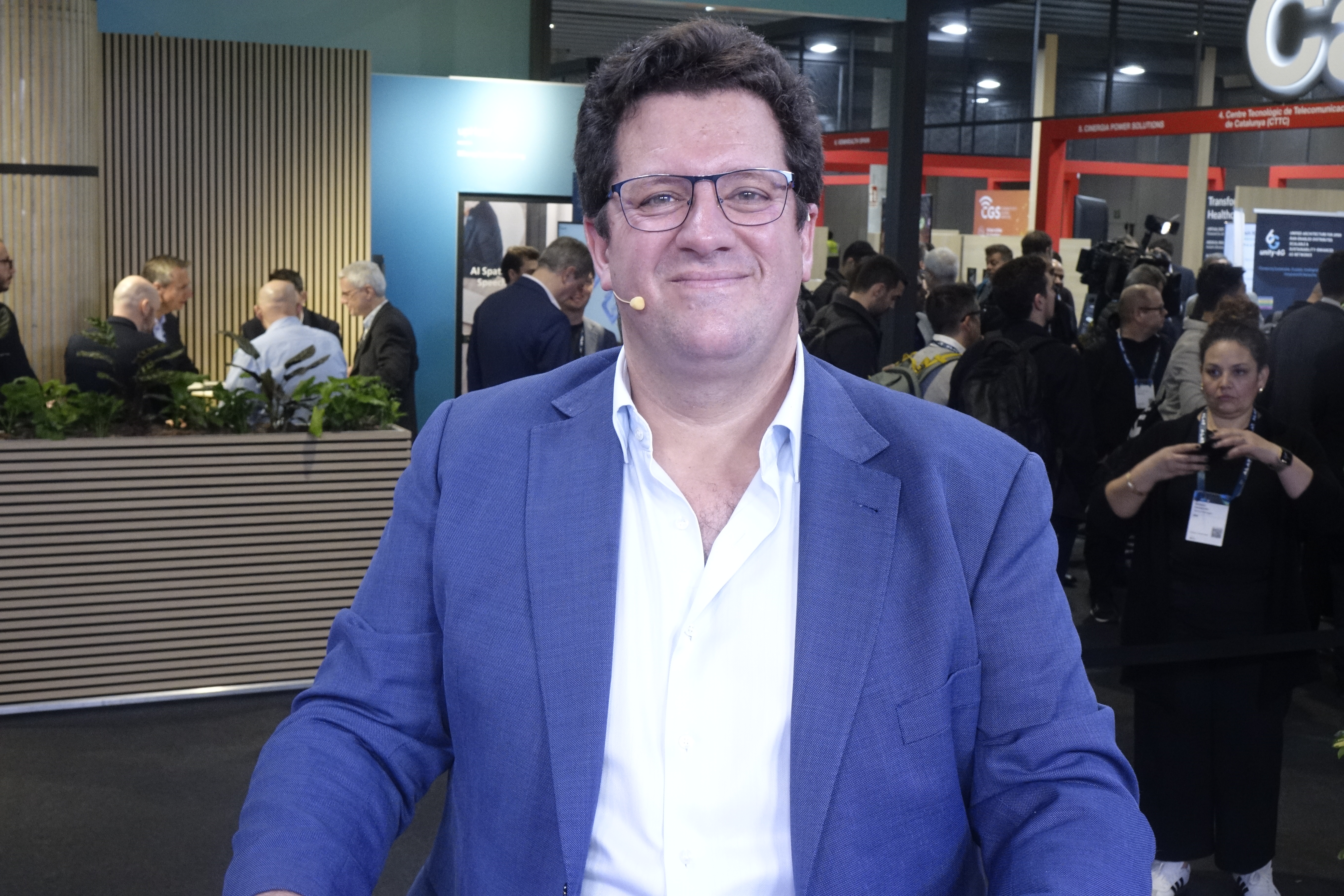
Dr. Elias Zamora
>> It is a pleasure to be here with you.
Savannah Peterson
>> It is such a joy. Okay, but before we even get into anything, there's a very big announcement coming out today, something very new. You've been working with IBM for a while, but you get to break the news here with us on theCUBE. Tell us.
Dr. Elias Zamora
>> Yes, I am going to tell you, but before I am going to tell, I tell you a bit the history of why we are here.
Savannah Peterson
>> Yes.
Dr. Elias Zamora
>> And why we are going to make this announcement.
Savannah Peterson
>> Absolutely.
Dr. Elias Zamora
>> So Sevilla FC is one of the most, let us say, successful football club in Europe. We are seven times Champions of the Europa League, and we are a well-known and successful club in the European football ecosystem. Why we are different? We are different for two things. Mainly, apart from the passion that all of us, we think that we have, we always think that we are famous because the way that we try to acquire and to identify talent. So in the last 20 years we were famous for this. And in the last five, six years we became famous for our technological vision. So from 2019, 2020, '21, we have started around data department, technological department, our own applications, data-driven application for football, for the game, and not only for the game. And in the last two years we have been working heavily on generative AI, probably the first club, at least one of the first clubs, if not the first, working seriously with artificial intelligence, generative one for talent identification, in such a way that we have grown very much in maturity, in sport, and in technology, and in AI. And today we are going to announce our official membership in the AI Alliance. AI Alliance is a very elite club of technological companies, top-level academical institutions. So just to say, Meta, IBM, Intel, Uber, Harvard, Cornell, San, FFL, ETH in Europe. And Sevilla FC is the first club, better to say, the first sport institution to be part of the AI Alliance. So it's a recognition of our effort and maturity in AI, and in technology. And it is also, for us, our responsibility, because we are, in one way or the other, we are helping to shape the AI using sport.
Savannah Peterson
>> Wow. So that must... Congratulations.
Dr. Elias Zamora
>> Thank you very much.
Savannah Peterson
>> That's got to feel really amazing.
Dr. Elias Zamora
>> Now, it sounds for me, let us say I have digested it.
Savannah Peterson
>> Yeah.
Dr. Elias Zamora
>> But of course, when this start being built, and when you start understanding the impact that you have had, in something that five, six years ago was just a good dream, for us is a pleasure and a honor to be part of this.
Savannah Peterson
>> Absolutely. Well, and you get to be pioneering. I'm so curious, because you're definitely, obviously, on the front lines, especially on the sporting front. What was the conversation like internally when you were deciding to make this investment in data, and inevitably in AI?
Dr. Elias Zamora
>> This is very interesting question, because everything comes from there. So Sevilla FC, as I said before, we are well known in Europe and in the world.
Savannah Peterson
>> I was going to say, in the world. It's safe to say that.
Dr. Elias Zamora
>> Yeah, in the world, for all scouting success. So in the last 20, 25 years, we have discovered good players before any other people could discover them. How this started 25 years ago, in a manpower way. So you just sent people, sent a scout to competitions in which no other team sent a scout, so you could see them before any other club did it. In the moment that the most part of the clubs in Europe and in the world were able to send technical people, a scout there to such a competition, you lost your edge of, let us say, competitivity against the others. So in one way or the other, you have to find a way to still having this edge to be more competitive than the others. And we decided that the way was through data and through technology. So the way is now, okay, you can send a scout to watch a player, but we are going to watch it deeper than you.
Savannah Peterson
>> Yeah. Ooh, I like that. Okay, so wait, so what does that mean, deeper?
Dr. Elias Zamora
>> What is the meaning of the deeper? Deeper is having more information and cleaner information about the players than other clubs. This is the idea, this ideology is the mission.
Savannah Peterson
>> So what sort of data, and now I'm just, frankly, curious, what sort of data indicates what's going to be a good player? If you can tell me, that might be part of your secret sauce.
Dr. Elias Zamora
>> You have, from my point of view, three kind of data. The quantitative data, how old are you? How many passes you give? How many goals you give? How many goals you avoid, if you are the goalkeeper? So you have thousands of given variables, or metrics, that tell you the quality of a player, no? The most obvious is the scores, how many goals you score.
Savannah Peterson
>> Right.
Dr. Elias Zamora
>> But not only.
Savannah Peterson
>> Yeah.
Dr. Elias Zamora
>> Then you have the so-called categorical data. So for example, what is your nationality? Everybody knows that Argentinian, and Brazilian, and Spanish are good. Other countries, they have less success in football. So categories, what is your position? What is your nationality? What is your favorite or your most skilled leg or foot? So you have a lot of, also, categories that you are part or not part of. And then, the third source of data is the opinions. So you or any other specialist in any field, when you have an opinion about your field, typically, it's a qualified opinion. So you can be a specialist on a given field, and I am not, my opinion is less valuable than your opinion, because you are the specialist. We have, in Sevilla FC, a big number of scout that are specialists in football. So they watch a player, and they don't count the number of passes, they don't evaluate the nationality, or the favorite foot of the player. They just give their opinion about the quality of the performance of the player, the human opinion.

Savannah Peterson
>> Oh, yeah, so the human's still on the loop?
Dave Vellante
>> And you can score that, though?
Dr. Elias Zamora
>> And what we are doing with artificial intelligence, with generative artificial intelligence, is to be able to process such an information, such a data, in the same way as we could process, successfully, the categorical and numerical data.
Savannah Peterson
>> Yeah. Wow.
Dave Vellante
>> And have you found that the use case for scouting is more productive, for instance, than the use case of game planning? For instance, in football-
Savannah Peterson
>> Good question....
Dave Vellante
>> American football, you might think of the actual in-game. Same with baseball, like Moneyball. Why is scouting such a good use case for you?
Dr. Elias Zamora
>> Because, to tell you the truth, you could also, that depend on the values, and the culture, and the history of the clubs. So there are clubs, or there are the sports, in which the game planning is fundamental. You say baseball, American football are classical sport. Other clubs in Europe, they have a very well-defined way of playing. Sevilla FC has a strong tradition in scouting. So we are building already from a tradition. So for us, what's the natural answer, where we have to proceed, where we have to maintain our edge, it is in the line in which we were always leaders.
Dave Vellante
>> And have you found that it's more helpful bringing up young players and evaluating young players? Or actually deciding how much to pay up for free agents, because free agency has changed all sports?
Dr. Elias Zamora
>> We have developed technologies that allow us, for example, to evaluate if the value of a player is more than the actual skills, or less than the actual skills, is overpriced, or down priced, the evolution of the price of a player. Or for example, if the age is playing an important role, or if some of the skills that cannot be measured. Because age is easy to measure, but other skills like leadership are not so easy to measure. It is a psychological trait that is difficult to measure directly. So we have prepared, myself as a leader of the data department, we have made a lot of effort in order to provide the technology and to provide the machinery, in many cases AI machinery, that allow the sport directors to make all the decisions. To tell you the truth, which is the most important, which is the less important, it is in the crystal ball and the magic of the sport directors.
Dave Vellante
>> So what is the technology behind all this? Can you share what you're doing? Obviously, what you're doing with IBM?
Dr. Elias Zamora
>> We have, let us say, classical data technology. We have classical... Of course, this is mainly for description, data acquisition and description. Then we have, also, machine learning, classical machine learning for prediction. For example, the evolution of the prices of the player. Or, for example, also, which player are more similar to each other, which player are more compatible with a given coach. This is, we are using, let us say, what people now call classical artificial intelligence. And what we are using, in order to extract information for scouting reports for non-structured data is generative AI. So we are doing, de facto, because I think that the generative AI is now the most attractive one for people also, is we allow, in the past... No, not in the past, nowadays also, we can ask, "Give me a player that is younger than 28, scores more than 15 goals, and the value is less than 20 million." This is a classical prompting or querying for structured data. But now we can also say, "That is a leader, and play as a center forward, greeting in Spanish." So this prompt, greeting in human language, is enriched through generative AI, converted in a more, let us say, a richer prompt, a richer description in Spanish. Then it is transformed into what people in AI call vectors. And this is crossed against all, or hundreds and thousands of report of players also greeting in Spanish. They are now compared the meanings of reports, and the meaning of what we have enriched. And then, this technology tell us which players are described by our experts, having the desired skills that you introduce in your prompting.
Savannah Peterson
>> So you mentioned, in the earlier days, people are going out and actually viewing players. Now you have this data, this IBM partnership, all of these tools. How much time do you think that saves you?
Dr. Elias Zamora
>> So people have, the expert, they must still watch the matches, live or in a video. This note doesn't change. They still have to write their opinion about the players. It's the most important, it's the source of value. But let I suppose the following. Typically, in the past, and now also, typically, every summer, because in the summer is the moment in which players are buy, or sold, or changed from team to team. You have, typically, 100, 150 players that you are interested in, potentially. Every player that you are interested in already has a meaningful numbers of reports, from 30 to 50. So in the past, you had to, first of all, read all these reports. We are speaking about, let us say 50, multiply by 100, we are speaking already 5,000 reports.
Savannah Peterson
>> Wow.
Dr. Elias Zamora
>> Everyone is a full sheet of information. And then, describe the player in your own words, in a small summary. This took weeks, and you could do it just for a small number of players. Now-
Savannah Peterson
>> I mean, I can't even imagine.
Dr. Elias Zamora
>> No, no, and also, the quality is never-
Savannah Peterson
>> The stack of paper. I'm just seeing it right now.
Dr. Elias Zamora
>> Yes. And finally, you end up just remembering the last and the first of the description of a player, and forgetting about the rest of 48 ones-
Dave Vellante
>> Yeah, recency bias....
Dr. Elias Zamora
>> that you cannot remember.
Savannah Peterson
>> Exactly, a hundred percent. Don't we know it.
Dr. Elias Zamora
>> And maybe the good one was the 37, in which you have the characteristic that you're looking for, the 37, not the 50 or the first. So now, we can do it automatically for any number of players. You can have a summary with good qualities of all the characteristics of the players that you're interested in. So now you don't have to just to look at 100 players, you can just look at 1000 players, without investing time. And the most important also-
Savannah Peterson
>> That's wild....
Dr. Elias Zamora
>> you can do something that you couldn't do in the past. You can look for a kind of player that you are, for a given skill with a given trait, and identifying to which player, in which player, in which report, in which scouts were identifying such a trait. So among your reservoir of football knowledge, human football knowledge, you can now identify the trait that you are interested in.
Savannah Peterson
>> That's cool.
Dave Vellante
>> And that player might be a better fit for you.
Savannah Peterson
>> Yeah, like the team DNA.
Dave Vellante
>> And might be more valuable to you than another team. You might be willing to pay a little bit more for that individual.
Dr. Elias Zamora
>> Agreed.
Dave Vellante
>> Why did you choose IBM as a partner? What's your relationship with IBM? Are you a longtime customer?
Dr. Elias Zamora
>> I say that we are happy with the technology of IBM, but I tell you that the difference, in our case, were the people. So when people think about technology, people think about cold blue robots. But technology, in many cases, has a human perspective. And the people from IBM approached to us, because as I said before, we were becoming quite mature in technology and data in the football ecosystem. They approached to us because they seen that, "Okay, these guys are really having a vision about technology. We want to help them with our vision and technology." And we made a good team together. And together, we had already the question that we're going to solve, that is the one that I've already explained. And they made this question their question. And they help us with a team of the so-called client engineering division, they help us to push towards the answer of the question. And then, they keep believing in the world that we have that together. So we have formed a way, a kind of group of persons, from IBM, from Sevilla FC, that we share vision, we share mission. And this is at least as important as the technology.
Savannah Peterson
>> I love that you said that. I was not expecting your answer to be the people. We love the people at IBM too. But that's so great, because I think sometimes we forget that, especially when we talk about AI. Like you said, we feel very removed from it, even though it's in our hands. But having the right partners and the right players is what makes a great team.
Dr. Elias Zamora
>> You should have the technology, you should have the knowledge. But given technology, given knowledge, it's the people.
Savannah Peterson
>> That's what I'm talking about.
Dr. Elias Zamora
>> Both in your organization and in any other organization. So because it is so important to have the right people with the right values working together with you.
Savannah Peterson
>> Absolutely. So last question... Well, yes, last question for you. What's next? What do you hope to be able to say when we get to hang out at next MWC in 2026, that you can't yet say today?
Dr. Elias Zamora
>> I want to say that we don't want to stop here.
Savannah Peterson
>> Yeah, baby.
Dr. Elias Zamora
>> And as I say, we have already applied technology data science in many fields, not just in scouting. We have also in B2B, in fan engagement, in also fan description and identification, in ticketing. We have also, inside of Sevilla FC, built solutions based on this. But I think that still, the generative AI has to land in all the other fields of football. So football, a football club, is something very complex. You have ticketing department, you have retail department, you have B2B sponsorship department, you have football department, you have communication department.
Dave Vellante
>> You have merchandise.
Dr. Elias Zamora
>> Merchandise.
Savannah Peterson
>> Yeah, I mean, there's a lot of businesses within one.
Dr. Elias Zamora
>> Exactly. Merchandise department. And they generate, in all these departments, you can build bridges between this a department and what is happening in the economy, in other fields. Because, for example, our retail department has to learn, has to acquire technology, and vision, and ideas from big retailers. And what we want to do is now to land AI technology from big verticals, from other big sectors, to apply to all sectors of retail, B2B, sponsorships, ticketing, et cetera. We want to, also, to push the next generation of technology, AI technology, also there.
Savannah Peterson
>> Yeah, the fan experience, I think it's going to be really interesting. Okay, I lied, I have one more question for you. How do the players feel about all of this? Are they curious about it? Do they like that they get an AI score?
Dave Vellante
>> Interesting.
Savannah Peterson
>> Yeah. Yeah, I'm curious.
Dr. Elias Zamora
>> I think football, as any other professional sport, is very demanding, in terms of the attention that you have to focus on your own performance and performance of the team. But I think that in the moment there is, already for the last 10 years, 15 years, the football is gamified in terms of computer games. So I think that for the football players, it's natural to see how the technology's evaluating them, because they are already seeing that for the last 20 years in the computer games. So they know what are they scoring. They know-
Savannah Peterson
>> Oh, that's interesting....
Dr. Elias Zamora
>> what is their value? And they play computer games among each other.
Savannah Peterson
>> Wow. I was not expecting that answer.
Dr. Elias Zamora
>> So it's, in one way or the other way, natural.
Savannah Peterson
>> That is so cool.
Dave Vellante
>> That's great. Wow.
Savannah Peterson
>> So the gamification of the game prepared them for this AI moment.
Dr. Elias Zamora
>> Exactly.
Savannah Peterson
>> That is so meta, and so cool.
Dr. Elias Zamora
>> .
Dave Vellante
>> Amazing story. I mean, there's such a fine line between good and great in sports.
Savannah Peterson
>> Oh, fingernail.
Dave Vellante
>> It's awesome to see technology maybe changing that equation a little bit.
Dr. Elias Zamora
>> Exactly.
Dave Vellante
>> And it's constantly moving, so you have to stay ahead. Thanks for coming on. It was great.
Savannah Peterson
>> Yeah, Elias, thank you so much. This was really spectacular. Good luck to the football club. And we can't wait to hear what you're doing next and how this all plays out for the fan experience. Ooh, I'm just excited. Thank you. Thank you, thank you.
Dr. Elias Zamora
>> Thank you very much. A pleasure.
Savannah Peterson
>> And thank all of you for tuning in wherever you might be. Dave and I are here in Barcelona, Spain. It's day one of Mobile World Congress. My name's Savannah Peterson. You're watching theCUBE, the leading source for enterprise tech news.