We just sent you a verification email. Please verify your account to gain access to
MWC25. If you don’t think you received an email check your
spam folder.
In order to sign in, enter the email address you used to registered for the event. Once completed, you will receive an email with a verification link. Open this link to automatically sign into the site.
Register For MWC25
Please fill out the information below. You will recieve an email with a verification link confirming your registration. Click the link to automatically sign into the site.
You’re almost there!
We just sent you a verification email. Please click the verification button in the email. Once your email address is verified, you will have full access to all event content for MWC25.
I want my badge and interests to be visible to all attendees.
Checking this box will display your presense on the attendees list, view your profile and allow other attendees to contact you via 1-1 chat. Read the Privacy Policy. At any time, you can choose to disable this preference.
Select your Interests!
add
Upload your photo
Uploading..
OR
Connect via Twitter
Connect via Linkedin
EDIT PASSWORD
Share
Forgot Password
Almost there!
We just sent you a verification email. Please verify your account to gain access to
MWC25. If you don’t think you received an email check your
spam folder.

In order to sign in, enter the email address you used to registered for the event. Once completed, you will receive an email with a verification link. Open this link to automatically sign into the site.
Sign in to gain access to MWC25
Please sign in with LinkedIn to continue to MWC25. Signing in with LinkedIn ensures a professional environment.
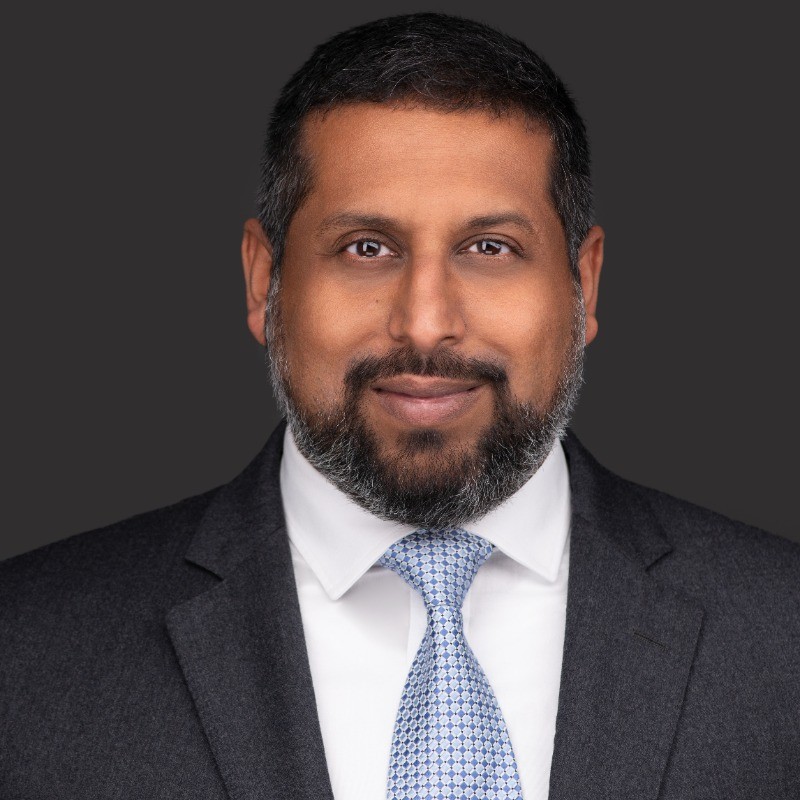
Join Vilas Dhar, president and trustee of the Patrick J. McGovern Foundation, as he shares his insights at MWC25 Barcelona with theCUBE's Dave Vellante. Explore how the foundation continues the legacy of Patrick McGovern, fostering technology that serves humanity. Dhar's expertise in blending technology with social causes is highlighted through his journey as a technologist and human rights lawyer, showcasing his commitment to optimizing technology's role in building a better future.
Key takeaways underscore the potential of artificial intelligence (AI...Read more
exploreKeep Exploring
What is the mission of the Patrick J. McGovern Foundation and how does it relate to technology and innovation?add
What are the three main focuses of the institution mentioned in the text?add
>> Hi, everybody. Welcome back to Fira Barcelona. You're watching theCUBE's continuous coverage of MWC 2025. My name is Dave Vellante and it's my great pleasure to have Vilas Dhar here who's the president and trustee of the Patrick J. McGovern Foundation. Great to see you. Great to meet you. Thanks so much for taking some time with us.
Vilas Dhar
>> Dave, what a joy to be with you and what a buzz there is in the air here. It's incredible.
Dave Vellante
>> It's a great show. I mean, I often wonder what Pat would think of... by then it was called Mobile World Congress and I'm sure he had a big presence here. Patrick J. McGovern, of course, was the chairman of IDG. I worked at IDC for many, many years. Reached out to you and I really appreciate the time. I don't know much about the foundation, but I'd love to hear more about it, your role and what your mission is.
Vilas Dhar
>> You know what's funny, Dave? Is I think Pat would've loved to be here today. AI is in the air. Everybody's thinking about how we transform technology for good. And Pat McGovern lived a life where for his entire career, he thought about making sure that technology got as close to people as possible. Built an amazing publishing empire that told stories not just of what we were doing today, but what we could aspire to tomorrow. And through that, he created an entire revolution in how we all thought about tech. Today, here we are on AI, and I get to represent one part of his legacy, the Patrick J. McGovern Foundation. He left an incredible gift to humanity, saying, "Use a significant portion of my estate to go out and build an institution that protects our technology future, that makes sure that we can be optimists about tech, that we can invest in the right kind of technology to build a better world, make sure that everybody has a place in it." And that's what I get to do every day.
Dave Vellante
>> So, how did you stumble into this role? And what's your background?
Vilas Dhar
>> I often think about destiny. I spent my career doing a few different things. I was a technologist first. I went off to go become a human rights lawyer. I traveled around the world working in conflict zones, place of vulnerability. And you know what I learned every time, Dave? Was, even though there was often a legal solution, a human rights solution, tech was always going to be a part of it, of creating new political opportunity and new dignity. And so, I spent my career bouncing back and forth between the private sector and doing good in the world. I realized that maybe there was a way to do both of those things at the same time. So, I spent some time at Harvard as a fellow on social change. I got to know the family of Patrick McGovern, great visionaries themselves, and they asked me to join the journey.
Dave Vellante
>> It's amazing. Through theCUBE, we do a lot of pro bono work. Just recently, we're working with an outfit called Life Calling, run by John Mack. And their whole mission is to how do you preserve humanity in the digital age? It's so often we forget about our humanity. And that's similar to your mission, isn't it?
Vilas Dhar
>> Similar. And I'll tell you how we really thought about this, is for so long there's been a world of civil society, the people who take on great challenges like healthcare and education and climate, but often they sit very far away from where we technological innovation. And we have to bridge that gap in a meaningful way. So, as an institution, we do three things. One is we help non-profits and civil society use AI to do amazing things around the world. From helping small kids and small classrooms get personalized tutoring, to making sure communities know what the impacts of climate change will be. But what we've learned is there's more to do than that. It's not just about using AI, it's about shaping AI for our future. And so, we've actually come forward as a major voice globally on AI governance, on how we think about making sure these tools are used for public purpose. And maybe most interesting, we also work on thinking about what the future might look like. And what we need to build not just in technological innovation, but in human innovation of our systems and institutions to make sure that world works for everyone.

Dave Vellante
>> So, there's a lot of tension in this conversation around AI for good AI governance and profit. You've seen that with open AI and the tug of war between the for-profit and the non-profit. What do you think of that? But more importantly, how do you think the industry can and should reconcile that tension?
Vilas Dhar
>> I think you're right that we often perceive that tug of war that you talked about. But it's the wrong game to be playing. Look, I have a deep commitment to the idea that the private sector is our engine of innovation. It builds amazing and inspirational things. But innovation without heart and soul doesn't mean very much. And so, what we need to do is figure out how we innovate new technologies that solve real problems that people face today and they might face tomorrow. These are the kinds of problems that are in the news every day. War and conflict, climate change, the access to food and basic health supplies. In a world where we're able to use the best of what we can think of to do the best of what our moral compass defines, that's the future I want to live in. And this is where I think the world needs new institutions. The private sector I think is an incredible driver of this kind of work. And government, instead of trying to regulate the private sector, meaning they react to it and try to bound and constrain them, should be thinking about building new visions of potential futures. How do we invest in public capacity? How do we think about creating compute as a public resource? How do we make sure that the data we gather in the world represents everybody inclusively? And maybe most importantly, Dave, and I know this is something you're passionate about, how do we invest in training a new generation of technologists that recognize that you can use tech for public purpose at scale? This is what we do day in and day out at the foundation. We try to figure out how we transform systems at scale. We deploy capital, again, from this great gift that Patrick McGovern gave us, but we do it through a set of hypotheses about what the future could look like.
Dave Vellante
>> Well, that was one of Pat's... one of his 10 principles, was invested in your people through training. Pat had these 10 principles, and he used to come to our company meetings and he would hold little quizzes like, "What's principle number seven?"
Vilas Dhar
>> I love it.
Dave Vellante
>> We used to show up. We'd have the cheat sheet just in case he called on us. But the reason I bring that up is because you see so many of Pat's principles, like the decentralized organization. He would treat everybody in his company like they were their own business, their own CEO. He wanted us to be very close to customers because that's where the best information was. And he understood that if you keep the corporate staff lean and push innovation out as close to the customer as possible, you're going to have the greatest outcomes. I hear so many organizations now thinking about that virtual organization, the decentralized organization, and he started that in the 1960s.
Vilas Dhar
>> Well, what I'll tell you, Dave, and this is the magic of it, is his life philosophy, those principles translate so effectively, not just across for-profit companies, but across the civil society sector as well. We live a number of his values that let's try it attitude that I know you think about. The idea of good news, of appreciating our people and making sure that they are right at the center of the change they want to create in the world. Of recognizing that lean institutions often drive great performance, and knowing that we have to trust our people and our partners to be able to go out and do the good work in the world. It's a way of doing business, sure. But I think in many ways it was a way of living life for Pat, and it's one that we try to emulate every single day.
Dave Vellante
>> Well, he certainly was an optimist, and you mentioned good news.
Vilas Dhar
>> Yeah.
Dave Vellante
>> So, Pat used to have these memos. Back before email and internet, you'd get these inter-office memos, and you'd open it up, and it was this piece of paper and it had a logo on it, a rainbow, and it said, good news. And Pat would recognize something that you did. And we used to staple them, put them up on our cubicle or in our offices. People were so proud of them. Pat touched everybody in that way. And I come back to optimists. There's so much in the news, so much negativity about the negative potential for AI and how it's going to eliminate jobs. And I know Pat would've believed that it's going to create opportunities. It's going to create jobs. I wonder if you could just talk about his and your philosophy on AI optimism
Vilas Dhar
>> To this day, by the way, Dave, when we send out a grant announcement or a note to one of our partners, it starts with the headline, good news. But I'll tell you what, I'm coming to you. I was in Davos earlier this year, and I was in Paris for the AI Action Summit with President Macron, and I was at the Munich Security Forum. And what I saw through that was an evolution of an AI conversation that has really shifted over the last few years. I think we all started with curiosity, and then at some point unbridled and maybe even naive optimism. And then there was a period of existential dread and risk. But throughout, those of us who have been in AI for 25 years and recognize social change, recognized the need for a pragmatism about AI. That what we needed to do was not worry about the emotional swings of the space, but recognize that if we built these tools with consistently, if we built them with moral compass, they would change everything for the better. Pat always talked about thriving, and sustainable and equitable futures. This is really where I come from. Look, I'm an AI scientist by training. I've spent my life in tech. I know that if we invest in these tools properly, we can transform the way we think about, sure, healthcare and education and climate we've talked about, but also human inspiration and creativity. Our ability to envision brand new things. Our ability to explore our solar system, our galaxy, the universe, so many things in front of us. But what we have to be careful to do is make sure that we actually put our hands on the wheel. AI can't drive the ship for us. We have to take it where we want it to go. We have to explore new boundaries and coasts.
Dave Vellante
>> The idea of making it self-sustaining again, that was always Pat's mantra, his belief, his vision. He never took a dime of outside capital. And he again treated us, "Okay, here's the business. Go grow it. Figure out what resources you have. Go get money from customers or figure out how to create from a whole cloth." And we learned how to do that. He had a saying he always used, it was, the best is yet to come.
Vilas Dhar
>> Best is yet to come.
Dave Vellante
>> He would always end there. And it's true. And that is true today, isn't it?
Vilas Dhar
>> Well, what I tell you, Dave, is I never had the great pleasure of meeting Pat McGovern, but I've known him through his family, through the reflections from the many people that worked with him over his career. I'm going to tell you down to a T, every single person speaks about him in this almost mythical way. He was a leader of a business in a time when he expressed those characteristics of integrity, of character, of vision, of optimism. I think there's a lot for us to learn from him. But I think at the end of the day, in every meeting that we have inside the foundation ends with the same sentiment, the best is yet to come.
Dave Vellante
>> Leo DeRosha is saying that nice guys finished last. Pat proved that wrong.
Vilas Dhar
>> Absolutely.
Dave Vellante
>> There's no question about it. I mean, here's a guy who flew a coach. I remember the Wall Street Journal-
Vilas Dhar
>> One of his traditions we still continue today, by the way.
Dave Vellante
>> So, I'll make you laugh. So, Pat would fly coach and you'd be on a plane every now and then with Pat because he lived on planes, and he would've a stack of magazines, Computer World, and Info World, and PC World, IDC reports, and the whole flight he'd be going through... he had his little tape recorder, and then you'd get one of these good news. He'd read something that you wrote. I remember, I'll make you laugh, Vilas. One time I upgraded on a United flight to California. Lori McGovern was sitting next to me. She sits down next to me. We looked at each other, we upgraded on our own dime. We were laughing.
Vilas Dhar
>> Oh, so funny.
Dave Vellante
>> It'd be funny if Pat was in the back of the plane. But this is who he was.
Vilas Dhar
>> You know what?
Dave Vellante
>> He was so humble. And he was a big man, by the way.
Vilas Dhar
>> Yeah. No, it was a humility of purpose. It wasn't a humility of identity. He just knew that he had a mission to accomplish and he was going to do it. And we try to live that today. I still have the same experience. I sit in the back of a plane with my laptop out and work the whole way. But when you focus on the change you're trying to create in the world, none of that stuff matters. You do it because it creates joy in the world.
Dave Vellante
>> And this man had a belief and a vision. We were talking earlier about the way he literally talked his way into China in the 1970s. I remember him telling me the story. He was in a trip in Japan and he booked a flight to China and somehow, talked his way in. He didn't have a visa. We weren't allowed to go into China. He said, "I'm just transferring. I'm just transferring." And he ended up having one of the bureaucrats write a note that said, "Let this guy go see somebody in the government." And he spent days there and he opened Computer World China before Nixon and Kissinger. I mean really remarkable individual. And he opened Computer World Antarctica.
Vilas Dhar
>> It's a story we talk about all the time. And I have to ground us in a geopolitical reality of today. I told you I came from the Munich Security Forum. I'm here with a number of telcos from around the world that are seeing borders closing in a little bit. It feels like the world maybe is moving into a space where it's just a little bit more fragmented, a little bit more isolated. But Pat always lived a world where he said, "If I can get there, I can find a relationship. And if I can find a relationship, I can build a business. If I can build a business, I can change the way people interact with the world around them. I think we have to live that today, and we think about it all the time, that technology is borderless. The policies that govern it are going to have to happen through multilateralism. And the only way that happens is human to human exchange. We have to make sure we connect with each other in a way that we can actually name what a shared vision is. And when we do, we can have a conversation about norms and rights, principles and practices about how we build the institutions that create that future.
Dave Vellante
>> I love that you're bringing humanity into technology. Pat would've loved that. What do you want to be able to say, let's say 12 to 24 months from now that you're not able to say today?
Vilas Dhar
>> It's the perfect time period. I think 10 years ago, you might've asked that question and say, "What do you want to say in a decade?" But with the pace of accelerating change, we know that we're on 12 to 24 month cycles. I think it's very easy to say it. I want to make sure that AI isn't just a story of a few companies that are building for innovation's sake. Should be a story of humanity coming forward to build for each other. To build solutions to the problems we all face today. To know that we have distributed access to AI everywhere on the planet, and to make sure that we bring the very best of our shared imagination to defining what this future might look like.
Dave Vellante
>> Vilas Star, I can't thank you enough for coming on, and the best is definitely-
Vilas Dhar
>> The best is yet to come....
Dave Vellante
>> yet to come.
Vilas Dhar
>> Absolutely.
Dave Vellante
>> Really appreciate it.
Vilas Dhar
>> Thank you.
Dave Vellante
>> All right. Thank you for watching. Keep it right there. I'll be right back with Savannah Peterson and Bob Laliberte. You're watching theCUBE at MWC 2025. Be right back.