We just sent you a verification email. Please verify your account to gain access to
MWC Barcelona 2024. If you don’t think you received an email check your
spam folder.
In order to sign in, enter the email address you used to registered for the event. Once completed, you will receive an email with a verification link. Open this link to automatically sign into the site.
Register For MWC Barcelona 2024
Please fill out the information below. You will recieve an email with a verification link confirming your registration. Click the link to automatically sign into the site.
You’re almost there!
We just sent you a verification email. Please click the verification button in the email. Once your email address is verified, you will have full access to all event content for MWC Barcelona 2024.
I want my badge and interests to be visible to all attendees.
Checking this box will display your presense on the attendees list, view your profile and allow other attendees to contact you via 1-1 chat. Read the Privacy Policy. At any time, you can choose to disable this preference.
Select your Interests!
add
Upload your photo
Uploading..
OR
Connect via Twitter
Connect via Linkedin
EDIT PASSWORD
Share
Forgot Password
Almost there!
We just sent you a verification email. Please verify your account to gain access to
MWC Barcelona 2024. If you don’t think you received an email check your
spam folder.
In order to sign in, enter the email address you used to registered for the event. Once completed, you will receive an email with a verification link. Open this link to automatically sign into the site.
Sign in to gain access to MWC Barcelona 2024
Please sign in with LinkedIn to continue to MWC Barcelona 2024. Signing in with LinkedIn ensures a professional environment.
(bright music) >> Welcome back, everyone,
to theCUBE's live coverage here in Barcelona for
Mobile World Congress, now called MWC 2024. I'm John Furrier with Dave
Vellante, theCUBE's coverage. Great to have back CUBE
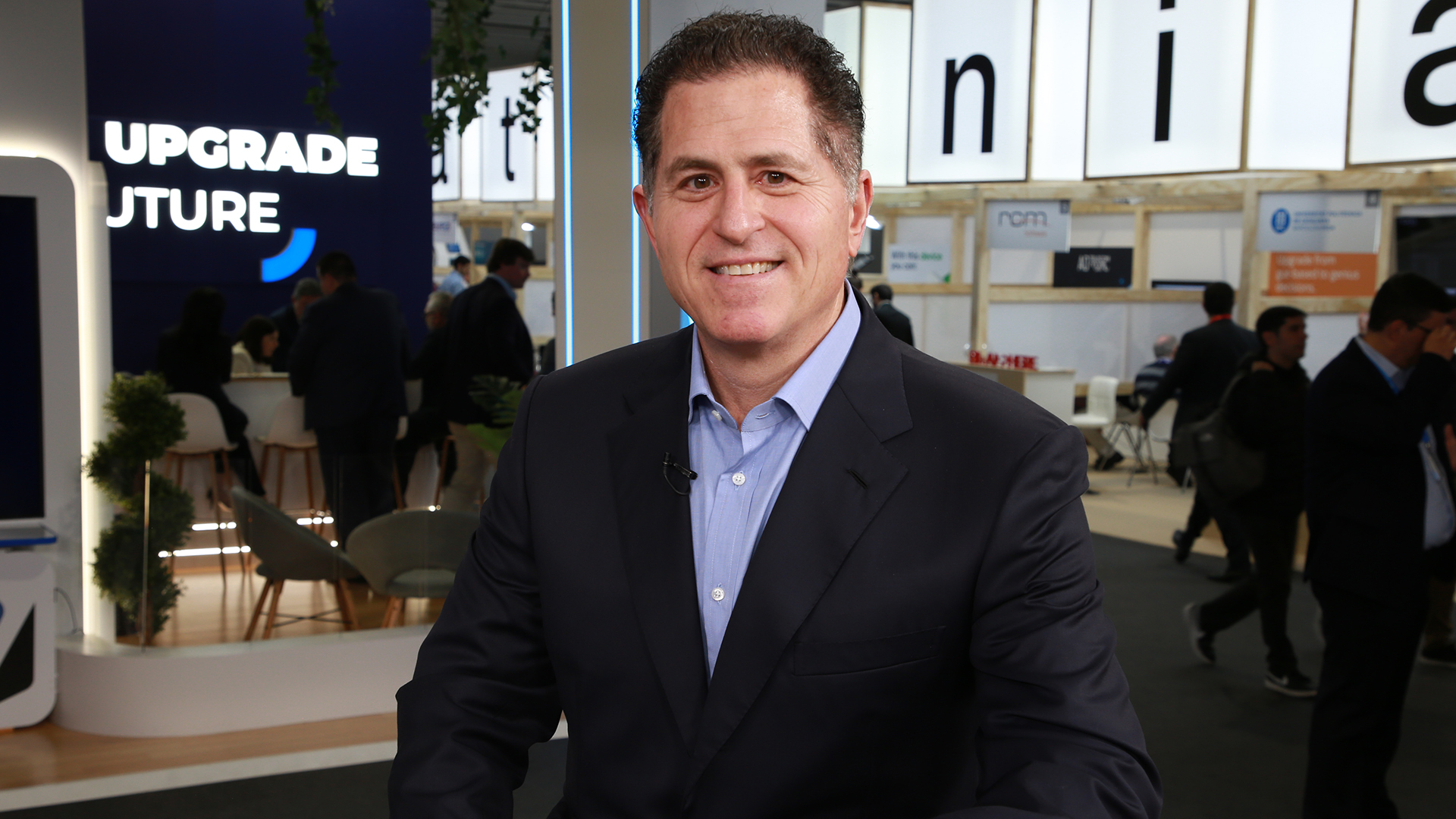
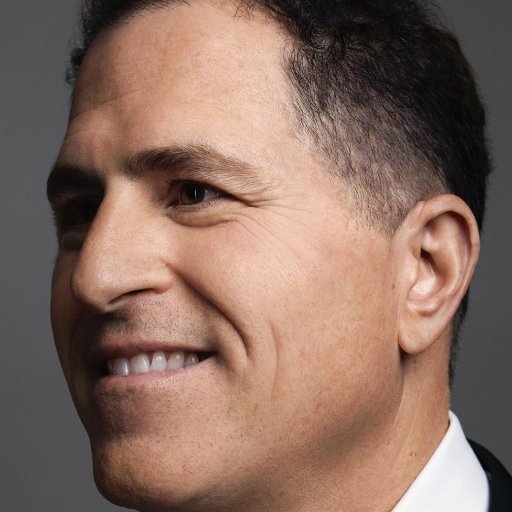
alumni Michael Dell who's the CEO of Dell Technologies. Quite a run the past decade. We're now in the AI
wave, welcome to theCUBE. >> It feels like we're
just getting started, guys. I mean, this is all very exciting and it has been a fun decade, but when I look at what's
going on in the world and especially here at
Mobile World Congress, well, it's like a whole
new world of opportunity opening up with the cloudification
of the telco networks, what's going on with AI at the edge, the explosion of data which we've been talking about
for some time, lots of fun. >> Mike, I wanted to
ask you when you came on 'cause I've been watching your social. Love when you do the throwback, your dorm room photos. Go back and reminisce the glory
days founding the company, but also David and I have
been debating on our CUBE pod about how you transition to the web, okay? And these big waves, they're
transitional moments. AI is one of them. You saw it early. I mean, we were there four years ago when you led your keynote. It was all AI and data. Again, good call there, but now we're seeing this is a wave. This is a embryonic
and growing fast change in user behavior, user expectations. Every vertical's been disrupted. We're in another transition, and you're in the middle of it again. What is your vision of this transition and how are you getting through it, and how are you advising your peers and other companies, your customers? >> Well, first interesting observation is about every 10 years, it feels like another wave comes and they're built always
on the previous foundations that have been set. So you wouldn't be able to have this wave unless you had all the
advanced semiconductors, the data, the incredibly fast networks, the super fast storage to
feed the GPU, the data, fast enough, all the
advances in computer science. But first of all, it feels like it's going 10 times faster than previous waves and of course, we're moving
from calculating and computing into cognition and brains which is a totally different space than we've been in in the past. And that is kind of wonderful, exciting, a bit scary as well, but I think it is ultimately
an enormous moment for the expansion of the economy, human potential, creativity, and ultimately technology's
always been about how do we make humans
more successful, safer, and healthier in everything
that we're doing? And I think technology is going to do that even more so now that we
have these AI superpowers. >> We were doing a
look-back this past week and everybody's talking
about is this the AI wave, is it like the.com bubble? And we did a look-back just 'cause we lived it through it. You obviously did, thrived through it, and the CapEx investments for the internet were just enormous, and now you're seeing the
similar CapEx investments here and of course, the cloud guys
are pouring in money as well. So that CapEx is just, to your point, it's just going to allow people
to develop on top of that, make their lives better. How do you see these two eras? There are a lot of similarities,
a lot of differences. >> The big difference I see is
this is going 10 times faster. So think about how long it took us to get five billion
people on the internet. To get five billion people on AI is happening almost instantly and we're seeing it quickly move from the cloud service
providers and hyperscalers to the .ai companies into enterprise. hundreds of enterprises
deploying these systems and again, I talked about in my keynote you want to bring AI to your data, not data to your AI. And most of the data is still on prem and most of the data in the
future is going to be created in the real world at the edge. And so the operators
play a very big role here in bringing that capability
into the real world. >> Supercomputing, this
past event we went to, it has the same pattern here. You're seeing a couple trends. The telcos is networking, but on the supercomputing, AI and HPC went well together. Data and clustered
systems we're calling it. You got more horsepower needed on premise for whether it's a GPU cluster or a compute cluster, but now workloads need hardware and software working together
in a new systems way. In a way, it's almost like a
new kind of server-like model, but it's not a server. It's a new thing. What's your vision of this? >> Well, of course, you need data because if you have no data, you have no AI, right? You have bad data, you have bad AI, and the fuel for these systems
is enormous amounts of data. That's a topic we know a lot about and spend a lot of time on, right? At Dell Technologies with our
great combination with EMC and that's worked out really well. Still number one in data storage. Bigger than number two, number three, number four, and growing,
and that's great. So you got your data. Then you got compute and it's a new kind of compute
as you've seen with GPUs. You got memory, a new kind of
memory, high bandwidth memory. Then you get into networking, right? You've got a new kind of networking and storage is particularly important here because if your storage, or your memory, or your networking are too slow, you won't be able to
feed the GPU fast enough and your GPU will sit idle
for a lot of the time. And given the cost of these GPUs, again, this kind of
complete system architecture and being able to make that incredibly efficient is very important. And our demand, our backlog, our shipments of these systems with the GPU being at the center of it are growing at a rate like
nothing we've ever seen. >> Michael, I've heard
you're a sharp investor and like to make big bets. And so you go by the Dell booth, big, big presence here, but it's going to take a long time to get the payback in this industry. What did you see? Why are you making the
investments you're doing? I see you're doing some
things with Vodafone and Dish. Dish actually reinventing itself. What did you see? How do you see that playing out? And when do you get the return? >> And in my keynote, we had Chris Sambar from
AT&T come on stage with me and the big deal they
announced with Ericsson, well, Dell's providing the
servers as part of that deal. So open RAN is happening
AT&T with Ericsson and Dell and so that's a real business, and I would say the vast majority of the network virtualization,
cloudification of the network and O-RAN type deployments that
are happening in the world, we're in the middle of them whether they're programs or pilots. And so about four years ago, well, go back a little bit earlier, a bunch of the carriers came to us and said, "Hey, we want
to do virtualization. We want to buy your servers." We said, "Great, here's the servers. Go knock yourself out," right? And they said, "But we
need special things." They said, "Well, you
didn't tell us that," right? So we went off and we then created special infrastructure and software for automation. Then we started creating these building blocks
specifically for telco. Open ecosystems are great, but carriers don't want open ecosystems. They want something they can rely on. So we worked with companies
like Red Hat and Wind River and Amdocs to basically
build a certified solution that we know works and we can deploy consistently. So they have a platform and then they can just put the applications on it, repeat it, and it helps them make this transformation to a cloud network, a cloud telco network much faster. >> The question I have
for you on the networking is the kind of the last area
we're seeing in cloud native where the work's being done to go faster. You mentioned that in this new systems architecture that's emerging. I'm calling it clustered systems
for lack of a better word, but these are new microclouds, a micro, and they're sitting on
premise and the edge. So you got the edge
developing nicely with AI, kind of forcing that out, as you said. Bring your AI to the data. Where do you see that
opportunity at the edge? Because I think to me that's the key. The network has to be faster, okay? What your vision on how you guys are solving that network problem as these new systems get built? It might be network controllers
are the new switches or hey, maybe we could reconfigure things certain ways for more
compute in this case, more GPUs in that case. These are new system architectures. The network has to play the key role. Otherwise it's a bottleneck. What's the problem to solve there and what's your vision on that? >> So keep in mind another
way to describe the edge is it's the real world, right? It's like the physical world. It's where stuff actually happens, right? And so you're talking about manufacturing plants, and retail stores, and hospitals, and logistics centers, and anywhere where real
stuff happens, right? And we've been seeing this move of compute
into those environments and now you want to connect it, right? And so private 5G is playing a role and we've also got some
great partnerships there with folks like Nokia. We've got great private 5G solutions again, using our server
and storage infrastructure, and you're right, the
network has to become a cloud so the operators can stand up services so that application
developers can write to that. That's what AT&T is doing, that's where all these carriers are going, and we're going to help them get there. >> How long is the line
to get your AI servers? A lot of people want to
do this stuff on prem or have a hybrid. It must be out the door right now, so what's the situation like for you guys? >> The H100 lead times are down and we literally we're a
10-week lead time on H100s. So we're delivering those
rapidly and in enormous volume and we're taking orders for H200. Those will start ramping
around the middle of the year and look, I mean, it's a whole ecosystem of capability here that
we're bringing together. I talked a little bit about the storage. We just released new
versions of PowerScale, the F210 and F710, and these systems are two times or greater faster than our competitors in right performance in
feeding the GPU the data. This is really important, right? 'Cause if you got a $50,000 GPU and it's idle 20% of the time, you just lost a lot of money, right? So you need the networking
to be really fast, the storage, the memory, and we're thinking generations ahead about how you really build these systems to be incredibly performant whether they're in mega
scale data centers, or on-prem, or at the edge. >> Michael, really appreciate your time. I know you got a hard stop, but I do want to get one last question. Dave will probably get one in too. What's your vision as you look
at Dell Tech World coming up with your customer events
happening, we'll be there. This year, what's going to be the theme? Can you share a little bit of the vision of what you're going to
go into Dell Tech World? What's it going to be about? Obviously AI will be a big theme. What's the key vision
that you're going to be hitting the marks on? More AI, AI, AI, what's your thinking? >> AI will certainly be a big theme and you're right, there are new computing architectures here, but it's not all about training, right? Actually most of the AI
will be about inference and will be in the real world, and so kind of architecting
the systems for the future and it won't just be in
the data center, right? It'll be the AI PC, right? So AI is a great opportunity to reimagine everything that goes on in the world and we're making it pervasive
across everything we do. Our customers are embracing it and we're helping them. >> Thank you so much for
your time coming by theCUBE. As always, awesome. >> Great to be with you guys. Great to see you, okay. >> Michael Dell doing a cameo by theCUBE. As usual, great content. The systems are changing,
opportunities are everywhere. The world is going to get more productive and faster, smarter, and
hopefully more efficient. It's theCUBE live coverage from Barcelona. Thanks for watching. (bright music)
(bright music) >> Welcome back, everyone,
to theCUBE's live coverage here in Barcelona for
Mobile World Congress, now called MWC 2024. I'm John Furrier with Dave
Vellante, theCUBE's coverage. Great to have back CUBE
alumni Michael Dell who's the CEO of Dell Technologies. Quite a run the past decade. We're now in the AI
wave, welcome to theCUBE. >> It feels like we're
just getting started, guys. I mean, this is all very exciting and it has been a fun decade, but when I look at what's
going on in the world and especially here at
Mobile World Congress, well, it's like a whole
new world of opportunity opening up with the cloudification
of the telco networks, what's going on with AI at the edge, the explosion of data which we've been talking about
for some time, lots of fun. >> Mike, I wanted to
ask you when you came on 'cause I've been watching your social. Love when you do the throwback, your dorm room photos. Go back and reminisce the glory
days founding the company, but also David and I have
been debating on our CUBE pod about how you transition to the web, okay? And these big waves, they're
transitional moments. AI is one of them. You saw it early. I mean, we were there four years ago when you led your keynote. It was all AI and data. Again, good call there, but now we're seeing this is a wave. This is a embryonic
and growing fast change in user behavior, user expectations. Every vertical's been disrupted. We're in another transition, and you're in the middle of it again. What is your vision of this transition and how are you getting through it, and how are you advising your peers and other companies, your customers? >> Well, first interesting observation is about every 10 years, it feels like another wave comes and they're built always
on the previous foundations that have been set. So you wouldn't be able to have this wave unless you had all the
advanced semiconductors, the data, the incredibly fast networks, the super fast storage to
feed the GPU, the data, fast enough, all the
advances in computer science. But first of all, it feels like it's going 10 times faster than previous waves and of course, we're moving
from calculating and computing into cognition and brains which is a totally different space than we've been in in the past. And that is kind of wonderful, exciting, a bit scary as well, but I think it is ultimately
an enormous moment for the expansion of the economy, human potential, creativity, and ultimately technology's
always been about how do we make humans
more successful, safer, and healthier in everything
that we're doing? And I think technology is going to do that even more so now that we
have these AI superpowers. >> We were doing a
look-back this past week and everybody's talking
about is this the AI wave, is it like the.com bubble? And we did a look-back just 'cause we lived it through it. You obviously did, thrived through it, and the CapEx investments for the internet were just enormous, and now you're seeing the
similar CapEx investments here and of course, the cloud guys
are pouring in money as well. So that CapEx is just, to your point, it's just going to allow people
to develop on top of that, make their lives better. How do you see these two eras? There are a lot of similarities,
a lot of differences. >> The big difference I see is
this is going 10 times faster. So think about how long it took us to get five billion
people on the internet. To get five billion people on AI is happening almost instantly and we're seeing it quickly move from the cloud service
providers and hyperscalers to the .ai companies into enterprise. hundreds of enterprises
deploying these systems and again, I talked about in my keynote you want to bring AI to your data, not data to your AI. And most of the data is still on prem and most of the data in the
future is going to be created in the real world at the edge. And so the operators
play a very big role here in bringing that capability
into the real world. >> Supercomputing, this
past event we went to, it has the same pattern here. You're seeing a couple trends. The telcos is networking, but on the supercomputing, AI and HPC went well together. Data and clustered
systems we're calling it. You got more horsepower needed on premise for whether it's a GPU cluster or a compute cluster, but now workloads need hardware and software working together
in a new systems way. In a way, it's almost like a
new kind of server-like model, but it's not a server. It's a new thing. What's your vision of this? >> Well, of course, you need data because if you have no data, you have no AI, right? You have bad data, you have bad AI, and the fuel for these systems
is enormous amounts of data. That's a topic we know a lot about and spend a lot of time on, right? At Dell Technologies with our
great combination with EMC and that's worked out really well. Still number one in data storage. Bigger than number two, number three, number four, and growing,
and that's great. So you got your data. Then you got compute and it's a new kind of compute
as you've seen with GPUs. You got memory, a new kind of
memory, high bandwidth memory. Then you get into networking, right? You've got a new kind of networking and storage is particularly important here because if your storage, or your memory, or your networking are too slow, you won't be able to
feed the GPU fast enough and your GPU will sit idle
for a lot of the time. And given the cost of these GPUs, again, this kind of
complete system architecture and being able to make that incredibly efficient is very important. And our demand, our backlog, our shipments of these systems with the GPU being at the center of it are growing at a rate like
nothing we've ever seen. >> Michael, I've heard
you're a sharp investor and like to make big bets. And so you go by the Dell booth, big, big presence here, but it's going to take a long time to get the payback in this industry. What did you see? Why are you making the
investments you're doing? I see you're doing some
things with Vodafone and Dish. Dish actually reinventing itself. What did you see? How do you see that playing out? And when do you get the return? >> And in my keynote, we had Chris Sambar from
AT&T come on stage with me and the big deal they
announced with Ericsson, well, Dell's providing the
servers as part of that deal. So open RAN is happening
AT&T with Ericsson and Dell and so that's a real business, and I would say the vast majority of the network virtualization,
cloudification of the network and O-RAN type deployments that
are happening in the world, we're in the middle of them whether they're programs or pilots. And so about four years ago, well, go back a little bit earlier, a bunch of the carriers came to us and said, "Hey, we want
to do virtualization. We want to buy your servers." We said, "Great, here's the servers. Go knock yourself out," right? And they said, "But we
need special things." They said, "Well, you
didn't tell us that," right? So we went off and we then created special infrastructure and software for automation. Then we started creating these building blocks
specifically for telco. Open ecosystems are great, but carriers don't want open ecosystems. They want something they can rely on. So we worked with companies
like Red Hat and Wind River and Amdocs to basically
build a certified solution that we know works and we can deploy consistently. So they have a platform and then they can just put the applications on it, repeat it, and it helps them make this transformation to a cloud network, a cloud telco network much faster. >> The question I have
for you on the networking is the kind of the last area
we're seeing in cloud native where the work's being done to go faster. You mentioned that in this new systems architecture that's emerging. I'm calling it clustered systems
for lack of a better word, but these are new microclouds, a micro, and they're sitting on
premise and the edge. So you got the edge
developing nicely with AI, kind of forcing that out, as you said. Bring your AI to the data. Where do you see that
opportunity at the edge? Because I think to me that's the key. The network has to be faster, okay? What your vision on how you guys are solving that network problem as these new systems get built? It might be network controllers
are the new switches or hey, maybe we could reconfigure things certain ways for more
compute in this case, more GPUs in that case. These are new system architectures. The network has to play the key role. Otherwise it's a bottleneck. What's the problem to solve there and what's your vision on that? >> So keep in mind another
way to describe the edge is it's the real world, right? It's like the physical world. It's where stuff actually happens, right? And so you're talking about manufacturing plants, and retail stores, and hospitals, and logistics centers, and anywhere where real
stuff happens, right? And we've been seeing this move of compute
into those environments and now you want to connect it, right? And so private 5G is playing a role and we've also got some
great partnerships there with folks like Nokia. We've got great private 5G solutions again, using our server
and storage infrastructure, and you're right, the
network has to become a cloud so the operators can stand up services so that application
developers can write to that. That's what AT&T is doing, that's where all these carriers are going, and we're going to help them get there. >> How long is the line
to get your AI servers? A lot of people want to
do this stuff on prem or have a hybrid. It must be out the door right now, so what's the situation like for you guys? >> The H100 lead times are down and we literally we're a
10-week lead time on H100s. So we're delivering those
rapidly and in enormous volume and we're taking orders for H200. Those will start ramping
around the middle of the year and look, I mean, it's a whole ecosystem of capability here that
we're bringing together. I talked a little bit about the storage. We just released new
versions of PowerScale, the F210 and F710, and these systems are two times or greater faster than our competitors in right performance in
feeding the GPU the data. This is really important, right? 'Cause if you got a $50,000 GPU and it's idle 20% of the time, you just lost a lot of money, right? So you need the networking
to be really fast, the storage, the memory, and we're thinking generations ahead about how you really build these systems to be incredibly performant whether they're in mega
scale data centers, or on-prem, or at the edge. >> Michael, really appreciate your time. I know you got a hard stop, but I do want to get one last question. Dave will probably get one in too. What's your vision as you look
at Dell Tech World coming up with your customer events
happening, we'll be there. This year, what's going to be the theme? Can you share a little bit of the vision of what you're going to
go into Dell Tech World? What's it going to be about? Obviously AI will be a big theme. What's the key vision
that you're going to be hitting the marks on? More AI, AI, AI, what's your thinking? >> AI will certainly be a big theme and you're right, there are new computing architectures here, but it's not all about training, right? Actually most of the AI
will be about inference and will be in the real world, and so kind of architecting
the systems for the future and it won't just be in
the data center, right? It'll be the AI PC, right? So AI is a great opportunity to reimagine everything that goes on in the world and we're making it pervasive
across everything we do. Our customers are embracing it and we're helping them. >> Thank you so much for
your time coming by theCUBE. As always, awesome. >> Great to be with you guys. Great to see you, okay. >> Michael Dell doing a cameo by theCUBE. As usual, great content. The systems are changing,
opportunities are everywhere. The world is going to get more productive and faster, smarter, and
hopefully more efficient. It's theCUBE live coverage from Barcelona. Thanks for watching. (bright music)