This theCUBE Research segment at Mobile World Congress 2026 Barcelona features Eoin Coughlan of IBM, global chief technology officer and industry lead for Telecommunications Media and Entertainment and Fran Heeran of Red Hat, vice president global telecommunications. Coughlan explains orchestration, governance and IBM's sovereign core and they emphasize managing multiple model types and software agents to support complex deployments. Heeran highlights telco advantages in edge real estate and sovereign networking and they describe distributed cloud-native approaches for running artificial intelligence, AI workloads at the far edge.
The hosts John Furrier of theCUBE and Dave Vellante of theCUBE interview Coughlan and Heeran about telco transformation, hybrid cloud strategies, edge computing and telecom platforms. The discussion covers cloud-native adoption, low-latency use cases such as augmented reality wearables, AI-driven radio orchestration and network security across disaggregated networks. Analysts note monetization shifts toward business-to-business managed services and secure distributed platforms and emphasize practical challenges in deploying and governing AI at scale.
Forgot Password
Almost there!
We just sent you a verification email. Please verify your account to gain access to
MWC Barcelona 2026. If you don’t think you received an email check your
spam folder.
In order to sign in, enter the email address you used to registered for the event. Once completed, you will receive an email with a verification link. Open the link to automatically sign into the site.
Register for MWC Barcelona 2026
Please fill out the information below. You will receive an email with a verification link confirming your registration. Click the link to automatically sign into the site.
You’re almost there!
We just sent you a verification email. Please click the verification button in the email. Once your email address is verified, you will have full access to all event content for MWC Barcelona 2026.
I want my badge and interests to be visible to all attendees.
Checking this box will display your presense on the attendees list, view your profile and allow other attendees to contact you via 1-1 chat. Read the Privacy Policy. At any time, you can choose to disable this preference.
Select your Interests!
add
Upload your photo
Uploading..
OR
Connect via Twitter
Connect via Linkedin
EDIT PASSWORD
Share
Forgot Password
Almost there!
We just sent you a verification email. Please verify your account to gain access to
MWC Barcelona 2026. If you don’t think you received an email check your
spam folder.
In order to sign in, enter the email address you used to registered for the event. Once completed, you will receive an email with a verification link. Open the link to automatically sign into the site.
Sign in to gain access to MWC Barcelona 2026
Please sign in with LinkedIn to continue to MWC Barcelona 2026. Signing in with LinkedIn ensures a professional environment.
Are you sure you want to remove access rights for this user?
Details
Manage Access
email address
Community Invitation
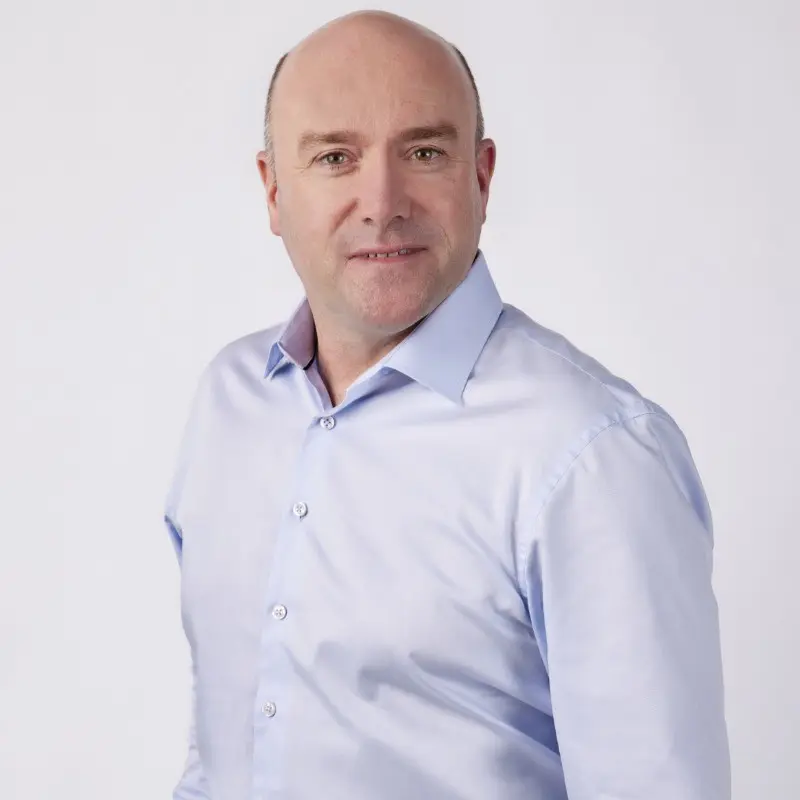
Eoin Coughlan, IBM & Fran Heeran, Red Hat
John Furrier and Dave Vellante host a conversation with Eoin Coughlan, Global CTO & Industry Lead, TME, at IBM and Fran Heeran, Vice President, Global Telecommunicationsat Red Hat as part of theCUBE’s coverage of MWC26 from Barcelona, Spain
Vice President & Head of Global Telecommunications BusinessRed Hat
In this interview from MWC Barcelona 2026, Eoin Coughlan, global chief technology officer industry lead of IBM, and Fran Heeran, vice president of global telecommunication at Red Hat, join theCUBE’s John Furrier and Dave Vellante to discuss the acceleration of AI convergence within the telco industry. The guests break down the massive opportunity at the edge, explaining why telecommunications providers are perfectly positioned to host private AI workloads and "AI factories" for the enterprise market. Heeran and Coughlan highlight the transition from using AI ...Read more
exploreKeep Exploring
What is the current position of telecommunications companies regarding the edge computing opportunity for cloud-native and hybrid AI workloads, and are they positioned and moving quickly enough to capitalize on it?add
How are telecommunications companies positioned to take advantage of edge computing and AI, and how can they monetize AI workloads at the network edge?add
How can telecommunications companies leverage their networks and federated edge infrastructure to offer sovereign, secure cloud and edge services for enterprises and AI workloads, and what makes them different from over‑the‑top providers?add
How are telecommunications networks evolving toward greater distribution and disaggregation, and how should operators manage and orchestrate multiple AI models and agents while ensuring security, governance, and sovereignty?add
>> Welcome back around to theCUBE. I'm John Furrier, host, with
Dave Vellante, my co-host. We're here at Mobile World Congress, MWC 2026, our fifth year. We got IBM and Red Hat here to break down the AI convergence, the acceleration in the telco. We got Eoin Coughlan, global CTO industry lead of TME at IBM. Fran Heeran, vice president of global telecommunication at Red Hat. Gentlemen, thank you for coming
on theCUBE. Appreciate it.
Eoin Coughlan
>> Thank you.
- Great to be here. Thank you.
John Furrier
>> You guys kind of own the
whole technology stack, and with Red Hat, you're starting to see the cloud native
come together with telecom and the AI workloads
are running in hybrid. Okay, so looking good there. Now they got the
networks, we got the edge. What's your philosophy right
now of where they are at? Do they see the opportunity?
Is it moving faster? Thoughts?
Eoin Coughlan
>> When I look at the edge opportunity, I think the telcos are
perfectly positioned. I think they have the assets,
they have the buildings, the infrastructure, they have the network. And in those locations,
right across the country where people might want to run these more private AI
workloads that are associated with their own enterprise. And I think that gives the
telcos a great advantage to take that on. And when we look at their 5G networks and we look at where they have
their CUs based, et cetera, they tend to be dotted
all around the country. So they have the infrastructure, they have the technology
capability, they just need to grasp the opportunities with the enterprises that need this.
John Furrier
>> Eoin, you bring up a good point. The telecom we've been
following over multiple decades, they've always been great at technology. They got the trillions of build out, but now that they start to
talk about monetization, networking and data is what's key at the edge in these telecoms. With the converged edge and AI factories coming soon,
high performance AI workloads, they got to be tied in a distributed manner. That's distributed computing.
Fran Heeran
>> Well, I think of it as a platform company, what we're seeing. And if you look at AI at
the very highest level, we're seeing, I think the vast
majority of use cases is in around cost savings, optimization. So internal use, how do I use AI to optimize my network, my operations? We're now starting to see
the conversations about how do I monetize AI? So when I've built the infrastructure... And to your point, they do
have this very unique piece of real estate, which is your
radio network, the far edge. Putting AI in there as
part of AI RAN, so AI for radio is key. Our mission in Red Hat
obviously is to make that as efficient as possible
with the platform.
John Furrier
>> Fran, quickly define far edge because you mentioned wireless. Define far edge. I think it's
important to pull that out.
Fran Heeran
>> It's a little bit subjective.
John Furrier
>> Wireless is a spectrum, unlicensed, licensed spectrum. Is that what-
Fran Heeran
>> No, far edge is more how close to the device can you get to the consumer. So in a typical telco, you've
got your main data centers where you put your core
network, your IT systems. And then as you go out
towards sort of the edge of the network, the radio I
suppose is the definition of near far edge, if that's
the right term to use.
John Furrier
>> Far edge interface.
- For some people, far edge is actually in the
premises of the enterprise. But for telcos, it really
is out on the radio network. How do I make that
efficient to begin with? And then once I've done that,
with things like AI for radio, can I then monetize it by
leasing the infrastructure, leasing the compute power that
I've got for third party use?
Dave Vellante
>> And there's also the tiny
edge at the far edge where-
Eoin Coughlan
>> The device.
Dave Vellante
>> You get space.
- ... I presume you can run-
John Furrier
>> Space is an edge too.
- ... you can run Linux out of the tiny edge.
Fran Heeran
>> It's subjective as to how .
John Furrier
>> I bring it up because this is the modern telecom architecture. It's end to end. This just seems to be the new
data centric architecture, not just voice data.
Eoin Coughlan
>> Absolutely. Yeah. But it also comes... If you look at putting those
workloads in those areas, this is where security comes
into the picture in a big way. So you have to plan all
of these AI factories or AI workload capabilities in
a secure manner right across the network in order to protect
it for your enterprises.
Dave Vellante
>> The telcos have always
done great at connectivity. I think two years ago
at this event, we heard, I think it was the CEO of
Orange, called out Netflix that Netflix should pay up. And Netflix retorted with, "No, we're bringing all this wonderful value to you," et cetera, et cetera. But my point is that the
over the top vendors, they got all the monetization. With 5G, the conversation
was, "No, we have to be able to monetize 5G. " That really didn't happen. So where are the monetization opportunities for the telcos today, Fran? You talked about cost savings. Sure, that's a form of
monetization, but describe that. Is that the physical AI? I mean, obviously autonomous
vehicles, there needs to be some kind of connections. You've got satellites now
coming in as a threat. Where do you guys see the
telcos not missing this great opportunity that they've
historically missed?
Eoin Coughlan
>> I think if you look at
the enterprise business that they have, they
have a great opportunity to expand that right now. So today, if you look at it, a lot of telcos are providing
MSP services where they're providing not just
connectivity, but security and other capabilities. With AI, there's a lot of companies, if you look at the SME
market, which is about 90% of all business-
Dave Vellante
>> We think they would own that, right?
Eoin Coughlan
>> They should own that. They
should be their CIO office. They should provide the AI factory and they should give
them the tools to govern, to build their own capabilities, to bring in their own models. And that's what we're talking to customers about right now
is, how does the telco manage that for all of the enterprise?
John Furrier
>> I think that's the most
important conversation. Can you share your view of the architecture to make that happen? Because that really is
what we're hearing is what everyone's talking about,
how do I make that happen?
Fran Heeran
>> I think this is where you cross in. So you mentioned sovereignty
before we went on air. And then there was an
announcement last week, which kind of went unnoticed, but five of the big European telcos
announced a federated edge agreement where they're
essentially federating their own edge real estate and technology. The sovereignty debate in Europe, I think is an interesting one
because the question you have to ask is, what does a
telco have that is unique or differentiated that
will make it attractive for the enterprise and not over the top? Sovereignty, given the focus on this AI, how do I retain my data
within national boundaries? Telcos are, they've been building sovereign networks for years. A telco network is, by
definition, largely sovereign. I think they're really
well positioned to offer. That's where you're seeing
the gigafactories, the AI factories. They're seeing an
opportunity to do something that nobody else can do right now, which is offer these
hyper, super sovereign, secure telco grade clouds, both in kind of mainstream data centers, but also out on the edge as well.
John Furrier
>> You're saying, Fran, that
they already had done the sovereign right for the
right reasons, cloud, hybrid-
Fran Heeran
>> That's what a network is,
sovereign by definition. Yeah. - ... if you add
intelligence with AI factory, smaller footprints, could be
the size of a small little box, GPU, compute memory.
Fran Heeran
>> With the guarantees of data
integrity, of security, of property following regulations,
which is something again, the telcos are very good at doing.
John Furrier
>> What do you see as the outcome of that? Because I would imagine there'd
be things we would never see before use cases.
Fran Heeran
>> In terms of what
happens when you do this?
John Furrier
>> What happens if you put
intelligence on a federated, sovereign, already
pre-baked, pre-requisite?
Fran Heeran
>> So this is the question,
and we talked about edge. This is the famous, why do I need the edge and AI and the edge? And I think we're still, we have to weed through all the nonsense use
cases and get to the real ones. The new generation of wearable devices is an interesting one. So they're starting to demand lower and lower latency, which is where the telco edge
becomes really important. So at the show here, we have
the wearable glasses, the AR, VR devices. When they get enabled
on the mobile network, they will require extreme low latency. So putting the workload
that they rely on as close to the device as possible, that's something a telco can offer. That is becoming a practical use case.
Dave Vellante
>> How does that affect
their overall architecture? We've got decades of
CapEx that have been spent and built up for the sort of pre-AI era. AI comes along, changes
everything, the network changes, obviously the compute, everything. How are telcos balancing that existing infrastructure and what do they have to change? And then how do you guys help?
Fran Heeran
>> Want me to start, Eoin?
- Yeah, sure.
Fran Heeran
>> It's become, and it's been
going on for a couple of years. Where before telcos would
put all their workloads in a couple of locations, you had
two main data centers usually, it's become much more distributed now, much more disaggregated. That's one of the fundamental things you're seeing happening on the network. And it's very much about, how
do I put the right application on the right infrastructure
in the right location? So having that choice
of, "Okay, my app needs to be using this infrastructure, but located in this location
close to the device. " So it's becoming a choice and a much more distributed
disaggregated network design. Eoin?
Eoin Coughlan
>> And I think once you
have that design in place, now you need to look at how you're going to manage all of this. So we used to think about,
"I'm going to put AI in and AI is going to solve this. " But what does that mean?
So you break that down. If you want to be cost conscious,
which everybody has to be, then you're going to have
a number of different types of models that you're going to use. So you're going to use
large language models. You're going to want small
language models which are specifically trained
on your enterprise data and you're going to use
some frontier models. So now you've got agents
using these models, but who's orchestrating
all of those agents, right? So you need to orchestrate
across all of these agents. And we talked about sovereignty. So what we're releasing this
year is our sovereign core, and that's to help operators and other industries to deliver a core of software capability, which
guarantees the security, guarantees the governance, and allows demonstrable
control of that AI.
Dave Vellante
>> This is really important
because those centralized networks that you described, Fran, have been highly reliable. As you now disaggregate, can
you achieve that same level of reliability, governance,
security, et cetera? I mean, you're opening up
Pandora's box, are you not?
Eoin Coughlan
>> Well, this is where the latency that Fran was talking about
as well comes into play because when you have
these language models that you're using as part of the agents and the agents are
speaking to other agents and using tools, the latency therefore becomes a really big challenge. And that's why we're now
moving from building models and capability for business outcomes to evaluating those models for accuracy, but also performance. And that's where technologies like vLLM and Red Hat are pushing is
really powerful 24 times.
John Furrier
>> You're enabling the business model because what you're talking
about is a modern hybrid architecture in distributed computing. Okay, check. But legacy models of telecom
has been selling connectivity. Now they're moving to managed service, managed platform edge. They would do average revenue per circuit. Now they're doing average
revenue per service. So when you get agents, you have the services model, not so much. Are they there? How would
you rank the progress of the mindset of the
shift on the business side?
Fran Heeran
>> That's a really important question. And I think when you look at
what's coming down the road, right 6G is not quite
here yet, but it will be. It'll be the talking
point next year, I'm sure. I think the lesson we all
learned from 5G was we've maxed out the consumer monetization. The only 5G use case that emerged on consumers
was fixed wireless access where you can put
broadband where you haven't got fixed infrastructure. On 6G, if you look at how the
telco technology is evolving, it's much more about devices and machines. So in addition to consumers,
the future networks are going to be more about these wearable
devices, machine drones, for example, as part of the specification. So you're seeing a
shift, and I think that's where the telcos will begin
to focus on the B2B play. It's going to be, "Use
my network as a network of choice for devices. " Not phones because
they'll be there anyway. So it's going to require
a new mindset shift, but we are seeing telcos more and more realizing this is coming and focusing more on the B2B space.
John Furrier
>> So you're saying if you
put 6G radios everywhere, because they have limitations, but say millimeter wave
could solve that problem.
Fran Heeran
>> It's a denser network.
- Yeah.
Fran Heeran
>> You've got more points of presence, but also you've got the
latency, you've got the speed, and it's going to be a mix of consumer and device, non-phone device.
John Furrier
>> So the far edge enablement,
that's a transceiver to a far edge access.
Fran Heeran
>> It's a unique piece of real
estate for a telco as well. And that's where they could monetize-
Dave Vellante
>> Right. I mean that is a huge
opportunity. I guess the competitive threat to that is, what? The satellite networks is
the sort of the new thing, but really the don't have the, at least the scale and
for quite some time.
Fran Heeran
>> All the regulatory, I think
that's going to be some time.
Dave Vellante
>> Yeah. So that seems like this one, finally the telcos are
going to be able to-
John Furrier
>> They have the opportunity.
- ... knock it down, right?
John Furrier
>> First. They better not miss this one.
Eoin Coughlan
>> Exactly.
- You agree.
Eoin Coughlan
>> I agree.
- Opportunity. Don't blow it.
Fran Heeran
>> Absolutely.
- And I think a lot of people will be talking about that this year because it is... I mean, like we were just
talking about, perfect scenario where they're used to a
heavy regulatory environment, they have good relations
with the governments. You could see governments needing to have sovereign applications
for the governments, the healthcare, et cetera, and all of that moving on to sovereign platforms, which they manage.
John Furrier
>> I would say based on your
conversation guys, to me, the observation is that the road is meeting
them where they are. Cloud native is booming. The demand on AI, the Metas, the Googles and the hyperscalers are coming in.
Fran Heeran
>> Sovereignty.
- So they don't really... I mean, they got a footprint. They just got to leverage
some of the tweaks.
Dave Vellante
>> I mean, the previous wave was how good are you at developing content and distributing that to users
and creating an experience. I mean, that was not the telco sweet spot. Now we're talking about
connectivity, trust, managing distributed networks. I mean, this is their wheelhouse.
Fran Heeran
>> And the way they're having
to build their networks is now a monetizable opportunity because it's a changed architecture. They've got this kind of
unique piece of compute that they can offer and
infrastructure. So yeah.
John Furrier
>> All right. We've got a minute left. Give a quick plug for what you guys are doing at MWC this year. What's the top conversation? What are the biggest
issues people should pay attention to that you're working on?
Fran Heeran
>> So for us in Red Hat, and then I'll hand over to
Eoin, I think three main things. One is common infrastructure
platforms for telco. So we're getting away from building silos. As you go from data center to far edge, having a common platform, that's where Red Hat plays very strongly. AI is obviously huge. And AI, not just in a
monetizable opportunity, but also how you build the networks and design it, and then sovereignty.
John Furrier
>> Eoin, what's your focus?
- So our focus is on moving to the next stage of value, trust and governance, which
brings in sovereign core, which is a main focus of ours. Quantum computing. Where
are we in the development towards quantum computing? How do we get those use cases? So we're showcasing some
of that at our booth. And then of course, post
quantum cryptography is the challenge that everybody's facing. And then we're also looking
right across the autonomous network space because here
you're going to be building a lot of different agents with a lot of different LLMs and SLMs, et cetera. So you're going to have a lot of technology that you need to manage. So we're going to show how to do it.
John Furrier
>> Well, I got you here.
Since you're an expert and we have our mixture
of expert series, might as well ask you the quantum question. I'm hosting a Chatham House Rule panel on, the topic is quantum wireless, quantum RF. What does that mean? Well,
how does quantum change the game in telecom?
Eoin Coughlan
>> Well, I think what you're
looking there is quantum introduces the capability of
doing computations of a type of mathematics which standard computers and supercomputers struggle with. So we often talk about the
different states when we're talking about material science, but when you look at RF,
the number of possibilities are almost infinite and you're looking across
three-dimensional space and all of the things that affect it. So when you're looking at RF planning and things like that, quantum
computing can greatly speed up or even make possible
the types of computation-
John Furrier
>> So you think it's going
to be a game changer?
Eoin Coughlan
>> Yeah, it's the type of computation.
John Furrier
>> Possibilities are endless. Yeah.
Eoin Coughlan
>> Absolutely. Yeah. And it's
the same when you look at network optimization, network planning, and RF coming into that. That's all part of that kind
of endless set of computations that standard computers will struggle with and quantum computers
should be the right tool.
John Furrier
>> Well, thanks for sharing.
That's going to be our agenda for next year, MWC.
Eoin Coughlan
>> Fantastic. - A little teaser.
Thanks for sharing that.
Dave Vellante
>> Thanks, Eoin.
- Fran, thanks for coming on.
Fran Heeran
>> Thanks guys. Appreciate it.
- Appreciate it. I'm John Furrier with Dave
Vellante, breaking down MWC26. A little teaser with quantum
in the future, of course. The platforms are moving to the edge. This is where the action is. This is where the value will be created and extracted, both technically
and on the business side. More coverage from theCUBE
after this short break.







 John Furrier
 Dave Vellante