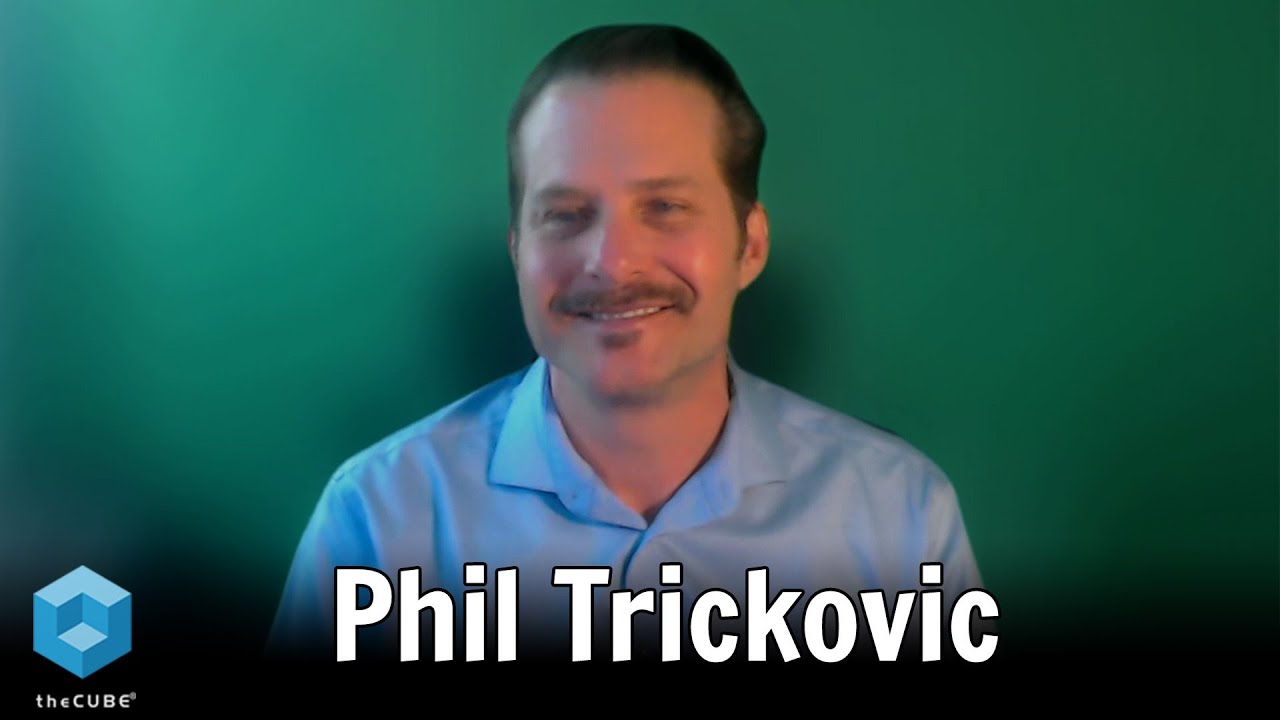
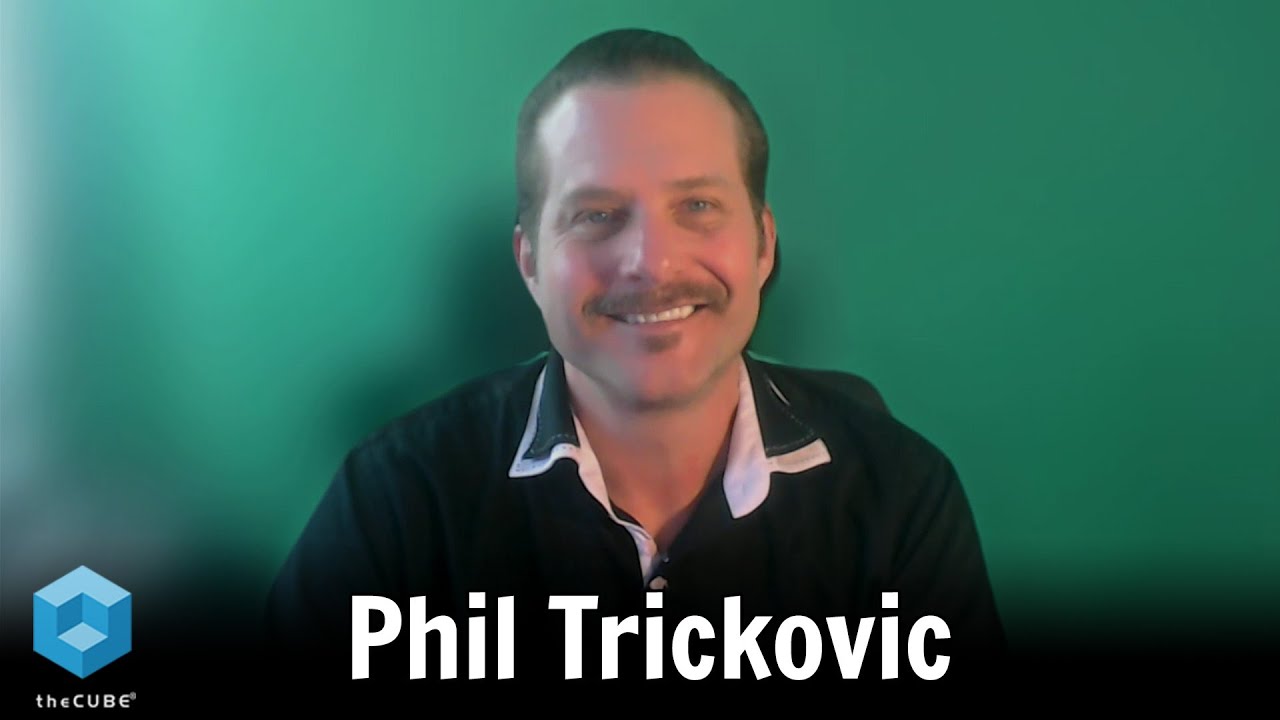
In this special segment of the AppDev Done Right Summit, Phil Trickovic, SVP and GM at Tintri, joins theCUBE Research’s Paul Nashawaty to explore how intelligent infrastructure is reshaping the full application development lifecycle. Trickovic highlights how Tintri’s AI-enabled operating environment simplifies CI/CD pipelines, enables self-service for developers and provides predictive analytics that optimize performance from Day 0 build through Day 2 operations.
The discussion covers the growing demand for unified tooling, with organizations moving away from fragmented systems toward intelligent, autonomous platforms that reduce operational friction. Trickovic also unpacks how Tintri bridges legacy and cloud-native environments, empowers DevSecOps teams and supports compliance and sovereignty requirements across distributed, Kubernetes-driven applications.
Listeners will hear how real-world use cases, such as the Tintri-Platform9 collaboration, are demonstrating frictionless automation, scalable performance and the business impact of adopting AI-driven infrastructure. From accelerating developer productivity to future-proofing against complexity and skill gaps, this conversation underscores why modernizing application-centric infrastructure is now a competitive imperative.
Forgot Password
Almost there!
We just sent you a verification email. Please verify your account to gain access to
AppDev Done Right Summit. If you don’t think you received an email check your
spam folder.
In order to sign in, enter the email address you used to registered for the event. Once completed, you will receive an email with a verification link. Open this link to automatically sign into the site.
Register For AppDev Done Right Summit
Please fill out the information below. You will recieve an email with a verification link confirming your registration. Click the link to automatically sign into the site.
You’re almost there!
We just sent you a verification email. Please click the verification button in the email. Once your email address is verified, you will have full access to all event content for AppDev Done Right Summit.
I want my badge and interests to be visible to all attendees.
Checking this box will display your presense on the attendees list, view your profile and allow other attendees to contact you via 1-1 chat. Read the Privacy Policy. At any time, you can choose to disable this preference.
Select your Interests!
add
Upload your photo
Uploading..
OR
Connect via Twitter
Connect via Linkedin
EDIT PASSWORD
Share
Forgot Password
Almost there!
We just sent you a verification email. Please verify your account to gain access to
AppDev Done Right Summit. If you don’t think you received an email check your
spam folder.
In order to sign in, enter the email address you used to registered for the event. Once completed, you will receive an email with a verification link. Open this link to automatically sign into the site.
Sign in to gain access to AppDev Done Right Summit
Please sign in with LinkedIn to continue to AppDev Done Right Summit. Signing in with LinkedIn ensures a professional environment.
Are you sure you want to remove access rights for this user?
Details
Manage Access
email address
Community Invitation
From Legacy to AI-Native: Tintri’s Infrastructure Vision for the AppDev Future
TheCUBE’s Paul Nashawaty and John Furrier close out the AppDev Done Right Summit with a research-driven look at modern application development. Their conversation reflects on the full development lifecycle — from ideation to delivery — and the strategies driving innovation at scale.
Nashawaty shares insights on AI-assisted tools, developer productivity and the rise of platform engineering as a core discipline. Together, the analysts explore how cloud, data and application design are converging to create new opportunities and challenges for software teams.
According to theCUBE Research, organizations with mature platform strategies see up to a 30% boost in delivery cycles and team collaboration. For leaders focused on sustainable innovation, this session offers solid guidance on aligning modern tools with long-term outcomes.
From Legacy to AI-Native: Tintri’s Infrastructure Vision for the AppDev Future
Phil Trickovic
SVPTintri
search
Paul Nashawaty
>> Welcome to this special edition of our App Dev Summit series, where we dive deep into trends, tools, and technologies that shape a lot of application development landscape. During theCUBE's App Dev Done Right Summit, we've seen a powerful convergence of platform simplicity, developer productivity, AI acceleration, and DevSecOps-first thinking. Phil, I'm really happy to have you back on the show. Tintri was an integral part of the App Dev Summit, really showcased a lot of the day zero to day one and day two and DevSecOps pieces. Welcome to the show. Welcome back.
Phil Trickovic
>> Well, thanks for having me back again third time around.
Paul Nashawaty
>> Yeah, it's great to have you here. Why don't you introduce yourself to the audience and introduce Tintri?
Phil Trickovic
>> Hi, everybody. I'm Phil Trickovic. I am the SVP and GM of Tintri. We are a data intelligent AI client. Been on the market commercially since about 2012, and we are designed to serve this market that's emerging here
Paul Nashawaty
>> And it is a emerging market indeed. It's really exploding. I mean, we see application modernization and application development as the new kind of, I don't know, dare I say, the new oil of the machine. It's working. It's happening. Things are happening. And when we think about Tintri and Tintri's involvement, you have modern infrastructure delivering intelligent VMware, where storage purpose-built application centric environments, that is really incredibly important when we look at the research because Kubernetes adoption accelerated with a lot of this. You need to have that automation and data-driven platform that really does play a critical role to simplify the day zero to day two operations. Also, enabling DevSecOps teams and optimizing performance, scalability, and security across the entire outpatient lifecycle because it's a really, really important... We know we saw that in the research. We saw that in the data, acceleration of those KPIs and pushing code out the doors fast and quick, that happens. It's something that we really need to think about, and Tintri definitely has the ability to do so. So, Phil, I want to jump right into this because we only have a limited amount of time and I don't want to keep talking about things. But after hearing about the rise in the complexity and the hybrid and AI-native environments, what infrastructure decisions are you prioritizing to improve software delivery velocity and reduce operational friction, and how is Tintri helping with that?
Phil Trickovic
>> So, we were designed from that from day one. Paul, as you know, we greatly simplify CI/CD pipelines. I'll stay off the flow because that can go on forever, but that's been there since day one. Lots of reference from customers. What's exciting to me is that those flows are also changing and accelerating, and we are perfect for that. Developers that don't want to deal with storage admins, don't want to deal with network. It's self-service. For admins, storage people, infrastructure people that don't want to deal with developers, that eternal... it's there too. So, it's still required that you manage these products and it required that you be able to support multiple different protocols, multiple different hypervisor methodologies, and in some cases, multiple different containerization methodologies. We do all of that out of the box, turnkey. So, it's very exciting to see this around the globe, what I'm seeing that it's really framing up nicely for us.
Paul Nashawaty
>> Yeah, I mean congratulations on that. I mean, it really is being right inline with the shifts in the industry. What we're seeing in platform engineering is accelerating. We've seen that the role of DevOps is really a hybrid role between a platform engineer and DevOps teams. And the last thing DevOps teams want to think about right now is whether or not the infrastructure is going to work for them. So, to make that infrastructure available and working is really powerful. But when we think about some of the challenges that happen, you have to have those actionable insights. When you see things happen on the environment, that'll slow down your CI/CD pipeline. And this includes things like adapting storage and observability strategies in order to response to the shifting for platform where, by application-aligned infrastructures, but we saw a lot of this highlighted during the summit and then during the research of the summit. So, I'd love to hear your perspective about reinforcing that call to move beyond that legacy system and the fragmented tool tooling, and really have that unified approach. Because one of the data points I wanted to share is we've found that 75% of respondents are saying that they're using six to 15 different tools to manage their ecosystem, their environment. And in 2025, this year, these 54% of respondents are looking to move away from those distributed tools to more of a unified approach. So, I'm wondering if you can touch a little bit more about Tintri's response here. How do you accelerate that frictionless response to the infrastructure, but also help with maybe some of even the skill gap issues that are out there as well?
Phil Trickovic
>> Yeah, those are excellent points, Paul, and I could go on for this for an hour too. That's a whole topic. Where we accelerate that is, again, ease of use. And remember, our operating environment is and was the first AI-enabled operating system on the market, period. It just wasn't called AI back then, we called it autonomous infrastructure. So, where does this matter for developers? Something that you said, "What do I need to launch this? What do I need?" Our predictive analytics will take their workload. So, if they're developing an app that's got 20 users and they have to scale to 200 users. Our AI engine will go out, scan all resources, available CPUs, et cetera, et cetera, network, bandwidth and come back and recommend, "Okay, you want to add 100 users. You want to add 100,000 users."
It will tell you horsepower-wise exactly what you need to do that with, what you have and how to do it, how to expand it. So, these are a lot of things that aren't known about Tintri and it's actually quite underutilized, unfortunately. It's the ability of predictive analytics. It's our own LLM historic in there that we can track what you've been doing, what your usage patterns are and then model against that. So, that's very valuable for developers and speeding up that process. There won't be surprises when you hit launch.
Paul Nashawaty
>> And I also want to touch on, and again, this is an area that I think is important to note, is you do offer a bridge in the gap with those data sources, right? If people are running heritage applications and they're running their new environments, they don't have to be siloed. They can work together and operate. So, if you have an LLM or SLM that you're working with, you can pull data from the various sources and still aggregate it together. That's a very important distinction, especially when we're talking about automation and intelligent data management really to help improve those development, productivity and operational scale. Because one of the customer use cases that we were talking about during the summit is the AI IDE story, that Tintri's role in automation and that lean ops perspective, that was really impressive. But when we're talking about anything, AI right now is hot, right? Of course, that's just what it is. But when we're talking about acceleration of development, productivity and operational scale, it's equally or more important when we're talking about these AI solutions. Can you touch a little bit about that?
Phil Trickovic
>> I can, Paul. I wish I could show you this case study. We talked about Platform9, for example. I could send this to you if you want to send it to your users, or they can just Google Platform9-Tintri case study. If you want to see a real-world outcome, please Google that. It also exposes you to that IDE vendor is. I just can't say it here. So, it's largest in the world. Take a look at it. The outcome's pretty amazing. If anybody would like more information on that or to speak with somebody, if you're encountering similar challenges, please reach out.
Paul Nashawaty
>> Yeah, I think use cases are incredibly important because it takes our technology and it actually applies it to real-world scenarios. I mean, that's one of the biggest challenges I've seen throughout my career is to take technology and translate it to business value. I mean, there's a lot of cool tech out there, but it needs to really actually work and solve business problems. I really was impressed with your Platform9 announcement, Platform9 doing that migration of onto the platform and how Tintri is working very closely with that integration is making that scene was, that's another area of, again, removing friction or removing those complexities. But I think that in itself, the partner ecosystem is really a party of Tintri's differentiated approach. You have the intelligence, adaptive, not only complex, but also, you challenge or validate your current thinking about infrastructure environments and investments. And I do truly appreciate working with organizations that you want to maximize your existing IT investment, but you can do so while investing in the future. Do you want to touch a little bit on that? Because I think these use cases are important to note, but also organizations are like, "Well, do I really want to bring in another thing for my environment? Is that going to cause me issue? What's going to happen if I do that?"
Phil Trickovic
>> Yeah, there's also two points there. There's a business tactic if you don't do it, it's not technical business, then you're going to lose, period. Because there's companies that are doing it and the efficiencies they're gaining will crush their competitors. It's order of magnitude improvement in their operations, period. And that's referenceable thought. Issue is there's only a handful of them that are successful doing it. So, as you go down stack, I think the resistance point of realizing that, okay, it's almost like when mainframe and x86 came around. There's going to be two different paths of people. The hypervisors aren't going anywhere, that's going to stay. The new apps that are coming out, to be developed from the ground up with an AI engine and an AI platform are going to crush any other application that's doing similar functions, period. And you're not going to do legacy stuff, it's not going to happen. You'll never be able to manage, produce and deploy it at scale.
Paul Nashawaty
>> Yeah, I think that's a fair statement, Phil. I also think that the audience is trying to understand their path, right? They're saying like, "Hey..." They know they have to modernize. They know they have to get into a better, newer way of doing it for a number of reasons. It's not just cost or operational efficiencies or developer productivity, but there's also the security elements, the security elements of if you're on a heritage environment, that potentially opens it up to vulnerabilities and that's an issue in itself. That's a whole nother summit, a whole nother other video we could talk about here. But I definitely think that it's important. But as we're looking forward and we're looking ahead in organizations thinking about modernizing, especially as they're preparing infrastructure strategies to support agentic AI scenarios, right? That's another area, not just security, but agentic AI. You were mentioning yourself that you're traveling around the world. There's also sovereign data mandates, right? That that's an issue. If data has to reside in-country, it has to reside in certain cloud environments. And then, there's also the growing demand for simplicity across distributed environments. We were talking on previous sessions that we had that the research is showing that 67% of organizations are hired in generalists over specialists, and that simplicity that they're looking for these organizations are looking for, they're pushing back to vendors to reduce the complexity and provide the simplicity, so generalists can do the work that historically was a specialist to do the job. So, I think that that's an area that we should probably double-click on.
Phil Trickovic
>> Well, yeah, a quick answer to that is if you YouTube or Google, I think it was a seven or a nine-year-old, it was 10 years ago, one of our staff members had their daughter install Tintri. So, from an ease of use of implementation, setting it up for developers, if you don't have a system admin, hopefully you're a little wiser than a nine-year-old kid, but it was successfully done in I think 30 or 45 minutes. So, the stand up, the setup and the ongoing maintenance of it does not really require administration. Critically what you just said there too though, is to understand customers and technical people need to understand this. If you're doing micro-service based apps, which I would say is going to be 80% of future applications, and that's probably understated, Kubernetes environments come with an order of magnitude or object. So, if you have compliance issues, you've got GDPR, whatever, restrictions around country exit, it's not just like the Word document that you spit out or the outcome that you spit out. It's every single object that that is touched cannot lead that bounded. So, I don't think a lot of our market is fully digested how large that is and what a pain in the butt is to manage on a x86-type system, it just is. It's an order of magnitude more things you have to deal with that are very impactful. And also, you said about generalists, you need to have people who understand where these objects are going. If you don't have an intelligence system that can tell you. So, that's where our value is. We don't care. You could set the boundaries on it. You could set all of this up in box, without an army of people to maintain it.
Paul Nashawaty
>> Yeah, and that's really key, right? As we move forward, I think that the feeder of a lot of people is, well, we don't need an army of people, and will AI be the future and take over everything? I don't believe that to be the case, but I think that we have to be more intelligent about how we're using these tools in order to be successful. Phil, this has been incredibly insightful, really important. I do really appreciate you being part of the App Dev Summit, you and Tintri being part of it. It's really been awesome to have you part of it because your value proposition and your go-to-market statements, your positioning and your awareness around this space is really an integral part of the research that we're showing here. So, I want to thank you for attending. Before we close, do you have any closing thoughts you want to leave to the audience?
Phil Trickovic
>> No. Yeah, I think I said it in the last one. Keep your eyes open, investigate thoroughly, and remember, these are ones and zeros and how to most efficiently match. A lot of the magic and smoke and mirrors needs to go away, because the efficiency gains, the potential of this technology advancement is massive, but all of us need to change our mindsets about how we approach .
Paul Nashawaty
>> Very cool, Phil. Thank you for your insights. Thank you for attending. It's really been great having you on. And thank you for all of you that tuned in. We really do appreciate you being part of the App Dev Done Right Summit, but that wraps up this session. But please do tune into the rest of the series, where we have conversations that dive into the tools, trends and talents shaping the future of application development. Whether you're deploying at the edge, building an AI, or modernizing your new cloud stack, we have you covered. So, be sure to follow us on social. If you have any thoughts, questions, or just want to connect, you can always reach me at pauln@siliconangle.com. Until next time, stay curious and stay building.
From Legacy to AI-Native: Tintri’s Infrastructure Vision for the AppDev Future
search
Paul Nashawaty
>> Welcome to this special edition of our App Dev Summit series, where we dive deep into trends, tools, and technologies that shape a lot of application development landscape. During theCUBE's App Dev Done Right Summit, we've seen a powerful convergence of platform simplicity, developer productivity, AI acceleration, and DevSecOps-first thinking. Phil, I'm really happy to have you back on the show. Tintri was an integral part of the App Dev Summit, really showcased a lot of the day zero to day one and day two and DevSecOps pieces. Welcome to the show. Welcome back.
Phil Trickovic
>> Well, thanks for having me back again third time around.
Paul Nashawaty
>> Yeah, it's great to have you here. Why don't you introduce yourself to the audience and introduce Tintri?
Phil Trickovic
>> Hi, everybody. I'm Phil Trickovic. I am the SVP and GM of Tintri. We are a data intelligent AI client. Been on the market commercially since about 2012, and we are designed to serve this market that's emerging here
Paul Nashawaty
>> And it is a emerging market indeed. It's really exploding. I mean, we see application modernization and application development as the new kind of, I don't know, dare I say, the new oil of the machine. It's working. It's happening. Things are happening. And when we think about Tintri and Tintri's involvement, you have modern infrastructure delivering intelligent VMware, where storage purpose-built application centric environments, that is really incredibly important when we look at the research because Kubernetes adoption accelerated with a lot of this. You need to have that automation and data-driven platform that really does play a critical role to simplify the day zero to day two operations. Also, enabling DevSecOps teams and optimizing performance, scalability, and security across the entire outpatient lifecycle because it's a really, really important... We know we saw that in the research. We saw that in the data, acceleration of those KPIs and pushing code out the doors fast and quick, that happens. It's something that we really need to think about, and Tintri definitely has the ability to do so. So, Phil, I want to jump right into this because we only have a limited amount of time and I don't want to keep talking about things. But after hearing about the rise in the complexity and the hybrid and AI-native environments, what infrastructure decisions are you prioritizing to improve software delivery velocity and reduce operational friction, and how is Tintri helping with that?
Phil Trickovic
>> So, we were designed from that from day one. Paul, as you know, we greatly simplify CI/CD pipelines. I'll stay off the flow because that can go on forever, but that's been there since day one. Lots of reference from customers. What's exciting to me is that those flows are also changing and accelerating, and we are perfect for that. Developers that don't want to deal with storage admins, don't want to deal with network. It's self-service. For admins, storage people, infrastructure people that don't want to deal with developers, that eternal... it's there too. So, it's still required that you manage these products and it required that you be able to support multiple different protocols, multiple different hypervisor methodologies, and in some cases, multiple different containerization methodologies. We do all of that out of the box, turnkey. So, it's very exciting to see this around the globe, what I'm seeing that it's really framing up nicely for us.
Paul Nashawaty
>> Yeah, I mean congratulations on that. I mean, it really is being right inline with the shifts in the industry. What we're seeing in platform engineering is accelerating. We've seen that the role of DevOps is really a hybrid role between a platform engineer and DevOps teams. And the last thing DevOps teams want to think about right now is whether or not the infrastructure is going to work for them. So, to make that infrastructure available and working is really powerful. But when we think about some of the challenges that happen, you have to have those actionable insights. When you see things happen on the environment, that'll slow down your CI/CD pipeline. And this includes things like adapting storage and observability strategies in order to response to the shifting for platform where, by application-aligned infrastructures, but we saw a lot of this highlighted during the summit and then during the research of the summit. So, I'd love to hear your perspective about reinforcing that call to move beyond that legacy system and the fragmented tool tooling, and really have that unified approach. Because one of the data points I wanted to share is we've found that 75% of respondents are saying that they're using six to 15 different tools to manage their ecosystem, their environment. And in 2025, this year, these 54% of respondents are looking to move away from those distributed tools to more of a unified approach. So, I'm wondering if you can touch a little bit more about Tintri's response here. How do you accelerate that frictionless response to the infrastructure, but also help with maybe some of even the skill gap issues that are out there as well?
Phil Trickovic
>> Yeah, those are excellent points, Paul, and I could go on for this for an hour too. That's a whole topic. Where we accelerate that is, again, ease of use. And remember, our operating environment is and was the first AI-enabled operating system on the market, period. It just wasn't called AI back then, we called it autonomous infrastructure. So, where does this matter for developers? Something that you said, "What do I need to launch this? What do I need?" Our predictive analytics will take their workload. So, if they're developing an app that's got 20 users and they have to scale to 200 users. Our AI engine will go out, scan all resources, available CPUs, et cetera, et cetera, network, bandwidth and come back and recommend, "Okay, you want to add 100 users. You want to add 100,000 users."
It will tell you horsepower-wise exactly what you need to do that with, what you have and how to do it, how to expand it. So, these are a lot of things that aren't known about Tintri and it's actually quite underutilized, unfortunately. It's the ability of predictive analytics. It's our own LLM historic in there that we can track what you've been doing, what your usage patterns are and then model against that. So, that's very valuable for developers and speeding up that process. There won't be surprises when you hit launch.
Paul Nashawaty
>> And I also want to touch on, and again, this is an area that I think is important to note, is you do offer a bridge in the gap with those data sources, right? If people are running heritage applications and they're running their new environments, they don't have to be siloed. They can work together and operate. So, if you have an LLM or SLM that you're working with, you can pull data from the various sources and still aggregate it together. That's a very important distinction, especially when we're talking about automation and intelligent data management really to help improve those development, productivity and operational scale. Because one of the customer use cases that we were talking about during the summit is the AI IDE story, that Tintri's role in automation and that lean ops perspective, that was really impressive. But when we're talking about anything, AI right now is hot, right? Of course, that's just what it is. But when we're talking about acceleration of development, productivity and operational scale, it's equally or more important when we're talking about these AI solutions. Can you touch a little bit about that?
Phil Trickovic
>> I can, Paul. I wish I could show you this case study. We talked about Platform9, for example. I could send this to you if you want to send it to your users, or they can just Google Platform9-Tintri case study. If you want to see a real-world outcome, please Google that. It also exposes you to that IDE vendor is. I just can't say it here. So, it's largest in the world. Take a look at it. The outcome's pretty amazing. If anybody would like more information on that or to speak with somebody, if you're encountering similar challenges, please reach out.
Paul Nashawaty
>> Yeah, I think use cases are incredibly important because it takes our technology and it actually applies it to real-world scenarios. I mean, that's one of the biggest challenges I've seen throughout my career is to take technology and translate it to business value. I mean, there's a lot of cool tech out there, but it needs to really actually work and solve business problems. I really was impressed with your Platform9 announcement, Platform9 doing that migration of onto the platform and how Tintri is working very closely with that integration is making that scene was, that's another area of, again, removing friction or removing those complexities. But I think that in itself, the partner ecosystem is really a party of Tintri's differentiated approach. You have the intelligence, adaptive, not only complex, but also, you challenge or validate your current thinking about infrastructure environments and investments. And I do truly appreciate working with organizations that you want to maximize your existing IT investment, but you can do so while investing in the future. Do you want to touch a little bit on that? Because I think these use cases are important to note, but also organizations are like, "Well, do I really want to bring in another thing for my environment? Is that going to cause me issue? What's going to happen if I do that?"
Phil Trickovic
>> Yeah, there's also two points there. There's a business tactic if you don't do it, it's not technical business, then you're going to lose, period. Because there's companies that are doing it and the efficiencies they're gaining will crush their competitors. It's order of magnitude improvement in their operations, period. And that's referenceable thought. Issue is there's only a handful of them that are successful doing it. So, as you go down stack, I think the resistance point of realizing that, okay, it's almost like when mainframe and x86 came around. There's going to be two different paths of people. The hypervisors aren't going anywhere, that's going to stay. The new apps that are coming out, to be developed from the ground up with an AI engine and an AI platform are going to crush any other application that's doing similar functions, period. And you're not going to do legacy stuff, it's not going to happen. You'll never be able to manage, produce and deploy it at scale.
Paul Nashawaty
>> Yeah, I think that's a fair statement, Phil. I also think that the audience is trying to understand their path, right? They're saying like, "Hey..." They know they have to modernize. They know they have to get into a better, newer way of doing it for a number of reasons. It's not just cost or operational efficiencies or developer productivity, but there's also the security elements, the security elements of if you're on a heritage environment, that potentially opens it up to vulnerabilities and that's an issue in itself. That's a whole nother summit, a whole nother other video we could talk about here. But I definitely think that it's important. But as we're looking forward and we're looking ahead in organizations thinking about modernizing, especially as they're preparing infrastructure strategies to support agentic AI scenarios, right? That's another area, not just security, but agentic AI. You were mentioning yourself that you're traveling around the world. There's also sovereign data mandates, right? That that's an issue. If data has to reside in-country, it has to reside in certain cloud environments. And then, there's also the growing demand for simplicity across distributed environments. We were talking on previous sessions that we had that the research is showing that 67% of organizations are hired in generalists over specialists, and that simplicity that they're looking for these organizations are looking for, they're pushing back to vendors to reduce the complexity and provide the simplicity, so generalists can do the work that historically was a specialist to do the job. So, I think that that's an area that we should probably double-click on.
Phil Trickovic
>> Well, yeah, a quick answer to that is if you YouTube or Google, I think it was a seven or a nine-year-old, it was 10 years ago, one of our staff members had their daughter install Tintri. So, from an ease of use of implementation, setting it up for developers, if you don't have a system admin, hopefully you're a little wiser than a nine-year-old kid, but it was successfully done in I think 30 or 45 minutes. So, the stand up, the setup and the ongoing maintenance of it does not really require administration. Critically what you just said there too though, is to understand customers and technical people need to understand this. If you're doing micro-service based apps, which I would say is going to be 80% of future applications, and that's probably understated, Kubernetes environments come with an order of magnitude or object. So, if you have compliance issues, you've got GDPR, whatever, restrictions around country exit, it's not just like the Word document that you spit out or the outcome that you spit out. It's every single object that that is touched cannot lead that bounded. So, I don't think a lot of our market is fully digested how large that is and what a pain in the butt is to manage on a x86-type system, it just is. It's an order of magnitude more things you have to deal with that are very impactful. And also, you said about generalists, you need to have people who understand where these objects are going. If you don't have an intelligence system that can tell you. So, that's where our value is. We don't care. You could set the boundaries on it. You could set all of this up in box, without an army of people to maintain it.
Paul Nashawaty
>> Yeah, and that's really key, right? As we move forward, I think that the feeder of a lot of people is, well, we don't need an army of people, and will AI be the future and take over everything? I don't believe that to be the case, but I think that we have to be more intelligent about how we're using these tools in order to be successful. Phil, this has been incredibly insightful, really important. I do really appreciate you being part of the App Dev Summit, you and Tintri being part of it. It's really been awesome to have you part of it because your value proposition and your go-to-market statements, your positioning and your awareness around this space is really an integral part of the research that we're showing here. So, I want to thank you for attending. Before we close, do you have any closing thoughts you want to leave to the audience?
Phil Trickovic
>> No. Yeah, I think I said it in the last one. Keep your eyes open, investigate thoroughly, and remember, these are ones and zeros and how to most efficiently match. A lot of the magic and smoke and mirrors needs to go away, because the efficiency gains, the potential of this technology advancement is massive, but all of us need to change our mindsets about how we approach .
Paul Nashawaty
>> Very cool, Phil. Thank you for your insights. Thank you for attending. It's really been great having you on. And thank you for all of you that tuned in. We really do appreciate you being part of the App Dev Done Right Summit, but that wraps up this session. But please do tune into the rest of the series, where we have conversations that dive into the tools, trends and talents shaping the future of application development. Whether you're deploying at the edge, building an AI, or modernizing your new cloud stack, we have you covered. So, be sure to follow us on social. If you have any thoughts, questions, or just want to connect, you can always reach me at pauln@siliconangle.com. Until next time, stay curious and stay building.




 Paul Nashawaty