Betty Junod, chief marketing officer of Heroku from Salesforce Inc., and Vish Abrams, chief architect of Heroku from Salesforce, join theCUBE’s Paul Nashawaty at the AppDev Done Right Summit 2025. The conversation explores Heroku’s evolving role in simplifying modern application development while supporting speed and quality at scale.
Junod and Abrams reflect on Heroku’s developer-first foundation, detailing how its ecosystem reduces complexity through built-in CI/CD pipelines and infrastructure abstraction. They highlight the platform’s ability to support agility and innovation in today’s multi-cloud environments.
The segment also explores Heroku’s integration with emerging technology trends, including AI-driven workflows and the adoption of microservices. Junod and Abrams underscore how Heroku continues to empower teams through simplicity, flexibility, and operational efficiency.
Forgot Password
Almost there!
We just sent you a verification email. Please verify your account to gain access to
AppDev Done Right Summit. If you don’t think you received an email check your
spam folder.
In order to sign in, enter the email address you used to registered for the event. Once completed, you will receive an email with a verification link. Open this link to automatically sign into the site.
Register For AppDev Done Right Summit
Please fill out the information below. You will recieve an email with a verification link confirming your registration. Click the link to automatically sign into the site.
You’re almost there!
We just sent you a verification email. Please click the verification button in the email. Once your email address is verified, you will have full access to all event content for AppDev Done Right Summit.
I want my badge and interests to be visible to all attendees.
Checking this box will display your presense on the attendees list, view your profile and allow other attendees to contact you via 1-1 chat. Read the Privacy Policy. At any time, you can choose to disable this preference.
Select your Interests!
add
Upload your photo
Uploading..
OR
Connect via Twitter
Connect via Linkedin
EDIT PASSWORD
Share
Forgot Password
Almost there!
We just sent you a verification email. Please verify your account to gain access to
AppDev Done Right Summit. If you don’t think you received an email check your
spam folder.
In order to sign in, enter the email address you used to registered for the event. Once completed, you will receive an email with a verification link. Open this link to automatically sign into the site.
Sign in to gain access to AppDev Done Right Summit
Please sign in with LinkedIn to continue to AppDev Done Right Summit. Signing in with LinkedIn ensures a professional environment.
Are you sure you want to remove access rights for this user?
Details
Manage Access
email address
Community Invitation
Simplicity, Speed, and Scale in the Age of AI and Multi-Cloud
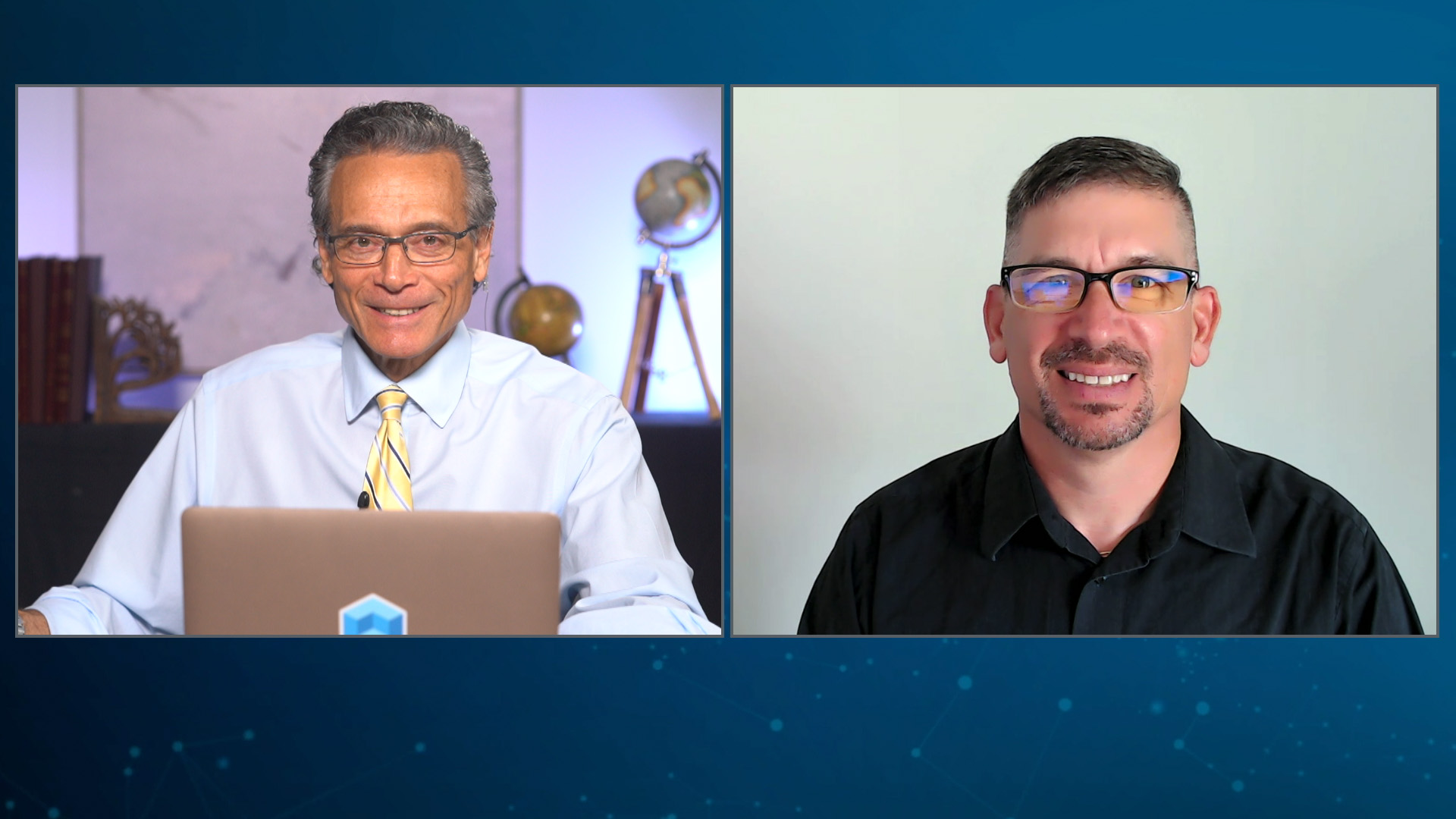
Betty Junod, chief marketing officer of Heroku from Salesforce Inc., and Vish Abrams, chief architect of Heroku from Salesforce, join theCUBE’s Paul Nashawaty at the AppDev Done Right Summit 2025. The conversation explores Heroku’s evolving role in simplifying modern application development while supporting speed and quality at scale.
Junod and Abrams reflect on Heroku’s developer-first foundation, detailing how its ecosystem reduces complexity through built-in CI/CD pipelines and infrastructure abstraction. They highlight the platform’s ability to support agility and innovation in today’s multi-cloud environments.
The segment also explores Heroku’s integration with emerging technology trends, including AI-driven workflows and the adoption of microservices. Junod and Abrams underscore how Heroku continues to empower teams through simplicity, flexibility, and operational efficiency.
Simplicity, Speed, and Scale in the Age of AI and Multi-Cloud
Betty Junod
CMOHeroku
Vish Abrams
Chief ArchitectHeroku
Betty Junod, chief marketing officer of Heroku from Salesforce Inc., and Vish Abrams, chief architect of Heroku from Salesforce, join theCUBE’s Paul Nashawaty at the AppDev Done Right Summit 2025. The conversation explores Heroku’s evolving role in simplifying modern application development while supporting speed and quality at scale.
Junod and Abrams reflect on Heroku’s developer-first foundation, detailing how its ecosystem reduces complexity through built-in CI/CD pipelines and infrastructure abstraction. They highlight the platform’s ability to sup...Read more
exploreKeep Exploring
What are the current challenges and priorities for developers in the AppDev environment, particularly regarding cognitive load and infrastructure management, and how does Heroku address these issues?add
What is the history and significance of Heroku in the context of web development and application deployment?add
What developments in technology are currently influencing the tools available to developers, particularly in relation to AI?add
What are the main challenges faced by CIOs in their modernization efforts, and how does Heroku address these challenges?add
What advantages does Heroku offer to developers in terms of flexibility and support?add
Simplicity, Speed, and Scale in the Age of AI and Multi-Cloud
search
Paul Nashawaty
>> Welcome to today's session with Heroku, empowering developers to simplify and scale for development platforms. This is part of the AppDev Done Right Summit. In an era where developers are under pressure to innovate faster without compromising quality, Heroku stands out by offering a developer-first platform that simplifies complexity. From seamless CI/CD pipelines to automatic scaling and powerful integration and capacities, Heroku helps teams move from the idea to impact with speed and confidence. In this session, we'll talk about how Heroku continues to evolve as a trusted development platform for building, deploying, and scaling modern applications with ease. Today, I'm joined by Betty and Vish. Betty, Vish, great to see you again. Great to have you on the AppDev Summit. It's really exciting to have you here. Why don't you introduce yourself to the audience? Betty, let's start with you.
Betty Junod
>> Hey, Paul, thanks for having us. Betty Junod, CMO of Heroku at Salesforce.
Paul Nashawaty
>> Betty, thank you. And Vish.
Vish Abrams
>> Hi, good to see you again, Paul. Vish Abrams, Chief Architect of Heroku.
Paul Nashawaty
>> Awesome. Thank you both for being here. This is awesome. I mean, we have a lot to talk about here, and when we look at the AppDev environment, it is evolving very rapidly as you both know. But one of the things I want to jump right into is talking about the simplicity and complex environments. We see this as a big challenge. With our latest research, we found that 74% of developers are looking to reduce cognitive load as a top priority when selecting development platforms. And when we look at this, 50% of platforms are looking to abstract infrastructure management and offer opinionated defaults. What are your thoughts around this from a Heroku perspective? And maybe you can start by giving a little bit of background of how Heroku kind of came together, and for those that may not know it, and maybe just start there and let's kind of have the conversation around this.
Vish Abrams
>> Yeah, great. I think if we look at the history of Heroku, Heroku kind of came to the forefront way back in the late aughts when web development was really starting out. And you may recall back then there was this move towards something called Ruby on Rails, which was looked at as a way to let maybe new developers that weren't used to building complex web applications be able to build and scaffold things really easily. And that meant that there were application development went from the world of system administrators and old school kind of C, C plus plus developers into this new wave of developers. And the thing that Heroku has been great at is just really removing the need to worry about all of those lower layers just as you're saying. The easier, the more you can uplevel and abstract that out and make it so a developer doesn't have to worry about the underlying layers of the system, the operating system, keeping your system packages up to date, et cetera, the better the experience is for deployment. And in the past 15 years, getting closer to 20, Heroku has just really maintained that and made it easier and easier over time. And I think if you look at it, we're in a similar space in the industry right now where the type of developer is changing and more people are recognizing the need to have a really stable foundation to build and deploy your applications.
Paul Nashawaty
>> Vish, I couldn't agree more, and I've always been a huge fan of Heroku. It's been an awesome place to kind of land your code and get things operational. Betty, let's kind of talk a little bit about technology and the differentiation. What are your thoughts around, with this new ecosystem, we have this small little thing called AI that's out there, people are talking about, I don't know what that is, but people are talking about AI, and there's also all this different code levels and such. What are your thoughts around that?
Betty Junod
>> Yeah, I think it's really interesting to see the explosion because we've gone through many cycles on this, right? This happened when containers and Kubernetes started, there was an explosion in new technology components that people had to think about. We're having the same thing with AI, but at the end of the day, there's new tools for developers or builders because things like AI-enabled tools like Cursor and Windsurf, Lovable, all of those things are really expanding what it means to be a builder and kind of changing the process. But then we also need to consider how is AI going to be part of the, not only just the build, but the deployment side as well? So what's kind of great is the core principles of what we founded Heroku on carry through with each evolution of technology in that it is about making sure that it continues to be easy for developers within the tools that they like to use, how can they access, gain access to these additional technologies, additional tooling for their process, and then making sure that those new powerful underlying technologies are part of the platform so that the apps can take advantage of them over time. There's a lot of talk about what are these new apps? Are they fundamentally different? Oh, agents, they're autonomous, et cetera. But at the end of the day, it's still code, and that code needs to be created, and it needs to be run and operated in a way so that it behaves as designed. And so in that sense, if you break it down, it still goes back to our core platform principles.
Paul Nashawaty
>> Yeah. And Betty, when I think about it, I started the kind of conversation around that simplicity around complex environments. And I think that from my understanding of Heroku, from just its inception to modern developments today, it's always prioritized. Heroku's always been prioritizing simplicity, and it really also fuels that ecosystem growth. So there's a big ecosystem out there which ties into things like the tangible benefits for developers that really help them get their jobs done. So if you look at it, Betty, from the perspective of that ecosystem, how are developers working in increasingly complex environments today, but also using that simplicity to get their jobs done?
Betty Junod
>> So I'd put it in the realm of simple yet powerful. It's not simple at the sake of not having capabilities, but do we need to have so much undifferentiated heavy lifting in choosing, configuring, setting up all of these additional tools that the ecosystem will keep bringing over time? Is that the burden of the developer, or is the burden of the developer should really be about how do I consume the capabilities of these new technologies so that I can then build new features or build new apps or take existing workloads that are there and modernize them over time?
Paul Nashawaty
>> Yeah, I think that makes sense. You know what, the ecosystem is important, but there's also these larger trends that we're seeing as well, right? Vish, when we look at how organizations are maturing their CI/CD pipelines, we find that pipelines are being deployed 200 times more faster and more frequently and have 106 times faster lead times. And this is not just from our research that we're seeing how organizations that are with that mature pipeline, this is also, we're seeing this out of door metrics as well. But when we look at some of the connections to these larger trends, Vish, I'd like to talk a little bit about how Heroku can help with agile DevOps and microservices adoption and what that means. I mean, I think that's a big factor when we look at these trends.
Vish Abrams
>> I think it's key. And if anything, sort of the pressure from AI is increasing the speed with which people need to deploy and build and deliver new parts of their system. And one of the pieces that Heroku has had for quite a while is our pipelines product or CI/CD product, which allows you to put your code into different environments and promote them through different environments to allow you to have a very reliable way of pushing out new updates to your code. So really the blocker for most organizations to get onto something like that is the time and the expertise that it takes to get a well architected and constructed deployment system to push it through the different stages, et cetera. So if you can get an accelerant by just getting a leg up and having something already made for you to use, often that's the thing that really gets your teams to be able to focus on the business logic and the software, integrating the AI pieces, all of the important stuff that you need to do to make your business better. You don't have to worry about the underlying layers of setting up your deployment pipeline and figuring out how to promote and all that stuff, then you've gotten a big advantage. And that's one of the areas that Heroku focuses.
Paul Nashawaty
>> Yeah. That makes a lot of sense. And I also like that human-centric API approach. I mean, I have this guy here, he's not human-centric, but he's definitely telling me that there's definitely a ways to get to where you need to go with those agent-ready APIs. You were talking about AI and how that's kind of coming into it. This is evolving fast. And when we look at how the industry has invested heavily in creating APIs that are really intuitive but also accessible to human developers, I think the element of what you're talking about is not to take the human out of the loop, so to speak. And Betty, maybe you can talk a little bit about that, where the market is shifting to more of these API calls are important and these agents are important, but it's also equally important to have that culture of the human in the loop.
Betty Junod
>> Yeah. And that's actually core to what we are doing at Salesforce. So it's about humans and software working together. And if you think about creating agents, agents are there to autonomously complete certain workflows, right? Workflows that are well-understood, workflows that we know that we are simply not processing enough of, right? Could we address your healthcare experience better if we were to agentify certain parts of that experience? Like even so simple things like booking an appointment. If you can only call between eight and five, what does that mean if you have meetings all day, as an example? So it's really important to have a human in the loop because the human is the one that has to A, design it. And then there will always be variations. As the agent is running the process, there'll be things that don't fit within the guardrails of the defined process and the defined variances. So what you need is you need an exception where humans can participate or let's say certain agents should only be able to complete up to a certain point and then have a human be the one that does things like yes, approves the final refund. So I think as we look at these agents and we look at this new kind of class of software that we're able to employ into our workplace, it's about how do we use that to get more things done better consistently? Because that's the best thing about software is that it doesn't sleep. But then also making sure that we know that the world isn't just all cookie cutter, so making sure that we have breaks and moments for the humans to go in and check and be able to be part of an escalation process.
Paul Nashawaty
>> Yeah. And I think the other thing that I found incredibly valuable is when we were having our discussions and briefings as we were leading up to this, AI agents talking about how they're going to accelerate an API-first development approach. One of the things that we talked in detail about, and Vish, maybe you can help me and the audience articulate this a little bit better, but it's the reinforcement of the architecture principles that Heroku is pioneering through the Twelve-Factor Manifesto. And for those that may not be familiar with this, maybe you can explain a little bit about that because I think that really helps build and run out those applications for the web more effectively. But can you help the audience explain that or help me explain it a little bit better?
Vish Abrams
>> Yeah, definitely. And actually it's particularly relevant to some of the things we've been doing lately. So recently we decided to update the Twelve-Factor Manifesto by bringing it to the community and collaborating with everyone on modernizing it. The Twelve-Factor Manifesto was originally written back in around 2012, and it was congealing a lot of the lessons learned about running applications at scale from Heroku, how to build applications the right way so that they can be run at scale. And the thing that's very interesting right now, we're just in our working group for the Twelve-Factor Manifesto, we've settled on trying to find the right sort of agentic prompting that you need to help agents create Twelve-Factor apps. Now, here's why I think that's interesting. The reason that that's interesting is because vibe coding has become this big thing that everybody's talking about these days. I've done it myself. We recently released a Heroku MCP server so that you can actually plug Heroku into your vibe coding environment and have it deployed directly to Heroku. Funnily enough, it worked before we wrote the MCP server because Heroku's been around long enough it's in all the training data, so if you give the agent access to your CLI, it can use your Heroku CLI and deploy anyway. But with the MCP server, it works better. So I can vibe code an app, but I can go into my environment, Herse or Windsurf or whatever and say, "Write a snake game, deploy it on Heroku." It'll churn for a few minutes, produce an app that runs on Heroku. But the issue is it's built an app that solves the problem that I asked it for, but it doesn't think about, "Well, how do I maintain this thing over time? How do I write it in a way that it can be extended? How am I making it operatable? Where's the telemetry going in? How do logs work?" All of those pieces, the agent doesn't think about that. And so what that means is, it's great for day one, but then if you want it to be deployable over time, you don't have that. And this is exactly what happened with regular developers back in the day. They could use Rails and scaffold their application, but they didn't know how to operate it. So we had to create a set of principles for them to understand here's how to build the application in a way that will allow you to operate it over time. And now we need to give those same instructions to the agents, which I just find very entertaining. Or you can say to the vibe coders, the people that aren't diving into the world of software developers that are just sort of going into this space and learning what it even means to have an application, of what it means to manage it over time. And that means that we're taking those same principles, that Twelve-Factor App Manifesto, and we're expanding it to a wider audience and teaching a new group of people and agents, both humans and agents, how to use them to build reliable, scalable, dependable applications.
Paul Nashawaty
>> I mean, that makes sense. I like that. And when you kind of start expanding on how you're describing this, Betty, I want talk about the connection between this multi-cloud world that we live in, which is lots of different things that happen. We see in our research, 94% of organizations use two or more clouds, 78% use three or more clouds, 65% use four or more clouds, so there's all these different complex environments, but the user experience becomes more important, not less important. So the user experience itself really is about the user design. It becomes more critical in an agent-driven world because you have to be able to do things more effectively, but you don't want to spend the time just trying to cobbling a bag of bits together, so to speak. What would you say to that when you have these interconnected worlds and this ecosystem, but that experience needs to be more important?
Betty Junod
>> And this is really with Heroku, we have a long history of customers building their mobile or web front-end experience and running that on Heroku. And then the flexibility of our platform allows them to have this unified, front-end, unified customer-facing experience. But then behind the scenes, it can be a whole mess of different systems because we know, especially organizations that have been around for a while, you will have systems of record and other systems of engagement in, they could be on-prem, they could already be in a cloud, they could be across many different providers. And the important thing is how are you bringing that together, connecting that, and then doing any sort of logic in between? The example I like to give that is, I'm sure we all have our favorite bank of some sort, and we're using their mobile app. Now, most of our banks have grown by M&A. Just because they've grown by M&A doesn't mean I want to log into five different mobile apps to deposit my check. It's the company's problem, it's not the customer's problem. So with that same approach, what we do is we help customers basically build that type of, build a great initial experience, that front experience, but then the platform is set up in a way that it can connect to whatever they have behind the scenes and bring that logic together in a way that gives a unified experience. And I think that's really, if you start from the customer in, that's really what they're able to build.
Paul Nashawaty
>> I think that's an important point to kind of have the audience understand here. You're starting with the customer's expectation, right? But it's also, I know I don't want to log into five different mobile apps to deposit a check. That's not fun. I have trouble enough with one, and I don't need to do five. But I think that the other thing I find incredibly powerful about the solution is when we start looking at the research that we have that we fielded, complexity is the killer of a lot of modernized application development. In fact, when I talk to CIOs, they tell me the two main reasons or challenges they run into for their modernization efforts is skill gap and complexity. And those are the two things that Heroku seems to solve pretty easily. So when I look at this, I see that doing some customer interviews and such, when I've talked to the Heroku customers at shows in different events and such, they've reported reductions in their go-to market times upwards of 30 to 50%. And this is especially in those startup and digital native companies, that's an important factor here because I think meeting the client where they are in their journey is important to understand how they can be successful. What are some of the other areas that you think that would really helpful for organizations to understand? They're getting started, they don't know what to do, maybe they're moving from a heritage environment to a new environment. There's kind of this sometimes a perception, well, Heroku is only a Salesforce product, and that's not true. I know that, but I think one of the things, maybe Vish, you can explain to the audience here how they can get started if they wanted to get started.
Vish Abrams
>> Yeah, I think one of the most interesting parts of Heroku is our flexibility in supporting different software stacks. Meaning if you're a Java developer, if you're a Python developer, even down to which libraries you prefer, if maybe you're Python developer, but you prefer to use PIP to install your packages or UV to install your packages, so kind of whatever area of the ecosystem that you really like, and you already have experience in, you can use to build your applications. And I think there's this concept that's come up called the full stack developer that's been around, everybody needs to be a full stack developer. And that may be true, having some depth to be able to go up and down layers when you work on software is great, but you don't want everybody to be a fuller stack developer. You don't want everybody to have to manage all of their layers and then the underlying platform beneath them, and then the operating system beneath that and the cloud beneath that. It's like there's a limit where there's a point where if you try and hire people that are too full, then you don't have enough expertise on this particular thing that you're working on. So I think Heroku strikes this really great balance of handling the bottom parts of the stack so that you can just focus on the business value, but it doesn't hamstring you. Some of these will say, "Well, yes, we'll handle all that, but you have to build within this very strict set of guidelines. You have to use a particular language. You have to use a particular framework or a particular SDK." Heroku says, "No, we'll give you the flexibility to use whatever you're comfortable with, whatever you're familiar with, whatever your developers are already experts in, but then we're going to, around the edges, build the supporting structure so that they don't have to worry about the rest of that stuff."
Paul Nashawaty
>> Yeah, I love that response because you provide developers with their, if they're using a bespoke solution, they can continue to use that, but still have that unified view and the unified front, which I really like about that ecosystem. Betty, I want to leave you with the last word. What do you have for the audience here?
Betty Junod
>> We're really excited for what's going on right now because it's bringing a whole new class of people into this world of software development. Vish talked about, we support all these languages. That's great for people who've been in software development. I think the most interesting thing now is English potentially is becoming a quote unquote development language. What does that mean for the future of who built an app and for what purpose? From a Heroku perspective, we've always been behind the folks that are building software, so I think this is a really exciting time for us to see about who are the new builders from this point on, and what does that mean? So we're here to support them throughout this transformation.
Paul Nashawaty
>> Vish, Betty, this has been awesome. Thank you for being on today with me. This is just really a little bit to get started for the audience. So for the audience viewing, there's a lot more to unpack here, a lot more to carry on the conversation with Betty and Vish and the team here. But thank you for joining us on this deep dive into Heroku and at the AppDev Done Right Summit. As I mentioned, lots of research, lots of conversations to be had, to continue to be had. This is just the start of the conversation, not the end. And so by embracing these practices that we talked about, organizations can respond faster to challenges and build a culture of resilience and ongoing innovation. So thank you for attending today's session, and we look forward to continuing the conversation.














 Paul Nashawaty