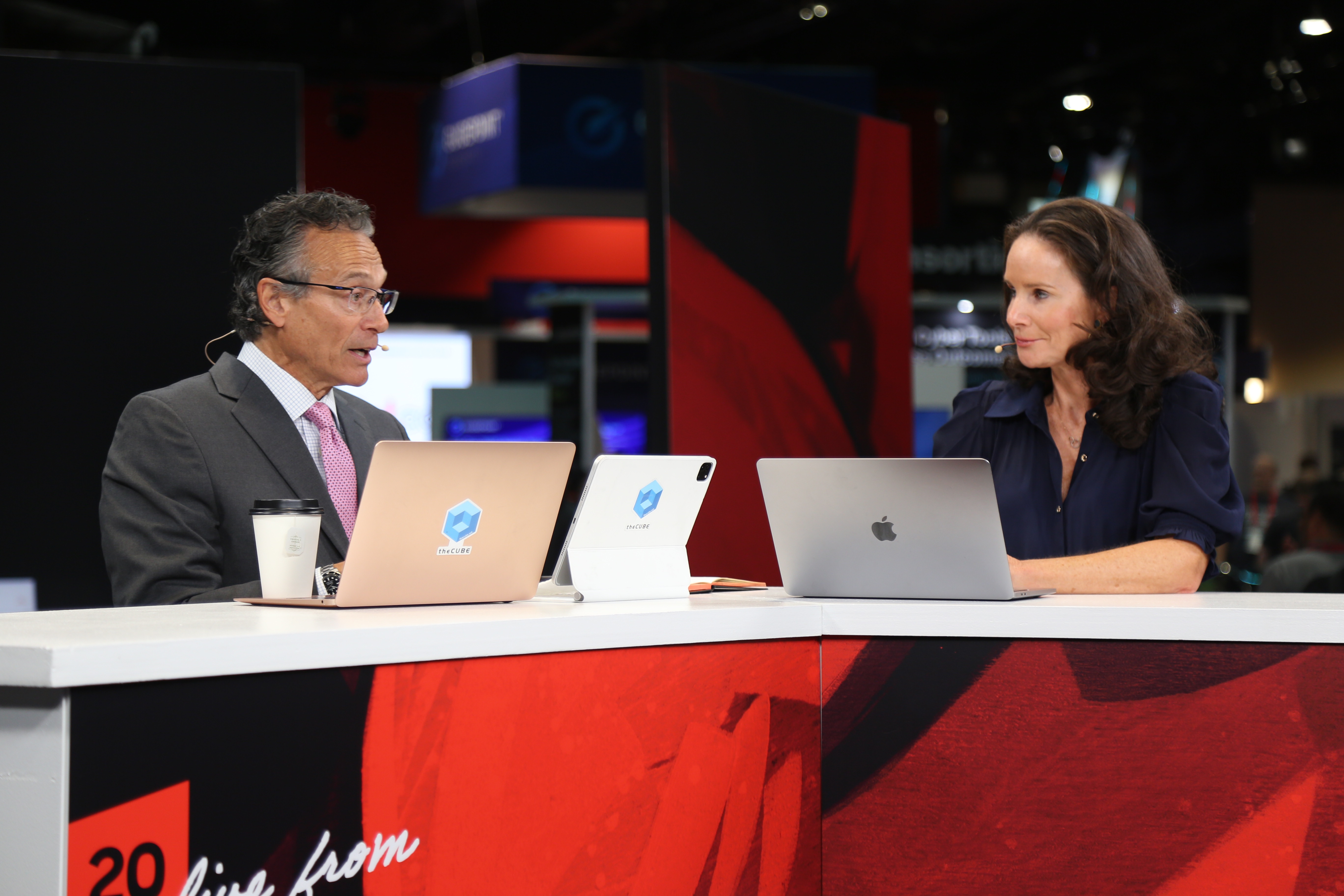
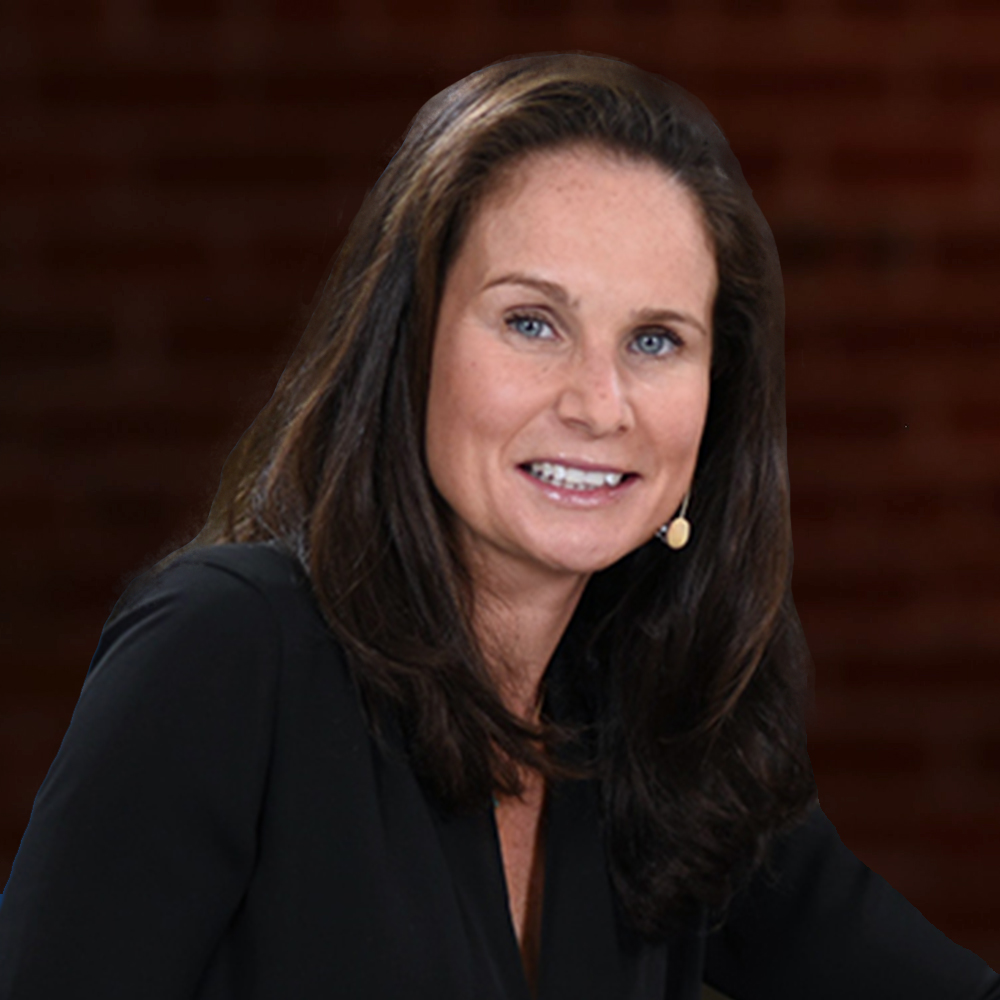
During theCUBE's live coverage of Crowdstrike Fal.con 2025, hosts Rebecca Knight and Dave Vellante examine the recent developments and strategies highlighted by CrowdStrike. The event occurs in Las Vegas, where industry leaders gather to discuss the evolving cybersecurity landscape and CrowdStrike’s ongoing journey towards innovation and growth following last year's challenges.
This video features expert insights from Dave Vellante, co-founder and co-CEO of SiliconANGLE Media, along with Rebecca Knight, exploring CrowdStrike's strategic shift from being perceived as an endpoint product to a robust platform. Vellante discusses their recent analysis titled "From Product to Platform, How CrowdStrike Navigates to Durable Growth," which highlights the company’s recovery trajectory post the July 2024 outage. They note CrowdStrike's efforts in transparent communication and customer care and its innovative pricing model, Falcon Flex.
The discussion further examines the keynote by CrowdStrike's Chief Executive Officer George Kurtz, focusing on the company’s vision of an autonomous security operations center and the significance of their advanced technologies such as Falcon Flex. Vellante and Knight emphasize the importance of data-driven agent development as explained by Kurtz and how CrowdStrike stands out among competitors by delivering seamless integrations and maintaining high standards of innovation and value.
Rebecca Knight and Dave Vellante share insights from George Kurtz's keynote, highlighting CrowdStrike's focus on a single-platform strategy rather than a collection of platforms often used by competitors. They discuss factors to consider for crowd adoption of new tools and the overall competitive landscape. The conversation also includes insights from Sean Stewart Cairncross regarding government-private sector collaboration and cybersecurity resilience. The video concludes with a preview of interviews and discussions with various industry experts and partners participating in Fal.con 2025.
Forgot Password
Almost there!
We just sent you a verification email. Please verify your account to gain access to
CrowdStrike Fal.Con 2025. If you don’t think you received an email check your
spam folder.
In order to sign in, enter the email address you used to registered for the event. Once completed, you will receive an email with a verification link. Open this link to automatically sign into the site.
Register For CrowdStrike Fal.Con 2025
Please fill out the information below. You will recieve an email with a verification link confirming your registration. Click the link to automatically sign into the site.
You’re almost there!
We just sent you a verification email. Please click the verification button in the email. Once your email address is verified, you will have full access to all event content for CrowdStrike Fal.Con 2025.
I want my badge and interests to be visible to all attendees.
Checking this box will display your presense on the attendees list, view your profile and allow other attendees to contact you via 1-1 chat. Read the Privacy Policy. At any time, you can choose to disable this preference.
Select your Interests!
add
Upload your photo
Uploading..
OR
Connect via Twitter
Connect via Linkedin
EDIT PASSWORD
Share
Forgot Password
Almost there!
We just sent you a verification email. Please verify your account to gain access to
CrowdStrike Fal.Con 2025. If you don’t think you received an email check your
spam folder.
In order to sign in, enter the email address you used to registered for the event. Once completed, you will receive an email with a verification link. Open this link to automatically sign into the site.
Sign in to gain access to CrowdStrike Fal.Con 2025
Please sign in with LinkedIn to continue to CrowdStrike Fal.Con 2025. Signing in with LinkedIn ensures a professional environment.
Are you sure you want to remove access rights for this user?
Details
Manage Access
email address
Community Invitation
Keynote Analysis, Day 1
Kick off Fal.Con 2025 with theCUBE’s keynote analysis as Rebecca Knight and Dave Vellante dive into CrowdStrike’s big stage message. They revisit last year’s outage, the rebound that followed, and Dave’s “from product to platform” analysis. The conversation highlights how CrowdStrike’s V-shaped recovery was fueled by customer care, Falcon Flex pricing and tuck-in acquisitions that strengthened its single-platform story.
They then look at adoption signals to watch: customer uptake of Charlotte, expansion of Falcon Flex and declining churn intent. Kurtz’s vision for an agentic SOC takes center stage, with parallels to self-driving cars and the need for guardrails. Rebecca unpacks the three agentic phases: detection, reasoning and continuous learning, while Dave stresses how governance and security of AI agents will shape the road ahead.
Finally, the pair reflect on data as the differentiator powering agent-building and SOC automation. They weigh the U.S. government’s push for business collaboration, Kurtz’s aspirational “security AGI” North Star, and the ecosystem approach CrowdStrike favors over stitched-together alternatives. The takeaway: AI has reset the cybersecurity curve, and enterprises must fight AI with AI while building maturity to keep pace.
Kick off Fal.Con 2025 with theCUBE’s keynote analysis as Rebecca Knight and Dave Vellante dive into CrowdStrike’s big stage message. They revisit last year’s outage, the rebound that followed, and Dave’s “from product to platform” analysis. The conversation highlights how CrowdStrike’s V-shaped recovery was fueled by customer care, Falcon Flex pricing and tuck-in acquisitions that strengthened its single-platform story.
They then look at adoption signals to watch: customer uptake of Charlotte, expansion of Falcon Flex and declining churn intent. Kurtz’...Read more
exploreKeep Exploring
What innovative strategies did CrowdStrike implement to address customer care and pricing flexibility?add
What does George Kurtz say about the approach of CrowdStrike compared to its competitors, particularly Palo Alto?add
What are the key messages and insights that the audience hopes to gain from CrowdStrike's coverage relating to the company's future and the evolving landscape of cybersecurity?add
What is George Kurtz's perspective on the approach companies should take in the cybersecurity industry?add
>> Good morning everyone. I'm your host, Rebecca Knight, and we are kicking off two days of theCUBE's live coverage of Fal.Con 2025 here in Las Vegas. I'm sitting next to Dave Vellante...
Dave Vellante
>> Rebecca.
Rebecca Knight
>> ... the co-founder of theCUBE. Hello, how are you?
Dave Vellante
>> Good, good. Haven't seen you in a while.
Rebecca Knight
>> I know, it's been a minute.
Dave Vellante
>> Back on the program post Labor Day, we're back at it. It's been a good summer, was down in New York Stock Exchange a lot...
Rebecca Knight
>> Indeed.
Dave Vellante
>> ... with John, doing some cool stuff there, and then now we're back in Vegas.
Rebecca Knight
>> Back in Vegas where we life to be, where we love to be.
Dave Vellante
>> Pretty amazing transformation or transition from last year. Of course last year at this time we were coming off the July-19th outage and the whole message last year was we're moving on. I mean, I think CrowdStrike they went on kind of the apology tour, but more so they really focused on helping customers get back. I think by all accounts, they did a really good job. As you know, I just wrote the breaking analysis-
Rebecca Knight
>> Well, exactly, I want to actually tell our viewers about this. It's From Product to Platform, How CrowdStrike Navigates to Durable Growth, a piece that you published over the weekend where you really set the stage for what we're going to see here over the next two days. You said the CrowdStrike's recovery is V-shaped after the July, 2024 outage. What are the specific data points? Walk us through what leads you to believe that this is a genuine rebound.
Dave Vellante
>> Yeah, so before I do that, I just want to say the title was a little bit provocative because George Kurtz will tell you, I've always had a platform, we didn't transition. But the industry I think is transitioning from product to platform, and I think customer mindsets are transitioning. So I'm not a journalist, but I have a little journalist in me, I always like to do a little tweaking, but I do think now that is the mindset from the customers, but it wasn't in the original days, it was kind of considered an endpoint product. That V-shaped recovery was pretty dramatic, and I think the first data point that we got was from our partners, ETR. They did a flash survey of a hundred customers the day of the incident, and found that 95%, 96% had been affected, and they were pissed, rightly so, I understand that. But at that time, so we wrote that up at the time and we said, "Listen, things are going to calm down, we think, if CrowdStrike does a good job helping people get back online," which they did. It's not just easy to rip and replace, right? All the processes and the procedures and the skill sets around that, they're kind of fossilized. And so what CrowdStrike did that was I think quite clever is they've created this customer care program, they get a lot of steep discounts, they communicated very transparently to Wall Street that, "This is going to affect our earnings, we're reserving money to actually take care of this, and we're going to give steep discounts, and we're going to really start offering Falcon Flex." Falcon Flex is this flexible pricing program, essentially it's an all-you-can-eat. You know? Come on in, you can take any module you want, you can swap things out. I wish more SaaS companies would do that. I wish Marc Benioff would do that with Salesforce, but it's not as easy in a lot of companies. And so I think that George Kurtz learned from his early days in cybersecurity, this is the easiest, most facile way. And I think the second thing is the stock price rebounded, I mean, they're up well over $100 billion now. I think they peaked well over 110, 115 where they are today. They're at a $4.7 billion run rate, today revenue run rate. Their margins, they're profitable, their free cash flow margins are good. I've got some stats in the piece. They're cash in the bank, they got $5 billion in the bank. And then when you line them up against some of the other leaders like Palo Alto and Zscaler, they're trading in a multiples, and I think that multiple is warranted because of the great job they did bouncing back, not only but the durability of the platform, the innovation, and then we will get into it on some of the keynotes, but one of the things that George Kurtz said, which was a little bit of poke at some of the competitors, is "We're a single platform, not a collection of platforms."
And he could be talking about a firm like Palo Alto, which tends to acquire companies and sort of cobble them together. They would claim they're doing the engineering work. I think CrowdStrike gets high marks, Rebecca, for actually doing... they made a couple of announcements of acquisitions today. One, I think they announced today, Pangea, and the other one they made a couple of weeks ago for streaming. And they do a good job of doing the integration. They're not doing these big giant acquisitions like Palo Alto bought CyberArk for 25 billion, that's a lot to swallow. I think this company does more innovation tuck-ins that fit into its platform and that do the engineering work. So those are some of the quick takeaways that I had.
Rebecca Knight
>> And we are both fresh from the main stage where George Kurtz was up there of course. And I want to get into that, but before we do, we are here at Falcon 2025, are there specific announcements or metrics that you'll be watching that will help you be able to gauge whether or not they actually are in fact executing in ways that you believe that they are? And is there any other elements that you're watching, as you say, as growth normalizes and competition intensifies?
Dave Vellante
>> Yes. Well, I think first of all, the marketing always leads the actual adoption. So I'm curious when I talk to customers about how many are actually using Charlotte. We were here a couple of years ago, Charlotte was announced, kind of cool chatbot, LLM-based assistance, the digital assistant for the Security Operations Center. I still think it's early days for Charlotte adoption. I think some folks the bleeding edge, but there's still a lot of caution there. I think the other thing is Falcon Flex. I think it's a great program, but I think still a vast majority of the customers aren't in on Falcon Flex, so that's something that we're watching closely. And I also think that CrowdStrike's not out of the woods yet, right? Customers are still saying, "Hey, we're thinking about alternatives even though it's really hard for us to move." But those numbers, those churned numbers, those intended churned numbers are way, way, way down in the last year. So those are some of the things that we're watching, and I think it's always important at CrowdStrike to watch the innovations, the vision. I mean, George Kurtz set out a vision of the autonomous SOC and basically used the analogy of full self-driving. We'll talk about that, I'm sure. I wonder if it'll be as hard to get to as FSD. Experts say there's a reason why we don't give kids their license until they're 16 years old, because the brain has to develop and it's complicated to get to full self-driving. And so I don't know how far that analogy goes. I hope it's not too far, I hope we can get to the autonomous SOC before we can get to full self-driving.
Rebecca Knight
>> Well, that is a very important point. In fact, as you said, he was up there on the main stage talking about entering the age of the Agentic SOC. Three stages, Agentic detection, triage, and creating workflows. Second, Agentic-based reasoning, what does it mean, how can you really think more like an analyst? And the third is continuous learning. How can we apply what has happened so that we can be smarter the next time? What are your first impressions? And as you said, he really did show this parallel between where we are with this in terms of self-driving cars, but he also said, you do need guardrails on the intern, because as many of us have experienced, AI is amazing, but it doesn't do everything right. It still makes simple mistakes, and you do in fact really want to make sure that that person who is driving the car knows what they're doing.
Dave Vellante
>> Well, one of the things I would observe and I strongly agree with is the old model, it doesn't work. I mean, security was broken before the new model, right? It was a do-over then, and it's even more of a do-over now. And I think the leaders in this industry would agree that no longer can humans keep up. So that I definitely agree with. So I like the vision of the Agentic SOC. I think the question is, okay, well, how's that going to play out, how are you going to secure those agents? Kurtz kind of implied that it's the human's job to actually put in the guardrails for those agents.
Rebecca Knight
>> And manage the agents.
Dave Vellante
>> Right. And so Marc Benioff famously in the Wall Street Journal wrote an article, we're the last generation of managers that will be managing human-only employees. And George Kurtz said, "You might have 10,000 employees, but you might have a million agents. How are you going to manage those agents? Who's going to secure those agents?" Of course, he wants to be the platform that secures them. And they also announced basically an agent builder, I'll call it platform. And it's funny, I wrote down in my notes, why should somebody... Because they announced, I think seven agents, and they said there's going to be hundreds of agents that people want to build. And so we have agent builder, they don't call it agent builder, I forget what they call it, but a capability for developers to build their own agents. And I said, why should they use CrowdStrike's Agent Builder versus Google's or Amazon's, et cetera? And then he answered it immediately. So he was reading my mind, and the answer was, data. They have the data. And I buy that. I think a handful of companies have that data and the technology to actually create that development environment so that you can build your own agents. And they've always had a graph database. He mentioned that. Something that George Gilbert and I talk about a lot in the agenda era. In fact, graph databases never really took off except really in cyber security. But graph databases, think of them as multi-dimensional views of stuff. So people, places, things, activities, processes, having that in a graph database that can visualize, that you can query. That's always been the hard part of graph databases, it's really hard to query them. You had to go back 15 years, you don't have the facile query nature of SQL, but that's changed with modern systems and AI. And so they've got a lot of experience there, they've got a lot of data there. So I think they're in a good position to continue to lead this charge. I mean, look, the knock on CrowdStrike is always their price is too high. Well, that's because they're adding value. And so luxury products get premium pricing, and that develops into great companies and high growth and good margins. And as long as the innovation engine keeps going, they and their investors prosper.
Rebecca Knight
>> We had George Kurtz on the program last year, I mean, it is a very entrepreneurial company, and as he said, there is a parallel with the security curve and the innovation curve, because as these new innovations keep coming forward, you need to protect them. You need to secure them before they go out into the masses. Another part of the keynote, we heard from Sean Stewart Cairncross, who is the national Cyber Director of the United States. He's seven weeks into his role. He was up on the main stage doing a fireside chat about what the government is looking for from the private sector, and how the government's interested in collaborating and making sure that incentives are aligned, and for protecting and securing, as well as making money. What was your take on what he was saying? Were you buying what he was putting down?
Dave Vellante
>> Yes. I would certainly like the message. Whether or not they can pull it off, we'll see. I do feel like President Biden's executive order around cybersecurity I thought was very, the principle admonishing the student. "You have to do better." It was a lot of finger wagging, and I never thought that was constructive. I feel like Sean's message was much more collaborative, and you and I were talking about, we really liked the notion of the aligning incentives, maybe serving your country in a role of cybersecurity, because the future of war is cyber, at least a big component of it is cyber. You don't have to necessarily go into the military, you could maybe go into a role in cybersecurity. I think that is really the front lines of a lot of what we're talking about here in terms of national defense. I guess we'd call it National War now, I'm not really crazy about the War department moniker, but let's put that aside for a moment. But I like the message of collaboration, it seems like this administration is obviously much more business friendly, they seem to be wanting to partner with business, at least to a degree. We'll see how that plays out in the long term. The pendulum swings. As always, when things get over-regulated, it's bad, then things get under-regulated, then something bad happens 10 years down the road and the two administrations previously get blamed for it. So we'll see how that works. I think striking a balance is always necessary.
Rebecca Knight
>> Indeed, indeed. So we are about to kick off two days of CrowdStrike coverage. We're going to have on lots of customers, travel and leisure, MGM resorts, lots of CISOs from major companies, partners, AWS, Deloitte. What are the messages that you are looking for? What are you wanting to hear from customers that will in fact make you more confident that in fact, CrowdStrike will recover fully?
Dave Vellante
>> Well, I think the fundamental premise is that AI has put us into a new era of cybersecurity, that the humans who used to be able to... The technology used to be able to stop 99% of the problem, and then the 1% is where the bad guys prospered. But generally speaking, the humans could deal with that. No longer is that the case. AI has made it such that the volume of activity from the adversaries is so high and the sophistication is so high that you must fight AI with AI. What was interesting, George Kurtz laid out an aspirational North star that he called security AGI, which I thought was interesting because George Gilbert and I coined to the term enterprise AGI. Everybody talks about AGI with these consumer LLMs, but enterprise AGI is the notion of proprietary data that organizations are going to apply to become superheroes, get their superpowers. That's why we wrote why Jamie Dimon is Sam Altman's biggest competitor and how he gets there. So to answer your question, I'm really interested in that North Star. It is aspirational, it's years away, but I'm interested in to what degree that resonates with customers, because they're just fighting fires every day, and what kind of position they're in to actually get on that curve, because that means they have to have their data house in order, they have to have their infrastructure in order, API creep has to be dealt with, you're injecting agents into the equation. I suspect it's going to be really challenging for most organizations. I mean, most organizations are having trouble just operationalizing something like Zero Trust, which when you read the NIST framework makes a lot of sense, but actually operationalizing that is very challenging. So what I'm looking for is where are customers on that maturity curve and what role, of course, because we're at CrowdStrike, does CrowdStrike play? And why CrowdStrike relative to many of the other alternatives? The last thing I'll say is George Kurtz said, "No one company can do it all." That's a philosophy that is somewhat different than some of the leaders like a Palo Alto, for instance, who seems to be trying to do more and more and more. I think CrowdStrike's taking more of an ecosystem approach toward consolidation, which I think has some merits. Vertical integration versus loosely coupled, both can work.
Rebecca Knight
>> Well, we're going to dig into this over the next two days, and I'm looking forward to it.
Dave Vellante
>> Thanks, Rebecca.
Rebecca Knight
>> I'm Rebecca Knight for Dave Vellante. Stay tuned for more of theCUBE's live coverage of Falcon 2025. You're watching theCUBE, the leader in enterprise news and analysis.