In this theCUBE Research interview, Vishal Salvi of Cognizant, senior vice president and global head of cybersecurity services, discusses agentic AI, adversarial threats, platform consolidation and strategies for cyber resilience at CrowdStrike's Fal.Con 2026. Salvi explains how artificial intelligence, abbreviated as AI, surfaces dormant vulnerabilities and what this means for security design segmentation and accountability; they highlight implications for identity management and non-human identities.
Key takeaways include a shift toward platform consolidation and simplified architectures to reduce blast radius and a focus on cyber resilience through measures to measure, contain and recover quickly. Salvi urges chief information security officers, CISOs, to adopt clear strategies; they recommend establishing guardrails for non-human identities and treating security as continual improvement. Analysts on theCUBE emphasize board attention, budget alignment and cross-organizational accountability to address evolving cyber risk.
Almost there!
We just sent you a verification email. Please verify your account to gain access to
CrowdStrike Fal.Con 2026. If you don’t think you received an email check your
spam folder.
In order to sign in, enter the email address you used to registered for the event. Once completed, you will receive an email with a verification link. Open the link to automatically sign into the site.
Register for CrowdStrike Fal.Con 2026
Please fill out the information below. You will receive an email with a verification link confirming your registration. Click the link to automatically sign into the site.
You’re almost there!
We just sent you a verification email. Please click the verification button in the email. Once your email address is verified, you will have full access to all event content for CrowdStrike Fal.Con 2026.
I want my badge and interests to be visible to all attendees.
Checking this box will display your presense on the attendees list, view your profile and allow other attendees to contact you via 1-1 chat. Read the Privacy Policy. At any time, you can choose to disable this preference.
Are you sure you want to remove access rights for this user?
Details
Manage Access
email address
Community Invitation
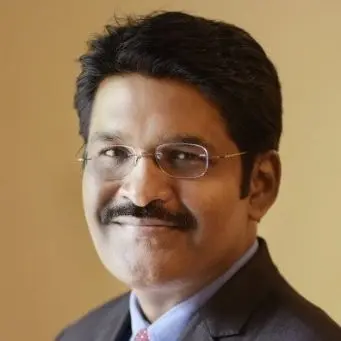
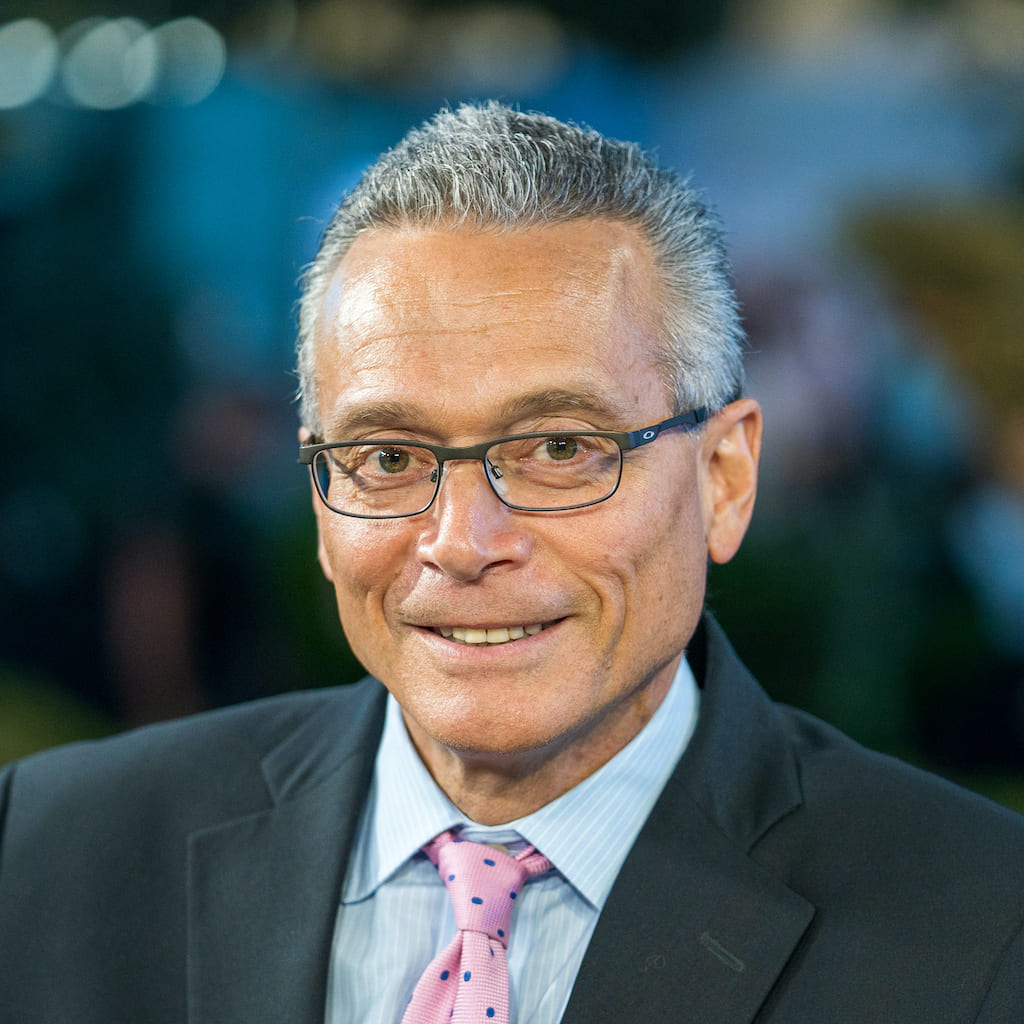
Vishal Salvi, Cognizant
In this theCUBE Research interview, Vishal Salvi of Cognizant, senior vice president and global head of cybersecurity services, discusses agentic AI, adversarial threats, platform consolidation and strategies for cyber resilience at CrowdStrike's Fal.Con 2026. Salvi explains how artificial intelligence, abbreviated as AI, surfaces dormant vulnerabilities and what this means for security design segmentation and accountability; they highlight implications for identity management and non-human identities.
Key takeaways include a shift toward platform consolidation and simplified architectures to reduce blast radius and a focus on cyber resilience through measures to measure, contain and recover quickly. Salvi urges chief information security officers, CISOs, to adopt clear strategies; they recommend establishing guardrails for non-human identities and treating security as continual improvement. Analysts on theCUBE emphasize board attention, budget alignment and cross-organizational accountability to address evolving cyber risk.
SVP, Global Head of Cybersecurity ServicesCognizant
In this interview from Fal.Con 2026, Vishal Salvi, global head of cybersecurity service line at Cognizant Technology Solutions Corp., joins theCUBE's Dave Vellante and Rebecca Knight to discuss how frontier AI is reshaping the cybersecurity threat landscape. Salvi explains why the last six months differ from previous cycles of change, noting how AI can uncover decades-old dormant vulnerabilities at scale, creating unprecedented risk. He unpacks the dual mandate facing CISOs: deploying AI for defense while guarding against adversarial AI, all amid growing atta...Read more
exploreKeep Exploring
How is AI affecting cybersecurity, including the new risks and vulnerabilities it creates?add
What are the current challenges facing CISOs and how should they respond to increasing complexity, a growing attack surface, and heightened attention from boards and leadership?add
Does consolidating infrastructure and security platforms with fewer partners reduce blast-radius risk and improve an organization's cyber resilience?add
What is your outlook on AI's impact on cybersecurity—can it make software "secure by design," and what risks or challenges (including unintended consequences) do you foresee?add
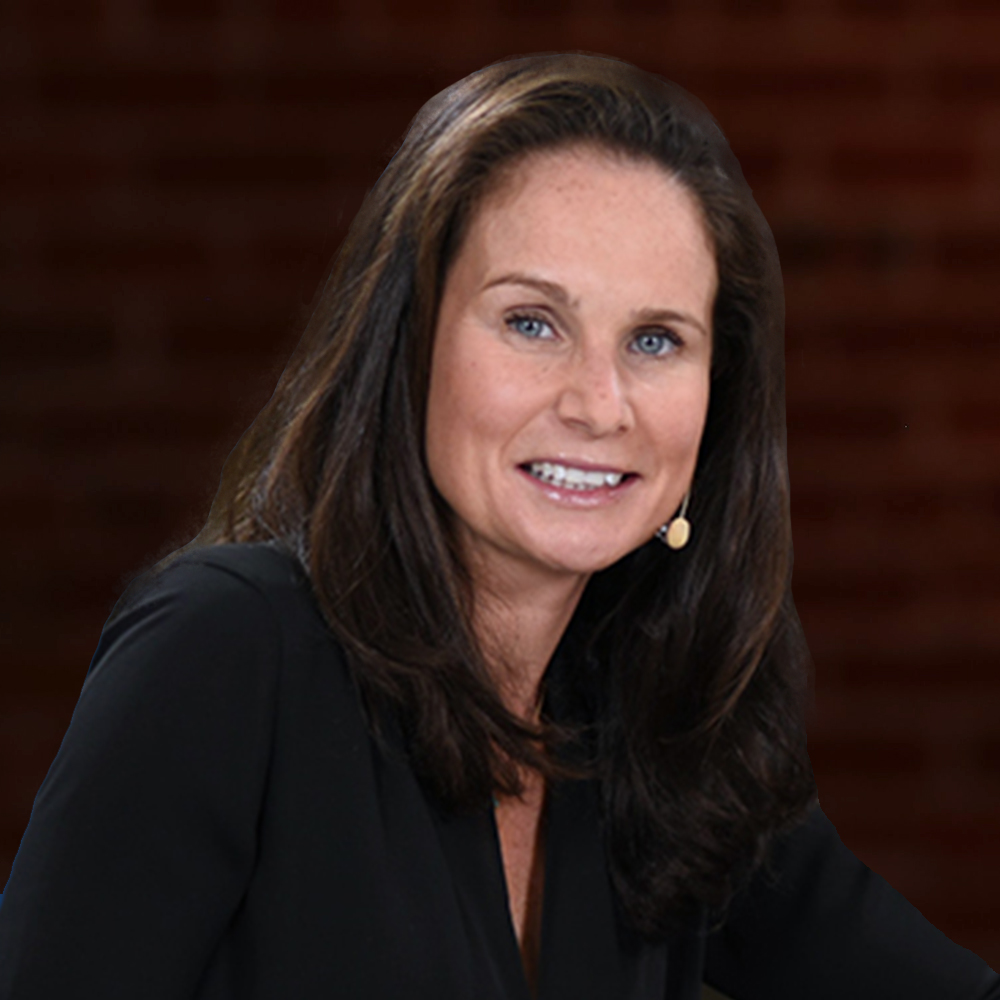
>> Good evening everyone and welcome back to theCUBE's live coverage of Fal.Con 2026, the CrowdStrike Conference. I'm your host, Rebecca Knight, alongside Dave Vellante, co -CEO and co -founder of theCUBE. I would like to welcome Vishal Salvi, SVP Global Head of Cybersecurity Services at Cognizant. Welcome Vishal.
Vishal Salvi
>> Thank you so much for having me.
Rebecca Knight
>> Your first time on theCUBE, so we're delighted to have you. You are a veteran in cyber security services. You're now at Cognizant. Today is your one year anniversary, so congratulations.
Vishal Salvi
>> Thank you.
Rebecca Knight
>> I'd love you to start out by talking a little bit about this moment in time, because you, as we said, you know this industry so well, and right now there is so much change going on with agentic AI moving so quickly into enterprises. Does this feel demonstrably different to you than at other points in your career when you were watching enterprises adopt new technologies?
Vishal Salvi
>> Yeah, I think it's a great question to start off with. I think if you look at the history of cyber security, we've always seen that the intensity and the frequency of the attacks have constantly changed every year. And it's never peaked because every new year you see something different and new. But I think what's different in the last six months is the way in which AI is impacting and making a big change to the ways we look at cyber, both in terms of how AI is deployed within the cyber security, but also adversarial AI. And what I mean by that is, if you look at it in terms of what frontier AI is doing right now, it's able to find out vulnerabilities which humans have missed for almost three decades, right? And all these dormant vulnerabilities are becoming visible at scale. And that is creating an unprecedented risk which we have never seen before. And it's compelling us to look at all the dormant technical debt, security debt, we have not been able to make a business case about, is now something which we need to worry about. So I guess both in terms of the application of AI and how it is going to create a new security threat landscape for us is equally important, but also in terms of what AI is able to unearth and give us visibility of. So both the things are very different from what we've seen in the past. So we were just talking.
Dave Vellante
>> About Jackson Holeand Kevin Warsh speech. And the Fed of course has a dual mandate, right? They've got to have maximum employment and low inflation. At the same time, security pros are being asked to defend against cyber attacks with AI but then protect against potential AI attacks. We were also just talking about agent swarms and the Hugging Face. Is it as complicated of a balance in cyber security as it is in the economy? Is it more complicated? How are CISOs balancing those two mandates?
Vishal Salvi
>> I think it's a very tough job. I think it's getting tougher by the day because the complexity is increasing, the business adoption is obviously unprecedented, and as a result of all of this, the attack surface is growing. So clearly, it's a tough job to balance, but at the same time, you've got to do it. But clearly, cyber is now in the center of all the action. And you have the board's attention, you have the leadership's attention, you also have the budgets. So you have no reason to complain. And you need to make sure that you're able to use this sort of attention to your advantage. because cyber security has always been a topic where you are a catalyst to the change, and the change is the whole ecosystem. And so as a CISO, you need to make sure you engage the ecosystem and drive the change. You are not the change, but you are the catalyst to the change. And so clearly, you need to make sure you seize this moment and make the best use of this, but it is a complicated world, and it takes a village to solve this.
Dave Vellante
>> interesting, the change from, if you think about RSA and then Black Hat, you had the Microsoft moment in between, and then you saw CrowdStrike's earnings last quarter, which clearly there was momentum from Microsoft. So what are you seeing in terms of customers trying to consolidate to simplify? Are they aware? obviously they're aware. Are they moving fast enough? I think George Kurtz was on Cramer saying that many enterprises maybe still don't appreciate the urgency. That's self -serving, he's kind of selling his book. But so as a technology agnostic company, what are you seeing out there?
Vishal Salvi
>> I think there is a fair bit of confusion, and also there's a fair bit of sitting on the fence to really decide what do you do. Because the speed of change and the way things are unfolding is compelling for people to allow it to stabilize before they start really committing towards a particular strategy. But I guess that's not a good strategy because you cannot be sitting on the fence. You need to be involved and engaged because it's not just about technology, it's also about policy and defining accountability within your organization to make the change successful. And so therefore, you got to get involved. But as a community, we are in the phase of awareness. You saw the open letter for security. All of this is about trying to compel the ecosystem to really take notice of this and see how we're going to come together to secure the AI, right? And so that's where we are right now.
Dave Vellante
>> But Vishal, at the firm level. It's chaotic, right? The ChatGPT moment became a board issue. What are we going to do about it? Where are we exposed? How can we close those exposures now? Go. And this chaos turned into cash. I often sort of joke, not so funny. So, but a lot of times firms are just reacting tactically because they have to, but there's this other potential risk which is what I call the blast radius challenge. How significant is that? How aware are people of that issue? Should they be? How do you help mitigate that? As the trust bar is rising for firms like CrowdStrike, its ecosystem, its GSI partners like you guys. How are you handling that?
Vishal Salvi
>> I think the key word is cyber resilience. And it's something which is part of our tagline. we call it Cyber Resilience Delivered. And the reason we call it out is because blast radius is not something new, right? As a concept, it's been around and we've seen the way we have architected the technology, we have mostly kept it flat so the moment somebody enters, they pretty much have access to your infrastructure, right? And the same thing happens with the spread of malware, and we've seen, you know, the lateral movement that can happen. So clearly, there is a need for better segmentation, better design, and for the past so many years, we've been talking about how we build network segmentation so that we are able to either create a network invisible, or at least segment it so that if there is a compromise, it is limited to a particular area. But clearly, it is talking about building a more cyber resilient organization.
Dave Vellante
>> Okay, but does consolidation then make the blast radius problem less risky?
Vishal Salvi
>> I think yes, because what happens is that when you do consolidation, you are able to simplify your architecture, right? And when you simplify, you are making your security more effective, right?
Rebecca Knight
>> So is that the answer for all organizations? 100%.
Dave Vellante
>> But wait, wait, wait! But I'm also giving more data, more context, and more autonomy to that consolidated platform. Right, so if something goes wrong.
Vishal Salvi
>> So there are only three hyperscalers, and most of the organizations work with them, and there is a risk that if one of them goes down, there is going to be a significant impact.
Dave Vellante
>> But you can architect around that, which is what you're saying, right?
Vishal Salvi
>> Exactly, so the work has been around building infrastructure where we can keep some eggs in one basket. So it's not about, So the choice is between working with few partners or working with 70 partners that we do right now, what is better? Clearly, fewer partners. Are better. Exactly.
Dave Vellante
>> We agree. And that's what consolidating security means. I'm going to put all my eggs in the CrowdStrike, not all, but most of my eggs in the CrowdStrike and Cognizant basket. So that puts a lot of pressure on you. And so your message is, I like the message, cyber resilience. So double click on that. How do I architect that resilience? It's because it's, okay, so I guess it's multiple clouds, maybe two clouds, multi -cloud. Is it multiple security platforms? I really don't necessarily want a Palo Alto and CrowdStrike. I want to pick one.
Vishal Salvi
>> In my view, if I work with multiple tools, actually I have a bigger risk than if I work with a more simplified architecture. Agreed, agreed. Yeah. So actually, it's far better if I work with a CrowdStrike infrastructure end -to -end and deliver it because I have better control over my destiny, right? So I think that's really what we call, well in fact, we talk about completely end to end managed security. We believe that if you pre -engineer, pre -integrate and deliver it as a service, I think it's far better compelling way because then you have the power of working across customers, putting it all together and giving the best of the solutions for our customers.So said another way.
Dave Vellante
>> Recovery is going to be more efficacious with a consolidated platform. If something goes wrong, and you have the data, and you have the telemetry, and you have the automated controls and the visibility, your recovery time should be faster and higher quality.
Vishal Salvi
>> 100%. And in cyber world, we don't only worry about just managing and protecting, because we cannot assume that you're not going to get breached. I think the key thing is how soon you can act and how soon you can contain and recover. That's the key.
Rebecca Knight
>> So what, I mean, you said at the very beginning of this conversation that this issue now has the attention, the time, and the money. So what do you tell a CISO who is under pressure to adopt AI fast? What's your best advice for that person?
Vishal Salvi
>> Security is all about getting better every single day. You cannot think about the mountain to climb and start worrying about it today. But you take one step at a time and just make sure that you're measuring that you're better than what you were yesterday. It's not about anything else, right? And so it's no different even today. It's just that you need to have a clear strategy, you need to really have a clear goal in mind in terms of where you want to go, and you need to commit. You cannot sit on the fence. You need to commit and you need to go and execute in that direction. I think that's the key.
Dave Vellante
>> Yeah, so how do you eat an elephant? The old joke goes, one bite at a time. So how do you establish non -human identities and give them least privilege access? How do you manage that when agents are ephemeral, they're coming, they're going, it's like spinning up VMs is trivial compared to this.
Vishal Salvi
>> Yeah, so I will just take a step back and tell you, when you talk about humans, right? We've always been conditioned by learning at the school and our undergraduation, post -graduation, and then you have value system at home, and then you come to office, you have a code of conduct, and then you have your standard operating procedures. So all humans are conditioned by this programming on how they conduct themselves using their credentials in the office. Now you need to teach the agents the same aspect, because if you don't, then they will go berserk and they will execute their task without these guardrails. So, the lexicons are changing. So in the agentic world, you talk about guardrails and the policies, and so all the things that I just talked about, we need to make sure you're defining it. Now the question is, the people who are currently building these agents, are they motivated? Do they know the cybersecurity world and how they need to design the systems which contain all these guardrails so that the agents behave in the same fashion that we humans do. No, they don't. That's a challenge, right? And every opportunity that I get, I use this to make sure we make that a point because we're going to have, in a conservative estimate, for one human being, 50 agents, non -human identities in any organization. But that can be at least 100 in the future. So you need to make sure that we build the same, but it's not rocket science. We know how to build policies, and we need to apply the same policies for the non -human identities.
Dave Vellante
>> Well, but when cloud became a thing, cloud security was kind of the first line of defense, and then the developers were asked to now be SecOps pros, and then the whole shift left movement, that was a real challenge. And now you've got forward deployed AI engineers that are expected to be AI experts. So maybe it's back to that dual mandate. Maybe AI helps, I'm sure it does in many ways.You know.
Vishal Salvi
>> I have hope. And the reason I have hope, because we don't have, we are not going to rely on humans to code anymore. Right. And we found a great weapon to identify all the flaws at scale which we never had before. So imagine what all it now takes is every new software that gets developed is ensuring that those flaws don't exist. And it's just one control of the 150 that are there in cyber, right? And I believe that every single control is going to get disrupted by use of AI in future. So that's the world. So the hope is that AI is going to make it far simpler and AI is going to make secure by design a reality.
Dave Vellante
>> And I think it will on the flaws. I'm an optimist there too. What I'm worried about is the unknown unknowns, like the behavioral aspects, like we saw recently with the swarms. These were sort of unintended consequences. We thought we had guardrails. And so, I guess you said it well, you do it one day at a time, you keep getting better and better and better. It's like an athlete.
Vishal Salvi
>> I made a statement of hope, but it's going to get worse before it gets better. Because you're going to learn, and you're going to go through this journey, but it's going to happen very fast. And as we've shown, as humans, whenever we face adversity, eventually we'll get it right, right? So eventually we'll give it the attention that it deserves, and then we'll fix it. But how long before that world arrives is the question. And until that time, we have to be at it to make sure that we build processes, systems, technology, and best practices to drive it.
Dave Vellante
>> Fair enough. It comes back to people, process, technology, now agents.
Rebecca Knight
>> Exactly. Making it the daily practice, as you said. You're going to get better each day. Vishal, a pleasure having you on theCUBE. Thank you so much.
Dave Vellante
>> Great conversation. Great conversation. Thank you. Cheers.
Rebecca Knight
>> I'm Rebecca Knight for Dave Vellante. Stay tuned for more of theCUBE's live coverage of Fal.Con 2026. You're watching theCUBE, the leader in enterprise tech news and analysis.








 Rebecca Knight
 Dave Vellante