Rohan Cherian, Vice President of Digital and Customer Technology, and Scott Johnston, Vice President of Ecommerce and Customer Experience, both from Pet Valu, share insights at the Elevate 2025 Summit. This session explores how Pet Valu evolves its digital strategies to enhance customer engagement both online and in-store.
In this feature presented by Patricia Wu of FINTECH.TV, with insights from Scott Hebner of theCUBE Research, Cherian and Johnston outline Pet Valu's digital transformation journey. They discuss their commitment to replicating the in-store personalized customer service online, which proves pivotal in doubling the number of stores and maintaining customer loyalty. Emphasizing a composable commerce approach, they detail the strategies employed to create an omnichannel experience that meets the needs of their tech-savvy consumers.
Key takeaways include the importance of collaboration across departments for successful digital transformation, aligning with partners such as Commercetools, and shifting towards a flexible architecture that supports rapid innovation. According to the discussions, this approach enables Pet Valu to remain competitive while adapting quickly to changes in the retail landscape and anticipate customer needs in a data-driven manner.
Forgot Password
Almost there!
We just sent you a verification email. Please verify your account to gain access to
Elevate — The Global Commerce Summit 2025. If you don’t think you received an email check your
spam folder.
Sign in to Elevate — The Global Commerce Summit 2025.
In order to sign in, enter the email address you used to registered for the event. Once completed, you will receive an email with a verification link. Open this link to automatically sign into the site.
Register For Elevate — The Global Commerce Summit 2025
Please fill out the information below. You will recieve an email with a verification link confirming your registration. Click the link to automatically sign into the site.
You’re almost there!
We just sent you a verification email. Please click the verification button in the email. Once your email address is verified, you will have full access to all event content for Elevate — The Global Commerce Summit 2025.
I want my badge and interests to be visible to all attendees.
Checking this box will display your presense on the attendees list, view your profile and allow other attendees to contact you via 1-1 chat. Read the Privacy Policy. At any time, you can choose to disable this preference.
Select your Interests!
add
Upload your photo
Uploading..
OR
Connect via Twitter
Connect via Linkedin
EDIT PASSWORD
Share
Forgot Password
Almost there!
We just sent you a verification email. Please verify your account to gain access to
Elevate — The Global Commerce Summit 2025. If you don’t think you received an email check your
spam folder.
Sign in to Elevate — The Global Commerce Summit 2025.
In order to sign in, enter the email address you used to registered for the event. Once completed, you will receive an email with a verification link. Open this link to automatically sign into the site.
Sign in to gain access to Elevate — The Global Commerce Summit 2025
Please sign in with LinkedIn to continue to Elevate — The Global Commerce Summit 2025. Signing in with LinkedIn ensures a professional environment.
Are you sure you want to remove access rights for this user?
Details
Manage Access
email address
Community Invitation
Scott Johnston & Rohan Cherian, commercetools
Rohan Cherian, Vice President of Digital and Customer Technology, and Scott Johnston, Vice President of Ecommerce and Customer Experience, both from Pet Valu, share insights at the Elevate 2025 Summit. This session explores how Pet Valu evolves its digital strategies to enhance customer engagement both online and in-store.
In this feature presented by Patricia Wu of FINTECH.TV, with insights from Scott Hebner of theCUBE Research, Cherian and Johnston outline Pet Valu's digital transformation journey. They discuss their commitment to replicating the in-store personalized customer service online, which proves pivotal in doubling the number of stores and maintaining customer loyalty. Emphasizing a composable commerce approach, they detail the strategies employed to create an omnichannel experience that meets the needs of their tech-savvy consumers.
Key takeaways include the importance of collaboration across departments for successful digital transformation, aligning with partners such as Commercetools, and shifting towards a flexible architecture that supports rapid innovation. According to the discussions, this approach enables Pet Valu to remain competitive while adapting quickly to changes in the retail landscape and anticipate customer needs in a data-driven manner.
Rohan Cherian, vice president of engineering at Pet Valu Canada Inc., and Scott Johnston, vice president of eCommerce and customer experience at Pet Valu, join theCUBE’s Scott Hebner and Jennifer Wu at Elevate — The Global Commerce Summit. Together, they explore how Pet Valu is advancing its digital capabilities to support both physical and digital retail growth.
The conversation highlights Pet Valu’s focus on translating its high-touch, in-store customer service into a seamless online experience. Cherian and Johnston emphasize the importance of omnich...Read more
exploreKeep Exploring
What was the challenge faced by Rohan and the speaker in creating an online presence that mirrored the in-store customer service of Pet Valu Canada for the expanding network of stores?add
What factors were considered in the decision to transition to a composable commerce approach for the retail store?add
What is the strategy being implemented to personalize and contextualize customer interactions online, and how is a composable commerce approach helping to unify data architecture and break down silos within the company?add
What are some of the key areas being looked at in the road map for the company's online order management and customer service?add
>> Welcome to Elevate--The Global Commerce Summit. We are here at the Miami Beach Convention Center. Not a bad place for a gig.
Patricia Wu
>> Not at all.
Patricia Wu
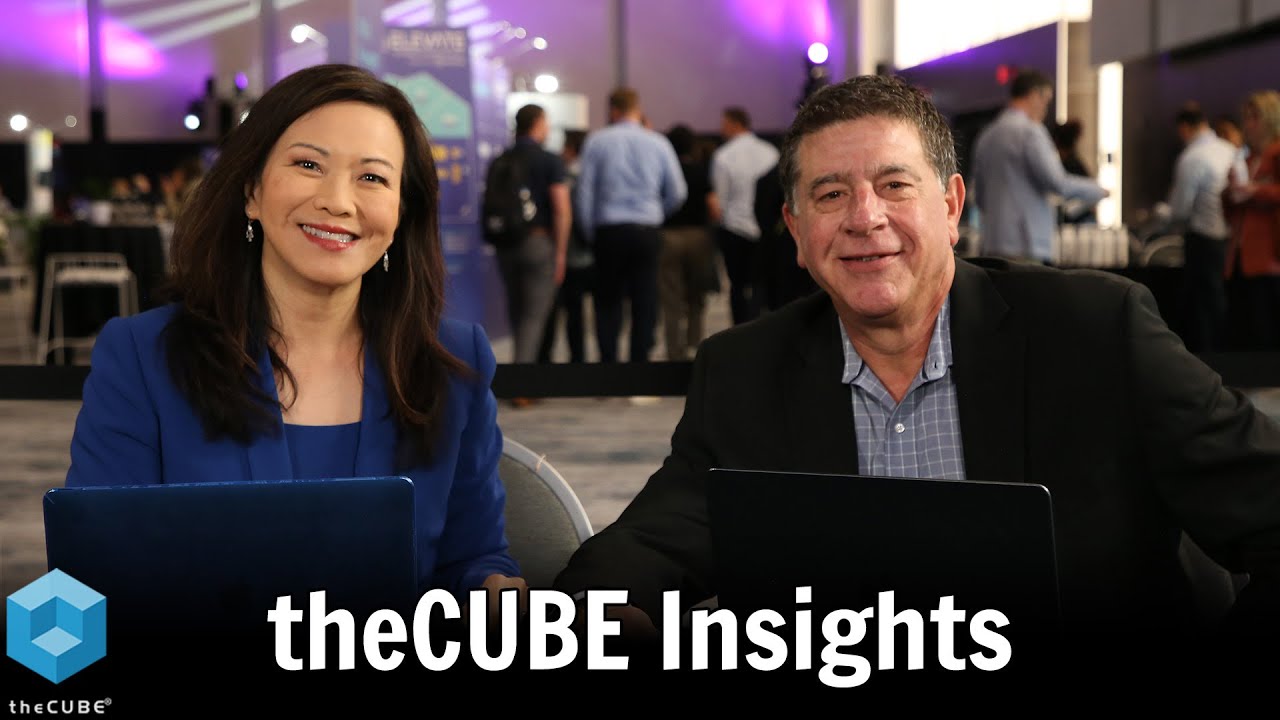
>> I'm Patricia Wu, your host, and this is Scott Hebner, my co-host and analyst. You are going to love this next interview with all the animals you have.
Scott Hebner
>> Yes.
Patricia Wu
>> Okay, we'll get into that.
Patricia Wu
>> Yeah, we should get into that. But the one thing I would say to everyone is when your kids are small and they say, "Get a parrot,"-
Patricia Wu
>> They live 50 years.
Patricia Wu
>> ... realize they live 50 years, so now they're gone in college. I'm stuck with a parrot.
Patricia Wu
>> But you know how best to take care of them.
Scott Hebner
>> I do.
Patricia Wu
>> And you're going to find out some more lessons right now-
Scott Hebner
>> I am.
Patricia Wu
>> ... because we're going to introduce our guests. We have got Rohan Cherian, VP of Engineering, Pet Valu; and Scott Johnston, VP ecommerce and customer experience at Pet Valu. So I think Scott is one of the people that you guys have in mind when you say you're partnering with devoted pet lovers. He's got parrots, turtles, koi fish.
Scott Hebner
>> Three dogs.
Rohan Cherian
>> Amazing. You're the ideal customer.
Patricia Wu
>> Yes. Yes we are. And my kids were, but they're gone now. I'm stuck taking care of everything.
Rohan Cherian
>> Yeah.
Patricia Wu
>> So speaking of the ideal customer, you have wanted to give your customers the best just as they want to give their pet children the best. How did that impact your journey? Because you come quite a distance from five years ago, pre-pandemic, zero online sales? Am I correct to where you are now? Walk us through that.
Scott Hebner
>> Yeah. I mean, there was a decision made pre-Covid to expand the Canadian Pet Valu network from 600 stores to about 1200 stores who went public, raised a bunch of money and started on that journey. The leadership knew that we needed to have an online digital presence that mirrored the excellent in-store customer service that Pet Valu Canada is known for in order to be successful in that expansion. Our franchise model really allows for local owner and local customer to come in and create that bond for our devoted pet lovers so that they're successful throughout their whole pet journey's life cycle. So it really is... When you come into the store, you're going to bring your pet in and the owner's probably going to know your pet's name before they know your name. And that's the relationship that has been built and been the success for Pet Valu over the years. And the challenge then became for Rohan and I, how do you create that online for the next stage of customers who are a little more digital savvy than the previous version? So that became our focus, is to how do we achieve that.
Patricia Wu
>> Yeah. So how did you do that, Rohan?
Rohan Cherian
>> Yeah. So I think one of the journey essentially just began with what we actually have today and where we'd started to start transforming it. And one of the core focuses was that interaction that Scott has described, it's very personalized, it's relevant, there's a lot of meaningful moments. So we started looking at that and saying, "Okay, what do we need to do to get something stood up that is not only composable, but also modular, flexible that can scale?" So we started there, and we kind of tried to make sure that the experiences we have today online... Because we did... Eventually, we went from a browsable site to having a shoppable site, but that site was still tied to a very monolithic platform, so not able to roll out features very quickly. Risk-prone release cycles, like engineering was always locked in. You had vendor lock in. So really it was taking an approach of one team, one mentality, looking at... putting the customer right in the middle and saying, "What would the customer expect?"
What they expect is what they get in store. When they walk into the store, the ease of connectivity, the conversations they're having with the ACEs, which we call our animal care experts. We have acronyms for everything. So customers are called DPLs, devoted pet lovers. Our store associates are called ACEs, animal care experts. And that's basically where we started the journey and we tried to replicate all that directly into the engineering stack that we picked, and that's one of the reasons why we ended up looking at ecommerce stores because it aligned perfectly with that vision, being able to personalize and have something and at the same time scalable.
Patricia Wu
>> So it sounds like the composable commerce was a very strategic conscious decision.
Rohan Cherian
>> That's right. Yeah. We understood that going down the composable commerce route meant that you're going to end up having to stand up your own team, you have to take the reins and you control your fate, and it just meant that you'd have to have teams that knew how to kind of work and think together. So Scott and my teams work together very closely between product and engineering. We move as a unit. So we typically look at, "Okay, what feature, what problem are we trying to solve? What does that experience look like today in store and how do we truly create a omni-channel unified experience?"
So composable was at the heart of all of that because it was really the foundation of what we needed to start building on top of. So we're coming up on... I think in a week we're coming up on a year since we launched.
Patricia Wu
>> And I suspect the composable part also opens up a whole ecosystem of sources for new innovations and allow you to move quickly, adapt, and as you learn and get feedback, right?
Rohan Cherian
>> Yeah, absolutely. I think one of the things that we talked a lot about is being able to do things like releasing when ready or doing rapid deployments. We would work on features on our previous monolithic platform and wait for months until we could truly release it. But now the innovation, so it's almost like you're getting autonomy without chaos. You're getting all this innovation that you can actually do and you're able to be more confident in delivering something that's also faster, more reliable, and the teams get a lot of autonomy. They're able to run things the way they need to in each area. And if we want to start looking at API first, integration first, we can just look at all these tools out there and know that we don't have to wait for months to turn on.
Rohan Cherian
>> It's pet, but it's still retail and it moves very, very quickly. And even in the first half of this year, we've seen a ton of change in the industry and how quickly we're able to respond to those things has been part of the success of why we're still Canada's pet number one pet specialty retailer. So best of breed best for me. Having the things that are important to our DPLs and to our at the stores to be able to support that journey has been really helpful.
Patricia Wu
>> It sounds like the ultimate team sport, right? You got product and engineering work together. You probably... the storefronts and the ability to bring all that together, get people to buy in, and then you have the composable architecture that allows you to adapt quickly. I mean, I think it's a really good model that future proofs-
Patricia Wu
>> That's right.
Scott Hebner
>> ... where you're heading with your customers.>> Yeah. That's right. We really did align. So in-store, POS is also in our group as well as so the online experience and the customer care experience. So we hear it from everybody, what's working and what's not working, and we're able to quickly make decisions around that without getting sort of bogged down in too much red tape. So it's a good alignment for our groups.
Rohan Cherian
>> Yeah. It helps to have... I mean, in my past life in retail you'd have... these would all be bifurcated. You have IT setting in a different group, you'd have care or marketing setting in different groups. So silos start to form. It's nice for us because the customer care team sits directly with Scott, the in-store tech for POS sits directly with me, but together we have teams kind of coming together saying, "Here's that experience. Here's the problem, here's how we want to solve it."
And then we can try and look at it and say, "Okay, well, how do you scale that experience across an 800 store network nationwide, East Coast to West Coast? And how do you kind of make sure that's consistent no matter where the customer goes, in-store or online?"
So that kind of access to information and data and that availability of knowing what we need to be able to do and quickly testing it and hearing back from the customer, that's really key. It makes a big difference.
Patricia Wu
>> I want to circle back to something you said right at the beginning about just the customer experience in the store and how much you valued that and you wanted to make sure you could replicate that online. How has this digital platform impacted that customer connection?
Scott Hebner
>> It's been very, very vital. We know that most of our customers are going online before they're going in-store or they're making that purchase online depending on how their time constraints are that day. If they can get to the store, they'll go; if they need to shop online, they need to shop online. So that experience needs to be exactly the same for what they check out and what they pay for and what item availability is online as well as what... it's the same thing. So we're very, very conscious about making sure inventory is as near real-time as possible so they know with confidence when they get to the store what they have, as well as just general item availability and as much information as we can get them to help them make that purchasing decision. We don't do any special promotions online, say for some recurring subscription items, but the price you pay online is the price you pay in-store. We're not trying to channel shift anybody. So we're really there to support the customer, our DPL's journey however they choose to shop in-store, online. We know the store is the king. They're the source of our success over the years and we're there to help support them, but we also know that the customer is shifting towards a more digital universe and we want to make sure we're there to support them as well.
Patricia Wu
>> During Andrew Burton's keynote this morning, three things jumped out at me. One was the composability, which we just talked about. The second thing is when he said, "Going from a transactional experience to more of a personal experience," making an actual experience, and then also not just responding but anticipating... So will you talk a little bit about that in the world of pets? Is that what you-
Scott Hebner
>> Yeah. I mean, I'll start, and you can get into the technology side. So we do a lot of personalization. We're not super deep into it, but it's on our roadmap to get into. Within our pet profile that a customer can tell us about their pets and how many pets they have and how old they are and the breed and all those other kind of things, we're able to target with specific promotions or other content that might be relevant to them. If you're a cat person, stop sending me dog coupons, those kind of things. So we really get into a personalized experience through our pet profile where we're able to not only add online, but in store. When you log in store, the ACE will be able to see your pet profile and that information about you. So that whole journey kind of comes connected. The pet profile has been growing over the last little while. We've got a contest on right now where our customers can tell us... send in pictures about their pets and be voted on, and the top 12 are going to become part of our annual calendar, which is contrived tens of thousands of entries every year. We needed to build that to be able to support a mass amount of entries in a very short period of time, where know Rohan's engineering team came in to help with that.
Rohan Cherian
>> Essentially, what you mentioned, Scott, this morning about Andrew's conversation around going from every transaction, I think we like to look at it as a take convert every transaction into an interaction, and you really look at every single thing and say, "Okay, if a customer would experience something that was very personalized online, how do you make it more contextual and relevant?"
To Scott's point, we're just starting that journey. So you're not just getting an email saying, "Hey Scott, we know you bought this kind of food for your parrot. We're trying to take that even further. If you end up starting to look for something online, you have a pet profile created. We know what type of experiences and relevant products to position and show you."
At the same time, that's a journey. You have to have enough interaction points for that to convert. Or also it would just be a very static email that comes to you, say, "Hey Scott, here's your email. Thanks for visiting the store."
So that's the journey that we're going on, but there's lots of moving parts and pieces to that because that means all the different microservices that we've built, all the different elements that we are touching, we have to be able to connect those together. So commerce, like a composable commerce strategy has allowed us to unify that data architecture. It's all those silos are starting to break down and it's starting to enable exactly what Scott's talking about with cross-channel experiences.
Patricia Wu
>> Yeah, I was going to ask, where's all heading from here? I mean, you made great progress. Obviously, the pandemic wasn't too long ago.
Rohan Cherian
>> Yeah. Yeah, yeah.
Scott Hebner
>> Where do you envision maybe we're talking again in two years?
Rohan Cherian
>> I had say, it's a great question. We've got a lot of stuff that we want to do in a road map. I think search is really important. We're looking at that. One of the key areas we're looking at is what happens after you click submit online? So really understanding what happens beyond the button, what happens with the data, what happens with order and the order flow and order management because job's not done, right. The customer found the site, got onto the site, found what they were looking for, frictionless checkout, but what then? What's next? Because for us, we have to make sure that we're able to service the customer. They have direct visibility and access into those orders. They want to make changes to those orders. So order management ends up becoming a key area that we're looking at, order orchestration. We're also starting to get AI curious. We're looking at AI specifically to try and understand, "Okay, well, how could we use this meaningfully versus just being a buzzword thing? And look at it from a standpoint of, should we start exploring other AI tools?" It was great to see that Commercetools rolled out AI as well as model context protocol. That means that it's built in into the engine already that we're using. So we would start identifying areas to start activating that. And then I would say connections and loyalty because values in our name. So really looking to deliver true value for the customer.
Patricia Wu
>> So I'm wondering if you could just give one piece of advice for another traditional retailer just embarking on this e-commerce journey, what would it be?
Rohan Cherian
>> I think one of our biggest successes with this transformation that we did was we really partnered with all the other groups with Commercetools, with our SI, with the rest of the organization to make sure that it was successful from day one. We came in on time, on budget, and we had no drop in sales or traffic. And within a very short period of time, we were able to start building and releasing on the new platform. And a lot of part was that... it was in doing in no small part to the engineers working with our SI's engineers, the product team working with the SI's product team so that everybody was on the same page. We all knew what we were going to get when we came out of it. Don't let your SI work in a silo and then hand you something and say, "Here you go." You want to be there right from day one.
Rohan Cherian
>> Yeah. And I would say be intentional about everything. Don't let it happen to you, especially if you're going.... You find yourself here on a modernization journey. Ask yourself, what is your vision, mission state? But really look at it and say, "What does a composable strategy mean for you? What does speed and flexibility mean for you?" And prioritize, I would say, more than anything else, outcome over polish. So one of the things that we've done is we got very comfortable being uncomfortable, and then from there it kind of became this steady, constant state of saying, "Okay, we can constantly change and react and pivot."
But that became the key underlying pin for us to look at it and say, "Okay, this is how we can actually build and keep rolling out." If you waited to build a perfect thing, you'd never roll it out. So our ability to iterate and our ability to put a feature out and then build on that. It may not be perfect, but we got it out faster and you can start proving out the business case. Right.
Patricia Wu
>> Was the decision around composability as a core architectural approach anchored in the ability to go across an ecosystem of providers, or was that something that came of value a little bit later?
Rohan Cherian
>> It was actually something that we learned during the course of the implementation. It was not something we knew right up front. We knew that there was a way to go about implementing and working with SIs. At the same time, we also realized that being intentional about your architecture and understanding what that looks like, that would be key. And then understanding how you're going to work with multiple different vendors. Because if you're staying with the legacy monolith, you're basically in a tightly coupled integrated system with one vendor. The moment you go composable, now your critical point of failure, you actually bifurcated that. Now you have many points of failure, but they fail in isolation. So all of a sudden you have to think about it and ask that question, do you need to actually have multiple vendors or should you actually stand up with team that can understand that living assembly line? Right.
Patricia Wu
>> Well, I'm looking forward to having the AI agents that act like my pets.
Patricia Wu
>> Act like your pets or order everything for you. Imagine that's a full-time job with-
Patricia Wu
>> Although for the parrot, we're going to muzzle it.
Rohan Cherian
>> Yeah. Wait, we got to make a possum button.
Scott Hebner
>> Very friendly. Yeah, we go.
Patricia Wu
>> I'm surprised you haven't offered them the parrot yet. He was offering to ship it to me.
Scott Hebner
>> Cage and all. Would love Miami.
Patricia Wu
>> Yeah, definitely. Well, thank you so much you guys. This was so interesting, and for two pet lovers, definitely very insightful. So looking forward to this future with our pets.
Rohan Cherian
>> Awesome. Thank you for having us.
Rohan Cherian
>> Thanks having us.
Scott Hebner
>> Thank you.>> Yeah.
Patricia Wu
>> And thank you so much for watching our coverage of Elevate, the Global Commerce Summit. I'm Patricia Wu for Scott Hebner. Don't go away. We have a lot more coming up. You're watching theCUBE, the leader in enterprise tech news and analysis.









 Patricia Wu
 Scott Hebner