Elevate 2025: A Comprehensive Discussion on Technological Advancements in Retail
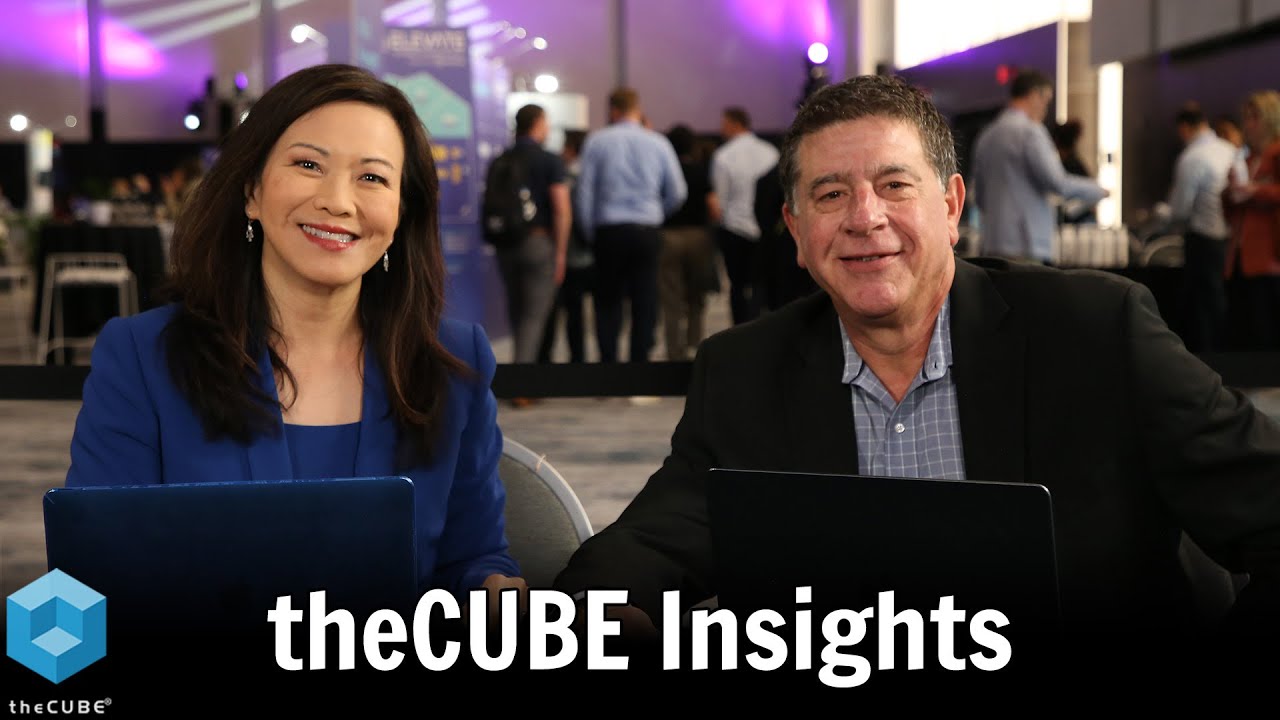
The guest for today’s discussion is Uman Chan, the senior director of digital technology at The Vitamin Shoppe. Our hosts, Scott Hebner, principal analyst with theCUBE Research, and Patricia Wu of FINTECH.TV, engage with Chan at Elevate - The Global Commerce Summit, exploring the transformative journey in retail technology and the push towards a composable commerce strategy.
In this insightful conversation, Chan shares their expertise and experiences in evolving The Vitamin Shoppe's digital architecture. The discussion delves into the shift from a monolithic legacy system to a flexible and scalable composable commerce infrastructure. Within this framework, the team has transformed into engineers who now own the entire tech stack, enhancing efficiency and innovation, as noted by Hebner and Wu.
Key takeaways from the session highlight how The Vitamin Shoppe has capitalized on composable commerce to improve customer experiences and operational agility. Chan elaborates on strategic initiatives for seamless integrations and personalization strategies powered by artificial intelligence (AI). These efforts not only boost customer satisfaction but also increase business value, ensuring the company's adaptability to future trends and market dynamics.
Forgot Password
Almost there!
We just sent you a verification email. Please verify your account to gain access to
Elevate — The Global Commerce Summit 2025. If you don’t think you received an email check your
spam folder.
Sign in to Elevate — The Global Commerce Summit 2025.
In order to sign in, enter the email address you used to registered for the event. Once completed, you will receive an email with a verification link. Open this link to automatically sign into the site.
Register For Elevate — The Global Commerce Summit 2025
Please fill out the information below. You will recieve an email with a verification link confirming your registration. Click the link to automatically sign into the site.
You’re almost there!
We just sent you a verification email. Please click the verification button in the email. Once your email address is verified, you will have full access to all event content for Elevate — The Global Commerce Summit 2025.
I want my badge and interests to be visible to all attendees.
Checking this box will display your presense on the attendees list, view your profile and allow other attendees to contact you via 1-1 chat. Read the Privacy Policy. At any time, you can choose to disable this preference.
Select your Interests!
add
Upload your photo
Uploading..
OR
Connect via Twitter
Connect via Linkedin
EDIT PASSWORD
Share
Forgot Password
Almost there!
We just sent you a verification email. Please verify your account to gain access to
Elevate — The Global Commerce Summit 2025. If you don’t think you received an email check your
spam folder.
Sign in to Elevate — The Global Commerce Summit 2025.
In order to sign in, enter the email address you used to registered for the event. Once completed, you will receive an email with a verification link. Open this link to automatically sign into the site.
Sign in to gain access to Elevate — The Global Commerce Summit 2025
Please sign in with LinkedIn to continue to Elevate — The Global Commerce Summit 2025. Signing in with LinkedIn ensures a professional environment.
Are you sure you want to remove access rights for this user?
Details
Manage Access
email address
Community Invitation
Uman Chan, The Vitamin Shoppe
Elevate 2025: A Comprehensive Discussion on Technological Advancements in Retail
The guest for today’s discussion is Uman Chan, the senior director of digital technology at The Vitamin Shoppe. Our hosts, Scott Hebner, principal analyst with theCUBE Research, and Patricia Wu of FINTECH.TV, engage with Chan at Elevate - The Global Commerce Summit, exploring the transformative journey in retail technology and the push towards a composable commerce strategy.
In this insightful conversation, Chan shares their expertise and experiences in evolving The Vitamin Shoppe's digital architecture. The discussion delves into the shift from a monolithic legacy system to a flexible and scalable composable commerce infrastructure. Within this framework, the team has transformed into engineers who now own the entire tech stack, enhancing efficiency and innovation, as noted by Hebner and Wu.
Key takeaways from the session highlight how The Vitamin Shoppe has capitalized on composable commerce to improve customer experiences and operational agility. Chan elaborates on strategic initiatives for seamless integrations and personalization strategies powered by artificial intelligence (AI). These efforts not only boost customer satisfaction but also increase business value, ensuring the company's adaptability to future trends and market dynamics.
EUman Chan, senior director of digital technology at The Vitamin Shoppe, joins theCUBE’s Scott Hebner and Jennifer Wu at Elevate — The Global Commerce Summit, to share insights on modernizing retail infrastructure. The session focuses on The Vitamin Shoppe’s shift to a composable commerce strategy and how it’s driving internal and external transformation.
Chan details the company’s move away from a monolithic system toward a flexible, modular architecture that gives engineering teams full ownership of the tech stack. This shift has unlocked greater spe...Read more
exploreKeep Exploring
What journey did the company initially start on before transitioning to a composable commerce approach?add
>> Welcome to Elevate - The Global Commerce Summit. I'm Patricia Wu, your host, along with my co-host and analyst, Scott. We are so lucky. We are talking about our favorite things today, pets and now, vitamins.
Scott Hebner
>> We're on vitamins. We talked about coffee.
Patricia Wu
>> Uh-huh. Exactly. Agility in business, flexibility, personalization.
Scott Hebner
>> AI agents.
Patricia Wu
>> AI agents. This is like Christmas morning for us. All right, so we are so lucky to have our next guest, Uman Chan, a senior director of technology at the Vitamin Shoppe. Thank you so much for being here.
Uman Chan
>> Thanks for having me.
Patricia Wu
>> So let's start with the big picture, what the Vitamin Shoppe is all about, and then how the role of technology helps to make that vision a reality?
Uman Chan
>> Yeah, so Vitamin Shoppe is a specialty retailer of health and wellness products and solutions. We believe that everyone is deserving of good health and that we help our customers make progress in their health and wellness journey so that they can become their best self. Technology, in this case, I believe is an enabler, so that we can achieve this seamless experience across all the different touch points for our customers so that our customers can get to the solutions and the products that they need to help them make progress on their journey.
Patricia Wu
>> So, you chose the composable path and we've heard a lot about the benefits of that path. Was there an unexpected benefit?
Uman Chan
>> Yeah, there was certainly an unexpected benefit in terms of the team culture that we have really built out. So when we started, the team was largely a team of developers who were just responsible for keeping the lights on, doing basic feature developments on the legacy e-comm platform. So, from that, they transformed to what I call from developers to engineers, which where they are really owning the whole stack. So from CI/CD, platform engineering and just a general sense of ownership that wasn't really there that they have now, so that there's a much better productivity from the engineers where they're focusing on innovating, delivering values, instead of just keeping the lights on and fixing issues in production.
Scott Hebner
>> So you moved to a composable commerce strategy architecture. Were you building off of an existing digital experience or were you starting from scratch?
Uman Chan
>> So, it's actually a very interesting journey that we have. When we first started, we didn't mean to go on a composable commerce journey necessarily. So when we started, it was a legacy monolith e-comm platform. And then our principles were just to build things so that it's in a future-proof way and then it's also in the technically correct way so that we can allow the platform to be scalable and also, flexible. So what we started doing was to pull things out of the monolith architecture and started building services outside of it. But over time we're doing this through business ROI projects where we're continuously delivering value. Every project that we do on the business side, that is on the business roadmap, we take that opportunity to what we call de-platform, pull things out of the legacy e-comm platform so that we can build this momentum. So up to a certain point, we have this tremendous momentum that is actually already aligned with the mock principles and also composable commerce journey. So at that point, we went to the business and said, "Hey, we've made all this progress, it makes sense to double down and continue on it and this is why." And we looked at all the other options and this is why this option makes sense. I still remember going to our CFO and doing a whole presentation, and at the end she was like, "Okay, so we don't really have a choice, do we?" But in a good way, not that we don't really have a choice, but it's just the one that makes sense. So from there on, we work with partners like Commercetools to really build up the rest of the stack so that the core commerce capability like card and checkout is also composable. So right now, what we have is a tech stack that is highly flexible, adaptable, that allows us to move with a lot of speed and agility.
Scott Hebner
>> Yeah. That's been the overriding feedback we've gotten through all the conversations we had today. Is it future proofs your ability to react to unexpected changes, dynamics in the marketplace, new innovations? It gives you choice and flexibility and time to market advantage, right?
Uman Chan
>> Absolutely. Yeah.
Scott Hebner
>> Yeah.
Patricia Wu
>> Yeah. And with things moving so quickly, do you think this composable foundation is going to help you adapt to future trends more dynamically?
Uman Chan
>> 100%. So, if I go back to the times when we had the pandemic, so, some of the background work that we've done was what enabled us to move a lot quicker. For example, at the time, every retail had to do curbside pickup. We were able to do that in relatively short amount of time because of the foundation that we've built. And nowadays, after we've gone fully composable, we went from every two weeks, every sprint cycle where we have deployments and new feature releases to being able to do on-demand deploy. We do multiple releases a week. So that speed to market is tremendous. We can release anytime we want. Where in the past, we were always slowed down by long deployment cycles and then a long QA process, which it's no longer a thing. It's a thing of the past nowadays.
Scott Hebner
>> So, if we had your CFO here, the outcomes, how would it be described? It was a she, right?
Uman Chan
>> It was. We have a new CFO now, but...
Scott Hebner
>> Are they happy, is I guess, the question? They're seeing the value of the composable platform?
Uman Chan
>> Absolutely. So, I don't have numbers to share, but what I can share is that there are measurable improvements on the customer experience side. So that does translate to better customer experience, better conversion, and then just better customer experience that builds loyalty with the brand. So, we've seen that with our customers. Feedback from our surveys and then just reviews and things like that. We've seen a lot of that feedback as well. On the other side, in terms of on the team, like I mentioned earlier, the culture shift was tremendous. One of the biggest value that you can get from a team is really the mentality shift and that sense of ownership translates to a lot of productivity that you can visibly see from the work that's being produced.
Scott Hebner
>> Well, whenever you're deplatforming anything that's a big decision. It's risky too.
Uman Chan
>> Yeah.
Scott Hebner
>> And obviously, you've had a lot of success with it. What are you most proud about? The one thing that...
Uman Chan
>> Yeah. So there's a few things actually, but if I were to choose one thing, I think it's our ability to be able to deliver value continuously throughout this journey. Because historically, if you've been in technology for long enough, you've done these migrations where you're replatforming and then you have to kind of stop the world, do a cutover, and then all hands on deck. We did none of that. So, throughout this whole journey, we were delivering value to the business. So there's always continuous improvement to the business and delivering value. But at the same time, when we actually had to cutover, there wasn't really a cutover. The customer's experience has been seamless. No one even noticed the change, which is a good thing in this case, other than having a faster site, more performance site that's more scalable. So when we did the cutover, it was actually anti-climatic because we spent a lot of time planning for it, and then we're all waiting for where's the issue? Where's the issue? And then it was just smooth and it just went very smoothly. That was really a highlight and a testament to how composable commerce is flexible and giving you that flexibility to do these deployments. And then just even the migration itself.
Patricia Wu
>> Well, I found in my life the amount of pride is in direct correlation to how big the challenge is.
Uman Chan
>> Yes.
Patricia Wu
>> So what would you say is the biggest challenge you had to overcome and how did Commercetools help with that?
Uman Chan
>> I think the biggest challenge is really just coming up with a strategy to dissect this giant monolith. Peeling back the onion one layer at a time, I think that's good and well, but also, doing it in a very strategic way so that you keep business continuity. And then also allowing the team to upskill during that time because upskilling is a very important thing here, especially when you have a team that's been really working with a lot of the legacy technology. So having a strategy that allows that growth in the team so that they have the autonomy and also the time, and then also, the capability and mindset to transform. That's also a really big part of this whole overall strategy.
Scott Hebner
>> So, in keynotes this morning, the general session, a big vision for the role of AI, AI agents, Agentic workflows as we go through time here, I thought it was quite compelling. I've been following agents for a long time, but this is the first time in the context of a real purpose, which is B2C and B2B commerce. What was your view of the vision that they laid out and the path into the future?
Uman Chan
>> Yeah. No, I think it makes a lot of sense. We're actually kind in the process of evaluating how we can use Agentic AI to solve our problems. So we always say we don't have a AI strategy, but if AI can solve a problem for us, then it's part of the strategy. So that's the small distinction I like to make usually. But in terms of Agentic AI, we do see opportunities there to use it for our personalization strategy because we like to do one-to-one and next best action personalization. What that means is that we know exactly who you are. Maybe you're a customer who likes to do a little bit more education and learn a little bit more about the products before you shop. Whereas maybe I'm a customer who is very price sensitive and then I need an offer to get me to convert. So recognizing that, having that information data fed into possibly an AI model with an AI agent, so that that can make the decision to say, "Hey, this is the next best action for me as a customer to make progress in my journey." So that's where we're focusing on doing some experiments and then doing a little bit more investigation in there.
Scott Hebner
>> And the way I understand it, their AI agent toolkit in the AI hub, that's just going to become an integrated part of the platform. So, it should be democratizing it for you and your developers to use it, make it easier when you need it.
Uman Chan
>> Yeah, exactly. Exactly.
Scott Hebner
>> Yeah. And it goes to the composability part because if agents are anything, they need to be composable.
Uman Chan
>> Yes, exactly. So to us, we believe in the concept of best of breed. So picking the most specialized and the best solution for a particular challenge or problem so that we can solve it most effectively so that we're also not locked into one solution. And if let's say, it gets out of date, then we can swap it out for something else.
Patricia Wu
>> So, for other retailers who may be considering this journey, what advice would you give them?
Uman Chan
>> I would say it is definitely a big challenge. There's no way around it, so don't get overwhelmed. One of the beauty is that what we did, we did it over a few years. So we didn't have a focused effort to do the migration itself. You can always take steps to do it. You don't have to dive head first into it and then have to get pressure to finish it in like 12 months, 18 months, or whatever it may be. So take those steps, even experiment with it, don't get overwhelmed. And then the other thing is really, aside from upskilling, which is a little bit more obvious, but up-tooling is as important because at the end of the day, it's going to be a system that's distributed, and then there's a lot more complexity that goes along with it. So, if you have the same team, it becomes a lot more to manage. So with the tools in place, what I mean by tools is from monitoring, observability, automation, that's going to be key. You won't be able to handle all that with the same team when you come from a monolithic world to the new world, but the tooling is going to help you do that. Right? The automation, CI/CD, platform engineering, those are all the things that you really need to invest in. That's going to pay a lot of dividends in terms of the ROI that you get out of it.
Scott Hebner
>> You mentioned it's a big challenge. Would you go as far as saying it's a challenge you must address now, otherwise you risk never being able to catch up because the innovation cycles are going so quick now it's... Yeah.
Uman Chan
>> Yeah. Personal view, I think it is a must in the sense that, like you were saying, right, the pace of change is not going to be slowing down. It's going to get faster and faster. So, composable commerce is really the way we can make sure that we can move as quickly as the customer demands and just industry trends. That's what's going to give you the flexibility and adaptability for you to really move along with that flow.
Scott Hebner
>> That was definitely one of my takes today-
Patricia Wu
>> Oh, for sure....
Scott Hebner
>> Is that it's really time to drive that change and you've got to move to that composable model for a variety of reasons. You touched on many of them. It's like do or die in many ways.
Patricia Wu
>> We just heard from Alistair Groves, the head of product at Commercetools saying, best time to plant a tree was 20 years ago and next best time is now.
Uman Chan
>> Yes. Yes. Absolutely.
Patricia Wu
>> Well, thank you so much for your insights.
Uman Chan
>> Thank you.
Patricia Wu
>> These were gleaned in the trenches, so really valuable.
Uman Chan
>> Thank you. Appreciate it.
Scott Hebner
>> Thank you.
Uman Chan
>> Thanks for having me.
Scott Hebner
>> It's been great.
Patricia Wu
>> And thank you so much for watching. We're here at Elevate - The Global Commerce Summit. We're going to be back with some final thoughts, so you don't want to miss that. You are watching theCUBE, the leader in enterprise tech news and analysis.






 Patricia Wu
 Scott Hebner