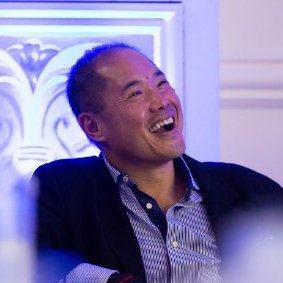
In this episode of theCUBE, John Furrier engages with Bill Tai of ACTAI Global. Recorded live from the Cerebras SUPERNOVA 2025 event, this discussion delves into the complex intersection of energy demands, technological advancements, and blockchain innovation. With an audience of over 2,000 people, the event marks an insightful convergence of industry leaders and enthusiasts keen to explore the world of AI and decentralized energy solutions.
Bill Tai, an influential venture capitalist, shares their journey from the early days at Taiwan Semiconductor Manufacturing Company to their current leadership roles, illuminating their expertise in navigating and investing in cutting-edge technologies. Known for community-driven initiatives through ACTAI Global, Tai articulates how interdisciplinary collaborations are essential to tackle global challenges, such as the impending energy shortages driven by data center demands, and how blockchain can contribute to creating smarter energy systems.
Key takeaways from the discussion highlight Tai’s perspective on the urgent need to rethink energy infrastructure. They suggest innovative decentralization-focused solutions akin to the telecom deregulation of the '90s. Tai further elaborates on the role of blockchain and AI in supporting energy efficiency and democratization, presenting a pragmatic vision for future grids where information and economic incentives drive innovation.
Forgot Password
Almost there!
We just sent you a verification email. Please verify your account to gain access to
Cerebras SUPERNOVA 2025. If you don’t think you received an email check your
spam folder.
In order to sign in, enter the email address you used to registered for the event. Once completed, you will receive an email with a verification link. Open this link to automatically sign into the site.
Register For Cerebras SUPERNOVA 2025
Please fill out the information below. You will recieve an email with a verification link confirming your registration. Click the link to automatically sign into the site.
You’re almost there!
We just sent you a verification email. Please click the verification button in the email. Once your email address is verified, you will have full access to all event content for Cerebras SUPERNOVA 2025.
I want my badge and interests to be visible to all attendees.
Checking this box will display your presense on the attendees list, view your profile and allow other attendees to contact you via 1-1 chat. Read the Privacy Policy. At any time, you can choose to disable this preference.
Select your Interests!
add
Upload your photo
Uploading..
OR
Connect via Twitter
Connect via Linkedin
EDIT PASSWORD
Share
Forgot Password
Almost there!
We just sent you a verification email. Please verify your account to gain access to
Cerebras SUPERNOVA 2025. If you don’t think you received an email check your
spam folder.
In order to sign in, enter the email address you used to registered for the event. Once completed, you will receive an email with a verification link. Open this link to automatically sign into the site.
Sign in to gain access to Cerebras SUPERNOVA 2025
Please sign in with LinkedIn to continue to Cerebras SUPERNOVA 2025. Signing in with LinkedIn ensures a professional environment.
Are you sure you want to remove access rights for this user?
Details
Manage Access
email address
Community Invitation
Bill Tai, ACTAI Global
In this episode of theCUBE, John Furrier engages with Bill Tai of ACTAI Global. Recorded live from the Cerebras SUPERNOVA 2025 event, this discussion delves into the complex intersection of energy demands, technological advancements, and blockchain innovation. With an audience of over 2,000 people, the event marks an insightful convergence of industry leaders and enthusiasts keen to explore the world of AI and decentralized energy solutions.
Bill Tai, an influential venture capitalist, shares their journey from the early days at Taiwan Semiconductor Manufacturing Company to their current leadership roles, illuminating their expertise in navigating and investing in cutting-edge technologies. Known for community-driven initiatives through ACTAI Global, Tai articulates how interdisciplinary collaborations are essential to tackle global challenges, such as the impending energy shortages driven by data center demands, and how blockchain can contribute to creating smarter energy systems.
Key takeaways from the discussion highlight Tai’s perspective on the urgent need to rethink energy infrastructure. They suggest innovative decentralization-focused solutions akin to the telecom deregulation of the '90s. Tai further elaborates on the role of blockchain and AI in supporting energy efficiency and democratization, presenting a pragmatic vision for future grids where information and economic incentives drive innovation.
Bill Tai, co-founder and chairman of ACTAI Global, joins theCUBE’s John Furrier at Cerebras SUPERNOVA 2025 to explore the intersection of energy infrastructure, AI acceleration and blockchain innovation. Speaking before an audience of more than 2,000 at Fort Mason in San Francisco, Tai draws from decades of experience — including early days at Taiwan Semiconductor — to unpack the complex future of compute and sustainability.
The conversation highlights how escalating data center demands are reshaping global energy outlooks. Tai emphasizes the potential...Read more
exploreKeep Exploring
What is ACTAI Global and what events do they host?add
What is Hut 8 transitioning to become and what are their future plans for their subsidiaries?add
What is Powerledger and how does its decentralized, peer-to-peer energy trading system work?add
>> Hello, I'm John Furrier, here at theCUBE, here in San Francisco at Fort Mason as part of Cerebras Supernova event that's actually turning into a conference, oversubscribed, over 2,000 people. Bill Tai is with me, chairman of ACTAI Global, an organization, a micro community as coined by the information, actually called out as one of the best groups of targeted entrepreneurs working on athletes, art, competitiveness, all that great stuff. Bill, great to see you. Thanks for coming on theCUBE.
Bill Tai
>> Thank you for having me, John. Always a pleasure.>> As always, ACTAI Global, great organization, you had a great event in Dominican Republic. Heard Guns N' Roses was there, one of the musicians there. They're involved in some of your business.
Bill Tai
>> Yes.>> I talked to one of your companies, that was a streaming company you invested in, the Maui event, an event in Greece.
Bill Tai
>> We're going to have you on Maui, filming and taking kitesurfing lessons. Can't wait to see it.>> Yeah, great community of leaders getting together, cross-section, interdisciplinary, really thinking about the big problems. Going to be fun, but also productive. Let's get into some of the things. Obviously, people who know you, you're a legendary investor, number one employee at TSMC as well as zillion other great investors. You got a taste for the trends. What's going on now? You're seeing a global economy. You had Hut 8 that you invested is now part of American Bitcoin. You're starting to see a sovereignty kind of vibe going on with crypto. You're starting to see decentralized becoming back to where it was almost, like, I'd say eight years ago, when it was really kind of an alpha tech problem. Now, you've got a lot of AI coming in.
Bill Tai
>> Yeah.>> AI and blockchain communities kind of have a similar... It rhymes, doesn't it?
Bill Tai
>> It does, actually. So I guess to hit a bunch of those points, because you had so many in that first line of questioning, so just to help people understand what ACTAI Global is, the acronym stands for athletes, conservationists, technologists, artists, and innovators. We hold a series of events around the world with people from all of those disciplines. We did happen to have Matt Sorum from Guns N' Roses and Apple from the Black Eyed Peas on a private island in the Philippines, so that we do do things on the Dominican Republic, but this one was with the Ayala family and corporation in the Philippines. The trends that you mentioned, you mentioned a lot of them. I did start in silicon, and I became a venture capitalist in 1991. So it's been a good 34 years. Probably, for your audience, I've been funding companies since before you were born, but I moved up the stack from chips to communications equipment, started a data center company in the '90s for the internet build-out. Took some time off in year 2000, when the shit hit the fan. Came back into the industry in 2003 for Web 2.0 and started doing those companies, and machine learning, then blockchain. And so here we are in this gigantic confluence of AI, blockchain, and a coming energy shortage. So you start with more questions and I'll move into where we go from there.>> Yeah. Yeah, no, I mean, that's great. Thanks for summarizing that better than I did, so good. The energy piece is a big one. And you're starting to see chips and systems get designed differently for power-
Bill Tai
>> Yes, yes.>> ... because of the shortage. I mean, data centers, I think you said on theCUBE last time you were on our studio, data centers are all sold out.
Bill Tai
>> Yes.>> What's the answer? Is that more of a grid computing framework? What's your vision?
Bill Tai
>> Well, okay, so I think the energy... So we've got all of this massive investment happening in AI companies, like NVIDIA, at the scale that they are generating $100 billion a year of cash flow. That whole trend may stop, and so I'm going to frame this in a couple of ways. A year ago, at this time, I was looking at data from a bunch of researchers on how much energy would be required to fuel the data centers that had been planned, announced, and funded in the next five years. That amount of energy was the equivalent of 40 million American homes, and there's about 100 million American homes now that have been built over almost 100 years, so that's kind of a choke point. Eric Schmidt recently testified in front of Congress. Now, his numbers are kind of off the charts compared to everybody else's, but his estimate is that data centers today run 3% of America's energy. By 2027, they will be 97% of America's energy. And to accomplish that, we need 27 gigawatts. One gigawatt is the equivalent of a nuclear power plant. So in his off-the-charts estimates, we need 27 nuclear power plants in two years and in the following three->> Just to service the existing-
Bill Tai
>> Data centers.>> ... forecast.
Bill Tai
>> Yes, the forecast.>> Not more.
Bill Tai
>> The data center , yes. And in the following three years, we need 63 more. Now, I don't know if those estimates are accurate, but at Hut 8 Mining, we started as a division of Bitfury. Bitfury was founded in 2011 or '12. By 2017, we are operating 800 megawatts of electricity mining Bitcoin. That sounds like a lot. We carved off 100 million watts, took that public. That's Hut 8 Mining. Carved off another 100 million watts or so. That's a public company, Cipher Mining. As of last year, we were running about 600 megawatts just in that subsidiary, with a gigawatt in the pipeline. We're now operating 1.3 gigawatts, with 12 gigawatts in the pipeline. So Eric's estimate of 27 gigawatts more needed isn't maybe so off the mark.>> Yeah, yeah, you're kind of, at a practical level, at that now.
Bill Tai
>> Yeah. So we're now basically transitioning Hut 8 to become an energy infrastructure company. Two subsidiaries, one is a Bitcoin mining sub that is now renamed American Bitcoin. Trump family and affiliates own 20% of that. That's going public, as a separate company in the fall. And then, we have a data center company building GPU data centers called Highrise.ai, and then the 12 gigawatts of optioned electricity, that will be provisioned as managed services.>> You're building the grid.
Bill Tai
>> We're trying to.>> You're trying to build the grid.
Bill Tai
>> We're trying to.>> Well, this brings up a couple of things I want to get your thoughts on, because when you're talking, and first of all, thank you for the primary data, because that's actually good data. We're going to mark the tape on that one and we'll come back to that as a highlight. But that brings up kind of the entrepreneurship, because whenever there's a problem, entrepreneurs fill the void. So there'll be a creative solution.
Bill Tai
>> Yes.>> There are some lines of sight on some decentralized approaches. We had the Crypto Trailblazers in our studio, some Stanford young entrepreneurs are working on there.
Bill Tai
>> Yeah.>> So this is where innovation happens, Bill. You've seen this movie before. What's your take on this?
Bill Tai
>> Well, this is a giant one. So I think what's going to happen resembles a little bit of what happened in the '90s, when the telephone system in this country got completely redone, from circuit switching to packet switching, to allow the internet to exist as it exists today. If you can remember, anyone in this audience, back to the '80s, there was only one real phone company and a bunch of little cellular operators, but AT&T ruled it all. The government, by 1994, realized that it was obstructing progress, and so that there had to be deregulation. There was something called the Telecom Deregulation Act of 1994 that split AT&T up into a long-distance carrier and a bunch of regional Bell operating companies. Here, it was Pac Bell.>> Yeah. , yeah.
Bill Tai
>> There was New York Telephone, Ameritech, et cetera. If that had not happened, I would posture that the internet wouldn't exist like it exists today. We have the same problem now->> Because they would not have innovated or invested.
Bill Tai
>> Telephone companies were charging $1 a minute for long-distance calls, and now you can do that on VoIP for free.>> Yeah.
Bill Tai
>> Right, so there was a lot of resistance. Today, the energy infrastructure of the United States is not unlike what the telephone company used to be like. It started as a centralized architecture, pushing electrons to the edge. In 2018, a miracle happened, and that miracle was that all forms of renewable energy, hydro, wind, solar, everything dropped below the cost of burning fossil fuels, in terms of cost per kilowatt hour. So now, you have this old infrastructure with a lot of things sitting on the edge, pushing electrons in, but the system wasn't designed to be bidirectional. The phone company had to go through a total change, with a protocol layer on top of it called TCP/IP, Transmission Control Protocol/Internet Protocol, that allowed it to become a context-aware cloud that knew everything on the endpoints and could direct traffic in between. I would posture that, unless we do something like that, to allow for bidirectional sources of energy and a context-aware cloud, to know where there are choke points and how to onboard new electricity and provision the economics accordingly, we're going to end up like Spain and Portugal, and have massive blackouts in this country.>> Yeah, that's an energy-switching network.
Bill Tai
>> Basically.>> That's what you're getting at.
Bill Tai
>> We have to have a smart network, with load balancing multiple sources in and out.>> So let me ask, because I know you've also been very successful, you also have a big financial brain as well, how do you structure this? Because maybe the asset class of venture capital can have a breakthrough, and you talked about the Bells being broken up into the little Baby Bells. I used to call them regional Bells, -
Bill Tai
>> Yes.>> Our Box or Baby bells, they called them. That was almost an asset decoupling.
Bill Tai
>> Yes.>> And it was also decentralizing the bells.
Bill Tai
>> Yes, and we have to do that.>> So it sounds like decentralization might be in line there.
Bill Tai
>> Yes.>> So how do you structure that as an asset? Because remember when cells exploded, cell towers, they were just a collection of cells that someone put them under a corporation. Is it going to be like a corporate asset management company, the government, or is it private? What's your vision on that?
Bill Tai
>> Well, I think that, okay, so right now, the infrastructure side of provisioning electricity has, in today's market, perverse incentives. So it's basically the model for the transmission carriers today is cost plus, with regulated public utility commissions as oversight. Right, so the incentive is to pad the cost structure as much as you can, to have a little bit of margin on it, and there's no competition. So I think, one, we have to open up the transmission carriage space, like they did in the '90s, where people were... Remember Qwest Communications?>> I do, yes.
Bill Tai
>> With the railway cars, with the trenchers, right?>> Yeah.
Bill Tai
>> Building alternative long-distance fiber.>> Yeah, yeah.
Bill Tai
>> And then, the creation of alternative carriers at the edges, so the R-box plus the CLECs, competitive local exchange carriers, and the ILECs, the inter-exchange points. And so I think in a world where there's many suppliers of electricity pushing stuff in, you need a software layer that's on top, that is a little bit like a protocol, that allows for billing, provenance, and it will be decentralized.>> Bill, it's triggering me from the old telecom bust of 2000, remember the CLECs wouldn't open up the last mile?
Bill Tai
>> Yep, yep.>> The last mile, they did everything except to the home.
Bill Tai
>> History rhymes, because the last mile is the most expensive part, right? Because you get economies of scale in the backbone, but when you have to provision lots and lots of endpoints, and there's a rural farmhouse 50 miles away, and you have to run one line for that, everyone else has to subsidize that. So it's very, very difficult to be at the edge.>> So the economics matter, so-
Bill Tai
>> They do, so it's hand in hand, entrepreneurs and government.>> All right, so how do we take that learnings and project it onto where we are today? You got decentralized is back, you're starting to see blockchain and crypto.
Bill Tai
>> Blockchain and AI together, and crypto, as the->> Money mechanism.
Bill Tai
>> Yeah, transaction layer. It can do that. So I have funded a company called Powerledger. Powerledger basically has a decentralized, peer-to-peer energy trading system. So for example, like 10 years ago, people that were Bitcoin mining in Menlo Park, the electricity rates go like this through the day, right? So if there's high load, it's 24 cents a kilowatt hour, maybe different now. If it's a low load, it's 10. And so you could have someone next door to you with solar panels on their house, generating electricity, and the PG&E may be buying it back for 2 cents. So if that's my next door neighbor, why should I pay 24 cents when the electrons are coming in next door, too? Right, so to the extent you could have a peer-to-peer billing system that recognizes who's the source and who's the drain, and they can sell to me contractually with blockchain as the backbone, crypto as the payment mechanism, and then I think AI as a layer inside. Energy companies today, they have lots of data on usage. They have data sets for temperature, like when it's hot, the air conditioners are gone. There should be a way to create an LLM or something like... It's not actually language, but people know what LLMs are. If you had an energy LLM inside every electricity company, you could have automatically load balancing systems.>> You could also democratize the energy usage, so for instance-
Bill Tai
>> Yes.>> ... remember community networks, community wifi? You could have community energy-
Bill Tai
>> Yes.>> ... where, actually, the collective could say, "Hey, let's mine some Bitcoin."
Bill Tai
>> Right, right.>> "Buy that new pool for the community center, or fund some school or education."
Bill Tai
>> Yes, there are spots, there are places in the United States where there's wind power and solar, where because the generation is lumpy, there might be too much energy produced at night, and those generators are willing to pay you one and a half cents a kilowatt hour to burn the energy off. So you could attach Bitcoin mining on there, and pile up money, and then use that to buy the electricity back when you need it. So that Bitcoin mining is a proxy for batteries. It's storing the electron usage as currency, to be used later as opposed, to electrons in some kind of a bucket.>> So if you're watching, this is what they talk about at the ACTAI global events.
Bill Tai
>> Yes, we do.>> It's a fun micro community, but they actually have serious conversations. Bill, you know that I love micro communities, I love trust networks, theCUBE and NYC with Brian Bowman.
Bill Tai
>> You've built some great ones, John.>> You have one, too. But you guys are recognizing the information as one of the top micro communities in tech.
Bill Tai
>> Yes.>> Some other ones, fly-fishing, poker, you guys are athletes, and kitesurfing. The role of networks now are super important. Could you share your vision, because you and I share the same passion, that trust networks can live on top of the real world?
Bill Tai
>> Yes.>> Because we are, as humans, real-world assets, and we're not on chain yet-
Bill Tai
>> Yes.>> ... but maybe our digital twins will be. But this convergence of our digital lives and physical space-
Bill Tai
>> Everything.>> Share your vision, because you have a great vision.
Bill Tai
>> Well, yeah, historically, everything comes from community. So I think you were in the Palo Alto area in the '80s, yes?>> Yeah.
Bill Tai
>> Okay, so from 1979 to 1987, there were a group of kids that would meet in rooms at Stanford, at SLAC, and other places. They were total unknowns, but who did they become? Steve Jobs, Steve Wozniak, Bill Gates, Paul Allen, the people that founded Sun, Alan Shugart, Nolan Bushnell, that started Atari. They were all there to show their pieces of wood with parts on them, or little programs that would run on these little hacked-up things, because they wanted to share information and progress the industry, and that became a multi-trillion dollar... Just one company is $3 trillion, right? So trillions of dollars came out of that community.>> Yeah, they're collaborating openly, no judgment, crazy ideas.
Bill Tai
>> Yes.>> By the way, SLAC is not Slack as we know it, and it's SLAC as the Stanford Linear Accelerator-
Bill Tai
>> Exactly, yes.>> ... on Sand Hill Road.
Bill Tai
>> Yes, yeah.>> Glory days. What's the equivalent now? Basically it's like Discord, it's servers, it's WhatsApp groups, just the new collaboration of -
Bill Tai
>> Yeah, I think with the birth of the internet and the ability to have geographic distributed reach, people from all over the world, obviously, everybody listening to this podcast or broadcast, they're a member of some online community, whether it's a Facebook group, or it's a Discord server, or something like that. So there are hundreds of ways now to share, collaborate, and grow the knowledge base together. And when you mix people, and ideas, and problems to be solved together, you come up with creative solutions, if you've got really cool entrepreneurs.>> Yeah, I think what you do, what you're doing with ACTAI Global is very good, because you bring face-to-face as a more of a reinforcement to the digital-
Bill Tai
>> Yes, yes.>> ... and that's intimate.
Bill Tai
>> Yes.>> It doesn't have to be big numbers, because the big numbers are on the internet.
Bill Tai
>> Well, you know, there are some things that you can become aware of online, but you can't really learn unless you're talking to other people. Kitesurfing is one of those, starting companies is one of those. You can't just read a little manual and say, "I'm now a startup entrepreneur," and just do it. You have to talk to people that have had experience doing it and learn from them, too.>> Well, I'm looking forward to getting mentored on the kitesurfing because I am a beginner. I've watched a lot of YouTube videos.
Bill Tai
>> Yes, well, then, there you go. You can learn like that, too.>> Not really, I got to put it into practice. Bill, great to have you on. Thanks for dropping in. Again, as always, what you're doing, you're a great leader in the industry, and really appreciate your brain power and your investments really targeting kind of the impact, but also innovation.
Bill Tai
>> Yes.>> Thanks so much.
Bill Tai
>> They all roll together. Thank you, John.>> Yeah, all right. I'm John Furrier here at theCUBE. We are at the Supernova event, now turning into a conference, over 2,000 people are here. Of course, theCUBE is here. We do whatever it takes, this is our pop-up CUBE. I'm John Furrier, your host. Thanks for watching.