We just sent you a verification email. Please verify your account to gain access to
Celosphere 2024. If you don’t think you received an email check your
spam folder.
In order to sign in, enter the email address you used to registered for the event. Once completed, you will receive an email with a verification link. Open this link to automatically sign into the site.
Register For Celosphere 2024
Please fill out the information below. You will recieve an email with a verification link confirming your registration. Click the link to automatically sign into the site.
You’re almost there!
We just sent you a verification email. Please click the verification button in the email. Once your email address is verified, you will have full access to all event content for Celosphere 2024.
I want my badge and interests to be visible to all attendees.
Checking this box will display your presense on the attendees list, view your profile and allow other attendees to contact you via 1-1 chat. Read the Privacy Policy. At any time, you can choose to disable this preference.
Select your Interests!
add
Upload your photo
Uploading..
OR
Connect via Twitter
Connect via Linkedin
EDIT PASSWORD
Share
Forgot Password
Almost there!
We just sent you a verification email. Please verify your account to gain access to
Celosphere 2024. If you don’t think you received an email check your
spam folder.
In order to sign in, enter the email address you used to registered for the event. Once completed, you will receive an email with a verification link. Open this link to automatically sign into the site.
Sign in to gain access to Celosphere 2024
Please sign in with LinkedIn to continue to Celosphere 2024. Signing in with LinkedIn ensures a professional environment.
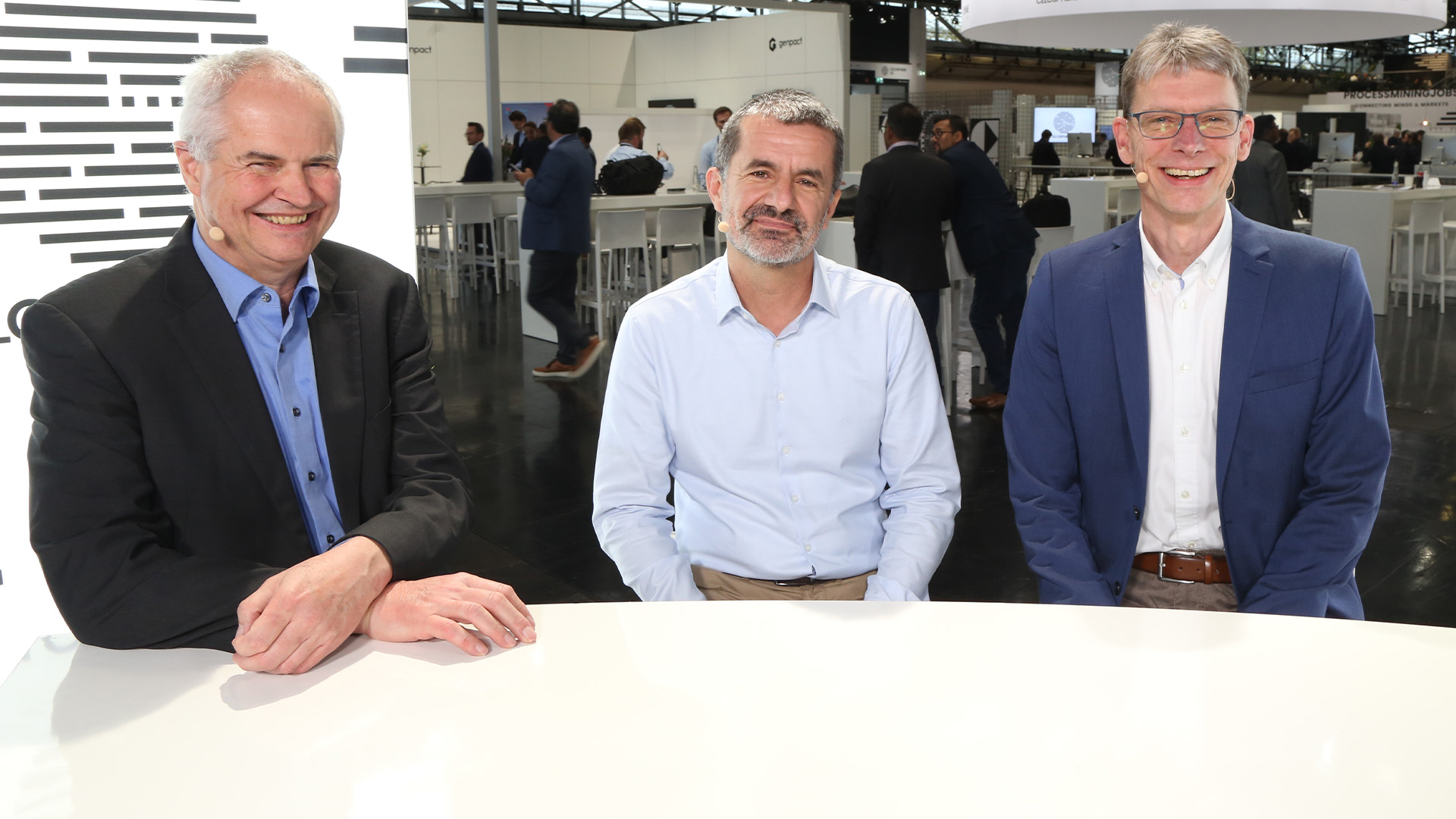
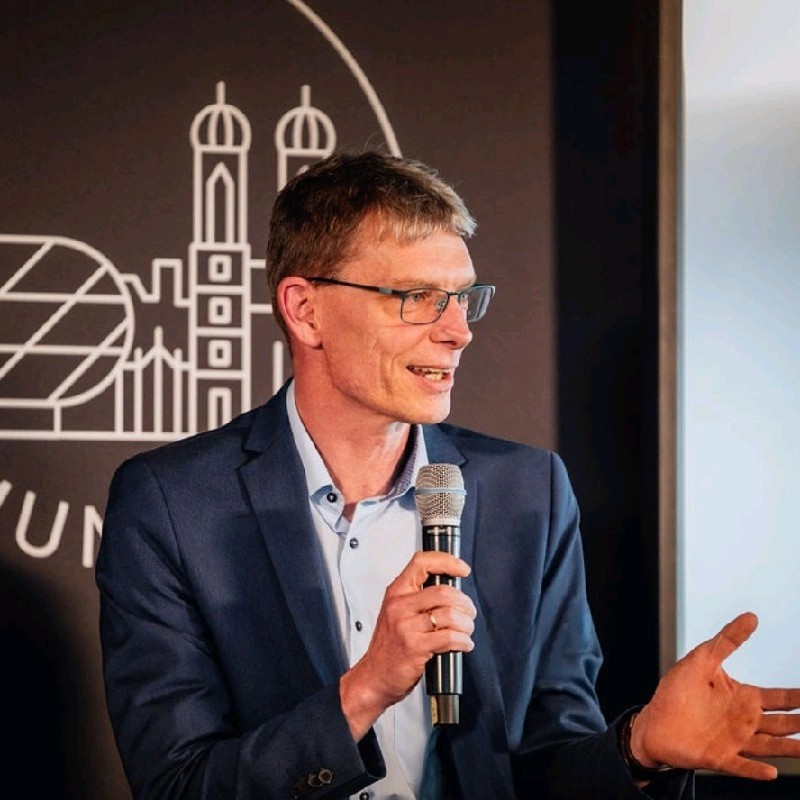
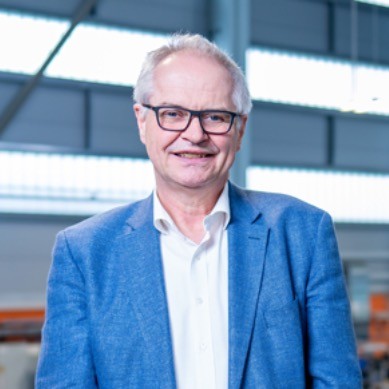
Georg Schukat, Schukat,
Jorg Frenzel, Conrad Electronic and
Pablo Fernandez, TD Synnex
Pablo Fernandez
Process Innovation & Transformation DirectorTD SYNNEX
Jorg Frenzel
Director Operational ExcellenceConrad Electronic
Georg Schukat
Managing DirectorSchukat
Innovative collaboration between Conrad, TD SYNNEX, and Schukat led to the Game Changers Award, breaking barriers and achieving process efficiency gains in the supply chain network. This collaboration aimed to improve visibility and eliminate manual work in the EDI process by connecting processes and sharing data across the companies. The trust-filled relationship and controlled sharing of data helped overcome security and privacy concerns. The goal is to bring more partners into the model to increase the network effect and leverage better visibility for capa...Read more
exploreKeep Exploring
What is the reason for winning the award?add
What triggered the realization that improvements could be made in both internal and supply chain processes during the cooperation and core innovation discussions?add
What are some potential applications for open invoice reconciliations and the use of AI in improving operations and customer satisfaction?add
What additional steps should be taken to expand the network and improve end-to-end transparency for customers, including integrating third-party sellers and marketplace products?add
Georg Schukat, Schukat,
Jorg Frenzel, Conrad Electronic and
Pablo Fernandez, TD Synnex
search
Rob Strechay
>> Hello, and welcome back to Celonis Celosphere, here out of Munich, 2024. We're having a great time. And I think one of the best things that we've been seeing is all the innovation that's been going on. And we're going to continue to roll through. I think process intelligence at the center of things. We've been talking about it for quite some time, that you can't really do AI if you don't understand the process. And building an agent with no process makes no sense. So, I'm really excited because I think, again, this one, this topic that we're going to go dive into here really takes me back to my roots. And it really ties together some things that I had seen that were broken when I was at a financial services company and we did a lot of EDI. I'm welcoming in Jörg, Pablo, and George, who are going to help me actually break down. You guys got the Game Changers Award. And you guys are from three different companies, were able to work together to really overcome some of the challenges of process across this, and having those agreements and understanding that visibility across that.
So, Jörg, why don't you start by giving us an idea of the total, what is going on, and why you won the award? Let's go with that.>> Well, why we won this award? Because I think it's an innovative collaboration, what we have done. We have crossed the borders across companies, not only looking at Conrad into its own freaky processes, but also expanding this to two of our most innovative suppliers, I call it that way. To go across the borders and to find real process innovation and process efficiency gains in this chain. That's a very amazing thing.
Rob Strechay
>> So, TD SYNNEX, I know them. It's a large distributor. It seems like this is pretty innovative for what TD is trying to lean into and can help throughout that entire process. How do you see that?
Pablo Fernandez
>> Fully agree. I think one of our common requests from customers that we get is, for example, where my goods will get delivered. That's a simple question, but very complex. And as Jörg said before, we cannot answer that question ourselves. We need to go beyond boundaries. Getting data from our suppliers, then process, and then to our customers. And then, to the end customer. And I think that's a key element, and I think the only way to get there is to connect with the other partners.>> Yeah. Just to jump in there, it's connecting the chain. It's the customer. You are our customer or vice versa, and so you can spotlight up to the real customer and get him-
Pablo Fernandez
>> It's a process.... >> get to understand what he's doing, what he wants.
Georg Schukat
>> I think it's obvious, no process in our branch starts and ends within our company. So, we were always limited what we could see and what we could act on. And now, we open it up, open it up to the whole process chain. Now, we can look really from the factory down to the customer, with all steps in between. That's a potential I see, and that was the reason we wanted to invent on that.
Pablo Fernandez
>> And for me, the interesting part is that realization moment, that you realize that we cannot do it by yourself, that you need to connect to the others. We have EDI, other systems, but I think these networks broke those boundaries and then we can go into that thing. Go from beginning to the end. It doesn't matter how many partners are in the middle.
Rob Strechay
>> Yeah. I think, again, when you look at EDI, it's just point to point. You don't know what happens on that other side. You have to rely on... And obviously, you're partnered-up, so you're relying on it anyways. But it's "Hey, maybe there's something that could be done, because there's rework because of data gets corrupted, or doesn't get there in the right order or something like that." What's the flow through network from a process perspective through the three companies?>> Well, let me start here. So, it's us issuing this purchase order, requesting some goods that our customer wants from TD SYNNEX or Schukat, and then transferring this on to our partners. And what we expect back is simple things like dispatch advice, our order confirmation and invoice. And maybe some information in between on delays, on shortages, and so on. And at the end of the day, we want to use the product that we receive to pass this on to our end customer. To make him happy, or her.
Rob Strechay
>> Well, I think that's the whole thing, right?>> Yeah.
Rob Strechay
>> It's like you're all customers of each other.>> Yes.
Pablo Fernandez
>> Yes. Yes.
Rob Strechay
>> It's also, then there's ultimately the end user of the product.
Pablo Fernandez
>> Exactly.
Rob Strechay
>> How do you look at it from a TD perspective that, again, it's pretty new? TD has been involved with marketplaces and other stuff for a bit now. All the hyperscalers are out there pushing those, but this is really real-time process optimization across that.
Pablo Fernandez
>> Fully correct. And for me, it's an evolution. EDI, we all know what it is. It's good. It helps, but it has limitations, and also has a cost. You need to go one by one to implement EDI. API somehow is a next level of that, but I think this is the next generation. Meaning, it's not only that we share data, but in a common dictionary. You'll need to do customizations. We all speak the same language, and that makes a difference. If many parties can get there, I think that would be a major change.
Rob Strechay
>> And how does it help at your end of that whole spectrum? Because it must be able to give you more visibility into what's coming down towards you.
Georg Schukat
>> Yeah. What we realized when we went into the cooperation and core innovation is that we are not as good in the processes as we thought before. And the same moment we had when we first implemented process mining, you always think how good you are until you hit reality. And the same happens with the network. You hit reality and then you see, "Oh, we should improve." And then, that was the trigger for our cooperation.
I think Conrad realized reality, how much improvement can be achieved for the internal process as well. If the supply chain process is not good, your internal process can only grow to a certain level of excellence. And then, you're limited because we are not delivering as we should. And then, Conrad can't get to the top level. And so, I think it's natural that you consider going into the whole chain. And it gives us advantages because we gain. Much of process mining is to avoid manual work, and we had a bit too much manual work in just all around the EDI process. Something fails and the most understandable thing is, a product might be on end-of-life for us. But for Conrad, if they don't have the information in real time, they might still try to order it, or might be even offered to the customer, which is really bad for Conrad and for us. And so, it's natural. It has been a need for a long time to break this barrier between the companies.
Rob Strechay
>> Yeah. And so, to me, when I look at this, it takes a lot of trust between the companies as well. This, to me, you can't be more partnered if you're connecting up your processes and basically showing and opening up what's going on on the other side. How did you get over that barrier?>> Well, maybe because there has always been a good relationship here.
Pablo Fernandez
>> Yeah, we like each other.>> Yeah, we like each other. Yeah, he's right.
Rob Strechay
>> That's definitely good. That's a good place to start.>> And on the other side, it's the open-minded setup here that every company wants to become better and serve customers better. Because this is where we all live from. Those are the ones who are paying our bills. And to be honest, it is quite astonishing how open we got into this. Not being afraid of talking about failures, but talking about opportunities, where to get better, what to improve in a chain.
Pablo Fernandez
>> And also, for sure, we get some internal fear or resistance about this thing. But then, you can prove very easily that you share the information you want with the people you want. And I think that's a very powerful message. And if you think of that, I prefer this much more than people in the organization sending mails with attachments with zero control. The information here is very well-controlled, legally protected. So, I think, yeah, there's a bit of fear, but this is the fear of something new. But when you prove it works and it's very controlled, I think that part's very easy.>> Yeah. Innovative esprit, or how you call that?
Rob Strechay
>> Esprit de corps.>> Yeah. It's living from open-minded and open communication. And the ones that are hiding the information, they cannot innovate.
Rob Strechay
>> Right.
Georg Schukat
>> And for us, the big advantage was from the principal point of view, it's not as open as blockchain. Blockchain had, in my point of view, to fail because it was too open, and you didn't have any control about the data shared. And we just can control how much data we share. Everybody gains as much as possible, but still, we have control what's going to the partners in the network. And that makes a big difference. And that's a big advantage I see, yep.>> Because somehow, Conrad is now living in information provided by our partners, but only the ones that we need for this special topic. Not more and not less. And this gives focus on one side, and it gives reliability that not everything is shared.
Rob Strechay
>> So, I was going to ask about that. Because to me, some people may be saying, "Okay, well, how is it secure? How is it protected?" You were all Celonis customers prior to this, so it was connecting those up-
Pablo Fernandez
>> Exactly....
Rob Strechay
>> in a particular, almost like a virtual private process group.
Pablo Fernandez
>> Yeah, like this.
Rob Strechay
>> How does that work? And how did you overcome some of those security concerns and privacy concerns that you might have?>> Well, first of all, there is nothing that is not signed or approved by our legal department on the one side. We have to sign that we share data, NDAs, and stuff like that. But the second thing is that you can really mindfully choose whom you share the data to and what you share. And based on this trust-filled relationship, there's no question behind it.
Rob Strechay
>> Yeah. And do you think for TD, this is a foot in the door, where you could see more of this as well?
Pablo Fernandez
>> I hope so. That's why we are here. So, I think, for me, the goal of this whole thing was to prove that this works. And actually, it does work. So, now, what we need to bring is more partners into the model. Because we need data and partners because it's a network effect. The more people there, the more data, the more value.
Rob Strechay
>> Because I could see how the more visibility you have up and down the stack from producer all the way to the seller of the end user, that this can help you all be able to plan your own capacity as well.
Pablo Fernandez
>> Yes.>> Leverage.
Rob Strechay
>> And have better visibility across that because you know if something comes in, how fast it's going to get back to here and what those... Is that one of the goals that you had out of this as well, was to have better visibility in the entire process? So that you could say, "Okay, I have confidence in when I put this order in, I'm not going to run into an out-of-stock or a end-of-life issue?">> Well, the first part was to synchronize and harmonize, let's say, delivery dates and all the communication around that. But what you are speaking about is maybe one of the next steps, to leverage okay, what do we offer our customers? 2,000 pieces, for example. Is this something that is available at our partners, or are they even capable of restocking this? Because maybe it's not an edge case, but one of the cases that we run into is, we have a special price offer, we just have marketing on it. And for some reason, this is not aligned in the purchasing chain or the supply chain. And then, we end up with having 2,000 orders and only 500 or 600 to be served to the customers. And then, we're pointing to our supplies, "Hey, what's going on here?" Well, that's not how we should do it in the future. Maybe let's get predictive. If we see there's an upcoming shortage, maybe get down the amount of products that we serve or offer to our customers, to make it transparent and reliability.
Rob Strechay
>> Yeah. I think that's a great place to go to the final question here, which is, hopefully, you're a game changer this year. Next year, hopefully, you come back as a game changer again and continue to innovate. What do you see that you could be doing this time next year that you might be here talking about that you can't talk about today?>> Well...
Rob Strechay
>> Yeah, a curveball for the last question.
Pablo Fernandez
>> That's a difficult one. Maybe a simple part is talking about the networks, the expansion to different use cases. And I think there's tons of potential. One of them, for example, is open invoice reconciliations. Many times we have disputes, price wrong, different products, whatever. But we realize too late. That has impact in operations, phone calls, people upset, and also in the working capital.
If there is a difference, I want to know sooner than later. But not only transactional data, master data and to say, can you use, prices? We have broad portfolios. It's very dynamic. If we can get that in advance, that will simplify all the operations and also match customer satisfaction.
Rob Strechay
>> Anything you want to add?
Georg Schukat
>> Yeah. You shouldn't finish this talk without this year's buzzword. And on the end, you could put some AI of the interaction between the companies.
Rob Strechay
>> I was going to say-
Georg Schukat
>> And make agents for the companies and connect the companies in a way.
Rob Strechay
>> Yes. Very good, you brought AI in. Otherwise, we're getting kicked off the internet. So, I appreciate that. How about yourself, to finish it off? What do you want to be saying next year?>> Well, in addition to these things, because I don't want to repeat that, expand this network because we're now on the supply side, on the other side to our customers. Because then, we have a real end-to-end transparency. And yeah, we are not only selling our own products, we also sell marketplace products, third-party sellers. Maybe also to integrate somehow this aspect to it. So, we have like a 360 degrees view onto our customer experience. At the end of the day, the customer is buying a Conrad. He's not caring who's our supplier and who's selling there. They want to have a good experience. They relate this to Conrad, and we can somehow need to connect all the dots.
Pablo Fernandez
>> If I can bring something else, I think with this, we are just sharing data, simple data. That's our first step. But then, when we talk about cross-improvement, most of us we work internally in our company with boundaries. And I see this as a potential game changer. It's our first step to do cross-improvement across the supply chain. Not my supply chain, their supply chain. But for that, the first step is, we have the same data, or we share data. Then, the next step, maybe not next year, but a couple of years time, is how we can improve processes in the supply chain. I think that would be a big question.
Rob Strechay
>> I love that. I think that's a great place for us to leave it. So, I want to thank you for coming on.>> You're welcome.
Rob Strechay
>> And congratulations on the award.
Pablo Fernandez
>> Thanks. Thanks.
Rob Strechay
>> I think, again, this kind of working together, to me, is the true thing that can make EDI a real thing. You have to have the processes before you have all of this. So, thank you, again. Much appreciated.
Georg Schukat
>> Thank you.
Pablo Fernandez
>> Thanks a lot. Thanks.
Georg Schukat
>> Nice to be with you.
Rob Strechay
>> Yes. And thank you for watching this episode from Celosphere. We're going to be right back with some more. Stay tuned, we have more action packed. Finishing up day two. Thanks for watching. See you soon.