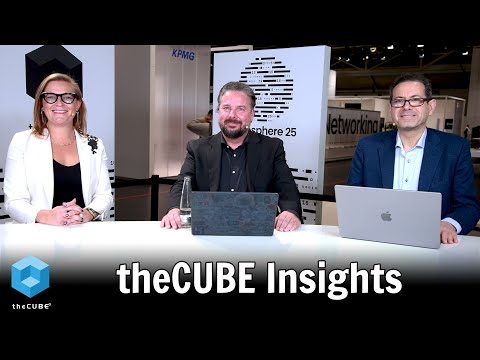
Savannah Peterson and Rob Strechay host a conversation with Sebastian Dahs, Vice President, Service Process Improvements at Deutsche Telekom as part of theCUBE's coverage of Celosphere 2025 live from Munich, Germany.
Forgot Password
Almost there!
We just sent you a verification email. Please verify your account to gain access to
Celonis Celosphere 2025. If you don’t think you received an email check your
spam folder.
In order to sign in, enter the email address you used to registered for the event. Once completed, you will receive an email with a verification link. Open the link to automatically sign into the site.
Register for Celonis Celosphere 2025
Please fill out the information below. You will receive an email with a verification link confirming your registration. Click the link to automatically sign into the site.
You’re almost there!
We just sent you a verification email. Please click the verification button in the email. Once your email address is verified, you will have full access to all event content for Celonis Celosphere 2025.
I want my badge and interests to be visible to all attendees.
Checking this box will display your presense on the attendees list, view your profile and allow other attendees to contact you via 1-1 chat. Read the Privacy Policy. At any time, you can choose to disable this preference.
Select your Interests!
add
Upload your photo
Uploading..
OR
Connect via Twitter
Connect via Linkedin
EDIT PASSWORD
Share
Forgot Password
Almost there!
We just sent you a verification email. Please verify your account to gain access to
Celonis Celosphere 2025. If you don’t think you received an email check your
spam folder.
In order to sign in, enter the email address you used to registered for the event. Once completed, you will receive an email with a verification link. Open the link to automatically sign into the site.
Sign in to gain access to Celonis Celosphere 2025
Please sign in with LinkedIn to continue to Celonis Celosphere 2025. Signing in with LinkedIn ensures a professional environment.
Are you sure you want to remove access rights for this user?
Details
Manage Access
email address
Community Invitation
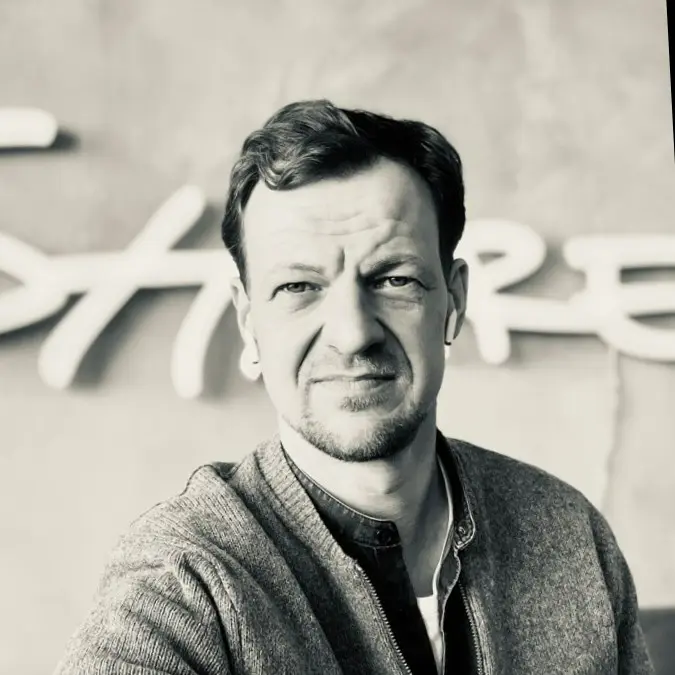
Sebastian Dahs, Deutsche Telekom
Savannah Peterson and Rob Strechay host a conversation with Sebastian Dahs, Vice President, Service Process Improvements at Deutsche Telekom as part of theCUBE's coverage of Celosphere 2025 live from Munich, Germany.
Vice President KVP, Sales & ServiceDeutsche Telekom
In this Celosphere 2025 interview from Munich, Germany, Sebastian Dahs from Deutsche Telekom joins theCUBE’s Rob Strechay and Savannah Peterson to share how his sales and service team is combining Process Intelligence with machine learning to tackle churn at scale. Dahs traces the journey from an initial 2021 pilot to a 2023 reboot leveraging object-centric process mining, explaining why data access, the “human factor,” and rigorous monitoring are the three success levers. He details a high-impact use case where ~500,000 customers a year move through a comple...Read more
exploreKeep Exploring
What is your role at Deutsche Telekom and how does it relate to process improvements and customer service?add
What has been Deutsche Telekom's experience with Celonis and process intelligence since they began their journey in 2021?add
What challenges are being faced in a specific customer process that leads to contract cancellations, and what strategies are being considered to reduce customer churn?add
What techniques and approaches are being used to understand and improve customer experiences and retention?add
>> Good afternoon Celonauts and welcome back to beautiful Bavaria. We're here in Munich, Germany at Celosphere. Name's Savannah Peterson. Delighted to be bringing you coverage for two days here on theCUBE with Rob Strechay. Rob, this is one of our favorite shows every year, just don't tell our other friends.
Rob Strechay
>> I know. I can't tell everybody that this is a favorite. I mean, I think it brings me back to when I first got out of university and doing business process and engineering-
Savannah Peterson
>> 20 minutes ago?
Rob Strechay
>> Yeah, I mean, well, it feels like that. But I think it's a lot of fun to see how far it has come, and I do believe in freeing the process.
Savannah Peterson
>> I am here for it. We're believers. One of the things that I really love about this show is we get a chance to meet the partners and the customers of Celonis, and speaking of, we have Sebastian with us. Sebastian, welcome to the show. Thanks for being here.
Sebastian Dahs
>> Thank you. Nice to be here. Nice to meet you.
Savannah Peterson
>> So tell us a little bit about Deutsche Telekom and your role there.
Sebastian Dahs
>> Yeah, I'm working for Deutsche Telekom in the sales and service department, so selling our products to our customers, servicing our customers. And my small unit is doing service process improvements, so finding journey problems, also process efficiency potentials and going into projects and improving this kind of stuff.
Savannah Peterson
>> It sounds a lot like our friends here at Celonis.
Sebastian Dahs
>> Yes, it is. Probably that's why I'm here.
Rob Strechay
>> How has that journey been as you've looked at it? Because, again, sales and service are very process-heavy portions of companies. I'm a customer, as I was telling you. I've had great service here in Munich for the last five days. But to help people understand how you've started on this journey with Celonis and with process intelligence.
Sebastian Dahs
>> As Deutsche Telekom to private customers we are serving mobile services and also broadband fixed line services, and in our sales and service departments, we have a lot of, let's say, traffic from the broadband business. So it's a complex product, sometimes complex processes. And our ride with Celonis started already in 2021, and we tried out whether we can get more information out of our broadband process data. And let's say our processes and also the data model, going into detail, is a bit special, and in these days, Celonis couldn't really cover this specialty of Deutsche Telekom processes and the data. So we stopped the project then and we started or restarted a new trial in 2023 when they said, "Okay, our product has improved," so the object centric process mining, they call it. I didn't know these times what it is. And in the meantime, I know. So we got step by step. So finding a new use case, doing proof of concept, proof of value, going into an operational test. So the journey started and we're still on a ride.
Savannah Peterson
>> Aren't we all on a ride right now in 2025? Let me tell you, it's been a ride today. I'm curious what type of... You mentioned the insights and the information you're able to get out of looking at these processes. Can you share some examples of what you're able to learn and then apply to the business moving forward?
Sebastian Dahs
>> So right now we have the focus on one special process, we have about 500,000 customers per year running through this process, and we have identified a relevant set of crucial cases within. In the past, we couldn't find why we have these crucial cases and the cases really often ended up in customers breaking up their contract. So we are losing revenue.
Savannah Peterson
>> So churn, real churn, yeah, yeah.
Sebastian Dahs
>> Yes. And with Celonis tried whether we can find out more about the customers, more about the processes, and also finding solutions to improve these processes and handling these customers in order not to lose the customers, to make these customers happy, but also to keep the revenue at Deutsche Telekom.
Savannah Peterson
>> Are you able to predict their journey as a result of this as well so you can sort of forecast their experience?
Sebastian Dahs
>> Yeah. And this is somehow the specialty of our case. We do process mining on the one hand side and we have on top of the process mining part, a machine learning model where we are predicting the risk of this customer, and then we are really focusing on calling these customers, bringing these customers through the process, and hopefully having happy customers and hopefully keeping the revenue.
Rob Strechay
>> As you look at the results that you've had, how do you see the key operational factors that really made this possible for you? Because again, things have changed, obviously their product has improved, your process has probably evolved a little bit as you've gone from '21 to '23 to get here. How has this really helped you with hit your KPIs?
Sebastian Dahs
>> I think there are three success factors. The first one is having access to the data, having the data in order to get it structured. And sometimes it's really difficult to have the interface to all of these data. Second one is... I would call it the human factor. As I said, we have the prediction model, but then we are getting in touch to the customer, being sensitive with the customer, handling the customer through the process. And the third aspect is the monitoring, the analysis, so verifying that there's a effect. In our project we do an A-B testing, so having our customers in a test group, customers who are called and handled and still having some customers in the reference group, so running through the old process.
Savannah Peterson
>> So you're able to do that comparison and actually see the marked improvement. Connectivity in cell phones, it's an emotional service for people. I can imagine you're dealing with people in a moment of passion if they're calling your customer service.
Sebastian Dahs
>> And that's what Telekom Deutschland or Deutsche Telekom is also standing for. We want a premium provider and also we want to serve as a premium provider. So especially once a customer is in a problem or in a process gap, we want to be there and helping our customers through these times.
Rob Strechay
>> As we come here to the orchestra pit now that we're surrounded by, but as we come in from understanding this, again, when you look at customer success and you look across the industry, how do you see things changing and what are some of the broader trends that you're seeing that could... That was very, very cute. That can help you with... That other people are tying into this why this is the right time to do this process automation.
Sebastian Dahs
>> So I think we are fully in line with the whole trend in the industry. So automating the whole business system, our value chain, using AI in this context. And we have just learned in the keynotes, we are heading into the era of enterprise AI, and in our business unit, at every point we try to use new technologies in order to scale our business. And if it's agentic AI internally or for our customers, if it is about prediction models, machine learning, and so on. And what I like about our project is that we already have the combination of process intelligence with the artificial intelligence. It's still on small scale, but we are about to ramping up other projects in this area.
Savannah Peterson
>> What gives you the confidence that you're able to ramp that up and to scale up?
Sebastian Dahs
>> I think the most important thing is to do the next step. So I'm not aiming for some kind of target picture and we have to be there in 2027. So it's always about doing the next step, the next step, the next step, still knowing the direction and having the right partners on board, and we are in intense talks with Celonis, how we can get further to the next level.
Rob Strechay
>> As you look at, like you said, those next steps, I would assume you're tying it to... Because again, being process oriented, you're tying it to specific processes that then are bigger overarching processes wrap around, and because you have different lines of business and there's different processes based on that, do you see it as, "Hey here..." Like you talked about those critical cases, are you ranking those business cases and those processes that support those business cases and that's how you decide which is the next to tackle?
Sebastian Dahs
>> So the internal point of view is clearly on where can we get business impact? So what can we get out of it? Either it's about cost efficiency or it's about revenue and so on. But I think it's also about the external perspective of our customers. We have a very fragmented, segmented customer base. So young people-
Savannah Peterson
>> It's everyone, essentially.
Sebastian Dahs
>> Yeah, we want to have everyone, so we have to serve everyone. So I think we have to set up flexible in our services, in our self-services, and also in our technology. So I think there is the internal and the external view coming together, serving all of our customers with the right technology, the right channels, the right touch points, the app, also the shop, the retail stores, and also internally fulfilling business targets and to be more effective and efficient.
Rob Strechay
>> Yeah, I think one of the things that's really neat, and maybe you can talk to this is, and it was kind of talked to by Karsten, I don't remember if it was today or yesterday when we had a little briefing with him, but was the distributed nature. You have a very distributed team that's using these processes. How has that worked for being able to... Because like you talked about the data being fragmented and bringing it together and then bringing it out to them, how has that worked? Because they're also at different places in their careers, there are different types of people. How have they embraced this process intelligence journey?
Sebastian Dahs
>> So let's say in the corporate central, the ivory tower, there were all... We had these data scientists type of guys, so they're used to such kind of projects. It was different to our call center agents. So having the tools, we have also the target that they need to use less tools. So we said them, "Okay, we have a new process and you get a new tool, the Celonis front end." So we were in the project also very sensitive in order to get them used to these new processes and the new tool. So we started very manually, slowly, getting to the next level, getting to the next figures, so daily ambitions and so on. And in the meantime we have a really automated process and they got used to it and they're really happy with it. And we are in the meantime at three locations in Germany, just internal service agents. So the location is not a problem. And also with our way to bring them closer to this new solution, it worked fine.
Savannah Peterson
>> What do you hope to be able to... It sounds like there's been quite an evolution with your experience with Celonis and all these processes as you're building trust within the team and a lot of things, my closing question to you, Sebastian, is when we're hanging out at Celosphere 2026, what do you hope to be able to say then that you can't yet say today?
Sebastian Dahs
>> Okay. Yeah, that's interesting. So with the guys from Celonis and also internally we are speaking about do we want or how can we integrate Celonis in our data platform, in our architecture. Whether it's the right part? Right now it's not still some kind of satellite, it's not yet fully integrated. And we are thinking about integrating, and once we do this, there will be new potentials and also really short ramp-up times for new use cases. So going back to your question, next year probably I sit here and say, "Yes, we are fully integrated," or I won't be here.
Rob Strechay
>> Well, we hope you're here.
Savannah Peterson
>> Yeah, yeah, we definitely hope you're here. This has been great. And I mean talk about a proof point that we really will know if it worked or if it didn't based on whether you're on our interview roster next year. Sebastian, thank you so much for coming to join us today.
Sebastian Dahs
>> Thank you for your time. Very nice.
Savannah Peterson
>> Yes, and I got to say, you handled the marching band like a champion. There's a lot of action going on here on the show floor at Celosphere here in Munich, Germany. My name's Savannah Peterson, you're watching theCUBE, the leading source for enterprise tech news.