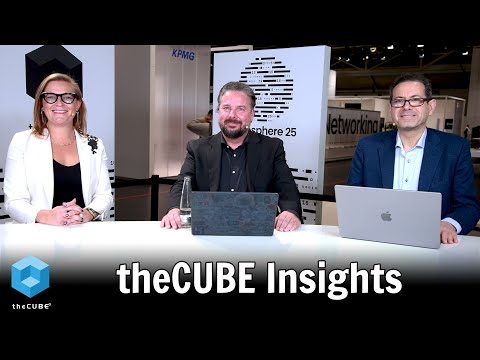
Savannah Peterson and Rob Strechay host a conversation with Daniel Brown, Chief Product Officer at Celonis as part of theCUBE's coverage of Celosphere 2025 live from Munich, Germany.
Forgot Password
Almost there!
We just sent you a verification email. Please verify your account to gain access to
Celonis Celosphere 2025. If you don’t think you received an email check your
spam folder.
In order to sign in, enter the email address you used to registered for the event. Once completed, you will receive an email with a verification link. Open the link to automatically sign into the site.
Register for Celonis Celosphere 2025
Please fill out the information below. You will receive an email with a verification link confirming your registration. Click the link to automatically sign into the site.
You’re almost there!
We just sent you a verification email. Please click the verification button in the email. Once your email address is verified, you will have full access to all event content for Celonis Celosphere 2025.
I want my badge and interests to be visible to all attendees.
Checking this box will display your presense on the attendees list, view your profile and allow other attendees to contact you via 1-1 chat. Read the Privacy Policy. At any time, you can choose to disable this preference.
Select your Interests!
add
Upload your photo
Uploading..
OR
Connect via Twitter
Connect via Linkedin
EDIT PASSWORD
Share
Forgot Password
Almost there!
We just sent you a verification email. Please verify your account to gain access to
Celonis Celosphere 2025. If you don’t think you received an email check your
spam folder.
In order to sign in, enter the email address you used to registered for the event. Once completed, you will receive an email with a verification link. Open the link to automatically sign into the site.
Sign in to gain access to Celonis Celosphere 2025
Please sign in with LinkedIn to continue to Celonis Celosphere 2025. Signing in with LinkedIn ensures a professional environment.
Are you sure you want to remove access rights for this user?
Details
Manage Access
email address
Community Invitation
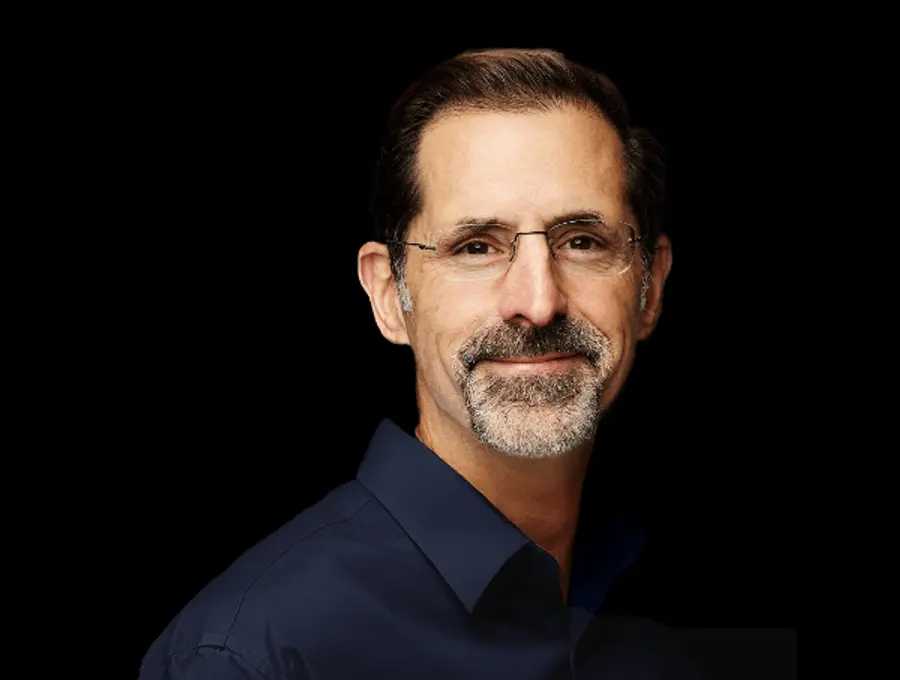
Daniel Brown, Celonis
Savannah Peterson and Rob Strechay host a conversation with Daniel Brown, Chief Product Officer at Celonis as part of theCUBE's coverage of Celosphere 2025 live from Munich, Germany.
In this Celosphere 2025 interview from Munich, Daniel Brown, chief product officer of Celonis, joins theCUBE’s Rob Strechay and Savannah Peterson to unpack how Process Intelligence sits at the center of AI outcomes – captured in the event’s “no AI without PI” theme. Brown explains the company’s “Free the Process” message as a commitment to openness (making operational data accessible instead of trapped in “data jail”) and details the technical underpinnings: a scalable data core that transforms enterprise signals into a Process Intelligence Graph for fast, op...Read more
exploreKeep Exploring
What was the atmosphere and focus of the event being discussed in Munich, Germany?add
What is the importance of being open as a platform in relation to process information and data access?add
What happens when information and data are not accessible or visible in a process?add
>> Good afternoon, Celonaughts, and welcome back to beautiful, surprisingly sunny Bavaria. We're here in Munich, Germany at Celosphere. My name's Savannah Peterson, joined with Rob Strechay to bring you all the latest in process mining. Rob, what a great start to the show so far.
Rob Strechay
>> I think it's been fantastic. I think, again, the energy's been great, the customers we've had on the Celonis folks that have been on are really bringing a lot of energy to this. And I think it's an important inflection point, we are with AI and process intelligence, coming together. Really, the not doing AI without PI kind of concept. So-
Savannah Peterson
>> We've heard that here before.
Rob Strechay
>> Yes.
Savannah Peterson
>> Speaking of very excited to welcome our latest guest. Dan, thank you for taking the time. Busy week for you.
Daniel Brown
>> Thank you both. I appreciate the time.
Savannah Peterson
>> I appreciated when you were giving us our press briefing yesterday, you talked about how cool you felt because you had just added something to your inner wrist, your temporary tattoo.
Daniel Brown
>> Yes. Yes, it fell off.
Savannah Peterson
>> Oh, no. I was wondering if it was still on.
Daniel Brown
>> It fell off.
Savannah Peterson
>> As someone who's tattooed, I can relate to that feeling of how cool you felt.
Daniel Brown
>> I did. I felt very, very cool. Yes.
Savannah Peterson
>> Immediately about that. One of the things that I'm always so impressed with Celonis is the branding, the commitment to having a message that isn't just strong, but maybe a little spicy. So, explain to us what free the process really means?
Daniel Brown
>> Yeah, first and foremost, it's about our commitment to being open as a platform and to innovators that are not on our platform but want to call into it. So, I think that's the underlying cultural piece, and it's also a belief that other vendors should do that with their customer's data, which is obviously where a lot of this process information lives. So, I think freeing the process is like, Hey, if you can't get that information out and you don't have visibility into how you're actually working, that's like a jail. It's not a good thing. So, we want to free the process.
Savannah Peterson
>> I like that you took it a step farther than silos.
Daniel Brown
>> Yes.
Savannah Peterson
>> It's now actually data is in jail. Data jail.
Daniel Brown
>> Data jail.
Savannah Peterson
>> Rob have you ever been to data jail?
Rob Strechay
>> I feel like I've been in data jail.
Daniel Brown
>> I think this is a new term.
Rob Strechay
>> Yeah, data hell, data jail. When you look at it and everybody talks about is it a data lake or a data swamp? How do you get out of the swamp? When we were talking yesterday, one of the things, some of the technical capabilities that you've really built underneath. And I think this is key because when you look at these models, and I'm not just talking about gen AI, and I thought Carsten and team laid out a really good view of its multimodal AI. It's not just about gen AI. Can you talk to really some of the technical capabilities you've been working on since you've gotten here to really help build out into scale with these?
Daniel Brown
>> Yeah, I think there are probably three, but let's start with the data core because it's the big enabler. When you think about the digital footprint of an enterprise, it's absolutely immense. And the system of record, those are just one part. There's obviously task and there's IoT. And many companies have robotic information. And now, we've got agents all over the place. And so, in order to be able to understand and organize all of that data and use it, you need tons of scale, you need to be able to transform it into a semantics, into a process intelligence graph. So, you can use it and you need to be able to query it very, very quickly to do operational and business critical things. So, that's kind of the heart, and it's only going to get bigger, this digital footprint, it's a hockey stick.
Savannah Peterson
>> Yeah, it's absolutely exponential. In your role, you get to see a lot of different companies across verticals. Can you tell us some of your favorite use cases or examples of where you've seen this value achieved and the benefits thereof?
Daniel Brown
>> Yeah, I mean, we talked about one this morning that I just think is absolutely brilliant. The customer is Novo Nordisk, which you know is a pharmaceuticals and out of Denmark, which by the way is personally very great for me because I lived there for four years. So, it's nice to work with-
Savannah Peterson
>> I love Denmark. Shout out to all of our Denmark friends.
Daniel Brown
>> Yeah, shout out to Denmark. That's right, exactly. Great place and great company. And so, what they're trying to do is really reduce the burden of certain processes. And one is protocol deviation is a a standard life science pharmaceutical process. And so, what they do is they've used agents to identify these deviations and document them, organize the documentation, put it all together so that these researchers, I mean these are very important knowledge workers don't have to do all that work themselves. And the timeline for doing this by using agents to construct and organize, that documentation has gone down from 100 hours to one hour. It's unbelievable.
Savannah Peterson
>> Whoa. A 99% reduction?
Daniel Brown
>> A 99% reduction.
Savannah Peterson
>> That's amazing.
Daniel Brown
>> It's really, really amazing. And I think that you're going to see more and more use cases like that across all businesses of all size, all the industry, all region.
Rob Strechay
>> Yeah. I think, to me, that was also something that you hit on and it was hit on again in the keynote today, was just really enterprise AI really needs context. And I mean, we've been fans of Celonis for a while now, but we think that you can't build out an agent without understanding the process. I think how do you see enterprise AI in context and how does Celonis really help in that way?
Daniel Brown
>> Yeah, I mean, it's a great, and it's like the foundational question. When Celonis moved from case-centric to object-centric process mining, it was a very smart strategic bet. It was a recognition that if you wanted to do the things that we're talking about today, you needed connected processes. And that's why we have these objects and events, and these events can participate in different process and connect them. So, a digital twin needs data to be organized, it needs data to be related, and then, the last part is to enrich it. And that's where you get all of this insight. Basically, companies, it's people doing work, machines doing work, agents doing work sequentially. And you got to figure out how that actually transpires. Is it working? Is it not working? If it's not working, how do I make it better? And that's what all that enrichment provides. And that plugs into your agentic strategy because if they don't have access to that information, then your agents, they won't know what to do.
Savannah Peterson
>> Well, then you're not going to get any benefit from any of that.
Daniel Brown
>> Absolutely agree. That's right.
Savannah Peterson
>> Wasn't planning to ask you this question, but I'm going to now because of what you get to see. How far along the actual adoption curve of AI do you think we are right now versus-
Daniel Brown
>> Oh, it's a great question.
Savannah Peterson
>> Yeah.
Daniel Brown
>> Yeah. I think, first of all, it's moving really fast. I think Alex talked about it, or actually Carsten was the one who mentioned this, there's pressure from the board down to the C-suite, all the way down to people. Everybody's talking about AI. I think we're very much in a human in the loop model where a human will come in and make sure that things are working well, but I think this hockey stick is moving very, very quickly. The key is how it's the determinism versus the variability of a response from a foundation model and the tools that you give it. And for certain things, that's not okay. And you should use normal automation techniques. For other things, that's okay and the semantic capabilities of an LLM can be absolutely fantastic. So, I think we're going to see this accelerate really, really rapidly over the next 12 months.
Rob Strechay
>> I think one of the things that we all look at and looking out in the not too distant future is what happens with autonomous agents? How do you see autonomous agents really leveraging PI going forward?
Daniel Brown
>> So, I think we use these terms, analyze, design and operate. The easiest way to see an agent in action is through operation. So, typically, after you've analyzed and maybe you've designed a process differently, maybe you've extended it, maybe you've modified it, maybe you've redone it all together, you're still going to get variability. Like something's late, there's a storm in some place, delivery, somebody changed their mind, there's a finish-to-finish dependency, and you want to do something about it. So, agents are very, very good at mining the information that is in the process intelligence graph. Why did a deviation occur? Is it a conformance problem, like something isn't what I expected? Is it a performance problem? Is it too late? Is it too costly? And then, correcting that by looking at the information in the graph and asking the question, how can I remediate it? And is it the right way to remediate? And then of course, go and execute. So, I think that's really the easiest one to consume, but there are many other ways that I think agents can help facilitate this analyze, design, operate lifecycle.
Savannah Peterson
>> I think you're absolutely right about that. Dan, this has been thrilling. I know you have a very tight schedule today.
Daniel Brown
>> I do.
Savannah Peterson
>> So, I'm going to let you out of data jail and camera jail.
Daniel Brown
>> I appreciate that.
Savannah Peterson
>> And just say thank you very much.
Daniel Brown
>> Thank you. I appreciate it. Rob, pleasure.
Rob Strechay
>> Yeah.
Savannah Peterson
>> And thank you, Rob. Always a joy. And thank all of you for tuning into our two days of live coverage here in Munich, Germany at Cellosphere. My name's Savannah Peterson. You're watching theCUBE, the leading source for enterprise tech news.