We just sent you a verification email. Please verify your account to gain access to
CDOIQ Symposium 2024. If you don’t think you received an email check your
spam folder.
In order to sign in, enter the email address you used to registered for the event. Once completed, you will receive an email with a verification link. Open this link to automatically sign into the site.
Register For CDOIQ Symposium 2024
Please fill out the information below. You will recieve an email with a verification link confirming your registration. Click the link to automatically sign into the site.
You’re almost there!
We just sent you a verification email. Please click the verification button in the email. Once your email address is verified, you will have full access to all event content for CDOIQ Symposium 2024.
I want my badge and interests to be visible to all attendees.
Checking this box will display your presense on the attendees list, view your profile and allow other attendees to contact you via 1-1 chat. Read the Privacy Policy. At any time, you can choose to disable this preference.
Select your Interests!
add
Upload your photo
Uploading..
OR
Connect via Twitter
Connect via Linkedin
EDIT PASSWORD
Share
Forgot Password
Almost there!
We just sent you a verification email. Please verify your account to gain access to
CDOIQ Symposium 2024. If you don’t think you received an email check your
spam folder.
In order to sign in, enter the email address you used to registered for the event. Once completed, you will receive an email with a verification link. Open this link to automatically sign into the site.
Sign in to gain access to CDOIQ Symposium 2024
Please sign in with LinkedIn to continue to CDOIQ Symposium 2024. Signing in with LinkedIn ensures a professional environment.
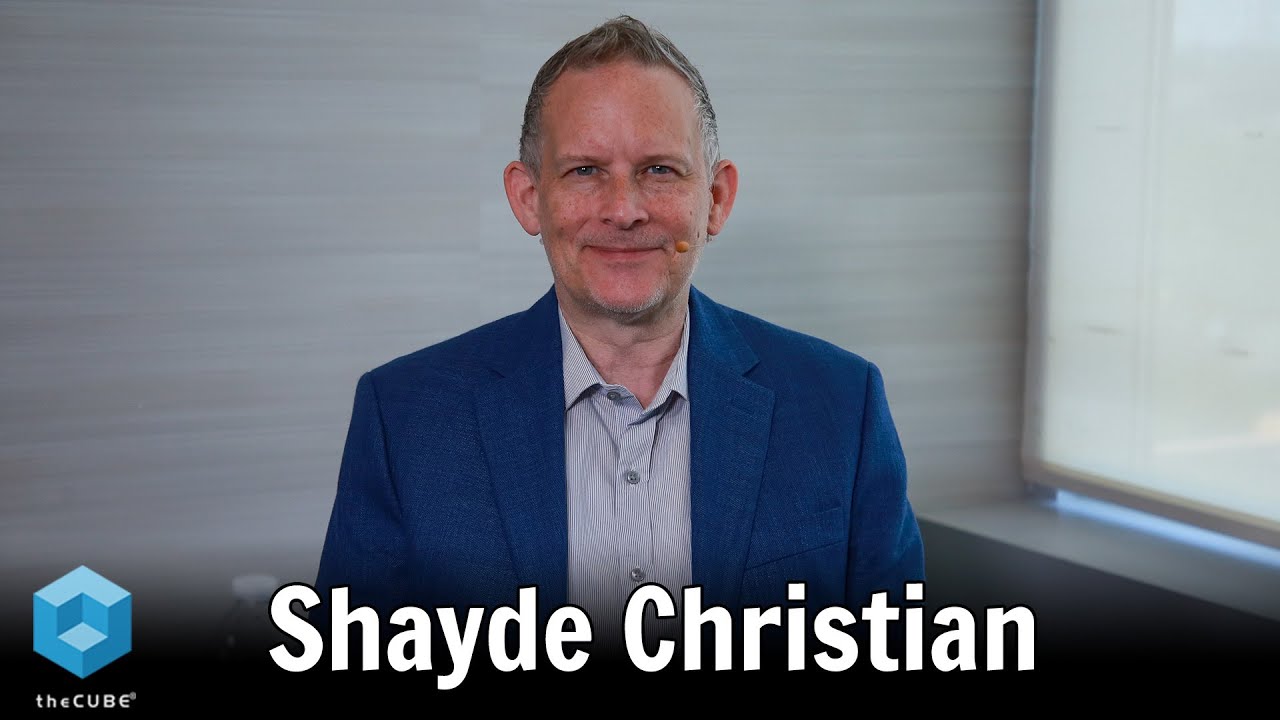
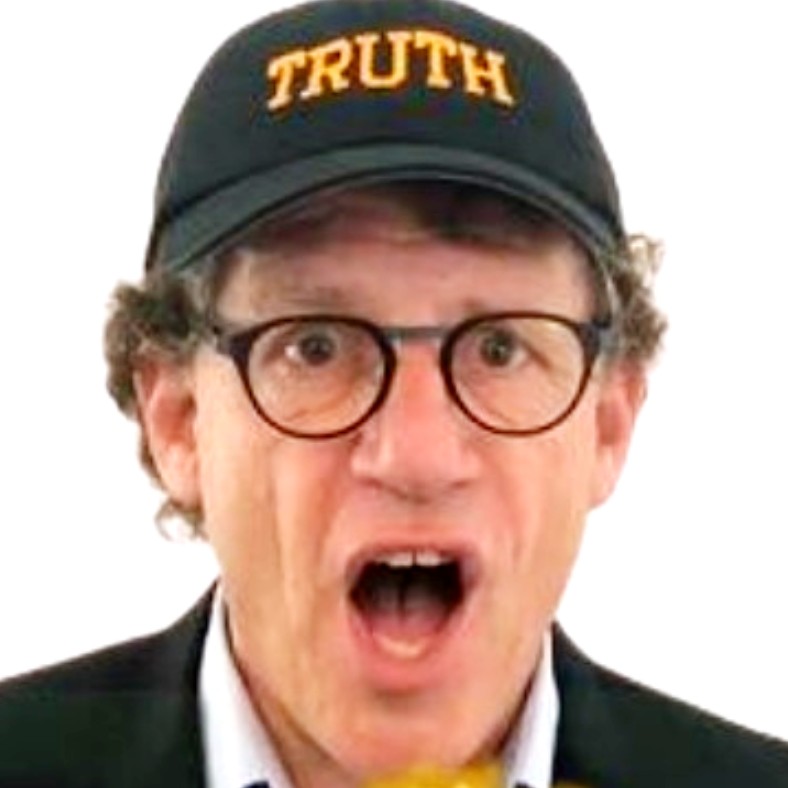
The Data Whisperer & Principal ConsultantMetaMeta Consulting
Paul Gillin, known as Scott Taylor, the Data Whisperer, emphasizes the importance of data quality, governance, and foundational activities in enterprise data management. He believes in starting with the why before delving into the how. Scott explains the three V's of data storytelling: vocabulary, voice, and vision. Engaging the business side and aligning strategic intentions is crucial. He discusses challenges faced by data-driven organizations and the necessity of a strong data management foundation for success. His book focuses on creating a business-acces...Read more
exploreKeep Exploring
What is Scott Taylor known for in relation to data?add
What is Scott Taylor, the Data Whisperer, focused on in his work?add
What is the reason why the industry has failed to live up to the hype, expectations, and promises to customers, and do you think it will actually deliver this time around?add
What is the importance of determining the truth in data before deriving meaning from it in an organization?add
>> (music)>> Welcome back to Cambridge, everybody. This is Dave Vellante from theCUBE's Coverage of CDOIQ 2024. I'd like to welcome in Paul Gillin.
Paul Gillin
>> Hey, Dave.>> Co-host Paul, you've done a number of these CDOIQ... MIT at the time, CDOIQ conferences over at the Tang Center. I think you did one sort of solo one year when I was out of town. You and I-
Paul Gillin
>> Yeah, I->> It was 2009, about their fourth year. Little tiny event at that point. It's exploded since then. I was checking out our library of this stuff. We have done well over a hundred interviews at CDOIQ conferences, over 150 guests. We have over a thousand shorts that we built from this conference.
Paul Gillin
>> Amazing.>> And, it's just crazy to see the ascendancy of the back office, chief data, data quality people, and now it's front and center. The premier chief data officer event, Scott Taylor is here. If you don't know him, he's the Data Whisperer, author, great guy. Saved the day last night. Thank you so much for coming on theCUBE.>> Anything I can do, Dave. I'm thrilled to be here. Paul, good to see you. I feel like I'm on the Carson Show of dating.>> Oh, that's awesome for you to say.>> Really happy to be here, finally.>> Data Puppets, author, you DataVengers, you're a keynoter, you're a content creator. Tell the audience a little bit about yourself.>> So Scott Taylor, Data Whisperer, but spoiler alert, I don't do a whole lot of whispering. I'm out there to just sort of yell, tell and sell about the power and value of data management. So, I work in... the Work I do is really around the storytelling aspect of enterprise data management. How do you get the business side engaged? How do you get stakeholder involvement? How do you get the money for a lot of this data work? And I focus on the classically unsexy stuff, like data management, data quality, data governance, solid found... master data, reference data, metadata, MDM, RDM, PIM, RIM, DAM, all those foundational activities that have to be in place if you want to take advantage of anything else going on in the space.>> Now, how did you learn all this stuff? You were never a practitioner, but you were a consultant for many, many practitioners for many years, correct?>> Yeah, absolutely.>> Absorbed through osmosis, all that knowledge?>> You've outed me in terms of my actual experience. But, I was 30 years in corporate data representing some really iconic, world-class data brands like Nielsen, Dun & Bradstreet, Kantar, so on the sales and marketing and strategy side in that area, and dealt with every kind of enterprise, at every level of maturity, and every category, literally all over the earth. So, that limits my scope in terms of what I engage with, but began to see... and I was always the storyteller in the group. Like to say I've been in storytelling since it was two words, way back. And now, data storytelling is a huge hot thing, but the ability to convey, in some kind of business accessible narrative, the value that data management brings is where I fit in. And, I dealt with a lot of these enterprise data leaders who kind of had a dual personality feeling of, one, they were really passionate about the work that they could do and what it could bring to the enterprise; and they were extremely frustrated, because nobody would listen to them. They talk about how it's done. They talk about techniques. They get under the hood. And one of the things I focus on is, you got to talk about the why before you start getting into the how. And I never met a CEO or a CFO who's got money who cares about how you're going to get it done in data until they understand why it's important.>> This is pre-Simon Sinek. You know, somebody was on theCUBE yesterday, Paul, and they mentioned data literacy. I'm like, what do you actually mean by that? And they said, "There's actually a Wikipedia entry that defines data literacy." And essentially, the definition is being able to tell stories with data. That's what you do.>> Yeah. And there's two kinds of data storytelling out there, in my perspective. There's the classic data storytelling that a lot of books out there... And really about analytics, how to take some insight or metric and put it into a context that drives some form of business action. Super important. But again, I felt, in the space we need a story about why managing data is important. So, this data storytelling for data management is kind of the second type of data storytelling. And I encourage enterprises... You need both. It's not Sophie's choice here. You got to do both of them. But most people focus on the analytics storytelling stories with data, and need to really beef up on the stories about the data.>> Well, what's an example of a story? I mean, help our... IT people are not traditionally the best storytellers.>> Yes.>> What's an example of how they can tell the story?>> The work I do, and the framework I put together, I call the three V's of data storytelling for data management. So, kind of a knowing wink on the three V's of big data. But mine are vocabulary, voice and vision. And so, I encourage them, get the words right. Forget the text speak and the buzzwords. Again, people on the business side just glaze over when you start talking about the latest analytics, graph hub, fabric mesh, you're going to implement. Get your voice right. How do you sound about data? Does your whole team have the same kind of focus on what the opportunities are, and what the benefits are? Have you put together almost an internal marketing program in your organization around data? And then the third would be that vision. Everything you do in data has got to enable the strategic intentions of your enterprise. Where's your company going? And why is data going to help you get there? And, focus really on... If you need to start somewhere, start with that last thing. Why does your company exist? Forget about data. Go look for the business reason. Why does your company exist? And put that narrative together that shows that, actually, every company I've ever dealt with has some objective, some form of trying to deliver value to their relationships through their brands at scale. That's a well-honed phrase that I've worked with a lot. And, it's extensible to every kind of enterprise. And so look at that. Find your version of that. What is your company trying to do? What do your leaders say? And start showing how data is going to support those activities.>> I'm fascinated by data-driven organization. We hear a lot about that term a lot. How do you become a data-driven organization? Have you seen organizations successfully transition to becoming data-driven? And how do they do it?>> A lot of companies want to be data-driven. They just have a hard time finding a place to park. But it's whatever terminology for me that makes it work. So, I don't get too deep in sort of how you implement these things culturally. I say I focus on the why rather than the how, and embracing data technically is important. But, to be data-driven, to be data-literate, to be data-informed, to be data-inspired, whatever that second word is, the business has to be engaged. And again, starting there, are you telling them the right story or explaining why it's important? Are you explaining why standards are important? Why not coming up with your own way to spell street every time you key in a new customer? And these things are really tactical and almost in the minutiae, but that clogs up a lot of the data work that people do downstream, having inconsistent hierarchies, lacking categorization. There's no unique identifiers. Again, I come from the master data space, where all those foundational elements are. When you don't have that stuff, it does fall apart.>> So master data management... Actually, many data initiatives have failed to live up to the promise, right? The 360 view to the customer, the data warehouse itself. So, we created data marts that created more stovepipes, master data management, big data in a dupe. All of these were going to solve everything.>> Yeah.>> Now, it's AI. So, I'm interested in your perspective on why the industry has failed. Not that it's failed to deliver value. It's delivered a lot of value, but it's definitely failed to live up to the hype, to the expectations, to the promises to customers. Why do you think that is? And do you think this time around, it'll actually deliver?>> I don't know if this time around it did. I mean GenAI, they're already talking about AI governance, right? "Oh, we need to make sure those LLMs are fed the right training corpus." As you say, you go back to big data, there was volume, velocity, the variety that kind of kills you. All these data scientists. When that came out, people were talking about spending 80% of their time munging and wrangling, and 20% of their time complaining about munging and wrangling.
And you go back to enterprise systems, where people were starting to transition to those. Then all of a sudden, it was we got to harmonize our legacy data. That's why I think silos came up. And you go all the way back. General ledger. You still need a chart of accounts. So, I kind of look at this through line from GenAI all the way back to general ledger, that this same story around making sure the foundation's right is there. And to answer your question, why isn't it working? I think part of it is, they're not capturing the imagination of the business side, and having realized this work's got to get done first. It's got to be... Why do you think you call it a foundation? And it struggles because it's not sexy. It's boring, it's clerical, it's back office. It's, "Why do I care about customer IDs?" and all that kind of really dull stuff. But again, if you don't have that, it doesn't get there.>> Yeah. So, it's under-resourced because if it doesn't resonate to the business, the businesses says, "You deal with it.">> There were early promises of, again, 360. We're going to get three... And people end up going around in circles, to kind of play on that geometry there. And a lot of big promises, a lot of ocean boiling, a lot of looking for that one size fits all, quick fix, band-aid, easy button, magic wand, sign here, which everybody wants.>> Yeah.>> But it's hard. Also, guess what? It's hard. It's really tough to set a standard in your organization. It's tough to align to a common definition of anything. It's tough to find some version of that truth that people are trying to program around. You can boil my entire data philosophy down to three words: truth before meaning. And that's how I try and, again, give the headlines to the business side. Determine the truth in your data before you start deriving meaning out of it. And, a lot of emotional stuff around the word "truth." I'm not talking politically, I'm not talking personally, but at an organization. At an enterprise, you can find the truth. You can handle the truth if you've got data management.>> True. Because that's the first thing that happens in meetings, is they attack the data.>> Yeah.>> If it doesn't fit their agenda.>> Yeah. And software companies too, right? Everything demos perfectly. But, when you implement it on your own, if it doesn't work, it's not the hardware, it's not the software, it's the data. And it's usually that master data, reference data, metadata that's not in place.
Paul Gillin
>> Is GenAI an opportunity? Because everyone is, on the business side now, is riveted on GenAI and Fascinated by it. Opportunity to put their data house in order? Or is this just another bauble? Is this another Hadoop?>> I hope it's another opportunity to drive a lot of those initiatives that are focused on that foundational stuff. So, yes. And I think because it's so exposed, and because all our kids know about GenAI, right? My relatives who knew nothing about data know about being able to create something out of ChatGPT. But that story, again, is so similar. You put crap in there, you get crap out. Hallucinations are the latest version. I hope that... We always hope, "Finally, this is it." But it's at least helping that story from the data management side of going, "We've been talking about this forever. If we get it right, we can leverage.">> I would argue it was a prerequisite to the opportunity.>> Yeah.>> It's a mandate to get the data house in order, and then the opportunity will present itself. And my prediction would be, some companies will get it right, others won't. Maybe most won't. I don't know. Tell us about your book or books. I'm fascinated by the 99% Buzzword Free.>> Right.>> You must not have talked about AI.>> So my book, Telling your Data Story: Data Storytelling for Data Management, as you mentioned, Dave, right on the cover it says "99% Buzzword Free." I did not want to over-promise. And recently translated into French where it's "99% sans mots a la mode," which of course means no words about ice cream. So that's a nice angle there. But, it's how to put a business accessible narrative together to sell in. And I'm overt about it, coming from the sales and marketing background. It's like, "You've got to sell this in." The story I tell people that they need to tell about data management is a pitch. And you just get right to... You got five minutes with your CEO. Explain to them why managing data is important. I go through a lot of my... I have a whole section on why you should believe me. So I talk about my street cred. I do something that people have responded to nicely, because there's a couple pages about what I don't do. Like, "Here's what this book isn't going to give you, so don't read any further." And I don't get under the hood. I don't talk about how. I don't talk about tools. I don't talk about implementation. I don't talk about culture, but I talk about that aspect that's so important, especially for data leaders, or any aspiring data leader. How do you communicate better? How do you engage better with the organization? How do you get... When you're up for funding against better storytellers? Head of marketing is a better storyteller than the head of data. The head of sales, if they don't tell a story, they're not making quota. So, they're trained in those soft skills, and somehow, at least giving the portfolio of skills that a data leader has, you've got to beef up those soft skill part. You've got to be able to communicate. So, pretty straightforward book. It was really fun to write and kind of put together. I've got, like you said, I've got these frameworks, the three V's, the four C's, the eight A's. I won't go through them all, but just sort of pithy, mild stuff that at least give people some direction on how to put that narrative together.>> And you're making all this sort of what's generally perceived as mundane, back office stuff, relevant to a much broader audience. Give a plug for what you do. How do people engage with you?>> I'm on LinkedIn, all over the place. I'm on YouTube. I do content with brands now. So, after getting out of the corporate world, I'm having a ball. I do events. In case you can't tell, I have a fear of not public speaking. So, that's the way I position myself. And I love getting on stage and just get people fired up about something that is generally relatively boring. And that's the engagement I get afterwards, that people are just like, "You said it the way I wish I could say it." And work with software companies, data companies, industry associations, anybody creating an event or looking for content to produce around this part of the space. And, I used to write white papers, but now I do puppet shows. You should check out the data puppets, which I have a series on that starring->> You're very entertaining.... >> CDO, C.D.O the chief dog officer, and he hires a catsultan from Meowkinsey. Sanjeev was the voice of Microspoon in that. Microspoon in Salesforce.>> Beautiful.>> Really fun stuff. And again, it's just how to get some attention in the space.>> Scott Taylor, the Data Whisperer, thanks so much for coming to theCUBE. It was great to have you.>> Oh, a blast to be here. Thank you so much.>> Appreciate it. All right, keep it right there. More from CDOIQ 2024. Dave Vellante for Paul Gillin and Sanjeev Mohan as well. We'll be right back after this short break. You're watching theCUBE.>> (music)